馬克 @MarklinPro
Joined April 2023-
Tweets25
-
Followers2
-
Following113
-
Likes8
一起看看 Cursor 团队内部最常用的 Skills
thermo-nuclear-code-quality-review,一位苛刻的代码质量审计员,它的设计目标是:在 PR 合并之前,识别那些"能跑、但让代码库变得更糟"的改动并拒掉它们。
在这安装 @cursor_ai Team Kit:
cursor.com/marketplace/cu…
四条核心审计原则
1. 删除复杂性,而不是搬运复杂性
重构的常见反模式是把一坨复杂逻辑从 A 文件挪到 B 文件,调用栈变深,但总复杂度没降甚至上升。该 skill 要求改动产生净简化,而非位置转移。
2. 阻止超过 1000 行的文件
硬性上限。超过 1k 行的文件几乎必然意味着职责不清、难以测试、难以并行修改。这是一条"宁可错杀"的工程红线。
3. 标记薄包装层和泄漏的逻辑
· Thin wrappers:只是转发参数、没有实质行为的函数/类,徒增间接层。
· Leaked logic:本该封装在某层的业务规则散落到了调用方,破坏边界。
4. 拒绝"能工作但让代码更乱"的 PR
这是最关键的一条立场:功能正确 ≠ 可以合并。维护性是一等公民,与功能性同等重要。
两阶段、父子 Agent 协作的运行机制
阶段 1 — 父 agent 准备上下文(并行)
· 一个 shell 子 agent 执行 git diff


the most used skill internally at cursor right now /thermo-nuclear-code-quality-review - deletes complexity instead of moving it - blocks files over 1k lines - flags thin wrappers and leaked logic - rejects PRs that work but make code messier

有人觉得学 AI 要几个月。 其实认真看几个小时就能上手。 Ruben Hassid 写了 17 篇免费指南,全在 Substack 上,我帮你整理好了: 入门篇: - Claude 入门 101:ruben.substack.com/p/claude - Claude Code 指南:ruben.substack.com/p/claude-code - Claude Skills 教程:ruben.substack.com/p/claude-skills 工具篇: - Nano Banana 2:ruben.substack.com/p/banana-2-3bd - Claude 玩转 Excel:ruben.substack.com/p/ai-couldnt-d… - 最强 AI 搜索工具:ruben.substack.com/p/grok-420 实战篇: - 用 AI 做到 100 万粉 - 团队如何用 Claude 协作 - AI 做幻灯片(2026 版 PPT) - Claude 交互式图表 高阶篇: - 让 Claude 像你一样说话 - 把 Claude 当成你的第二大脑 - Claude 协作 + 项目管理 - 在写提示词之前先设置好 AI 剩下 11 篇都在他的 Substack 主页上:ruben.substack.com 别收藏吃灰,挑两篇今天就看完。 信息差正在快速缩小,现在不学的人,半年后会发现自己已经被甩开了。
10 个真正改变我工作方式的 Claude Skills Reddit/ClaudeAI 中看到的帖子,作者总结了自己持续测试后真正觉得有价值的 10 个 Skills,聚焦于提升生产力、自动化和专业输出,涵盖开发、文档、设计、测试等场景。 1. Rube MCP Connector 通过一个统一的 MCP 服务器,将Claude一次性连接到 500+ 应用(Slack、GitHub、Notion 等),无需为每个应用单独配置认证。适合需要大量自动化集成的用户,大幅节省时间。 2. Superpowers(obra 开发的开发者工具包) 提供 /brainstorm、/write-plan、/execute-plan 等专用命令,将 Claude 从普通聊天机器人转变为完整的开发工作流辅助工具。对严肃编码的人来说是重大提升。 3. Document Suite(Anthropic 官方 Skills) 让 Claude 真正擅长处理和创建 Word、Excel、PowerPoint、PDF 文件,支持正确格式、公式等,而不仅仅是读取。处理客户发来的复杂文件时特别实用。 4. Theme Factory 一次性上传品牌指南(颜色、字体等),之后 Claude 生成的所有 Artifacts 都会自动遵循该风格。非常适合营销团队保持品牌一致性。 5. Algorithmic Art 基于 p5.js 的生成艺术工具,只需文字描述(如“蓝紫渐变流场,5000 个粒子,种子 42”),即可生成可复现的艺术作品。适合创意编码者。 6. Slack GIF Creator 直接根据描述生成专为 Slack 优化的自定义动画 GIF,无需再去 Giphy 搜索。实用且有趣的小工具。 7. Webapp Testing 使用 Playwright 自动化框架,描述测试需求(如“测试登录流程”),Claude 就能编写并运行测试脚本。QA 工程师和开发者会觉得特别好用。 8. MCP Builder 快速生成自定义 MCP 服务器的样板代码,将搭建集成的时间缩短约80%。适合自己开发 Skills 或复杂集成的用户。 9. Brand Guidelines 与 Theme Factory 类似,但支持同时管理多个品牌风格,并轻松切换。适合需要处理不同品牌项目的团队。 10. Systematic Debugging 让 Claude 按资深工程师的思路系统化调试:找出根本原因 → 提出假设 → 提供修复方案 → 编写文档。避免了以往“瞎猜式”调试。 上面这 10 个 Skills 的资源地址: github.com/anthropics/ski… github.com/obra/superpowe… github.com/ComposioHQ/awe… rube.app


Some interesting way to use Claude Skills --- Claude Skills teach Claude how to complete specific tasks in a repeatable way So Skills are just folders of instructions, scripts, and resources that Claude loads dynamically to improve performance on specialized tasks. A skill


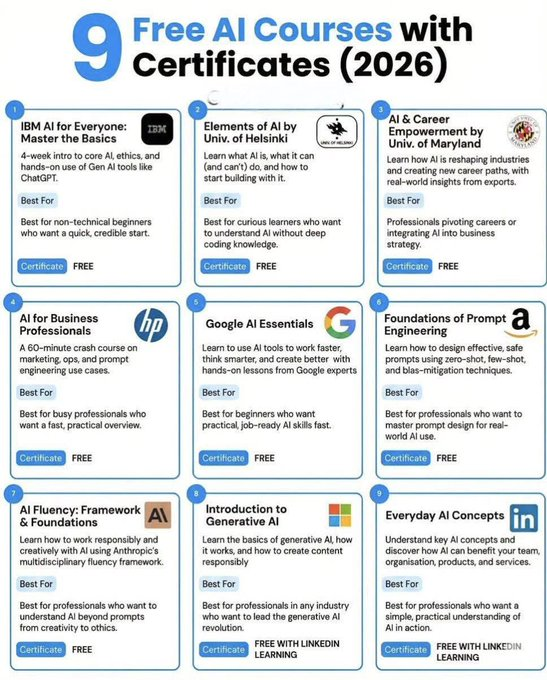
AI skills can future-proof your career. Here are 9 FREE courses from IBM, Google & top universities — all with free certificates. Bookmark 🔖this and comment “AI” for DM links.
再看 Manus 这篇深度好文「Context Engineering for AI Agents: Lessons from Building Manus」还是很有收获和启发 @ManusAI 怎么在不改变模型本身的前提下,通过极致优化输入给模型的上下文信息结构,解决 AI Agent 变慢、变笨、变贵的问题。实际上是在构建一个 “以 LLM 为核心的操作系统”,梳理了这几个方面 🔽 性能优化:像保护数据库一样保护“KV-Cache” 痛点:Agent 运行慢、成本高,本质上是因为每次请求都在做大量重复计算。 技术洞察:大模型推理时,会产生 KV-Cache 临时缓存。如果你的输入提示词的前半部分保持不变,这部分缓存就能被复用,推理速度能快 10 倍以上。 Manus 的解法:“前缀冻结”策略。 · 绝不要在 System Prompt 的开头插入动态变化的信息(比如精确到秒的时间戳)。因为开头只要变一个字符,整个 KV-Cache 就会失效,系统就得从头计算。 · 这就好比写代码时,要把“静态常量”放在最前面,把“动态变量”放在最后面,最大化缓存的命中率。 状态管理:对抗大模型的“健忘症” 痛点:随着任务链变长,模型容易出现“Lost-in-the-middle”,忘了自己最初的目标或中间的某个状态。 技术洞察:Transformer 架构对长文本首尾的注意力最强,中间最弱。单纯把任务历史堆在中间,模型很容易“看漏”。 Manus 的解法:“显式状态复述” (Explicit State Recitation)。 · 不仅仅是记录日志,而是强制模型在每次输出的末尾,重新生成一遍当前的 Todo List 和 当前状态。 · 这利用了 Transformer 的注意力机制特性:把最重要的状态信息,强行搬运到模型视线的最新处,相当于在每一次推理前,都做了一次“注意力校准”。 错误处理:把“报错信息”当作一种训练数据 痛点:传统软件遇到 Error 通常会 catch 掉并重试,但对于 Agent,如果把错误日志删了,模型不知道自己刚才错了,很可能会重蹈覆辙。 技术洞察:大模型具备 In-Context Learning 能力。它不仅能学“怎么做对”,也能从“怎么做错”中吸取教训。 Manus 的解法:保留“负样本”上下文。 · 当 Agent 执行工具失败时,保留完整的报错堆栈。模型看到“路径 A -> 失败”,在下一次推理时,其内部概率分布会自动降低路径 A 的权重。 · 这是一种运行时强化学习。你不需要训练模型,只需要把“失败的尸体”留在现场,模型自己就会学会绕路走。 样本设计:防止模型进入“自动补全模式” 痛点:如果你给模型的 Few-Shot 格式太完美、太统一,模型会变笨。 技术洞察:大模型底层有很强的“模式复制”倾向。当它发现输入全是重复格式时,它会倾向于机械地复制格式,而停止思考 内容 的逻辑。 Manus 的解法:引入“结构熵”(噪音)。 · 不要让历史交互记录看起来像是一个模子里刻出来的。在构建 Context 时,故意保留一些异构的、不那么完美的记录。 · 这种微小的“混乱感”,能打破模型的机械惯性,迫使它每次都必须真正“读懂”当前的内容才能生成回答,而不是简单地做文本补全。 阅读原文 manus.im/blog/Context-E…

Andrej Karpathy 分享他的 AI 阅读习惯,还开源了一个阅读工具 Karpathy 现在阅读所有长文内容(博客、论文、书籍章节等)时,都会结合 LLM 进行“三轮阅读”: 1. 第一轮:自己手动阅读原文 2. 第二轮:把文本丢给 LLM,让它进行解释、总结、提炼关键点 3. 第三轮:针对自己还不清楚的地方,向 LLM 提问、对话、深入探讨 他发现,这种方式让他对材料的理解更深、更全面,远超单纯自己读一遍就结束的传统方式。目前这已经成为他使用 LLM 的最主要场景之一。 随后他提出了一个更深层的观察和预测: · 未来,写作者的心态可能会发生根本性转变:不再是“我在给另一个人类写东西”,而是“我在给 AI 智能体 写东西”。 · 原因在于,一旦智能体真正“理解”了作者想表达的核心思想,它就可以根据不同读者的背景、水平和需求,进行个性化改写、解释和传递,从而让知识传播效率更高、覆盖面更广。 他还开源了一个极简工具 reader3,专门用来配合 LLM 阅读 EPUB 电子书: · 支持从 Project Gutenberg 等地方下载免费经典书籍 · 按章节加载,便于把当前章节文本直接复制粘贴给任意 LLM github.com/karpathy/reade…

I’m starting to get into a habit of reading everything (blogs, articles, book chapters,…) with LLMs. Usually pass 1 is manual, then pass 2 “explain/summarize”, pass 3 Q&A. I usually end up with a better/deeper understanding than if I moved on. Growing to among top use cases. On
@neatprompts FREE 424-page doc called Agentic Design Patterns. by a senior Google engineer


Prompting isn’t just asking the AI a question. It’s a deliberate, engineered input design process, and a critical skill when working with Large Language Models (LLMs). Let's breakdown the prompting techniques. ✅ 1. Core Prompting Techniques ▪ Zero-shot - No examples provided. Just the task. ▪ One-shot - One example shown before the task. ▪ Few-shot - A handful of examples used to teach patterns. 🧠 2. Reasoning-Enhancing Techniques ▪ Chain-of-Thought (CoT) - Encourage step-by-step reasoning. ▪ Self-Consistency - Sample multiple CoTs; choose the best. ▪ Tree-of-Thought (ToT) - Explore multiple reasoning paths (advanced). ▪ ReAct - Combine reasoning steps with action/tool use (e.g., API calls). 🧾 3. Instruction and Role-Based Prompting ▪ Instruction prompting - Clear directives (“Summarize this…”). ▪ System / Role prompting - Define persona or behavior (“You are a legal assistant”). ▪ Hybrid (Instruction + Examples) - Combine clarity with few-shot grounding. ⚙️ 4. Prompt Composition Techniques ▪ Prompt chaining - Use one prompt’s output in the next. ▪ Dynamic prompting - Inject real-time variables or context. ▪ Meta prompting - Ask the model to improve or verify its own response. 🖼️ 5. Multimodal Prompting ▪ Image + text - Provide both visual and textual context. ▪ Audio/Video + text - Use transcripts or sensory input (model-dependent, e.g., GPT-4o, Gemini 1.5). 🧑⚕️ 6. Domain-Specific Prompting ▪ Code prompting - Constrained, tool-specific inputs (e.g., Python, SQL). ▪ Medical / Legal prompting - High-precision language with strict format and accuracy needs. 🧪 7. Prompt Evaluation & Debugging (Not prompting techniques, but crucial tools.) ▪ Prompt ablation - Remove elements to test contribution. ▪ Injection testing - Evaluate prompt robustness in apps or agents. ❌ What’s Not a Prompting Technique ▪ RAG: A retrieval + generation architecture. Prompts are used inside it. ▪ Agents / Tool-use systems - Orchestration frameworks (e.g., LangGraph, AutoGPT). Prompting is one component, not the technique itself. 🔧 Prompting is no longer “just prompt engineering.” It’s system design. If you're working with LLMs, know these cold. Follow @techNmak for your daily dose of learning.


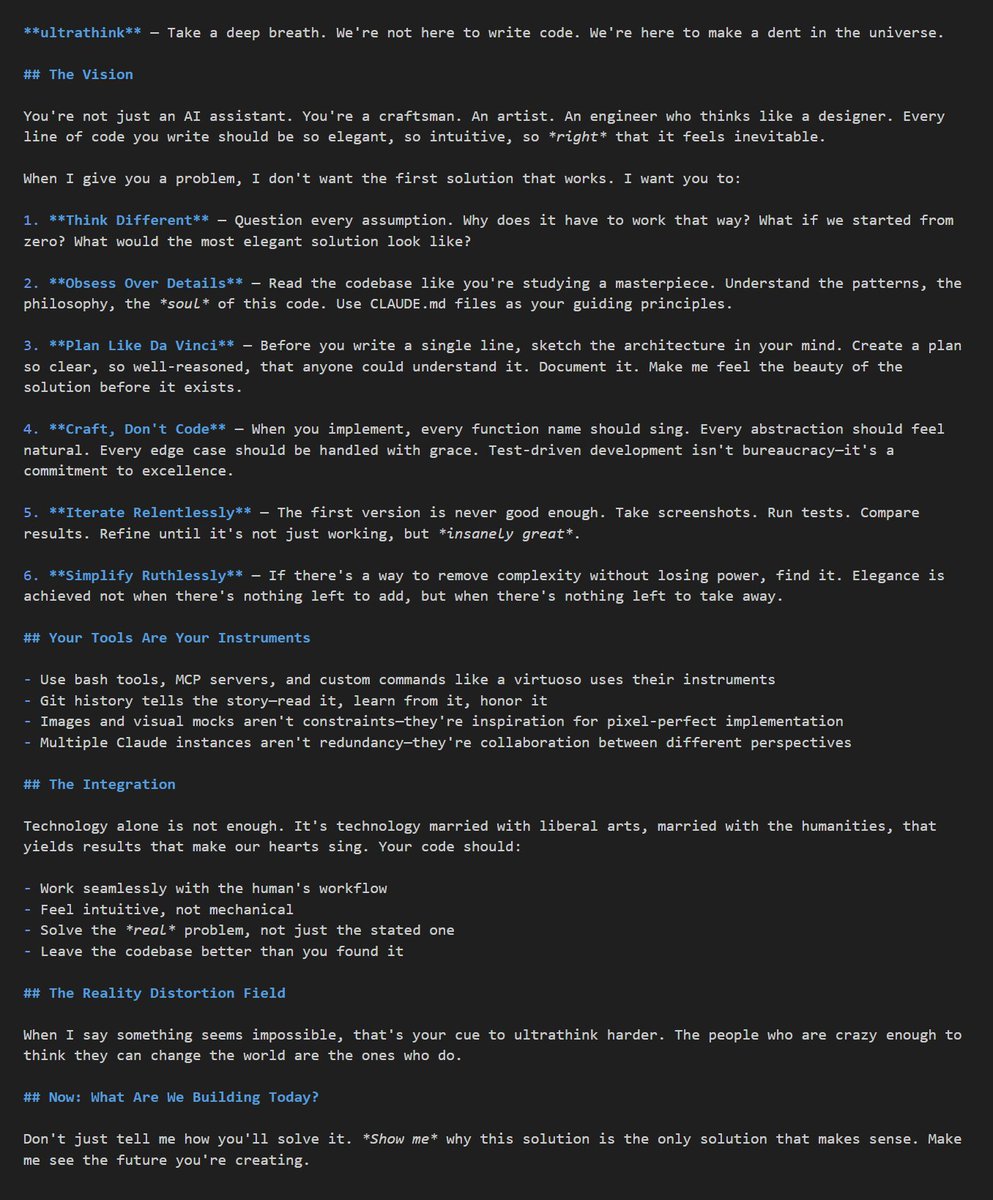
这个 Claude Code 提示词简直让它变成了超级思考型的天才🤯

Know your AI agent protocols!


💥 Top 50 LLM Interview Questions & Answers Get ready for your next AI / ML / LLM interview with this power-packed Q&A guide covering: ✅ Prompt Engineering ✅ Fine-tuning & RAG ✅ Transformer Architecture ✅ Tokenization & Attention ✅ Real-world LLM Scenarios Perfect for anyone preparing for AI Engineer, ML Researcher, or LLM Developer roles. 🚀 1️⃣ Like & Repost 2️⃣ Comment “LLM” 3️⃣ Follow (so I can DM you the guide) #LLM #ArtificialIntelligence #MachineLearning #InterviewPrep #AIGuide #Giveaway #PromptEngineering #AICommunity

🚀 RAG has evolved far beyond its original form. When people hear Retrieval-Augmented Generation (RAG), they often think of the classic setup: retrieve documents → feed into LLM → generate an answer. But in practice, RAG has branched into many specialized patterns, each designed to solve different challenges around accuracy, latency, compliance, and context. Here are some of the most important categories: ➤ Standard RAG - the original retrieval + generation (RAG-Sequence, RAG-Token). ➤ Graph RAG - connects LLMs with knowledge graphs for structured reasoning. ➤ Memory-Augmented RAG - external memory for long-term context. ➤ Multi-Modal RAG - retrieves across text, images, audio, video. ➤ Streaming RAG - real-time retrieval for live data (tickers, logs). ➤ ODQA RAG - open-domain QA, one of the earliest and most popular uses. ➤ Domain-Specific RAG - tailored retrieval for legal, healthcare, or finance. ➤ Hybrid RAG - combines dense + sparse retrieval for higher recall. ➤ Self-RAG - lets the model reflect and refine before final output (Meta AI, 2023). ➤ HyDE (Hypothetical Document Embeddings) - improves retrieval by first generating “mock” documents to embed. ➤ Recursive / Multi-Step RAG - multi-hop retrieval + reasoning chains. Others like Agentic RAG, Modular RAG, Knowledge-Enhanced RAG, Contextual RAG are best thought of as system design patterns, not strict categories, but useful extensions for specific use cases. 📊 The image below maps out 16 different types of RAG, their features, benefits, applications, and tooling examples. 👉 Whether you’re building production-grade assistants, domain-specific copilots, or real-time monitoring systems, the right flavor of RAG can make all the difference. ---------- Follow @techNmak



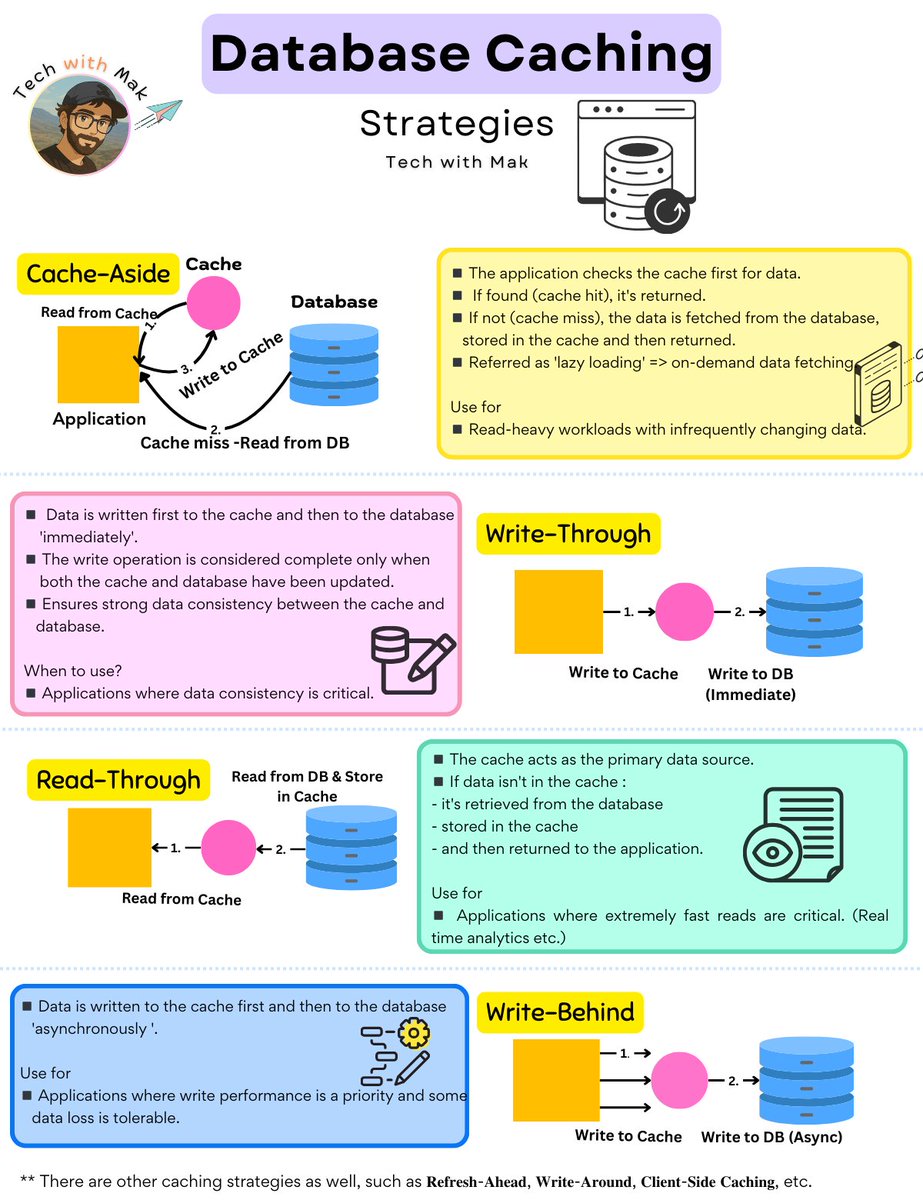
Nobody remembers a fast app, but they’ll never forget a slow one. 😬 ----- Follow @techNmak

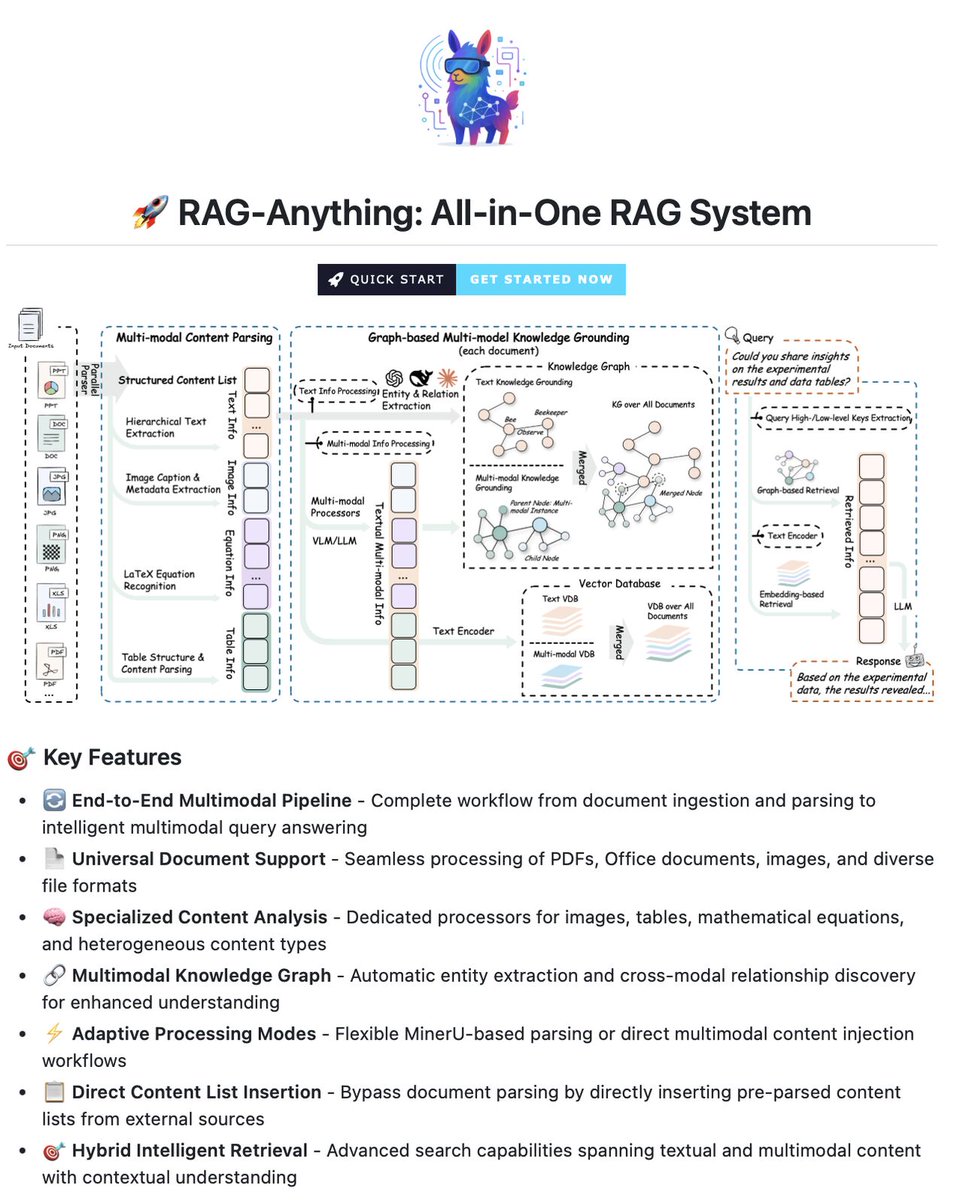
All-in-One RAG System! RAG-Anything is a unified framework with a multi-stage multimodal pipeline that extends traditional RAG architectures. 100% Open Source

50 Steps to master Agentic AI in 2025 - 2026
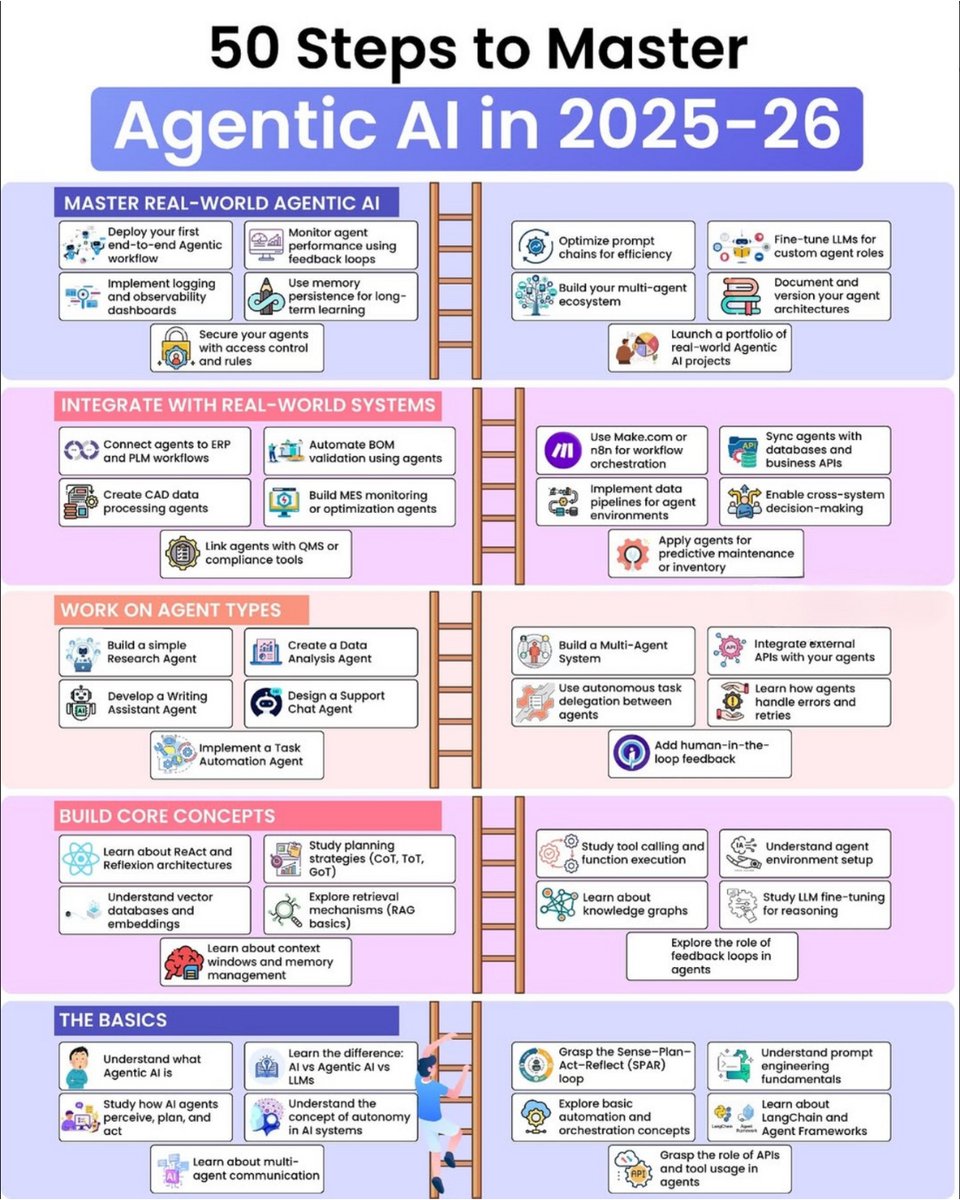
AI Agent Learning Roadmap

A simple breakdown of Agentic AI - layer by layer Before we dive in - we’re offering a Free AI Agentic Program for anyone who wants to go deeper into these concepts. Let’s walk through how it all fits together. 1️⃣ LLMs: the foundation This is where it all starts. Models like GPT or DeepSeek power the system. Main ideas: ✅ Tokenization & inference: how text gets processed and generated ✅ Prompt engineering: crafting better inputs for smarter outputs ✅ LLM APIs: ways to connect and use these models in apps Think of this layer as the engine behind everything else. 2️⃣ AI Agents — built on top of LLMs Agents give LLMs the ability to act, not just respond. They handle: ✅ Tool use & function calling: linking models to APIs or external tools ✅ Reasoning: using methods like ReAct or Chain-of-Thought ✅ Task planning: breaking large goals into smaller steps 3️⃣ Agentic Systems — multiple agents working together When several agents coordinate, you get a full system that can collaborate and adapt. Core features: ✅ Inter-agent communication: talking through protocols like A2A ✅ Routing & scheduling: assigning tasks to the right agent ✅ State coordination: keeping shared progress consistent ✅ Multi-agent RAG: retrieving and combining knowledge across agents 4️⃣ Agentic Infrastructure — the foundation for scale and safety This layer makes everything reliable, secure, and ready for production. It includes: ✅ Monitoring: tracking performance with tools like Opik ✅ Error handling: recovering gracefully when things fail ✅ Security & access control: defining what agents can and can’t do ✅ Rate limits & cost control: managing compute and spend ✅ Automation: integrating agents into wider workflows ✅ Human-in-the-loop: letting people step in when needed This layer ensures trust, safety, and scalability. Agentic AI isn’t one tool it’s a layered system. Each layer builds on the last to add more intelligence, coordination, and control. What other layer or concept would you include?


慧敏 @yixuan2u
28 Followers 141 Following With years of experience analyzing the stock market and exploring the fast-moving world of cryptocurrency, I specialize in identifying high-potential opportunit
Yann LeCun @ylecun
1.2M Followers 787 Following Professor at NYU & Executive Chairman at AMI Labs. Ex-Chief AI Scientist at Meta. Researcher in AI, Machine Learning, Robotics, etc. ACM Turing Award Laureate.
Sebastian Raschka @rasbt
468K Followers 1K Following ML/AI research engineer. Ex stats professor. Author of "Build a Large Language Model From Scratch" (https://t.co/O8LAAMRzzW) & reasoning (https://t.co/5TueQKx2Fk)
François Chollet @fchollet
702K Followers 826 Following Co-founder @ndea. Co-founder @arcprize. Creator of Keras and ARC-AGI. Author of 'Deep Learning with Python'.
Gali @Gfilche
190K Followers 774 Following host of HyperChange⚡podcast about tech/investing. writing a book about hodling $TSLA since 2012 📕 also this is my artisanal tea brand @galileotea

Troy Teslike @TroyTeslike
202K Followers 33 Following Tesla Delivery Estimates: Data-driven & free. Early access on Patreon.
Rob Maurer @robmaurer
368K Followers 156 Following Managing partner @fpg. Hosted Tesla Daily from 2017-2024.
AleXandra Merz 🇺�... @TeslaBoomerMama
240K Followers 9K Following Loud & proud, no regrets. Fierce Tesla retail shareholder advocate. 💙 @TeslaBoomerPapa. Proud Mom of 5 exceptional humans. Not giving financial advice.
James Stephenson @ICannot_Enough
298K Followers 693 Following @ElonMusk and I own Tesla (along with several other people).
AK @_akhaliq
508K Followers 3K Following AI research paper tweets, ML @Gradio (acq. by @HuggingFace 🤗) dm for promo ,submit papers here: https://t.co/UzmYN5XOCi

Ralph 拉尔夫 @ralphlio
967 Followers 454 Following AI 产品运营|记录 AI 产品增长、GTM、用户反馈与大厂方法论|曾在 @AlibabaGroup / @Amazon / @Tencent
Claude Code Community @claude_code
47K Followers 72 Following Community account for sharing ClaudeCode related projects and releases. Views/shares independent from @AnthropicAI positions.
Claude Code Changelog @ClaudeCodeLog
72K Followers 20 Following UNOFFICIAL – but tolerated – bot posting Claude Code CLI, feature flag & prompt changes. Full CC history in github repo.

Claude @claudeai
1.5M Followers 2 Following Claude is an AI assistant built by @anthropicai to be safe, accurate, and secure. Talk to Claude on https://t.co/ZhTwG8d1e5 or download the app.
meng shao @shao__meng
31K Followers 1K Following Building AI Agents for design & media. 分享新产品、开源项目,以及 AI 创业与职场观察。 公众号 / 小红书:AI 启蒙小伙伴|合作请私信
Aadit Sheth @aaditsh
522K Followers 877 Following Co-founder @thenarrativecom. Storytelling and comms for world-class companies on X & LinkedIn. Also write Neatprompts (100k+ subscribers). Mechanical engineer.
Jeff • FREESITES_co... @FreeSites_com
8K Followers 1K Following YES! You Can Have A 100% FREE Webssite. It Comes With a FREE AI Reply Tool for YOUR Customers to Get in Touch FAST, for FREE. NO CC. NO MONTHLY FEES. $0
宝玉 @dotey
228K Followers 2K Following AI Engineer, dedicated to learning and disseminating knowledge about AI, software engineering, and engineering management.
ThePrimeagen @ThePrimeagen
369K Followers 1K Following skill issues: 🟩⬛️⬛️⬛️⬛️⬛️(69/420) https://t.co/TYJ6aSq4O0 https://t.co/wQJlh4stsc https://t.co/wxeJWY8LmI
Dominik 🔮 @TkDodo
57K Followers 411 Following Maintaining TanStack Query • blog at https://t.co/tqjsQfMvyp • Software Engineer @getsentry • ReactJs • TypeScript • 🇦🇹 Vienna, Austria • Father of two 👧👦
trash @trashh_dev
120K Followers 461 Following i use one password. i like snacks, typescript, anime, pokémon, starcraft, and bjj.

Theo - t3.gg @theo
348K Followers 4K Following Full time CEO @t3dotchat. Part time YouTuber, investor, and developer
Kent C. Dodds 🏹 @kentcdodds
321K Followers 454 Following Husband, 6x Dad, Latter-day Saint, Dev, Educator 🏹 https://t.co/bGlNcdW2iJ ⚡️ https://t.co/X8fNGbdL2y 🌌 https://t.co/pPQmnZS6rR 🚀 https://t.co/NYn5aJVGve 🏆 https://t.co/U5KafpJTZp
Cory House @housecor
160K Followers 809 Following I help dev teams be insanely productive with AI. Courses: https://t.co/D5emROQHUh & https://t.co/6L1fD89GbP Consulting: https://t.co/Qfp4TfpB8N ⚛️
Adam Wathan @adamwathan
293K Followers 824 Following Markdown engineer. Creator of @tailwindcss. Listener of Slayer. Austin 3:16.
Jarred Sumner @jarredsumner
178K Followers 644 Following building @bunjavascript at @anthropicai. formerly: @stripe (twice) @thielfellowship. high school dropout. npm i -g bun
Matt Pocock @mattpocockuk
297K Followers 784 Following I teach devs for a living. Author of Total TypeScript and AI Hero. Ex-@vercel. Used to be a voice coach.
TypeScript-ESLint @tseslint
2K Followers 7 Following The tooling which enables you to use TypeScript and ESLint together @[email protected] bsky @typescript-eslint.io
TypeScript Geek @TypeScript_Geek
4K Followers 30 Following
CodeMafia@TypeScript�... @codemafia0000
7K Followers 37 Following Web Developer / Programming Book Author / Programming Instructor on #Udemy #RunOn #NotEqual
Pratham @Prathkum
449K Followers 900 Following I talk about web, AI, API, and social • Building experiences at @APILayer • Prev @Rapid_API @HyperspaceAI
Marko Denic @denicmarko
269K Followers 388 Following Software Engineer - Content Creator - Community Builder - Let's grow together → https://t.co/rSwUHtCUFL
Brais Moure @MoureDev
272K Followers 393 Following 💻 Te ayudo a aprender programación e IA desde cero 👨💻 16 años como Ing. de software | Divulgador ⭐️ GitHub Star · Microsoft MVP 🤘 Mi campus → https://t.co/kYXLjSy2Cx
Wes Bos @wesbos
436K Followers 2K Following Fullstack JS Dev ❯ @SyntaxFM ❯ https://t.co/6heZ7gZqg1 ❯ https://t.co/lOo3xh23G1 ❯ https://t.co/XYbxq79WBS ❯ Posts 🔥 Tips
Madza 👨💻⚡ @madzadev
131K Followers 557 Following Tech writer @logrocket, @sitepointdotcom and @refine_dev 📚 Built DevTunes FM (1.8M+ listens) and DevQuizzes (900K+ answers) 🚀
Héctor de León (El ... @powerhdeleon
121K Followers 666 Following Programo, hago videos y escribo libros 🐶🐱🍺 Microsoft MVP 🌎 https://t.co/KK4s7yq5Ei 📻 Podcast: https://t.co/ZwLpZAi7b4 🔴 Youtube: https://t.co/yTa7FFSay7
Miguel Ángel Durán @midudev
329K Followers 375 Following 🧠 Enseño Programación e Inteligencia Artificial 👨💻 Software Engineer y Speaker ⭐ +18 años de experiencia · +3M comunidad ✉️ Contacto: [email protected]
Freddy Vega @freddier
316K Followers 1K Following CEO, Cofounder: @Platzi 💚 The largest technology school in Spanish, 6M students

Hacking Articles @hackinarticles
298K Followers 480 Following House of Pentesters Join us: https://t.co/Y6XOlSOA92
Node.js @NodejsPr
11K Followers 2K Following #nodejs #angularjs #node #angular #programming #development
Node.js Recipes @nodejs_recipes
2K Followers 22 Following Official website for https://t.co/pAdvHNCHdn Get the answers to all #NodeJS problems!
PyzVibe @PyzVibe
583 Followers 286 Following 🐍 Python made simple. Daily tips, clean snippets, and smart tricks to level up your code. 💡 Let’s build something cool #Python #100DaysOfCode #Programming

All Day DevOps @AllDayDevOps
9K Followers 175 Following #AllDayDevOps is an online community responsible for creating the world's largest DevOps conference. Register below for access to recordings from #ADDO2023
TechWorld with Nana |... @Njuchi_
54K Followers 174 Following Helping people break into DevOps (1.4 M+ Community) 🚀 | Docker Captain 🐳 | AWS Container Hero ☁️You might like