
adisorn boonsungnern @PotaeDev84
Joined March 2025-
Tweets42
-
Followers4
-
Following148
-
Likes74
Learn Coding by playing games 1. Kubernetes k8sgames.com 2. DevOps devops.games 3. Linux overthewire.org 4. Git ohmygit.org 5. Python codecombat.com 6. CSS & HTML codepip.com 7. Cybersecurity picoctf.org 8. Mobile Coding (like Duolingo) sololearn.com 9. For Complete Beginners scratch.mit.edu 10. 25+ Programming Languages codingame.com Follow @ghumare64 for more such tips!
CVE-2026-24514: ingress-nginx Admission Controller denial of service - github.com/kubernetes/kub…

How to spot phishing scams


Nearly two years ago we entered the Gemini era, and it's changed how people and organizations work, learn, create and get stuff done. Today we're entering the next phase with Gemini 3, our most intelligent model. Every generation of Gemini has built on the last. In less than two years: - Gemini 1 showed breakthroughs in native multimodality and its long context window expanded the kinds of information that could be processed. - Gemini 2 laid the foundation for agentic capabilities and pushed the frontiers on reasoning and thinking, helping with more complex tasks and ideas. And 2.5 was also a step-change in coding capability. - And today, Gemini 3 combines all of these capabilities so consumers, developers and businesses can bring any idea to life. Gemini 3 is state-of-the-art in reasoning and is much better at figuring out the context and intent behind your request, so you get what you need with less prompting. It’s our next step in making AI truly helpful for everyone.

Many developers think Lombok is part of the Spring framework. But the truth is Lombok is not Spring-specific. It’s a standalone Java library It works in any Java project, not just Spring Boot Because in Spring Boot projects, we write tons of DTOs, Entities, Configs, etc. Lombok cuts down the boilerplate there, so it feels like a Spring feature, but that's not true.


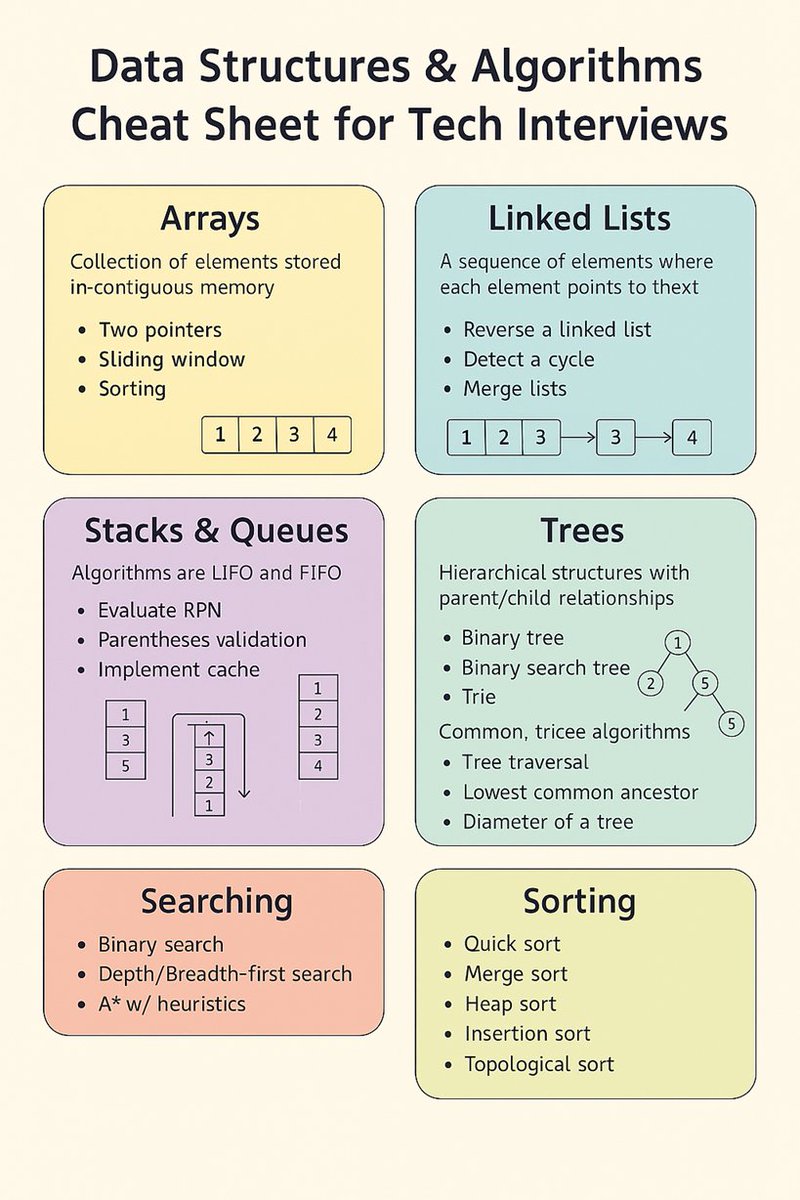
Data Structures and Algorithms Cheat Sheet for Tech interviews (with resources) 1. AlgoMonster - shrsl.com/483tt 2. Udemy - bit.ly/3QH8Y2R 3. Educative - bit.ly/3JOjH8v 4. ZTM Academy - bit.ly/3JOjH8v 5. DesignGurus - bit.ly/4cOygYF

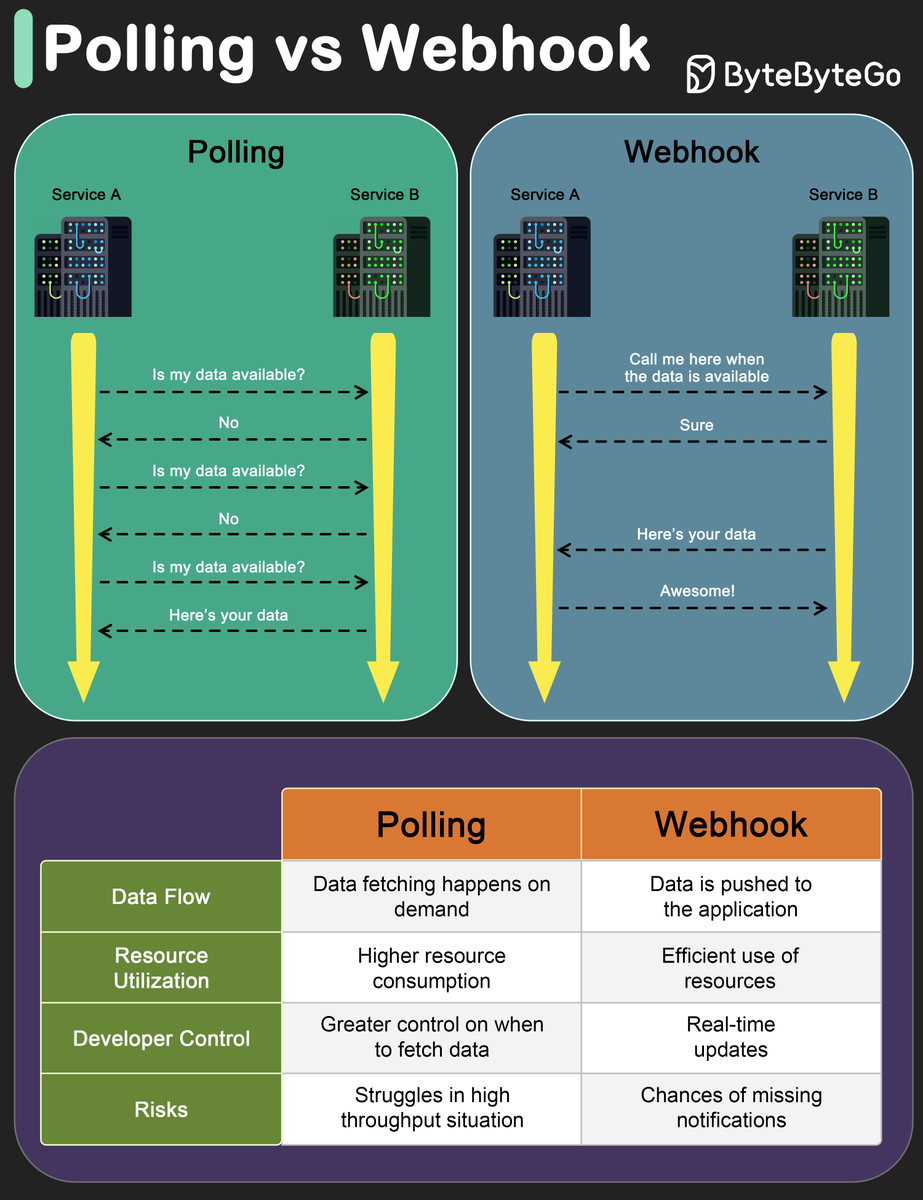
Polling Vs Webhooks - Polling Polling involves repeatedly checking the external service or endpoint at fixed intervals to retrieve updated information. It’s like constantly asking, “Do you have something new for me?” even where there might not be any update. This approach is resource-intensive and inefficient. Also, you get updates only when you ask for it, thereby missing any real-time information. However, developers have more control over when and how the data is fetched. - Webhooks Webhooks are like having a built-in notification system. You don’t continuously ask for information. Instead you create an endpoint in your application server and provide it as a callback to the external service (such as a payment processor or a shipping vendor) Every time something interesting happens, the external service calls the endpoint and provides the information. This makes webhooks ideal for dealing with real-time updates because data is pushed to your application as soon as it’s available. So, when to use Polling or Webhook? Polling is a solid option when there is some infrastructural limitation that prevents the use of webhooks. Also, with webhooks there is a risk of missed notifications due to network issues, hence proper retry mechanisms are needed. Webhooks are recommended for applications that need instant data delivery. Also, webhooks are efficient in terms of resource utilization especially in high throughput environments. -- Subscribe to our weekly newsletter to get a Free System Design PDF (158 pages): bit.ly/bbg-social

Couldn't Agree More! #Terraform sets up ur infra — like creating servers, networks, firewalls, storage — all the basic building blocks #Ansible is used to configure what’s already there — like installing apps, setting permissions, starting services, or applying updates #DevOps


How SSH Works

Microservices Collaboration Patterns. Enjoy and don't forget to follow @techNmak 😊


How do companies ship code to production?

Apache Kafka was born out of a problem. 😉 LinkedIn engineers => faced difficulties in tracking website metrics, activity streams and other operational data. A team of engineers => led by Jay Kreps, Neha Narkhede and Jun Rao started developing a distributed publish-subscribe messaging system that could handle high-throughput, low-latency data streams. This system eventually became Apache Kafka. It was open sourced in early 2011. The name 'Kafka' was chosen by Jay Kreps. He named the system after the famous author 'Franz Kafka'. 😊 Kreps was an admirer of Franz Kafka's writing and found the name fitting for a system that dealt with the flow of information. It's written in Java and Scala. Later they founded => 'Confluent' (a company) in 2014 to provide commercial support and additional tools for Kafka users. Read more in the 🧵

SIEM Vs SOAR

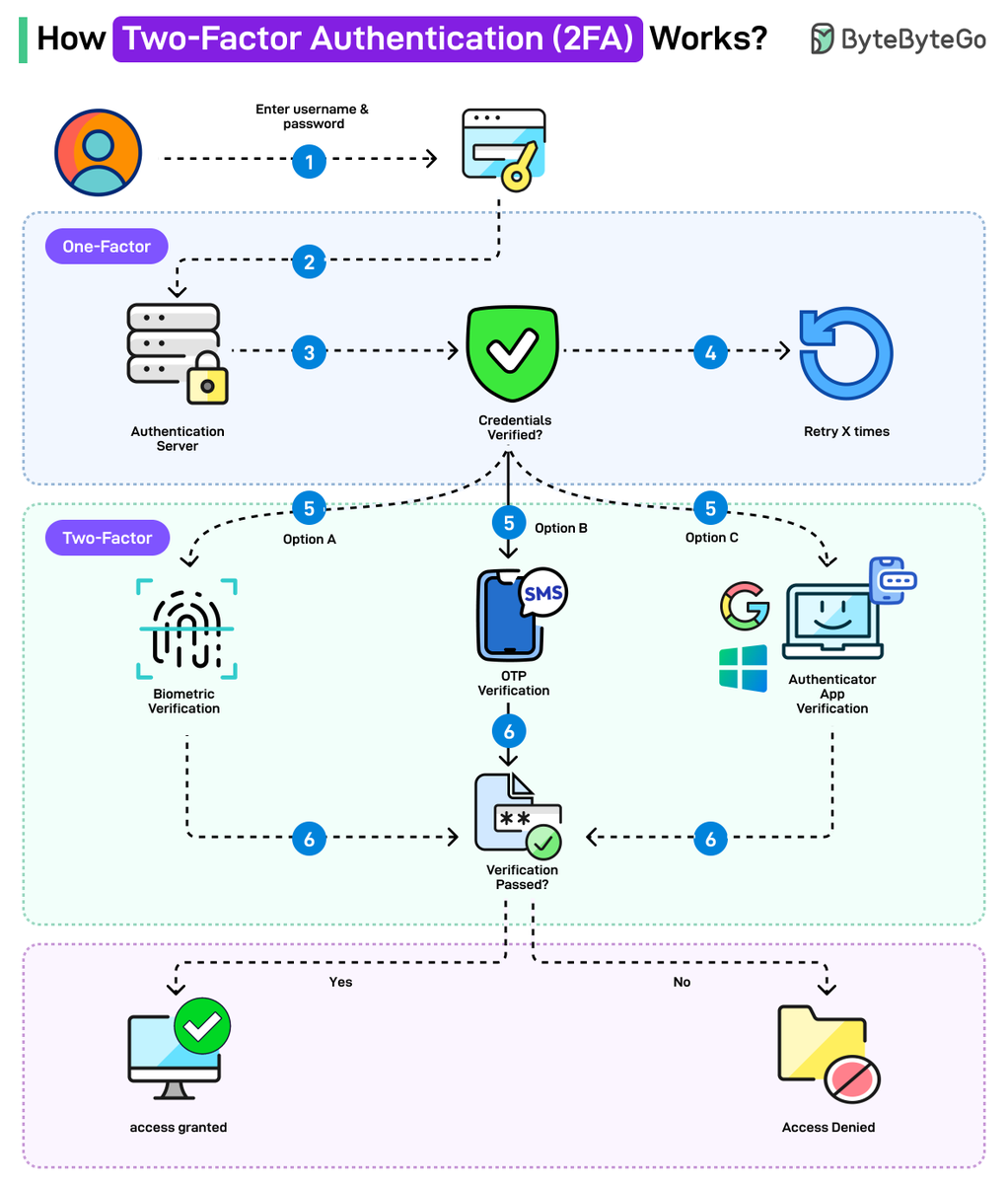
How Two-factor Authentication (2FA) Works?

𝗦𝗼𝗳𝘁𝘄𝗮𝗿𝗲 𝗔𝗿𝗰𝗵𝗶𝘁𝗲𝗰𝘁𝘂𝗿𝗲 𝗣𝗮𝘁𝘁𝗲𝗿𝗻𝘀 Software design defines a system's architecture to meet requirements, creating blueprints for development teams. Over time, reusable architecture patterns have emerged that reduce complexity, increase maintainability, and speed development. The most crucial software architecture patterns are: 𝟭. 𝗟𝗮𝘆𝗲𝗿𝗲𝗱 𝗔𝗿𝗰𝗵𝗶𝘁𝗲𝗰𝘁𝘂𝗿𝗲: Divides applications into logical layers (Presentation, Business, Data Access) with specific responsibilities. Promotes separation of concerns and easier maintenance. 𝟮. 𝗠𝗶𝗰𝗿𝗼𝘀𝗲𝗿𝘃𝗶𝗰𝗲𝘀: Decomposes applications into small, independent services communicating via APIs. Each implements a single business capability and can be independently deployed, enabling team autonomy and continuous delivery. 𝟯. 𝗘𝘃𝗲𝗻𝘁-𝗗𝗿𝗶𝘃𝗲𝗻: Uses events for asynchronous communication between components. The system doesn't wait for event handling to complete before continuing, making it ideal for real-time applications requiring high scalability. 𝟰. 𝗦𝗽𝗮𝗰𝗲-𝗯𝗮𝘀𝗲𝗱: Uses independent "spaces" as autonomous units across multiple servers. Eliminates single points of failure in high-volume systems and overcomes data bottlenecks and network latency. 𝟱. 𝗠𝗶𝗰𝗿𝗼𝗸𝗲𝗿𝗻𝗲𝗹 (𝗽𝗹𝘂𝗴-𝗶𝗻 𝗮𝗿𝗰𝗵𝗶𝘁𝗲𝗰𝘁𝘂𝗿𝗲): Provides minimal core functionality with additional services as separate modules. Developers can modify components without impacting core functionality, which is ideal for applications requiring customization. 𝟲. 𝗖𝗤𝗥𝗦 (𝗖𝗼𝗺𝗺𝗮𝗻𝗱-𝗤𝘂𝗲𝗿𝘆 𝗥𝗲𝘀𝗽𝗼𝗻𝘀𝗶𝗯𝗶𝗹𝗶𝘁𝘆 𝗦𝗲𝗴𝗿𝗲𝗴𝗮𝘁𝗶𝗼𝗻): Separates read and write operations into distinct models. Improves performance and scalability in complex domains by optimizing each path independently. 𝟳. 𝗛𝗲𝘅𝗮𝗴𝗼𝗻𝗮𝗹 (𝗣𝗼𝗿𝘁𝘀 𝗮𝗻𝗱 𝗔𝗱𝗮𝗽𝘁𝗲𝗿𝘀): Isolates business logic from external concerns. Allows applications to be driven by various sources and developed independently from runtime dependencies. Selecting the correct pattern depends on your specific requirements and constraints. Real-world applications often combine multiple patterns to address different aspects of system design. #technology #softwareengineering #programming

Basic Server Types


30 Blogs to Learn 30 System Design Concepts: 1. APIs: blog.algomaster.io/p/whats-an-api 2. API Gateway: blog.algomaster.io/p/what-is-an-a… 3. Scalability: blog.algomaster.io/p/scalability 4. Availability: blog.algomaster.io/p/system-desig… 5. CAP Theorem: blog.algomaster.io/p/cap-theorem-… 6. Load Balancers: blog.algomaster.io/p/e1fa4254-938… 7. Load Balancing Algorithms: blog.algomaster.io/p/load-balanci… 8. Caching: blog.algomaster.io/p/4d7d6f8a-680… 9. Caching Strategies: blog.algomaster.io/p/top-5-cachin… 10. Cache Eviction Strategies: blog.algomaster.io/p/7-cache-evic… 11. Distributed Caching: blog.algomaster.io/p/distributed-… 12. CDNs: blog.algomaster.io/p/content-deli… 13. Database Types: blog.algomaster.io/p/15-types-of-… 14. SQL vs NoSQL: blog.algomaster.io/p/sql-vs-nosql… 15. ACID Transactions: blog.algomaster.io/p/what-are-aci… 16. Database Indexes: blog.algomaster.io/p/a-detailed-g… 17. Database Sharding: blog.algomaster.io/p/what-is-data… 18. Database Scaling: blog.algomaster.io/p/system-desig… 19. WebSockets: blog.algomaster.io/p/websockets 20. Message Queues: blog.algomaster.io/p/message-queu… 21. Consistent Hashing: blog.algomaster.io/p/consistent-h… 22. Bloom Filters: blog.algomaster.io/p/bloom-filters 23. Rate Limiting Algorithms: blog.algomaster.io/p/rate-limitin… 24. SPOF: blog.algomaster.io/p/system-desig… 25. REST vs GraphL: blog.algomaster.io/p/rest-vs-grap… 26. Long Polling vs WebSockets: blog.algomaster.io/p/long-polling… 27. Stateful vs. Stateless Architecture: blog.algomaster.io/p/stateful-vs-… 28. Concurrency vs Parallelism: blog.algomaster.io/p/concurrency-… 29. Proxy vs Reverse Proxy: blog.algomaster.io/p/proxy-vs-rev… 30. Batch vs Stream Processing: blog.algomaster.io/p/batch-proces… ♻️ Repost to help others in your network.


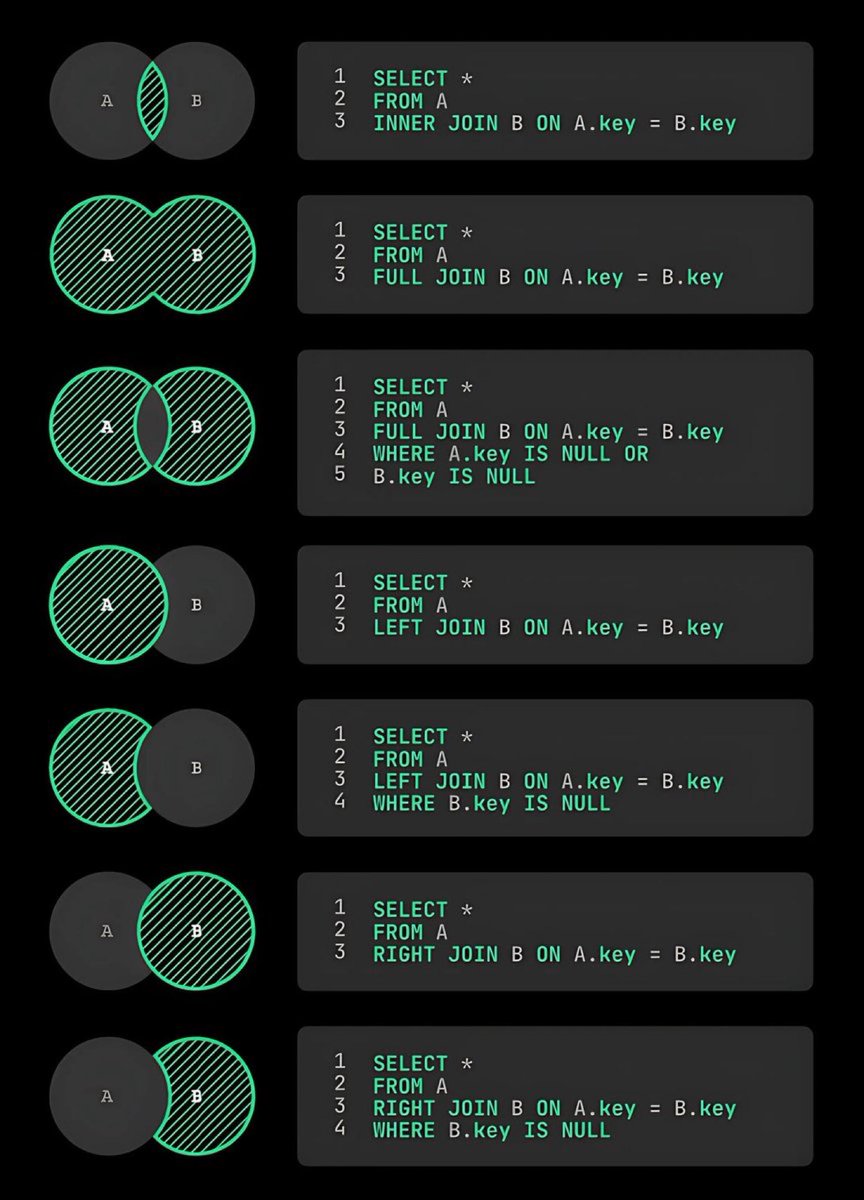
SQL JOINs are like Set Theory:

Debra @DebraGrreek
1K Followers 3K Following I am curious, open-minded, genuine, spiritual & out going.
Tangenz Corporation @Tangenz_Corp
134 Followers 79 Following Helping customers maximize ROI of On-Premise software investment and lead their transition to Cloud
Serena📚 @ds_serena_
14K Followers 11K Following yoga🧘♀️ travel✈️ books📖 data science📊 live for experiences not things but love buying things tho 🛍️🤑
Anryton Technology @AnrytonTech
2K Followers 2K Following Quantum Resistant L1 chain | Cosmos & EVM compatible 🚀
argoproj @argoproj
22K Followers 27 Following Argo is the premier open source GitOps and MLOps CNCF project
Cyber Security News @The_Cyber_News
67K Followers 284 Following World’s #1 Largest Cyber Security News 📰 Platform For Security Professionals. Get Latest #CybersecurityNews #HackingNews, #Cyberattack, #Threats & #breaches
Kubernetes Podcast fr... @KubernetesPod
18K Followers 227 Following A news and interview show with insight from the Kubernetes community. Hosted by @kaslinfields and @boredabdel.
PrometheusMonitoring @PrometheusIO
52K Followers 87 Following An open-source service monitoring system and time series database.
Helm @HelmPack
38K Followers 215 Following the package manager for @kubernetesio // a @CloudNativeFdn graduated project // check out Helm V3 now
Amazon Web Services @awscloud
2.2M Followers 433 Following AWS is the world's most comprehensive cloud, enabling organizations to accelerate innovation, reduce costs, and scale more efficiently.
Kubesploit @kubesploit
21K Followers 1 Following News and links on Kubernetes security curated by the @Learnk8s team Mastodon: @[email protected]
Istio @IstioMesh
47K Followers 117 Following #Istio is an open platform that provides a uniform way to connect, manage, and secure microservices. ⛵️ Join our community: https://t.co/23fWuCAw1W
Kubecon_ @KubeCon_
44K Followers 66 Following The #Kubernetes & @CloudNativeFdn community conference. Join us at https://t.co/I1qXBvTytY #KubeCon + #CloudNativeCon
K8sContributors @K8sContributors
17K Followers 2 Following Powered by Kubernetes SIG-Contributor-Experience (k8s is a numeronym for Kubernetes)
Kubetools @kubetools
12K Followers 2 Following World’s #1 Kubernetes Tools Directory. Follow us for the latest Kubernetes News, blogs, and development of Agentic AI tools and resources.
CNCF @CloudNativeFdn
112K Followers 761 Following CNCF is the home of @kubernetesio, @prometheusio, @envoyproxy, and many more. Join us at #kubecon.io 18-19 June in Mumbai
Open Policy Agent @OpenPolicyAgent
8K Followers 27 Following An open source project enabling unified, declarative, context-aware control across the entire stack.
Kubernetes @kubernetesio
324K Followers 86 Following #Kubernetes: open source production-grade container orchestration management. #CNCF #K8s
Grafana @grafana
72K Followers 163 Following ☁️ Open observability cloud ☁️ Join the Grafana community 👇
Kube Careers @kubecareers
13K Followers 1 Following Hand-picked Kubernetes jobs, clear salary ranges and apply directly to companies. Curated by the @Learnk8s team. Mastodon: [email protected]


It's FOSS @Itsfoss
167K Followers 187 Following Linux and Open Source Web Portal 🐧 Follow us to - Get the latest Linux and Open Source news 📰 - Learn Linux tips and tutorials 💡 - Enjoy Linux memes 🤣
Madza 👨💻⚡ @madzadev
131K Followers 558 Following Tech writer @logrocket, @sitepointdotcom and @refine_dev 📚 Built DevTunes FM (1.8M+ listens) and DevQuizzes (900K+ answers) 🚀
Linux Handbook @LinuxHandbook
159K Followers 78 Following Learn to use Linux commands, SysAdmin tools, Self-hosting, Docker and other DevOps stuff with us.
GitHub @github
2.7M Followers 333 Following The AI-powered developer platform to build, scale, and deliver secure software.
Pratham @Prathkum
449K Followers 906 Following I talk about web, AI, API, and social • Building experiences at @APILayer • Prev @Rapid_API @HyperspaceAI
nixCraft 🐧 @nixcraft
397K Followers 0 Following Love Linux/Unix, open source, and programming? Into Sysadmin & DevOps? Follow us! Boost your IT career with daily new tools, apps, and humor ⤵️
Hacking Articles @hackinarticles
299K Followers 480 Following House of Pentesters Join us: https://t.co/Y6XOlSOA92

DevOps Online @DevOpsOnline
13K Followers 6 Following DevOps Online is your industry news website. We provide you with the latest news and thought leadership straight from the global world of DevOps.
Andrew Brown @andrewbrown
75K Followers 1K Following I teach people Cloud, DevOps, Data, ML, Security, K8s and Serverless. #CloudCamp
Rohit Ghumare @ghumare64
88K Followers 2K Following Architect | Advisor | Investor | Building Agents @ iii | Ex-founder CreateMVP
Pradumna Saraf @pradumna_saraf
42K Followers 54 Following Open Source Developer | Docker Captain | Microsoft MVP | DevOps | Owner @rebasemedia | DM for collabs | 🏸 ♟️🏍️
Eddie Jaoude | DevRel... @eddiejaoude
206K Followers 3K Following 🌏 Digital Nomad 🇬🇧🇵🇹🇹🇭 ⭐️ GitHub Star of the Year | 👨🏫 GitHub Top Teacher Award 🤓 Developer Advocate @paypaldev 🎙️ Views expressed are my own

Michael Cade @MichaelCade1
24K Followers 9K Following Global Field CTO | Lead Technologist @Veeam - Kubernetes, Cloud-Native, DevOps & Data #90DaysOfDevOps 👨🏻💻
Kunal Kushwaha @kunalstwt
281K Followers 2K Following Building the ultimate developer ecosystem @WeMakeDevs. Hosting world-class events, scaling businesses, and empowering engineers.
Aditya Oberai @adityaoberai
52K Followers 1K Following DevRel Lead @appwrite 🥑📍🛠️ Tinkering with web apps, cloud and AI tools 🧑💻 📍 👨👩👧👦 Bringing writers together at @blrwritersroom 📝
Saiyam Pathak @SaiyamPathak
64K Followers 2K Following Head of Developer Relations @loft_sh | Founder @kubesimplify| He/Him tweeting my opinions | email - [email protected]
LearnKube @learnk8s
95K Followers 31 Following Broaden your Kubernetes expertise with a curated feed of news, articles and best practices. Mastodon: [email protected]
Azure Support @AzureSupport
137K Followers 725 Following Official Microsoft Azure account for improving the customer experience by connecting the Azure community to the right resources - answers, support, and experts.
David Fowler @davidfowl
146K Followers 1K Following Distinguished Engineer at Microsoft, Creator of NuGet, SignalR, https://t.co/PiydKAsC8g Core, Aspire and Barbadian 🇧🇧, Tennis Player, Father, other half @symonefowler
Azure Weekly @AzureWeekly
32K Followers 5K Following Your free weekly #azure news fix. Subscribe at https://t.co/EftggFR4UJ Published every Sunday. Powered by @endjin
.NET @dotnet
340K Followers 850 Following Free. Cross-platform. Open source. A developer platform for building all your apps. Official handle of the .NET team at Microsoft.
Microsoft Azure @Azure
1.1M Followers 21 Following Limitless innovation. ☁️ Follow along for the latest news and resources from the official #MicrosoftAzure team. For help, contact @AzureSupport.
James Newton-King ♔ @JamesNK
42K Followers 61 Following Principal Software Engineer @Microsoft Aspire & https://t.co/LE9LGGmZuk. Author of Newtonsoft.Json.


Jeffrey Snover @jsnover
68K Followers 1K Following Jeffrey Snover: Retired/ Philosopher-Errant / PowerShell Inventor / Science geek.

Forrest Brazeal @forrestbrazeal
41K Followers 218 Following Purveyor of good tech things. prev. @google. PARADOX INC is out from Ballantine Jan 27! Preorder: https://t.co/DeFFli0RTx
Jaana Dogan ヤナ �... @rakyll
167K Followers 1K Following ML/AI Systems at Google. Simplicity and optimism. Personal opinions.
Mitchell Hashimoto @mitchellh
212K Followers 146 Following Creator of Ghostty. 👻 Prev founded @HashiCorp, created Vagrant, Terraform, Vault, and others.You might like