VDRi @VDRiii
Joined October 2024-
Tweets854
-
Followers366
-
Following6
-
Likes412
Let's talk about Argentina against Switzerland. Switzerland's man-to-man high press caused Argentina a lot of problems and allowed them to control long spells of the game through possession. It was a good decision by Murat Yakin to press Argentina aggressively like that, considering their line-up. Argentina are not a team that will take many risks in deep build-up. Scaloni has repeatedly said he doesn't like his midfielders receiving difficult passes under pressure with their backs to goal. As a result, Emi Martínez often goes long. Argentina can sometimes compete for second balls thanks to the number of players they have inside, but the lack of a player who can threaten in behind or consistently hold up play meant Switzerland won too many duels and recovered possession. Argentina's best route through the press usually came via quick one-twos down the flanks involving the full-backs. Out of possession, Argentina defended in a 4-4-2 diamond. Switzerland intelligently manipulated Enzo Fernández, whose role was to jump onto the double pivot, having to press two players. Xhaka frequently dropped into the back line while Freuler drifted wide, forcing Enzo into a difficult decision over who to follow. Basically, what they did was increase the distance Enzo had to cover in his dual pressing role. That movement broke Argentina's first line of pressure and allowed Switzerland to progress comfortably into the final third. Once there, Switzerland consistently found players between the lines. Argentina's three-man midfield couldn't cover the full width of the pitch, leaving gaps between the midfielders. Initially, Switzerland lacked the quality to turn those receptions into clear chances, but they became much more dangerous once they started combining centrally before playing out wide. From there, crosses from the full-backs to Embolo and Ndoye receiving in wide areas meant Switzerland started to look very dangerous. As the game went on, Switzerland committed more and more players forward because they simply didn't feel threatened by Argentina in transition. At times, both full-backs, Ricardo Rodríguez and Denis Zakaria, were pushing high into the last line. Switzerland increasingly pinned Argentina back, sustaining attacks and controlling territory. This match again highlighted that Argentina are not an aggressive pressing team and are less comfortable defending for long periods without the ball. Their 4-4-2 diamond is much more effective when pressing high than when defending in a medium block. It's fair to question whether a more transitional profile would improve this team in those types of games. Against opponents who can dominate possession and force Argentina deep, they inevitably spend long stretches without the ball. In those contexts, having a player who can attack space may be more valuable than adding another technical midfielder.
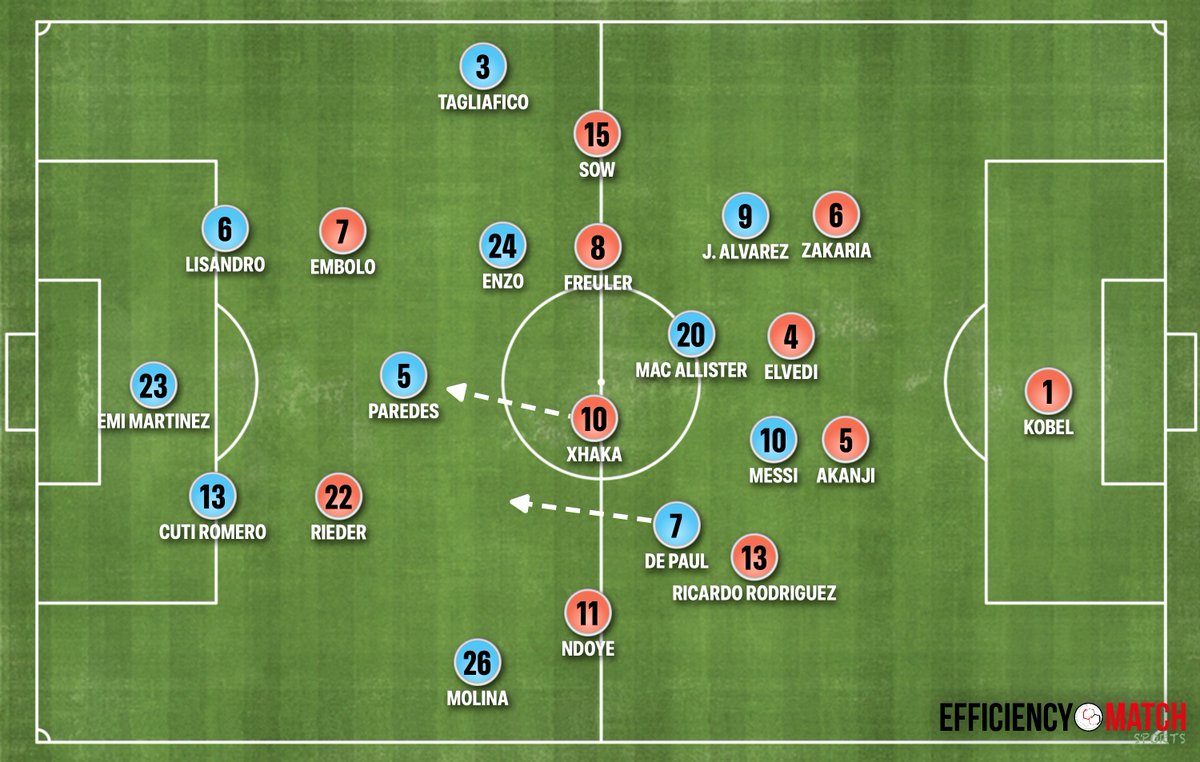
Switzerland. Such an impressive team, and a fantastic coaching job by Murat Yakin. I'm not sure you could ask for much more from a coaching perspective. Switzerland have shown outstanding tactical flexibility throughout the tournament. They can switch between an aggressive man-to-man press, as they did against Argentina, or adopt a more conservative defensive approach depending on the opposition. In possession, they produce excellent positional attacks with multiple solutions to beat different pressing structures. They are also tactically flexible, capable of changing their attacking structure and playing with different systems depending on the demands of the game. Capable also to take risks in deep build-up from goal-kicks to control more the games with the ball. They have so many versatile players who can perform in different roles and positions, making the team much more unpredictable. Several players are asked to play in roles that differ significantly from those they occupy at club level, yet they continue to perform because the team's ideas and intentions are so clear. Switzerland are excellent at accessing central spaces, although they understandably lack the individual quality in the final third to consistently turn those situations into goals. Even after losing their biggest attacking threat, Manzambi, to injury, they remained highly competitive despite missing the quality he provides. Another major strength of this team is the depth Yakin has built. He has rotated extensively throughout the tournament, making numerous changes to the starting XI, yet the collective level has remained remarkably consistent. Regardless of who plays, everyone contributes and the team continues to perform at a high level. Their rest defence is also great. They understand which matches allow them to commit more players forward, creating greater fluidity and mobility, and which require a more conservative approach to protect against transitions. An exceptionally well-coached and well-organized team. They have done an incredible job and, unlike some other teams that reached the quarter-finals while offering less, Switzerland have fully deserved their place at this stage of the World Cup.
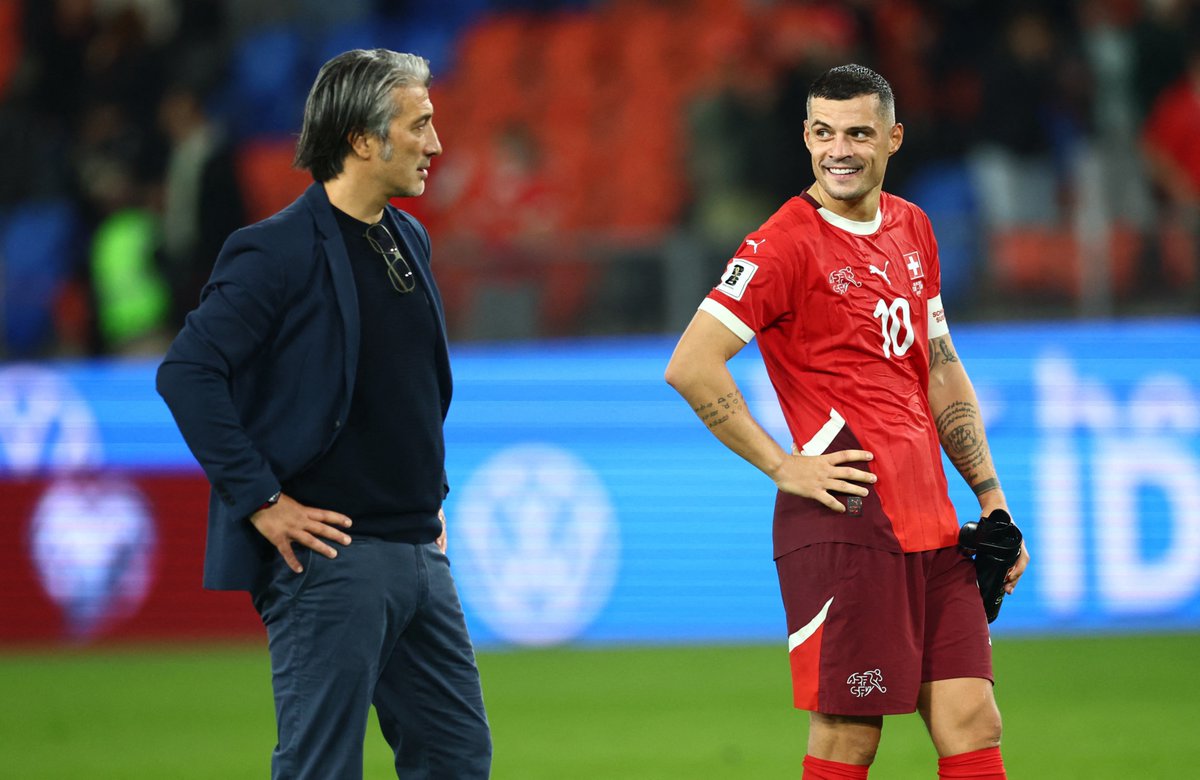
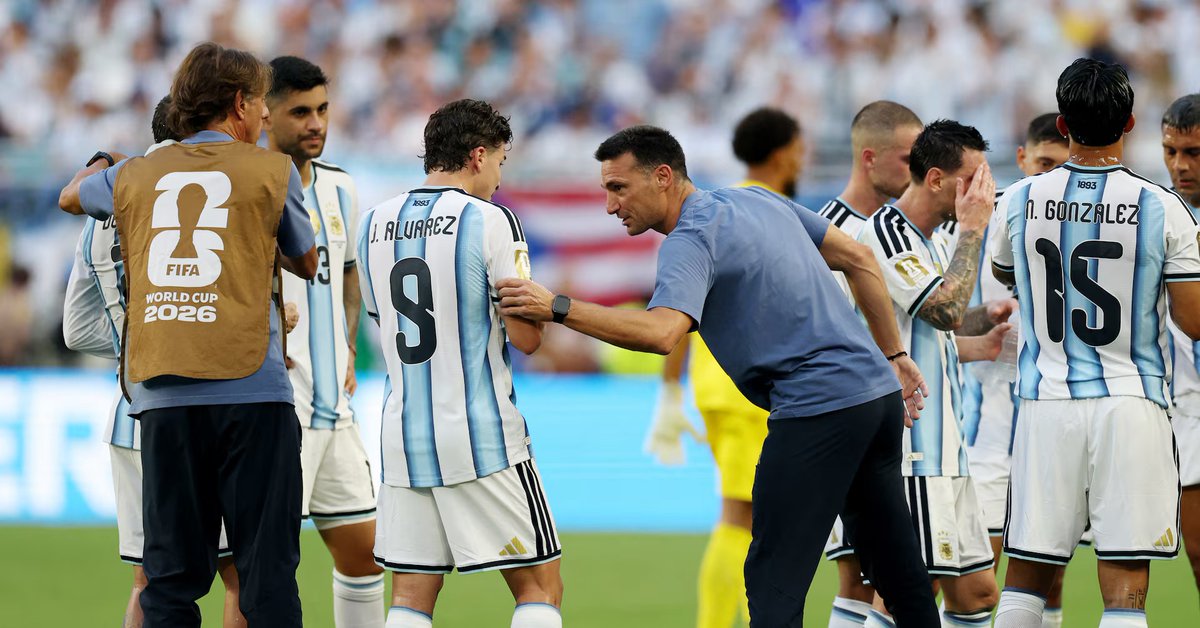
Talking about Argentina. These are the kind of games where Argentina seem to lack a transition threat. I understand Scaloni's idea of filling the line up with many midfielders. He's trying to maximize the phase of the game where Argentina are at their best: sustained possession in the final third, accessing central spaces through the technical quality of their midfielders. However, Argentina have clear out-of-possession issues and, against teams that dominate possession, it's inevitable they'll spend long periods defending deep, especially when protecting a lead. In those situations, adding another midfielder doesn't necessarily help because Argentina simply won't have enough of the ball for that extra control to make a meaningful difference. It's fair to wonder whether sacrificing one midfielder for a winger would really damage their attacking dynamics all that much, while giving them a much greater threat in transition. Argentina also struggle to progress consistently in deep build-up. Switzerland pressed man-to-man, forcing Emi Martínez to go long, but Argentina lacked a player who could either run in behind or hold the ball up to relieve pressure and allow the team to move up the pitch. Scaloni has even said in press conferences that he doesn't like his players receiving too many passes under pressure in deep build-up with their backs to goal. He prefers to avoid those situations altogether, so it's understandable that Argentina often choose the direct option instead of insisting on playing through the press. The moments when Argentina looked most capable of beating Switzerland's press came through quick one-twos from wide areas involving the full-backs, particularly down Nahuel Molina's side.
Bukayo Saka. England look much better with a player like him. He slows the tempo down, makes better decisions, and gives the team greater control in possession, allowing them to sustain attacks for longer periods. Gordon and Madueke offer more pace, directness, and transition threat, but it's clear England sacrifice a significant amount of control when Saka isn't on the pitch. He is also England's best player at delivering crosses to the far post, giving them a much greater threat when attacking from wide areas and crashing the box with Bellingham and Kane. There's a reason why he's so important to Arteta's Arsenal.
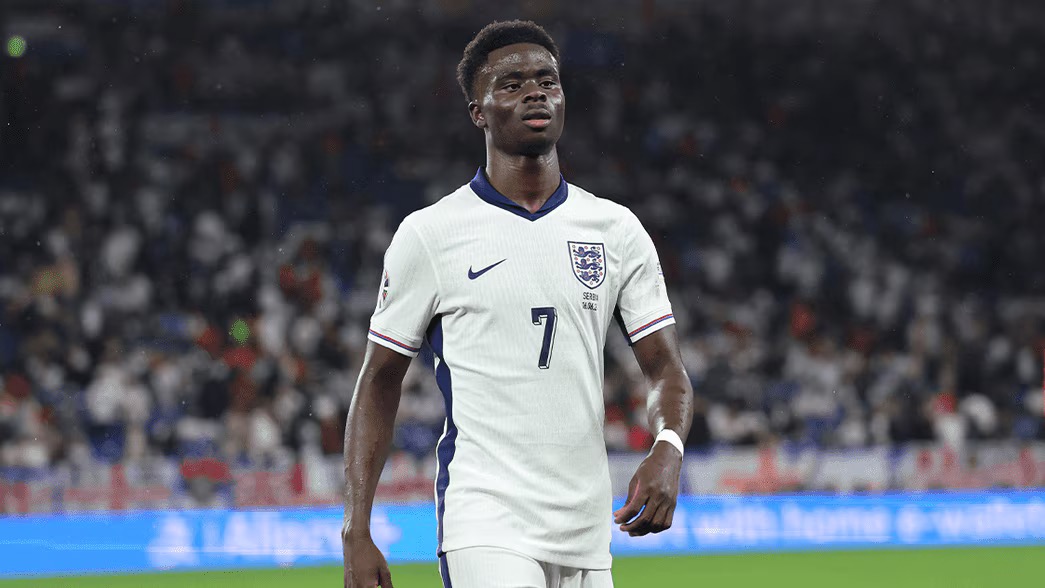
Bukayo Saka: “Us forward players want to run forward but the manager emphasises a lot the other part of the game.”
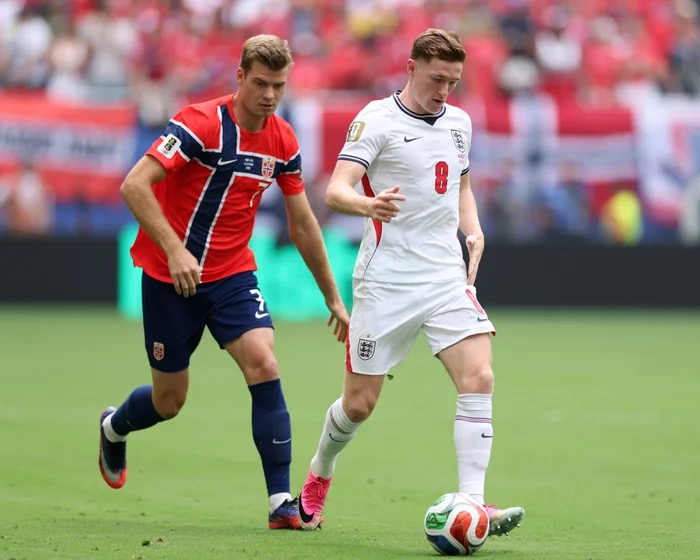
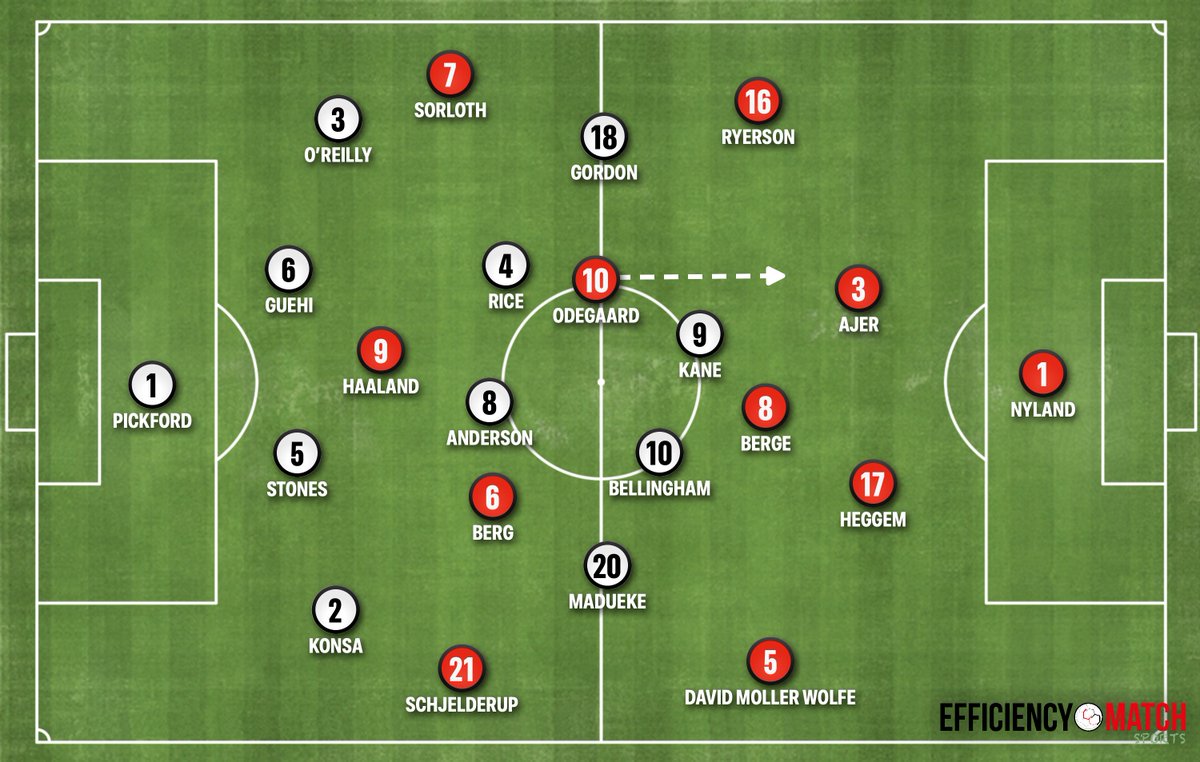
Let's talk about Norway against England. Such an interesting game from a tactical perspective. England controlled the first 30 minutes with a 3-2-5 structure. Konsa operated as a more conservative right-back, staying deeper, while O'Reilly pushed into the last line. This allowed England to create a numerical advantage against Norway's zonal 4-1-4-1. Norway's defensive block is relatively easy to manipulate because they defend very zonally and don't always apply pressure to the ball. You can circulate possession, attract them to one side, and then exploit the far side. England repeatedly looked to exploit 2v1 situations on the far side through Anderson's diagonal switches to Madueke or Saka. Bellingham will look for runs between the left centre-back and full-back, dragging the full-back inside and creating even more space for Madueke or Saka to receive wide. They could have looked for the same pattern on the left, but they lacked a left-footed passer capable of consistently finding Gordon with those diagonal balls. England knew they had an advantage, but it could also become a trap. Norway keep their back four intact and almost never ask an extra player to drop into the last line, even when overloaded by five attackers. Instead, they leave their wingers high, ready to attack in transition. With Schjelderup, Sørloth, and Haaland, their counter-attacking threat is enough to force opponents to be cautious. Norway are also able to dominate possession by overloading the first phase of build-up and dropping Ødegaard deeper. Tuchel preferred to not to press too aggressively, knowing that a man-to-man press would simply allow Norway to play long towards Haaland in 1v1 situations. Instead, England pressed more conservatively in a 4-2-3-1, with Kane closing the ball-side centre-back while the far-side winger tucked inside to block access to the opposite centre-back. Haaland's presence explains why Norway are usually a team that can keep possession. Teams are reluctant to press them aggressively as Ancelotti already said in a press conference. You can add to Haaland the ability of Ødegaard to be press resistant. Norway looked better in possession than in previous matches because Schjelderup offers more when receiving between the lines inside than Nusa. But they are at their most dangerous in settled attacks when they progress down the left. Ødegaard, Norway's main playmaker, naturally drifts to that side because he is left-footed. Schjelderup and Nusa both provide 1v1 ability and goalscoring threat, while also being able to cut inside and deliver crosses towards two elite box threat forwards like Haaland and Sørloth. It became even more evident how dangerous Norway can be out wide, when Oscar Bobb came on, as Norway suddenly became dangerous from both flanks instead of relying almost exclusively on the left. Norway may have fewer solutions in settled possession than some of the tournament's other top teams to progress centrally, but they compensate with great transition threat, aerial dominance in crosses, set pieces and 1v1 ability out wide. England could have created more danger by attacking the far post with crosses. Berge rarely dropped into the box to provide extra protection, leaving opportunities for England to overload the back post. Bukayo Saka is the player most capable of delivering those balls with the composure and precision required. England looked particularly dangerous whenever Saka found those deliveries. By starting Gordon and Madueke, England gained more pace and directness, but lost some of the composure and decision-making in the final third that Saka consistently provides. England can still be competitive, but if they want to control games more consistently through possession, they need more players who are comfortable playing at a lower tempo, like Saka. They also need Rice, whose ground coverage and physicality in rest defence allow them to sustain attacks higher up the pitch.
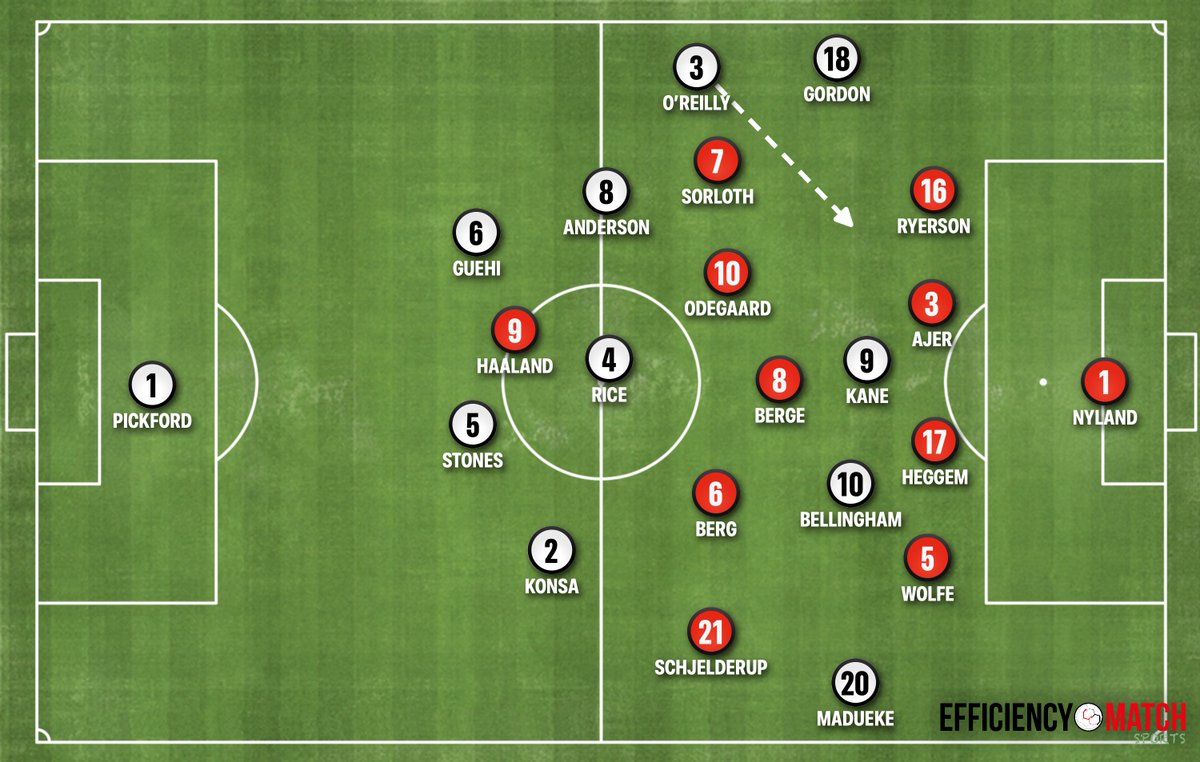

Norway defend in either a 4-1-4-1 or a 4-4-2, and they almost never drop into a situational back five. That means if you commit five players to the last line, you'll usually have a numerical advantage. In particular, you can create an overload on the far side. That's why England have repeatedly looked for diagonal switches to the weak side. Norway defend in a very zonal manner. They don't always apply immediate pressure on the ball, making it relatively easy to switch play from one flank to the other. The trade-off might be intentional. They keep their wingers high instead of asking them to drop into the back line, leaving them well positioned to launch transitions as soon as possession is regained.

Talking about Norway. Norway are different from most positional teams in this World Cup. Instead of vacating the build-up and committing large numbers forward, they do the opposite: they consistently overload the first phase with multiple players. The main reason is Erling Haaland. Haaland is one of the biggest reasons Norway have been able to dominate possession throughout the tournament. Having press-resistant midfielders like Ødegaard and Berg also plays a key role. Norway almost always have an extra player, plus the goalkeeper, in the build-up because very few teams are willing to press them man-to-man. Doing so would leave Haaland isolated in a 1v1, a risk most opponents are reluctant to take. And if they do press aggressively, Norway are more than happy to play long into Haaland and bypass the press. While Norway are able to control possession, they are less effective at progressing centrally. They lack profiles who consistently receive between the lines and eliminate opponents, especially when Ødegaard drops deep to help the build-up. That's why I still believe Norway's best route to goal is through the left side. Ødegaard naturally drifts there because he's left footed, while Schjelderup or Nusa provide 1v1 ability and goalscoring threat from that flank. Add Haaland and Sørloth attacking the box, both among the best in terms of box threat. Norway have a clear advantage there to exploit.

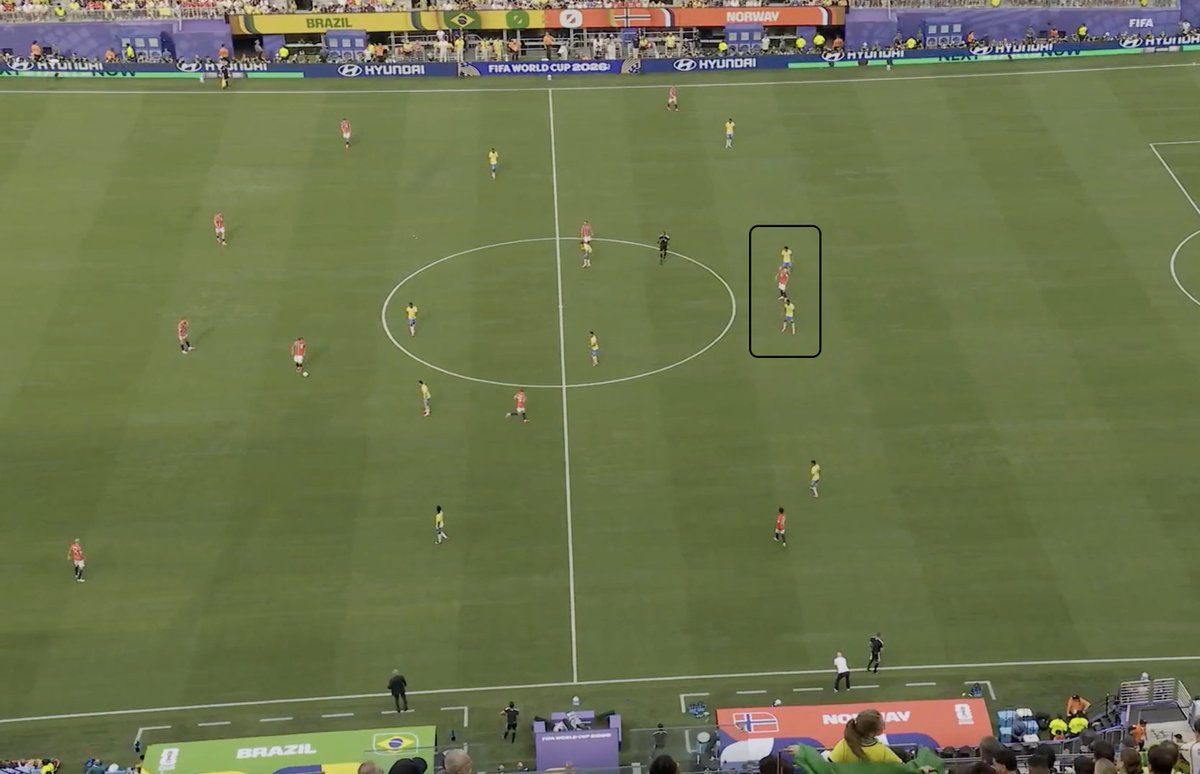
The attacking dynamics of Spain change significantly depending on whether Fabián Ruiz or Pedri starts in midfield. With Fabián, a left-footed player, Spain naturally attack more down the left, meaning Lamine Yamal receives the ball less often. However, when he does receive it, he's usually more isolated in 1v1 situations. With Pedri, Spain attack much more through the right, so Lamine sees far more of the ball, but he also tends to receive it with more defenders around him and less space to exploit.
Norway – England. Schjelderup replaces Nusa for Norway. Konsa starts at right-back instead of Quansah, while Stones is back in the starting XI at centre-back. The intentions from both teams are quite clear. Instead of starting more possession-oriented players like Saka or Oscar Bobb, they've gone with Sørloth and Madueke, signalling a more direct, transition-focused approach.
Let's talk about Spain against Belgium. Spain have shown great fluidity in their positional attacks. They have been well organised in rest defence, avoiding problems in defensive transitions, while the full-backs have provided excellent overlaps. Once again, Spain have looked dangerous with low crosses into the box. Spain are a very complete team. Even without seeing the best versions of Pedri and Lamine Yamal yet, they remain a very strong side with clear ideas. Belgium defended in a man-oriented system, and Spain repeatedly found good solutions against it. One of the main ones was having players move away from their assigned positions. The movements of Baena, Olmo and Oyarzabal when dropping deep created problems for Belgium and allowed Spain to progress into the final third. Belgium's defenders were reluctant to follow players too far from their starting positions, allowing Spain to find free players between the lines and advance the ball. When you play against a man-oriented system, you can manipulate the opposition by dragging defenders out of position, including the centre-backs. However, you then need players capable of attacking the space left behind, because man-oriented systems offer very little cover. Lamine occasionally threatened with runs in behind and created a lot of danger whenever he did so. But it's clear Spain lacks profiles that can attack in behind, with many of them wanting the ball to feet. Another effective solution against man-to-man marking is quick one-twos, like the combination between Pedro Porro and Lamine Yamal for Spain's opening goal. Spain were also excellent at keeping their composure under pressure in deep build-up. They built up very well, often looking for Oyarzabal's chest with direct passes, while Unai Simón consistently showed excellent quality with his distribution. The inclusion of Fabián Ruiz also gave Spain another left-footed player, allowing them to attack more naturally down the left. Compared to their usual midfield of three right-footers, Spain looked more balanced in possession instead of relying so heavily on attacks down the right through Lamine Yamal. The attacking dynamics of Spain change significantly depending on whether Fabián Ruiz or Pedri starts in midfield. With Fabián, a left-footed player, Spain naturally attack more down the left, meaning Lamine Yamal receives the ball less often. However, when he does receive it, he is usually more isolated in 1v1 situations. With Pedri, Spain attack much more through the right, so Lamine sees far more of the ball. However, he also tends to receive it with more defenders around him and less space to exploit, which may explain why he struggled more during the closing stages of the match. Belgium defended in a very man-oriented system, but alternated between going full man-to-man and keeping an extra defender in the back line. Initially, De Bruyne screened the passing lane into Rodri, but once he stepped forward to press, Rodri became available. If Spain found Rodri, one of Belgium's midfielders would jump to him and a centre-back would step out, turning the structure into full man-to-man marking. It was a hybrid approach between full man-to-man and maintaining an extra defender, very similar to Portugal's defensive system. Belgium caused Spain some problems by playing long towards De Ketelaere and winning the second balls. They also created a couple of dangerous transitions when Spain were slightly slow to react after losing possession, while Doku helped Belgium progress with his ball carrying. Apart from those moments, however, Spain were clearly the dominant team. I love De Bruyne as a player, but this was not a game that suited his strengths. Belgium spent long periods defending, and without runners attacking the space in transition, a profile they largely lack, De Bruyne had very limited opportunities to influence the game with his passing or his quality in the last third. We need to be realistic about this Belgium team. They executed a fantastic game plan against the United States, but in their other matches they have struggled to be defensively solid in their 4-4-2. They also lack players who can consistently threaten in large spaces during transitions. In settled possession, their attacks have been quite positional, relying more on occupying the last line with numbers than on creating relationships and combinations between their best players.


First half between Spain and Belgium. Spain have shown great fluidity in their positional attacks. They have been well organized in rest defense, avoiding problems in transition, while the full-backs have provided excellent overlaps. Once again, Spain have looked dangerous with low crosses into the box. The inclusion of Fabián Ruiz has also given Spain another left-footed player, allowing them to attack more naturally down the left. Compared to their usual midfield of three right-footers, they have looked more balanced in possession, not only attacking through the right side with Lamine Yamal. Belgium are defending in a very man-oriented system, but they have struggled whenever Spain's players move away from their assigned positions. The movements of players like Baena, Olmo and Oyarzabal when dropping deep have created problems, allowing Spain to progress into the last third. Belgium have caused Spain problems by playing long to De Ketelaere and winning the second balls.
Spain - Belgium.

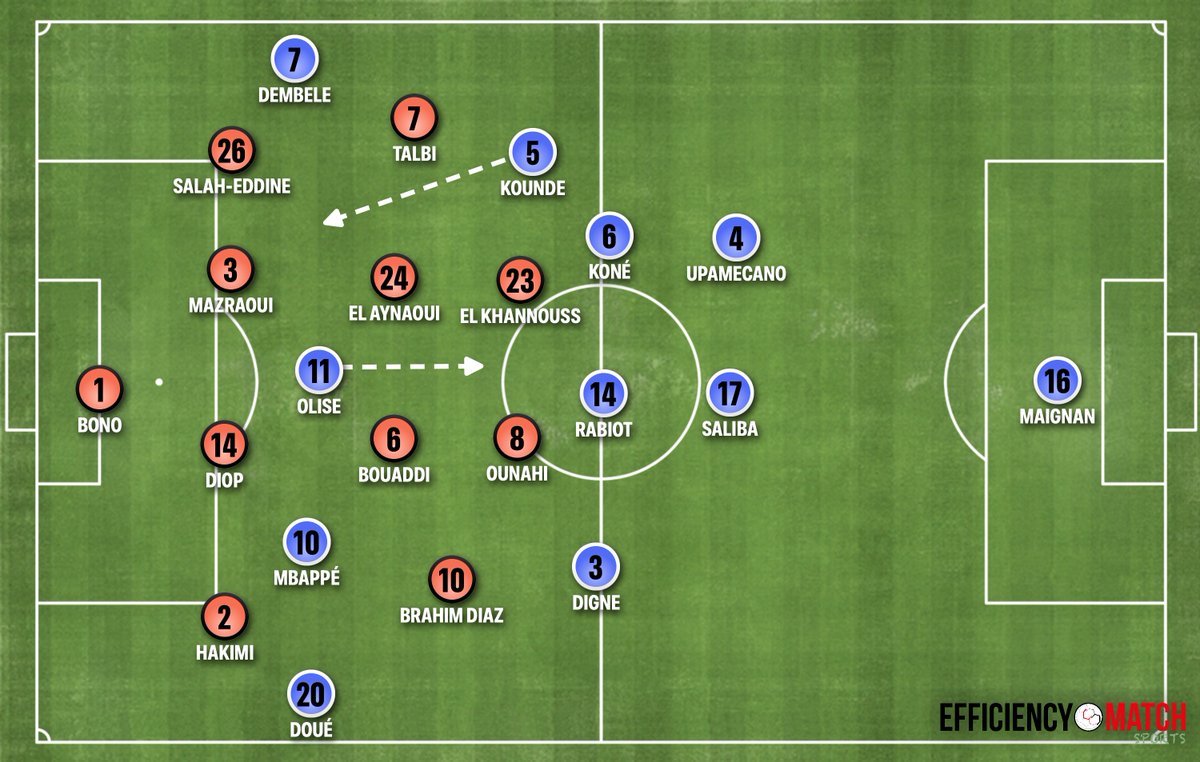
Let's talk about France against Morocco. France attacked in a 3-2-5 structure, with Jules Koundé pushing into the right half-space to open a direct passing lane to Ousmane Dembélé. Lucas Digne stayed deeper, providing more defensive security. Michael Olise, as usual, started between the lines but had the freedom to drop deeper and organize play. Kylian Mbappé occupied the left half-space, where he eventually scored the opening goal. France continue to attack with plenty of players behind the ball. The two midfielders, for example, usually stay very close to the centre-backs, always facing forward and rarely pushing higher up the pitch. Their role is mainly to circulate possession from side to side without taking unnecessary risks while protecting the team against transitions. This can make France look a bit predictable in settled attacks, relying mainly on individual quality or quick combinations between their front four. They don't create many chances in these situations, but the trade-off is that they are almost impossible to hurt defensively because they always have so many players behind the ball. France still look at their best when they have space to attack. That's why, during certain phases of the game, they became passive and allowed Morocco to dominate possession, patiently waiting for them to commit numbers forward and lose the ball in dangerous areas before launching counter-attacks. Mbappé won a penalty after Hakimi lost possession with Morocco exposed, while Désiré Doué produced an excellent ball-carrying action in transition following a poor turnover from Bouaddi. France simply have too many elite players to defend against when they can run into space. From restarts, however, France adopt a different approach. They often press high, sometimes even man-to-man. It makes sense because these situations allow them to organize the press properly, and the reward for winning the ball is very high. They also have a clear physical advantage. France's defenders and midfielders are stronger in duels and more athletic in large spaces than Morocco's players. Morocco's players are technically outstanding and very agile, but they generally lack the physical profile to consistently beat France's defenders in open space or dominate offensive duels. Outside of restarts, France rarely press aggressively. Instead, they are happy to defend in a compact mid-block, allowing opponents to have possession while protecting the space behind them. You can circulate the ball around them and occasionally even play through them, but playing behind them feels almost impossible. Teams sometimes manage to progress between the lines, yet very little happens after that. At the start of the second half, with the score still 0-0, France counter-pressed more aggressively, taking slightly greater defensive risks. During the opening minutes, Morocco managed to break the first wave of pressure and attack in transition. Even then, they never generated clear chances because once the ball was forced wide, William Saliba and Dayot Upamecano proved almost impossible to beat in large spaces. Even when France become more aggressive, their defensive quality allows them to take risks without conceding much. As for Morocco, I keep coming away with the same impression. I think there's still a lot of room for improvement. They can dominate possession for long periods because they have many press-resistant players and clear positional ideas that allow them to progress into advanced areas. But once they get there, very little happens. I like the overloads they create on the flanks, especially with Ounahi. They have many technically gifted players who rarely lose the ball in tight spaces, but they struggle to convert possession into clear chances. There is very little diagonal progression into dangerous central areas, and overall they don't take enough attacking risks. The reality is that they have been missing Ez Abde so much. With his 1v1 out wide, Morocco would have been able to create wide overloads on the right side, to then find Ez Abde isolated on the left side to target defenders in 1v1 situations. Morocco are excellent at slowing down the tempo of the game, and they are also difficult to create chances against. Their rest defense is usually well balanced, with Noussair Mazraoui staying deeper to allow Achraf Hakimi to attack more aggressively. They have a very good team, but many of their goals have come outside of settled attacks and they felt short to create chances consistently. Their goal against Brazil came in transition, while their goals against Canada came from transitions and a set piece.


First half between Switzerland and Colombia. Switzerland have looked dangerous in possession, creating promising situations through their positional attacks, but have lacked precision in the final third. Colombia looked dangerous in transitions, particularly after winning the ball in central areas.
This is an excellent piece on the United States by Tommy. He breaks down the team's World Cup campaign, their playing identity, the future of this squad, Pochettino's impact on the project, and the role Latin American communities could play in the future.
The United States became the last of the three host nations to be eliminated from the 2026 FIFA World Cup. A World Cup campaign that started and ended with the same result, but very different feelings. The start of this tournament brought great energy and momentum to the team.

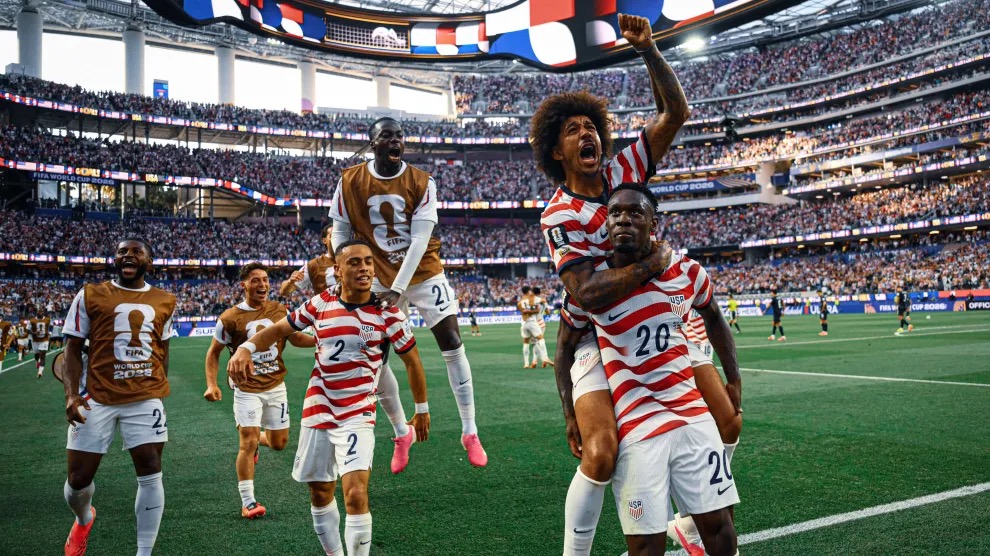

The United States became the last of the three host nations to be eliminated from the 2026 FIFA World Cup. A World Cup campaign that started and ended with the same result, but very different feelings. The start of this tournament brought great energy and momentum to the team. A 4-1 win vs Paraguay and 2-0 win vs Australia clinched the group for the US. These two results showed the US at its best. A team that excelled in the counter-press, high press, attacking with runs in behind which were created through the fluidity and close connections of their front 5-6 players. A question going into the tournament based on the roster selection was: Who was going to play next to Tyler Adams and how would this midfield operate? The answer to this quickly became central to the US’ best performances. The team found balance with Adams operating often as a single pivot with Tillman and McKennie in more advanced positions. This platform gave the US ability to play with an extra attacker as Dest and Robinson often provided the width as wingbacks. Pulisic started wide left looking to move inside on his stronger right foot as attacks developed. Balogun often operated on the blind side of the farthest center back, looking to attack the space created by the three 10’s. Or he allowed attacks to break in behind on the near side to then attack the box at speed. The US looked at its best when they were aggressive, dynamic, forward-thinking, confident to combine in short spaces, and willing to selflessly run off the ball. They did so tactically by creating a 3+1 base in build-up and rest defense with Adams’ mentality and mobility covering the space of two defensive midfielders. In attacking moments, the front 6 created a balanced attack. Mobile players in high and wide positions complemented the strong central relationships, often combining in close distances to threaten inside and behind lower/more compact blocks. This balance and the athletic qualities enabled the US to repeatedly get into valuable attacking positions around the box. These relationships also allowed the US to be aggressive in the counterpress. In many of the preparation matches, the US gave up too many goals in transition moments. They were often building and organizing for transitions in a 3+2 shape. The decision to field Tillman higher rather than a double pivot gave the US an extra attacker closer to the ball and freedom for 10’s like Pulisic, Tillman, and McKennie. This made the US more dynamic in attack, but in an interesting way it helped the US be more effective in transition moments. The profiles and reactions of these central players to hunt the ball in the immediate transition moment stifled the potential for opponents to hurt them in transition. Defensively, the US opted for a back 4 through the phases, whereas in the lead-up to the tournament the US shifted between back 4 in pressing moments and a back 5 lower. This decision to field a consisten back 4 felt natural but through much of the tournament the US was the more dominant team and didn’t have to spend much time in their defensive block until the Belgium game. The Bosnia match reinforced many of the strengths that had emerged during the group stage. The US continued to create attacks from their press, counterpress and the relationships within the front six. However, the match also became a turning point for reasons that had little to do with the football itself. A moment that changed the narrative and momentum surrounding the team away from the actual play on the field. Now, the Belgium game will leave a sour taste for everyone. The other host nations knocked out in this round did so playing fully to their identity. Canada remained a high pressing, aggressive, vertical team that wanted to disrupt any sort of rhythm for the opponent and was undone ultimately by Morocco being more clinical. Mexico pushed England to their limits as England put on arguably their most defining team performance in their World Cup history. Simply, this was not the US’ day and Belgium proved twice in the last 6 months that they are a better team. The US rushed simple actions that all players will admit they can complete 9/10 times, while also making high profile errors for goals. Much of the talk will be about how this tournament ended for the US, which should not be lost in the discussions. In addition, there needs to be a honest reminder that the country has critical steps that must be made in preparation for the next World Cup cycle but also for the next generation of American players that were captivated by a home World Cup. In the short term, the questions surrounding certain positions and depth remain true as the US prepares for the future. The team can benefit from continuity within the group especially players in their early to mid 20s like Alex Freeman (21), Chris Richards (26) Antonee Robinson (28), Tyler Adams (27), Weston McKennie (27), Malik Tillman (24), Folarin Balogun (25), Sergiño Dest (25), Christian Pulisic (27), and Ricardo Pepi (23). The US will need to find a strong CB partner(s) alongside Chris Richards who can defend large distances and support the US’ aggressive press and counterpress identity. Understand their GK depth, a position typically of strength. The team can also benefit from more variety and depth in attacking profiles, especially at winger and striker with more players who can unlock the game in different situations. The Belgium game was also a reminder in the need for stronger depth. Belgium, although much older, was able to bring on Romelu Lukaku, Jeremy Doku, Axel Witsel, Alexis Saelemaekers, and Hans Vanaken, while leaving Kevin de Bruyne as an unused substitute. One of the beautiful aspects of the United States and its sociopolitical landscape is that it is a melting pot of cultures. This has positively impacted the national team which now features players born across the world who come from a variety of backgrounds. People from across the world coming to the US, whether physically living here for much of their childhood or arriving here through the national team, and finding a home is one of the most central points to the modern American identity. Globalization of the football world has helped recent Western European national teams achieve success, not without its own pains and tensions. Teams such as France, England, and Germany have built their recent successes with many immigrants in their team. This is a potential strength of the United States and must be a part of their national team planning in the future. The hope for the long term future is that soccer in America continues to broaden its cultural reach across all communities making soccer the sport of necessity in the streets while the professional structures continue to broaden their scouting networks making their academies stronger and more accessible to all communities. These decisions over generations hopefully make soccer the strongest cultural reference. In the context of the soccer world, there are three external geo and sociopolitical factors that I think can help build a strong national team for the future. First, as we have seen with recent teams, exposure to the European elites of football especially German and English academies where the type of football being taught and the physical and mental demands make players more robust and prepared for elite levels of the sport. Players such as Richards, Adams, McKennie, Tillman, Balogun, Pulisic spent time in top level academies of Europe (especially Germany) where the identity of pressing and counter pressing is at the core of their national footballing identity. Second, the US must not lose their sense of the American underdog/comeback fighting spirit. This has been central to great American sports stories such as Miracle on Ice and USWNT 1999ers, and I think why many fans of American soccer found themselves supporting players like Sebastian Berhalter and Diego Luna over the past two years. Finally, the United States must do a better job of investing time, energy, and resources into the Latin American communities in this country. The strength of Latin American football is its emotional, almost spiritual, connection to the game and the role of the individual in the game. Culturally, the game belongs to the individual and in the countries like Argentina the game belongs to “el pibe” and on the biggest stage when your country has this identity, these are the players that decide games and win trophies. A coach like Mauricio Pochettino brought some of the Latin American qualities to the forefront of the national team. In the future, I hope this aspect of American culture, the role of the Latin American immigrant, becomes more central. The United States at 2026 World Cup showed they are right where they should be. The game is building momentum as the sport of the youth and American culture. If it continues to blend the harmony of the influence of the elite European club experience, the American fighting spirit, and the power of the individual and passion in Latin American culture then the United States will have the potential to move into the world’s elite footballing nations. Written by @tmccabe98.
Let's talk about Colombia. Colombia leave the tournament as one of the most entertaining teams to watch, but also one of the most effective. Overall, they have shown themselves to be one of the most complete teams in the competition. Néstor Lorenzo's side conceded just one goal in five matches, recorded comfortable victories over Uzbekistan, DR Congo, and Ghana, and produced one of the tournament's standout performances by dominating Portugal. Against Switzerland, they competed in a balanced knockout game that could easily have gone either way before eventually losing on penalties. Although Colombia possess excellent transitional qualities, they have also been one of the most possession-oriented teams at this World Cup, ranking only behind sides such as Spain and Germany in ball possession while also finishing among the top five teams for chances created. Their usual structure has been a 4-3-3, built around two physically dominant yet mobile centre-backs in Jhon Lucumí and Davinson Sánchez, athletic full-backs Daniel Muñoz and Johan Mojica, Lerma as the #6 holding midfielder, energetic #8s such as Gustavo Puerta, Richard Ríos, and John Arias. James Rodríguez or Juan Fernando Quintero as the #10 attacking midfielder, Luis Díaz on the left wing, and either Luis Suárez or Jhon Córdoba as the #9. One of Colombia's biggest strengths has been the fluidity of their attacking ideas. James Rodríguez frequently drops into deeper areas to dictate play and organise possession, particularly looking to exploit the left side with his outstanding left foot. Whenever James vacates the attacking midfield space, Gustavo Puerta intelligently adjusts his positioning, pushing higher to occupy the space James has left while maintaining the team's balance. This constant mobility, with James heavily involved, creates central combinations before releasing the full-backs into advanced positions. Rather than staying permanently high, Daniel Muñoz and Johan Mojica often arrive late from deeper positions, making them extremely difficult to track. Daniel Muñoz, in particular, has been one of Colombia's greatest attacking weapons throughout the tournament, repeatedly creating danger through these delayed runs and even scoring from them. Like every elite attacking side, Colombia constantly threaten the space behind the opposition. Muñoz, Mojica, Luis Díaz, Luis Suárez, and Puerta all make aggressive runs beyond the defensive line, stretching opponents vertically and creating larger spaces to combine inside. Those runs are fundamental to the effectiveness of Colombia's attacks. Another interesting aspect of Colombia's build-up is that, rather than forcing players to remain between the lines, James Rodríguez and Gustavo Puerta are both encouraged to drop deeper to help progress possession from the back. Their players enjoy the freedom to move towards the ball whenever necessary instead of occupying fixed positions. Although Colombia rarely involve their centre-forward extensively in their passing sequences, he provides an important reference point whenever they need to play more directly. Something very characteristic of Colombia is that they do not play with a natural wide winger. Besides certain game contexts in which Luis Díaz moves closer to the touchline, they generally attack with a narrow front two or front three. Perhaps Colombia's greatest quality has been their versatility. While they have consistently dominated matches through possession, they have looked equally comfortable playing a more transitional game whenever the situation required it. The second half against DR Congo perfectly illustrated this flexibility. After controlling possession during the first half, Colombia protected their lead by attacking more directly after regaining the ball, yet remained just as dangerous. With elite transition players such as Luis Díaz, dynamic runners like Luis Suárez and Gustavo Puerta, and outstanding passers in James Rodríguez and Juan Fernando Quintero capable of releasing teammates with through balls, Colombia always carried a significant threat whenever space opened up. Without the ball, Colombia generally defended in a 4-4-2 shape. James Rodríguez stayed alongside the centre-forward, while one of the midfielders, usually Gustavo Puerta or John Arias, shifted wide to complete the midfield line. Their defensive structure was largely zonal, but the exceptional athleticism and work rate of players such as Puerta, Richard Ríos, Lerma, and Arias, combined with centre-backs comfortable defending far from their own goal and very fast full-backs, often allowed Colombia to become more aggressive and man-oriented when pressing higher up the pitch. They also defended long balls particularly well thanks to the physical dominance of Lucumí and Davinson Sánchez. Colombia were not necessarily one of the tournament's most aggressive pressing teams, but their athletic profile allowed them to defend extremely effectively. The ability of their midfielders to cover ground significantly reduced the defensive issues their pressing structure could create. Switzerland were able to play through Colombia's defensive block at times, but once they did, one of Colombia's midfielders would usually appear to solve the problem. One aspect that occasionally caused problems was the spacing of their deeper defensive block. When defending inside their own half, James Rodríguez and the centre-forward could become disconnected from the rest of the team, leaving excessive space in front of the midfield line. This sometimes allowed opponents to establish longer periods of possession and pin Colombia back. However, being forced deeper was rarely a major issue because Colombia remained a constant threat on the counterattack. One of the most impressive aspects of Colombia throughout the tournament was their ability to avoid becoming vulnerable in defensive transition despite committing large numbers of players forward. At times, Colombia attacked with structures resembling a 3-1-6 or 2-2-6, with constant mobility in midfield and James Rodríguez dropping deeper to orchestrate attacks. On paper, those structures could have left them exposed after losing possession. In reality, that rarely happened. The reason lies in the extraordinary recovery speed and work rate of players such as Daniel Muñoz, Johan Mojica, and Gustavo Puerta. All three are exceptional at sprinting back into defensive positions immediately after possession is lost. Muñoz and Mojica possess the engine to repeat high-intensity efforts, while Puerta consistently tracks back and recovers central spaces with remarkable intensity. As a result, Colombia could appear exposed for a brief moment before suddenly recovering numbers behind the ball within only a few seconds. Their athleticism allows them to rotate positions constantly without sacrificing defensive stability. Although Colombia fell short of the quarter-finals, once again suffering the heartbreak of a penalty shootout, just as they did against England in 2018, they leave this World Cup having established themselves as one of its strongest collective teams. Few teams managed to balance entertainment and effectiveness as consistently as Colombia throughout the tournament.


Switzerland - Colombia.

Let's talk about Argentina. I haven't bought into the narrative that Argentina have been poor in attack. Today was another example of why. Scaloni got the tactical approach right. The 4-4-2 diamond worked very well in the first half, allowing Argentina to progress consistently through the centre. While many teams struggle to access central areas against compact blocks, Argentina continue to show they can do it with regularity. The other key adjustment was using Tagliafico as the player attacking the space in behind. His late runs constantly stretched Egypt's defensive line and became one of Argentina's biggest attacking weapons. Argentina created three or four clear chances from those movements, including the penalty. On another day, they score three or four goals. Egypt's goalkeeper, Shobeir, was outstanding and kept his team in the game. It's true that Argentina are not currently producing the same level of quick combinations and one-touch play that have defined them in recent years, but they still create enough chances through their settled attacks. What I also found interesting was Scaloni's team selection. Many expected him to add more pace, more wingers and more 1v1 specialists. Instead, he doubled down on midfielders by bringing Paredes into the team. Personally, I think that was the right decision for this game. Against Egypt, who defended deep for long periods, Argentina needed technical quality and combinations between the lines rather than pure transition threats. With Tagliafico providing the depth through his late runs, the lack of a natural runner in behind wasn't really an issue. That said, I still believe there are game contexts where Argentina would benefit from having a more transitional profile. Against Algeria, for example, who committed many players forward when attacking and left huge spaces behind their defensive line, a player capable of constantly attacking those spaces would have been extremely valuable. Another interesting contrast was Messi's performance. Against Cape Verde, Messi played very well while several teammates struggled to reach their level. Today, Argentina collectively played much better, but Messi wasn't at his best, at least until the end of the game. Knowing this team, it probably won't be long before both click at the same time. The feeling I always have when watching Argentina is that they can score at any moment. Very few national teams give you that sensation. Defensively, however, there are still clear issues. The first is the pressing. I actually thought Argentina pressed better today than they did against Cape Verde. Their counter-press remains one of their biggest strengths, especially during the first three to five seconds after losing possession, when they surround the ball with numbers and intensity. The problem comes if the opponent survives that initial pressure. If teams stay calm, accumulate passes and slow down the tempo with the ball, they can play through Argentina's press. At that point, Argentina begin to suffer. Part of the issue is physical. They lack athleticism in certain areas, and some players simply don't have the engine to sustain repeated high-intensity pressing actions throughout the match. On top of that, Messi naturally contributes less defensively than the rest of the team. As a result, opponents can eventually push Argentina backwards and enjoy longer spells of possession. The best solution is probably the one Scaloni already believes in: dominate the ball so much that your weaknesses without possession are rarely exposed. It's normal you have these weaknesses when you have so many technical players in your line up. Dropping into a deeper defensive block doesn't really suit this team either. Argentina don't have many transition players to threaten teams after recovering possession, while defenders like Lisandro Martínez are generally more comfortable defending higher than spending long periods protecting their own penalty area. The second issue is their rest defence. Ironically, this is normally one of Argentina's strengths. Unlike many positional teams, they don't need to commit huge numbers into the last line to pin the opposition back. They can progress centrally on short distances without the need of positional pinning, which allows them to keep several players behind the ball (centre-backs, midfielders and sometimes even one or both full-backs) giving themselves excellent protection against counter-attacks. That balance disappeared during the second half. Argentina gradually committed more and more players forward. Both full-backs pushed on, Lisandro Martínez stepped into midfield on numerous occasions, and at times only Paredes and Cuti Romero were left protecting defensive transitions. Against a team with the pace Egypt possess, that was a dangerous gamble. Salah, Hassan, Ziko...are good enough to hurt you in transitions. Egypt had one goal ruled out by VAR before eventually scoring from another transition, and they continued to look threatening every time they broke forward. Even after equalising at 2-2, Argentina kept throwing bodies into attack. They refused to settle, but that also meant Egypt came close of scoring again on the counter. The final minutes descended into complete chaos. In the end, though, Argentina showed exactly why they remain one of the toughest teams to eliminate. When everything seemed to be against them, they never stopped believing.


Argentina - Egypt.


OFFSIETE FOOTBALL ACA... @Goni2522
279 Followers 3K Following provide the most comprehensive soccer training program to youth players with the experience & philosophy of our trainers.
riski aldian @riski_coach
401 Followers 3K Following
raditya lamuri @RadityaLamuri
1 Followers 37 Following

majed alowaifi @maaged2010
2K Followers 2K Following ماجستير | حاصل على رخصة تدريب AFC | مساعد مدرب نادي قلوة | محلل فيديو | ( عيش حياتك واستمتع بلحظاتها الجميلة )
Pratama FN @PratamaFN
136 Followers 1K Following Social Economic Currently Issues, Sport Focusing On Football, Moto GP and UFC.

asanda mahaye @AsandaMahaye
854 Followers 4K Following Walk like a King❤️🙌 ,SHEMBE uNyazi LweZulu is my God. ISILO/Beast sikaZulu🐆The King of the South. “uMKhonto uyosala uzenzela”
Luis Alberto Ayrton R... @LuisAyrton35468
45 Followers 1K Following
Abo fahad⚡️ @ssl03
597 Followers 1K Following ستَعيش مرَّة واحِدة علَى هَذه الأرض، إذا أخطَأت اعْتَذر، وإذَا فرحت عبّر، لا تكُن معقَّدًا ، والأهمُّ لا تكرَه ولا تحْقدْ ولا تَحْسد. 〰️
ahmad @1aprill
12K Followers 2K Following
موسى عبده ح�... @haltani2
2K Followers 1K Following مدير ادارة التوجيه والارشاد بجازان(سابقا)متقاعد

otvibesdaily @Otvibesdaily
1K Followers 2K Following ⚽ Bukan akun bola tapi suka bola 💰 Crypto | 🃏 Random Lucu | Meme | Daily Vibes Random
Khalid🟩 @kaledt7g
230 Followers 6K Following
فوزي بشير ا�... @fuwzi_99
119 Followers 583 Following

T M ⭐⭐ ⚽World C... @TMonWorldCup
304 Followers 4K Following ⚽World Cup🏆 🇺🇸 🇨🇦 🇲🇽 2026 ⭐⭐ Scorpio #worldcup #fun #entertainement #soccer #football #usa #canada #trump #mexico #clips #crypto #music #football #elon
☁️ @ANAMOSH3ARFNI
2K Followers 2K Following
Mohammed 2030 KSA F-3... @MTaibq
551 Followers 4K Following الاخلاق مثل الارزاق الناس فيها بين غني وفقيـر .
النخبوي💚�... @iixaii678
27 Followers 264 Following
- @1ilenx
100 Followers 156 Following


All @AaortbAll
14 Followers 204 Following
777 @qSSQp6VJFM3dBYw
11 Followers 282 Following
たなかなか @KSiUIN2S1v3hVqj
166 Followers 942 Following

#W @VGGWI
83 Followers 4K Following
𝗡𝗮𝘀𝘀𝗶�... @Nassim1906
98 Followers 340 Following {ولا تقولن لشيء اني فاعل ذلك غدا، الا يشاء الله واذكر ربك إذا نسيت وقل عسي أن يهدين ربي لأقرب من هذا رشدا}.
Miko @MikoMattS
48 Followers 644 Following
LNL_Football @LNL_FootAnalyst
1K Followers 873 Following Aspiring Football Analyst & Coach | Structural, tactical & data-driven analysis.
Kwabena ®️ @Cobby1126076
161 Followers 2K Following

Sadik 🇸🇳 @PapeOmarMbaye4
9 Followers 86 Following

numerodiez @elchoukininho
746 Followers 2K Following qui n'a pas d' imagination n'a pas d'ailes . "Be humble and never think you are better than anyone else. We all leave this world empty-handed."
Prince Alex @Stanton4POTU
0 Followers 690 Following
Dieguito. @12Takaaki
291 Followers 3K Following 『No Pierde un balon 』 Ritmo/Habilidad/Inteligencia Dejar que juegue 『夢中は努力に勝る』
Indre @zyubraj
5 Followers 60 Following
Tsunoda @tsunodasyo0106
756 Followers 2K Following
プレミア @Tzf0QUrDbtpQf8J
6 Followers 299 Following
Harry NCFC 🔰 @Hazzadinho_ncfc
52 Followers 529 Following
Hani_ @hanikawkaw
77 Followers 751 Following
Timmy Eriksson @Timmyeriksson_
3 Followers 91 Following
Apuntes de Rabona @ApuntesRabona
9K Followers 247 Following Medio independiente. El futbol desde el análisis, la cultura y la nostalgia.
Roger Bonet "Ruxi" @Ruxiiii4
27K Followers 3K Following Professional Football Player 🇮🇩 | Coach UEFA PRO | Experiences in 🇲🇽🇺🇸🇫🇮🇮🇸🇪🇸 | Writer | Psychologist | Scout | Owner & Co-Founder "The Game Changer"
The Game Changer Espa... @TGC_ESP_
1K Followers 10 Following Comunidad Táctica de Fútbol | Analizando las Tendencias Modernas Alrededor del Mundo.
The Game Changer Engl... @TGC_english
9K Followers 17 Following Tactical Football Community | Analyzing Modern Trends Around the World.

FaktaBola @FaktaSepakbola
702K Followers 682 Following Konten-konten menarik sepakbola ⚽ kadang serius, kadang bercanda. https://t.co/C8f0QCdmuLYou might like