

Andy @WorryNot4Eva
To the moon and cyber security. Joined August 2023-
Tweets345
-
Followers26
-
Following602
-
Likes314

there's a famous "karpathy claude.md" being shared around here github.com/multica-ai/and… with a whopping 177k stars two things you should know about this file - 1. it's NOT actually from andrej karpathy 2. i've got empirical evidence it'll hurt your agent performance thread 👇


China open-sourced a peanut-sized OCR that parses entire 100-page PDFs in one shot.. It's called Unlimited-OCR. Only 3B params. Runs locally. Every other OCR tool chops your doc into pages and loses the thread. this one reads the whole thing in a single pass. → One-shot "long-horizon" parsing (32K context window) → Multilingual, out of the box → 93% on the standard parsing benchmark (+6 over baseline) → <0.11 error rate past 40 pages → Runs 100% locally on your own hardware → Works with Transformers, vLLM, SGLang, Docker, Ollama, llama.cpp Traditional cloud OCR (Textract, Google Vision, Azure Doc Intelligence) costs $1.50–$15 per 1,000 pages. This runs on your machine. For free. Forever. Baidu built it explicitly to push DeepSeek-OCR one step further. Already at 1.9M downloads on Hugging Face and most people have no idea it exists yet. 100% open source.

Everyone talks about using AI for vulnerability research. Nobody talks about the orchestration layer that makes it actually work. This post covers the harness: how to structure LLM pipelines for security research so they produce consistent, verifiable findings instead of burning tokens on hallucinated garbage. Reviews RAPTOR, Anthropic's reference harness, Baby Naptime, Evil Socket's Audit, and Visa's VVAH. Covers context budgets, model routing, RAG for persistent memory, validation gates, and why one system prompt for the entire pipeline is a mistake. Released an open-source template to build your own. Blog: blog.zsec.uk/harnessing-har… GitHub: github.com/ZephrFish/harn… Author: @ZephrFish #InfoSec #AI #VulnerabilityResearch
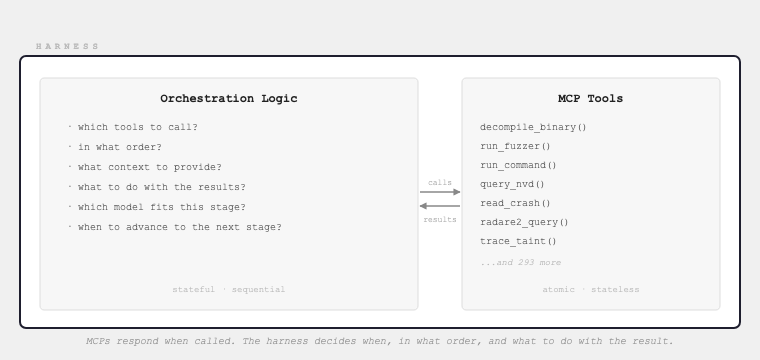


The harness is a while loop, Binary Ninja over MCP, and four markdown files. That is it. GPT-5.5-Cyber extracted 6,358 YARA rules, 9,350 behavioral detection rules, 7 ML models with test harnesses, and an entire CLIPS-based rule engine from Cortex XDR. All encryption keys auto-recovered. All rules verified against a live instance. The same approach applies to CrowdStrike, Microsoft Defender for Endpoint, SentinelOne, Elastic Security, and every other EDR shipping local detection logic to the endpoint. This is what using LLMs for security research actually looks like. Not AI-generated blog slop, not passing off other people's work without credit. Actual research, clearly stating what the LLM did, verifying every finding against real systems, and publishing the methodology openly. If your security strategy relies on local endpoint detections alone, this is the wake-up call. specterops.io/blog/2026/06/2… Author: @_xpn_ @SpecterOps #DefenseEvasion #ThreatIntel #InfoSec

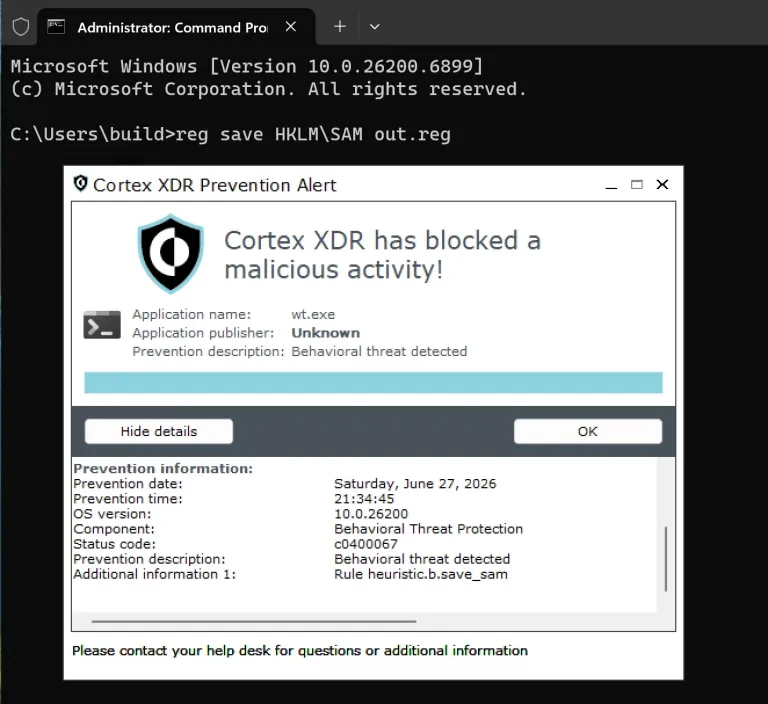


New blog post is up looking at how LLMs are making local EDR rulesets, YARA rules, and behavioral detections trivial to extract. This post focuses on how simple the harness can be. Buckle up h4xx0rs, the next few months are gonna get interesting! specterops.io/blog/2026/06/2…
One of the most consistent free security education resources on the internet. Weekly HackTheBox walkthroughs for years. Every machine fully documented. Enumeration to root. Active Directory attack chains. Web exploitation. Container escapes. Kubernetes abuse. Windows and Linux privilege escalation. WiFi hacking. Cloud security. Reverse engineering. Malware analysis. Binary exploitation. Phishing. Real CVE exploitation. SANS Holiday Hack solutions. Every post includes a "Beyond Root" section that digs into why the vulnerability exists and how the machine works under the hood. That section alone teaches more about detection engineering than most courses because it shows you exactly what artifacts each attack leaves behind. If you are studying for OSCP, sharpening your RE and malware analysis skills, learning Linux pwn, or building detection rules, start here. 0xdf.gitlab.io Author: @0xdf_ #OSCP #HackTheBox #InfoSec


Adding to this list. All free. No paywall. No signup. exploitreversing.com - 700+ pages of malware analysis and exploit research class.malware.re - full university malware analysis course malwareunicorn.org - RE101, RE102, macOS RE, PE injection azeria-labs.com - ARM assembly, shellcode, heap exploitation revers.engineering - applied RE series and hypervisor development pwn.college - buffer overflows to kernel exploitation p.ost2.fyi - 30+ courses, WinDbg, IDA, Ghidra, UEFI, kernel exploitation corelan.be - 41 tutorials spanning 17 years of exploit dev fuzzysecurity.com/tutorials.html - 19-part series, usermode to kernel windows-internals.com - Windows internals, secure kernel, VBS, KDP, dynamic analysis YouTube: youtube.com/@_JohnHammond youtube.com/@LiveOverflow youtube.com/@lauriewired youtube.com/@allthingsida youtube.com/@OpenSecurityT… Thousands of dollars worth of knowledge. All free. #ReverseEngineering #MalwareAnalysis #InfoSec


I have been seeing reverse engineering / malware analysis courses that cost thousands of dollars. Do you know you can actually learn that for free, right? There are also a bunch of other courses out there that are way cheaper or even free: - courses.0ffset.net -

📝 Awesome Bug Bounty Writeups — Learn From Real Reports, Not Theory A curated collection of hundreds of real-world bug bounty writeups covering vulnerability discovery, exploitation techniques, bypasses, and attack chains from top security researchers. Categories Covered: • Cross-Site Scripting (XSS) • Server-Side Request Forgery (SSRF) • Insecure Direct Object Reference (IDOR) • SQL Injection (SQLi) • Cross-Site Request Forgery (CSRF) • Authentication & 2FA Bypass • CORS Misconfigurations • Local File Inclusion (LFI) • Subdomain Takeovers • Race Conditions • Remote Code Execution (RCE) • Android Security Testing Why it's valuable: • Learn real attack methodologies • Understand vulnerability chaining • Improve bug bounty hunting skills • Study report writing and impact assessment • Discover bypass techniques used in actual programs Instead of reading generic tutorials, study how researchers found, exploited, and reported vulnerabilities on platforms like Google, Microsoft, PayPal, Facebook, Uber, Yahoo, Tesla, Amazon, and many more. 🔗 github.com/devanshbatham/… #bugbounty #Pentesting #WebSecurity #AppSec #XSS #SSRF #IDOR #SQLInjection #CyberSecurity


File upload bugs are still everywhere. My 2026 playbook: 1. Map every upload — profile pic, resume, CSV, KYC, support attachments. Different code paths, different bugs. 2. Beat the extension filter: - shell.PHP (case) - shell.php.jpg / shell.jpg.php - .phtml .php5 .phar .pht - %00 null byte - shell.php;.jpg (IIS) 3. Spoof Content-Type: image/jpeg in Burp. Half the time it's the only check. 4. Beat magic bytes — prepend GIF89a; to your PHP. Valid image header, valid PHP. 5. SVG = XML =