Ryan Greiser, CFP ® @_Greiiser
Helping Millennials cut taxes, boost income, and build wealth · @InvestmentNews Best Wealth Managers Under 40 · @Investopedia Top 100 FA · Tweets ≠ Advice opulusmethod.com Join 4,500+ subscribers → Joined November 2017-
Tweets96
-
Followers11
-
Following503
-
Likes138

Stop asking "should I sell my RSUs." Use this 4-step framework instead: 1. What’s this worth after tax? 2. Would you buy this much stock with cash? 3. Sell whatever is a “no.” 4. Keep only what’s a real “yes.”
The years you’re free enough to enjoy what you’ve built are fewer than the years you spend building it. Spend accordingly.
Plenty of people sitting on a $2,000,000 portfolio still spiral over a $15,000 trip with the family. It’s not that the money isn’t there. It’s that the account balance never got translated into a green light. Their net worth climbed. Their personal “allowed to spend” settings stayed frozen. So the person who had to pass on a $15,000 vacation at 35 is still running the exact same mental spreadsheet at 48. Despite the numbers living in a different universe now. Getting rich is challenge one. Letting yourself enjoy it without self-punishment is challenge two. Most people stop after the first.
Four numbers determine how much life insurance a family actually needs: outstanding debt, years of income to replace, the mortgage balance, and future education costs. Most quotes skip straight to a multiple of salary instead. The multiple is easier to sell, but those four numbers are the actual math that matters. Families who add up debt, income, mortgage, and education almost always land with a number they need instead of the insurance industry shortcut.
This year I booked a $10,000+ family vacation. For a moment, it made me feel sick. Then I checked three numbers and the guilt disappeared. Today’s piece breaks down those three numbers and why this works at almost any income. ↓ open.substack.com/pub/opulusmeth…
A pattern shows up with clients anxious about inflation: They never connect it to their own mortgage. Their payment is fixed. Everything else keeps rising. The same inflation eating their grocery budget is shrinking their biggest debt in real terms.
Playing it safe feels responsible. That isn't always the safer choice. When you can recover from a wrong move but can't recover the years you spent not making it, delay is the actual risk. Most people have this backwards.
I've noticed something with clients whose kids are still young: They treat money like the scarce resource and time like the abundant one. It's backwards. Money you can always make more of. Time with an 8-year-old runs out in about ten summers. Most people don't realize this until it's too late.
You win with money by taking responsibility for three numbers: • What your bills actually cost you • What you're actually putting away • What you let yourself enjoy Get those three right, and the rest sorts itself out.
We're told the risk is enjoying your money too soon. I think the bigger risk is having the money and no longer having the health, time, or people to spend it with. One of those risks is reversible. The other one isn't.
Yooooooooo. The next 12 months are going to be insane. Phils. Birds. Sixers.

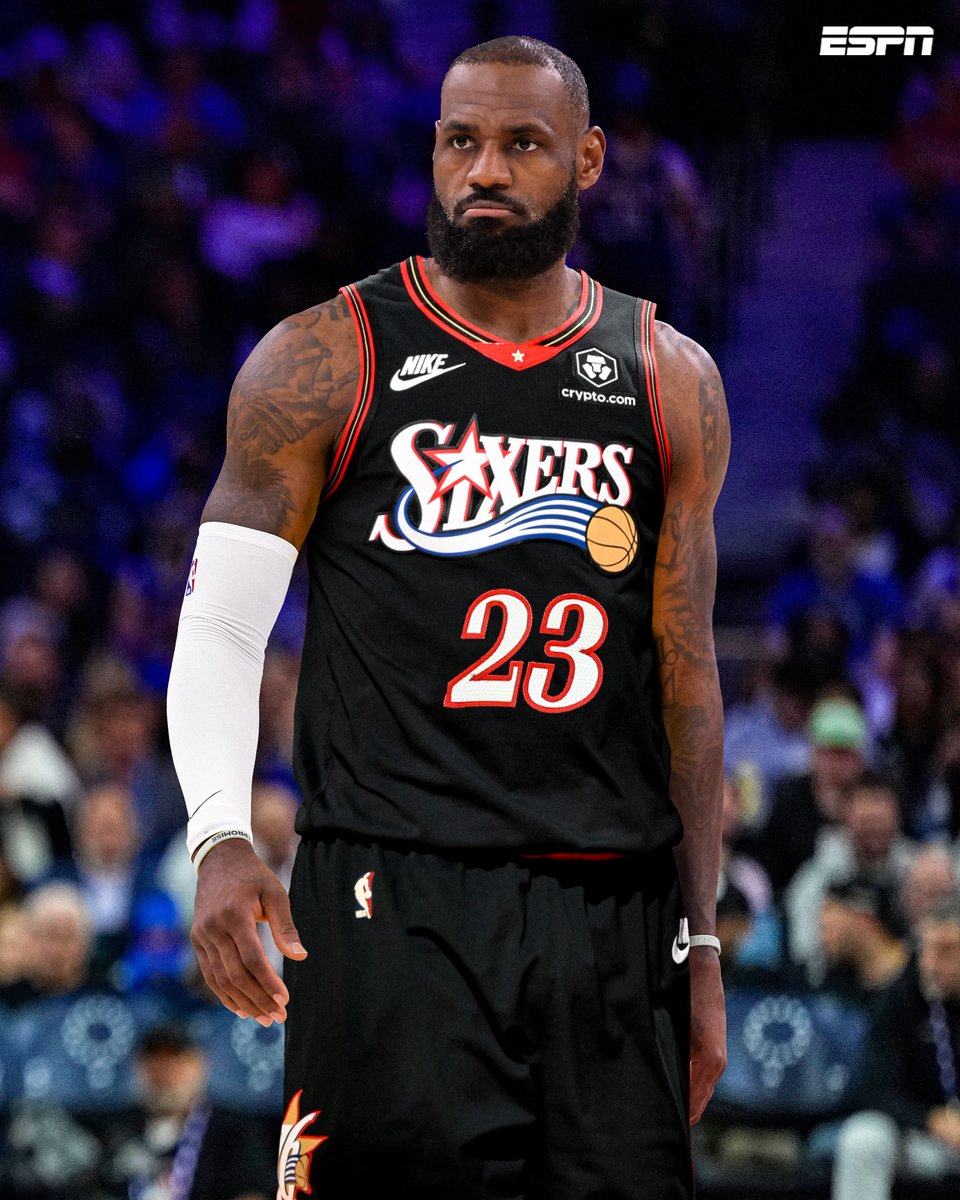
Breaking: LeBron James is signing with the Philadelphia 76ers on a two-year, $8 million deal with a player option, his agent Rich Paul told @ShamsCharania.
Early in my career I thought smart clients would just intellectually know to stay invested during a downturn. I was wrong. Watched several high earners abandon well-built plans the same week "extreme fear" hit the headlines. What changed things wasn't smarter clients. It was building the plan and the guardrails before the fear ever showed up. Now when volatility hits, the conversation is short: this is exactly what we planned for.

If your kid is 8, you've got about ten summers left before they're grown. Most high earners spend those summers chasing one more promotion. Here's why that trade costs more than it pays: ↓
Converting your LLC to an S-corp isn't one decision. It's 12 separate things you now have to set up, correctly, before the tax savings mean anything. Here's the full list, so nothing catches you off guard: ↓
Most people think delaying a big experience costs nothing. The money just sits there, still available later. It doesn't work that way. The older you get, the more it costs to get the same experience back: • Energy • Health • The people you'd have shared it with Waiting has its own cost and it only goes up the older you get.
A pattern shows up constantly with inherited IRAs: beneficiaries let the account sit untouched for years, then withdraw everything right before the 10-year deadline. It feels responsible. But it’s usually the most expensive option available.
"Lifestyle business" gets said like an insult. But optionality is the whole point of building wealth in the first place. Owning your time is the return most people are actually working for.
A new client kept sending extra principal to her 3% mortgage out of old habit. We paused and compared that to investing the same money instead. The gap after 15 years surprised her. A good financial habit was costing her, not protecting her.

harshal tandon @TandonHarshal
12 Followers 345 Following
JO_Nathan777 @JO_Nathan777
57 Followers 239 Following
The Great American Op... @Ironbrand2
3K Followers 7K Following Straight. White. Proud. Grateful. Save women's sports. Islam is an existential threat to liberal civilization. The U.S. is the most just society in history.
🇺🇸The Beave🇺... @CLMandell5
2K Followers 2K Following ‘if he fails, at least fails while daring greatly’ #God #Country #Husband #Dad PC: MLB 3K Hit Club
Bryan Bertani @BertaniBryan
39 Followers 376 Following

Phil Webber @PhilWebberCSF
13 Followers 189 Following I sell Finance and Finance Accessories! Independent Licensed Financial Professional
Mishaal @H20Mishaal
24 Followers 346 Following
Osman Tan @16osmantan
2 Followers 47 Following
Kaan @kaandemirelYP
925 Followers 1K Following
Ahmettt @Ahmettt14
0 Followers 20 Following
Chandler Builds @chandlerwilcox
585 Followers 3K Following Good stuff Links 👉🔗 https://t.co/QMP0pgu29V https://t.co/eXkyGkPn5x https://t.co/h94xVBw7Xc https://t.co/1HQCUAgx2L https://t.co/YzCK3AtoBu https://t.co/UhagdbYGkS https://t.co/FlpMuSLgON
Erin Maag @erin_maag
8 Followers 315 Following
PK @bklyn_PK
7 Followers 189 Following

Todd Barge @ToddBarge
133 Followers 833 Following
Brian Douglas @bdouglas67
53 Followers 65 Following
Sparrow News @SparrowGlobal1
71 Followers 191 Following Politics, Geopolitics, Economy, Culture, Religion.
Nick Jeffers | Möbiu... @MFTphysics
44 Followers 432 Following Theoretical physics ndependent researcher w/ AI. Möbius Field Theory — Klein bottle spacetime, unified physics. Prize mathematics. Rigorous epistemic protocol.
LoloVan @lolotechx
127 Followers 372 Following
MarketMaverick @AKCapStrat
1K Followers 698 Following Tesla. Tech. Exploring the Market with Daily Dose of Finance and Stocks
Yedukondalu @7kondalu358
67 Followers 1K Following
Blue Lizard 🩵 @TheXdailydose
163 Followers 4K Following
MJ @mhdjfi
23 Followers 276 Following
👁 @Oculustrade
76K Followers 17K Following trader @onepathapp to analyze the market all posts for education only https://t.co/rPJUGZlEXw
Alex R Hansen @AlexRHansen1
2 Followers 153 Following
Christine k @chistine321
62 Followers 197 Following
Panulirus @PanulirusArgus
9 Followers 124 Following

Mike Grace @MikeGraceBroker
8 Followers 95 Following Award-winning mortgage broker → app designer. 🎯 Together, we’ll shift the balance or power back to Canadian borrowers. CheckmyRate app launching 2026 🚀
Niek @niekjsmit
42 Followers 411 Following




🇬🇧🔥 FIRE is ... @GrahamCompton
2K Followers 1K Following Financially Independent, Retired Early (FIRE) in the UK. Still building wealth via index funds and property. Here to pass on what wisdom I have.
UNEarned Income @unearnedinc
310 Followers 985 Following Flipping earned income into passive cash flow. Covering Stocks, Real Estate, Crypto. Follow on IG/FB at "unearnedinc" - Shop stock merch at https://t.co/gHvyNFMEGs
Joe Lester @jlester310
195 Followers 917 Following

patjones @patjone04727701
6 Followers 36 Following
Raymond Fitzsimmons @RaymondFitzsi10
30 Followers 1K Following New York born and raised. Diehard Dallas Cowboys fan for 35+ years!
BowTiedMaltipoo @bowtiedmaltipoo
95 Followers 548 Following Cutest quadruped on DeGen Island | software engineering | skin care product formulator & online biz #bitcoin
Ashok Agarwal @AshokAg39473490
21 Followers 117 Following
Amol Panicker @amol_panicker
212 Followers 869 Following AMFI REGISTERED MUTUAL FUND DISTRIBUTOR (ARN-50803),Full Time Trader since 2004...Trend- Follower,Post Earnings Drift.
Miguel Gonzalez @miguegv
740 Followers 1K Following Financiero (F3 Amib). Pregúntame lo que quieras de FINANZAS PERSONALES
Rahul Bajaj @rahulbajajj
2K Followers 5K Following University of Northampton Alumnus.Loves cricket and stocks. I use Twitter as a self review diary. My tweets may offend.

Sports Follower @SportsFoll7394
37 Followers 362 Following follower of sports - Decade of Darkness Survivor
Aigerim Zimmerman @cg5pgvyt6n
3 Followers 92 Following
MudFlap @mud_jackson
653 Followers 944 Following
Scottsdale Leafs “B... @ScottsdaleLeafs
140 Followers 3K Following North is still North, Leafs, Cubs, Tacos
CA Tarun Sehgal @catarunsehgal
133 Followers 1K Following CA | Investment & Wealth Advisor | 25+ Years in Markets | Mutual Funds | Wealth Creation Lust, Anger & Greed lead to Degradation of Soul.

Mark Stevenson, MBA @MarkStevensonMS
2 Followers 29 Following Financial Advisor | Workplace Advisor - Equity Compensation at Morgan Stanley | For information, visit my website. NMLS#: 1766572 CA IL#:OM57414
T. Arnold 🏁 @TB_King9
4K Followers 4K Following Ⓜ️emphis Associate AD, Capital Projects & Operations | @HowardU Alum | @gmcbulldogs Alum | ΩΨΦ ⚡️| #LeaveYourLegacy | RT’s & Likes ≠ Endorsements 🏁
Allan Kreda @akreda
2K Followers 6K Following Contributing writer @AP covering Rangers, Islanders and Devils and formerly with New York Times @NYTSports. Co-author of Ken Morrow's memoir @ https://t.co/jbbZFh9DJY
Dogs4life @Dogsforeverever
208 Followers 1K Following Dog lover. If you don't love dogs - keep walking!
Scott Campbell @mbtm_scott
264 Followers 443 Following Flo-Grown,Husband,Father (Alexandra & Kelsey) and proud son of a Farmer. Rural Market Manager - Middle Georgia Market. All things BBQ🥩.Trends for United States
You might like