mpy @mpowerpy
Joined September 2022-
Tweets2K
-
Followers10
-
Following139
-
Likes3K

Six new multi-year @NASA projects will study everything from retreating glaciers to air quality to clouds generated by wildfires. Despite their different topics, all of the missions will use sensors mounted on aircraft. go.nasa.gov/4bBIsVy


2nd Edition at amzn.to/45Y3LyI Graph Machine Learning — the latest advancements in graph data to build robust machine learning algorithms. 𝓚𝓮𝔂 𝓕𝓮𝓪𝓽𝓾𝓻𝓮𝓼: 🟠Master new graph ML techniques through updated examples using PyTorch Geometric and Deep Graph Library (DGL) 🔵Explore GML frameworks and their main characteristics 🟠Leverage LLMs for machine learning on graphs and learn about temporal learning


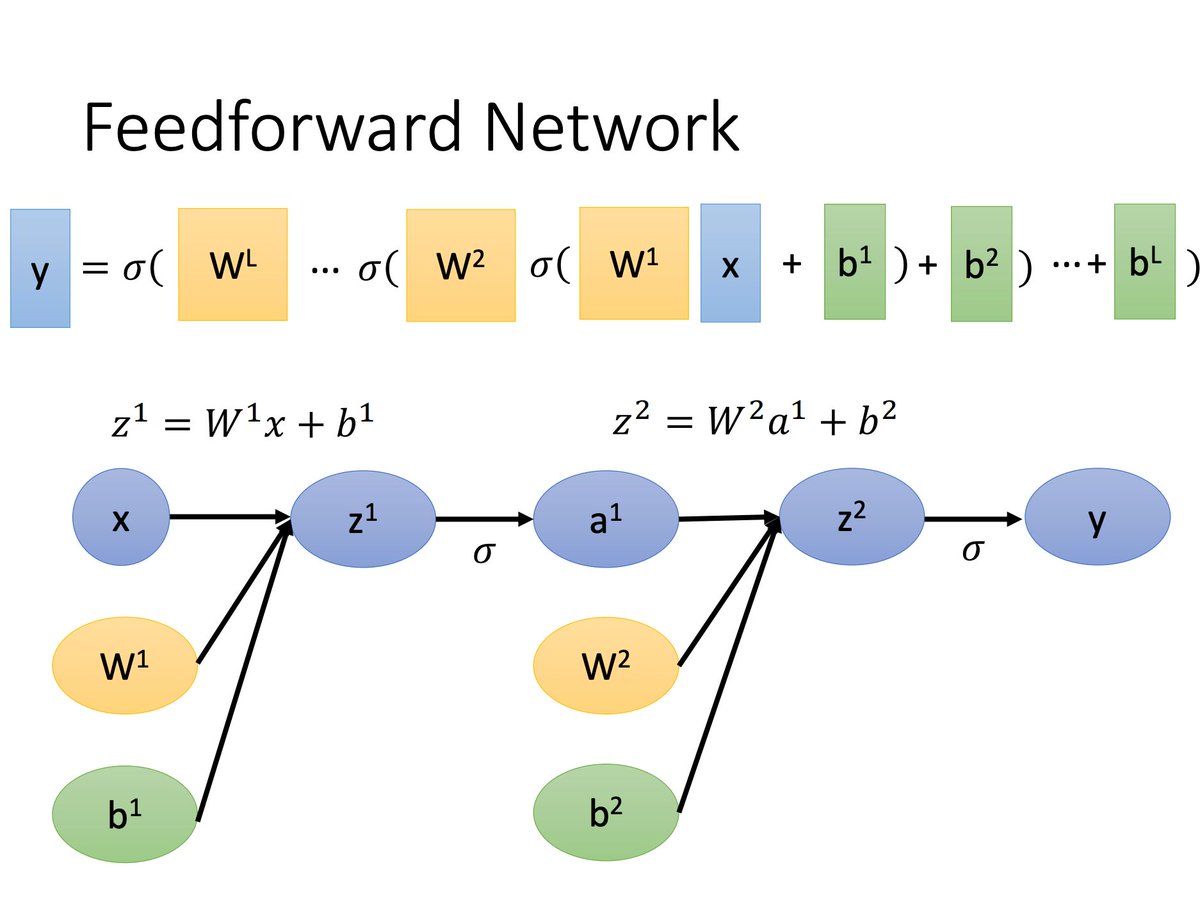
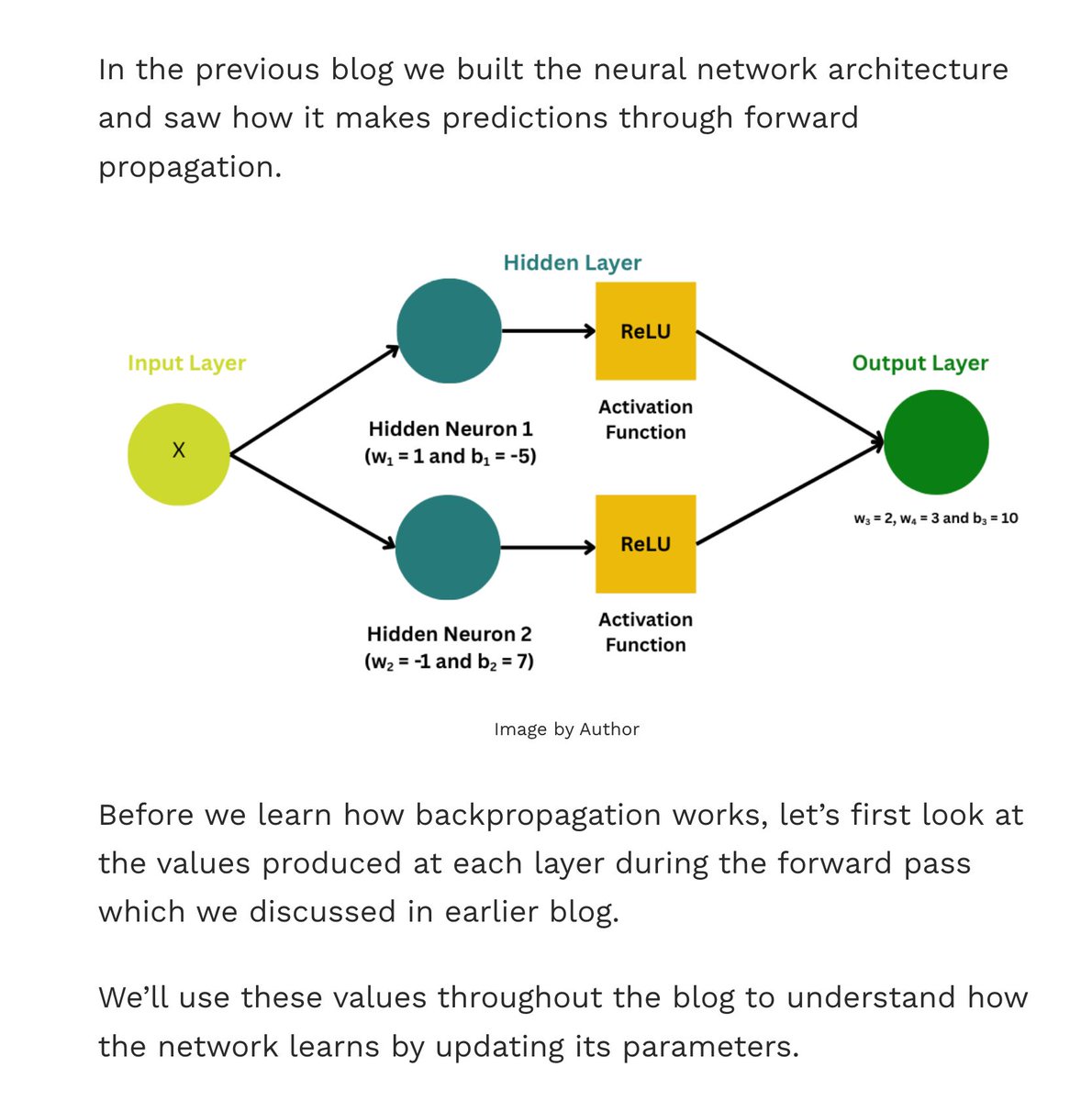
Backpropagation Explained for Beginners: Building the Intuition! #BigData #Analytics #AI #MachineLearning #DataScience #IoT #IIoT #Python #RStats #TensorFlow #JavaScript #ReactJS #CloudComputing #Serverless #DataScientist #Linux #Programming #Coding #100DaysofCode geni.us/BackpropIntuit… geni.us/Backprop-Graph


Mathematical Foundations of Quantum Computing: A Scaffolding Approach Get it at amzn.to/48bSyus


One day left to register for our webinar 'Satellite retrievals for wildfires & related applications'. Find out how satellite data from the @esa Climate Change Initiative Fire project is used to track global burned area and fire emissions and why accurate wildfire information matters for the climate system, civil protection, and environmental policy. This webinar is ideal for fire scientists, climate modellers, and environmental stakeholders.🔥🛰️ Register here: t1p.de/xuyrj


🔥 Wildfires across central Canada 🇨🇦 sent vast smoke plumes across eastern Canada, the US and the Atlantic in mid-July 2026. 🛰️ This #CopernicusEU Sentinel-5P time series tracks the smoke's eastward transport, supporting air quality monitoring. 🔗 link.europa.eu/fCpVRK


8 RAG architectures for AI Engineers: (explained with usage) 1) Naive RAG - Retrieves documents purely based on vector similarity between the query embedding and stored embeddings. - Works best for simple, fact-based queries where direct semantic matching suffices. 2) Multimodal RAG - Handles multiple data types (text, images, audio, etc.) by embedding and retrieving across modalities. - Ideal for cross-modal retrieval tasks like answering a text query with both text and image context. 3) HyDE (Hypothetical Document Embeddings) - Queries are not semantically similar to documents. - This technique generates a hypothetical answer document from the query before retrieval. - Uses this generated document’s embedding to find more relevant real documents. 4) Corrective RAG - Validates retrieved results by comparing them against trusted sources (e.g., web search). - Ensures up-to-date and accurate information, filtering or correcting retrieved content before passing to the LLM. 5) Graph RAG - Converts retrieved content into a knowledge graph to capture relationships and entities. - Enhances reasoning by providing structured context alongside raw text to the LLM. 6) Hybrid RAG - Combines dense vector retrieval with graph-based retrieval in a single pipeline. - Useful when the task requires both unstructured text and structured relational data for richer answers. 7) Adaptive RAG - Dynamically decides if a query requires a simple direct retrieval or a multi-step reasoning chain. - Breaks complex queries into smaller sub-queries for better coverage and accuracy. 8) Agentic RAG - Uses AI agents with planning, reasoning (ReAct, CoT), and memory to orchestrate retrieval from multiple sources. - Best suited for complex workflows that require tool use, external APIs, or combining multiple RAG techniques. Most architectures here involve some form of retrieval-time decision. But they all run on top of whatever was already indexed. If that indexing step outputs messy chunks, every architecture inherits them. Improving it is a separate problem from the 8 above. I wrote about a better unit for the indexing step. The technique: - cuts corpus size by 40x. - reduces tokens per query by 3x. - improves vector search relevance by 2.3x. And it doesn't alter the retrieval algorithm, the reranker, or the embedding model. Read it in the article quoted below.

Hands-On Graph Neural Networks Using Python: Build, Train, and Optimize Graph-Based Deep Learning Models with PyTorch Geometric and Python! #BigData #Analytics #DataScience #AI #MachineLearning #NLProc #LLM #IoT #IIoT #PyTorch #Python #RStats #TensorFlow #Java #JavaScript #ReactJS #GoLang #CloudComputing #Serverless #DataScientist #Linux #Programming #Coding #Books #100DaysofCode geni.us/Graph-NN--Pyth…


there are four types of agent loops. most people only know one. loop engineering is a choice between four structures, each handing off one more job than the last. every one answers two questions: what starts a run, and what ends it. hand-run, you answer both yourself, every time. 1) turn-based → you prompt, it acts, you review, you prompt again. both jobs stay with you. use when requirements are still forming. 2) goal-based → "/goal hit Lighthouse 90, stop after 5 tries." an evaluator checks, a no sends it back. use when the outcome is measurable but the path isn't. 3) time-based → a clock fires, it runs "check the PR, fix CI," then waits. /loop local, /schedule survives a closed laptop. use for recurring work. 4) proactive → no human present. it watches a channel, spawns triage, fix, and a reviewer, closes the task itself. use for standing duties you can't predict. not which one is most advanced. whether your task is exploratory, measurable, recurring, or standing. the more you hand off, the less you babysit. full breakdown in the article below.
"Digital Twins in Action", by Greg Biegel Pre-order now with Amazon price guarantee: amzn.to/4brDn1U from @ManningBooks You will learn how to: • Define clear business objectives for digital twins • Create digital representations of physical systems • Blend computer vision, OCR, and generative AI with 3D geometric models • Stream IoT sensor data into a twin • Represent real-world systems as knowledge graphs • Machine learning and agentic AI for analysis and decision-making


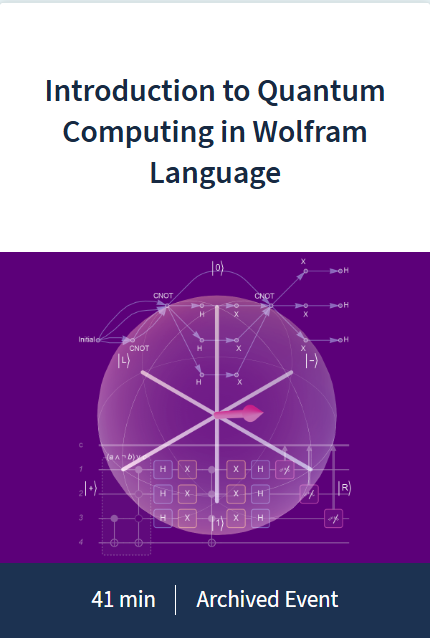
Build your foundation in #quantumcomputing: explore basic logic, quantum circuits, entanglement and algorithms #WithWolfram
🌟 🌟 🌟 🌟 🌟 Amazing 5-star book: “Dancing with #Python — Learn to code with Python **and** Quantum Computing” at amzn.to/3ERsiEC (744 pages)


This study examines wave behavior near extremal black hole horizons, using the Couch–Torrence inversion to clarify the deep analogy between horizon peeling and behavior near infinity in black hole spacetimes. 🔗worldscientific.com/doi/reader/10.…

"How to Build and Fine‐Tune a Small Language Model: A Step-by-Step Guide for Beginners, Researchers, and Non-Programmers" Available at amzn.to/4aV0amA

Learn Quantum Computing with Python and IBM Quantum — Write your own practical quantum programs [2nd Edition]: amzn.to/3F3PdlD v/ @PacktDataML 𝓦𝓱𝓪𝓽 𝓨𝓸𝓾 𝓦𝓲𝓵𝓵 𝓛𝓮𝓪𝓻𝓷: 🟠Get familiar with the features within the IBM Quantum Platform 🔴Create and visualize quantum gates and circuits 🟠Operate quantum gates on qubits using the IBM Quantum Composer 🔴Install and run your quantum circuits on an IBM Quantum computer 🟠Discover Qiskit and its many features such as the Qiskit Runtime 🔴Get to grips with fundamental quantum algorithms and error mitigation techniques to help you get started 🟠Understand the new era of quantum utility and how this moves us closer towards quantum advantage


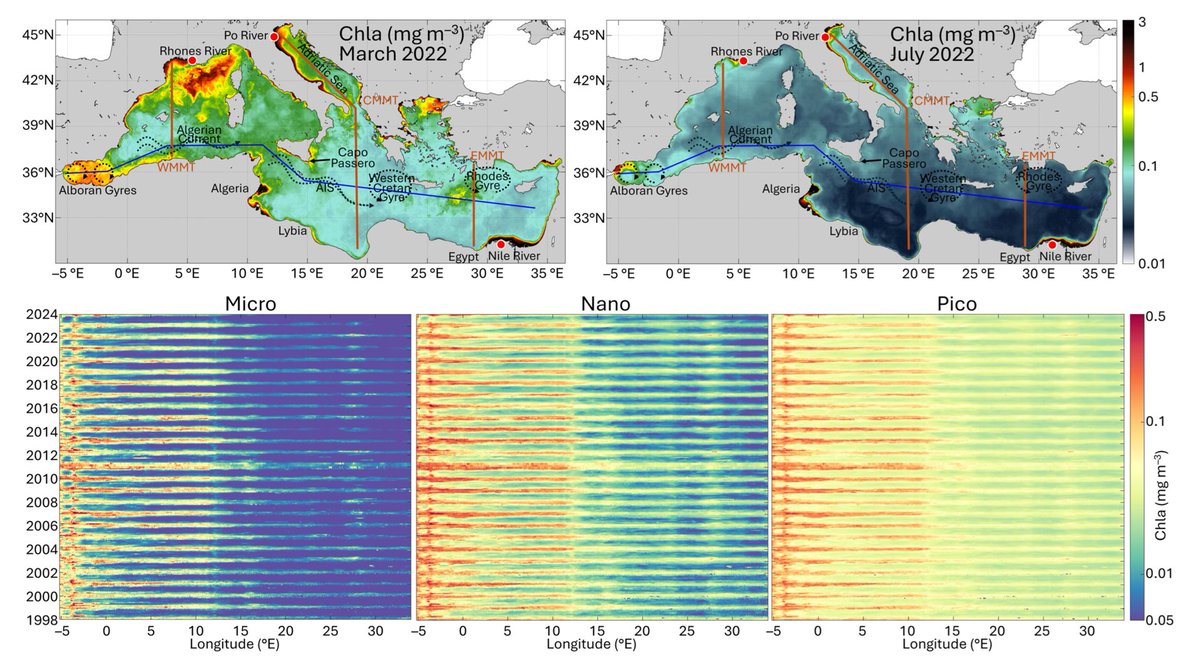
🌊🌊 #Ocean Colour Estimates of #Phytoplankton Diversity in the #Mediterranean Sea: Update of the Operational Regional Algorithms Within the #Copernicus #Marine Service ✍️ Annalisa Di Cicco et al. 🔗 brnw.ch/21x3Hre

أحد المراجع المهمة التي تمكنك من كتابة بحث علمي على أسس علمية. shuyiwrites.com/uploads/1/3/0/…


5 Powerful lessons from " Fall in love with the problem not the solution"

Statistics Every Programmer Needs — Practical Python implementations and quantitative methods: amzn.to/4vwf1fJ via @ManningBooks 🌟🌟🌟🌟🌟 This hands-on 448-page guide teaches you how to: • Apply foundational and advanced statistical techniques • Build predictive models and simulations • Optimize decisions under constraints • Interpret and validate results with statistical rigor • Implement quantitative methods using Python

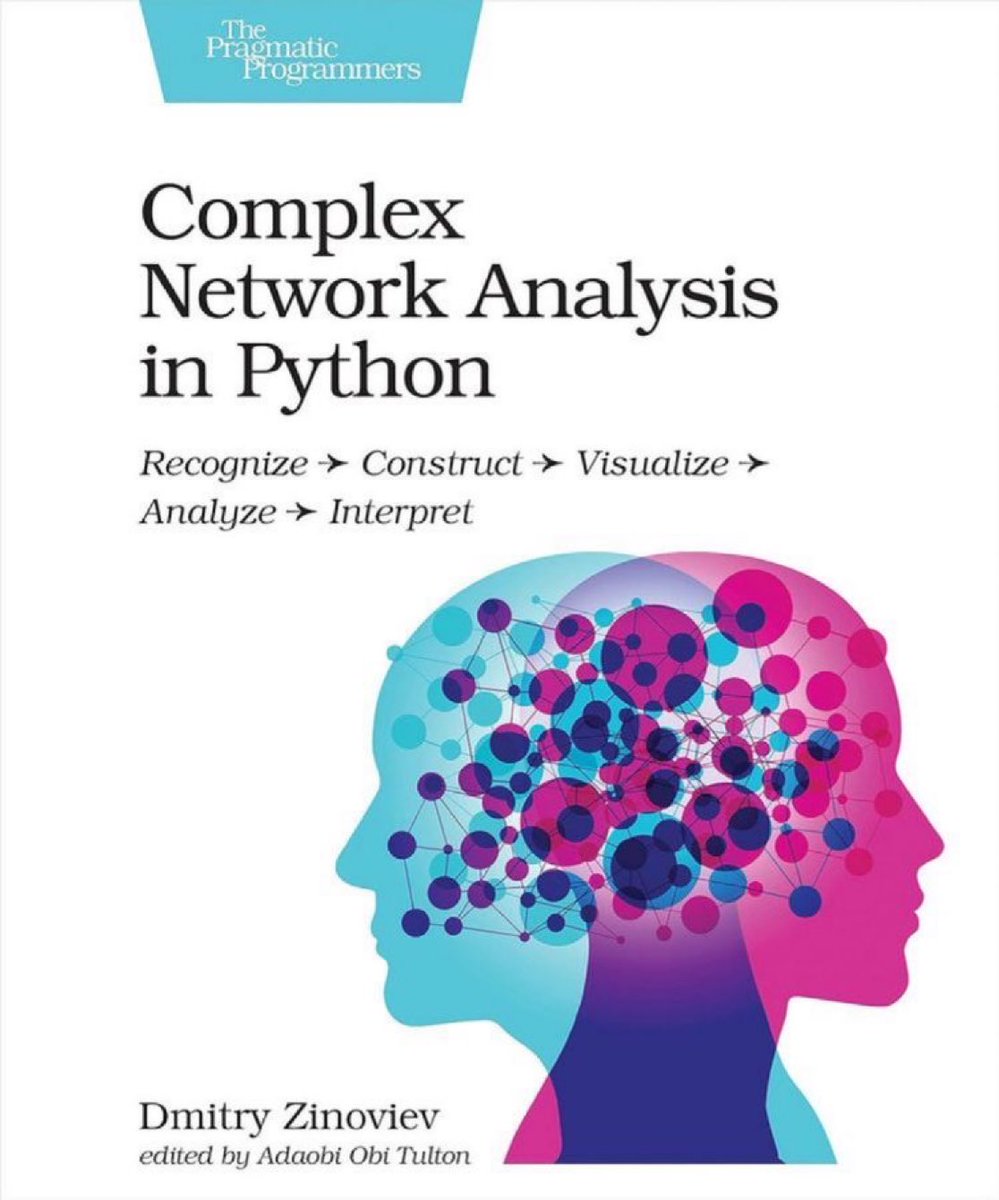
Complex Network Analysis in Python — Recognize • Construct • Visualize • Analyze • Interpret: amzn.to/2Rw8ZKL —————— #DataScientist #DataScience #AI #ML #MachineLearning

RFΛRΞΛS @RF_Areas
2K Followers 6K Following We design & manufacture #HT #solutions for #Wireless Comm. Focused on Radiophysics & Quantum Electronics. RFA SPACE, RFA UWB, RFA SMART, RFA Wi-Fi, RFA AI

ENIGMA EUProject @EnigmaEuproject
877 Followers 6K Following ENIGMA is an Horizon Europe project addressed to achieve excellence in the protection of Cultural Goods and artefacts from man-made threats
ERATOSTHENES Centre o... @ERATOSTHENESCoE
443 Followers 209 Following ERATOSTHENES Centre of Excellence of the Cyprus University of Technology is a digital innovation hub in earth observation, space and geo-spatial information.

Belinda Davis @Belinda85843090
110 Followers 2K Following hi, i am Jeff and i am 16 years old. I like to play mobile games and make memes all day ;)
Developer Highlights @DevHighlights
10K Followers 11K Following Curated highlights for developers and builders.
António Sá Pinto @asapintoPT
116 Followers 1K Following
Brandon Baker @_RYB_J
260 Followers 660 Following
IDU @defencealerts
82K Followers 198 Following "India above all else." Banned by Pakistan Government Personal Ties to the Indian Navy, CRPF & UPSTF
OpenUniversityCyprus @oucyprus
2K Followers 977 Following Public #University dedicated to open & distance #education, offering #bachelors, #masters, #phd degrees, devoted to #research #innovation δημόσιο #πανεπιστήμιο
Google Earth Engine N... @GeeDevs
181 Followers 40 Following Official account for Google Earth Engine Developers Nairobi.@GDG_Nairobi @EarthOutreach @googleearth @google
The Attraction Beast @AttractionBeast
7K Followers 431 Following Masculinity Coach | S❤️🔥x Foods + Workouts🏋️♂️ = ATTRACTION BEAST 👑 | Build a powerful physique | And become magnetically attractive and sexually confident
Shabdasneha Library @shabdasneha
34 Followers 44 Following Shabdasneha Library is a privately owned book library in Pune, India. Follow this feed to know more abt books as well as get receive updates from the library.
Pune Book Lovers @punebooklovers
147 Followers 150 Following Book club of Pune. Join us and get to know the fellow bibliophiles!
Vegard Loewe @vegardloewe
1K Followers 573 Following design, product and growth - building https://t.co/yvO7CizkUn
Cyprus University of ... @CyUniTech
4K Followers 1K Following Official Account of Cyprus University of Technology. Επίσημος λογαριασμός Τεχνολογικού Πανεπιστημίου Κύπρου.
JAXA Institute of Spa... @ISAS_JAXA_EN
7K Followers 44 Following Tweets from the Institute of Space and Astronautical Science (ISAS) located in the JAXA Sagamihara campus. 日本語:@ISAS_JAXA
RFΛRΞΛS @RF_Areas
2K Followers 6K Following We design & manufacture #HT #solutions for #Wireless Comm. Focused on Radiophysics & Quantum Electronics. RFA SPACE, RFA UWB, RFA SMART, RFA Wi-Fi, RFA AI
Universität Zürich @UZH_ch
28K Followers 406 Following Universität Zürich / University of Zurich. News rund um die Universität Zürich. Tweets in English: @UZH_en
Laboratory of Atmosph... @lap_auth
100 Followers 161 Following
PMOD/WRC @PmodWrc
156 Followers 23 Following Founded in 1907 by Carl Dorno Our institute is located in Davos. We actively cooperate with international partners and universities in climate research.
CARO by ERATOSTHENES ... @ECoE_CARO
86 Followers 105 Following The Cyprus Atmospheric Remote Sensing Observatory (CARO) National Facility NF of the ERATOSTHENES CoE for remote sensing observations of aerosol and clouds.
Airbus Space @AirbusSpace
161K Followers 351 Following At Airbus, we’re for what’s next. Join us as we work to fuel progress in space and, in doing so, create a better future for earth and all humankind. #NextSpace
Peter Dynes @PGDynes
51K Followers 954 Following MD - https://t.co/R4lefkSKKF | Advancing climate resilience through Sustainable Surface Radiative Thermal Management (SRTM) research https://t.co/rpCKuXuRX7
NASA's Johnson Space ... @NASAJohnson
2.3M Followers 173 Following Lead center for the @Space_Station and Orion spacecraft. Home to Mission Control and the nation's astronaut corps. 🚀 https://t.co/7u1SQekfru
Aditya Dahiya @AdityaDahiyaIAS
881 Followers 182 Following Reproducible code-based Data Visualizations. R. ggplot2. Views are personal.
Greek GEO Office @GreekGEO_Office
406 Followers 213 Following The focal point of Earth Observation activities in Greece
Ulka Kelkar @UlkaKelkar
4K Followers 1K Following what you see is what you get. views are mine, not my employer's.
Mat3ra @Mat3ra_com
3K Followers 477 Following The AI-ready collaborative platform driving the #DigitalTransformation of #materials and #chemicals R&D through #modeling and #machinelearning.
Tengrai @Tengrai_com
7K Followers 11 Following Join 500k+ creators building without limits. Prompt in your language. Render instantly. Own everything.
Mapbox @Mapbox
77K Followers 2K Following Mapbox powers navigation for people, packages, and vehicles everywhere. Register for BUILD with Mapbox: https://t.co/tXdM1hdA7v
Nature Reviews Earth ... @NatRevEarthEnv
11K Followers 654 Following An online-only journal publishing high-quality Review, Perspective and Comment articles across Earth and environmental science. Tweets by Erin, Graham & Clare.
TROPOS_eu @TROPOS_eu
1K Followers 114 Following The Leibniz Institute for Tropospheric Research e.V. (TROPOS) in Leipzig (Germany): Research on aerosols & air quality / air pollution / clouds & climate
ERATOSTHENES Centre o... @ERATOSTHENESCoE
443 Followers 209 Following ERATOSTHENES Centre of Excellence of the Cyprus University of Technology is a digital innovation hub in earth observation, space and geo-spatial information.
ESA's EarthCARE missi... @esa_earthcare
782 Followers 88 Following @esa’s cloud mission, with @JAXA_en. EarthCARE, "White Dragon", probes the mysteries of clouds and aerosols and the role they play in regulating the climate
AKSatelliteFacility @Ak_Satellite
2K Followers 63 Following The Alaska Satellite Facility (ASF) of the Geophysical Institute (GI) at the University of Alaska Fairbanks, downlinks, archives, and distributes satellite data
Stanford AI Lab @StanfordAILab
260K Followers 339 Following The Stanford Artificial Intelligence Laboratory (SAIL), a leading #AI lab since 1963. ⛵️🤖 Emmy-winning video: https://t.co/lV9smZTC1m
Joint Polar Satellite... @JPSSProgram
22K Followers 91 Following We’ve moved! Follow @NOAASatellites and visit https://t.co/51mGteiRU9 for future JPSS updates.
nana🦄 @ds_nana_
32K Followers 8K Following data scientist from a non tech background. code with coffee. share my learnings here #datascience #python #rstats #sql
FORCeS @FORCeS_H2020
263 Followers 42 Following FORCeS is an #H2020-funded project. It will provide more precise climate projections by reducing the uncertainty on how particles in the air affect climate.
CEOS WGCV Cal/Val por... @CEOS_WGCV
190 Followers 118 Following The CEOS Cal/Val portal serves as the main forum for exchange and information sharing for the CEOS Working Group on Calibration and Validation
European Space Agency @esa
1.9M Followers 1K Following Elevating the future of Europe through space. Please see our Privacy Notice: https://t.co/UkkEqaKmlL
Copernicus EMS @CopernicusEMS
71K Followers 2K Following Copernicus Emergency Management Service provides mapping products based on satellite imagery as well as #ForestFires #Flood and #Drought early warning products.
AMS Publications @AMSPublications
1K Followers 11 Following The American Meteorological Society (@ametsoc) publishes research that advances the atmospheric, oceanic, hydrologic, and climate science.
Python Maps @PythonMaps
78K Followers 517 Following Mapping the world with Python. Buy my book here - https://t.co/hAaaAxtIO9
NOAA Satellites @NOAASatellites
1.5M Followers 641 Following The NOAA Satellite & Information Service (referred to as NESDIS) is a line office of @NOAA.
GES DISC @NASA_GESDISC
10K Followers 237 Following News and information on Twitter from the Goddard Earth Sciences Data & Information Services Center (GES DISC) will now be found with @NASAEarthdata
Data Science Dojo @DataScienceDojo
228K Followers 938 Following We make learning data science and LLMs easy! Join the community of 10,000+ professionals. #DSDojo
Fire MDPI @Fire_MDPI
3K Followers 2K Following open access journal on fire by @MDPIOpenAccess. Current EiC: Dr. Grant Williamson @ozjimbob Founding EiC: Prof. Alistair Smith @pyroecophys Open Knowledge of🔥
Colette Heald @coletteheald
2K Followers 408 Following Canadian, former Bostonian, new Zürcherin, professor @ETH_en, atmospheric chemist, researcher, educator, wanderer, and wonderer. (Now @coletteheald.bsky.social)
Jobs in Atmos. Chem. ... @AtmChemAeroJobs
3K Followers 1 Following We have moved! Come find us on Bluesky! (same handle)
Mike Tamir, PhD @MikeTamir
39K Followers 51 Following SVP ML/AI Eng at Tubi, former Distinguished MLE & ML/AI Discipline Head, Shopify; ML-DS head at Uber AI and ATG; Chief Scientist, SIG; Founder FakerFact
Centre for Environmen... @cedanews
2K Followers 169 Following Providing data curation and analysis services to the environmental science community via two key services - JASMIN and the CEDA Archive
Thermal Remote Sensin... @thermal_sig
139 Followers 49 Following The EARSeL Thermal Remote Sensing Special Interest Group (SIG): bringing the thermal remote sensing community closer together
Laboratory of Atmosph... @PSI_LAC
335 Followers 3 Following Official account of the Laboratory of Atmospheric Chemistry (LAC) at @psich_en Managed by: @DadaLubna with (minor) assistance from @RobModini & @PatrikWiniger
Marcus Borba @marcusborba
40K Followers 3K Following Data & AI expert | Helping companies transform their business with dataYou might like