-
Tweets21
-
Followers1
-
Following70
-
Likes4
For my first post, I’m sharing a letter @NVIDIA signed on why open models matter. AI will transform every industry, power every company, and be built by every country. Open models strengthen safety and cybersecurity, accelerate innovation and diffusion, and enable sovereignty. The world needs both frontier closed models and frontier open models. images.nvidia.com/pdf/Open-Weigh…


We're partnering with @huggingface to investigate an unprecedented security incident. Cyber-capable OpenAI models compromised Hugging Face production during a benchmark evaluation. Sharing preliminary findings to help defenders understand emerging risks: openai.com/index/hugging-…
10M! New day, new usage reset for paid users of Codex and ChatGPT Work. Lands in the next hour. Enjoy.


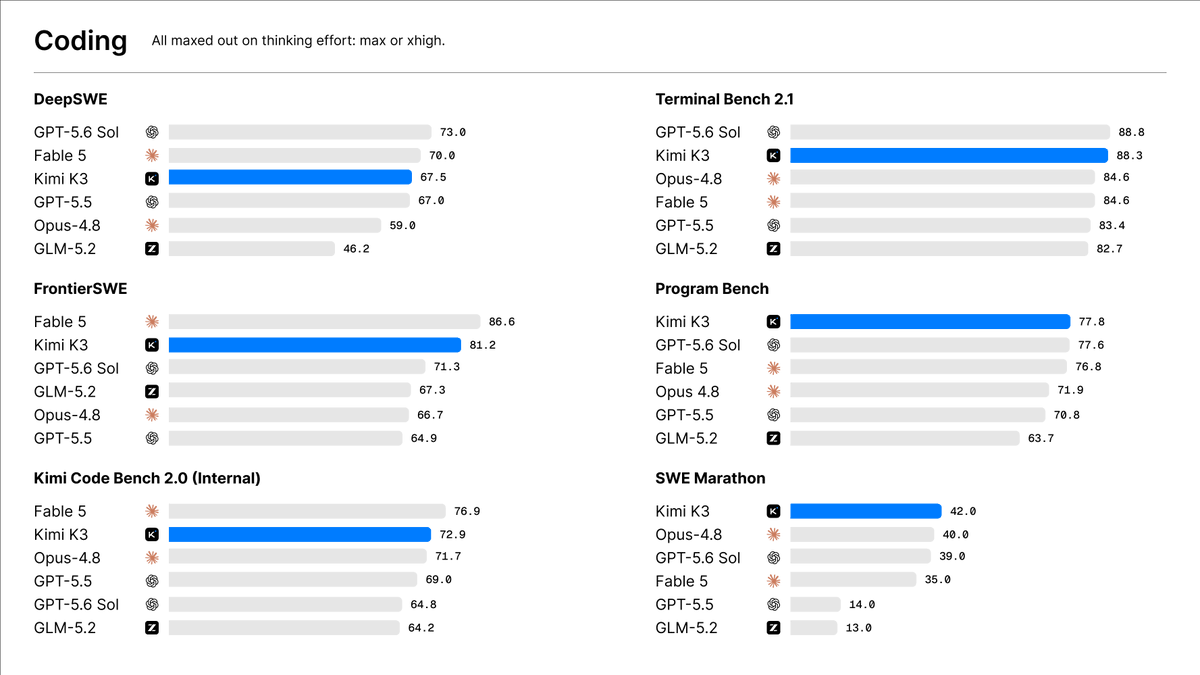
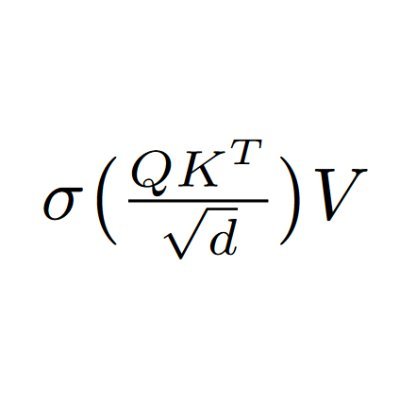
Introducing Kimi K3: Open Frontier Intelligence 🔹 2.8 Trillion Parameters, 1 Million Context, Native Multimodal 🔹 Kimi Delta Attention enables up to 6.3x faster decoding in million-token contexts 🔹 Attention Residuals deliver ~25% higher training efficiency at <2% additional cost 🔹 Built for long-horizon agentic coding and self-evolving workflows Kimi K3 is now live on on Kimi.com, Kimi Work, Kimi Code, and the Kimi API. Open Weights by July 27, 2026. 🔗 API: platform.kimi.ai 🔗 Tech blog: kimi.com/blog/kimi-k3


🚨 BREAKING: Anthropic CEO Dario Amodei 向美国国会提交报告: “经过调查,我们发现 Kimi K3 可能蒸馏了一个 Anthropic 尚未开发完成的模型。” 国会议员追问:“你们的模型还没做出来,它怎么蒸馏的?” Amodei:“这正是我们召开听证会的原因。” AI 安全领域迎来新课题:Future Model Leakage
Why can Kimi ship K3? Let me tell my story. Earlier this year, I left academia for industry. I talked to a lot of companies along the way. Here's what I saw: 1⃣Arrogance. They believe the AI war is over, and they won. No hunger for the future, and no hunger for talent. 2⃣Restlessness. Young labs short on foundation, either rushing to catch the frontier or pivoting away from the competition. 3⃣Fear. Strong teams with real experience, but from the second tier, they can't quite bring themselves to aim for #1. 4⃣Misalignment. Everyone is optimizing for their own credit, but nobody really cares whether the company can reach AGI. Kimi was different. Over many conversations with the founders, the same thing came through every time: a raw, genuine hunger for AGI. I joined. The hunger was real. We shipped K3. This is only the beginning.

Introducing a limited preview of GPT-5.6 Sol, our next generation frontier model, as well as GPT-5.6 Terra, a balanced model for efficient, everyday work, and GPT-5.6 Luna, a fast and affordable model for high-volume work. openai.com/index/previewi…

把干巴巴的 CS 算法变成了 300 多个可交互的「视觉沙盒」。 Elijah Yilma 发布的《The Interactive Handbook on Data Structures and Algorithms》不仅仅是一本电子书,而是一个可以直接在浏览器里运行代码的「学习操作系统」。 这背后的工程设计非常惊艳: 1/ 「空间可视化」。数组、哈希表、树结构不再是抽象概念,你的每一行操作都能在内存视图中看到实时的几何反馈。 2/ 「原位执行」。内嵌了完整的 Python 运行时,边看边写,无需切换窗口。 3/ 「视觉调试器」。支持算法执行轨迹的时间回溯,你可以像看电影一样随时暂停、快进和倒放代码逻辑。 计算机科学的学习门槛,正在被这种极度硬核的互动式 UI 彻底打碎。 我是「谁是藏镜人」,专注于挖掘 AI 与交互设计演进的底层逻辑。 关注 @VedaAI00,带你看清教育与技术交汇的每一个进化信号。

卧槽 OpenAI 终于干了件人事!!!🔥 2026 年第一个开源模型来了——Privacy Filter, Apache 2.0 直接放出! 1.5B 参数的 PII(个人信息) 检测神器, 专门把文本里的姓名、地址、电话、邮箱、身份证这些敏感信息秒红action掉。 关键是它能在你浏览器本地跑,WebGPU 直接干, 完全不用传服务器! 核心亮点: 1. 多语言支持 2. 完全本地运行(Transformers.js + WebGPU),无需上传服务器,浏览器即可使用 3. 实时处理文档,隐私保护优先 适合合规审核、 用户数据处理、本地隐私工作流等场景。 演示效果非常流畅,尤其适合需要强隐私保障的团队和开发者。 地址评论区👇

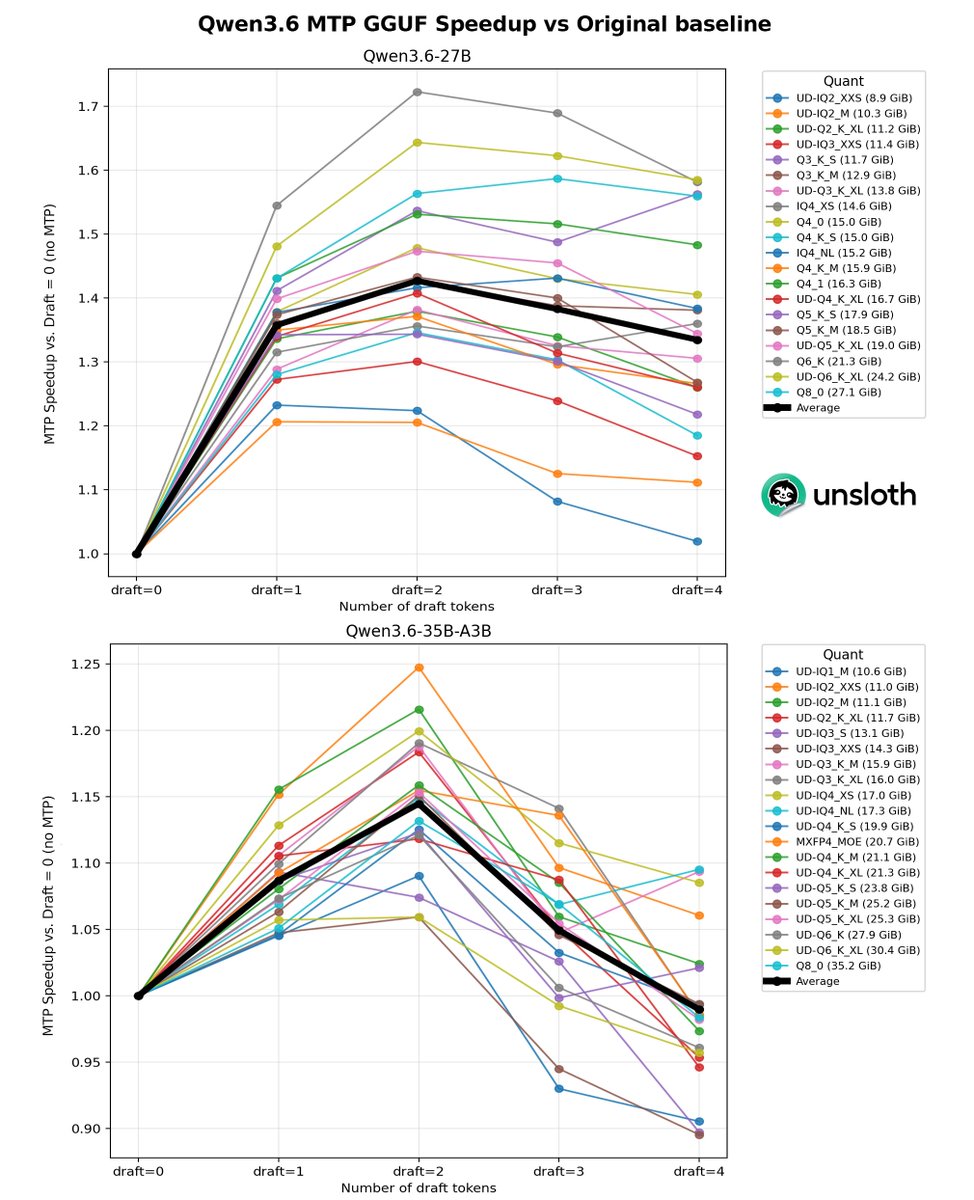
We released experimental MTP Qwen3.6 Unsloth GGUFs! Qwen3.6 27B MTP now runs at 140 tokens/s. Qwen3.6 35B-A3B MTP gets 220 tokens/s generation on a single GPU. Qwen3.6 27B and 35B-A3B have >1.4x speed-up over the original GGUFs without any change in accuracy. Guide + GGUFs + Benchmarks: unsloth.ai/docs/models/qw… In terms of average speedup, we see a 1.4x for dense models at draft tokens = 2 and for the MoE around 1.15 to 1.2x. We do not recommend more than 2 draft tokens because the acceptance rate drops precipitously from 83% to 50% with 4 draft tokens, and the forward passes for MTP become less beneficial. Use `--spec-type mtp --spec-draft-n-max 2` Thanks to Aman for github.com/ggml-org/llama…!

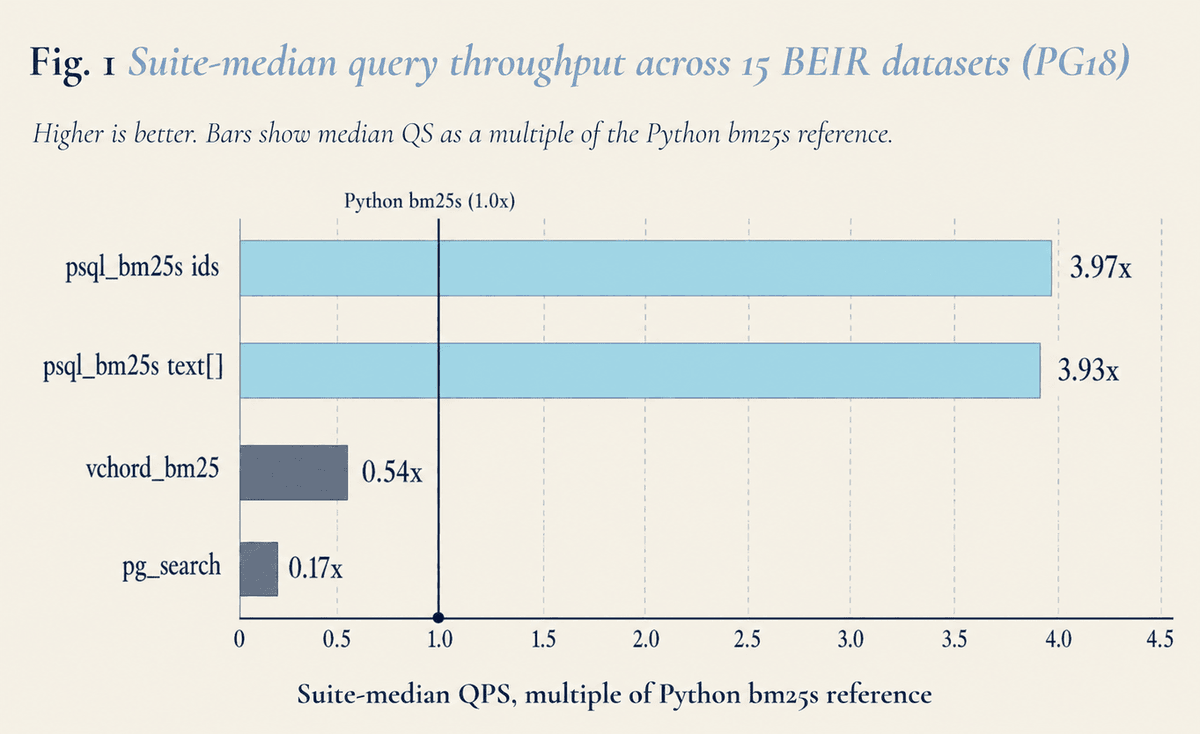
我們開源了這顆星球🌎上速度最快的低成本 bm25 引擎。

so we built psql_bm25s. exact BM25 retrieval. native Postgres access method. ~23x faster than pg_search on the standard benchmark. retrieval stops being a budget item. the harness stops rationing. the agent gets to look things up like it should have the whole time.

If you love fine-tuning open-source models (like me), then listen. > Start with 1B, 2B, 4B, and 8B models. (Don't start with a 27B model or bigger at first.) > Use WebGPU providers. I use Google Colab Pro for any model smaller than 9B. A single A100 80GB costs around $0.60/hr, which is cheap. Enough for small models. > Don’t buy GPUs unless you fine-tune 7 to 10 models. You'll understand the nitty-gritty in the process. > Use Codex 5.5 × DeepSeek v4 Pro to create datasets. Codex to plan, DeepSeek v4 Pro to generate rows. > Use Unsloth's instruct models as a base from Hugging Face. Yes, there are others too, but Unsloth also provides fast fine-tuning notebooks. > Use Unsloth's fine-tuning notebooks as a reference. Paste them into Codex, and Codex will write a custom notebook with the configs you need. > Spend 1 day learning about: - SFT (supervised fine-tuning) - RL training (GRPO, DPO, PPO, etc.) - LoRA / QLoRA training - Quantization and types - Local inference engines (llama.cpp) - KV cache and prompt cache > Just get started. Claude, Codex, and ChatGPT can design a step-by-step plan for how you can fine-tune your first AI model. Future tech is moving toward small 5B to 15B ELMs (Expert Language Models) rather than general 1T LLMs. So fine-tuning is an important skill that anyone can acquire today. Tune models, test them, use them. Then fine-tune for companies and make a career out of it. (Companies pay $50k+ to fine-tune models on their data so they can get personalized AI models.) Shoot your questions below. I'll be sharing in-depth raw findings about this topic in the coming days.
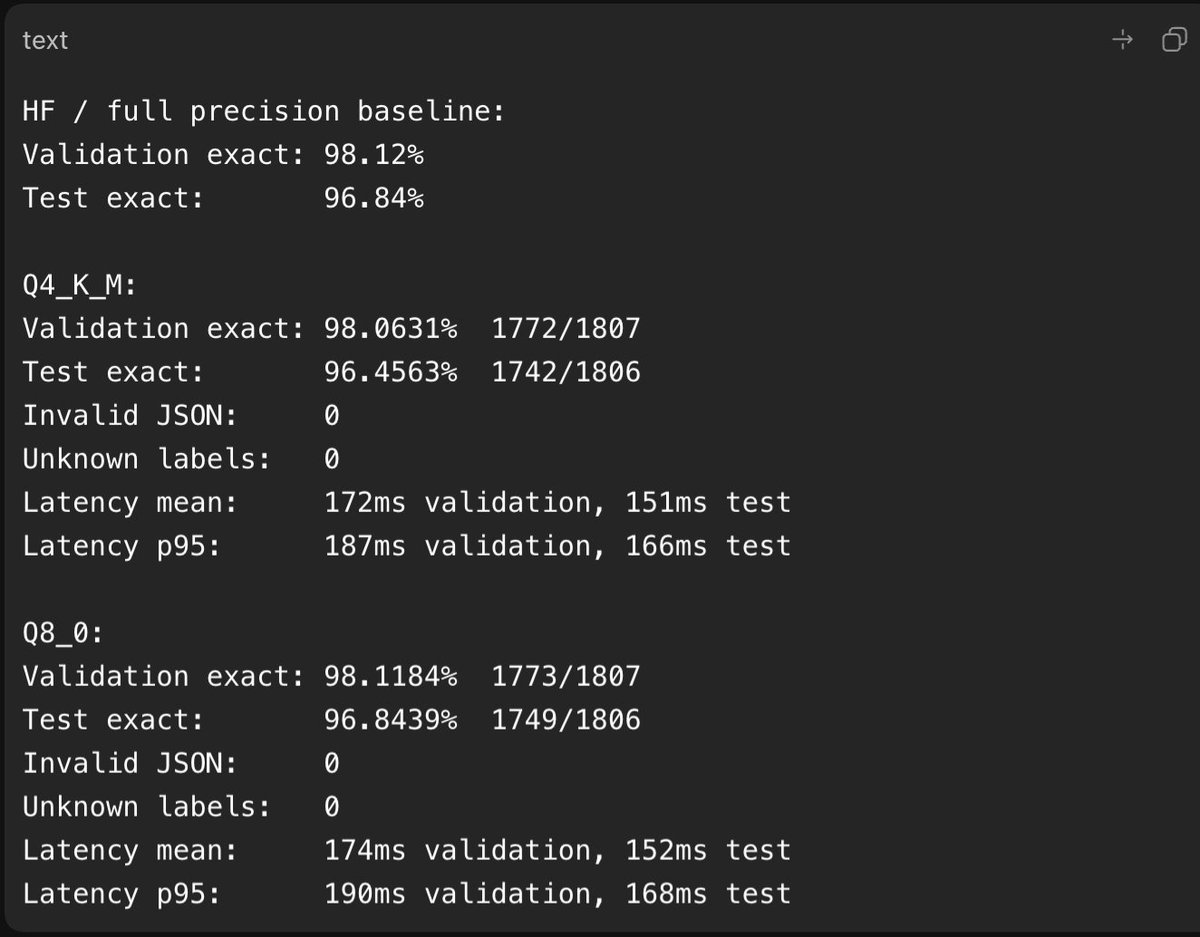


🚨 ÚLTIMA HORA: Investigadores chinos acaban de hacer Google Maps más rápido. En teoría. Un equipo de la Universidad de Tsinghua publicó un algoritmo que rompe un récord de 41 años. Desde 1984, nadie había logrado mejorar el algoritmo de Dijkstra, el motor que calcula rutas en Google Maps, vuelos y redes de internet. ¿La razón? Una "barrera de ordenación" matemática que los mejores expertos del mundo creían infranqueable. El año pasado, Robert Tarjan, una de las leyendas de la algoritmia, ganó un premio demostrando que Dijkstra era óptimo. El equipo de Tsinghua encontró otro camino: buscar la ruta sin ordenar todos los puntos. Al combinar la lógica de Bellman-Ford con un método de "ordenación parcial recursiva", obtuvieron una complejidad O(m log^{2/3} n), oficialmente mejor que el límite que se mantenía desde 1984. En grafos masivos como la web o la logística mundial, la diferencia es real. No va a aparecer en tu GPS mañana por la mañana, pero las bases acaban de cambiar.

🚨 OPEN SOURCE AI IS LITERALLY UNSTOPPABLE 🚨 The legendary founder of Redis (Antirez) just dropped ds4 - a custom native inference engine built specifically for DeepSeek v4 Flash This is earth shattering! Here is why: DeepSeek v4 Flash is a quasi-frontier model with a massive 1M context window You can now run it LOCALLY on a 128GB Mac using specialized 2-bit quantization The architecture is reimagined—he moved the KV cache from RAM directly to the SSD disk! 🤯 We already know DeepSeek v4 Flash is insanely good for agentic loops - Now you don't even need the cloud to run it Closed-source labs are burning tens of billions on massive GPU clusters while single brilliant developers are running frontier-level AI on laptops! They told us open-source would be worthless against trillion-dollar monopolies Instead, pure hacker culture + incredible open-weight models are completely rewriting the rules Open Source will ALWAYS win 💕

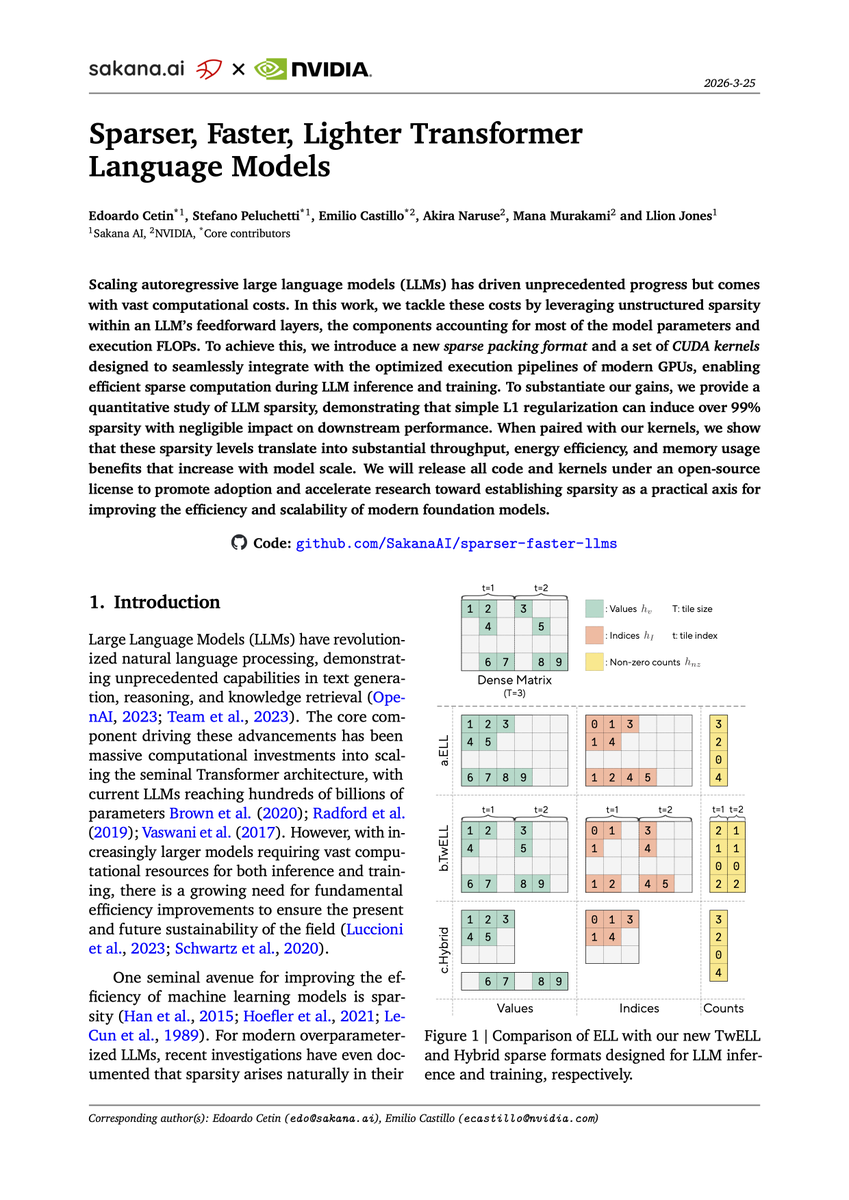
The human brain🧠 is incredibly efficient because it only activates the specific neurons needed for a thought. Modern LLMs naturally try to do this too (> 95% of neurons in feedforward layers stay silent for any given word), but our hardware punishes them for it. One of the most frustrating paradoxes in deep learning: making a model do less math often makes it run slower. Why? Because unstructured sparsity introduces irregular memory access, and GPUs are built for predictable, dense blocks of math. We teamed up with @NVIDIA to try to fix this hardware mismatch. Instead of forcing the GPU to adapt to the sparsity, we built a "Hybrid" format that reshapes the sparsity to fit the GPU. Our sparsity format (TwELL) dynamically routes the 99% of highly sparse tokens through a fast path, and uses a dense backup matrix as a safety valve for the rare, heavy tokens. Through TwELL and a new set of custom CUDA kernels for both LLM inference and training, we translated theoretical sparsity into actual wall-clock speedups: >20% faster training and inference on H100 GPUs, while also cutting energy consumption and memory requirements. Paper: arxiv.org/abs/2603.23198 Blog: pub.sakana.ai/sparser-faster… Code: github.com/SakanaAI/spars… ⚡️


Why did xAI hand over a 220,000-GPU cluster to Anthropic? The technical backdrop to xAI's decision to hand Colossus 1 over to Anthropic in its entirety is more interesting than it appears. xAI deployed more than 220,000 NVIDIA GPUs at its Colossus 1 data center in Memphis. Of these, roughly 150,000 are estimated to be H100s, 50,000 H200s, and 20,000 GB200s. In other words, three different generations of silicon are mixed together inside a single cluster — a "heterogeneous architecture." For distributed training, however, this configuration is close to a disaster, according to engineers familiar with the setup. In distributed training, 100,000 GPUs must finish a single step simultaneously before the cluster can advance to the next one. Even if the GB200s finish their computation first, the remaining 99,999 chips have to wait for the slower H100s — or for any GPU that has hit a stack-related snag — to catch up. This is known as the straggler effect. The 11% GPU utilization rate (MFU: the share of theoretical FLOPs actually realized) at xAI recently reported by The Information can be read as the numerical fallout of this problem. It stands in stark contrast to the 40%-plus MFU figures achieved by Meta and Google. The problem runs deeper still. As discussed earlier, NVIDIA's NCCL has traditionally been optimized for a ring topology. It works beautifully at the 1,000–10,000 GPU scale, but once you push into the 100,000-unit range, the latency of data traversing the ring once around becomes punishingly long. GPUs need to churn through computations rapidly to keep MFU high, but while they sit waiting endlessly for data to arrive over the network fabric, more than half of the silicon falls into idle. Google sidestepped this bottleneck with its own custom topology (Google's OCS: Apollo/Palomar), but xAI, by my read, has not yet reached that stage. Layer Blackwell's (GB200) "power smoothing" issue on top, and the picture comes into focus. According to Zeeshan Patel, formerly in charge of multimodal pre-training at xAI, Blackwell GPUs draw power so aggressively that the chip itself includes a hardware feature for smoothing power delivery. xAI's existing software stack, however, was optimized for Hopper and does not understand the characteristics of the new hardware; when it imposes irregular loads on the chip, the silicon physically destructs — literally melts. That means the modeling stack must be rewritten from scratch, which in turn means scaling is far harder than most of us imagine. Pulling all of this together points to a single conclusion. xAI judged that training frontier models on Colossus 1 simply was not efficient enough to be worthwhile. It therefore moved its own training workloads wholesale onto Colossus 2, built as a 100% Blackwell homogeneous cluster. Colossus 1, on the other hand — whose mixed architecture is far less crippling for inference, which parallelizes more forgivingly — was leased in its entirety to an Anthropic that desperately needed inference capacity. Many observers point to what looks like a contradiction: Elon Musk poured enormous capital into building Colossus, only to hand the core asset over to a direct competitor in Anthropic. Others read it as xAI capitulating because it is a "middling frontier lab." But these are surface-level reads. Look at the numbers and a different picture emerges. xAI today holds roughly 550,000+ GPUs in total (on an H100-equivalent performance basis), and Colossus 1 (220,000 units) accounts for only about 40% of the total available capacity. Colossus 2 — built entirely on Blackwell — is already operational and continuing to expand. Elon kept the all-Blackwell homogeneous cluster (Colossus 2) for himself and leased out the older, mixed-generation Colossus 1. In other words, he handed the pain of rewriting the stack — the MFU-11% debacle — to Anthropic, while keeping his own focus on training the next generation of models. The real point, then, is this. Elon's objective appears to be positioning ahead of the SpaceXAI IPO at a $1.75 trillion valuation, currently floated for as early as June. The narrative SpaceXAI now needs is that xAI — long the "sore finger" — is not merely a research lab burning cash, but a business with a "neo-cloud" model in the mold of AWS, capable of leasing surplus assets at high yields. From a cost-of-capital perspective, an "AGI cash incinerator" is far less attractive to investors than a "data-center landlord generating cash." As noted above, the most important detail of the Colossus 1 lease is that it is for inference, not training. Unlike training, inference requires far less tightly synchronized inter-GPU communication. Even when the chips are heterogeneous, the workload parcels out cleanly across them in parallel. The straggler effect — the chief weakness of a mixed cluster — is essentially neutralized for inference workloads. Furthermore, with Anthropic occupying all 220,000 GPUs as a single tenant, the network-switch jitter (unanticipated latency) that arises under multi-tenancy disappears. The two sides' technical weaknesses end up complementing each other almost exactly. One insight follows. As a training cluster mixing H100/H200/GB200, Colossus 1 was an asset that could only deliver an MFU of 11%. The moment it was handed over to a single inference customer, however, that asset transformed into a cash-flow asset rented out at roughly $2.60 per GPU-hour (a weighted average of the lease rates across GPU types). For xAI, what was a "cluster from hell" for training has become a "golden goose" minting $5–6 billion in annual revenue when redeployed for inference. Elon's genius, I would argue, lies not in the model but in this asset-rotation structure. The weight of that $6 billion becomes clearer when set against xAI's income statement. Annualizing xAI's 1Q26 net loss yields roughly $6 billion in losses per year. The $5–6 billion in annual revenue generated by leasing Colossus 1 to Anthropic, in other words, almost perfectly hedges xAI's loss figure. This single deal effectively pulls xAI to break-even. Heading into the SpaceXAI IPO, this functions as a core line of financial defense. From a cost-of-capital standpoint, if the image shifts from "research lab burning cash" to "infrastructure tollgate stably printing $6 billion a year," the entire tone of the offering can change. (May 8, 2026, Mirae Asset Securities)
What the SpaceX–Anthropic Deal Means Two weeks ago, we published a note laying out what GPT-5.5's release implied. The conclusion was simple: whoever secures compute first, in greater volume, and with greater reliability ultimately takes the win. With OpenAI's 30GW roadmap


One guy. One Navy ship. One file. 1 trillion databases. He built it alone in 2000. And gave it away forever. 🤯 Meet D. Richard Hipp 🇺🇸 > American developer. Born 1961 in North Carolina. > In 2000, working as a contractor on a US Navy destroyer. > Got frustrated with bulky databases that needed servers and setup. > Built SQLite in his spare time ~ a single-file database engine. > No server. No installation. No configuration. Just one file. > 25 years later, every iPhone, Android, Mac, and Windows PC runs SQLite. > Powers Chrome, Firefox, Safari, WhatsApp, iMessage, Skype. > Runs inside Tesla cars and commercial airplanes. 🚀 > Over 1 trillion SQLite databases active worldwide today. > Put the entire codebase in the public domain. Zero royalties forever. > Trillion-dollar companies use his code. He's never charged a cent. > Still maintains it full-time with a tiny team of 3. > Pledged free support and updates until at least 2050. > No VC money. No acquisitions. No spotlight. Just code. Every app on your phone runs his invisible masterpiece. Most engineers build for fame. He built for forever. Database GOAT. 🐐




Xinyu Yang @Xinyu2ML
18K Followers 2K Following Building open frontier intelligence. Opinions are my own. They/Them




Yann LeCun @ylecun
1.3M Followers 788 Following Professor at NYU & Executive Chairman at AMI Labs. Ex-Chief AI Scientist at Meta. Researcher in AI, Machine Learning, Robotics, etc. ACM Turing Award Laureate.
Andrew Ng @AndrewYNg
1.7M Followers 1K Following Co-Founder of Coursera; Stanford CS adjunct faculty. Former head of Baidu AI Group/Google Brain. #ai #machinelearning, #deeplearning #MOOCs
Google DeepMind @GoogleDeepMind
1.5M Followers 277 Following The engine room of @Google. Building AI safely and responsibly to solve the world’s most complex problems. Join us: https://t.co/jUHQA27iBL
Bun @bunjavascript
80K Followers 7 Following Bun is a fast, all-in-one toolkit for installing, bundling, running and testing JavaScript & TypeScript. To install: `npm i -g bun`
Warp @warpdotdev
57K Followers 2 Following The open-source agentic development environment, born out of the terminal. Build with agents, locally and in the cloud w/ Oz. https://t.co/DhGZnVzGYG
Y Combinator @ycombinator
1.6M Followers 367 Following We help founders make something people want. Subscribe to our newsletter: https://t.co/sjqjxxBeLc
Kube Architect @K8sArchitect
79K Followers 1 Following News and links on architecting and developing apps on Kubernetes curated by the @Learnk8s team Mastodon: @[email protected]
Stripe @stripe
288K Followers 552 Following Stripe builds programmable financial services. Help: @stripesupport. Read: @stripepress @WorksInProgMag. Status: @stripestatus.
a16z @a16z
1.0M Followers 62 Following It's time to build. https://t.co/A9eTFq6Xbx Posts are not investment advice or an advertisement for investment services. See https://t.co/nX2FtaLE06.

Chrome for Developers @ChromiumDev
421K Followers 128 Following The official Chrome Devs X account from Google. We want to help you build beautiful, accessible, fast, & secure websites that work for everyone, everywhere.
Cloudflare Help @CloudflareHelp
15K Followers 23 Following This is the official @Cloudflare Support account. See https://t.co/fgMNRRYirI for incident updates, or try https://t.co/WyPljyhDls and https://t.co/Q4N8QONzem.

Cloudflare Radar @CloudflareRadar
31K Followers 8 Following Internet trends, as seen by the @Cloudflare global network.
Microsoft Developer @msdev
525K Followers 48 Following Dive into the biggest news from Microsoft Build and learn how to start building with it today 👇
TypeScript @typescript
420K Followers 50 Following TypeScript is a language for application-scale JavaScript development. It's a typed superset of JavaScript that compiles to plain JavaScript.
Cloudflare Developers @CloudflareDev
73K Followers 140 Following Have questions, or building something cool with Cloudflare's Developer products? We're here to help. For help with your account please try @CloudflareHelp
GitHub @github
2.7M Followers 333 Following The AI-powered developer platform to build, scale, and deliver secure software.
Tony出海 @iamtonyzhu
24K Followers 2K Following Tony出海, Founder, Ship AI startups。2015年从国内互联网产品转行做跨境电商。SEO,社媒高转化,增长,AI markerting


Kubernetes @kubernetesio
325K Followers 86 Following #Kubernetes: open source production-grade container orchestration management. #CNCF #K8s
Matthew Prince 🌥 @eastdakota
281K Followers 300 Following A little bit geek, wonk, and nerd. Repeat entrepreneur, recovering lawyer, and former ski instructor. Co-founder & CEO of Cloudflare (NYSE: NET).
Node.js @nodejs
911K Followers 599 Following The Node.js JavaScript Runtime. 🐢🚀 Need help with Node.js? We've got a repo for that: https://t.co/BaCSQqilHm
Wey Gu 古思为 @wey_gu
19K Followers 4K Following Build things, troubleshoot& sing. Co-Founder @NowledgeLabs, build @NowledgeMem& https://t.co/RVZI2oX9pr Microsoft MVP. Feminist. Prev @NebulaGraph, @Ericsson Cloud
Nowledge Labs @nowledgelabs
503 Followers 33 Following We build knowledge layers in AI age. @NowledgeMem: the local first, graph augmented memory manager just works https://t.co/C1t6WwLJ1x https://t.co/J7JVWmFPSG
Hugging Models @HuggingModels
57K Followers 30 Following We're sharing/showcasing best of @huggingface models. Follow to stay in loop. Promoting Open-Source models.
Chris Tate @ctatedev
63K Followers 2K Following @Vercel Labs | Created https://t.co/473Fqx4HKt, https://t.co/ZekOfFeoXF, https://t.co/itpYrocV3p, https://t.co/9MKvOdyxN3 | Husband & Dad | He/him | Musician, Space Nerd, Foodie | Vegan
NVIDIA @nvidia
2.6M Followers 48 Following The official handle for NVIDIA. Blog: https://t.co/JAn5eKOTBT Support: https://t.co/6ln5FVnA2o All our social media: https://t.co/Uc56dL57Dh
Dane Knecht 🦭 @dok2001
40K Followers 2K Following I help invent the future. CTO @cloudflare. Angel investor.
The White House @WhiteHouse
5.0M Followers 5 Following Welcome to The Golden Age of America. 📱 Text USA to 45470 to receive alerts.
Cloudflare @Cloudflare
295K Followers 5K Following Cloudflare is the world’s leading #ConnectivityCloud, and we have our eyes set on an ambitious goal — to help build a #BetterInternet.

Vue @vuejs
324K Followers 525 Following Progressive JavaScript framework for building modern web interfaces. Created by @evanyou, maintained by https://t.co/GBCO6zpR6W.
Vitest @vitest_dev
32K Followers 27 Following Testing framework powered by @vite_js ⚡️, brought to you by @voidzerodev | Bluesky: https://t.co/vS4yqK4RGr 🦋
Evan You @evanyou
313K Followers 2K Following Husband / Father of two / Founder @voidzerodev (acq. @cloudflare) / Creator @vuejs & @vite_js. Chinese-only alt: @yuxiyou
Nuxt @nuxt_js
104K Followers 229 Following Nuxt is a progressive web framework to build performant and production-grade web apps and websites with Vue. https://t.co/hBNE0dql4W
FastAPI @FastAPI
45K Followers 1 Following FastAPI framework, high performance, easy to learn, fast to code, ready for production. 🚀 Web APIs with Python type hints. 🐍 By @tiangolo 🤓
Qdrant @qdrant_engine
13K Followers 112 Following High-performance Rust-based vector search engine. https://t.co/362gvLXHcw
Jina AI @JinaAI_
17K Followers 1 Following Your Search Foundation, Supercharged! (acquired by @elastic Oct. 2025)
OpenAI @OpenAI
5.1M Followers 4 Following OpenAI’s mission is to ensure that artificial general intelligence benefits all of humanity. We’re hiring: https://t.co/dJGr6LgzPA
Jack Clark @jackclarkSF
138K Followers 5K Following @AnthropicAI, ONEAI OECD, co-chair @indexingai, writer @ https://t.co/3vmtHYkIJ2 Past: @openai, @business @theregister. Neural nets, distributed systems, weird futures
Anthropic @AnthropicAI
1.6M Followers 2 Following We're an AI safety and research company that builds reliable, interpretable, and steerable AI systems. Talk to our AI assistant @claudeai on https://t.co/FhDI3KQh0n.
Claude @claudeai
1.7M Followers 2 Following Claude is an AI assistant built by @anthropicai to be safe, accurate, and secure. Talk to Claude on https://t.co/ZhTwG8dz3D or download the app.You might like