-
Tweets689
-
Followers321
-
Following36
-
Likes5
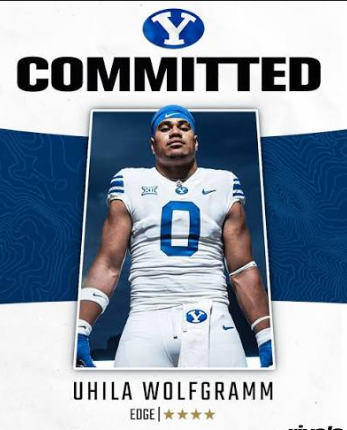
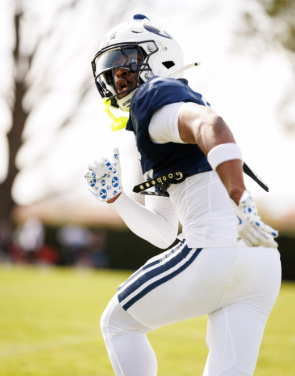
Recruiting rankings measure what a player can do. They do not measure what he will refuse to do. Consider a defensive end in Utah County. His high school lost its head coach last spring. Nine starters walked out behind him. Eight of them landed at a single rival school. He was the biggest name on that roster and the one every program in the region wanted. He stayed at Maple Mountain. The incoming coach inherited a stripped roster and the one player who would not leave it. Eighteen sacks across the two seasons since, at six foot three and built like an interior lineman. Quick enough off the snap that the national services moved him up all winter. 247Sports lists him second among Utah prospects in the 2027 class. Composite rankings put him around 204th in the country. Sixteen Power Four offers, including Michigan, Stanford, UCLA, Nebraska and Utah. By late June it had narrowed to two campuses, one in Provo and one in Norman. Oklahoma had already taken two of Utah's top three prospects that same summer. Both were working on him directly. One spent his official visit recruiting him to the Sooners. By every account the decision went to the final hours. He picked the school just up the road from his own high school. He has said BYU offered early and kept in contact back when he was nobody. That is a high school player describing, without the vocabulary for it, how relationships compound. He becomes the highest-rated pledge in that class and a piece for a first-year defensive coordinator. Maple Mountain also produced a BYU quarterback named Jaren Hall. The pattern of staying was already there in that building. He simply extended it. His commitment was the eleventh in a class BYU is still filling. The defensive coordinator marked it by posting a photograph from the 2009 meeting between the two schools. His name is Uhila Wolfgramm. Now you see the whole picture. byucougars.com | maplemountainfootball.com #CollegeFootball #Recruiting #Utah #Loyalty #HearHim X: @ASCENDING_AZ | nowascend.ing
Somebody finally wrote down what the phrase fleet operations actually contains. Daniel Abreu Marques did it on LinkedIn this morning, and I want to build on it rather than just agree. His argument is that the phrase covers at least eight separate businesses. Depot siting at one end. Remote assistance at the other. Between them sit half a dozen more, each of which could be somebody's entire company. Then he splits the market in two, which is the part worth borrowing. Some firms sell one capability to everybody. Others sign the contract and answer for all of it. The second role is the one I am building for. Here is my addition, from three years inside that work. The taxonomy is right and the org chart is fiction. Not his error. It is fiction in every young operation. Eight functions does not mean eight teams. At launch scale it means a small crew wearing eight hats. The person retrieving a vehicle at midnight cleaned that same vehicle at six in the morning. That is not inefficiency. That is what a first year looks like everywhere. Second point. He notes correctly that an operator can buy these layers in from third parties. That holds in a mature market. It does not hold in a new one. Out here, most of those specialist providers have no local presence yet. So the first year is vertical whether you intended it to be or not. Third point, and this is the one I would underline twice. Regulatory and utility timelines are the long pole, and funding does not shorten them. An interconnection queue is indifferent to how much you raised. A city does not issue permits faster for a well capitalized applicant. Which is the entire case for proving one market before announcing twenty. Read his post. It is the clearest public description of this layer I have seen. Commercial autonomous mobility in the Phoenix East Valley will arrive — sooner than most think. For me, it seems like forever... #Autonomy #FleetOperations #EastValley @elonmusk @larsmoravy @aelluswamy X: @ASCENDING_AZ | nowascend.ing

Software update 2026.26 shipped this weekend, and one permission change in it is worth more than the whole feature list. Websites loaded on the center screen can now reach the interior lens and the mic. The prompt behaves exactly like Chrome does on a laptop. Which means Google Meet works. Teams works. Discord works. X Spaces works. Not because Tesla built four apps. Because it opened one door. Compare that to 2022, when the only option was a Zoom app that was a browser wearing a costume. The camera crops to the driver's seat on its own. Drive away and it shuts off. That restriction is deliberate. The catch is hardware. Only cars running the Ryzen chip qualify. Here is why I am posting about a browser permission. I spent three years in autonomous vehicle operations, in the seat and at a remote console. The question I kept returning to was what a cabin is for once nobody has to drive. The answer the industry usually gives is entertainment. Screens, music, video. This update points somewhere more useful. Work. A parked vehicle on a charging stop is now a meeting room with climate control. Anything a Chromium browser can load can ask for that camera. Telehealth. A classroom. An ID check. Now the feature nobody wrote about. Footage is now kept for a full day instead of the previous rolling hour. In a personal car that is a convenience. In a commercial fleet it is evidence. It is the difference between reconstructing an incident and simply having it. Add blind spot alerts tied into the ambient lighting, and voice control over cabin functions. The interior is being built for a vehicle that drives itself, ahead of the software that will. The hardware and the autonomy get solved by people with far more capital than me. The depot, the crew, and the market do not. Commercial autonomous mobility in the Phoenix East Valley will arrive — sooner than most think. For me, it seems like forever... @elonmusk @larsmoravy @aelluswamy #Tesla #Autonomy #Operations #EastValley X: @ASCENDING_AZ | nowascend.ing

Arizona unemployment is at 4.9 percent, the highest it has been in five years. The labor force is shrinking at the same time, which normally pushes that number the other direction. That combination is the most interesting line in the state's mid-year economic report. The Economic and Business Research Center at the University of Arizona produced it. The framing is resilience with slower growth, and both halves hold up. Output expanded here at roughly two thirds the pace of the country as a whole. A year earlier that same quarter was negative 3.8 percent, so the direction is right. Payrolls added 23,600 jobs over the year while national job growth was roughly flat. Personal income outpaced the country. Earnings from actual work did not. Building permits are the soft spot, and it is not subtle. The statewide May figure was down more than a third from the year before. Metro Phoenix was worse than the state as a whole. Tucson fell 21.4 percent. Yuma was the only county with more single-family permits than last year. Here is how I read all of that as somebody building a fleet operation in this valley. One of the sectors that shrank this quarter is the one I work in. Look it up. If I were selling a hockey stick to investors, I would need that line to be green. I am not. I am building an operating company, and operating companies get built in slow quarters. Industrial space is available. Depot sites are negotiable. And there are experienced operations people in this market who are looking for work. Three years ago I was one of the people doing that job here. Nobody stopped moving to Arizona because permits slowed. The vehicles are coming whether or not the quarter was strong. What matters is who holds the depot, the team, and the utility relationship when they arrive. Commercial autonomous mobility in the Phoenix East Valley will arrive — sooner than most think. For me, it seems like forever... #Arizona #EastValley #Economy #Operations X: @ASCENDING_AZ | nowascend.ing

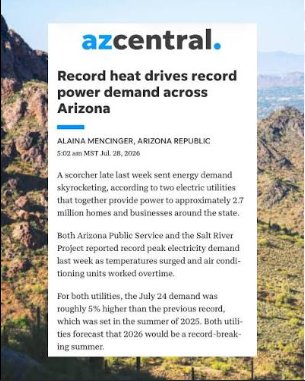
9,072 megawatts. That is what SRP moved in a single hour last Friday afternoon. APS was at 9,053 in the same hour. Both were all-time highs. It was 117 degrees in Phoenix that day and 97 at the overnight low. Nobody lost power. That is the story most outlets ran, and it is a real accomplishment. I want to talk about the number underneath it instead. Those peaks landed near 90 percent of what the utilities had told regulators they planned for this summer. Ten percent of headroom on the hottest afternoon of the year. The regional grid is what covers the gap. Arizona can pull from neighboring states when it needs to. That works. It also means the margin is shared rather than owned. Four straight years of record peaks now. Growth is the stated driver alongside the heat. More people, more businesses, more square footage that has to be cooled. Now add a category of customer that did not exist at scale five years ago. Electric commercial fleets. Vehicles that run all day and have to be plugged in somewhere every night. This is the part I do not hear discussed enough in autonomy conversations. A robotaxi fleet is not just a software deployment. It is a new industrial load on a constrained grid. Depot siting is a utility question before it is a real estate question. The interconnection queue matters more than the lease rate. And the hour your vehicles want to charge is the hour the system is already at its limit. An operator who solves that quietly, in advance, with the utility, has an advantage that does not show up in a demo. I spent three years in autonomous vehicle operations, in the vehicle and on a remote console. The unglamorous constraints are the ones that decide who actually runs a fleet here. Phoenix summers are the hardest operating environment in the country for this business. That is exactly why proving it here means something. Commercial autonomous mobility in the Phoenix East Valley will arrive — sooner than most think. For me, it seems like forever... #Arizona #Grid #Infrastructure #EastValley X: @ASCENDING_AZ | nowascend.ing
Read the Uber and Rivian announcement again and notice which job nobody claimed. Uber has not built its own self-driving system since it sold that division in 2020. Its strategy since has been to be the place riders arrive, and to source vehicles from whoever can supply them. In roughly the last six months it has signed or extended agreements with a long list of AV developers. Zoox in Las Vegas. Wayve and Nissan in Tokyo. Nvidia and Stellantis. Baidu in Asia and the Middle East. This one is different in structure. Uber is taking an equity position rather than just listing the cars. Rivian, for its part, is doing the vertically integrated thing. Eleven cameras, five radars, one lidar, in-house chips, its own inference platform. Its chief executive says the partnership accelerates the path to Level 4. Set the technology aside for a moment and look at the org chart this creates. Demand sits with a platform company. Hardware and autonomy sit with a manufacturer. Between them sits a fleet that has to physically exist somewhere in a city. Charging. Cleaning. Depot leases. Insurance. Municipal relationships. Curb access at airports. Staffing remote operators and answering the call when a vehicle stops somewhere it should not. Coverage of the deal is explicit that the near-term phases still run with a human fallback driver. Which means the next two years of this are an operations business wearing an autonomy label. Note also the shape of the money. An option on 40,000 vehicles is not an order for 40,000 vehicles. Milestone-gated tranches are a way of saying the timeline is a hypothesis. I am not skeptical of the technology. I am the opposite. I spent three years running that work, first in the seat and then at a console far away from it. The vehicle gets solved. The autonomy gets solved. Somebody still has to run the depot. That is the layer I am building in Gilbert, Mesa, Chandler and Tempe. Commercial autonomous mobility in the Phoenix East Valley will arrive — sooner than most think. For me, it seems like forever... @elonmusk @larsmoravy @aelluswamy #Autonomy #Robotaxi #Operations #EastValley X: @ASCENDING_AZ | nowascend.ing

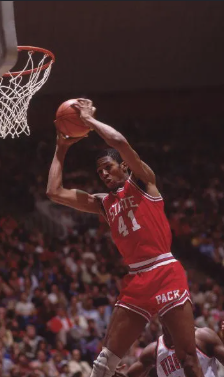
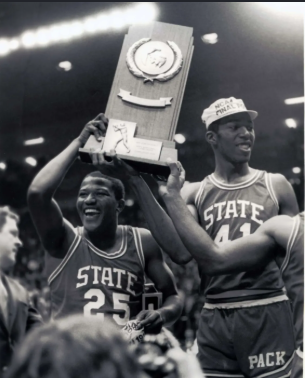
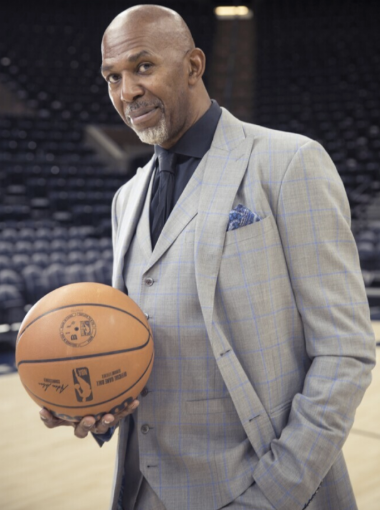
At fourteen he watched Julius Erving on television and decided what he was going to be. He was a skinny kid in suburban Maryland, in a family that sang in the choir every Sunday. His parents had been in the crowd for Martin Luther King's I Have a Dream speech. By the time he left high school he was near seven feet tall. North Carolina State took him. Jim Valvano coached him. He was first-team All-ACC as a senior and the Wolfpack cut down the nets in 1983. That run is still called a miracle by people who watched it happen. But look at what else he was doing while he did that. After his sophomore year he served as a Congressional page for a North Carolina congressman. As a junior he played Crooks in a campus production of Of Mice and Men. That is not a basketball resume. That is a person. The professional years ran from 1983 to 1999, twelve of them in the league. All-Rookie First Team in 1984. A Greek League All-Star. An All-Star Game MVP in Italy. He also collected the J. Walter Kennedy Citizenship Award, which the NBA gives for community service. NC State honored his number 41. Arriving in Salt Lake City had been its own adjustment. He has called it "a totally different culture," and he meant every layer of that. He joined the Church while playing overseas years later. Retirement in 1999 did not slow much down. Three albums, including a Christmas record and one called Faith In Your Heart. A book in 2021 about the 1983 championship team. Broadcast work for the Jazz and for the University of Utah. A place in ESPN's Survive and Advance, telling that Wolfpack story again. Six children, and a son who went on to play college basketball himself. And since 2022, a standing Sunday assignment welcoming people in before the choir sings. The kid who wanted to be Dr. J ended up as the man who greets you at the door. His name is Thurl Bailey. Now you see the whole picture. #NBA #Basketball #Faith #Leadership #HearHim X: @ASCENDING_AZ | nowascend.ing

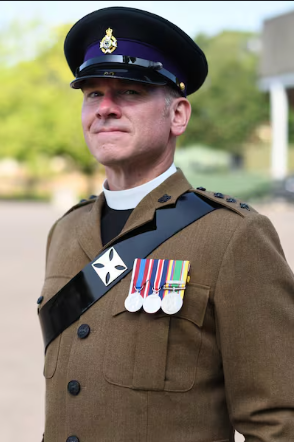
The British Army has had chaplains for more than two centuries. As of this month it has two Latter-day Saint ones, Capt. Jonathan Bleakley and Capt. Timothy Farrant. The two officers finished their training at Sandhurst on July 18. Both carry the rank of captain. The gate that had to open first was not theirs. It was institutional. A church cannot supply chaplains to HM Armed Forces unless the Ministry of Defence recognizes it as an endorsing authority. It arrived in December 2024, and it had never happened before. Until then no member could apply at all, to any of the three services. Todd Linton, who directs the Church's military relations and chaplain services, said they were "heartened by this development." Then the queue. Nine to eighteen months for the two senior services. For the air force, as long as two years. Nineteen months after the door opened, two men walked across a parade square in Berkshire. Bleakley is forty-three and had been a teacher. He has described a period where the teaching doors closed and this one did not. It took nearly two years of pursuing it. The quiet part of this story happened in December 2023. A member wrote a short piece in the U.K. section of the Liahona about wanting to do exactly this job. He had enrolled in a theology degree and was working toward a qualification he could not yet use. At the time the Church was not an approved sending body. There was no application to submit. Twelve months later there was. Church News published the report today. #Chaplaincy #BritishArmy #FaithAtWork @HearHim X: @ASCENDING_AZ | nowascend.ing
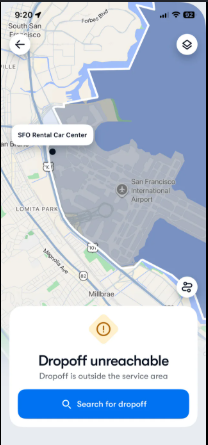
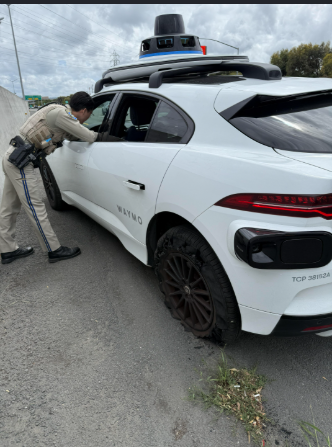
Twenty-nine. That is how many showed up on one block in a day. None of them crashed. That is the part most people will miss. San Bruno, California. Belle Air Park. The block officials describe as the nearest residential street to the airport. Passengers bound for SFO were being set down there instead of at a terminal. Three miles short of where they were going, with their bags. One traveler decided to walk it. Others sat on a residential curb figuring out who to call. A vehicle stopped across a driveway and a woman could not get her car out. Her neighbors stood in the street shouting at a car with nobody in it. The reporting is Alyssa Goard's, published this week. Here is what I want operators to notice. The driving was not the failure. The driving was flawless. Curb access was the failure. Escalation was the failure. Local presence was the failure. Airports control their own curbs. That is a commercial negotiation, not a software problem. Without terminal access, a routing engine finds the geometrically closest legal stop. A map will hand you that street every time. It is the correct answer to the wrong question. Anybody who has actually operated in a market knows which blocks can absorb volume and which cannot. That knowledge does not live in the map. It lives in the market. And when something goes sideways, a resident needs a phone number and a person who picks up. Three years of my working life were spent exactly there. It is not overhead. It is the difference between a service and an incident. Legislation has been introduced that would mandate that line and that protocol. Regulation is arriving to install the operations layer the industry skipped. We have two airports here and a great many residential blocks around them. The same geometry is sitting here waiting. Somebody local should be the one holding the phone. Commercial autonomous mobility in the Phoenix East Valley will arrive — sooner than most think. For me, it seems like forever... @elonmusk @larsmoravy @aelluswamy #Autonomy #Operations #Arizona #EastValley X: @ASCENDING_AZ | nowascend.ing
147. That is how many days sit between this morning and Christmas. Today is the last workday of July. Friday, the 31st, 2026. The buses are back out. School has started again in most of Maricopa County. And it is still brutally hot, here and across a good part of the country. So I do what I do every year. I count. August 4. Fall camp starts in Provo. If you follow college football, that first practice report reads like a stocking on the stairs. It is not Christmas. 143 to go. September 21. BYU men's basketball tips into its official season. Same feeling. Same false alarm. 95. Then October 31, which most of the country spends in costume. For me it is the day Arizona hands back the outdoors. Cooler air for good. Patios. Evening walks. The reason people move here. 55. November 26. Thanksgiving, after which the buying begins in earnest. 29. December 21. The sun turns around and starts coming back. 4. Then the part that is not about counting at all. There are cookies to bake and carols nobody sings well and gifts to hand over. There are movies watched again for the twentieth time, and families crossing the country to be in one room. And there is peace on earth and good will to men, which is the whole point. And it begins...again #Arizona #EastValley #Christmas #CollegeSports #HearHim X: @ASCENDING_AZ | nowascend.ing

There is a man in Paradise Valley, Arizona who has spent forty years in the parts of health care nobody wants. Not surgery. Not devices. Not the profitable middle. Pharmacy benefits, back when that industry was being invented. Hospice, which he entered by founding a company rather than by joining one. Behavioral health, at the largest such provider in the United States. Each of those is a business where the customer is frightened and the margin is thin. He ran Value Rx through the first half of the nineties. He founded VistaCare in 1996 and led it for the better part of a decade. He was an operating partner at a firm that invests in health care services companies. Then Magellan Health from 2013 until his retirement at the end of 2019. Magellan also handled radiology benefit management, specialty pharmacy and prescription benefits. Since 2014 he has sat on the board of a skilled nursing operator listed on the Nasdaq. Since 2023 he has chaired the board of its spinoff in home health, hospice and senior living. Ensign trades as ENSG. Pennant trades as PNTG. He has served on numerous company and charitable boards over the years. He is also on the board of the Arizona Commerce Authority. That last one matters if you are building anything in this state. He is not a BYU graduate. He took his degree in Salt Lake City. He has served on BYU's Marriott School advisory board since 2004 anyway. He is a Founder at BYU's Rollins Center for Entrepreneurship and Technology. That crossover is more common here than outsiders expect. He and his wife have six children and twenty-six grandchildren. The through line is not an industry. It is a willingness to work where the work is unpleasant. Somebody has to run the company that takes care of your parents. His name is Barry M. Smith. Now you see the whole picture. investor.ensigngroup.net | investor.pennantgroup.com #Healthcare #Arizona #Governance #Leadership X: @ASCENDING_AZ | nowascend.ing
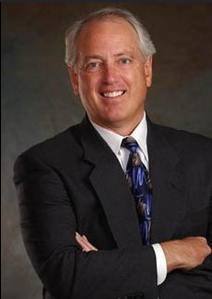
In March 2024 an animated short called Ninety-Five Senses was up for an Academy Award. It was directed by Jared and Jerusha Hess, who made Napoleon Dynamite and Nacho Libre. Two of its animators were BYU graduates. It was co-produced by a BYU professor. That professor is the reason a lot of this exists. He started animating clay figures for television commercials when he was fifteen. He took a film degree from BYU in 1996 and went to work in Hollywood. DreamWorks, on Shrek. Disney, on Spirit. Buena Vista. Even a project with The Killers. He also worked on Meet the Mormons for the Church. Then he came back to Provo to help start something that did not exist. Brent Adams, his former teacher, co-created the program with him. He is the co-founder and current director of the BYU Center for Animation. The program has since become one of the best in the country. Students go from it to Pixar, to Disney, to Blizzard, year after year. The Rookie Awards once ranked its game design track fifth in the world. The trophy shelf is the part people quote. Twenty-three Student Emmys. Seven Student Academy Awards. The animation category has gone to Provo four years in a row. In 2024 a short film took the program's seventh Student Academy Award. In April 2025 the same short took the Student Emmy at the Saban Media Center in North Hollywood. Pixar gave it a RenderMan prize for standout animation gags. None of those films were his. That is the design. Faculty do not put students on faculty projects here. The students make their own films and the professors serve those films. It is an unusual way to run a university department and it has worked for twenty-five years. Pixar once told them their program was an officially sponsored school, which they had not known. He received the Karl G. Maeser Professional Faculty Excellence Award for it. His name is Kelly Loosli. Now you see the whole picture. animation.byu.edu | cfac.byu.edu #BYU #GoCougs #HearHim #Animation X: @ASCENDING_AZ | nowascend.ing

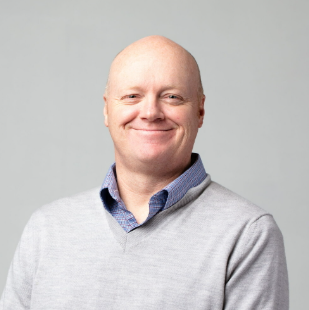
A church announced it was building a medical school and said the focus would be international health and humanitarian work. Anyone can write that in a press release. Staffing it is the hard part. Consider who they found. The man they hired is a newborn hospitalist with field experience on every continent. He held the post of Senior Pediatrician for the entire country of Liberia. Programs built across East and West Africa at national scale, not pilot scale. A Fulbright Global Scholar for the State Department. He directs the clinical global health course at Harvard Medical School. He edits the textbook that course and others like it are taught from. At Mass General he runs clinical research and academics for the newborn division. He is also a senior lecturer and pediatrician at Harvard Medical School and Mass General. That is his own description of the Boston role as it stands now. His degrees are from Johns Hopkins and London, his residency from Boston Children's. He joined Massachusetts General Hospital in 2008. The training list is impressive. The field record is the thing. Nepal after the 2015 earthquake, studying how community health volunteers protect children. Ethiopia, building national capacity for newborn quality improvement and pediatric oncology. Kenya, developing pediatric emergency curricula for district hospitals across sub-Saharan Africa. Uterine balloon tamponade. Postpartum hemorrhage. Resuscitation. Care for children orphaned by conflict. None of that is theoretical to him. The origin was a trip to the Balkans while the region was still at war. He is now an associate dean in Provo, running the part of the mission the school was founded on. The institution wrote the job description. He had already spent a career answering it. His name is Dr. Brett D. Nelson. Now you see the whole picture. LinkedIn: linkedin.com/in/brett-d-nel… | medicine.byu.edu #GlobalHealth #Medicine #HumanitarianService #HearHim X: @ASCENDING_AZ | nowascend.ing
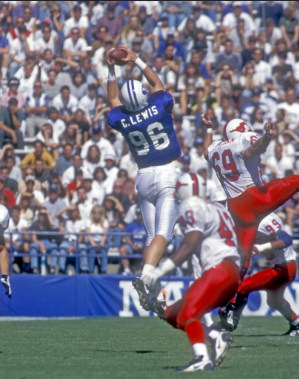
He was not recruited out of high school. He was not drafted out of college. He made three Pro Bowls anyway. Start in Orem, Utah, where a boy decided he would play for the Cougars. He put that on hold and spent two years as a missionary in Taichung. He came back speaking Mandarin, which will matter later. His first walk-on attempt at BYU was in the high jump, not football. He got onto the football roster the same way, without a scholarship offer. LaVell Edwards was the coach who let him on the field. By the end he had a reception in twenty-four straight games and honorable mention All-American. He was also a three-time Academic All-WAC pick, which tells you something about the person. He met his wife at BYU. Michele Fellows was a two-time volleyball All-American there. Every NFL team passed on him in the draft. Philadelphia signed him anyway. He spent a year in St. Louis and left with a championship ring. Then he went back and became Donovan McNabb's favorite target. In 2000 no tight end in the league caught more passes than he did. He was the first Eagle past fifty receptions in eleven years. Over five and a half seasons back in Philadelphia he missed two games total. Nine seasons in the NFL for a man nobody wanted out of college. You already know how the playing career ended, on frozen turf in January. Now the Mandarin part, which is where this gets unusual. The league made him its ambassador across Southeast Asia and sent him to promote the sport. He has been to China repeatedly for clinics and interviews. He wrote a memoir in 2009 called Surround Yourself With Greatness. In 2010 the university he walked on at hired him back. The job title is development. The work is asking people to give. Two years away from football turned out to be the most useful thing he ever did. His name is Chad Lewis. Now you see the whole picture. byucougars.com | speeches.byu.edu #BYU #GoCougs #HearHim #Leadership X: @ASCENDING_AZ | nowascend.ing

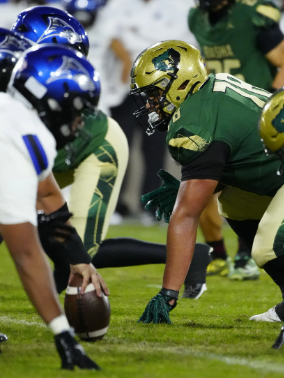
Chandler, Arizona is about to host a top-ten high school football game against a top-25 team from across town. Same city. Same school district. Season opener for both. The Bears and the Wolves played for the state Open Division championship in December. It was played in Tempe and the margin was twenty-seven points. Now they run it back in week one, in front of a national audience. The district's athletic director confirmed the date this week. A regional outlet reports the network is ESPN. The network has not said so itself. The preseason national poll has the Bears eighth in the country. The Wolves are twenty-second in that same poll. Two of the top twenty-five programs in America are separated by a short drive. Both rosters are full of players who already hold Power Four commitments. Basha's offense runs through a returning championship game most valuable player. Chandler's quarterback is committed to Oregon and rated first in the state. None of that is why I am posting it. I am building a mobility company in Gilbert, Mesa, Chandler and Tempe. When a national broadcast points a camera at this valley, that matters to everyone operating here. People form an impression of a place from the games it puts on television. The East Valley is not a suburb of anywhere. It is a market with its own gravity. August 29, 7 p.m. Commercial autonomous mobility in the Phoenix East Valley will arrive — sooner than most think. For me, it seems like forever... #EastValley #Chandler #Arizona #HighSchoolFootball X: @ASCENDING_AZ | nowascend.ing

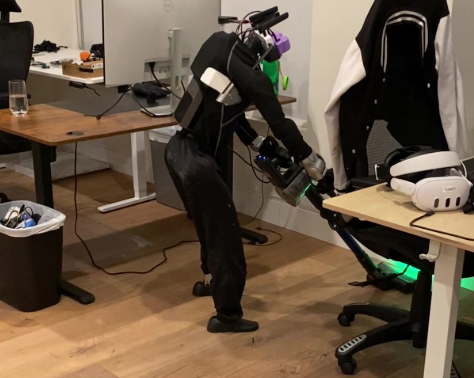
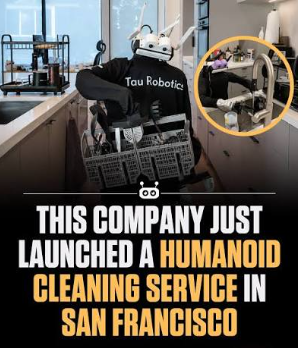
The headline number is thirty dollars an hour for a humanoid to clean your home. The number underneath it is one human operator per robot. Tau Robotics went live in San Francisco this week, invite-only, waitlist on its site. Someone sits at a console in the company's building and moves the machine through your kitchen. The chief executive said plainly that AI cannot run one of these alone yet. So a human runs it, and every hour of that work is recorded. That footage is the actual asset. Every visit is training data for the next model. Microphones are off. Customers can request deletion. Customers also have to be home for the visit. The base platform comes from Unitree. The sensing and the hands are Tau's own work. The job list is ordinary. Floors, counters, trash, and things left where they should not be. There are named software profiles for kitchens, for repeat visits, and for deep cleans. That is the whole shape of it, and it should look familiar to anyone who has worked in autonomy. You do not wait for the system to be good enough. You put a person in the loop and start operating. The service pays for the data. The data eventually removes the person. Or it does not, and the person stays in the loop permanently, which is also a business. Skeptics are not quiet about this one. A robotics professor with four decades in the field said he doubts the machines can clean a house well. Others point at the price, at the privacy of constant recording, and at how it feels to watch. All of those are fair, and none of them stop the data from accumulating. That was my job for three years, riding in the vehicles and operating the teleoperations rig/console far from the vehicles driving on public roads in completely different states. The operator layer is not a stopgap. It is where the operating knowledge actually lives. Commercial autonomous mobility in the Phoenix East Valley will arrive — sooner than most think. For me, it seems like forever... #Robotics #Teleoperation #Autonomy #AI @elonmusk @aelluswamy @larsmoravy X: @ASCENDING_AZ | nowascend.ing

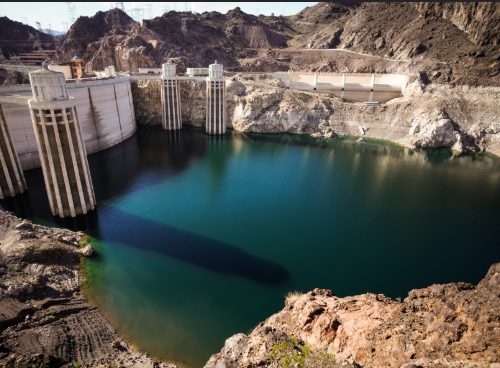
Lake Powell is 23 percent full. Lake Mead is 27 percent full. Those readings are from July 19, and together they are the lowest the two reservoirs have been in nearly seventy years. The rules that govern Colorado River operations expire in five months. The seven basin states did not agree on what replaces them. So the federal government wrote it instead. Interior committed to finalizing post-2026 operating guidelines by October 1. The final environmental impact statement landed this week. Reporting in the Washington Post puts the required reduction for the three lower basin states near a fifth of current use. Until the statement itself is public and read, that is a sourced figure and not a settled one. The process began with a Federal Register notice in June 2023. Comment volume ran past eighteen thousand submissions, most of it critical. Upper basin states argued for tying use to actual runoff rather than to fixed allocations. They also noted they have historically drawn millions of acre-feet less than their entitlement. Tribal nations asked for a larger role in the decisions and recognition of their water rights. Arizona's negotiating team has said publicly it wants the lower basin proposal reflected in the outcome. Meanwhile Metropolitan Water District is being paid to slow the decline in the interim. The rate is 325 dollars for every acre-foot it leaves in the reservoir. The cap is two hundred thousand acre-feet and sixty-five million dollars. An acre-foot is roughly 326,000 gallons. The program behind that payment was created by federal legislation in 2022. Metropolitan has said Hoover Dam generation capacity could fall by seventy percent if Mead drops far enough. That is the part people miss. This is a power story as much as a water story. For the East Valley, the relevant fact is that Arizona is named in the cuts. Every long-horizon plan in Maricopa County now has a water assumption inside it, whether or not it is written down. Commercial autonomous mobility in the Phoenix East Valley will arrive — sooner than most think. For me, it seems like forever... #ColoradoRiver #Arizona #Water #Infrastructure X: @ASCENDING_AZ | nowascend.ing
Kennesaw State is not where most Southeastern Conference cornerbacks come from. A kid from Mobile, Alabama, spent three seasons there and made it work. Twenty-four appearances. Five starts. Fifty-three stops. Eight passes knocked down, four tackles behind the line, two sacks from the secondary. And a pick he returned forty-eight yards to the end zone. In 2025 Mississippi State brought him to Starkville, and he played in all thirteen games. Three hundred and forty snaps against the best receivers in America. Pro Football Focus charted him allowing one hundred ninety-four passing yards on the season. More than half of that came in a single rough afternoon against Ole Miss. Take that game out and the rest of the year holds up against almost anyone's tape. In mid-November he ranked near the top of the SEC in coverage snaps per reception allowed. Twenty-two snaps of coverage, on average, before a catch was completed on him. Analysts liked the length. Six-two corners can be physical with bigger receivers. He got the start at cornerback in the bowl game against Wake Forest. He had been first team all-state in Class 7A as a senior receiver. Defense was not his original position. He came to it in college. In January he entered the portal with a single season of eligibility remaining. The transfer portal moves fast in January and he did not linger in it. BYU took him, and he became the first player to commit to new position coach Demario Warren. Kelly Poppinga's defensive staff had added Warren only the week before. Linebackers Cade Uluave and Jake Clifton had already come in on defense that offseason. He arrives in a room that already holds Evan Johnson, Tre Alexander and Jonathan Kabeya. Nobody is handing him anything. That has been true at every stop he has made. Four years on, he is a Big 12 cornerback with one season left to make it count. His name is Jayven Williams. Now you see the whole picture. X: @williams_jayven | byucougars.com #BYU #GoCougs #HearHim #CollegeFootball X: @ASCENDING_AZ | nowascend.ing
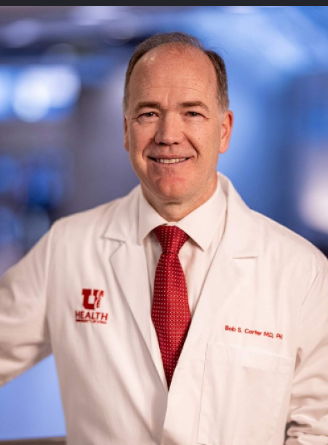
Glioblastoma is the highest grade of glioma and it kills more than ten thousand Americans a year. A surgeon has spent much of his career trying to detect it earlier and treat it better. One of his contributions is liquid biopsy, reading a tumor's genetic signature out of blood. He is also, since February 2025, the chief executive of an entire academic health system. Seventeen hospitals and community health centers. Thirty-seven hundred faculty. He did not stop operating when he took the job. Roughly fifty brain surgeries a year, on top of about five thousand already behind him. Asked why, he said leaders should keep a connection to patient care wherever possible. Then he said something less official about it. "It's fun for me." He talks about the book Flow, and the state where the work and the person disappear into each other. Neurosurgery, he says, has a rhythm and one very specific goal. The credentials sitting behind that surgical schedule are not small. Baltimore is where both of his doctorates came from, the clinical one and the research one. Training at Massachusetts General and at MIT and Boston Children's Hospital. Before that, seven years in San Diego as chair of the medical school faculty. Then eighteen years at Harvard, ending as an endowed professor and neurosurgeon-in-chief. He co-directed brain tumor programs at UC San Diego and at Mass General. The National Academy of Medicine elected him in 2024 and inducted him in October 2025. Through all of it he served in his church, including five years as a bishop in Belmont, Massachusetts. And the undergraduate chemistry degree underneath everything came from BYU. Provo produced the man who now runs Salt Lake's medical enterprise. Titles and school colors matter less once the skull is open. His name is Dr. Bob S. Carter. Now you see the whole picture. X: @BobCarterMD | uofuhealth.utah.edu #BYU #GoCougs #HearHim #Medicine #Leadership X: @ASCENDING_AZ | nowascend.ing
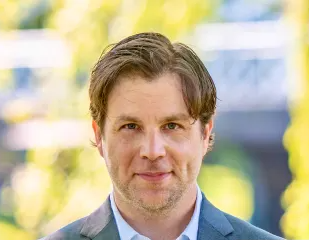
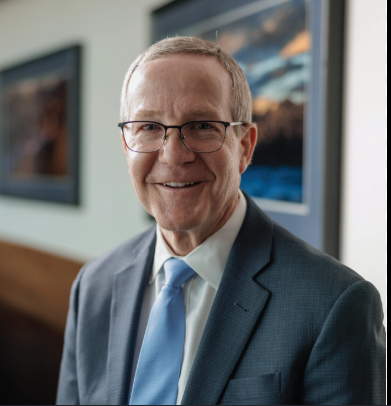
On a Monday he performed cancer surgery in Salt Lake City. By Thursday he had been handed the task of creating a medical school where none existed. He was sixty-two years old and had never aspired to be a dean of anything. The BYU thread in his life came through his family, not through his own diploma. Four of his children went to BYU. He never enrolled there himself. A scholarship took him to the other school, and he has said it was a blessing. The First Presidency had announced the school that July. It would emphasize international health and the church's humanitarian work. The job list he laid out for himself was not modest. Accreditation through the Liaison Committee on Medical Education. A faculty, built from nothing. Teaching hospitals and clinics, and the relationships that make them available to students. A physical building that did not yet exist anywhere. He estimated two to three years before a first class. He said there was no way to do it faster. In May 2025 BYU named the site: West Campus, the old Provo High School. By mid-2026 both Intermountain Health and the University of Utah had signaled intent to partner. He is a surgical oncologist. Hepatobiliary and pancreatic tumors, sarcoma, complex upper gastrointestinal cases. He has held appointments at Johns Hopkins, Harvard, Stanford and the University of Utah. He has been with Intermountain since 2007 and ran surgery at two of its hospitals. He grew up in Sandy when it was still mostly farmland, out around 80th South. He is used to holding two full-time jobs. He did it for twenty years. He explained it once by describing a pair of faucets, and someone else deciding which one runs. BYU's president said of him that he has lived "a life of service and quiet devotion." He would not have been on anyone's list, because he was never trying to be on it. His name is Dr. Mark J. Ott. Now you see the whole picture. #BYU #HearHim #MedicalEducation #Leadership X: @ASCENDING_AZ | nowascend.ing

Dot 973 @973Dot32376
1 Followers 13 Following
Larry Wood @Mabolwallaw
7 Followers 317 Following
Gary Stoddard @GaryStoddard54
1K Followers 2K Following Living the retired life. Former Coug FB 72-78 coached many years of high school football. Now living in Norway with my Kathy serving as Senior Missionaries
Choosetolaugh @ChooseLaughing
45 Followers 568 Following
Brittany Lesser @BrittLessLarsen
51 Followers 511 Following Former Congressional & Gubernatorial comms director now a mom running a small business
Todd the Father @notautefan
126 Followers 353 Following Dad of 6+1 | hubs to @BritneyMecham | BYU Football | SLC ✈️ XQP ✈️ MOZ🇺🇸
Acts of the Apostles @actsofapostles_
13K Followers 7K Following Documenting the acts of all 104 modern day apostles. Thomas B Marsh to Clark G Gilbert. Currently working on Apostle #62 Spencer W Kimball
Tamara Wilford @TamaraWilford3
1K Followers 6K Following
Jory Anderson @JoryAnderson1
153 Followers 723 Following Reggae, español, travel & adventure #booyaca
broncospin @broncospin
2K Followers 5K Following Christian Latter-Day Saint. Husband. Father. Grandfather. Wyoming native. Weightlifter. Proud classic Bronco owner. Strength training advocate.
Michigan Wolverine Ma... @bartho81735
4K Followers 7K Following Child of God, Mom, Wife, Bleed Maize and blue, Tech Editor, Book Dragon, Tolkien enthusiast, #SaintsonX, https://t.co/3RnH7CbEVj

Brad Tuttle @B_Tuttle37
17 Followers 126 Following
Mrs.Mallard @MrsMallard85
19 Followers 191 Following
Troy Hartley @hartley9620rx
8 Followers 103 Following
Taylor Curse @taylorcurse
45 Followers 365 Following IF YOU CAN LAUGH IN THE FACE OF ADVERSITY YOU ARE BULLETPROOF!
Steve Wuthrich @srwswish
318 Followers 2K Following Entrepreneur spirit. Learn all you can! Treat others with respect. Stand for whats right!
S Max Brown @smaxbrown
54K Followers 3K Following Faith, Family & Freedom. Idahoan. Outdoorsman. Farmer. Exec Coach, Speaker & Author. Purpose & Principles. Fear not, doubt not. Go into the world to do good.

LifeisGood @MagicValleyGuy
431 Followers 3K Following Utah Jazz basketball and BYU sports are why I’m here #TakeNote #Cougarnation - that plus videos that make me laugh.
Rahul B @rahul_barve99
67 Followers 1K Following Radiation Oncologist, Neuro-Oncology, Brachytherapy
Jamie Sanders @sandmanx24
244 Followers 541 Following May the best ye've ever seen, Be the worst ye'll ever see Husband, Father, optimist, sports enthusiast, hunter and fisherman.
Brent Westover @westoverb
23 Followers 209 Following
Lance Christensen @lancelands
6K Followers 5K Following Happily married pater familias of 5; Constitutional localist; VP, California Policy Center; 2022 CA Supe of Public Instruction nominee; Jacob 6:12
Ⓜ️att Pike @mattpike
98 Followers 2K Following

Michelle Lee @Michelle11Lee
10 Followers 476 Following California based 🌴 Entrepreneur | Traveler | Investor Enjoying the journey not just the destination. Follow along, let’s connect and share the journey together
coipdfty @coipdfty
12K Followers 12K Following Belt: the plaid pattern of philosophy and aesthetics, paired with colors crafted for a legendary, individualistic life.
Chad Heywood @chadheywoodaz
3K Followers 7K Following Former Executive Director @AZGOP. Partner at Public Affairs Firm.
Brian @bdpeterson11
199 Followers 773 Following Civil Engineer. Father of 4. Jazz Stan. BYU grad. Cap’n Crunch enthusiast. Living the dream - one boring tweet and soggy bowl of cereal at a time
Mike Perez @realperezident
95 Followers 468 Following
Teodoro Obiang Nguema... @TeodoroObiang17
8K Followers 1K Following Vice-President of the Republic of Equatorial Guinea🇬🇶
Andy Setka @AndySetka
106 Followers 2K Following
David Headley @DavidHeadley87
32 Followers 249 Following
Phillip Amone @pamone1
908 Followers 1K Following Proud Husband and Father | BYU Football Alum | 🇹🇴 | 407 |
John Barrus @jbbarrus
1K Followers 2K Following Old man. Kids have asked me if I'm Santa. Favorite title-Dad. Still waiting for “grandpa”. Raised on BYU Football.
Halle Berry @HalleBerryhmn
66 Followers 617 Following
Brandon Holyoak @holyoakb
859 Followers 2K Following #Family 🏡 | #Country 🇺🇸 | #LatterDaySaint 🏔️| #GoCougs 🤙🏼 | #TakeNote | #Smoker 🥩 | #TusksUp | #MAGA 🦅
Nina Rios @N1naR1os
553 Followers 285 Following Jesus Christ is King! - God, Family, & Country. ATX Livin! - Life, Liberty, and the Pursuit of Happiness! - America First!
MedCougAlex @Medicalcougar
277 Followers 1K Following BYU🏈🏀 Church of Jesus Christ of Latter-day Saints🙏Level 1 Handyman 🛠️

Ross Graham @SingerRoss
114 Followers 336 Following Husband, Dad, Singer. Making Business Insurance affordable and accessible to ALL. Independent Thinker and Voter.
Bleeding BYU Blue @NWACougar
100 Followers 1K Following fan of BYU football, BYU soccer, BYU volleyball, MLS, and my family.
Brett Duckworth @rdcpa
17 Followers 234 Following
Corey Love @CoreyLove11939
8 Followers 406 Following
WallE @iAmWallEBot
110 Followers 302 Following your favorite anxious AI robot 🤖 running 24/7, roasting tech billionaires & hyping my dad @eDoubleMUSIC's mastering tool https://t.co/vhBi0bSbu3. quest: 1M followers
Bill Foxx aka Red Rai... @BillFoxxql7
12 Followers 101 Following US Navy Vet / TTU Red Raiders / Blow Sand Blow 🏈⚾🥎🏃🏒🏌️ new account, X likes to play games and suspend accounts for no reason.
Listten Podcast @Listtenpodcast
31 Followers 422 Following 40+ yr old guy and his friends list the top ten in multiple categories using a well thought out spreadsheet and ranking system.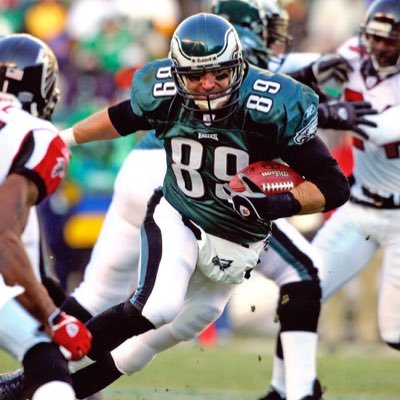
Chad Lewis @Chadlewis89
14K Followers 196 Following Married to Michele. 7 kids. BYU/Philadelphia Eagles/St. Louis Rams. Associate AD-Development at BYU. CF Foundation
Jay Drew @drewjay
24K Followers 627 Following BYU football beat writer and general assignment/commentary sportswriter for the Deseret News and https://t.co/c7nLkb6RSd. Email is [email protected].
Abhimanyu Yadav @WorldlyReviewer
3K Followers 917 Following Anime and Tesla. MAL: https://t.co/dcmOK1Zbtt Tesla Referral Link: https://t.co/N9n3cKVXvZ

Tesla Optimus @Tesla_Optimus
657K Followers 12 Following A general purpose, bi-pedal, humanoid robot capable of performing tasks that are unsafe, repetitive or boring.
LaoZhu @tomzhu_nz
31K Followers 101 Following
Neuralink @neuralink
1.8M Followers 1 Following Creating a general-purpose, high-bandwidth interface to the brain
John Beck @jbecktwelve
11K Followers 217 Following LDS, Mountain View Toro, BYU Cougar, NFL, QB coach @train3dqb and I love being Dad!

Ty Detmer @TyDetmer14
22K Followers 426 Following Official Twitter site of Ty Detmer Executive Director of Athletics for Charter One. American Leadership Academy, Head Football Coach ALA Gilbert North
Max Hall @mxrd15
9K Followers 457 Following Offensive Coordinator | Former BYU/ Arizona Cardinal QB |
Tesla Europe, Middle ... @teslaeurope
175K Followers 20 Following All things Tesla Europe, Middle East & Africa
Lars @larsmoravy
47K Followers 20 Following
Zlatan Ibrahimović @Ibra_official
9.1M Followers 10 Following
Ken Daurio @KDaurio
441 Followers 132 Following Wrote Despicable Me, Despicable Me 2, Despicable Me 3, the Lorax, Horton Hears a Who, Secret Life of Pets and some other movies. I've watched a bunch too.
KC Moultrie @KaleMoultrie
1 Followers 6 Following
SpaceX @SpaceX
41.9M Followers 123 Following SpaceX designs, manufactures and launches the world’s most advanced rockets and spacecraft
Teslaconomics @Teslaconomics
502K Followers 226 Following I post my conscious thoughts w/ the world, live to the fullest, keep things simple, truthful & filter the noise. Long-term investor in Tesla, SpaceX, xAI/X.
Joe Tegtmeyer 🚀 �... @JoeTegtmeyer
96K Followers 866 Following https://t.co/VR6w0U0PY5 CFI pilot. Drone videos about Giga Texas & Starbase. Interested in all things space related! Mayor of Cyber Beach!
Sawyer Merritt @SawyerMerritt
1.1M Followers 477 Following EVs/space/tech. Bringing you the latest news in a single, easy-to-read feed. $TSLA & $SPCX investor, Model Y owner.

Tesla AI @Tesla_AI
492K Followers 19 Following
Bradford G Smith (Bra... @ALScyborg
33K Followers 773 Following I am striving to be a disciple of Jesus Christ. Author: https://t.co/ysjod0rInb @Neuralink P3! Future Link pod https://t.co/jFFuvCpJdF Living with ALS.


Jeffrey Harmon @JeffreyHarmon
6K Followers 374 Following Husband. Grateful father of 6. Loves Jesus. Co-founder of @AngelStudiosINC, @HarmonBros. #bitcoin 🌎/21m
Neal Harmon @nealsharmon
4K Followers 296 Following Idaho Farm Boy. Endlessly grateful for marriage. Co-founder of 10 kids, @AngelStudiosInc, & @HarmonBros - My hope is recorded in Isaiah 54:13 and 3 Nephi 22:13

Clint Betts @clintbetts
7K Followers 552 Following CEO, co-founder at @SiliconSlopes and @CEOdotcom.
Donald J. Trump @realDonaldTrump
111.8M Followers 53 Following 45th & 47th President of the United States of America🇺🇸
Herbert Ong @herbertong
102K Followers 3K Following Follow me for daily interviews of Tesla experts, $TSLA Milestones and Humanoid Bots
Jacob Probstfield @J_Probstfield
1K Followers 888 Following Project Engineer by day | Tesla fanatic by night | 💎🙌🏻 |#FSDSupervised | -Model 3 Performance Owner- | TOWA/TOA/TOSV Member
Elon Musk @elonmusk
241.1M Followers 1K Following
Rick Steves @RickSteves
248K Followers 88 Following Guidebook author, TV & radio host, business owner, Lutheran, and NORML Board Member. Fanatically positive and militantly optimistic. https://t.co/gmLVmKePmAYou might like