BridgeAxis @BridgeAxis
BridgeAxis — AI-powered trading workspace with wallet-native deposits, DEX execution, and AIUSD fee discounts. bridgeaxis.io Washington, DC Joined May 2026-
Tweets225
-
Followers631
-
Following13
-
Likes107
AI and Synthetic Environments Real-world environments aren't always suitable for training autonomous systems. Virtual environments allow AI to experience thousands of scenarios, make mistakes, and learn from them without real-world consequences.

AI and Context Windows An AI model cannot process an unlimited amount of information at once. A context window determines how much text and other data a model can consider within a single request.

AI and Embodied Intelligence AI can do more than analyze information — it can interact with the physical world. Embodied AI combines m76 with robots, sensors, and cameras, allowing systems to perceive their environment and act within it.

AI and Small Language Models Bigger doesn't always mean better. Small language models can be faster, cheaper to operate, and easier to run locally. → For a specific task, a compact model can sometimes be more practical than a massive system.

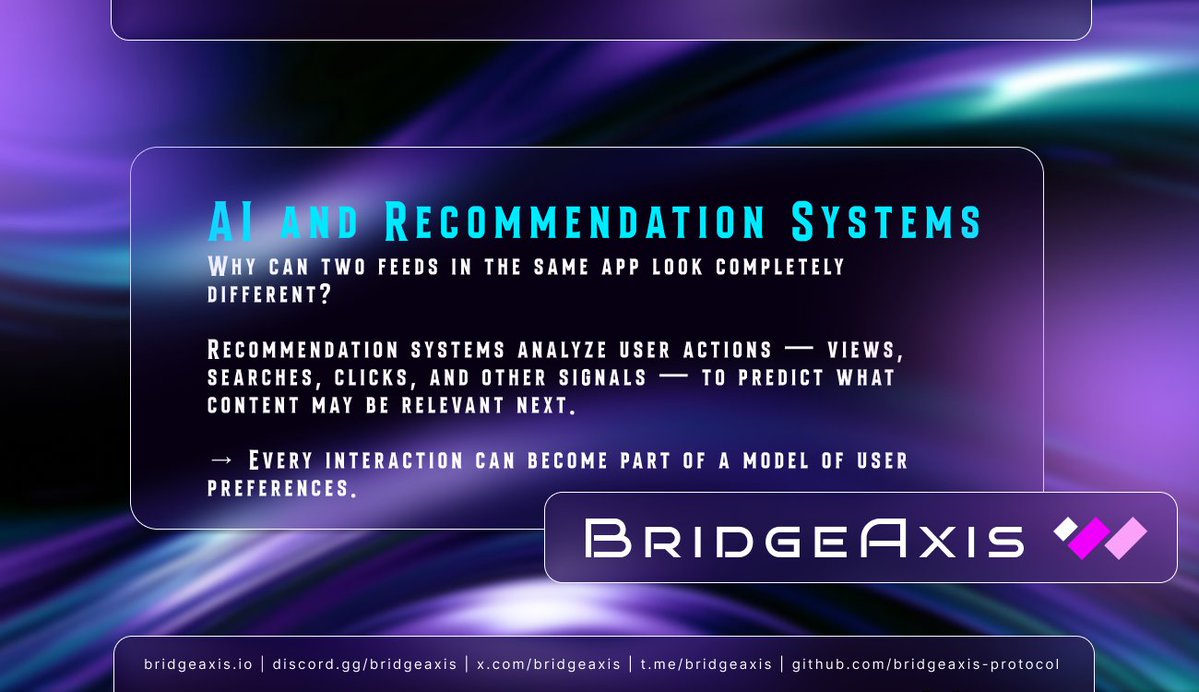
AI and Recommendation Systems Why can two feeds in the same app look completely different? Recommendation systems analyze user actions — views, searches, clicks, and other signals — to predict what content may be relevant next.
AI and Computer Vision A camera simply captures an image. AI can turn that image into a source of information. Computer vision allows systems to recognize objects, movement, text, and changes in their surroundings.

AI and Quantization A large AI model can require a huge amount of memory. Quantization reduces the numerical precision used by a model to decrease its size and computational requirements.

AI and Retrieval AI doesn't necessarily need to store all its knowledge inside the model itself. Retrieval-augmented generation can first retrieve relevant information from an external database and then use it to generate an answer.

AI and Model Drift An AI model can perform well today and gradually become less accurate over time. The reason is that the real world changes: user behavior, market conditions, language, and other data constantly evolve.

AI and Federated Learning What if an AI model needs to learn from data that cannot be collected in one place? Federated learning allows models to train across different devices while sending model updates instead of the original data.

AI and Active Learning AI doesn't always need to learn from an entire dataset. With active learning, a model can identify the examples that are most difficult or informative and send them for additional human labeling.

AI and Knowledge Graphs AI can work not only with text, but also with relationships between entities. Knowledge graphs represent information as networks of entities and connections — for example, person → company → role → industry.

AI and Self-Supervised Learning AI doesn't always need humans to provide the correct answers during training. With self-supervised learning, a model creates a learning task from the data itself — for example, predicting a missing part of a text or image.

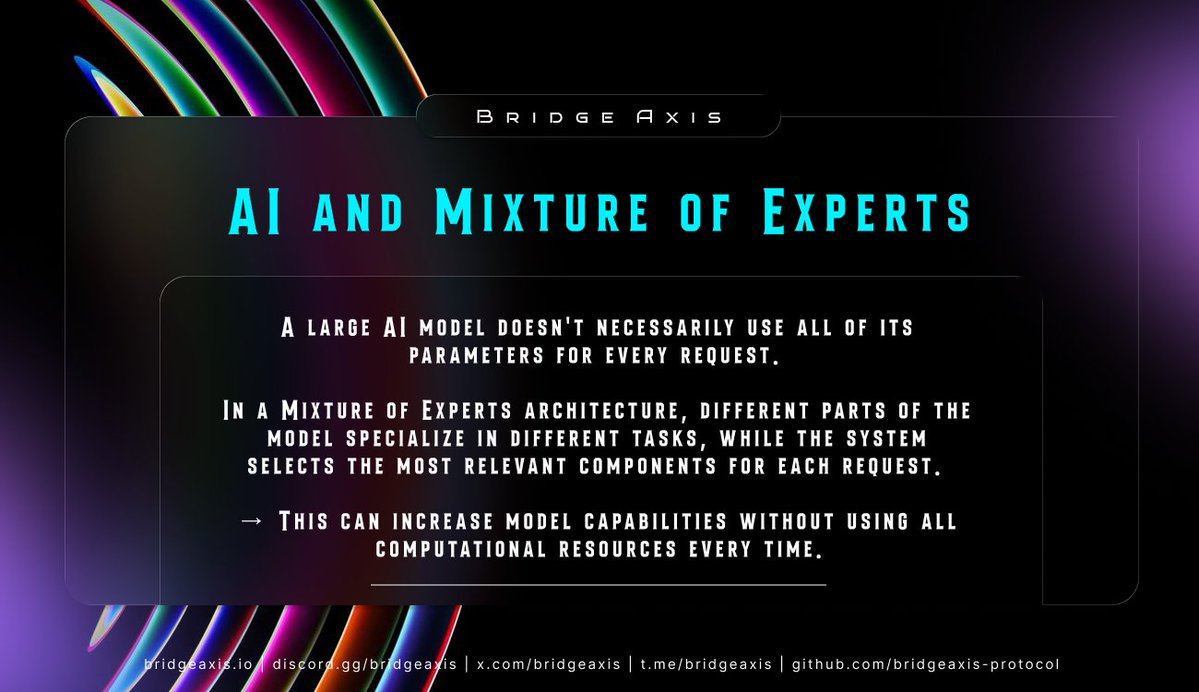
AI and Mixture of Experts A large AI model doesn't necessarily use all of its parameters for every request. In a Mixture of Experts architecture, different parts of the model specialize in different tasks,while the system selects the most relevant components for each request
AI and Synthetic Worlds AI can create entire virtual environments for training other systems. An autonomous algorithm, for example, can first be tested in simulations where it encounters thousands of different scenarios without risks to the real world. → AI can be used to train AI.
AI and Memory Some AI systems can retain information between interactions. This allows them to use previous requests, preferences, and context instead of starting every conversation from scratch. → Memory is becoming an important part of AI personalization.

AI and Multimodal Models AI is no longer limited to text. Multimodal models can work with text, images, audio, and other types of data while finding connections between them. → For example, a model can analyze an image and explain its content using natural language.
AI and Edge Computing Not every AI system needs a powerful data-center server. Edge AI allows models to run directly on smartphones, cameras, vehicles, and other devices. → This reduces latency and allows data to be processed locally instead of sending every request to the cloud.
AI and Uncertainty Not every question has a single certain answer — and AI can work with that uncertainty. Models can evaluate multiple possible outcomes and estimate which ones are more likely. → Good AI isn't only about producing an answer — it's also about accounting for uncertainty.

AI and Data Compression AI can learn to extract the most important information from massive datasets. During training, a model develops internal representations that allow it to work with information more efficiently than its original form. → In a sense, AI learns to create a compact representation of complex information.


Dorothy Greenley @GreenleyDorothy
2K Followers 5K Following

Christian @apt_crypto
7K Followers 1K Following
SOLANA WIZARD 🔮 @00Q__
137K Followers 131K Following 🚀 Web3 Growth | Early Gem Finder 📈 $SOL $ETH $BSC | Memes & Altcoins | 🌐 100K+ network | High engagement reach | 📩 DM for collaborations
Riley Morgan @iRileyCrypto
151K Followers 132K Following Web3 Growth Strategist | KOL Campaigns 📈 | X Spaces Host | DM for Partnerships 📩
sierra desmond @tokittiptookiee
248 Followers 1K Following helping early crypto startups to access the Global Marketplace through KuCoin Exchange. (KuCoin Listing Manager )
💎 KING OF CRYPTO �... @KingofCryp3g
2K Followers 6K Following 🚀 Crypto & Web3 Marketing 📈 Project Promotion | Community Growth 💡 Social Growth | Brand Visibility 🧠 Alpha Hunter | Open for Collabs 👤 Admin @zenpromoter
Michael Bolt @michaelbweb3
641K Followers 32K Following Trader & Investor | Marketing Manager | Native at #BNBChain #Base #SOL #ETH | My tweets are not financial advise. Business Inquiries DM or Telegram
CZ Robinhood 🪙 @PoriAkter5
42K Followers 24K Following Top Crypto Trader 📊 || Covering Robinhood chain's news,insights and gems || Partner @Robinhoodapp || DM for business
Solana PumpFun Tiger ... @SolPumpFunTiger
74K Followers 30K Following Helping crypto projects get real exposure 📈 Twitter + Telegram promo 🚀 Active audience 💎 | Serious collabs only 🤝 DM open #Binance 🔶 #MEXC #BNB 🔶 #BTC #ET
Vital Block 🛡️ @VB_Audit
20K Followers 8K Following #1 Blockchain Smart Contract Auditing & KYC Company 4 Crypto, AI & NFT Projects. Over $2B+ TVL Saved. Backed by @circle Alliance🛡️ DM: 🗨️https://t.co/r7B8eTdqin
Crypto Alpha HQ 🚀 @P4usUp
10K Followers 7K Following 🚀 Early Alpha on Meme Coins & Crypto 💎 Hidden Gems | New Token Launches 📈 Market Insights | 100x Opportunities ⚠️ DYOR | NFA
Whale GuilD @dawhaleguild
57K Followers 20K Following No.1 Crypto & Gaming Content Creator • Crypto top Influencer • NFA • Always DYOR • Dm for promotions & partnerships
Crypto Listing Hub Of... @unicom_world
108 Followers 377 Following Welcome to Crypto Listing Hub 🚀 Your one-stop solution for Crypto Project Growth & Exchange Listings.
Mastero X Crypto @AureliaNayza
144K Followers 11K Following Crypto lover || Passionate about Crypto & Web3 projects || Marketing that delivers real impact 🚀 || DM for Collab 🤝
THE CRYPTO DEV @_Niss0
210K Followers 106K Following 💎 Bitcoin Lover || Passionate about Crypto & Web3 ||⚡Marketing that delivers real impact ||📩 DM for business
Erick @CryptoErick9
24K Followers 23K Following Pudgy Penguin #5891 • Alpha Caller & CM • Degen Crypto enjoyer #NFT 🐧Spreading Awareness in the Web3 Space • #Crypto Marketing
Laly Pump☄️ @pump_okLaly
388K Followers 17K Following Crypto Queen #memecoin lover 💖| $SOL #Web3 #CTO $BTC | 🇸🇪🌐| My routine? Sky then #DYOR HOLD 💹⛷️ DM Business | KOL Network https://t.co/CzEcUveB35
Lisa Hisssen @LHisssen48615
458 Followers 5K Following
I'm Kevin Coo of cryp... @kevinCofounder
479 Followers 1K Following I'm Coo of crypto moon shoot // Our Community Services AMAs partnership pin post etc connect : https://t.co/3Us6KODzn9
Crypto Bella👑 @good_the5172
65K Followers 9K Following 🚀 Crypto Promoter | Web3 Growth| Helping crypto projects gain visibility| build strong communities📈| 📩 DM for Promotions & Collabs|
Tom Calls @T0m_Calls
432K Followers 24K Following Crypto Marketing Expert 🚀 | Precision Calls 📈 | Smart capital moves • Real growth 📊 | Powered by @biggerz & @biggerztrends
Captain Mutant @0ii05i
238K Followers 245K Following 💎 Crypto Marketing Beast 👑 | Strong Community ⚔️ • Massive Reach 🌐 • Guaranteed Impact 🚀 • DM for Premium Collab 🤝🔥
Whale Capital @DmitryBvilo
39K Followers 11K Following Crypto top influencer. Looking for realistic 10 - 100X Gems. DYOR - NFA. DM for promos!
Sømebody_eth @DeYoungBosslady
361 Followers 990 Following Collab Manager|| || Ex Partnership Manager at @Make_IDEEZA || KOL Network, Partnership Manager at “Lotique Labs”- https://t.co/7V5068Ym1h smart contract audit/SEO
СryptoTrafficMarket @CTM_Global
2K Followers 5K Following PROMOTION CRYPTO, BLOCKCHAIN, WEB3 AND AI PROJECTS | 750+ Projects Promoted
Xanss @xanss_yoshi
46K Followers 949 Following

Robert Boss™ @BossRobertX
92K Followers 23K Following 🚀 Marketing Expert || Growth Strategist 📈 Brand Growth || Community Building 📩 DM for Partnerships
︎ Teo Mercer @TeoMercer
1.9M Followers 30K Following Crypto positioning and market attention. Content, campaigns and KOL distribution. 10+ years in crypto | @OKX KOL
Philip Aidan @aidan_nexus
6K Followers 6K Following Tech Enthusiast & Learner 💻 | Exploring Tech, AI & Web3 🚀 | Sharing insights & building connections 💡 | Let's grow together! 🤝💯💯💯❤️
Nirmal Baig @nirmalbaignx
259 Followers 1K Following
Muh.Wahyudi. Z.A @zqqel66551339
49 Followers 242 Following helping early crypto startup to access the Global Marketplace through Exchange. (KuCoin Listing Manager)
Liev Schreiber @frswg68627271
83 Followers 427 Following Just a private space ✨ Keeping life simple, peaceful & real. 🎬 Movies • Music • Good vibes
LILLIAN YU @ShamblesGallery
413 Followers 770 Following I work closely with founders and teams on strategy, liquidity support, and launch execution.
mattyy @hiddenmatteria
2K Followers 6K Following BD @AtlasOracleX | 4 yrs interop + infra BD | ex @chainlinklabs | exploit detection intern
SWFT Blockchain @SwftCoin
79K Followers 44K Following Discover optimal liquidity paths across DEXs and bridges. You stay in control - we route it for you.
Kevlar @0xKevlar
220K Followers 8K Following Investor in 100+ Crypto Startups | GP @Momentum_6 l KOL of @OKX | Marketing Advisor and Community Building 📈
Dominic Mfonabasi||Th... @Official_Mfon
431 Followers 849 Following Believer• Member @OrexprimeAfric • Space Host • Content Creator/Writer @thespotdotapp • Graphics designer • Marketer @thespotdotapp
🐳CODY WHALES CALL ... @CODYWHALESCHINA
46K Followers 545 Following 中国最大的“鲸鱼”社区,聚集了大量大额投资者/鲸鱼,对 #Asianpower 、等项目感兴趣。这里有许多与加密货币相关的内容,投资者在此汇聚,进行大额投资并共同讨论。所有推广项目仅供参考,请在投资前务必认真研究并尽职审查,独立判断并承担风险。 ⛩️ Tg : https://t.co/W7km1PpqXO
Jawahar @jawahar701
1 Followers 1 Following
Manu 💧 @mhhnnuu
23K Followers 22K Following Crypto Analyst & DeFi Strategist | Alpha Caller & Trend Spotter 🚀 | Exploring Undervalued Gems & Emerging Blockchain Projects | Web3 Marketing Enthusiast
SOLANA PUMP ALERTS �... @Cryptosoltiger
33K Followers 25K Following All Type Of Crypto currency 💵 Promoter 💎 Official Others Partners Looking For Low Cap Gems 🧐 NFA DYOR #BNB #BTC #TRX (partners Open DM📥 partner
Jack @harry_monk6
21 Followers 62 Following

Worthy @WorthyOmah
226 Followers 1K Following JAVA DEVELOPER || TECH AND AI || BUILDING AI WORK FLOW THAT SCALE SALES|| DATA ANALYST.
Mire Wiil @MireWiil3318
5 Followers 49 Following
Google DeepMind @GoogleDeepMind
1.5M Followers 274 Following The engine room of @Google. Building AI safely and responsibly to solve the world’s most complex problems. Join us: https://t.co/jUHQA27iBL

Watcher.Guru @WatcherGuru
4.8M Followers 3 Following Watcher Guru gives you unparalleled, unbiased coverage of all-things crypto & finance in real-time | Posts Are Not Financial Advice | @BTCPrice
Anthropic @AnthropicAI
1.6M Followers 2 Following We're an AI safety and research company that builds reliable, interpretable, and steerable AI systems. Talk to our AI assistant @claudeai on https://t.co/FhDI3KQh0n.
Andrew Ng @AndrewYNg
1.8M Followers 1K Following Co-Founder of Coursera; Stanford CS adjunct faculty. Former head of Baidu AI Group/Google Brain. #ai #machinelearning, #deeplearning #MOOCs
Tom Brown @NotTomBrown
36K Followers 446 Following Co-founder and Chief Compute Officer @AnthropicAI
Yuri Milner @yurimilner
19K Followers 299 Following Science and Technology Entrepreneur, Investor and Philanthropist.

SpaceX @SpaceX
41.9M Followers 127 Following SpaceX designs, manufactures and launches the world’s most advanced rockets and spacecraft
Lex Fridman @lexfridman
5.4M Followers 691 Following Host of Lex Fridman Podcast. Interested in robots and humans.

The White House @WhiteHouse
5.2M Followers 5 Following Welcome to The Golden Age of America. 📱 Text USA to 45470 to receive alerts.
You might like