

INC2 Company @CoNotarization
We at INC2 provide business consulting and international education services to clients across the globe. internationalnotarization.com Washington DC. United States Joined July 2018-
Tweets146
-
Followers28
-
Following272
-
Likes155
We are now hiring for qualified teachers in Hong Kong


We are in need of Qualified tutors at INC2. #tutor #teachyoualessonep5 #teachyoualessonep4 #Teachersof𝕏


The 2026 AP Macroeconomics Exam scores: 5:19%; 4: 22%; 3: 25%; 2: 20%; 1: 14% AP 2026 Macroeconomics exam was taken by 189,000 students, ~1% of the U.S. high school population. AP Macroeconomics Multiple-Choice Questions (MCQ): • Once again, students demonstrated impressive performance on Unit 1, Basic Economic Concepts questions, with over 55% of students earning all or nearly all the available points in this section. Students also performed well on Unit 2, Economic Indicators and the Business Cycle questions, with 46% of students earning all or nearly all such available points. • The Financial Sector (Unit 4) was the toughest climb within the MCQs: ~15% of students earned all or nearly all of these points. • Across the course skills, students found manipulation tasks and numerical analysis most demanding, skills that reflect college-level expectations that students not only recognize economic relationships, but calculate and apply them with precision. AP Macroeconomics Free-Response Questions (FRQ): apcentral.collegeboard.org/media/pdf/ap26… The committee of professors and teachers designed this year’s FRQs to require students to demonstrate analytic fluency across the full scope of the AP Macroeconomics course: graphical construction and interpretation, quantitative calculation, verbal explanation, and multi-step causal reasoning. Since AP scores are reported on a 5-point scale, the free-response questions deliberately include some especially difficult points, designed to differentiate AP 5s from AP 4s, points of varying difficulty levels to differentiate AP 4s, 3s, and 2s, and more foundational points to separate AP 2s from AP 1s. • FRQ #1, a question about the AD-AS Model and Monetary Policy, was the exam’s 10-point long free-response question, inviting students to construct a correctly labeled AD-AS graph showing an inflationary gap, explain the economy’s long-run self-adjustment, and then analyze the effects of a specific open-market operation on the money market, interest rates, international capital flows, bond prices, investment spending, and unemployment. Performance on this task differentiated especially well between AP 5s and AP 4s. Long, multi-part FRQs like this one provide great measurement value, enabling educators to evaluate student abilities across the full range of the AP score scale, with several points focused on foundational skills expected of AP 2s, and other points requiring greater depth and mastery, as expected of AP 3s and AP 4s, and finally several very challenging points (international capital flows, unemployment changes, and the long-run self-adjustment process) designed to differentiate AP 5s from AP 4s. • FRQ #2, a question about the Labor Market and the Phillips Curve Model, required students to work from a data table for an economy to calculate the unemployment rate, draw a correctly labeled short-run and long-run Phillips curve, plot numerical equilibrium values, and reason about how shifts in retirement affect the unemployment rate. This question’s combination of data-based calculations, graphing, and verbal explanations is representative of tasks that students earning an AP 4 or higher must consistently be able to do. • FRQ #3, a question about Policy Effects and the Foreign Exchange Market, required students to work across multiple interconnected tasks: 1) identifying a central bank action in an ample-reserves system, 2) calculating the government spending needed to close a recessionary gap, 3) explaining the price-level effect of the change in government spending, and 4) graphing the resulting exchange-rate effect. This was the most challenging question on the exam, focused on differentiating AP 5s and AP 4s, from AP 3s, as students receiving AP 1s and AP 2s are generally unable to earn these points. All subjects' AP score distributions for 2026 will be posted here when available: apstudents.org/score-distribu…

The 2026 AP Precalculus Exam scores: 5: 29%; 4: 29%; 3: 24%; 2: 11%; 1: 7% The 2026 AP Precalculus exam was taken by ~300,000 students, roughly 2% of the U.S. high school population. AP Precalculus Multiple-Choice Questions (MCQ): • Students generally scored higher on questions about exponential and logarithmic functions than other functions (polynomial, rational, trigonometric and polar). • Students performed especially well on questions that required them to deploy their skill of supporting conclusions with a logical rationale or appropriate data. Students achieving AP 5s typically earned 100% of these points, and students achieving AP 4s, all but one. And students achieving AP 3s were also able to answer most of such questions correctly. This is exciting to see, as one of the focus areas in AP Precalculus is helping students develop the ability to communicate with precise language and provide rationales. AP Precalculus Free-Response Questions (FRQ): Each AP exam has multiple versions, for different time zones. I’ll focus the commentary below on the version taken by most students: apcentral.collegeboard.org/media/pdf/ap26… The four FRQs reflected major strands of the course — functions, modeling with exponential and sinusoidal functions, and procedural and symbolic algebraic fluency — and required students to work with equations, graphs, tables, and real-world contexts alike. Since AP scores are reported on a 5-point scale, the free-response questions deliberately include some very difficult points, designed to differentiate AP 5s from AP 4s, points of varying difficulty to differentiate AP 4s, 3s, and 2s, and more foundational points to separate AP 2s from AP 1s. FRQ #1, Q1, the Function Concepts question, presented students with the graph of an increasing function and an analytic presentation of a logarithmic function. Students had to evaluate a function composition, find inputs satisfying each of the functions presented, express limiting behavior using formal limit notation, and identify function behavior from a graph. This was a somewhat challenging question, suited to differentiating performance across the AP scores of 2, 3, 4, and 5, as students receiving AP 1s typically earned no points on this FRQ. Part C.i. (identifying a key feature of the function from the graph) and Part A.ii were both typically earned by all students earning AP 3s, differentiating them from students receiving AP 2s, who did not typically earn both of these points. Part B.ii. (correctly expressing the behavior of a function using formal limit notation as x approaches a value) was the most challenging point to earn on this FRQ, generally only earned by students achieving AP 5s. But C.ii, (providing a rationale and reasoning for their answer) was the clearest borderline between AP 4s and AP 5s, as students achieving 5s consistently earned this point whereas students achieving 4s did not. Part B.i. was the clearest differentiator between students earning AP 4s and students earning AP 3s, as students earning AP 4s were consistently able to answer this part correctly, whereas students earning AP 3s did not. FRQ #2, Q2, the Modeling a Non-Periodic Context question, asked students to model the decreasing value of a a car. To do so, they needed to write a system of equations from real-world data and solve for unknown constants, compute an average rate of change, use it to estimate a value, and then determine a domain limitation for the function model. I’m impressed by the way this question mirrors the kinds of quantitative reasoning that students will be expected to use in college courses across math, business, science, and social science – it's a terrific, and quite challenging, question, servinging to identify students who should receive AP 3s, 4s, and 5s, and students receiving AP 1s and 2s were usually unable to engage with this level of rigor. Parts A.i. and B.i. were the points that differentiated students earning AP 3s from students receiving AP 2s, who were usually unable to write these equations and find the average rate of change for the value of the car. Parts A.ii and B.ii differentiated students earning AP 4s, who were much more likely to be able to find these values and estimate the favlue of the car using the average rate of change, than students earning AP 3s. Parts B.iii (understanding the relationship between average rate of change, the secant line, and the function model) and C (explaining how to determine a domain limitation) were designed to identify the most advanced students, and were generally only earned by students achieving an AP 5, as both of these tasks required students to explain advanced mathematics accurately. FRQ #3, Q3, the Modeling a Periodic Context question, asked students to determine the coordinates of five labeled points on the graph of the sinusoidal height function, then construct an explicit formula for the function by identifying the values of amplitude, period, phase shift, and vertical translation. Notably, this question was completed without a calculator, requiring students to work with the geometric and algebraic structure of sinusoidal functions from first principles. Overall, students scored highest on this FRQ, which contained tasks at a variety of difficulty levels. Students receiving AP 2s could usually only perform one of the tasks within this FRQ correctly, students earning AP 3s could typically perform 2-3 of the tasks right, students earning AP 4s could typically perform 4-5 of the tasks accurately, and students earning AP 5s generally completed 100% of the tasks effectively. FRQ #4, Q4, the Symbolic Manipulations question, was the most demanding of the four FRQs and did not allow a calculator. Students had to solve equations involving logarithmic and exponential functions, rewrite an exponential function in an equivalent form, rewrite a trigonometric expression using the double-angle identity for sine, and find all solutions to a trigonometric equation within a specified interval. The breadth of symbolic and procedural demands made this question, the hardest of the FRQs, an excellent measure of overall precalculus mastery among the top students, as these points were aimed at providing students receiving AP 5s multiple opportunities to distinguish themselves from AP 4s, as this question was generally beyond the abilities of students receiving AP 1s, 2s, and 3s. Students achieving AP 4s consistently earned points A.ii. and B.i., differentiating themselves from students earning AP 3s, who could not typically perform these tasks, while all other points on this FRQ were earned much more consistently by students achieving AP 5s than by students who achieved AP 4s. I'm grateful to the AP Precalculus Development Committee for crafting an exam with such substantial and wide-ranging mathematical demands. Within a single exam, they asked students to evaluate compositions of functions and express limiting behavior in formal notation, fit exponential models to real-world data, construct and interpret sinusoidal functions from geometric context, and execute multi-step symbolic manipulation across logarithmic, exponential, and trigonometric functions — all without a calculator on half the FRQ section. Congratulations to the AP Precalculus students who rose to meet these challenges! All subjects’ AP score distributions for 2026 will be posted here when available: apstudents.org/score-distribu…

The 2026 AP English Language and Composition Exam scores: 5: 15%; 4: 28%; 3: 32%; 2: 15%; 1: 10% The 2026 AP English Language and Composition exam was taken by 631,000 students, ~4% of the U.S. high school population. The exam questions and essay topics were developed by a committee of college faculty, including English professors from Duke University, Florida State University, the University of Maryland and the University of California systems — and master AP teachers from across the nation. Multiple-Choice Questions (MCQ) 1.The highest-performing area were questions assessing students’ ability to accurately identify Claims and Evidence within texts across a wide range of styles and complexities. These students are reading arguments carefully and identifying how evidence functions. Students achieving AP 5s typically answered 100% of these questions correctly, while students achieving AP 4s generally only missed a single point, and students achieving AP 3s typically earned 75% or more of the possible points. 2.Students also scored very well on questions related to analyzing and understanding the Rhetorical Situation in reading (about 81%). Students earning AP 4s and 5s generally answered 100% of these questions right, and students earning AP 3s missed only a single point here. 3.The most challenging MCQ area was Style — questions in which students were asked to identify features and aspects of writers’ style in the passages they analyzed. Only 5 MCQs focus on this area, and they neatly differentiated across student abilities: generally, students achieving AP 5s earned all 5 points possible, students earning AP 4s earned 4 of the 5 points, and students earning AP 3s earned 3 of these 5 points. Attending to a writer's word choice, syntax, and tone at the sentence level remains the area with the most room for further growth and improvement. Free-Response Questions (FRQ) apcentral.collegeboard.org/media/pdf/ap26… Over a single 2-hour-and-15-minute session, students wrote three complete essays — a source-based synthesis argument, a rhetorical analysis, and an original argument — each demanding sustained reasoning and control of written English. These three free-response questions span the core of the discipline — synthesizing sources into an argument, analyzing another writer's rhetorical choices, and constructing one's own argument — and I love that the committee anchored them in sources and ideas that students are not likely to already have examined in class: the value of napping and how we rest, what it means to do creative work, and how much weight we should give to other people's opinions. This is part of what the committee must do: select source material that students will not already have studied in class, so that on exam day students are drawing upon their own skills, not an interpretation already given to them by a teacher or AI. Moreover, unlike AP English Literature and Composition, which focuses on novels, stories, drama, and poetry, AP English Language and Composition focuses on reading and analyzing non-fiction (speeches, essays, articles) and on writing argumentative, evidence-based, rhetorically effective essays, a powerful skill that is an anchor for a wide variety of career pathways. Because AP scores are reported on a 5-point scale, the free-response rubrics deliberately include foundational points that separate AP 1s from 2s, mid-range points that distinguish 2s, 3s, and 4s, and a small number of advanced points designed to differentiate AP 5s from AP 4s. FRQ #1, the Synthesis question on the value of napping, required students to read six authentic sources — reporting from national and international news outlets, a research university's findings, a data graph from a nonprofit health foundation, and a documentary photograph — then weigh competing evidence and build a defensible position. In short: college-level information literacy: evaluating real sources and putting them into conversation. Nearly every student — about 98% — earned the thesis point, stating a defensible position. This is the foundational move that is expected even among students receiving AP 1. The evidence-and-commentary rubric row is what most meaningfully differentiates across scores of 2, 3, 4, and 5. AP students receiving a 2 were usually able to earn just one of these points, whereas AP students receiving a 5 typically earned perfect scores on this row, not missing a single point. Selecting apt evidence from the sources and using commentary to explain how the evidence supports a line of reasoning — rather than merely quoting the sources — is what moved an essay up this scale. FRQ #2 asked students to analyze how writer Laura Amy Schlitz uses rhetorical choices—including an extended kite-flying metaphor—to convey what it means to be a writer. Why include a speech by a children's-book author, whose syntax and vocabulary in this speech are quite simple, on a college-level exam? Because the professors and educators who build the AP exams select passages the way college English faculty do: by stylistic, rhetorical, and interpretive complexity—not by Lexile scores, which measure only syntax, sentence length, and vocabulary. By that narrow metric, Ernest Hemingway, John Steinbeck, Elie Wiesel, Richard Wright, Zora Neale Hurston, and Toni Morrison would all be disqualified: their Lexile scores are similar to Schlitz’s. The statistics for this question are clear. FRQ #2 had a mean/max difficulty of .57—the hardest question on this year's exam, and consistent with the difficulty of FRQ #2 in prior years. Rhetorical and thematic complexity simply aren't the same as syntactical complexity, which is rarely the deciding factor when faculty choose what's worth analyzing. As in FRQ #1, AP students receiving a 2 were usually able to earn just one of the evidence and commentary points, whereas AP students receiving a 5 typically earned perfect scores on this row, not missing a single point. An impressive ~30,000 students earned the sophistication point for the skill with which they unpacked Schlitz’s rhetorical choices and strategies. FRQ #3, the Argument question based on a claim by physician, engineer, and former astronaut Mae Jemison, asked students to argue the extent to which they found Jemison's claim valid. Students generally found this essay slightly less challenging than FRQ #1, and significantly less challenging than FRQ #2, as demonstrated in their points earned. Almost all students — about 98% — established a defensible thesis, the foundational point expected even of students receiving an AP 1. Students receiving 2s were typically able to generate more effective evidence and commentary than in their other two essays, earning 2 of the 4 points possible here, so the real differentiation this essay provided was for students achieving AP 4s and AP 5s, who consistently earned all or all but one of the points possible. So: real kudos to the students who succeeded on this exam. Three full essays, six sources to weigh, an artful piece of rhetoric to analyze, and an original argument to defend — all in a single sitting. The committee built a demanding, content-rich measure of college-level reading and writing, and it’s exciting to see such a significant number of students meeting these high standards. All subjects' AP score distributions for 2026 will be posted here when available: apstudents.org/score-distribu…


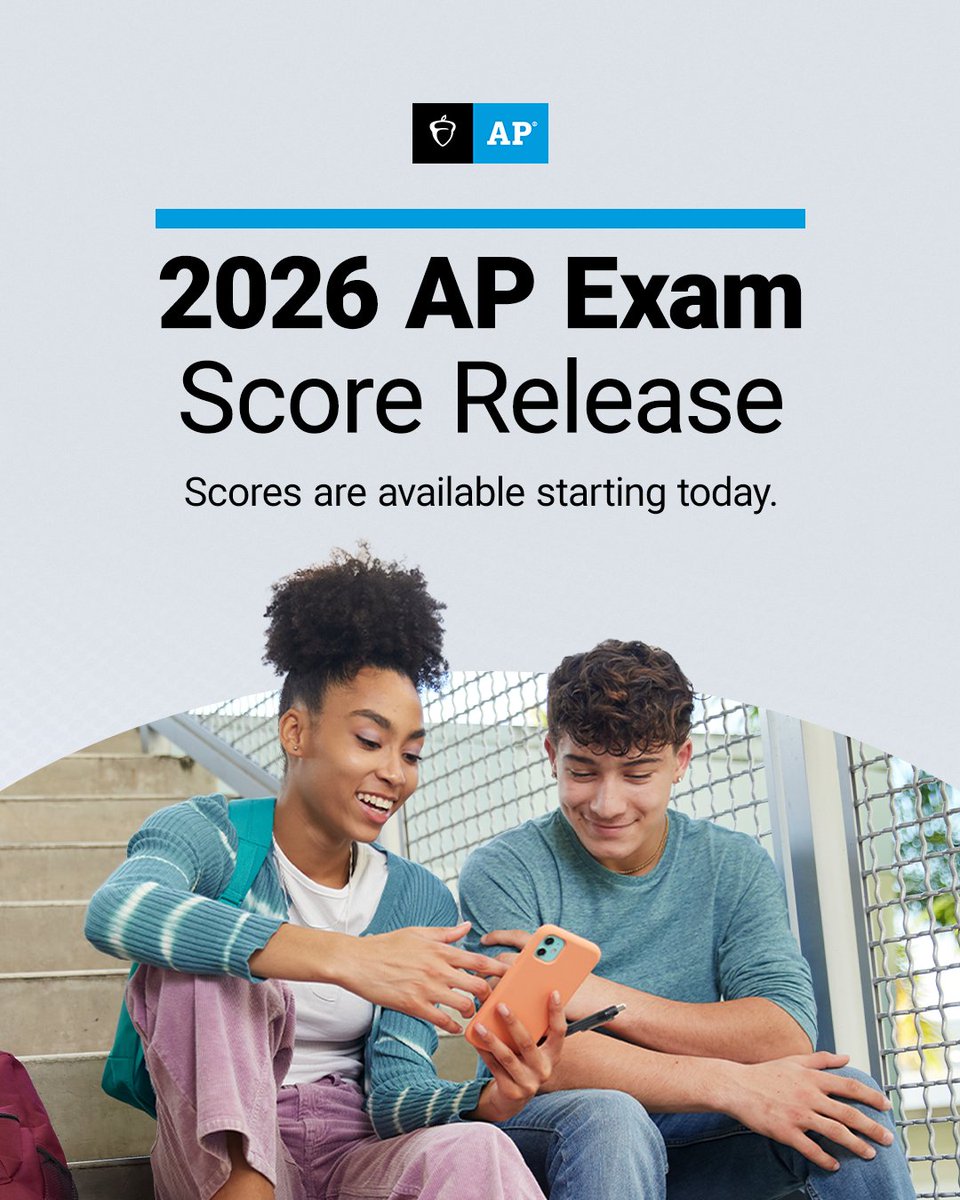
2026 AP Exam scores are available to students starting today. Students can view scores here: spr.ly/6012BE6Cbq
Can you answer this problem? #Teachersof𝕏 #BusinessFinance #BusinessIntelligence


INC is black owned.with over 20 years of experience ; If you need assistance with manufacturing or supply chain consulting services in Asia. Please feel free to contact us. E; [email protected]

⚠️ Our #SBI figures for Q1 2026 show that taxation remains the top driver of rising costs for small firms, cited by 58% of small businesses. Find out more 🔗 fsb.org.uk/media-centre/p…


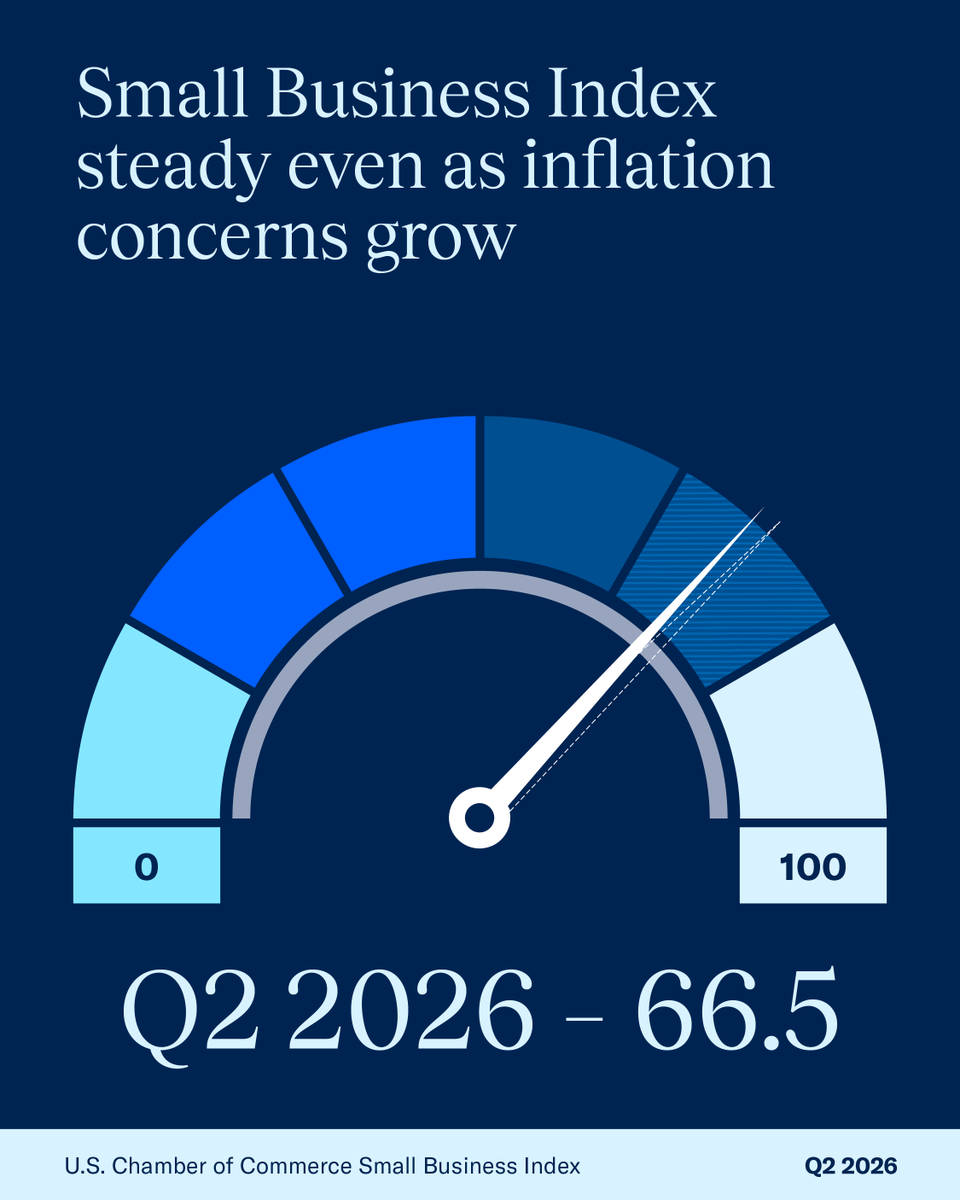
Small businesses remained resilient in Q2 2026, with confidence holding steady as the U.S. Chamber Small Business Index registered 66.5. Even as inflation concerns rise, many small-business owners report good business health and expect growth ahead. Read more: uschamber.com/economy/small-…
🚩 Growth ambitions for small businesses are at an all time low, with our latest #SBI figures showing that nearly a third of small businesses expect to shrink, sell up, or close in the next year. 🎙️ FSB's @craigie_b tells @CityAM's Business As Usual pod how the new Prime Minister could help to support small firms through action on business rates and late payments. Listen to it here: buzzsprout.com/2612946/episod…

Inflation Continues to Put Pressure on Small Business Owners thebusinesstimesng.com/inflation-cont…


İnsanların %99'u bu soruyu çözemiyor 🧠 Sadece 1 kibritin yerini değiştirerek 508'den daha küçük bir sayı elde edin

@Murk441 I would invest in myself to enhance my knowledge and well being.
@ShopBlackOwned INC2 is black owned.with over 20 years of experience ; If you need assistance with manufacturing or supply chain consulting services in Asia. Please feel free to contact us. E; [email protected]

@ShopBlackOwned INC is black owned.with over 20 years of experience ; If you need assistance with manufacturing or supply chain consulting services in Asia. Please feel free to contact us. E; [email protected]

Jarlath @Jarlath30198
9 Followers 424 Following
Flower Flicks @____flowers__
17K Followers 9K Following Daily fresh flowers to brighten your day | Nature lover | DM for collabs
TsinghuaSEA @tsinghuasea
183 Followers 92 Following Global Education Hub for Future Innovation, Sustainability, and Happiness.
Tootew @Tootewm4W
32 Followers 909 Following
Sasha @sotomatsut16299
119 Followers 3K Following A day without expectations is a day without expectations. https://t.co/QtztPYlJN2
Travel Angel Internat... @TravelAngel39
39 Followers 486 Following Exploring the world, With Travel Angel, One adventure at a time! ✈️🌍 Your passport to unforgettable experiences. Let us plan your next journey! 🗺️🌴
lankan travelocity @lankantraveloc
2 Followers 38 Following

Greg Smith @gregrsmith62
564 Followers 571 Following
Jason R. Simon @amancalledj
699 Followers 863 Following Teacher and writer based in Northeast Ohio. Former expat. Aspiring luddite. Politically homeless. Gustatory learner. Pilot G2 Pens Distinguished Educator.
_Lehentha Potsane Pet... @RLiehentha
2K Followers 5K Following 27🧚♀️ Influencer👱♀️💎💍🤷♀️ Soccer Fanatic⚽️ IT Specialist👩💻 💕ECD Practitioner❤️https://t.co/Qv9U61Ztlb
JenniferLynnTeaches @jenniferlmoroz
615 Followers 1K Following Public School Educator; Director: The Story of the Metis in Canada https://t.co/j7IPTEFqsB
International School ... @IntSchoolMag
4K Followers 3K Following Part of the School Management Plus Group, IS Mag is published three times a year, and celebrates the best of international schools around the globe
IB ++tutors @plusplustutors
95 Followers 728 Following Online IB Private Tutors from North America and Europe Serving Worldwide 🌎 Safe Environment 🦺 Engaging 🤝 Visit our website to find you a tutor!
Williamson & Williams... @W2REDC
34 Followers 117 Following Provide innovative real estate opportunities for our clients, investors and affiliates through the resources that the LORD has blessed our company with.
Bridge Of Japanese La... @BridgeJapanese
40 Followers 328 Following We are a volunteer club to teach Japanese in Kasai In Tokyo. If you are interested in it, message us.
Cutlery Choice @Cutlery_Choice
11 Followers 250 Following | Fantastic collection of Cutlery products | 100% Quality Guarantee | Worldwide shipping | SLL Encrypted Checkout. [email protected]
Tire-Caroline @TireCaroline
49 Followers 248 Following Supply all types tires-TBR, PCR, OTR, AGR with brands Doublecoin, Warrior, Volex, Kingnate, Wynstar etc.


Roots International S... @RIS_Pak
1K Followers 433 Following Roots International Schools is one of the best Schools in Pakistan, it has revolutionized the modern education standards, with an academic excellence.
Shenzhen_Insider @InsiderShenzhen
717 Followers 3K Following All things #Shenzhen ! For chatrooms and other content #follow our Facebook group and our Instagram name is shenzhen_insider . Our Wechat ID is Shenzhen_Insider
Clare's UK School Tri... @UKSchoolTrips
26K Followers 28K Following I post fantastic School Trip & Workshop ideas to bring learning to life so that your pupils can develop a love for education through experience & adventure.
Florida Gomez @FloridaGomez3
333 Followers 1K Following Iam a well dreamer who drewm big thing big want big things in life
http://www.Bhavishya.... @Bhavishyatutors
121 Followers 2K Following
AP for Students @APforStudents
92K Followers 1K Following Advanced Placement courses give students access to college-level work in high school, helping them save time and money in college.
ACT @ACT
64K Followers 2K Following ACT is transforming college and career readiness pathways so that everyone can discover and fulfill their potential. Direct all inquiries to @ACTStudent
College Board Forums @CB_Forums
22K Followers 37 Following Covering @CollegeBoard events and conferences, including #CBForum, #AP_Conf, and more.
Real Business @Real_Business
38K Followers 4K Following Telling the truth about SME life. Interviews, opinion, podcasts & inspiration for UK entrepreneurs who think bigger.
Federation of Small B... @fsb_policy
72K Followers 4K Following Official page of the Federation of Small Businesses (FSB). Follow us on LinkedIn: @ FSB UK and on Bluesky: @ fsb-uk. National Chair: @MMcTagueFSB
もぐもぐなかは... @nakaharu_0226
6K Followers 7K Following なかはる|32歳|ENFJ-A 🍽グルメ|✈️旅行|📚漫画 TikTok運用・SNSマーケティングの仕事してます 飲食店・観光・SNS集客に興味ある人はフォローしてください♡
http://www.Bhavishya.... @Bhavishyatutors
121 Followers 2K Following
Shenzhen_Insider @InsiderShenzhen
717 Followers 3K Following All things #Shenzhen ! For chatrooms and other content #follow our Facebook group and our Instagram name is shenzhen_insider . Our Wechat ID is Shenzhen_Insider
Tire-Caroline @TireCaroline
49 Followers 248 Following Supply all types tires-TBR, PCR, OTR, AGR with brands Doublecoin, Warrior, Volex, Kingnate, Wynstar etc.
Cutlery Choice @Cutlery_Choice
11 Followers 250 Following | Fantastic collection of Cutlery products | 100% Quality Guarantee | Worldwide shipping | SLL Encrypted Checkout. [email protected]
Bridge Of Japanese La... @BridgeJapanese
40 Followers 328 Following We are a volunteer club to teach Japanese in Kasai In Tokyo. If you are interested in it, message us.
Williamson & Williams... @W2REDC
34 Followers 117 Following Provide innovative real estate opportunities for our clients, investors and affiliates through the resources that the LORD has blessed our company with.
IB ++tutors @plusplustutors
95 Followers 728 Following Online IB Private Tutors from North America and Europe Serving Worldwide 🌎 Safe Environment 🦺 Engaging 🤝 Visit our website to find you a tutor!
JenniferLynnTeaches @jenniferlmoroz
615 Followers 1K Following Public School Educator; Director: The Story of the Metis in Canada https://t.co/j7IPTEFqsB
lankan travelocity @lankantraveloc
2 Followers 38 Following
Travel Angel Internat... @TravelAngel39
39 Followers 486 Following Exploring the world, With Travel Angel, One adventure at a time! ✈️🌍 Your passport to unforgettable experiences. Let us plan your next journey! 🗺️🌴
Sasha @sotomatsut16299
119 Followers 3K Following A day without expectations is a day without expectations. https://t.co/QtztPYlJN2
Tootew @Tootewm4W
32 Followers 909 Following
Flower Flicks @____flowers__
17K Followers 9K Following Daily fresh flowers to brighten your day | Nature lover | DM for collabs
TsinghuaSEA @tsinghuasea
183 Followers 92 Following Global Education Hub for Future Innovation, Sustainability, and Happiness.
Black Beauty Supply U... @BlackBeautySUK
580 Followers 418 Following
Black-Owned Businesse... @SAUEBLACKLA
8K Followers 475 Following supporting and uplifting black-owned businesses, black creatives and black entrepreneurs in Louisiana!!!! @saueblack [email protected]
SupportBlackOwned @SupportBlackOwn
3K Followers 1K Following A Directory of Black businesses and services provided by black people. #blackandproud #supportblackbusiness Consumers support a black owned business today!
Ella’s Beauty Mart @EllaBeautyMart1
7 Followers 29 Following A place to assist everyone with “presenting their best selves to the world in honor the matriarch of our family.” -Ella Mae Wilson
Black-Owned Businesse... @SAUEBLACKTX
31K Followers 5K Following supporting and uplifting black-owned businesses, black creatives and black entrepreneurs in Texas!!!! @saueblack [email protected]
Black Owned Beauty Br... @BOBeautyBrands
7 Followers 0 Following
Tsinghua SIGS @TsinghuaSIGS
2K Followers 403 Following A scientific research and graduate education platform of Tsinghua University, located in the vibrant city of Shenzhen.
Liz Duffy @DuffyLiz
2K Followers 1K Following International Schools Services (#issedu) president, avid #reader, world #traveler, lifelong #learner, #design thinker
Karen Vaites @karenvaites
30K Followers 7K Following I want excellent schools for all kids, and I write about literacy, math, curriculum, & key trends in K-12 Ed. Founder, Curriculum Insight Project @curriculumIP
Achieve Xiamen Intern... @AxisXiamen
156 Followers 78 Following AXIS holds a K12 international school license and is open to foreigners legally residing in China and residents from Hong Kong, Macao and Taiwan.
Yuri Halushka @HalushkaYuri
2K Followers 1K Following ib Educator | School Leader - ISTE Certified Technology Coordinator - Interested in personalized learning, shaping school cultures, & leadership.
Harvard University @Harvard
1.7M Followers 720 Following Official account for Harvard University. Devoted to excellence in teaching, learning, and research, and to developing leaders who make a difference globally.
Sias IS @SiasISChina
221 Followers 450 Following Sias International School, where East meets West, educates and inspires students to be well-balanced with a strong mind, body and spirit. #SiasIS We’re Hiring…
Andi Price @MrAndiPrice
5K Followers 2K Following Teacher in DXB 🇦🇪 Lead on EdTech ◦@Seesaw @HundrEDorg @HeyPobble Ambassador ◦Supporting #CollabUAE🇦🇪 #PinkShirtThursday👚 🥷
Amy Carroll @AmycCarroll
1K Followers 832 Following Vice Principal at Ranches Primary School ⭐️ Irish in Dubai ☘️ Mammy to Rían and Fiadh 💙💗Book Lover 📖 Travel Bug 🌎
Joe Creal @TheRealMrCreal
452 Followers 182 Following Assistant Head at RGS Guildford Dubai, specialist in Maths and Science, MEd in Educational Leadership, Pioneer @Seesaw, @microsoft innovative educator
Keri-Lee Beasley @klbeasley
10K Followers 7K Following HS Learning & Tech Coach at WAB, font geek, food enthusiast, amputee, passionate about design, 🏳️🌈 LGBTQIA+ ally (she/her), #IDEAS #DEIJ
Fiona Cottam @Principal_HIS
2K Followers 454 Following Principal at Hartland International School Dubai (@hartlandintl) passionate about excellence
Reena Oates @OatesReena
593 Followers 715 Following Deputy Headteacher Star International Mirdif - Deputy Whole school Safeguarding Lead - NPQSL - Vocational Education


Zach Groshell @MrZachG
19K Followers 8K Following Former teacher helping schools implement effective instruction | Progressively Incorrect🎙️ | Director @Steplab_co North America | PhD, Author of Just Tell Them
Chuck Hunter @chuckbizpro
338 Followers 671 Following Global business consultant, public speaker, visionary, hypnotherapist, change agent, friend, dad – oh and physicist, Navy fighter pilot, blackbelt…You might like


