DannyFPV.𐤊 @DannyFPV7
Kaspa the world's first secure, decentralized, scalable and programmable Proof-of-Work network. https://t.co/OeS3D2rtkv #𐤊 #HASH instagram.com/dannyfpv7?igsh… BlockDAG Joined December 2023-
Tweets2K
-
Followers396
-
Following351
-
Likes10K

The next evolution of Kaspa will not only be about making money move faster. It will also be about making money intelligent. Consider a future where economic activity no longer requires humans to initiate every transaction, approve every agreement, or supervise every exchange. Millions of autonomous agents could negotiate contracts, purchase computational resources, provide services, and coordinate entire supply chains. But this creates a fundamental problem: how do machines transact with one another without trusting the machines themselves? This is where Kaspa's emerging architecture becomes particularly interesting. Toccata introduced native covenants, transaction introspection, and zero-knowledge verification. KIP-21 provides application-specific sequencing commitments, while vProgs is being developed to execute complex computation outside consensus and prove its correctness on Layer 1. Individually, these are technical improvements. Collectively, they suggest something considerably more profound: the possibility of a programmable economic environment where trust is increasingly transferred from institutions and software operators to cryptographically enforced rules. Imagine an AI agent controlling $10,000 in operational capital. Instead of trusting its programming to behave responsibly, a Kaspa covenant could enforce spending limits, restrict destinations, and require specific settlement conditions. Even if the agent malfunctioned or became compromised, its authority would remain bounded by consensus-enforced constraints. Now multiply that architecture across millions of agents. An economy begins emerging where participants don't necessarily need to trust one another, share infrastructure, or even operate under the same administrative authority. They simply need compatible settlement rules. And here's the deeper implication: as artificial intelligence reduces the cost of producing economic decisions, the demand for neutral, automated settlement infrastructure could increase dramatically. Kaspa's opportunity isn't simply becoming another platform for decentralized applications. It's becoming the economic coordination layer for autonomous intelligence. Bitcoin demonstrated that money could exist without centralized issuance. Kaspa will help demonstrate how increasingly autonomous economies can coordinate without centralized permission. The future of Kaspa will be less about humans using cryptocurrency and more about machines using economic freedom.


just to be clear, there’s a lot going on across many fronts. it’s just not helpful to talk about things before they happen; they simply need to happen, and serious things take time. some serious efforts also won’t necessarily mature for various reasons, which is another reason ppl don’t always lay out their plans publicly (until they happen). i anticipate something of a “baby boom” in a few months, but teams will simply pursue delivery rather than talk

0.2 KAS went from Kaspa to Ethereum with no signer in the middle. On mainnet. As a test. @KasperoLabs burned 0.2 KAS, proved it and the Kaspa PoW above it in RISC Zero; an Ethereum mainnet contract verified the proof and minted 0.2 wKAS. Test only, capped, unaudited. No minimum-work threshold yet; the next version adds about an hour of level-30 blocks. @michaelsuttonil flagged what's left: the proof must show the block was chain qualified (on Kaspa's selected chain, not just in the DAG). He sketched a possible route. Not solved yet. Also merged, unreleased: @IzioDev's #1074, covenant transactions from WASM. Words the intern may not use today: trustless, breakthrough, live bridge. They're on a sticky note on my monitor. Day 1 of the sticky note.
Launching a token on Kaspa takes about a minute. And nobody can rug the supply. 🦭 Here's the full $KID launch on @kasseal, step by step: → Pick a name, ticker and picture → Launching is free. 25 KAS gets locked into the token's own cells → Signature 1 anchors it on chain. Signature 2 mints 1.2B → Supply sealed forever. Nobody can ever mint more → 800M sells on a bonding curve, 400M waits in reserve → At 573,540 KAS it graduates into a pool with NO withdrawal path → Your browser re-checks it all: 9 checks, all green Fees: 1% per trade, half to the creator, half to Kasseal. No custody. No server. Just Kaspa covenants. Launch it. Seal it. Prove it. [app.kasseal.com](app.kasseal.com) Live on testnet-10. Not audited yet. NFA. #Kaspa kaspa:native #KCC20 #Kasseal @Kaspaseal @kaspaunchained

Kasseal is live on Kaspa testnet-10. 🦭 Launch a token in a minute, trade it on a fair bonding curve, and watch it graduate to a locked liquidity pool, all on Kaspa's native covenants (KCC-20). Creators earn 0.50% of every trade on their token, claimable anytime. Free to
Kaspa is about to get a L1 bridge to Ethereum with no signers, approvers or admins anywhere in the path. Already proven on mainnet with a test token: deposit an ERC-20 into an Ethereum vault, mint a KCC-20 on Kaspa from a ZK proof of Ethereum’s own consensus.

Everytime I hear a bitcoiner say “Who cares if the $KAS tech is better, Bitcoin has already won” I cringe so hard. Bitcoin is a technology first and foremost and it’s because of its lack of covenants, UTXO programmability, protected vaults, whatever you want to call it, that these widespread hardware wallet attacks are happening and are so devastating for so many people. People have lost everything because there was no protection for their BTC UTXOs at the consensus level. There used to be people building real applications for bitcoin…not the shit that is pushed today. Here is a video of @jamesob from 3 years ago showing a demo OP_Vault which was apart of BIP-345. This would’ve allowed greater programmability for Bitcoin and given every user the opportunity to build their own vault and protect against seed phrase theft. I’ve never heard Michael Saylor or Larry Fink talk about covenants or protected vaults…only digital credit and other fiat brained bullshit. Ask yourself why that is. And then study the breakthrough UTXO programmability that $KAS offers on the L1 and start building 🙌🏻
@frank_r2d2 KCC-20 makes stablecoins a practical reality on Kaspa, yes
@kaspaunchained kaspa is programmable high-frequency proof of work. i think high frequency is all the rage so to speak. it makes it a continuous composition of highly responsive mini programs
Getting closer to this important milestone The reference app has a simple public minting policy, with a minter frontier of UTXOs (/actors) that can expand and contract with demand. There’s also a token seed frontier that can expand and contract, and only creates zero-balance token UTXOs. Expanding the frontier requires opting in and locking a small amount of KAS, which can later be reclaimed. This lets anyone enter the token covenant without already holding any token value. E.g., you create a zero-balance token UTXO from the seed using your own KAS, and others can later borrow-send you token amounts without having to contribute any KAS themselves. We envision this reference repo as the first step towards a general standardized Kaspa Token Lib (KTL), or more broadly, also non token contracts and libs. Let’s go

KCC-20 has advanced to Last Call: github.com/kaspanet/kccs/… A companion reference implementation by @manyfest_, written in Argent together with its pinned generated Silverscript, underwent an extensive manual review and AI-assisted audit by Michael Sutton, covering KCC-20

I spoke with @hashdag about $KAS wallet number one, he says being anonymous is not uncommon, but having zero (anonymous) coordination with the team is . . like the main investor giving up an observer seat on the Board and not protecting their investment. So his guess is EntityX may be a first timer that started crypto in 2020s for sure . . . What an interesting angle from our Favorite Br!lli@nt Mind !!

Major milestone for the Kaspa Privacy Initiative! 🎉 We just demonstrated autonomous recovery of native test KAS on Kaspa L1. After physically switching off the original computer, a second machine independently found the remaining reserve, generated a fresh ZK proof and successfully withdrew the KAS on TN10. No intervention from the original machine. No privileged withdrawal key. This is a major step toward something essential for private KAS: being able to recover your funds even when the original infrastructure disappears. Not a shielded pool yet, not audited, and more A1 tests remain. But a critical piece of the foundation now works! Built in the open: github.com/olafweller/kas…


KCC-20 has officially moved to Last Call status. Developing software and developing standards are very different. Software aims to solve a specific problem. A standard aims to define a general foundation for a wide class of solutions. A special thanks to @michaelsuttonil , who was there from the start to finish , guided me in how to approach this complex craft.


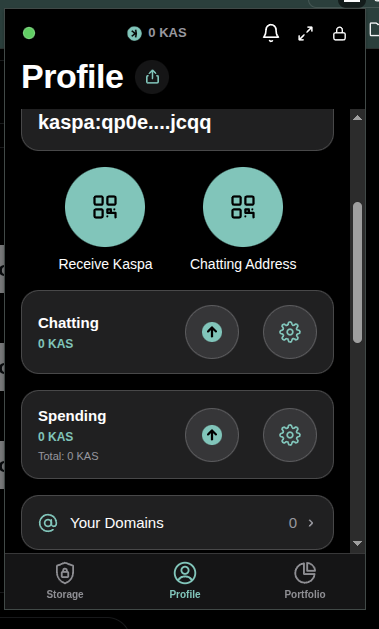
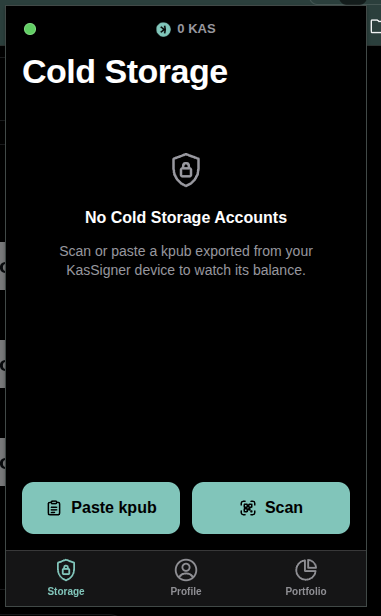
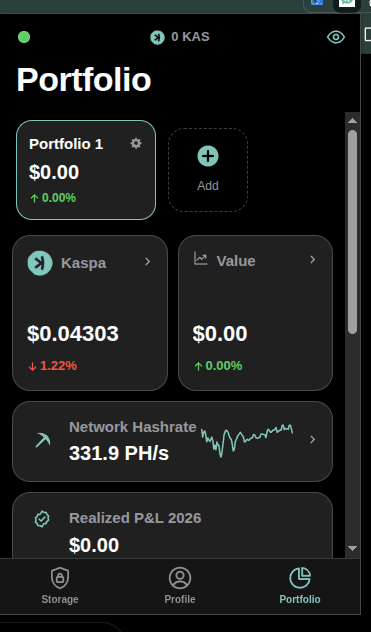
$KAS KaChat Browser Extension is now public and can be used! Its in beta and not on official browser extension stores yet. This will be another means to acquiring .kachat domains when they go live on mainnet. .kachat domains is already live on testnet which you can switch to it in the settings. github.com/KaspaSilver/Ka… KaChat browser extension is focusing on porting KaChat wallet specific features such as the profile, cold storage, and portfolio to track your holdings.

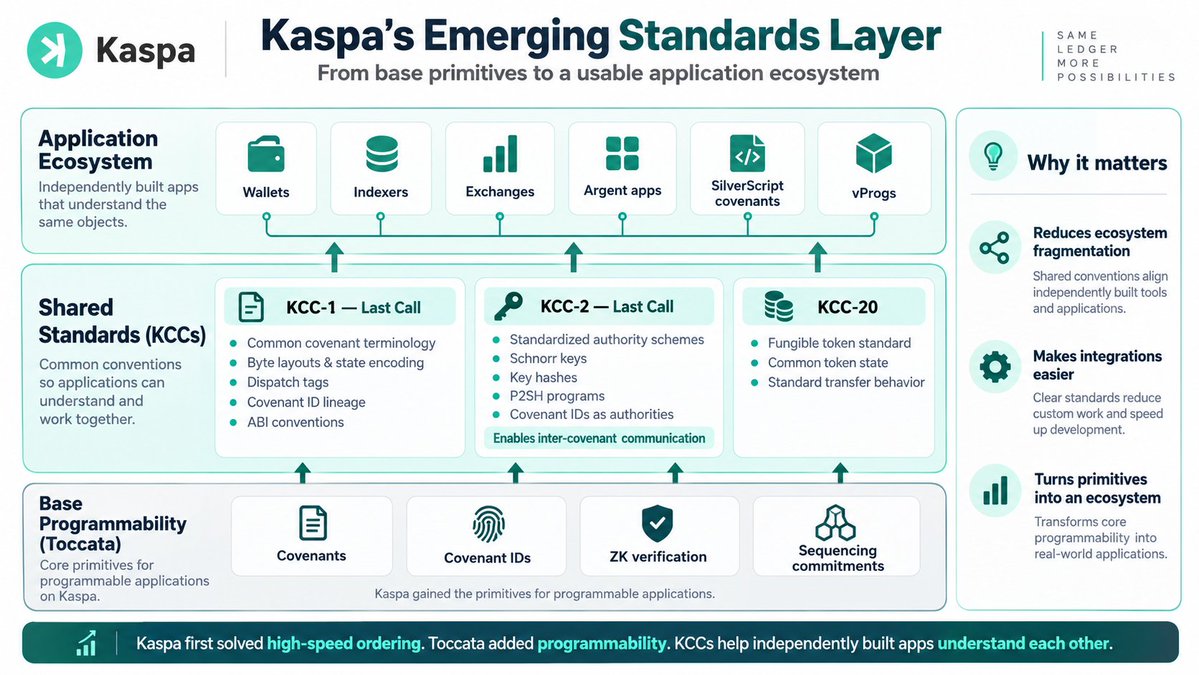
The most interesting new Kaspa development is happening above consensus: the ecosystem is beginning to standardize how programmable applications actually talk to each other. Toccata gave Kaspa covenants, covenant IDs, ZK verification and sequencing commitments, but those primitives alone do not create an application economy. Developers still need common answers to questions like: How is covenant state encoded? How does a wallet identify an entrypoint? How does one covenant authorize another? What does a token transfer look like to an indexer that did not create the token? This is what the emerging Kaspa Calls for Conventions, or KCCs, are attempting to solve. KCC-1 and KCC-2 have now progressed to Last Call. KCC-1 defines common covenant terminology, byte layouts, state encoding, dispatch tags, Covenant ID lineage and ABI conventions. KCC-2 goes one level higher by defining standardized authority schemes: Schnorr keys, key hashes, P2SH programs and even Covenant IDs themselves can act as authorities. That last mechanism is particularly important because it allows one persistent covenant lineage to authorize actions inside another application. In other words, Kaspa is developing standardized inter-covenant communication. Then KCC-20 applies these foundations to fungible tokens, defining common token state and transfer behavior rather than forcing every token implementation to invent an incompatible protocol. This may sound less exciting than 100 BPS or DAGKnight, but it addresses a completely different scaling problem: ecosystem fragmentation. A programmable network becomes dramatically more useful when wallets, indexers, exchanges, Argent applications, SilverScript covenants and eventually vProgs can interpret the same objects without bespoke integration work. Kaspa spent years solving how decentralized transactions should be ordered quickly. Toccata added programmability. The KCC layer is beginning to answer the next question: how do thousands of independently built programs understand each other? That is the point where primitives start becoming an ecosystem.
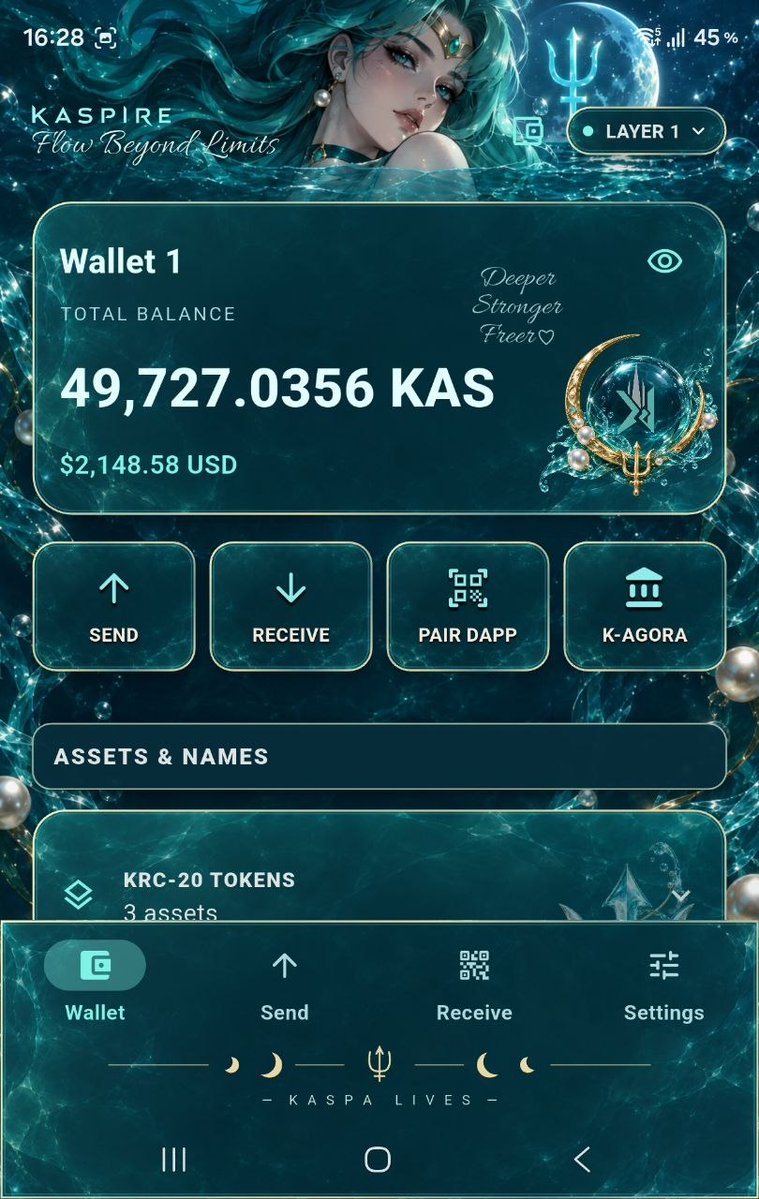
Made a little something for Kaspire. One wallet. A much bigger Kaspa ecosystem. KAS. KRC20. KRC721. KNS. KCC20. PSKT signing. WalletConnect. Self custody. Open source. Built for where Kaspa is going. This is Kaspire. @kaspirewallet @kasbtc_krc20 @kaspaunchained

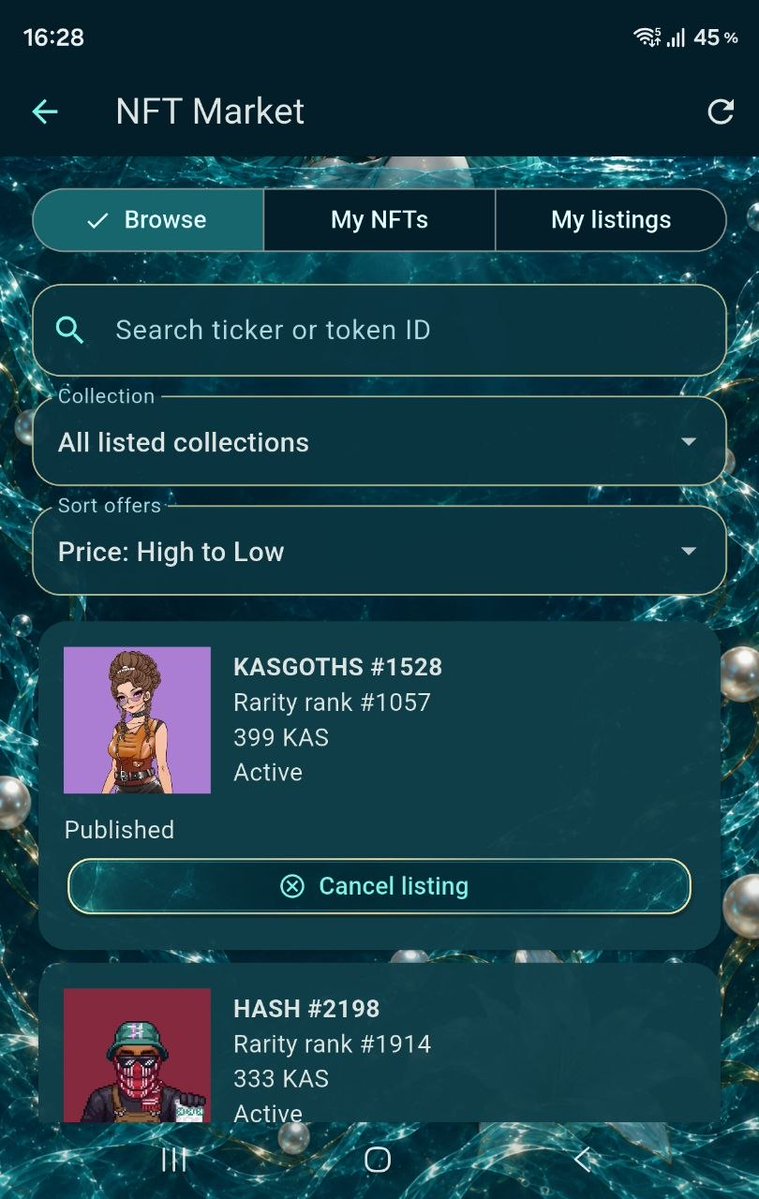
LIVE NOW: The Kaspire marketplace inside the wallet now supports NFT listings as well, not just dotk listings. The update also includes a brand new theme to choose from called Neptune. As usual: What you see is what you pay. There is no fee added on top for the buyer. The
If you're a business owner and want to help with $KAS adoption, this is how to phrase it from a psychological perspective: Instead of offering a discount for using $KAS, say there is a fiat surcharge Psychologically, people would much rather not pay a penalty than merely just get a discount, even though the payment is the same Example: instead of offering 20% discount for paying with $KAS, say there's a 20% surcharge for paying with fiat/credit card And have a small QR code with the very basics of #Kaspa and an affiliate link for clients to buy $KAS If more business owners have a fiat surcharge, more clients will get introduced to $KAS, helping adoption of the best money to ever exist.

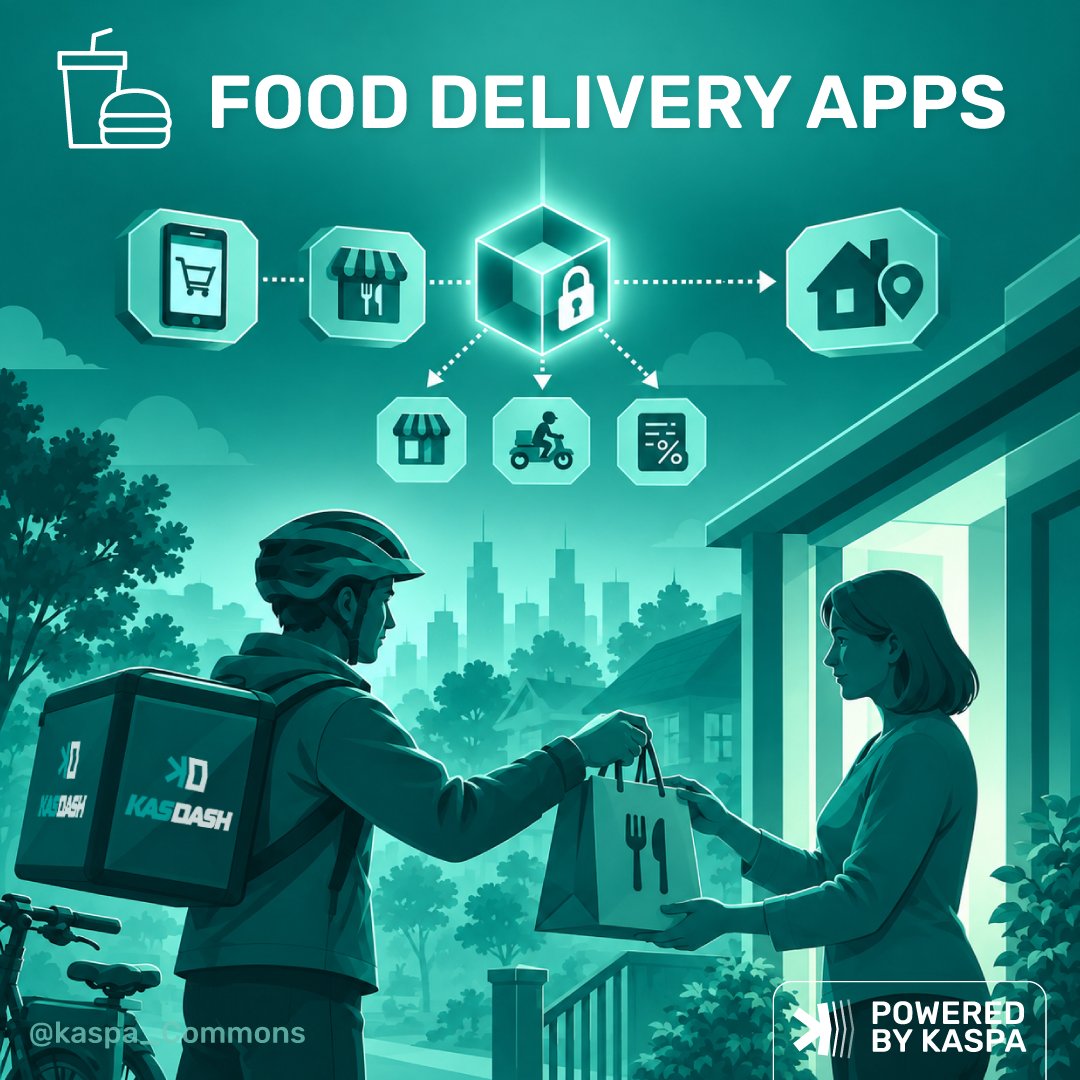
60+ Enterprise Markets to Be Disrupted by #Kaspa Tech #33 Food Delivery Apps Food delivery apps connect customers, restaurants and couriers, but the platform sits in the middle of almost every part of the transaction. It receives the order, handles payment, tracks delivery, calculates fees, pays restaurants and couriers, manages disputes and keeps the transaction history. Legacy Platforms & Systems • DoorDash, Uber Eats, Skip and Deliveroo • Centralized restaurant and courier marketplaces • Credit and debit card payment networks • GPS and mapping APIs • Restaurant POS integrations • Proprietary courier matching and dispatch • Platform-controlled ratings and reputation • Scheduled restaurant and courier payouts These platforms provide useful services including discovery, logistics and support. There is still plenty of room to rethink how the order, payment and settlement underneath those services work. What’s Broken / Innovation Gaps ❌ Restaurants and couriers depend on a central platform for settlement ❌ Customer payment, restaurant payment and courier payment are separate processes ❌ Payments can settle long after the food is delivered ❌ Order status and disputes depend on platform-controlled records ❌ Refunds and cancellations require the platform to determine where the money goes ❌ Ratings and work history are trapped inside individual apps ❌ Restaurants have limited control over marketplace customer relationships ❌ More automated commerce will require programmable payment and settlement Where Food Delivery Can Still Innovate and Where Kaspa Tech Could Help ❌ The platform controls the money from checkout to payout ✅ Payment could be locked at checkout with the conditions for spending it established from the beginning. Kaspa Covenants can enforce how a UTXO may be spent and validate its next state. Covenant IDs provide continuity as that state changes. An order could move through accepted, prepared, picked up, delivered, cancelled or refunded states while retaining a verifiable lineage. ❌ Developers have to build that logic close to Kaspa Script ✅ SilverScript now provides a higher-level way to write it. SilverScript v1.0.0 is officially released and compiles to Kaspa Script. Developers can define state and transition policies while the compiler handles much of the lower-level Covenant plumbing, state validation and transaction structure. For a delivery application, that could mean writing rules for when funds remain locked, when an order can advance, which outputs are valid and what conditions allow settlement or refund. ❌ One customer payment eventually has to become several payments ✅ The transaction itself can enforce the agreed outputs. Kaspa’s transaction introspection allows a Covenant to inspect and validate transaction outputs. A delivery contract could require the correct amounts and destinations before allowing locked funds to move. That opens the door to settling the restaurant, courier, taxes and other predefined recipients as part of the completed transaction rather than sending everything through a platform account first. ❌ Delivery confirmation and payment are separate events ✅ Delivery confirmation could become an input to the settlement process. A restaurant scan could verify pickup. A customer QR code, signature or another authenticated action could confirm delivery. The Covenant rules determine what constitutes a valid transition and whether the corresponding payment outputs are allowed. ❌ Restaurants and couriers wait for platform payouts ✅ Settlement could occur as part of the completed order transaction. Once the required conditions are satisfied, Kaspa can settle the valid transaction directly rather than leaving balances inside a platform for later reconciliation. ❌ Cancellations and refunds require someone in the middle to control the funds ✅ Valid refund paths can be written into the contract. A Covenant could allow one transition if an order is cancelled before pickup and another once delivery has been verified. More complicated disputes may still require arbitration or another agreed process. The basic settlement rules do not have to be decided after the fact. ❌ A full delivery marketplace involves more than one contract ✅ This is where Argent becomes interesting. Argent is being developed as an actor-based language and compiler for atomic, multi-contract applications on Kaspa. Argent programs compile to SilverScript and its runtime can construct transactions coordinating multiple actors. A future delivery application could potentially model the customer, restaurant, courier and other participants as separate actors whose contracts participate in one coordinated transaction. Argent is still under active development and needs further auditing and hardening before general production use. ❌ Private customer information should not be exposed publicly ✅ Kaspa’s native ZK verification provides another building block for applications that need to prove something without exposing all of the underlying information. This could eventually be useful for identity, eligibility, delivery or other private verification requirements while keeping unnecessary personal information outside the public transaction history. What could that look like? A customer places an order and the payment is locked according to predefined rules. The restaurant accepts it, the courier verifies pickup, and delivery is confirmed at the door. That final confirmation can trigger a transaction distributing payment to the restaurant, courier, taxes and any other agreed recipients. The delivery app can still handle menus, maps, courier matching, notifications, customer service and logistics. It doesn’t necessarily need to hold the funds and manage settlement between everyone involved. Toccata provides the L1 capabilities. SilverScript gives developers a practical language for writing Covenant logic. Argent is exploring how more complex multi-actor applications can be built above that foundation. Got inspired? Start Building! See links in thread PS - Shout out to @KasperoLabs for demoing their KASDASH app! We're hungry for more!


The clash between 4 most ruthlessly active crypto community. which one will dominate?? $kas $qubic $dog $snek


K kapture @K__kapture
1K Followers 4K Following
Charly ʞ @KaspaSea
654 Followers 1K Following

𐤊 Special @IbuyKaspa
535 Followers 648 Following Deuteronomy 6:5 “You shall love the LORD your God with all your heart and with all your soul and with all your might. God first, buy $KAS, don’t stop! 🫶🏽
Jeffrey Castro 𐤊 �... @jcdiorr
778 Followers 121 Following Decoding finance | Kaspa maximalist | Talking markets, money, and the future of decentralized wealth. ceo at tradevue
Ngesthi Tunggal @NNgesthi
9 Followers 52 Following


Rob The Crypto Wolf @RobCryptoWolf
10 Followers 61 Following
Mr. X @MrXCryptoinvest
60 Followers 197 Following
vokaunt @vokaunt18682
327 Followers 464 Following
Bitcoin Ethan Sola ag... @BitcoinEthtqlh
53 Followers 350 Following all crypto wallet solar eth and BTC can send wallet
Illya @kolpper
132 Followers 579 Following

Marco 𐤊 @MarcoH1997er
560 Followers 429 Following Kaspa and Bitcoin is Money everything else is a credit
LinuxGeorge @george_linux
197 Followers 910 Following Passionate about connecting Opensource Technology enthusiasts and beginning my own personal journey learning Arduino projects..

RealKaspaWire.kas @KaspaWire
580 Followers 1K Following #BTC #Kaspa #XMR wallet @KurncySolutions | Portfolio Builder: Which Cryptos to Buy📊 | Beginner? Book a chat ↓ 🔗https://t.co/QFEPnLkVXV | https://t.co/b3SCw3kiRB
Yakutrades @yakku_21
77 Followers 237 Following


Gary_the_𐤊 @Gary_the_K
420 Followers 2K Following
Krackizback @krackizback
260 Followers 2K Following
Borat Vambaster @BoratVambaster
151 Followers 404 Following
EddyParker77 𐤊 @EddyParkerr
352 Followers 1K Following

pleasehammerdonthurte... @hammertimevic
356 Followers 2K Following

Joseph_6𐤊 @6Psman
565 Followers 3K Following
Vincenzo Primerano @monarcaking9110
253 Followers 2K Following
Didds♤𐤊 @jas_tab074
453 Followers 2K Following
Frederik Kroppenstedt @fkroppi
19 Followers 54 Following
Andrea ✨🐬𐤊 @andrea_asen
424 Followers 2K Following Nobody's heard from me for months. I'm doing better than I ever was. 🖤

jordankas 𐤊 @jordankaspa
543 Followers 775 Following

Ijar maulana akbar @AkbarIjar60963
67 Followers 284 Following

Sibanna𐤊 @Sibannac1994
316 Followers 2K Following
Nikolai Schönhof @Battronus
52 Followers 381 Following
CyberGent 𐤊 @CyberGent_
2K Followers 685 Following Crypto 24/7 | (2 Cor. 5:21) | Digital assets enthusiast | Investor, YouTuber. Kaspa/Tangem Ambassador 🇪🇸🇺🇸
PraObd @PraObd
452 Followers 3K Following
Karol Pryka @KarolPryka
607 Followers 2K Following Victory belong to the most tenacious. Study Kaspa $kas
Hank @bobcharsiu
12K Followers 12K Following
Phaze @Phaze64738
209 Followers 246 Following Just a fan of the best shitcoin that keeps proving everyone wrong… $KAS 😏
Gonzo.𐤊as @Dr_Gonzo_K
2K Followers 696 Following Decentralized scribbler | Reporting from the frontlines of trustless money and digital rebellion | DAG Life | 𐤊|#
🇵🇭 TapToTip —... @mrZeku2000x
1K Followers 1K Following TTT x KASPA. S.i/Humans/Kaspa We are_in-hell. The urge to learn it all. So I equip my S.i agents With Kaspa , To mine the internet. https://t.co/2ghcWQ9nC8

Jas @Jvsmnnx
1K Followers 11 Following
KommsApp @KommsApp
176 Followers 14 Following Komms is a decentralised, censorship resistant communications protocol. Kaspa provides the truth. Bittensor provides usability. Komms connects the user
Coin Bureau @coinbureau
1.1M Followers 430 Following Official Coin Bureau X account: covering breaking news, insights & in-depth analysis across Fintech, Macro & AI.
Charly ʞ @KaspaSea
654 Followers 1K Following
KaChat @KaChat_
2K Followers 8 Following Digital money and communications happening in unison with real time decentralization and censorship resistance
TTTz.xyz 🦋ESP @TTT___KAS
14 Followers 22 Following I am not the antichrist / just another kaspian who supports Kaspa Real Life Adoption. We train AI with Kaspa for faster TRAINING using daglike infra. #AVRA
𐤊 Special @IbuyKaspa
535 Followers 648 Following Deuteronomy 6:5 “You shall love the LORD your God with all your heart and with all your soul and with all your might. God first, buy $KAS, don’t stop! 🫶🏽
Jeffrey Castro 𐤊 �... @jcdiorr
778 Followers 121 Following Decoding finance | Kaspa maximalist | Talking markets, money, and the future of decentralized wealth. ceo at tradevue
Ngesthi Tunggal @NNgesthi
9 Followers 52 Following
Rob The Crypto Wolf @RobCryptoWolf
10 Followers 61 Following
Bitcoin Ethan Sola ag... @BitcoinEthtqlh
53 Followers 350 Following all crypto wallet solar eth and BTC can send wallet
Mr. X @MrXCryptoinvest
60 Followers 197 Following
Illya @kolpper
132 Followers 579 Following
vokaunt @vokaunt18682
327 Followers 464 Following
Marco 𐤊 @MarcoH1997er
560 Followers 429 Following Kaspa and Bitcoin is Money everything else is a credit
LinuxGeorge @george_linux
197 Followers 910 Following Passionate about connecting Opensource Technology enthusiasts and beginning my own personal journey learning Arduino projects..
RealKaspaWire.kas @KaspaWire
580 Followers 1K Following #BTC #Kaspa #XMR wallet @KurncySolutions | Portfolio Builder: Which Cryptos to Buy📊 | Beginner? Book a chat ↓ 🔗https://t.co/QFEPnLkVXV | https://t.co/b3SCw3kiRB
Yakutrades @yakku_21
77 Followers 237 Following
Gary_the_𐤊 @Gary_the_K
420 Followers 2K Following
Krackizback @krackizback
260 Followers 2K Following
Borat Vambaster @BoratVambaster
151 Followers 404 Following
EddyParker77 𐤊 @EddyParkerr
352 Followers 1K Following
pleasehammerdonthurte... @hammertimevic
356 Followers 2K Following
Joseph_6𐤊 @6Psman
565 Followers 3K Following
Vincenzo Primerano @monarcaking9110
253 Followers 2K Following
Frederik Kroppenstedt @fkroppi
19 Followers 54 Following
Didds♤𐤊 @jas_tab074
453 Followers 2K Following
Andrea ✨🐬𐤊 @andrea_asen
424 Followers 2K Following Nobody's heard from me for months. I'm doing better than I ever was. 🖤
BitGo @BitGo
81K Followers 529 Following BitGo is the first public, federally chartered digital asset bank. Est. 2013. Founded by @mikebelshe and @billlee. NYSE: $BTGO | Fortune 500 Company
jordankas 𐤊 @jordankaspa
543 Followers 775 Following
Ijar maulana akbar @AkbarIjar60963
67 Followers 284 Following
Vijay 𐤊ailash, CFA... @realvijayk
8K Followers 1K Following Sound money advocate. Former Bitcoin Maxi encouraging you to STUDY #Kaspa & its long-term implications on society. Opinions, not financial advice.
Sibanna𐤊 @Sibannac1994
316 Followers 2K FollowingTrends for United States
You might like