Tony learn @DupreeTech
Joined September 2022-
Tweets150
-
Followers5
-
Following110
-
Likes104

If you’re a Data Analyst, looking for experience to add to your CV, Here are 10 platforms where you can volunteer or intern in data analytics, all with relatively straightforward application processes: VOLUNTEER PLATFORMS 1. DataKind (datakind.org) You create a profile on datakind.rosterfy.com, add your data skills and experience, and get considered for projects as they arise. Volunteers can work remotely from anywhere in the world.  Great for applying real-world analytical skills to social impact causes. 2. Catchafire (catchafire.org) You can volunteer in various ways ranging from a short 1-hour phone call to a 3-month scoped project, working remotely. Skills like data analysis, digital marketing, and IT can be offered to nonprofits.  One of the easiest sign-up processes out there. 3. Taproot Foundation (taprootplus.org) Taproot acts as a middleman between social impact organizations and professionals with the right skills. People can post projects or browse available ones, and the platform connects volunteers with pro-bono consulting opportunities.  4. Solve for Good (DSSG Solve) (solveforgood.org) It’s a platform where social good organizations post data projects they need help with, and volunteers help scope and solve those problems using data-driven methods.  Good for both beginners and intermediate analysts. 5. Omdena (omdena.com) Omdena offers a collaborative environment where participants work in teams to solve real-world problems using AI and data science. You gain hands-on experience with the benefit of mentorship from experts, and a certificate is provided at the end.  INTERNSHIP PLATFORMS 6. Internshala (internshala.com) Internshala offers various remote data science internships with startups and companies. While some roles are unpaid, they provide a great learning experience with hands-on projects, and a certificate is awarded for most positions.  Very popular and beginner-friendly. 7. The Sparks Foundation (thesparksfoundation.org) A widely known virtual internship program in data analytics and data science that’s easy to apply for. Projects are self-paced and you earn a certificate upon completion great for portfolio building. 8. Extern (extern.com) Extern offers externships specifically designed for those with zero experience, with real-world impact opportunities and resources like resume templates and direct application links.  9. Jobright.ai / GitHub Internship Repo (jobright.ai) This is a curated repository of data analysis internship opportunities updated regularly, pulling from 400,000+ positions added daily and matching them to your skills and experience.  Low friction, you browse and apply directly. 10. Idealist (idealist.org) Idealist is listed among platforms where you can find jobs and volunteer roles in social-change organizations.  It frequently lists data-related volunteer and intern roles with nonprofits globally, and applying is as simple as submitting a profile.

La IA ya puede crear fórmulas avanzadas de Excel en segundos. Aquí tienes 15 prompts de Claude que automatizan tareas complejas de hojas de cálculo. Guárdalo.


Update Soal-soal Excel 🔥🔥 Daily Exercise by: TanyaJawabExcel bit.ly/DailyExcel_Tan… Exercise Excel bit.ly/Basic_Expert_W… Interview Test bit.ly/EXCEL_INTERVIE… Excel Game drive.google.com/drive/folders/… MECC, E-Sport Chellenge drive.google.com/drive/folders/…
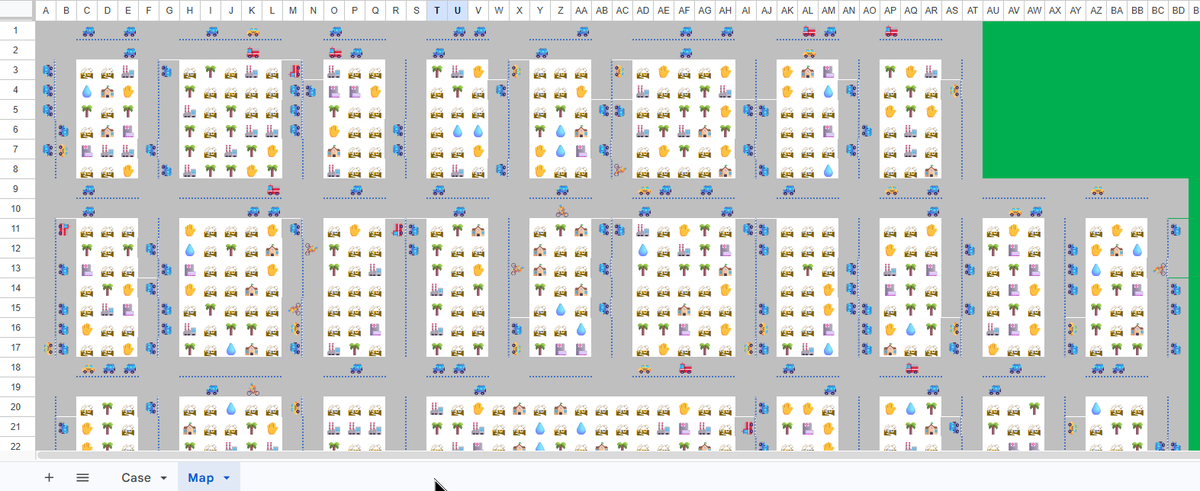
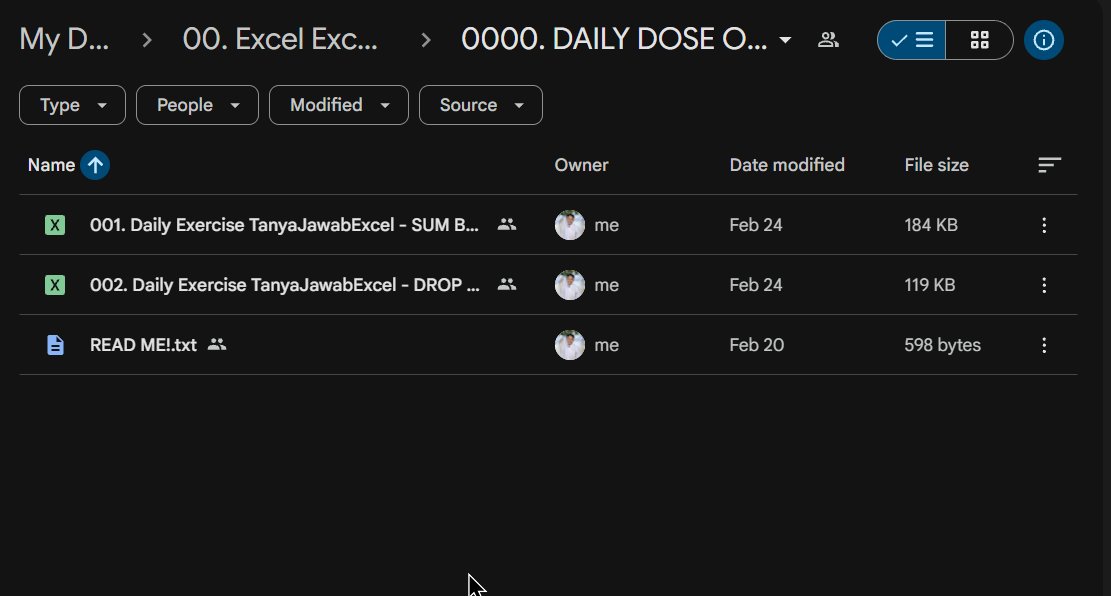
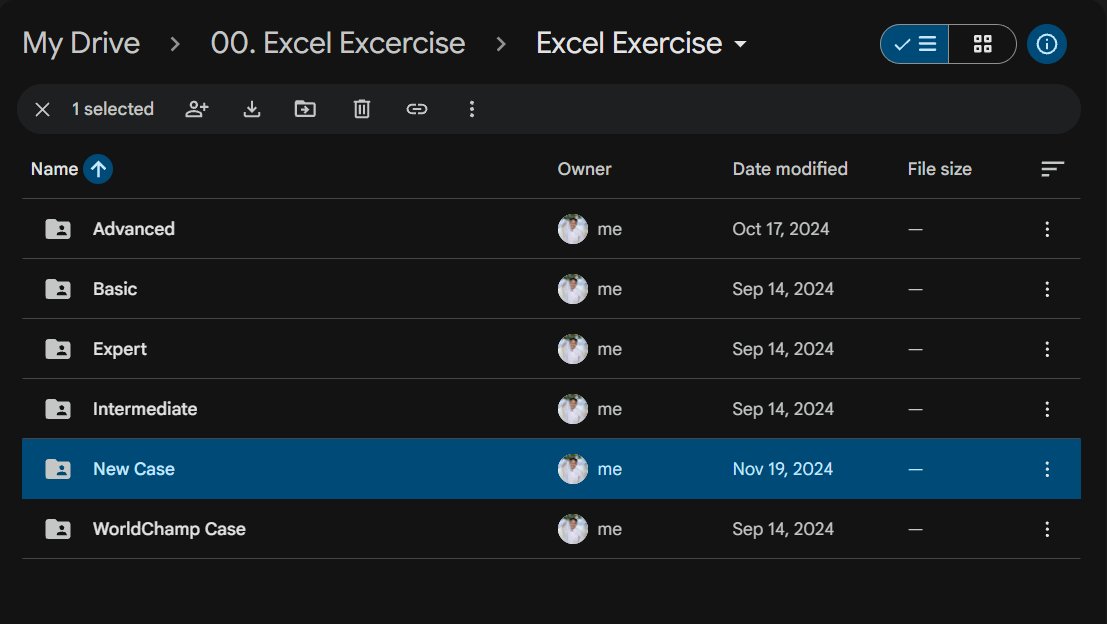
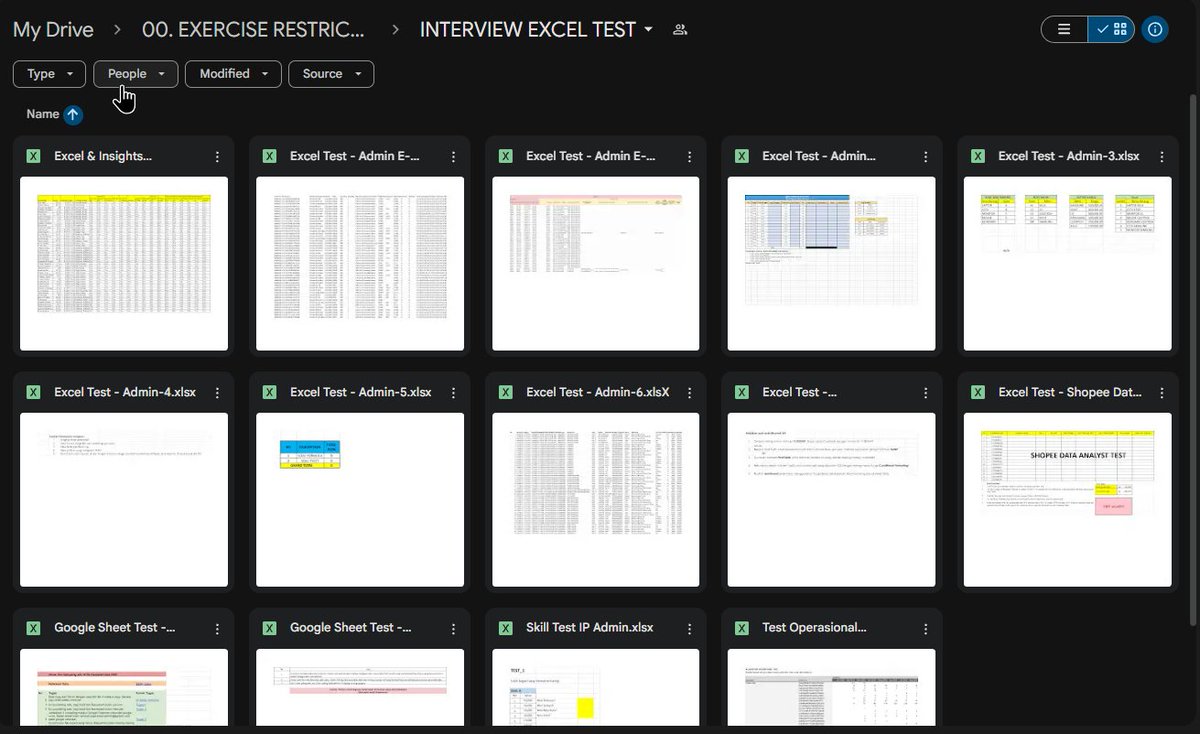

This is a huge deal for nerds

🚨 AI can now build Excel formulas like Microsoft's Power BI consultants (for free). Here are 15 insane Claude prompts that replace $550/hour spreadsheet specialists (🔖 Bookmarked for later)


All Paid Courses (Free for First 4500 People) 𝗣𝗮𝗶𝗱 𝗖𝗼𝘂𝗿𝘀𝗲 𝗙𝗥𝗘𝗘 (PART - 1) 1. Artificial Intelligence 2. Machine Learning 3. Cloud Computing 4. Ethical Hacking 5. Data Analytics 6. AWS Certified 7. Data Science 8. BIG DATA 9. Python 10. MBA (72 Hours only ) To get- 1. Like & Retweet to get DM 2. Reply " All "

100 SQL Questions with Answers in 59 pages🔥 1/n


When we look into the sky, we are not seeing the universe as it exists now but as it existed at different moments in the past. Light needs time to travel & that simple fact turns every observation into a journey backward through cosmic history. The Moon appears as it was about one second ago, the Sun as it was eight minutes in the past & distant galaxies as they were millions or billions of years before Earth even formed. In this sense, astronomers behave almost like cosmic archaeologists, reconstructing history from signals that have been traveling across space for immense spans of time. Distance in astronomy is therefore inseparable from time: the farther we look, the earlier in the universe’s history we are observing. The universe is ~13.8 billion years old, which might suggest that the farthest observable objects should lie 13.8 billion light-years away. But here is the catch: space itself has been expanding while light traveled toward us. Galaxies that emitted ancient light were much closer when that light began its journey, yet over billions of years the expansion of space stretched the distance between us. When this expansion is included in cosmological calculations, the observable universe turns out to be far larger than its age alone would imply. Today, its radius is roughly 46 billion light-years in every direction, corresponding to a diameter of about 93 billion light-years. This limit is called the particle horizon. It is not a physical boundary marking the end of the universe; it simply represents the maximum distance from which light has had enough time to reach us since cosmic expansion began. Beyond that horizon, more universe almost certainly exists, possibly extending indefinitely, but signals from those regions have not yet arrived and may never do so. The observable region slowly grows as time passes, because additional ancient light continues to reach us. Modern telescopes allow us to approach this limit not by traveling farther but by detecting increasingly faint and redshifted light. As the universe expands, wavelengths are stretched, shifting radiation toward longer wavelengths through cosmological redshift. Light emitted in UV or visible wavelengths by the first generations of stars now arrives primarily in the IR. Instruments sensitive to IR radiation can therefore detect galaxies formed only a few hundred million years after the Big Bang, revealing the earliest stages of cosmic structure formation. This leads to a deeper barrier. During the first several hundred thousand years after the Big Bang, the universe was filled with a hot, dense plasma that scattered photons continuously, making space opaque. Only when atoms formed could light travel freely. The radiation released at that moment is observed today as the cosmic microwave background, the oldest light we can directly observe. Earlier epochs cannot be explored using electromagnetic radiation because photons simply could not propagate through the primordial plasma. To probe those earlier times, scientists look instead to other messengers such as neutrinos or primordial gravitational waves. Another consequence of cosmic expansion is that some galaxies near the edge of the observable universe are now receding from us at effective speeds greater than the speed of light. This does not violate relativity because the motion is not through space but due to the expansion of space itself. Many of those galaxies are already permanently beyond our ability to communicate with, even though their ancient light is still arriving today. We are observing regions that are, in a causal sense, already disconnected from us. The maximum distance we can observe is set not only by technology but by fundamental physics: the age of the universe, the speed of light, and cosmic expansion. Better instruments let us see earlier epochs, but they do not move the observational horizon. Looking deeper into space simply means looking further back in time.


Learn Excel before SQL. Learn SQL before PowerBi. Learn PowerBi before Data Modeling. Learn Star Schema for Data Modeling first. Learn Data Visualization next.

If you cant send an Excel file because its too big, save it as .xlsb. This will shrink the size.

I thought Excel was tough… until I learned this: 20 formulas + 3 patterns = 95% of ALL Excel work. Let’s break it down:
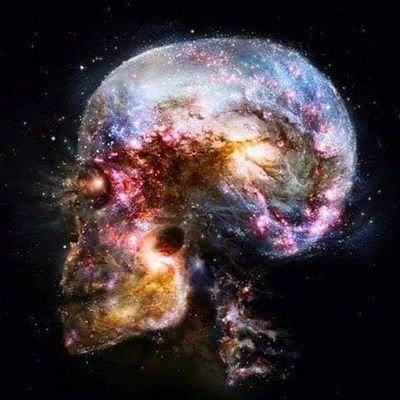
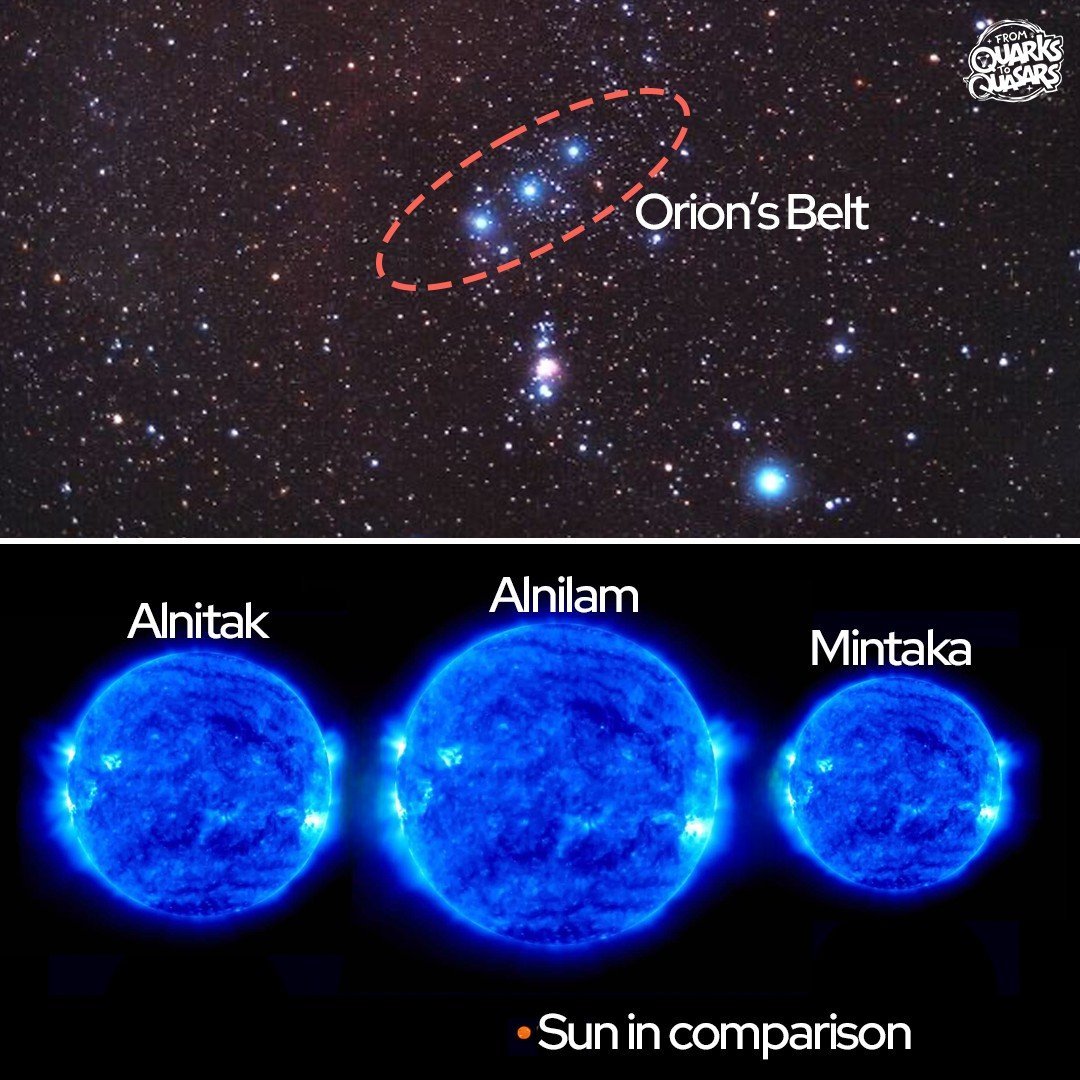
The stars of Orion’s Belt—Alnitak, Alnilam, and Mintaka—are tens of times larger and hotter than the Sun. If one replaced the Sun, its radiation would wipe out every planet in our solar system.

7 Ted Talks that will change your life. Bookmark for later 🔖


"La vida es movimiento, todo fluye", dijo Heráclito. Y así estamos nosotros: Rotación: 1.670 km/h. Órbita alrededor del Sol: 107.200 km/h. Órbita del Sol alrededor de la galaxia:828.000 km/h. Desplazamiento Vía Láctea: 2.160.000 km/h. 📹 James O'Donoghue con data de NASA.

🔭 | El telescopio espacial James Webb ha detectado el primer signo potencial de vida biológica en el espacio. Se cree que el exoplaneta K2-18b, que se encuentra a 124 años luz de distancia, está completamente cubierto de agua y tiene grandes cantidades de sulfuro de dimetilo, un gas producido sólo por organismos vivos.

🚨| El Telescopio Espacial James Webb (JWST) ha detectado posibles indicios de vida en el exoplaneta K2-18b Un equipo de la Universidad de Cambridge identificó en la atmósfera de este planeta moléculas como dimetil sulfuro (DMS) y dimetil disulfuro (DMDS), que en la Tierra son producidas por organismos vivos. K2-18b es una supertierra potencialmente habitable, de aproximadamente 2,6 veces el tamaño de nuestro planeta. Se encuentra a 124 años luz del Sistema Solar. Este hallazgo se considera la evidencia más sólida hasta ahora de posible vida extraterrestre, aunque los científicos advierten que se necesitan más observaciones para confirmar el descubrimiento.

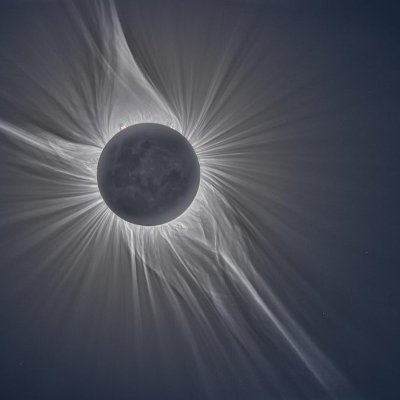
This is Betelguese, ~650 light-years away.

Amigos, he estado recopilando recursos para aprender inglés como si no hubiese un mañana. Abro hilo corto con lo que he conseguido (tests, audioguías, ejercicios, plataformas, etc). Acá va de regalo.


MegaJohnf1 @Johnf1Mega
938 Followers 5K Following Proud member of SAG/AFTRA/EQUITY...always fighting against violence and hypocrisy...willing to deflate all pomposity...
motivationfortify @gothami_g
196 Followers 2K Following I am chamidu I would like help to each and every person become a success

Ibraheem Hakeem @Foundersource
259 Followers 3K Following Believe in yourself, It All Belong To God Almighty. 37885525
Trends for United States
You might like