
-
Tweets213
-
Followers997
-
Following269
-
Likes1K
1/ animoflow.ai now takes prompts in any phrasing and any language. Korean, Mandarin, Hebrew. The "A person is..." template was never a design choice; it is just how HumanML3D captions are written, and the motion models learned language from them. Here's how >>>
2/ The solution is straightforward and doesn't require retraining. Just a 1.5B Qwen in front of the pipeline, prompted with examples retrieved from the captions themselves, converting whatever you wrote into that style. About 0.3s, and skipped when it is not needed.
@Michael_J_Black Thank you Michael, that means a lot coming from you!
Thank you Yael! This recognition from SIGGRAPH means the world to me. It was a great closure for the PhD years, and I was lucky to share the moment with good friends.

And another important highlight: my friend @GuyTvt receiving the Best Thesis Award!!🏆 so well deserved! +we had a lot of fun traveling this week and (almost) seeing a bear!


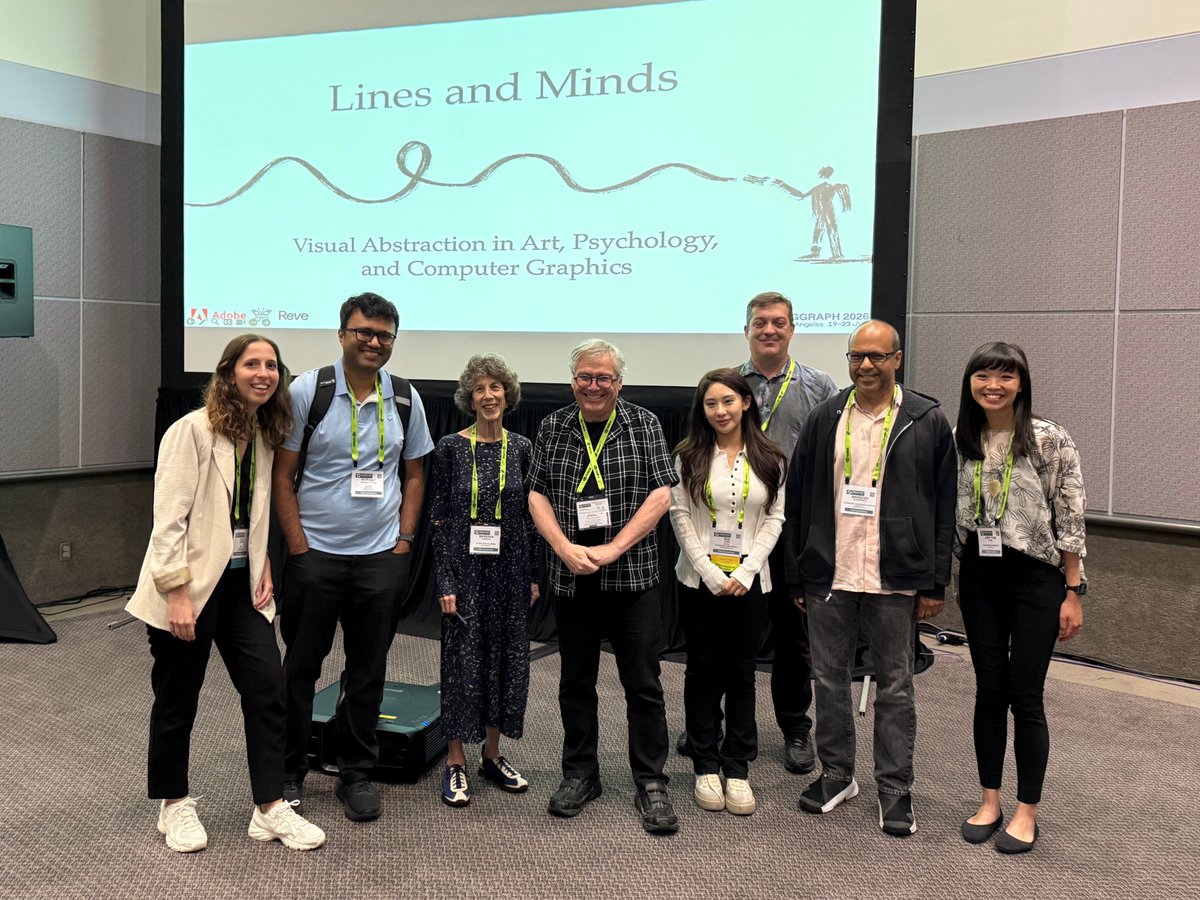
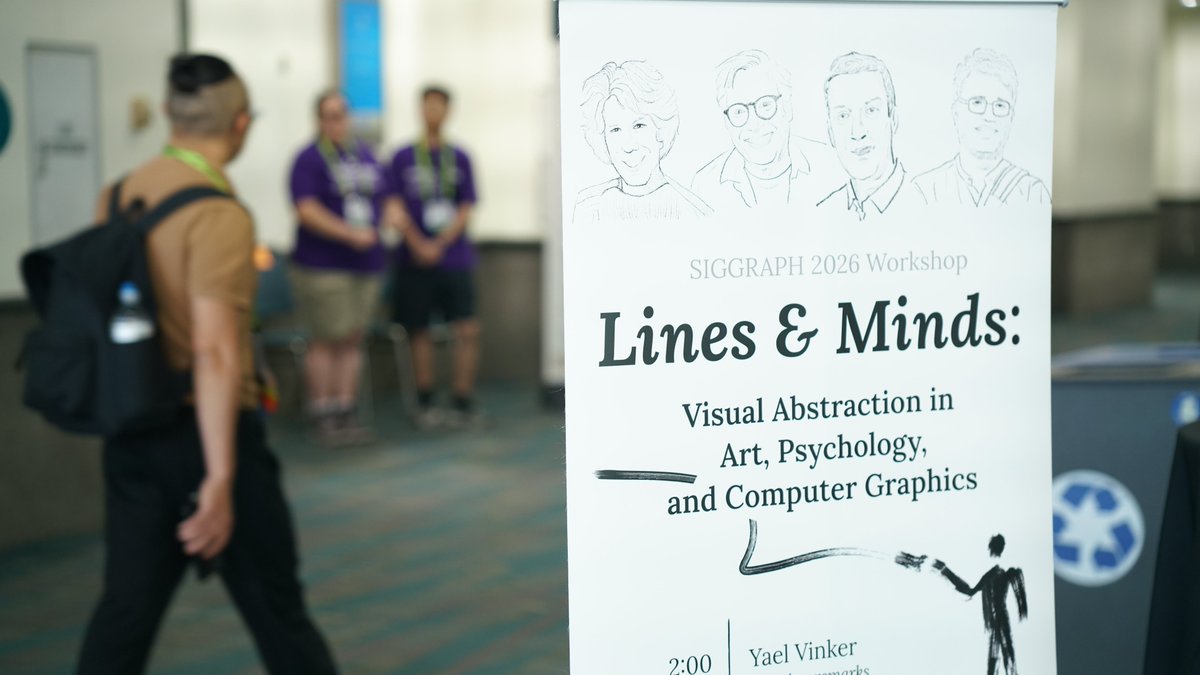
What a wrap to an amazing SIGGRAPH!🎉 Co-organizing Lines & Minds with this team was a dream come true! Thanks to our wonderful speakers and organizers, and a huge thanks to everyone who came out to learn about visual abstraction, even with the World Cup on😄


@eddiebuenosfoot I have an AnimoFlow server on my MacBook honestly:)
AnimoFlow is a new open ecosystem for generative character animation, live now at animoflow.ai. It's built on a simple observation: research models in this field are open, impressive, and moving fast, yet almost none of them ever reach animators. >>>

back to dev on ComfyBlockout... wanted to test animoflow from @GuyTvt pretty wild.
@BlakeC Try it! Kimodo should be able to handle complex prompts.
@eliott__mogenet Thanks! I shipped the beta version with text/trajectory/waypoint controls. But since you can plug in any open research work, I hope to add other controls (eg partial keyframes) in the near future.
The state of the art is already on board: MDM, PriorMDM, MoMask, and Kimodo. And the platform is built so that tomorrow's models plug in without touching the core. Try it free at animoflow.ai, or self-host it with one command.
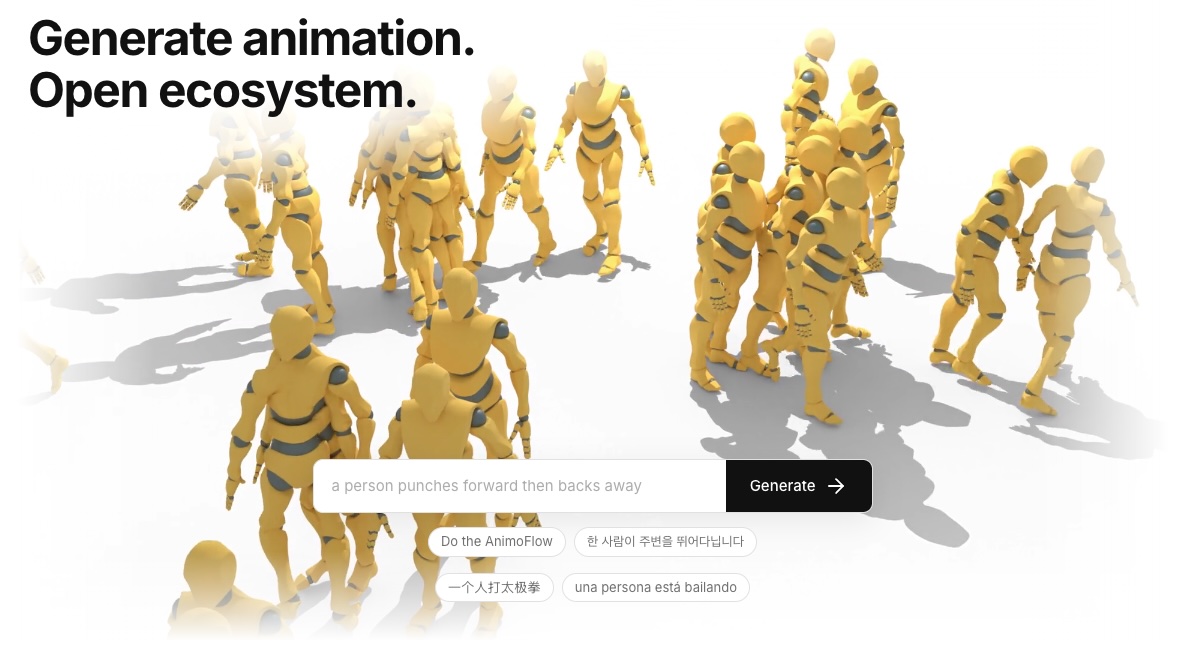
AnimoFlow closes that distance: one pipeline turns raw model output into animator-ready rigged assets, exposed as a web app, a Blender add-on, ComfyUI nodes, and a REST API.>>>

We've released an update to ProtoMotions! nvlabs.github.io/ProtoMotions/ Most importantly, this release was built with Yifeng Jiang, @YiShi_333 , @erwincoumans and @xbpeng4 , whose work shaped everything from the core methods to the final code release. 1/5

🤖 How can we teach dexterous robots to perform precise, contact-rich assembly? Introducing Play2Perfect: first learn to play with objects, then perfect the policy for tight insertion, multi-part assembly, and screwing. Sound on! 🔊 🧵👇
One of the nicest side effects of #Cloak was an elegant and accurate fix for the extrinsics of the popular DROID dataset. Hopefully it will be useful for many future projects! This is our first code delivery; stay tuned for more and check out tml.stanford.edu/cloak/

TL;DR: more accurate DROID wrist camera extrinsics, with example code. DROID's shipped wrist extrinsics are too noisy for pixel-level alignment with sim. In Cloak, we optimize our own wrist extrinsics (Silhouette Calibration algorithm, Section A.1). We leverage the fact that the
The robotics community has collected enormous robot datasets on grippers, but what happens when the hardware changes? How do we make robot data outlive the hardware it was collected on? We introduce Cloak, a training recipe for zero-shot cross-embodiment transfer. We never collect ANY embodiment-specific data. 🧵
You might like