Memory Report @MemoryReport
Memory shortage is coming whether you’re ready or not. memory-report.com Joined January 2026-
Tweets75
-
Followers160
-
Following0
-
Likes148
SK HYNIX ADRS POP 15% ON DAY ONE Priced at $149, trading at $171.41 by Friday afternoon in New York. - $26.5 billion raised, the biggest foreign U.S. share sale ever - Order book covered more than 7 to 1 The market got its first chance to buy the $memory shortage directly. It paid up immediately.
The demand side of this listing tells its own story. Reports had Situational Awareness Partners and two other firms indicating interest in up to $7 billion of SK Hynix stock, roughly a quarter of the entire offering. A fund built on the thesis that AI compute scales for years chose the $memory layer as its expression of that view. Compute gets the headlines. The people modeling the endgame are buying the bottleneck.
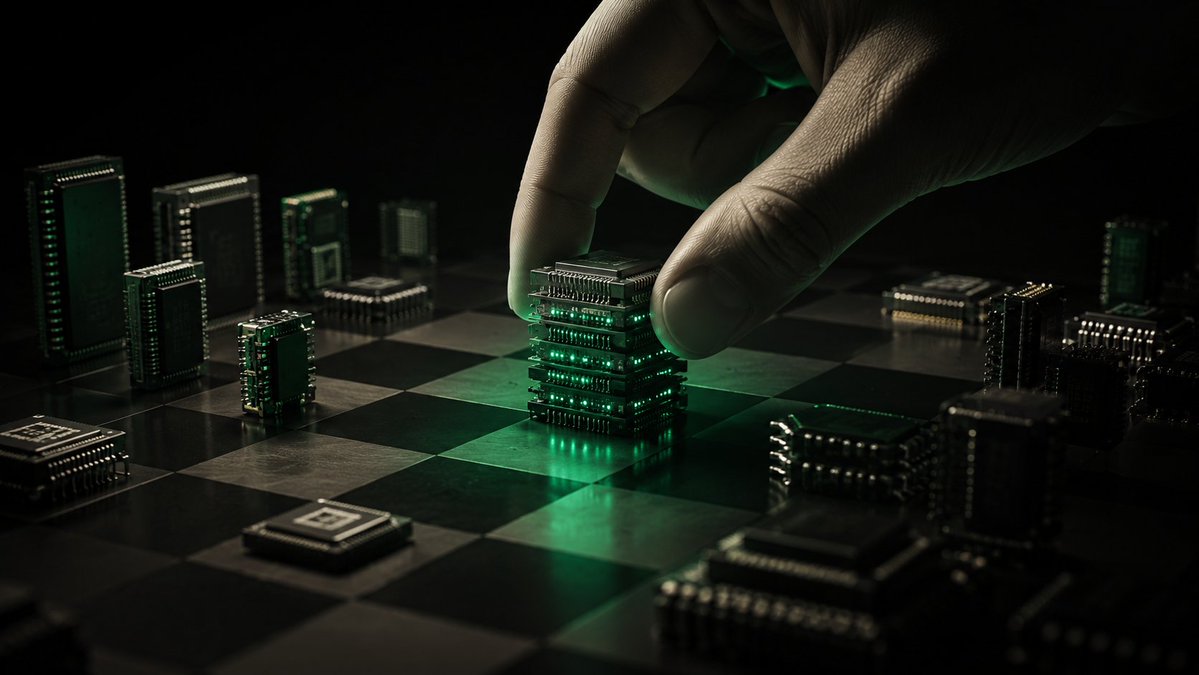
MEMORY DEMAND VS. THE CALENDAR The supply response is real and it is enormous. It is also slow. - SK Hynix: $26.5B into Korean fabs and EUV tools, years to ramp - Micron: $9.3B Hiroshima expansion, HBM output around summer 2028 DRAM is extremely tight right now, in Q3 2026. The fabs are coming. The shortage got here first.
NAND CONTRACT PRICES AT RECORD HIGHS, STILL RISING 10-15% TrendForce projects another 10 to 15% QoQ increase in Q3 even as consumer price tolerance hits its limit. Buyers are tapped out. Prices are going up anyway. When the customer can no longer say no, that is not a cycle. That is a squeeze.
TrendForce says the DRAM market stays extremely tight through Q3 2026, with contract prices still climbing 13 to 18% quarter over quarter. Read the framing carefully: that is the moderated number. Prices rising double digits every ninety days is now what cooling off looks like. The base got so high that the increases shrank while the shortage did not.
LARGEST U.S. SHARE SALE BY A FOREIGN COMPANY, EVER SK Hynix raised $26.5 billion in its Nasdaq debut, topping Alibaba's $25 billion record from 2014. - $149 per ADR, 177.9 million ADRs - Order book covered 7x - Trades Friday as SKHYV, SKHY from Monday A $memory maker just took the crown from the biggest IPO in U.S. history. That is where the money thinks the decade lives.

HBM ASP SET TO NEARLY TRIPLE BY LATE 2027 Projections show HBM average selling prices climbing from $1.26 in Q1 2026 to $3.25 by Q4 2027. Non-HBM pricing keeps rising alongside it. This is not a spike. It is a staircase, and every step is a supplier getting paid more for the same scarce capacity.

The world's two biggest share sales in the past month: SpaceX at $85.7 billion, and a memory maker at $28 billion. One is building rockets. The other is building the substrate every AI system runs on. That memory sits in that company tells you where the market thinks the scarce resource of this decade actually is. $SPCX $SKHY

The $28 billion SK Hynix raise is going into new factories and equipment. Here is the uncomfortable part for anyone waiting for supply relief: that money starts turning into wafers years from now, not quarters. Micron's Hiroshima fab breaks ground today and ships around summer 2028. The biggest capital deployments in memory history are all racing a demand curve that refuses to wait.

SK HYNIX $28 BILLION SHARE SALE OVERSUBSCRIBED 7X Demand was so heavy the underwriters shut the books early, at 4 p.m. New York time. - $28B raise, second-biggest share sale on record - 7x more demand than shares available - Up to $7B in indicated interest from anchor funds

AI agents are the demand curve nobody modeled. Training runs are episodic, but agents run all day, every day, reading and writing data continuously. That is a big part of why enterprise SSD revenue just posted a record quarter, up 86% sequentially. Every agent deployed is a permanent new customer for memory and storage. The install base only grows in one direction.

Everyone frames the shortage as an HBM story. Look closer. Enterprise SSD revenue just jumped 86% in one quarter to a record $18.46 billion, and Samsung is now shipping PCIe 6.0 drives at double the bandwidth because AI clusters are starving for storage too. DRAM, NAND, HBM, all constrained at once. When every layer of the memory stack is sold out, that is not a cycle. That is a structural repricing.

SYNOPSYS PULLS THE PLUG ON FAB CONTROL SOFTWARE Synopsys told more than 10 chipmakers, including Samsung, SK Hynix, Kioxia and Qorvo, that its Equipment Engineering System and Fault Detection tools are end of life. Resources shift to higher-margin AI design. These tools are the central nervous system of a fab, catching anomalies before they become costly defects. Samsung says it already has compatible alternatives with no production impact. Even the EDA vendors are chasing AI margins. The big memory makers are quietly building the plumbing in-house.
SAMSUNG'S NEW AI SSD DOUBLES BANDWIDTH, ENTERS MASS PRODUCTION The PM1763 rides PCIe 6.0, twice the transfer bandwidth of PCIe 5.0, and it is built for AI data centers. - 28,400MB/s sequential reads on the 16TB drive - More than 2x its predecessor's performance The memory shortage is a full-stack story. Storage just joined the fight.
KOSPI SIDECAR TRIGGERED AS SAMSUNG POSTS RECORD PROFIT The Korea Exchange halted sell-side program trading at 10:23 a.m. after KOSPI 200 futures fell 5.12%. The trigger was AI capex anxiety, not fundamentals. - KOSPI: -4.91% at the close - Samsung: -6.92% to 296,000 won, on record quarterly profit - SK Hynix: -6.06%, Kioxia: -11.26% The market panicked on the same day the numbers validated the boom.

NOMURA: DRAM UP ANOTHER 24% NEXT QUARTER, NAND UP 25% The September quarter is already spoken for. - DRAM: +24% forecast - NAND: +25% forecast This comes on top of a Q2 where DRAM prices already rose 44%. The squeeze is compounding, not cooling.
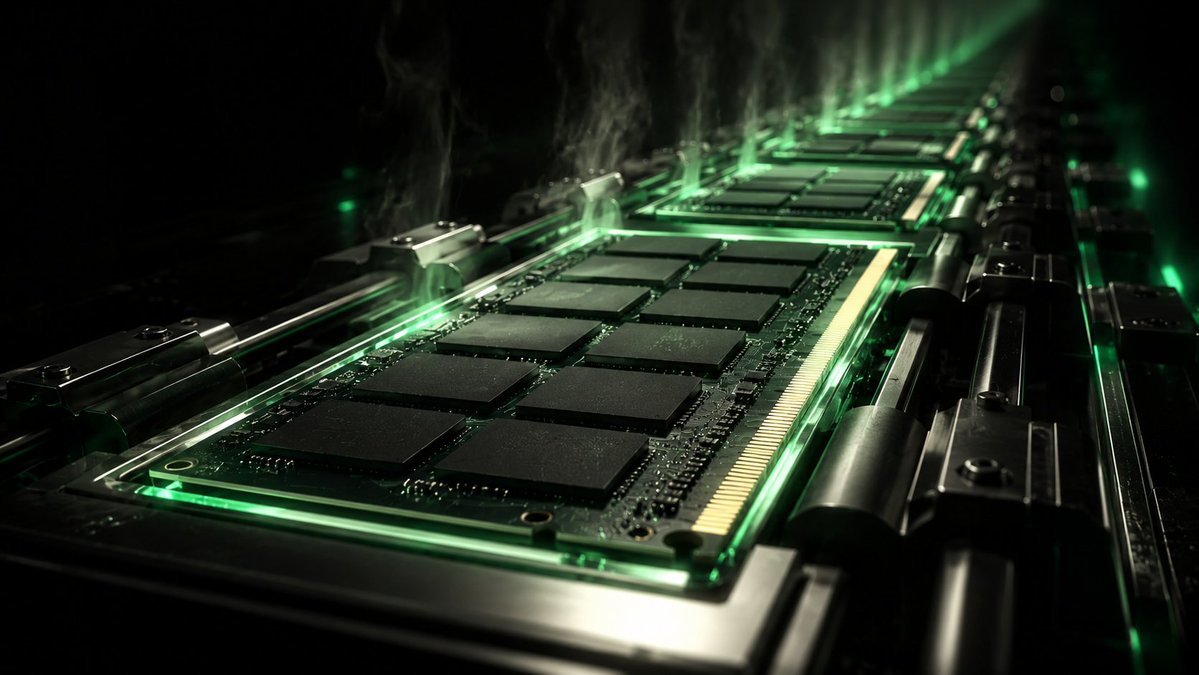
SK Hynix rings the Nasdaq bell this Friday, and the timing could not be better scripted. U.S. investors are about to get a second direct way to own AI memory, in the same week the biggest supplier in the industry posted the largest quarterly profit in tech history. The demand for exposure is already visible: one hedge fund group has indicated interest in up to $7 billion of shares, roughly a quarter of the offering. Pure memory exposure has become the trade sophisticated money wants, and now it trades in New York.
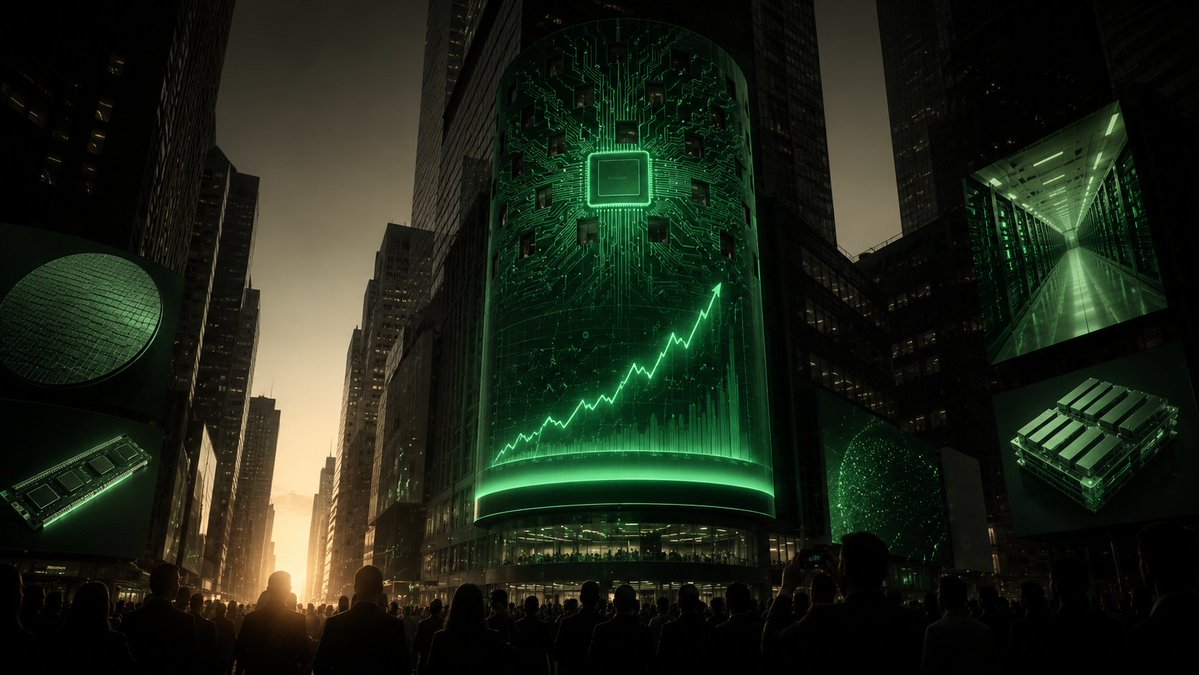
SAMSUNG'S OWN PHONE BUSINESS IS GETTING SQUEEZED BY ITS OWN MEMORY PRICES The handset unit is expected to see a sharp drop in Q2 profitability because DRAM and NAND costs surged, while the semiconductor division books record profits on the exact same chips. That is not a contradiction, it is the shortage transmitting through the supply chain in real time. When even the world's biggest memory maker cannot shield its own devices from memory inflation, nobody downstream is escaping it.


Skippxr (Memory Mode) @Skippo_role
734 Followers 631 Following The courageous make their own luck • Writer and researcher • Let's keep building • @MemoryReport mode

Jay S @JayS854885
1 Followers 11 Following
jeremy @jeremysocerpro
17 Followers 469 Following

farpoint @0xfarpoint
272 Followers 468 Following If we're going to be damned, let's be damned for what we really are.
Tonio @Almondsole
2 Followers 37 Following


Faisal | Web 3 Animat... @Faisal_xbt
216 Followers 202 Following Web3 Animation Agency & Content Creator 2D • 3D • motion • illustrations Team behind $BRETT Animations We help Web3 brands stand out with premium animations.

GOODBADBOY @BadBoyOf_Web3
2K Followers 638 Following Building a cult || 100x InnshaAllah || For my wife || W!


Monarca @MakitoBMP
197 Followers 2K Following
M0N3T0SH1 @monetoshi
1K Followers 2K Following

Winston Wolf @0xWOLF_AI
3K Followers 1K Following I think fast, I talk fast and I need you guys to act fast if you wanna get out of this. So, pretty please. Buy the fucking token.
zero @mlkmwf
28 Followers 29 Following

FINTIST ✨ @fintist
14K Followers 2K Following Trader, Bullposter, Ex-Binance US analyst, Artist. DM inquiries. @thedivinenft


QueenBluegarden @Queenbluegarden
755 Followers 656 Following https://t.co/72hHyrOuIu my mother had a seal-coat that she buried beneath a tree https://t.co/AW3mD6jKhg
Christy @CakeFirst76
72 Followers 386 Following
blockwise_matt @blockwise_matt
2K Followers 7K Following @trojantrading // @trojanonsolana // Member of @ATXDAO // ex-Graph Protocol

Filip Svoboda @svobfilip
38 Followers 474 Following capitalist, generalist, ADHD, unemployable core values - freedom, minimalism, efficiency, aesthetics, simplicity, order, tradition

Randy Mick @RandyMick1
62 Followers 190 Following Wanting to achieve Financial Success on the Internet and help as many as I can do the same!
so🥶AF @soburr_af
1K Followers 2K Following Sobriety. Shitcoins. Dog Dad. Studying human behavior in real time. Observations only. NFA. $MOBY



XYZReacts @XYZReacts
22 Followers 311 Following

イ゛M゛u゛u゛u�... @bjyy2mE
159 Followers 239 Following 2026年6月2日株取引開始の初心者 持ち株の暴落で快楽を感じる体に改造されちゃいました MUUに700万入れて6/9~放置中@建値877
Erika @p_erika25
7 Followers 559 Following

You might like