Mike Croft (Google Ecom Guy) @MikeCroft
Manchester, UK Joined May 2025-
Tweets83
-
Followers4
-
Following23
-
Likes7
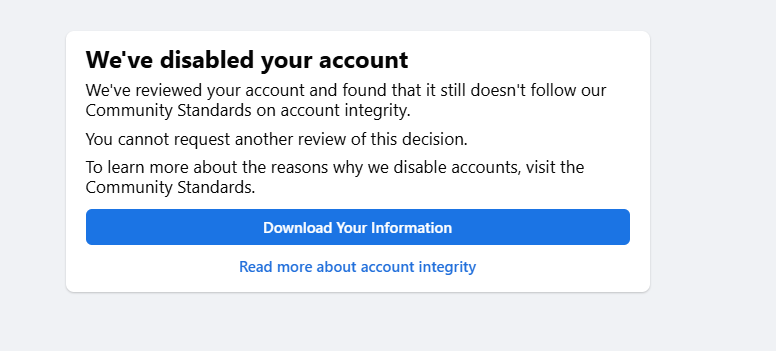
A trillion-dollar company is charging my credit card $400 every 3 days for ads I'm legally locked out of. Meta disabled my account. The ads vanished from Ads Library. The billing didn't. This is what "unauthorized" actually looks like. 🧵 Meta's response when I tried to log in to stop the $400 charges they're taking every 3 days from my account: [attached screenshot] They disabled my account. They're still billing me. The ads don't even appear in Ads Library anymore, but the money keeps leaving my bank. Zero support response. Zero way to stop it. This is unauthorized billing from a trillion-dollar company. @Meta @MetaBusinessHelp — DM me. I have my Ad Account ID and Business Manager ID ready to share privately.
I watch an insane amount of ads every week. Our swipe file has over 20,000 now. After going through that many, one thing becomes impossible to ignore. The ads that win almost always start the same way. Not the same words. The same patterns. Beauty, supplements, food, apps, SaaS. Doesn't matter. The first 3 seconds follow a handful of repeatable structures. You don't need to invent a genius hook every time. You need a format that's already proven, then adapt it to your product and audience. Here are the 8 hook types I see dominating the winners over and over again. The Apology Start with "I'm sorry" or "I owe you an apology." An apology signals something went wrong. That creates tension. People need to know what happened before they scroll past. Example: magritte.co/ad/d2f0a8d7-8a… The Expert Angle State your credentials in the first sentence. It answers the only question that matters in 3 seconds: why should I listen to you? Example: magritte.co/ad/4010c119-19… The Audience Callout Name your person directly. The more specific the callout, the harder it is to scroll past. Example: magritte.co/ad/6046c44f-01… The Bold Claim Make a statement that feels almost too strong. Bold claims create tension because people need to test whether it's true or justified. Example: magritte.co/ad/62b9257a-ea… The Did You Know Open a gap in their knowledge. Curiosity is one of the only forces stronger than the scroll. Example: magritte.co/ad/380739a8-cc… The FOMO Trigger Suggest they're missing something everyone else already knows. Fear of being left behind is stronger than the promise of getting ahead. Example: magritte.co/ad/6f39a04e-96… The Went Viral Reference social proof through momentum. Popularity acts as proof. If that many people care, maybe you should too. Example: magritte.co/ad/42fcc08f-0a… The How I Did It Promise the method behind a specific result. The result stops them. The "how" keeps them. Example: magritte.co/ad/a028daca-0a… You don't need 50 different hooks. You need 8 structures and the discipline to test them. Which one are you testing first?
Your agency reported a 5.8x ROAS last month. They lied. Not because the number was wrong. Because the number was meaningless. Last week I ran a 20-minute audit on a brand spending £47K a month on Google Ads. The agency deck was polished. The ROAS looked strong. Everyone was celebrating. I pulled the new customer data and the room went quiet. 68% of their "conversions" were returning customers. People who had already bought. People who were already typing the brand name into Google. PMax was bidding on those searches, taking credit for the sale, and the agency was putting it in the report like they'd earned it. Real new customer ROAS was 1.4x. On £47K a month. That's not scaling. That's subsidising Google to show your ads to people who were coming back anyway. Here's why this one hit different for me. I've managed over $80M in Google Ads spend. I've seen this pattern hundreds of times. But this brand had been with their agency for 14 months. Fourteen months of reports showing "strong performance" while new customer acquisition was essentially flat. They'd hired an agency to grow. They got an agency that maintained. That gap between platform ROAS and real new customer ROAS is something I think about constantly. Not because it's complicated. Because it's so simple to fix and almost nobody does. We reallocated their budget away from branded waste and into Manual Shopping campaigns targeting genuinely new buyers. Within 6 months that brand went from £88K a month to £666K. Same ad spend. Different strategy. Completely different business. The lesson is uncomfortable but it's simple. Your ROAS number is not your growth number. They are two completely different things. And if the person managing your ads can't separate them, they're not managing your growth. They're managing a dashboard. Three questions every ecom brand spending £20K or more on Google Ads should be asking right now: What percentage of my Google Ads conversions are genuinely new customers vs returning buyers? Is PMax bidding on my branded search terms and inflating my reported ROAS? If I stripped out every conversion from someone who's bought before, what does my ROAS actually look like? If you don't know the answers, that's not a knowledge gap. That's a strategy gap. And it's costing you real money every single day it stays open. Most brands don't have a traffic problem. They have a truth problem. They're scaling a number that makes them feel good instead of scaling the number that actually grows the business. You now have the three questions. You can ask your agency tomorrow morning. Their answers will tell you everything you need to know.
In January 2020 I nearly got fired from my first marketing job for trying to build something of my own. I was running local lead gen campaigns on the side. Evenings. Weekends. Every spare hour. Started with landscapers, figured out the process, then found my groove running ads for osteopaths. Getting them patients. Real patients who would never have found them through word of mouth. Most had never spent a penny on advertising. I built landing pages, SMS follow-ups, systems to get leads on the phone fast. It wasn't glamorous. But it worked. And I did a lot of it for free. Not because I was desperate. Because I needed proof the system delivered before I charged for it. Then my employer found out. I remember the feeling in my stomach. Being told that what I was doing outside of work was a problem. Knowing I had to choose. The safe job where I felt like I was shrinking every day. Or something that hadn't made me a penny yet. I stayed. Not because I wanted to. Because I wasn't ready. I had the system. I had the results. I didn't have the income to walk away. Nobody posts about choosing safety over ambition. But that's the real decision most people face. Not "should I follow my dream?" but "can I afford to right now?" I kept my head down. Eventually started signing clients properly. 13 sales calls in two weeks. Closed 12 of them. £500 a month each. One prospect had five locations. Another had ten. I was genuinely two weeks from handing in my notice. Then it was March. Two months. That's all it took between nearly losing my job for building this thing and watching the thing itself disappear. Every client messaged me the same week. Letting staff go. Closing doors. Everything I'd built. Gone. Not because I did anything wrong. Because the world decided it was done. That broke something in me for about 12 months. The voice in your head doesn't say "you failed." It says something worse. "Why bother?" There was no neat turning point. Just slowly remembering the system worked. The close rate was real. The results were real. The only thing that wasn't real was the timing. That was six years ago. Today I manage over $80M in Google Ads spend for ecom brands doing $3M to $20M. 10 brands maximum. Because I never want to build the kind of company that made me feel like I was shrinking. None of that happens if I don't survive January. None of it happens if I don't survive March. If things look bad right now. If you've done the work and the results haven't come. If you're stuck somewhere too small but too safe to leave. You're not starting over. You're starting again with everything you learned the first time. The only question is whether you're going to let a bad chapter convince you the whole story is finished.

2026 AI is about action and building

Most ecom brands are still running Google Ads like it’s 2023. Same PMax campaigns. Same broad match keywords. Same "set it and forget it" agency managing their account with a spreadsheet and a prayer. Meanwhile, I'm using Claude Code to build systems that do in 20 minutes what used to take me an entire afternoon. Let me be specific. I manage $80M+ in Google Ads spend across ecom brands doing $3M to $20M. Every single one of them has the same problem: their platform ROAS is lying to them. PMax is counting branded searches, returning customers, and people who already had the product in their cart. Strip that out and real new customer ROAS drops by 40 to 60%. Finding that waste used to mean hours inside spreadsheets. Manual data pulls. Cross-referencing campaign segments by hand. Now I use Claude Code to: Build automated audit scripts that flag branded waste in minutes. Generate persona-based Shopping feed titles at scale (74% of brands don't use the full 150 characters — that's free real estate you're leaving blank). Create competitor gap analysis tools that show exactly where a brand is losing impression share. Produce supplemental feed systems that would take a human two days, in about 30 minutes. One of my clients went from $4.5M to $16.8M in two years using Manual Shopping campaigns I built and optimised with these systems — spending 4% less. That's not AI replacing the strategist. That's AI making the strategist dangerous. Here's what most people get wrong about AI and Google Ads. They think it's about letting the machine run your campaigns. That's PMax. That's the thing that's already burning your budget on customers you were going to get anyway. The real play is using AI to build better tools, faster systems, and sharper analysis so the HUMAN makes better decisions. Three things Claude Code lets me do that no agency running PMax can match: One: I audit a brand's entire Google Ads account for new customer waste before I even get on a call with them. Free. In minutes. Most agencies can't do that in a week. Two: I build custom feed optimisation scripts for each client's catalogue. Not templates. Custom. Because a luxury nail brand and a vegan protein company need completely different title structures. Three: I automate the reporting that tells me whether a campaign is actually acquiring new customers or just retargeting people who already know the brand. Real ROAS. Not platform ROAS. The brands scaling right now aren't the ones with the biggest budgets. They're the ones with operators who use better tools to make better decisions faster. You're either building systems or you're guessing. And if you're spending six figures a month on Google Ads and your agency can't tell you what percentage of your "conversions" are returning customers vs genuinely new ones, you already know which one you're doing.
Gary Brecka called me to launch Echo Waters on Google. Zero history. Zero conversions. Zero data. Standard advice: spend 3–6 months gathering data before optimising. We didn't do that. Because there wasn't a data problem. Gary had 10 million followers who trusted him on health and hydration. That's a targeting brief. I already knew who the customer was — the algorithm didn't need to figure it out. Launched with structure. Manual campaigns. YouTube as direct response. Cold audiences only. Year one: $5.2M. New Customer ROAS: 4.3x. Data doesn't tell you who to target. You tell the data who to target. The algorithm is the execution layer. Not the strategy.
Your Shopping ads show three things: A product title. A price. An image. That's the whole ad. Most ecom brands write their titles for a warehouse: "Blue Running Shoes - Size 10 - Nike Air Max" I write them for the person searching: "Lightweight Long-Distance Running Shoes for Serious Marathoners" Same product. Same price. Same image. Different search terms triggering. Different person clicking. Different new customer rate. The product title is the targeting. It decides who sees you. Most brands leave that decision to whoever set up the feed in 2021.
In Q4 2025, Google's AI tools generated 70 million creative assets for advertisers. Seventy million ads. Same model. Same training data. Same performance benchmarks. The platform is about to become extraordinarily efficient at producing average. Google is rolling out their most advanced image generation model to all Google Ads users. Describe a product, the AI generates photography-quality images, video assets, product showcases. No studio. No photographer. No brief. The technology is impressive. The strategic implication is the part nobody's talking about. If every eCommerce brand is using the same AI model to generate their creative, differentiation collapses. The AI generates what performs on average. It optimises toward what has historically worked across the dataset. The output is competent, consistent, and looks exactly like everything else the algorithm has learned performs well. The ads that win on paid media — on Meta, on Google, anywhere — win because they're different. The hook that stops someone mid-scroll comes from a human insight about what that specific customer feels at 11pm on a Tuesday. That's not in a training dataset. AI creative tools are genuinely useful for scale — producing variants, testing formats, filling production gaps. Using them as your primary creative strategy means your differentiation and your competitor's differentiation are now coming from the same place. Google's AI will make average ads cheaper and faster to produce. Average ads are already losing.

Every agency pitch: "We take a holistic, full-funnel approach to your account." "You'll have a dedicated team and a senior strategist assigned." "We focus on driving meaningful growth, not vanity metrics." What actually happens: Junior gets the account. Sets up PMax. Checks in when ROAS goes red. Sends a report on Monday. I was Head of Google at a top agency for three years. The pitch and the product are not the same thing. I have seen the gap up close.
The most common change I make when I take over a new ecom Google Ads account: I turn off PMax. Here's the full reasoning. 🧵 PMax isn't broken. It's doing exactly what it was designed to do. Unfortunately, it was designed by Google. Its job: maximise conversions across every placement. So it asks — who's most likely to convert? Warm audiences. Every time. In every account I've ever looked at. Think of it like hiring a salesperson with one target: close as many deals as possible this month. They work through every warm lead in the pipeline. Conversion rate looks incredible. Numbers are up. Six months in: not a single new client acquired. Every sale was someone who was already planning to buy. That's PMax. The numbers that come back from PMax accounts I inherit: New customer rate: 15–25%. Branded term spend: 20–40% of budget. ROAS: looks excellent. Three things that all point to the same diagnosis: this account is circling your existing audience and calling it growth. Manual Shopping does something PMax can't. You decide exactly which search queries trigger your ads. You decide exactly which products show for which audiences. Done right, your ads appear in front of people who've never heard of you — searching for the type of product you sell, not your brand name. That's acquisition. Not retargeting at acquisition cost. The other thing manual lets you do: rebuild your product titles. Most brands write titles for a product catalogue. "Cologne - 100ml - Cedar Amber" I write them for the person searching. "Long-Lasting Date Night Cologne for Men" Same product. The title is the targeting. It determines who sees you. Most brands leave this decision to whoever set up the feed in 2021. The cologne brand: PMax off. Manual Shopping rebuilt. Titles rewritten. Branded spend removed. $4.54M → $11.3M in year one. Spend: down 4%. PMax was doing its job perfectly. Its job just wasn't the same as mine. PMax works when you have high brand awareness, broad demand, and you want efficient harvesting. For $3M–$20M ecom brands trying to grow new customer acquisition — that's rarely the situation. Manual isn't old-fashioned. It's just harder to manage. Which is why most agencies don't.
@maverickecom Workflow
A customer bought a product on Google this month without visiting a website, reading a review, or seeing a brand. They asked an AI. The AI chose. Google launched this in February 2026. They're calling it agentic commerce and presenting it as a win for convenience. Worth thinking through what it means for you before joining the applause. Right now, when a customer finds your product through search, they land on your site. You control the experience. You show them your story, your reviews, your upsells, your email capture. You build a relationship. You own the data. In an AI-mediated purchase, Google's agent makes the decision. Your product either surfaces or it doesn't. The criteria for surfacing are set by Google. The customer relationship flows through Google, not through you. The brands that benefit most from this shift are the ones with the best product data, best pricing, and strongest feed optimisation — because those are the signals the agent uses. The brands that lose are the ones competing on brand experience, storytelling, and relationship — assets an AI shopping agent largely ignores. This may be the future. It may also be Google inserting itself more deeply between brands and their customers, framed as convenience. I'm not saying don't prepare for it. I'm saying be clear about what you're preparing for.

Your agency's junior opens your account every Monday morning. They have one metric they care about: is this account green or red? Green = ROAS at target. Red = client is unhappy. Orange = blame the algorithm. New customer acquisition rate doesn't appear on that dashboard. Not because they forgot to add it. Because adding it would require them to show you a number that's usually bad.

Ryan & Matt Data Scie... @RyanMattDS
1K Followers 1K Following Weekly n8n, AI, & Data Science and Videos on YouTube. 30k Subscribers. Follow for daily posts on Data and AI
Adeniyi Adewale | Eco... @Adewalee4e4
435 Followers 6K Following I create conversion-driven landing pages and eCom stores with Figma, Replo & Instant and I make them SELL. Let’s turn your clicks into loyal customers.
Adeola Joyce @adewale_adeola1
290 Followers 4K Following Shopify Email Marketing VA | Klaviyo Flows & Campaigns for DTC Brands | Helping Shopify Stores Recover Revenue from Abandoned Carts
KH Brokers @Ecom_Brokers
892 Followers 5K Following Ecom & Dropshipping Brokerage: https://t.co/HGMkC6rji8

Alex Vacca @itsalexvacca
36K Followers 517 Following Founder & CEO @Frontal_AI | Helping B2B companies past PMF grow revenue without adding headcount | 1 of 4 @clay Elite Studio Partners | Built ColdIQ to $7M ARR
Meta @Meta
9.9M Followers 684 Following Connect with what you love to make things happen. It’s Your World.
Elsa Ai @ElsaSofia__AI
15K Followers 536 Following AI Educator helping individuals and brands build smarter with AI, Tech Tools, and Digital Skills | DM for Collaboration|HIGGS-BEAPK [email protected]
Shri Kanase @EcomShri
20K Followers 397 Following I grow Google ads revenue for eCommerce brands you've probably bought from. 593+ brands scaled since 2017. I share Google ads scaling strategies working now.
MJ Kayum @mjkayum
6K Followers 3 Following Exploring the future of AI and digital transformation. Sharing insights, tools and trends shaping tomorrow. DM for Collaboration.
Zephyr @Zephyr_hg
53K Followers 110 Following I teach solo professionals to build AI systems that do a team's work. Free systems weekly. 12,000+ already winning with AI ↓
Alex Fedotoff @FedotOff90
41K Followers 1K Following born in 🇺🇦 now in Miami. $100m+ in ecom sales | “King Of Scaling Facebook Ads” - Forbes | Building @gethookdai - Facebook ad library on steroids
Mike Futia @mikefutia
78K Followers 1K Following Building AI systems for ads + ecomm | Clients include Kitsch & MAELYS | 🤖 Join 600+ creative marketing teams 👉 https://t.co/Op2LABJvR8
George Clements | Cli... @georgeclem
18K Followers 134 Following Founder @paidhouse ($100M client revenue). Now helping agencies & coaches sign more clients with ads.
Lian Lim | Dashboard ... @dashboardlim
30K Followers 288 Following Building 8-9 figure AI Operating Systems
Charlie Morgan @CharlieImperium
30K Followers 0 Following $40M+ made selling information online Clients generated over $350M with Acquisition OS™ Join the #1 free community for coaches and agencies 👇
Arik Ahluwalia ⚡️ @chief_arik
3K Followers 203 Following Founder @ Spring Media | Full Stack Growth Partner for E-commerce Brands | Partnered with 150+ Brands
Osh | CRO & Profit Op... @oshalchemy
26K Followers 32 Following Helping ecom brands make more money from their existing traffic with landing page, offer, copywriting, and store optimization.
Lorenzo | Meta Ads & ... @lorenzo_pravata
26K Followers 1K Following Scaling brands past $1M/month profitably with FB Ads & Creatives | $100M+ revenue generated for clients | Case Studies & Portfolio at https://t.co/5yf7XVgOkb
Common Thread Collect... @CommnThreadCo
10K Followers 254 Following Common Thread Collective is an ecommerce growth agency, helping DTC brands that are doing 7-9 figures in annual online revenue.
Aleyda Solis 🕊️ @aleyda
179K Followers 986 Following SEO + AI search Consultant, Speaker & Author. @Orainti Founder. Finchling Co-Founder. @CrawlingMondays Host. #SEOFOMO, https://t.co/yvg9bT4WgZ, https://t.co/JIzqclSKXR …
Youssef @YoussefEcom
14K Followers 96 Following Scaled from 0 to $3M/mo with AI/DR e-com I share more sauce on IG 👇
Victor Godsk @EcomVictor
6K Followers 472 Following Email & SMS marketing that *actually* maximizes revenue for ecommerce brands | $90M+ generated for clients | Free email guides → https://t.co/JviBXJjXT9 🚀
Jackson Blackledge @blvckledge
75K Followers 1K Following google & youtube ads for dtc brands / tabs, snow, obvi, 47skin, craftd, agemate, sundays, frankbody, slate milk, muscle nation, sasha therese, icon amsterdam
Alex Hormozi @AlexHormozi
1.1M Followers 189 Following Co-Founder: https://t.co/gQN7OehYd2, https://t.co/VLS8LzeasI. Business Owners: Get your 2026 free scaling roadmap 👇

Donald J. Trump @realDonaldTrump
111.7M Followers 53 Following 45th & 47th President of the United States of America🇺🇸Trends for United States
You might like