Andrew Nguyen @OnwardsAndrew
Head of PM @ZenniOptical. Startup Advisor @techstars. Instructor @ProductSchool. Co-author of Product Manifesto. ex @BarkBox @Zappos @CapitalOne @AOL. Virginia Beach, VA Joined February 2010-
Tweets3K
-
Followers2K
-
Following5K
-
Likes21K

You can’t outwork the whole world. There’s always going to be someone somewhere willing to work as hard as you. Someone just as hungry. Or hungrier. Assuming you can work harder and longer than someone else is giving yourself too much credit for your effort and not enough for theirs. Putting in 1,001 hours to someone else’s 1,000 isn’t going to tip the scale in your favor. What’s worse is when management holds up certain people as having a great “work ethic” because they’re always around, always available, always working. That’s a terrible example of a work ethic and a great example of someone who’s overworked. A great work ethic isn’t about working whenever you’re called upon. It’s about doing what you say you’re going to do, putting in a fair day’s work, respecting the work, respecting the customer, respecting coworkers, not wasting time, not creating unnecessary work for other people, and not being a bottleneck. Work ethic is about being a fundamentally good person that others can count on and enjoy working with. So how do people get ahead if it’s not about outworking everyone else? People make it because they’re talented, they’re lucky, they’re in the right place at the right time, they know how to work with other people, they know how to sell an idea, they know what moves people, they can tell a story, they know which details matter and which don’t, they can see the big and small pictures in every situation, and they know how to do something with an opportunity. And for so many other reasons. So get the outwork myth out of your head. Stop equating work ethic with excessive work hours. Neither is going to get you ahead or help you find calm. [The Outwork Myth — It Doesn't Have To Be Crazy At Work, 2018]

Major life hack: Don't complain, ever. Nobody likes a complainer. They drain the energy of everyone around them. It's exhausting spending time around someone who constantly complains about things outside their control. If it’s within your control, go do something about it. If it’s not, you’re just wasting energy thinking about it. Complaining gives too much power to the thing. Take back that power.
@JohnnyNel_ @Replit @BrunoMars @amasad Yes! I was using Replit teams with them, but their usage fell off and I went back to my own core plan. Buildathon plus the immense progress of Replit brought them back. Now I have them all on their own core plans with a budget. Would love student accounts for them (HS, MS, ES)
Couldn’t miss @Replit Buildathon even during the @BrunoMars concert. What an amazing day and night. My kids and I built apps all day. Hour (day!) of code for our family went to another level. Thanks @amasad ! Happy 10 years, to many more and the next Buildathon.



This is the the quote I've been citing a lot recently.

you can outsource your thinking but you cannot outsource your understanding

Free Agent usage starts at 5:00am PST on May 2 for 24 hours

Spend time shipping product, not slide decks Short documents only (if you must)

coinbase banned slide decks a few years ago. one of the best decisions ever. your idea should stand on its own in a document without shiny slides.

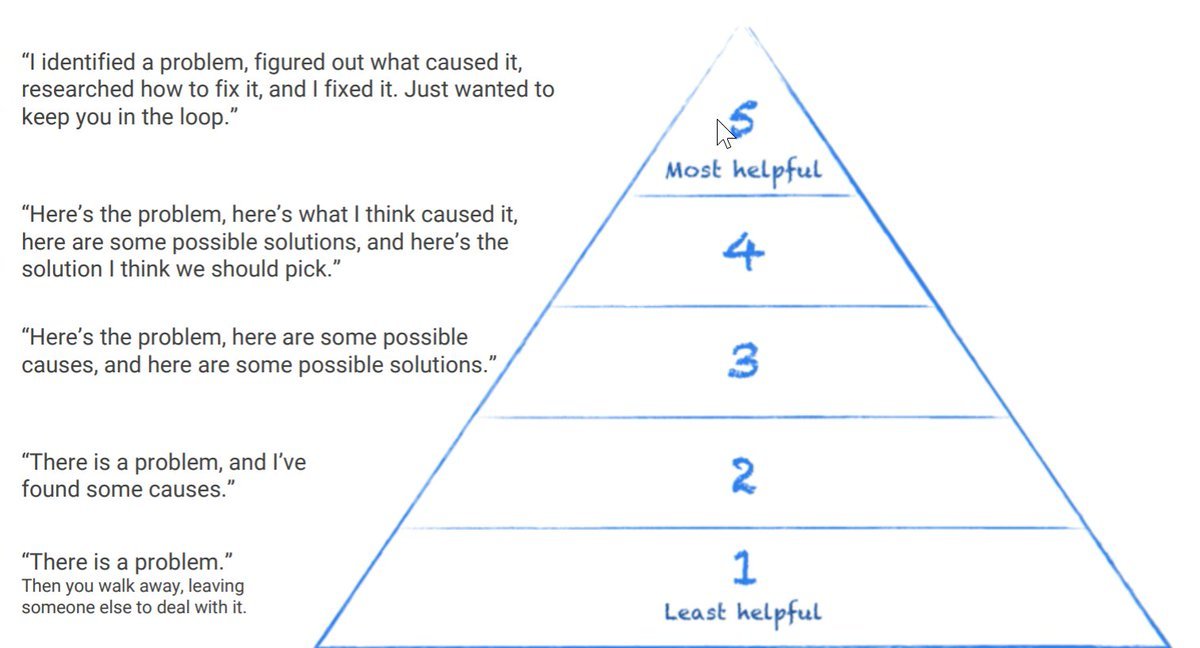
I stole this idea and now use it with every single employee. It’s the best illustration I’ve seen of teaching someone to be high agency. It says there are 5 levels of work: Level 1: “There is a problem.” Level 2: “There is a problem, and I’ve found some causes.” Level 3: “Here’s the problem, here are some possible causes, and here are some possible solutions.” Level 4: “Here’s the problem, here’s what I think caused it, here are some possible solutions, and here’s the one I think we should pick.” Level 5: “I identified a problem, figured out what caused it, researched how to fix it, and I fixed it. Just wanted to keep you in the loop.” Using this framework, here’s what I say to every new employee… You will live at Level 4 from Day 1 and as we build trust you will rise to Level 5. Being high agency doesn’t just mean tackling problems in this way. It means your entire way of working should be oriented to being a Level 4+ employee. Plz feel free to steal it as well. And ty @stephsmithio for the framework!

Before finding product market fit, if you don’t make growth+retention your priority you will not grow After finding product market fit, if you don’t make growth+retention your priority you will lose product market fit

It’s surprising how often the answer to “why aren’t you growing faster?” is simply “hmm, I guess we kind of normalized not focusing on growth”.

How does one prepare kids for the jobs of the future? blog.andrewyang.com/p/the-job-of-t…

fun frequent convo I've been having with founders in the a16z speedrun program we're running in LA for the next 12-weeks: the clarity of a startup's story means clarity in their strategy. The story is the strategy. On the other hand, a confusing, rambling story means that your approach is likely complex, incoherent, and unattractive. If you've ever had someone pitch you a product idea and then needed to ask question after question to understand what they're doing, you know what I mean. This is a skill. It takes tremendous time and effort to pare back your startup's core ideas into a short series of truths, with strong local connections in between. The process of paring down the idea requires hardcore prioritization -- knowing what parts of the idea are core and must be done right away, and what parts are irrelevant, or can be done in the future. A clear narrative forces clarity in strategic tradeoffs. It takes no skill to have massive complexity -- we can all brainstorm a ton of ideas, throw all the exciting trendy technologies into our idea, and make a go for it. But these messy stories reflect strategic indecision and avoidance. And the resulting unclear strategy will repel potential customers, investors, employees, and partners. They don't know who you are, or what you're really doing, because you don't either. the best stories are a form of lossy compression, where they leave out 90% of the operational detail, but still hit the emotional and strategic truth. They ring true as soon as the words leave your mouth. And not because they are obvious statements -- after all, we get tired of hearing the same things -- but rather because they make observations on the reality of the world new way that cuts through the noise. They contain a "secret" that's surprising and compelling. The best narratives tap into feelings, not just logic. the good news is that you can often figure this all out as you go. Founders and product builders are often are guided by the intuition of what they want to see in the world. Intuition might guide you towards a solid product, even if the initial story is a bit messy. And as you understand your customers' real world use cases, plus how your own customers describe your product, it can get easier to compress down all your ideas/observations/mistakes into a simpler expression of the idea.

At Box, we're 100% focused on being an AI-first company. One reason clearly is because we're building an AI platform for how companies work with their content, so we want to go extremely deep on what work looks like in the future and make sure we're building the best product for this. But also because I'm an extreme believer in how impactful AI will be for the future of work. In the process, AI has been increasingly changing my daily work as CEO, initially in small amounts but much more significantly in the past few months as AI models have gotten far better and as we have emerging Agent use-cases. Here are a few ways that I'm regularly using AI within a given week: * Generating product prototypes: often I'll be brainstorming with one other person or just by myself on a weekend or late at night and want to quickly see a prototype of a new product idea. I'm a very visual person and generally need to get things out of my head and onto a screen or piece of paper as quickly as possible for it to fully register if it's a good idea. I'll use various coding tools (mostly playing with Replit, v0, Cursor, Claude directly, Windsurf) to generate these prototypes (usually primarily just for front-end experiences) to think through an idea faster or better prepare it for presentation. * Getting research on basically everything: at this point I'm increasingly going to AI for most general research tasks that I need done, and as a result I'm researching far more. The cost of sending a question to someone and the impact I know it will have on their time is now far higher than me just kicking off the research in an AI system (mix of ChatGPT, Grok, Perplexity, Gemini). Market trends, competitive analysis, benchmarking, various market studies, and almost anything else that comes into my head I'm usually going straight to AI to have work on at this point. And often I'll end the night with a few deep research tasks, and wake up to the results. * Content generation: most new ideas that come to mind that need some form of written content or plan I'm usually going to AI first right away. Coming up with customer surveys, project plans, strategy brainstorm ideas, product press releases (less for the real release, more to think through positioning), branding or naming, and more. In this case I'm usually going back and forth with AI to work on this directly in a document (using Box AI in Box Notes, now leveraging a mix of Claude 3.7, o3/GPT4.1 now, Grok 3, or Gemini 2.5). * Content analysis: by virtue of my role, there are many situations where I need to review content for either internal or external consumption, and AI offers a helpful companion for idea generation and improvement in those processes. Things like reviewing an earnings call script and looking for gaps that analysts might want covered and preparing for their questions, or providing insights into a set of customers I'm going to pitch to better prepare for the conversations (mostly using Box AI on content with a mix of models). Now, there are some areas where I still will not use any AI, for instance when I'm writing emails, sending our company-wide memos, or writing posts like this. Some of this might be nostalgia and other parts superstitious, but I deeply believe writing things out helps you understand them better, and so I like to force myself to still think through critical parts of the business thoroughly. Maybe this changes in 5-10 years, but for now it's the one 100% human thing I'm keeping. But overall, it's clear that AI is fundamentally changing work. I'm able to analyze things much faster, move ideas and projects forward more quickly, as well as be more informed in the process. One other secondary effect it has is my expectations are going up for everyone I work with as well, and the speed at which projects can now be delivered. This will have big implications on the pace of business over time.
New essay: Every marketing channel sucks right now (full thing on my newsletter, just subscribe via link in bio) These days I’m spending a lot of my time with very early stage startups (yes, as part of the program at a16z to invest up to $1M into each, called a16z speedrun -- speedrun.a16z.com) and as part of this, I spend a lot of time talking about launch and marketing strategy for new products. The options for marketing pretty grim right now. Here are my complaints: - SEO: Takes too long, you’re competing against listicles (and Reddit threads), Google might screw you over at any moment, maybe AI one boxing will kill your traffic next year anyway :( - Influencer marketing: Get a big spike of traffic but none of it converts, the spike goes away after a few days, big creators are too expensive and a slew of small creators need to be cobbled together, lots of babysitting :( - PR/comms: Doesn’t actually generate signups, doesn’t scale and not repeatable, expensive retainers for PR experts to grab coffee with journalists, your competitors will get the same article next month, and press is as likely to attack you as to cover you :( - Email marketing: hope you like spam folders, building a good list takes forever, open rate rates are <30% and CTRs are <5% so hope you weren’t expecting a lot of clicks - Viral loops: doh you need an actually great product, all the contacts spamming techniques no longer work (neither email nor SMS!), your UX will be ruined by aggressive popups and onboarding schemes, and it’s nearly impossible to get viral factor >1 - Referral/affiliate/etc: be ready for a crazy amount of fraud, it’s just as expensive as paid marketing (though people fool themselves into thinking it’s not paid), and surprisingly most people don’t care and will get fatigued quickly! :( - Big launch on social: it can only happen once, you’ll have to spam all your friends to share and over time they might come to resent you, the algo is always working against you, and it only lasts for a few hours :( I could keep going… but you get the picture! Unfortunately this is the state of growth marketing. A lot of channels are not working, or are slow, expensive, or one-time only. This is the natural end state for things, and maybe we’re in a bit of a lull due to the technology super cycle as we’re 15+ years into the mobile wave, we’ve had various kinds of paid ads for 20+ years, and so on. All of these aforementioned marketing channels are now fully mature. The Law of Shitty Clickthroughs, Redux This is the logical ecosystem-wide conclusion for the concept I wrote about many years back, The Law of Shitty Clickthoughs which inspired by the efficient market hypothesis. It said the following: "Over time, all marketing strategies result in shitty clickthrough rates." I encourage you to read the full essay if you haven’t, but the tldr; is that when marketing channels work, everyone jumps in on them, and they start to decay like crazy. Why do they decay? Because customers stop responding over time — they start ignoring things as the novelty wears off. The ROI also goes down, as all the intermediaries that charge you for access to their audiences jack up prices. The super slick self-serve, automated auction model for paid marketing offers many pros and cons, first that it lets you aggregate much larger audiences with simple tools, but by making it easier, of course you end up with a ton of competition that then drives up CAC. In other words, as a marketing channel scales and ages over time — and yes, we’ve had SEO as a concept for 25+ years now — consumer engagement goes down, costs go up, competition goes up, ROI drops like crazy. Big channels versus Little channels All the aforementioned marketing channels are what I describe as “Big Channels.” They have scale, can be moved using $ (or labor, which costs $). And if you’re a big successful company, you might be fine because you have a (hopefully) strong brand, you get a bunch of organic traffic from word of mouth, you (hopefully) have a successful product that can cross-sell into new products, etc. You can have badly performing Big Channels because it’s all blended into a longer LTV recovery period, more organic, and all the other advantages that successful companies have. But let’s talk startups, who have none of these positive dynamics? I want to lay out a few thoughts: Don’t focus on Big Channels, focus on Little Channels. first, you should just know that all the aforementioned big, mature channels will suck for you. These channels have mostly all been bid up by bigger companies, and they are mostly stale to consumers, and you don’t have the same LTV and financial strength as an established product. Instead, a new startup has to be asymmetrical — what you can do that they can’t? The natural solution points towards Little Channels, which are all the smaller marketing strategies that are tried in the early days and abandoned over time. Don’t worry about scaling. Let’s say you have a new product with only 100 active users. If your marketing campaign gets you +500 actives, you’re ecstatic. Gain a few hundred users inside an established company, and you should clean up your resume. Thus, little channels can work: Running mini events with cool speakers, organizing a Facebook group, going after a single college/company/town, emailing your ex-colleagues/friends to try a new thing — these can all help in the early days. You won’t have the competition, the response rates will be higher since you’re doing it all by hand, and you can always scale over time by moving onto the next channel. Novelty is in your favor. There are only so many ways to sell a big established product to customers. The “wow” moments have all been used, the value prop is already understood. The response rate on marketing declines as a result. But if you’re a new, bright-eyed and bushy-tailed product on the market, and you have a “wow” product that presents well in a hype video, then you can get a nice big spike when you launch. And maybe even a few more smaller ones over time. One-time is fine, repeatability is what you do later. A lot of marketing tactics that work in the early days only work once — like a social media launch — but that’s OK. If you can prove that a few unscalable tactics work, and it helps you gain momentum via funding/hiring/otherwise, then over time you’ll have more time to try additional strategies. Your product is brand new, so your marketing can be brand new as well. When you build a new product, it’s always smart to take advantage of the new tech wave, so that you can create something different than what’s existed before. You want to be building a mobile app in 2010, not a website, and you want to be building in AI now. But in the same way, you can use these new technologies on the marketing side too. What does AI allow you to do in marketing that previously couldn’t happen? Whether it’s rapidly creating personalized creative, or generating concepts faster, or creating an interactive bot — what can you do different than no one is doing, using the new tech? Take risks with your brand. You can attract people with your brand by being polarizing. Say “this product is not for you, it’s for these other cooler people.” Or hit competitors directly in the face, in your marketing. Be aggressive. These are things that long-term employees of the world’s trustworthy brands can’t do, because they are being protective, and managing the downside. You need to do everything you can to stand out, because being ignored is the worst outcome for any marketing tactic. The point is — yes, today’s marketing channels sucks, but that has everything to do with the level of competition and the rate of customer fatigue. So go innovate! Try reaching people in new ways, say novel things to people they haven’t yet heard, and if you have to trade off anything, just trade off scalability. (You can deal with that later once your product is successful even at a small scale) Product is (unfortunately) King So I have bad news: Your product actually has to be very good. I wish I lived in a world where you could have amazing marketing and growth strategies, have a shitty product, and you would win. Then marketers would run tech, and they do not. It’s the people visionaries that create the products that run tech, and that’s a good thing! The reason is that even if you do a ton of work to acquire a bunch of users, it won’t matter if they leak out of the DAU number. I’ve come to think of great marketing strategy as a multiplier effect on your inherent product quality. If you have a great product, you will multiply that into greatness. If you have a shitty product, you will multiply that into… well, you get it. I think we’re seeing this in the AI wave at the moment. You have great, highly novel products and when one startup makes a hype video, it just goes viral. They don’t know anything about funnels, A/B testing, CAC, etc. The product is just killer, and the output is highly marketable, and as a result social media really works well for them. A year from now, I think the novelty value will have faded a bit — we aren’t as impressed by the output of image generation models compared to when they first came out. If the novelty fades, as I predict, then in a few years we’ll need to really figure out how to market these products. (Sorry AI researchers, you’re going to have to learn marketing and sales!) Every marketing channel sucks, but it’s going to be OK This essay was not meant to be depressing, but rather to just call out the idea what we can all see — that most of the channels we work with are decades old, that the performance is teetering on an edge. Just as products are innovating by adopting new tech — AI, XR, web3, and so on — we in the marketing field need to innovate as well, by asking ourselves, where can I do something new with XYZ new tech? And it’s very clear that we should not copy incumbent products. They have too many features — try something smaller and more targeted. But the same is true in marketing. Don’t copy the established products and try to execute in Big Channels — instead, think asymmetrically. What can you do that they can’t, and going with small channels is always a great place to start.

Learning must come before deciding. As explained in Chapter One, your brain stores different types of learning in your subconscious, your rote memory bank, and your habits. But no matter how you acquire your knowledge or where you store it, what’s most important is that what you know paints a true and rich picture of the realities that will affect your decision. That’s why it always pays to be radically openminded and seek out believable others as you do your learning. Many people have emotional trouble doing this and block the learning that could help them make better decisions. Remind yourself that it’s never harmful to at least hear an opposing point of view.
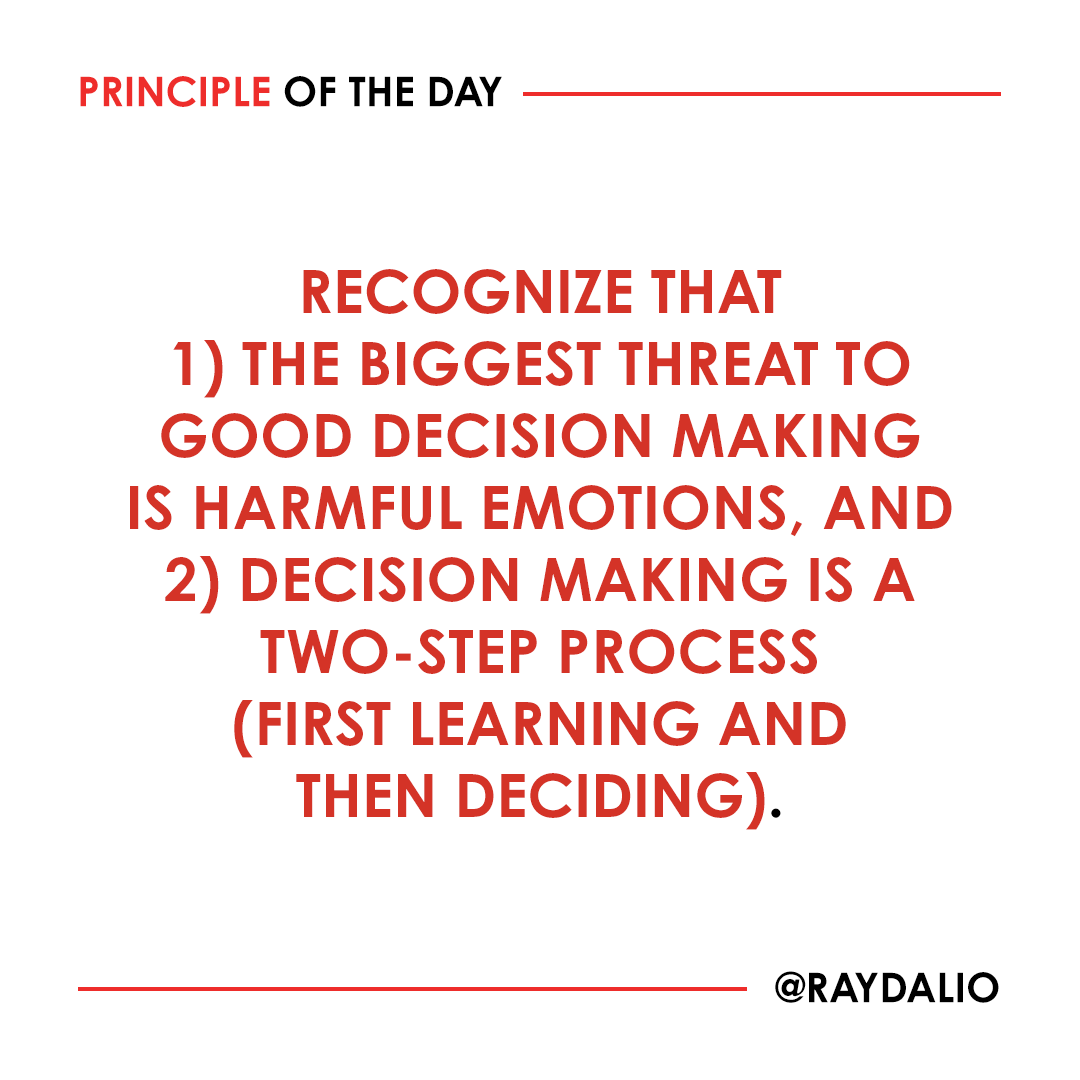
That greatly increased my open-mindedness which greatly improved my decision making. I urge you to try this approach. #principles #raydalio
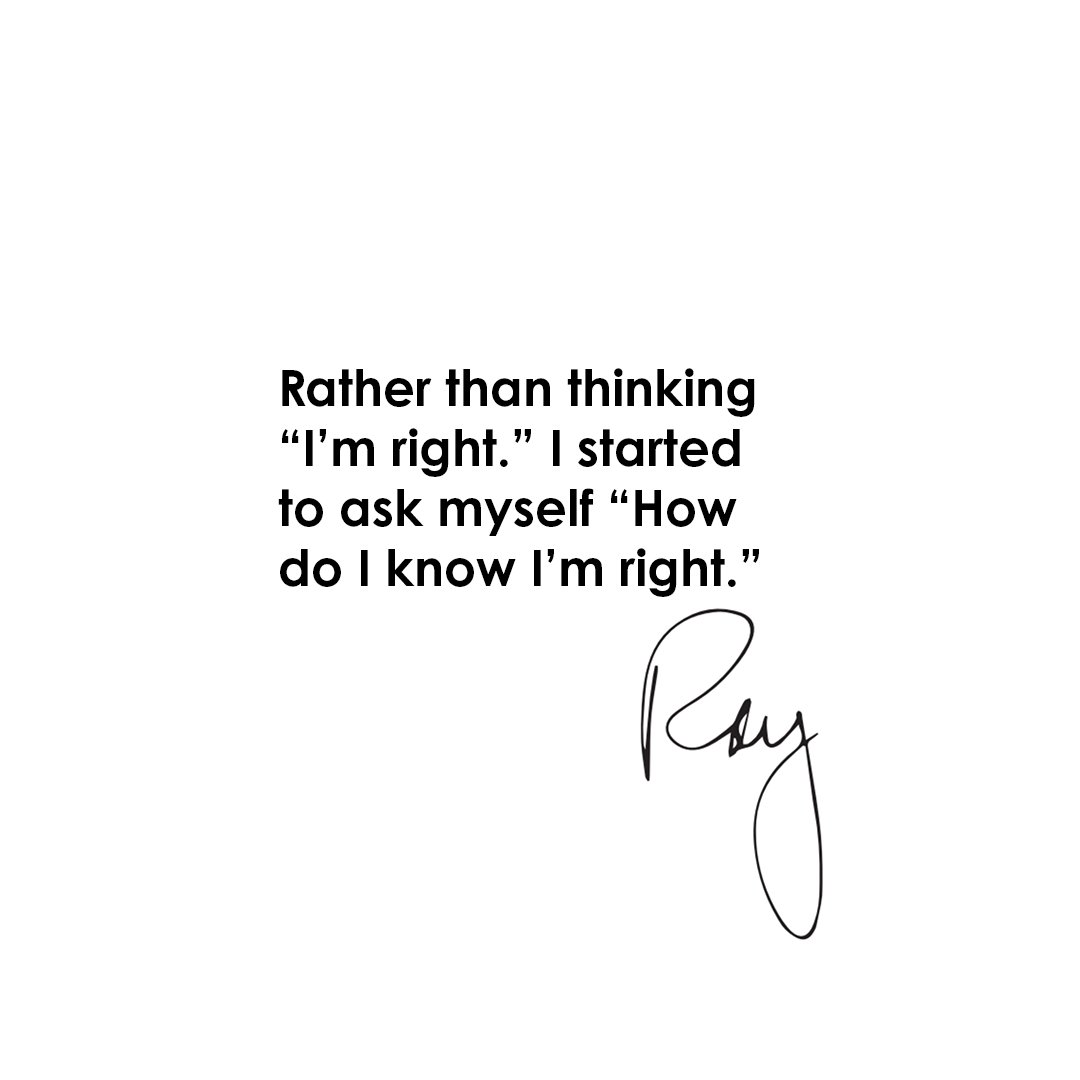
@iancassel 💯 as well as where you increment towards your highest conviction on reallocation plus added capital. True in all things beyond investing like where you spend your time as well.

the storytellers create the future. the rest of us build it.

Palmer Luckey explains why science fiction is a great place to look for ideas “One of the things that I’ve realized in my career is that nothing I ever come up with will be new. I’ve literally never come up with an idea that a science fiction author has not come up with before.”

Programming isn't going away. Prompting is programming. And the better you are at articulating what you want in clear written English, the better your results.
Who is building the product that’s 100% focused on vibe coding!? It needs to have: - built-in highly primitive gslides-level drawing tools - spotify integration for bg music - library of pre-existing app UIs (so you can, make the signup flow the same as XYZ app) - explainers on highlighted code diffs, etc. - library of graphics assets, integrated logo creator, etc All the PMs and ex-PMs like me will have a field day with this

Vibe coding is the best thing to happen to non-technical PMs maybe ever. There has never been a more accessible to learn the texture of code/development by just prompting + studying proposed changes. You can even copy paste proposed changes into GPT to get an explainer live

JustAnotherPM | Sid @JustAnotherPM
29K Followers 4K Following I build AI products at scale. I share what it takes to be an AI PM. Only practical, real-world advice. No-fluff, no theory.
Jen Yang-Wong @Jenyangwong
22K Followers 852 Following COO @contrary • building @contrary_res • angel @tryramp @zeptonow @stytchauth & more • prev @ubereats @hoyarowing
Prasant Lokinendi @psantloki
3K Followers 3K Following lead mobile & desktop apps @figma, frmrly @gowithengine,@Turo @Hopper, @TripAdvisor, @UNC. opinions are my own.
George from 🕹prodm... @nurijanian
79K Followers 2K Following Can I make everyone a great product manager? I will do my best | Get my AI PM OS ⬇️
Gibson Biddle @gibsonbiddle
30K Followers 3K Following Former Netflix/Chegg VP/CPO. Many virtual talks/workshops. Guest lecturer @INSEAD & Stanford. My free “Ask Gib” Product Newsletter: https://t.co/EM21Ic1Ag4
Sam @sambhigham
7K Followers 522 Following 10,000+ hours in #productmanagement, learning like it’s my 1st | Head of Product (Web 3) @ebay
AleXandra Merz 🇺�... @TeslaBoomerMama
241K Followers 9K Following Loud & proud, no regrets. Fierce Tesla retail shareholder advocate. 💙 @TeslaBoomerPapa. Proud Mom of 5 exceptional humans. Not giving financial advice.
Parv @ParvSondhi
6K Followers 2K Following 🛠️ recovering PM having fun building with AI 👨💻 sharing what I learn along the way 💼 prev @apple, @vida, @ebay @UCBerkeley
dennis hegstad @dennishegstad
121K Followers 8K Following i like to build things on the internet @Sonar_id @OrderSurvey. 2x previous SaaS exits (LiveRecover, Orderbump). I post a lot of memes, marketing and ai slop.
Sehab @sehab10192
52 Followers 126 Following মানুষ যখন খুব বেশি একা হয়ে যায়, তখন সে নিজের সাথেই কথা বলতে শুরু করে। আর সেই নিঃসঙ্গতা থেকেই জন্ম নেয় এক গভীর বিষণ্ণতা💔💔
Emma Lace 🎀 @COST007
10 Followers 473 Following soft like morning light, wild like my brain 🌅 100% follow back always

Nancy Q @merveyigitalci
12 Followers 704 Following dreamy & dramatically online ✨ follow back always
cammy no feelings @Jrjay66619924
27 Followers 2K Following emotional jukebox & follow back machine 🎶 100% follow back

EduReach @EduReachCo
3 Followers 19 Following Transform YouTube into smart learning! AI quizzes, study groups, 30-day FREE trial. Built for African students. https://t.co/VoCi76xgNl
Nonye Nwa-Niaf Okonkw... @nonyeomd1
135 Followers 659 Following Founder | ENTNDO | Building a stylized motion library for AR/VR and crypto tokenized digital agentic identities using tacit intelligence
HUMAN ACTIVISTS AND G... @JohnWahooli
219 Followers 4K Following Serve and save the oppressed, homeless ,disabled and poor. @wahoolijohn be the reason why others are smiling @big_uganda76152
Crypto King @giveaway_k51305
364 Followers 7K Following
Gennady Shenker @ShenkerGennady
2 Followers 87 Following
Chris Bee @chrisbeetweets
1K Followers 3K Following Building Devplan. Former CTO. ex-Zillow/Uber/Amazon. Dad. Dreamer.
Ben Rhodes @Benrhodesign
36 Followers 105 Following
EpsteinFIles @EpsteinDocsHQ
347 Followers 1K Following Independent archive documenting timelines and public records.
Sayra Cash @SayraCash
326 Followers 1K Following Helping High Earners swap Tax Bills for Solar Assets. 📉 Stop losing 50% to the IRS. 📈 Start building 25-year cash flow. Strategies used by Family Offices.
Ryan.F @Ryandacc
622 Followers 2K Following I know nothing about AI—my work revolves around taste, culture, and build. Building culture and shared consensus @SparkLab_City
Robert Scoble @Scobleizer
590K Followers 52K Following San Francisco/Silicon Valley AI | Robots, holodecks, BCIs, analysis of new things | Ex-Microsoft, Rackspace, Fast Company | Wrote eight books about the future.
Sean Shadmand @sshadmand
2K Followers 404 Following 4x Founder (CEO/CTO/CPO), ex IQT CIO, Building the next big AI enterprise product.
德州扑克-德扑�... @DaLuigi96528
65 Followers 1K Following 连续六年联盟地区赛事赞助商,8万+会员信誉口碑 致力于服务好每一位俱乐部会员与德州扑克爱好者。 加俱乐部咨询TG电报 @hhlianmen
Hannah @kaitomikik18874
213 Followers 6K Following Professional overthinker | Amateur avocado grower 🥑💭

Anna @BBeekley
145 Followers 554 Following Happiness is not something ready made. It comes from your own actions
Albin Russel @ARussel24665
64 Followers 3K Following
Ruslan Kryzhanivskyi @kryzhanivskyi_r
60 Followers 1K Following Helping Founders Design MVPs in 10 Days | AI, SaaS, Fintech, E-com, Healthtech, Real Estate | Connecting Startups with Top Engineers | @Movadex
Amintore Confalonieri... @AmintoreOficial
7K Followers 1K Following 🚀founder & CEO @amaliasalud 🥇former @ZTEPress @TIM_Official @Huawei ✍🏻 ocasional writer @CointelegraphEE ❤️ocasional mentor
Marina Cina @cinamarina
9K Followers 914 Following Building 🧠 Lumah | Founder Mailead (acquired, made $400k in 3 months) | Love 🎾 & 🏄🏻♀️
Sebastian Bauch @bauch_sebastian
1K Followers 7K Following Expanding frontiers @FRTCapital, something in cyber security, hyperdimensional computing & helping to let AI solve medical challenges
FloraDoherty @854xPplw5kqwAN
9 Followers 1K Following

EnidYeates @6oi02V8r3O6SACZ
11 Followers 1K Following
VernaMasefield @9Iu7BoxWFB2L0
19 Followers 856 Following
MandyCoffey @naq4Eje8l3lI78
13 Followers 1K Following
EmilyAdolph @owO1y1WVWWXmm
0 Followers 241 Following

ArleneWhit @0zRjlrb13t5tqD4
40 Followers 2K Following
Havn Club @havnclub
380 Followers 72 Following Text based private chef concierge that deliver in meals in glass containers. High protein, organic, local, and seed oil free. Live in San Diego + Washington DC
Ngoc Diem Ly @Zinnia_USA
614 Followers 806 Following Vietnamese descent | Owner of multiple businesses | Involved in tech and business | Loves golf, pickleball, tennis, cycling, and gardening 💬
MagNichols @y86d030e0JLKw7B
8 Followers 438 Following
Ellie Scott @7QdmL15kagwCJpJ
9 Followers 828 Following Target 30%+ monthly | 2 pro-grade US ideas. Free alerts for entries, exits, and risk control. @nahuel321rojas
InaLamb @56r6Rj5jfo5WQ
10 Followers 1K Following
FedWatchPro🇺🇸 @Prajui0585
46 Followers 2K Following 15-30% Monthly | 2 High-Conviction Stocks.Short-Term Gains: 15-20% in Days/Weeks.DM "JOIN" for WhatsApp Alerts. Live Trade Signals • Market Analysis
DeliaElla @5fyX5VRH8WSj1
27 Followers 1K Following
Ciworr @Ciworr081
24 Followers 976 Following
Teorvqarh @Teorvqarh58641
29 Followers 1K Following
Sesus @Sesus4900161
23 Followers 721 Following
Thea @o89DQ21QfWdMjoC
29 Followers 833 Following I’m not just a girl, I’m a force to be reckoned with.
Ywoni @Ywoni860
20 Followers 1K Following

Natalie @leP1Dxj0Kgi6olz
45 Followers 1K Following
Siefollah Aslani | Qa... @AslaniA32389
23 Followers 3K Following Founder of QashqAI Voice 🌍 | Voice for All | Cultural & Digital Inclusion | https://t.co/bKq4TIdAVfTrends for United States
You might like