
Peekee @PeekeeDev
Account to discuss Digital Twin software, SCADA etc... medium.com/@lisin.signage… Singapore Joined November 2025-
Tweets3K
-
Followers133
-
Following2K
-
Likes33K

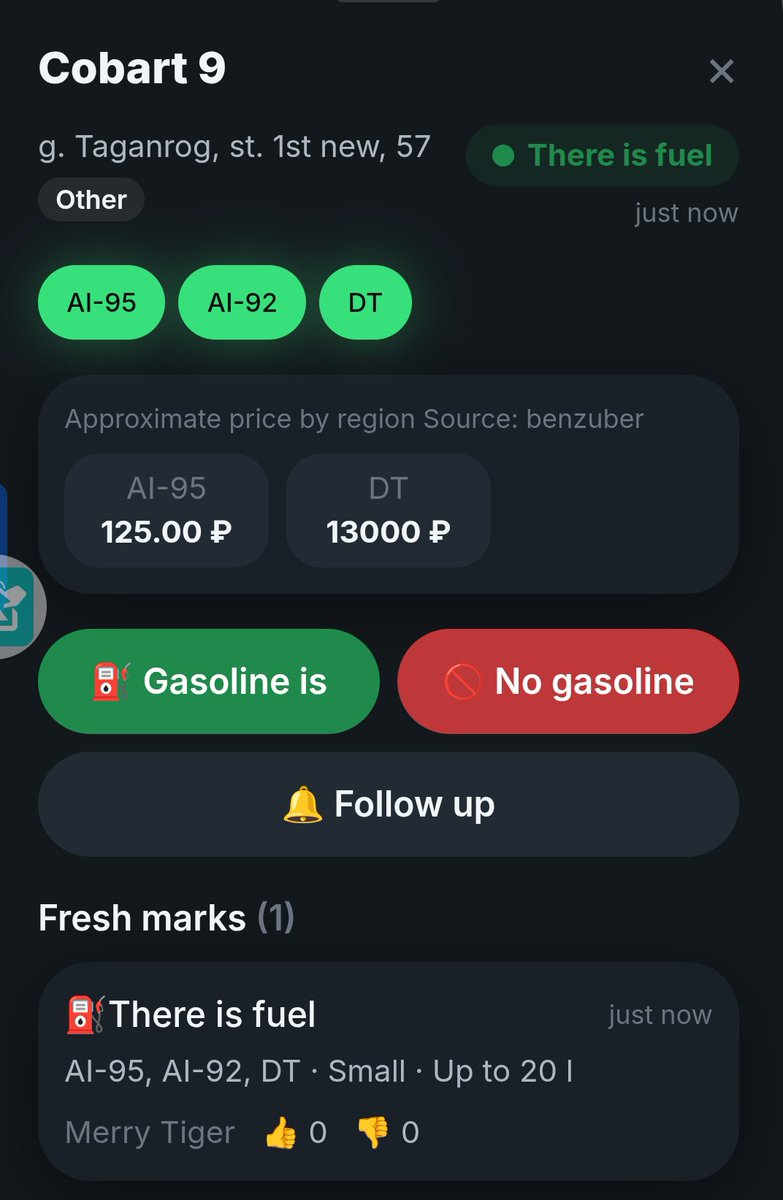
@AlexBondODUA Not just in Moscow. My favorite: near Rostov on Don on the main road to occupied territories...

@AunySillyMe Driving a camping car across Japan with 3 generations onboard without knowing a single word of Japanese...

I want to convince you to read a book with a scary cover. Everyone should read The Rise and Fall of the Third Reich, not because it is the last word on Nazis, but because it remains one of the most powerful demonstrations ever written of how civilization can fail while still believing itself to be civilized. That is the terrifying genius of Shirer’s book. It does not present the Third Reich as some meteor that struck Europe from outer space, nor does it comfort us with the childish notion that Germany was magically populated by millions of uniquely evil people. It shows something far more useful, and therefore far more disturbing: a modern, educated, technically sophisticated nation can be captured by lies, grievance, bureaucracy, fear, opportunism, and the small daily surrender of moral judgment. The machinery of barbarism does not require a population of monsters. It requires enough believers, enough cowards, enough careerists, enough cynics, and enough ordinary people who decide that keeping their heads down is safer than saying no. One argument I’ve heard is that all humans contain engrams that encode for certain group behaviors. When a local resource or abundance runs out, you invade a neighbor and take theirs. Or worse, you identify a group within your own population as the source of the problem and attack yourself, like an autoimmune disease. But it happens repeatedly throughout history. And the most important lesson is not that Hitler won Germany in a landslide. He did not. The Nazis became the largest party, but they never won a free majority mandate. In July 1932 they won 37.3% of the vote; in November 1932 they fell to 33.1%; and even in March 1933, after Hitler was already chancellor and political violence had warped the field, they reached 43.9%, still short of a majority. That is the chilling part. A country does not need 90% of its people to vote for madness in order for madness to govern it. It needs a militant minority, a fractured opposition, institutional weakness, elite miscalculation, and a public exhausted enough to mistake brutality for order. Shirer makes you understand that dictatorship doesn’t happen when people vote to abolish freedom. More often, it arrives wrapped in emergency powers, procedural legality, patriotic language, porous constitutions, and the promise that the unpleasant parts are “temporary”. People do not wake up one morning and decide to live in a police state. They accept one exception, then another. They tolerate one class of people being degraded because it is not yet them. They watch one newspaper silenced, one judge intimidated, one civil servant replaced, one neighbor denounced, and each time the mind performs its little act of self-preservation: surely this is not the REAL turning point; surely someone ELSE will stop it; surely it is better NOT to get involved. That is why the book is not merely history. It is a “systems manual” for democratic collapse. Shirer shows the inputs and outputs. Economic humiliation goes in. Conspiracy thinking comes out. Parliamentary paralysis goes in. The hunger for a strongman comes out. Propaganda goes in. Moral permission comes out. Career incentives go in. Obedience comes out. The horrifying thing is how much of it looks less like a thunderclap than like an old programming flowchart. Forms are stamped. Orders are routed. Promotions are granted. The trains run on time. Men like Asperger who would never personally murder a child learn to serve a system that does. And that is the second great reason to read it: it destroys the comfortable distance between “them” and “us.” Most people contain the engrams necessary to fall in line under the right pressure. That does not mean everyone is secretly a Nazi. It means human beings are exquisitely vulnerable to belonging, fear, status, obedience, resentment, and the narcotic-like relief of not having to think too hard when a leader offers a complete explanation for every pain or problem. Shirer forces the reader to confront evil not as a rare substance found only in supervillains, but as a set of ordinary human capacities intentionally reorganized by ideology and power. The book also matters because Shirer wrote with the eye of a witness. He was nor a historian, he was a journalist. As someone with ASD, I don’t fall prey to books like “A People’s History of the United States” because they are, at their core, emotional tracts. Shirer’s book is not. It’s journalism. It’s like reading a newspaper of events written by someone who was there and who had time to think about them. That’s because he had lived in Germany as a correspondent and watched the Nazi state harden around him. His great advantage is not academic distance but proximity. You feel the sequence of events as something unfolding in real time, not as a museum exhibit safely sealed behind glass. That gives the book its momentum. It reads less like a textbook than like a slow-motion systems crash, where every warning light is blinking and the operators keep insisting the reactor is fine. Yes, modern historians have refined, corrected, and complicated parts of Shirer’s interpretation. They should. No serious reader should stop with one book, especially one first published before I was even born. But that is not a reason to avoid it. It is a reason to start there and then keep going. Shirer gives the reader the great brutal architecture of the thing: the rise, the consolidation, the war, the crimes, the delusions, the collapse. Later scholarship can add wiring, plumbing, and better load-bearing analysis. Shirer gives you the building. And just when you start to feel comfortable there, he sets it on fire while you are still inside. What makes the book indispensable is that it turns “never again” from a slogan into a diagnostic skill. After reading it, you become less impressed by uniforms, slogans, rallies, and certainty. You become more suspicious of people who explain every problem by pointing at a hated internal enemy. You recognize the danger of elites who think they can harness extremists for their own purposes. You notice when law becomes a weapon instead of a restraint. You understand that institutions do not defend themselves; PEOPLE defend them, or they become scenery. And perhaps most importantly, you learn that moral catastrophe is usually incrementalbefore it is total. The abyss does not always announce itself. Sometimes it is approached by reasonable men making “practical compromises”, by citizens tired of chaos, by newspapers chasing access, by judges respecting technicalities, by businessmen preferring stability, by soldiers obeying oaths, and by neighbors deciding that silence is not approval exactly, just prudence. That’s the part that scared me the most – wondering where the “pragmatic me” would yield to the “moral me”, and just how sure I was that it would. That is why everyone should read The Rise and Fall of the Third Reich. Not to congratulate themselves again for being unlike the people in it, but to understand how much like them we might become if the incentives, fears, and pressures were arranged badly enough. The book is essentially a warning against human weakness under industrialized conditions. It teaches that civilization is not a possession. It is a behavior. It must be renewed, defended, and practiced, especially when doing so is extremely inconvenient. And if a thousand pages of Shirer leaves you with anything, it is this: the machine is built by people, staffed by people, obeyed by people, and stopped, when it is stopped at all, by people who finally decide not to fall in line. One final “pragmatic” note – there’s a chapter or two on the elections that go through the returns in a lot of detail. That part is a bit of a slog – you have my permission to fast-forward. But the rest of it is incredible. PS: I would have just written this as an episode if YouTube were amenable to creators working outside of their channel's comfort zone, but alas... no. Amazon: amzn.to/3QU4mfF

@AunySillyMe Superb. "Pink is a lie" 👏 Just a bit too much shaking imho.
@aikisteve @Tesla Did you say "please" at least once? 😂
@MichaelVSmith3 @MykhailoRohoza Best sign this type of news hurts them hard. See how they try desperately to twist what is said in the original tweet and you know...

1. אני לא בטוח שכולם מבינים עד כמה חמור המצב ברוסיה כרגע מבחינת מחסור בדלק לסוגיו. זה הולך ומחריף, ועלול להתפתח לאירוע עם השלכות יותר משמעותיות. אנשים ממתינים 12 שעות בתורים לדלק. וזה לא מאפיין רק מחוזות שקרובים לגבול האוקראיני. הסרטון המצורף למשל, שצילם נהג משאית אתמול בערב, הוא מהעיר צ׳יטה בעבר הבייקאל בסיביר, 5,000 ק״מ ממוסקבה, בערך 350 ק״מ מגבול מונגוליה וסין. הנהג מתוסכל, ואומר: "צ'יטה, צ'יטה. ה-26 ביוני, השעה 11 בלילה. איזה בלאגן, כוסאמק, פשוט בלאגן! אנשים מוכנים כבר לשלוף סכינים, פשוט ללכת מכות. מצלמים לי כל מיני תוכניות ריאליטי בטלוויזיה כמו 'איך לשרוד בסמרקנד', 'איך לשרוד פה ושם'... הנה, 'איך לשרוד במזרח הרחוק' – את זה צריך לצלם! בזבאיקליה, בצ'יטה! פשוט בלאגן, כוסאמק! הממשלה של הפדרציה הרוסית...אבל העיקר שבטלוויזיה מראים שהכל פאקינג מעולה אצלנו. מה, זה נראה לכם מעולה?! בשביל פאקינג 30 ליטר בנזין או 200 ליטר סולר, אתה פשוט צריך לעמוד שעות על גבי שעות בפקקים לתחנות דלק! זה פשוט הזוי, כוסאמק. לאן הכל פאקינג הולך? אני לא מאמין, איזה פקק, ינעל העולם. התחנה נמצאת שם... הנה, שם על הגבעה היא עומדת. (מישהו מדבר בקשר: 'נו, מה קורה, בחורים?') איזה דלק, בחייאת רבאק...פשוט זוועה, זוועה. קריסה טוטאלית. הכל אצלנו סבבה, התמונה בטלוויזיה מצוינת... הגענו רחוק, מה אני אגיד לכם."
@sarobertson_ RuZZian trolls attack in replies like crazy mosquitoes in August in a Canadian forest,,good sign 🤣
@Beefeater_Fella If the authorities deny it, then it's true and time to leave too 🤣👍
👏

To anyone who takes russia's side and says they are "liberating russian speakers" Look, just look, THIS is what russian liberation looks like, THIS is the ruskie mir (russian world) All they know is death.


@Sulkhan 1/ totally agree with you 👌 2/ your post draw so much Vatniks/trolls it's a honey pot to find targets to mute/block 😜

Researchers once asked 909 women to write down how they felt during every part of their day. The commute came in dead last, below housework, below their actual jobs. The study came from Daniel Kahneman, the psychologist who won a Nobel Prize for studying how people make decisions, and later research using bigger groups keeps finding the commute near the bottom. The math behind it is strange. You take a longer commute to get something back: a bigger house, a better school district, a higher salary. In theory it should even out. Two economists at the University of Zurich tested that against nearly twenty years of German survey data, and it didn't. People with longer commutes were just less satisfied with their lives. When they ran the numbers, someone with a one-hour drive each way would need to earn about 40% more to be as happy as someone who walks to work. The raise that justified the move mostly fails to pay for the daily grind of getting there. The body keeps a tally too. A study of about 4,300 adults in Texas found that once a one-way drive passed 10 miles, blood pressure started creeping up, along with blood sugar and cholesterol. Past 15 miles, people exercised less and were more likely to be obese. Sitting in a car that long crowds out the walk or the gym you meant to fit in. Then there is the cost to relationships. A Swedish researcher tracked 2 million Swedes who were married or living with a partner, and found that when one of them commuted 45 minutes or more, the couple was about 40% more likely to break up. The risk peaked in the first few years, and it usually landed on the same setup: the man takes the far job, the woman takes a smaller one near home and does more of the childcare. None of this is rare. The average American commute runs about 27 minutes each way now, close to an hour round trip, and roughly one in eleven workers spends 60 minutes or more in each direction. Britain's statistics agency found that every extra minute of commuting pushes happiness and life satisfaction down and anxiety up, with the worst stretch being a commute of one to one-and-a-half hours each way. The part that keeps showing up in the data is that people sign up for the long commute anyway. The bigger house and the higher salary are easy to picture. The hour in traffic, every day, for years, is the part the brain quietly tunes out.

The distance between your house and your job really affects your quality of life.

@EugeniaGurevich @Sulkhan Here is the 2003 border agreement between Russia and Ukraine, where Donbas and Crimea is Ukrainian, signed by Vladimir Putin.

@tak_ya_anna @GhostOfKyiv_ @JalopenoF1 @JohnLangleyDoe @jurgen_nauditt @secretsqrl123 @leonardkerk @JukkaPSeppl @Zsibo1 A new version of "Whack-a-mole" but here the looser one. Move AD to already destroyed refinery 😂 And in a way to ensure location is easily identified 😜 We're lucky they are so stupid 😇
@InsideLucysHead Good one, didn't see it coming 😂

CharlyBLR @CharlyBLR
1K Followers 2K Following Человек я не опасный: что на уме, то и в интернете. https://t.co/eLGkZc7c19
Sifferkonto @sifferkontot
146 Followers 568 Following
Mow D Lawn @MowDLawn
281 Followers 471 Following
Lumberjack 🇳🇱 s... @Lauraens21
3K Followers 5K Following Pedocharchie will cancel the MIDTERMS. A nation that yields to tyrants. Looses more than life and property. The light goes out. DM is block.
Koru Language @korulang
216 Followers 2K Following The Event Continuation/Effect Language Discord: https://t.co/2Dh7cU7Upb Multiple backends, Zig/JS.
Rada Hale @Har4262
256 Followers 7K Following
GK🇺🇲 @GaryKleinm20012
759 Followers 6K Following
0x44 @0x44_
291 Followers 150 Following 私は「0x44」ですどうぞよろしく。「D」又は「Diego」 と読んで。ゲームシリーズを作りますは「ANSI C」に。🇺🇸人です。「Pixel」は僕の猫です。PC−88とかPC−98を大好き、80年代の日本よ、永遠なれ!

Alexport @AlexAlexx974431
3K Followers 3K Following "A time to scatter stones, and a time to gather stones" #NAFO #Smokefleet
𝑬𝒗𝒆𝒍𝒚�... @TKouilou
10K Followers 7K Following J’ai appris, en vivant ailleurs, à ne rien prendre pour acquis @doshka_F - @doshka_france - @Motuzka_ua #NAFO
"J" radio free Americ... @JamesBi28025342
1K Followers 2K Following Escapee-Philosopher from planet "GgmEadE" in "no such anomaly" far away, sailing a sea of monkeys rewriting history instead of music. JUST Say no to Empire!
André Cotrim @andre_cotrim
411 Followers 557 Following Todas as opiniões expressas são pessoais. Não respondo a pedidos por mensagem direta. / All opinions expressed herein are my own. No requests via DM.
pentti kurikka @KurikkaPen52413
1 Followers 15 Following
Titi @Tiiitttiiiiiiii
5 Followers 30 Following
HoneybadgerLA #NAFO�... @HoneybadgerLA
7K Followers 6K Following Ukrainian Language Learner | Social Worker | INFJ | Recovering Attorney | Ex-Army SGT/NSA linguist | #smokefléét #smokerises 🏳️🌈🏳️⚧️
Ararat Legacy @AraratLegacy
16 Followers 38 Following Armenian & World History From Urartu to Ararat • Cultural Heritage Threads
𝙋𝑨𝙎𝑪𝘼�... @PascalouNafo
5K Followers 6K Following 𝑺𝑶𝑼𝑻𝑬𝑵𝑰𝑹 𝑳𝑨 𝑫𝑬𝑴𝑶𝑪𝑹𝑨𝑻𝑰𝑬 𝑬𝑻 𝑳'𝑬𝑼𝑹𝑶𝑷𝑬 ⭐#TAEM⭐ @Doshka_F💛💙 @doshka_france / #LeMondeFella /⭐ ⭐@motuzka_ua ⭐
loew @ChrisLoew_
119 Followers 4K Following
Juan Marcano @JuanMar32310709
326 Followers 1K Following
MacTíre Mór Fella @... @seaghmacs
3K Followers 5K Following Social Services information and advocacy services. Occasionally a White Knight. Infrequent checker of DMs.
Angela @SosaaAngela
148 Followers 2K Following Creating a world where kindness, compassion, and empathy are the guiding principles.


Dmitry Smirnov💱⚡... @Dmitry924456551
17K Followers 10K Following Российский предприниматель. Пишу свои мысли о будущем, настоящем. Часто шучу.
GwendolynYoung @YoungGwend41797
287 Followers 3K Following 🚨 Most people buy AFTER listing… We enter BEFORE 🚀 💎 Crypto signals (2 per week) 📈 1000%+ potential 🆓 100% FREE access ⚡ Not for everyone 👇 Join now
Andrew Komarov @AndVKomarov
4K Followers 3K Following Блогер📱 Русский враг «руZZкого мира» ☮️ #StopTheWarInUkraine
Асасёрю | 朝�... @youradmirety
269 Followers 1K Following per aspera ad astra | почитатель японской кухни | 日本料理ファン | ценитель красоты | эстет и интеллектуал | последний из могикан | Joined April 2026
sylvie @SassyGirlBoss
102K Followers 61K Following I AM ME. I DO ME. AND I CHILL •Unapologetic political junkie ✡︎Democrat✡︎Teacher•fmr covergirl & model• Unbothered•NoDM
🎯Viser la Lune🍑 @Procto_Log
9K Followers 5K Following Pas de lien d’intérêt avec Amel Bent Employé chez France Doigt Ornithologue autodidacte Conseiller d’Alain Bauer
𝕽𝖎𝖘𝖙𝖔 ... @RistoSuomela
4K Followers 6K Following Male, born 1958 in Finland. Teacher in Kuulampi primary school 1991-2018. Member of SDP party. #Finland #tyrnava #education #sdp #demarit #slavaukraini
Taylor Smith @itstaylorsmith9
4K Followers 1K Following Balkan & Western Europe romance Opinions and predictions my own.
_Philrp Prlkington @phrlippilk
19 Followers 1K Following Macroeconomist/investment professional. Author: The Collapse of Global Liberalism. Host of the Multipolarity podcast, @MultipolarPod.
Maurice Martin ♦️... @MauriceMartin01
34K Followers 31K Following Auteur Premier roman « Marianne » Édition Maïa pour le commander directement https://t.co/02YOsF834e
Lothar Thommes @lotharthommes01
97 Followers 3K Following Performance. Precision. Progress. | Building tomorrow’s energy solutions today.🔋⚡
NovaCivis @NovaCivis
1K Followers 717 Following Democracy Advocate | Human Rights, Freedom & Civic Health Championing people, dignity, and dreams. Strong opinions, stronger espresso.
Bonkster @Bonkster85
4K Followers 7K Following NAFO Fella, HaXX0r, WaffenlieferungsUltra, NAFOExtensionIsNonNegotiable, Hundeswehr, https://t.co/dYpgX9H8M7 @U24_gov_ua
Yuliia @Frank810
288 Followers 1K Following Combat Medic-Armed Forces of Ukraine 5th Center -Defense Intelligence Ukraine Int. Legion and tacmed instructor in Ukraine THIS IS MY ONLY ACCOUNT
BH @BHvastija
280 Followers 3K Following
Michael (Hedge Fund M... @5356_9798
74 Followers 1K Following AI can help me make money, but it can't predict my other half.🙈🙈🙈
MarketMemo @DemandDiary
5 Followers 76 Following
LX @LXSummer1
40K Followers 11K Following Daily ☕ / #RussiaOnFire + Sabotage / Self-proclaimed incident and 🔥 specialist / Bavovna Monitor / 🇺🇦✊ #NAFO #HellsFellas #pollwreckingteam @HellsFellas
spaceman @spacex6679
173 Followers 6K Following
Kevin Lenga @LengaWrites
127 Followers 94 Following Ghostwriter & Rédacteur stratégique. J'aide les coachs et entrepreneurs à convertir leur audience en clients fidèles.
Gene Trevino @GenoVeno73
57K Followers 13K Following Blue Dot In A Red State FYI - I curse a lot. Deal with it, or don't. Either way, I still curse a lot - but that doesn't negate nor lessen the truths I speak.

Caius @Caius841
307 Followers 253 Following Curieux du monde et de son histoire, de la géopolitique, la conquête spatiale, la finance et le monde marin. Supporter de l'OM et du RCT
Ned Stone @7h3_6h05t
3K Followers 6K Following Wisconsinite #AmericaFirst Lutheran Turned Catholic Swede living in USA

Ruslan Volkov @RuslanVolkov25
5K Followers 981 Following Would Love To (W❤️² )- is officially going global. From now on, your wish is our law. 👉🏼 https://t.co/z0hdEmhdK2
Nia♡ @softlynia_
3K Followers 1K Following Writer 📖 | Real Life Lessons from Fictional Stories B/C Every Story Teaches Something 🌱 DM for Collabo Ads & Promotions 💼 Backup: @softlynia_2 🔄
🦈🐑🚂davidevan... @davidevans442
5K Followers 6K Following Senior Air Traffic Controller, T2 Llandegley International Airport 🚁 Certified "dog-nonce lunatic" 🐧 Sketchy & weirder than a 🐧 god thought. 🇺🇦🇬🇧🇨🇦38
Tom Berg 🇸🇪🎗... @Kvasern
2K Followers 1K Following Stark, Lojal, Stolt med Mod, Kraft & Spänst bevakas vår utpost Gul & Blå https://t.co/ikUi5L4CwU
Auny 🧡 @AunySillyMe
30K Followers 4K Following Content Strategist obsessed with X, AI, music & drives 🧡 I help you automate your life with AI workflows • Adobe Firefly Ambassador ✨ My Music → https://t.co/7oh1FsV6o2
Steven Peeters @aikisteve
3K Followers 190 Following EVangelist with a passion to bring FSD to Europe https://t.co/XU98g2V5PP Head of IT and Cybersecurity, CISSP, CISM certified
NatRecordsScot @NatRecordsScot
12K Followers 469 Following National Records of Scotland. Preserving the past | Recording the present | Informing the future.
Оля Левина �... @OlaGinsburg333
6K Followers 4K Following Школьный учитель математики, репетитор. Люблю цветы и умных мужчин. Ненавижу войну. Троллинг наше всё. Публикации могут не совпадать с точкой зрения автора.
Douglas Yao @DouglasYaoDY
8K Followers 377 Following Making drugs https://t.co/OpaKgZ2ZCe. Prev computational bio PhD @harvard
Black Spark @Black_Spark2
5K Followers 27 Following The Black Spark - Russia's underground movement. our contact: [email protected] our Telegram: https://t.co/V0Of6ztOaB backup page: https://t.co/bf83kpkw3X
Scott Robertson @sarobertson_
18K Followers 566 Following International Digital Editor @MeidasTouch @MeidasClips
Jonas Åberg @jonaskkaberg1
589 Followers 799 Following Entrepeneur, investor, sports enthusiast. CEFA. My financial comments are NOT investment advice.
CharlyBLR @CharlyBLR
1K Followers 2K Following Человек я не опасный: что на уме, то и в интернете. https://t.co/eLGkZc7c19
Sifferkonto @sifferkontot
146 Followers 568 Following

LaylaStormy @StormyLayla
1K Followers 221 Following In politics I am totally anti-Trump. In ongoing wars I support Ukraine and Israel.
Sulkhan Metreveli @Sulkhan
5K Followers 29 Following CEO Met Capital | Director ACR Institute I write about Russia, power, AI, markets and Western survival. Follow if you prefer brutal clarity to polite stupidity.
The Ministry Of Ungen... @mouw5284
42K Followers 11K Following Here to combat Russian propaganda #NAFO #UKRAINE 🇺🇦 🇪🇺🇬🇧
Scott MacFarlane @MacFarlaneNews
377K Followers 922 Following Chief Washington Correspondent @meidastouch 90’s R&B super fan
Farmer99 @Farmer9911
2K Followers 1K Following
GROUP BY ORDER BY DES... @Bottom_up_guy
117 Followers 131 Following Between Russia and USA/Israel (попытка вернуться к жизни после убийства Маском)

zharynka @tak_ya_anna
3K Followers 882 Following M.A. in Sociology Lecturer | Writer | Ukraine & Frontline Fixer 🇺🇦 pretty while saving the world 🥰💅 #NAFO 🅿️ay🅿️al: [email protected]
Jarl Finland @jalle51
5K Followers 2K Following have the best job I've ever had. Otherwise I've worked in construction, sales, kitchen manufacturing, Political in the middle
Harman @itsharmanjot
4K Followers 45 Following Daily content on AI, No-Code & emerging tech • Learn practical AI tools to grow faster and work smarter • DM for partnerships & collabs
Dr. Jean Baptiste Zon... @JeanB_Zongo
12K Followers 562 Following Libre Penseur Burkinabè. Analyse et critique sur la situation sécuritaire au Sahel 🇧🇫🇲🇱🇳🇪. #Pro_Démocratie📥 #Anti_Juntes❌

BBC Breakfast @BBCBreakfast
612K Followers 484 Following UK's most watched morning programme. Join 5 million viewers waking up every day with the BAFTA & RTS winning show from 6am on BBC One ⏰ #BBCBreakfast
Michael Bohnert @mbohnert
3K Followers 469 Following Defense Researcher / Engineer @RAND | future tech, drones, air defense, EW & Russia-Ukraine war | Husband, father, skier | Views my own. RT ≠ endorsement.
Oluwatimileyin✨🦋 @Timmysofine
81K Followers 8K Following Tech and AI Influencer | MSc Governance of Digitalization, Åbo Akademi 🇫🇮 | [email protected]
Prof. Stefan Rahmstor... @rahmstorf
167K Followers 278 Following Professor of Physics of the Oceans & Head of Earth System Analysis at the Potsdam Institute. Public speaker. Dad. I don’t read comments here, I do at Bluesky.
Brendan Kelley @kelley7622
2K Followers 735 Following News for https://t.co/uRJdsvVMNj /Tracking Russia’s Human Safari/ Kherson Weekly on Substack / Research for Tochnyi
Tochnyi @tochnyi
12K Followers 182 Following Tochnyi is a collective project which aims to accurately report and discuss news and information relating to the Russian Federation’s illegal war in Ukraine.
John R @Tentmak49887517
2K Followers 803 Following John Ronning. Electrical Engineer, US Navy vet (Submarine Officer active, Intel Officer reserves), ex-missionary to South Africa
Fara Kaufman @justfara
213K Followers 205K Following Resist 🌊🇮🇱 blue sky justfara follow Books Reiki Chef #Foodie Music Fibromyalgia Dup Bridge Artist Nana CA Jersey Girl Peace #BLM insta @justfara1
Andre Schmidt 🇩�... @AndreSc96926942
112 Followers 105 Following #russiaisaterroriststate Glücklicher Opa.
Misty Mountain @_M_Mountain_
3K Followers 193 Following About Armenia and prominent people. If you like the content, please consider following, sharing, retweeting. Also, I do occasional satire, don’t get crazy.
Leeds Fella : Slava U... @FellaLeeds
12K Followers 12K Following Without unity, facism and authoritarianism will succeed. we cannot allow this to happen. History tells us what happens next. Slava Ukraini 🇺🇦 NAFO

Bartosz Milewski @BartoszMilewski
36K Followers 34 Following Physicist, programmer, mathematician. Author of Category Theory for Programmers. @[email protected]
🇺🇦 Andrei Alexa... @incomputable
15K Followers 441 Following Please refer to my website for bio and contact information.
Matthew Gross @HurricaneAddict
9K Followers 520 Following Fascinated by extreme weather and the extreme events that come with it. (Any fantasy hour maps posted are for entertainment & learning purposes, not forecasts.)
Rebecca 📖 @Avonleebythesea
23K Followers 8K Following “all the beauty of life is made up of light and shadow.” bookshop owner/writer. The Rapture of the Deep: A Collection of Short Stories https://t.co/MHqArqMNy5
Robert Petrosyan 🇦... @PetrosyanRob
3K Followers 73 Following He who owns information, owns the world.
Allan Aspinall @Allan_the_model
52 Followers 127 Following I'm a part time agency signed model who works with amateurs or professionals. Comfortable posing clothes or nude due to being a naturist.
Oorlog-monitor 🇳�... @oorlog_monitor
12K Followers 959 Following 🇳🇱Vecht tegen onwaarheden rondom de oorlog in Oekraïne. | 4000+ uur onderzoek | Updates | Draden | Ontkrachten van propaganda & desinformatie

Mickey McAllister @mcaliente21
2K Followers 545 Following American Lawyer & IT Entrepreneur. I live in Kyiv. 🇺🇦 I tweet about the war mostly, occasionally about sports. (Golden State Warriors).
MagellanQuest 🇪�... @MagellanQuest
3K Followers 392 Following I explain Europe through maps, data and history. Geopolitics, economy, identity and integration.You might like