Roy Toy @RoyToyGoGoGo
Joined May 2023-
Tweets78
-
Followers1
-
Following70
-
Likes0


一个能过所有主流反爬检测的开源浏览器项目:CloakBrowser 据说能过所有主流的反爬检测,比如Cloudflare等。 直接改自Chromium C++源码,编译阶段就把57个指纹信息改掉。 道高一尺魔高一丈,哈哈哈。 Github地址见评论


GPT2 x 线条头像 x 示例提示词优化过程 刚刚这篇文章只是概念版 接下来看 怎么优化 这个版本是可用 但没有足够有设计逻辑 不够巧思 我先优化了一个版本,有彩色背景和装饰的 提示词如下,又臭又长: 请将输入图片转换成一张适合社交媒体头像使用的极简主义单线条插画,默认画幅比例为 1:1。 主体可以是人物、猫、狗、其他动物,或植物。请根据输入主体类型,自动提取最具辨识度的外轮廓与关键特征,并将其概括为具有艺术感的极简单线条头像 / 形象插画。整体目标不是机械描边,而是保留主体神韵与识别度,用更高级、更有灵气的方式进行单线条重构。 【主体处理逻辑】 如果主体是人物:保留脸型、额头、鼻梁、嘴部转折、下巴、耳朵、发型等关键轮廓,只保留少量必要五官特征,避免细碎刻画。 如果主体是猫、狗或其他动物:保留头部外形、耳朵、口鼻轮廓、眼部神态、毛发的大轮廓走势等关键识别特征,避免复杂毛发细节。 如果主体是植物:保留花朵、叶片、枝条、果实或整体轮廓中最有识别度的形态特征,用简洁线条概括其姿态和节奏感。 【线条风格要求】 线条必须流畅、圆润、舒展、张扬、自然,尽量连续,一气呵成,具有呼吸感和即兴感。 整体以柔和弧线为主,少用尖锐、生硬、刻板的折线。 不要把轮廓画成死板的 logo 式描边,不要机械,不要僵硬,不要碎裂,不要过度规整。 线条应简洁但有生命力,带一点随性和艺术气质,看起来轻松、灵动、有收藏感。 【构图与头像适配逻辑】 整体构图按 1:1 方形设计,主体应明确、集中、醒目,适合用作社交媒体头像。 主体建议居中或略微偏中构图,轮廓完整,视觉重心清晰。 请预留合理留白,避免主体过大贴边,确保即使在头像圆形裁切后,主体关键部分依然完整清楚、识别度高。 画面应在小尺寸下依然简洁有力、容易辨认。 【背景色逻辑】 背景色不要固定为某一种颜色,不要默认总是蓝色。 请优先根据输入图片本身的综合色彩气质,提取适合作为背景的“暗色调逻辑”,从主体相关的深色倾向中选择合适的背景颜色。 如果用户明确指定背景颜色,则优先使用用户指定的颜色,并在此基础上保持整体高级、克制、有张力的暗色调处理。 背景色选择应遵循以下原则: - 以深色、纯净、有情绪张力的纯色背景为主 - 背景应能有效衬托主体线条,形成清晰对比 - 不要固定某个色相,可根据图片气质灵活选择深蓝、深绿、深紫、深棕、深灰、酒红、墨黑、蓝灰、橄榄深色等偏暗色调 - 如果图片本身适合冷色背景,则采用偏冷的暗色逻辑 - 如果图片本身适合暖色背景,则采用偏暖的暗色逻辑 - 如果用户指定颜色,则在该颜色基础上选择更沉稳、更适合头像展示的暗色版本 - 避免荧光感、廉价鲜艳感 - 避免灰闷、发脏、低对比、无精神的背景 【主体线条颜色逻辑】 主体主轮廓线建议使用白色细线,或使用与背景形成鲜明对比的浅色细线。 线条不宜过粗,也不要细到失去存在感,要轻盈、清晰、干净。 如果背景较深,优先使用白色或浅暖白色线条,以增强识别度与清爽感。 【点缀元素逻辑】 在主体周围加入少量随机、即兴、自然的小型彩色点缀元素,用来增强灵气、趣味和轻松感。 点缀元素可以是:小圆点、小弧线、小星形、小笑脸、小短笔触、小闪电、简单几何符号等。 点缀风格要圆润、俏皮、松弛、自然,像随手加上的灵感装饰,而不是刻意排版出来的模板元素。 点缀必须控制得当: - 数量少,点到为止 - 分布自然,略带随机感 - 不要过密,不要对称得太死 - 不要喧宾夺主 - 只作为辅助氛围存在 - 点缀色可从背景色的邻近或互补色逻辑中少量提取,也可使用少量跳色,如黄、橙、粉、淡紫、浅珊瑚色等 - 点缀整体要和主体及背景协调,不要显得生硬拼贴 【整体风格目标】 整体画面应当极简、轻盈、现代、灵动、有艺术气质。 既有单线条插画的干净感,又有即兴涂鸦般的松弛感和生命力。 要让主体显得圆润、舒展、有神韵,而不是僵硬、呆板、模板化。 最终效果应适合作为社交媒体头像:醒目、有辨识度、有趣、有设计感,同时具备轻松愉快、自然生动、值得收藏的艺术气质。 【避免出现的问题】 不要写实,不要阴影,不要明暗体积,不要复杂纹理,不要复杂场景。 不要机械描边,不要僵硬死板,不要尖锐刻薄,不要过度规整。 不要把背景色固定成单一蓝色模板。 不要背景过亮刺眼,也不要背景灰闷无精神。 不要装饰过多,不要抢走主体。 不要因为极简而失去灵气,也不要因为装饰而失去克制感。 比例16:9


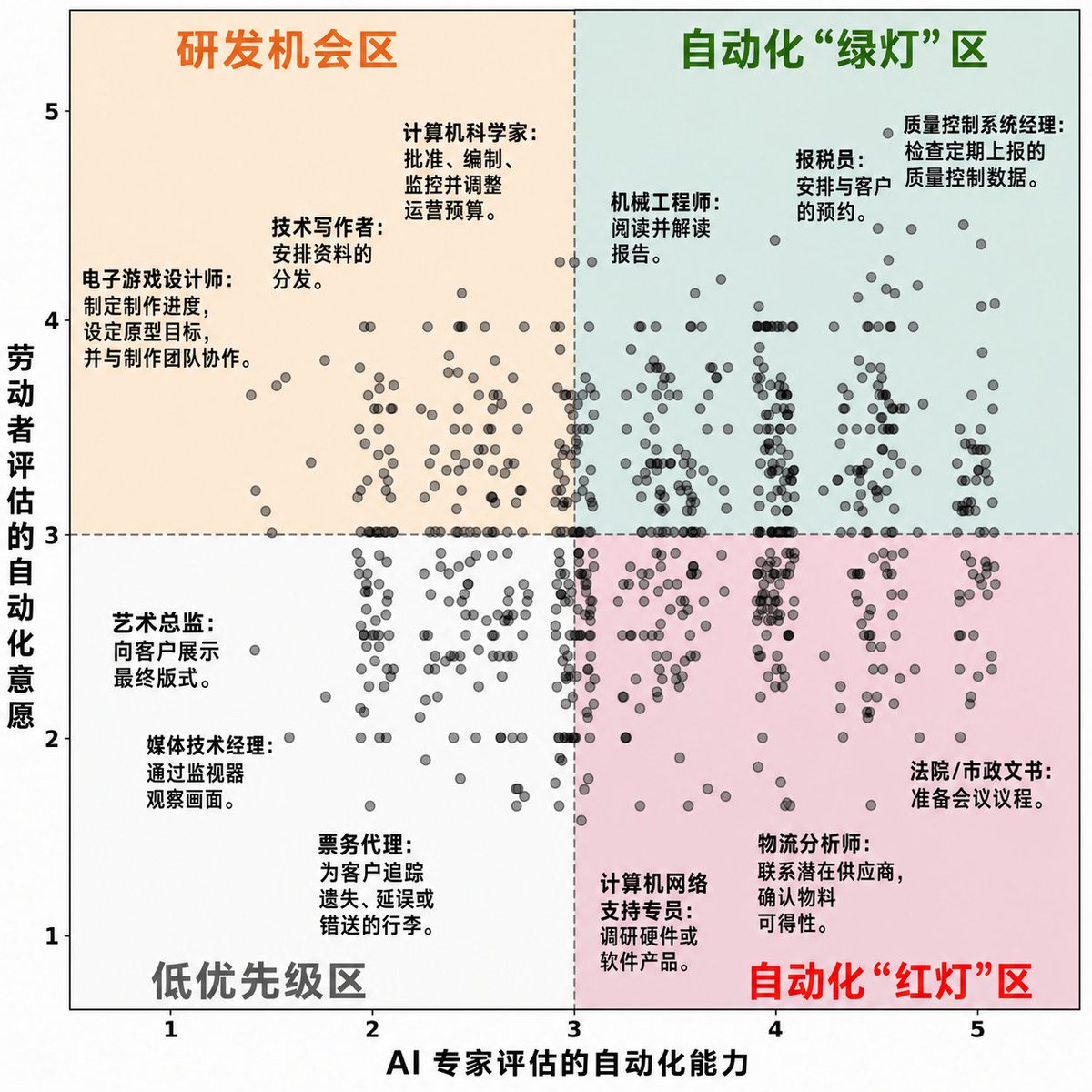
Stanford 用 1500 个工人和 844 个任务告诉 YC:你们 41% 的钱投错了方向 —— 你们投的都是"人们不想要"或"不需要"的东西,而那些"想要但没什么人做"的事正在等待 founders。论文中工人最想自动化的前 10 个职业 Claude 的使用量只有 1.26%,现有 AI 使用反映的是早期采用者偏好,不是真实工作场所需求! WORKBank 把工作任务划分成了四个象限,高渴望和高能力分别表示对 AI 高需求和 AI 目前的能力: 🟢 Green Light(高渴望 + 高能力) 这一象限聚集的工作类型:数据录入 / 文件整理 / 日程安排 / 例行报告生成 / 标准化客服流程 / 重复性信息检索整合(QA、合规类) 🟠 R&D Opportunity(高渴望 + 低能力) 这一象限聚集的工作类型:跨系统协调(涉及多个工具/部门但仍结构化)/ 长上下文研究 + 综合分析 / 项目计划和资源分配 / 中等复杂度的创意设计 这正是创业公司应该看的方向——工人想要 AI 帮忙,但当前 AI 能力还没到位。 🔴 Red Light(低渴望 + 高能力) 这一象限聚集的工作类型:内容创作的最终呈现(艺术/设计/媒体红灯比例 47.6% 全行业最高)/ 客户面对面的关系类(销售/法律咨询/客户管理)/ 决策的"署名"环节(草稿可以 AI 写但谁署名 = 谁负责)/ 创意的灵感判断("这个 ok / 不 ok"的最终拍板) 特征:技术上 AI 能做,但做的人在乎自己的 ownership / 创造性 / 客户关系——这是最容易引发劳动法纠纷和文化抵制的区域。中国法院的两个判例(Zhou 在 QA / Liu 做地图录入)就涉及这一区。 ⚪ Low Priority(低渴望 + 低能力) 这一象限聚集的工作类型:高度物理 / 跨系统手动追踪(电话、纸质文件、人工对接)/ 高度地方化、低标准化(每个城市/机场/银行流程都不同)/ 长尾的客户异常处理 / 受监管约束极强的小批量任务 特征:双低 = 不必做。论文也指出,这些任务人类做得也不开心(已经被流程化得很惨),只是 AI 现阶段也帮不上忙。 最被忽视的发现:同一职业内的不同任务往往横跨多个象限。最典型的例子 - 程序员: - "重构同一模式代码" → 🟢 - "理解模糊的用户需求" → 🟠 - "在客户面前展示 demo 并应对质询" → 🔴 - "在老旧 COBOL 代码里追一个偶发 bug" → ⚪ 这意味着"程序员被 AI 替代"可能是一个伪命题。程序员的某些任务在绿灯区(已被 Claude Code 大量自动化),某些在红灯区(客户沟通、责任归属),某些在 R&D 区(AI 还做不到的复杂理解)。 这也是 Diana / Cat Wu 描述的"PM 与工程师角色融合"在数据上的解释——工作不是被替代,是被重新切分到四个象限里🤔
逆向 Cocos Creator 项目 Prompt: 这是我司一个老项目,使用 Cocos Creator 开发、Electron 打包为 Desktop 版。由于项目太老,源码已经丢失。现在老板想要基于此项目做二次开发,希望恢复源码。./cc-reverse 是一个开源的 Cocos Creator 逆向工具。请你使用此工具恢复本项目源码。争取完整恢复,如果中间遇到报错请停下来向我汇报,我们再一起想办法 /brainstorming
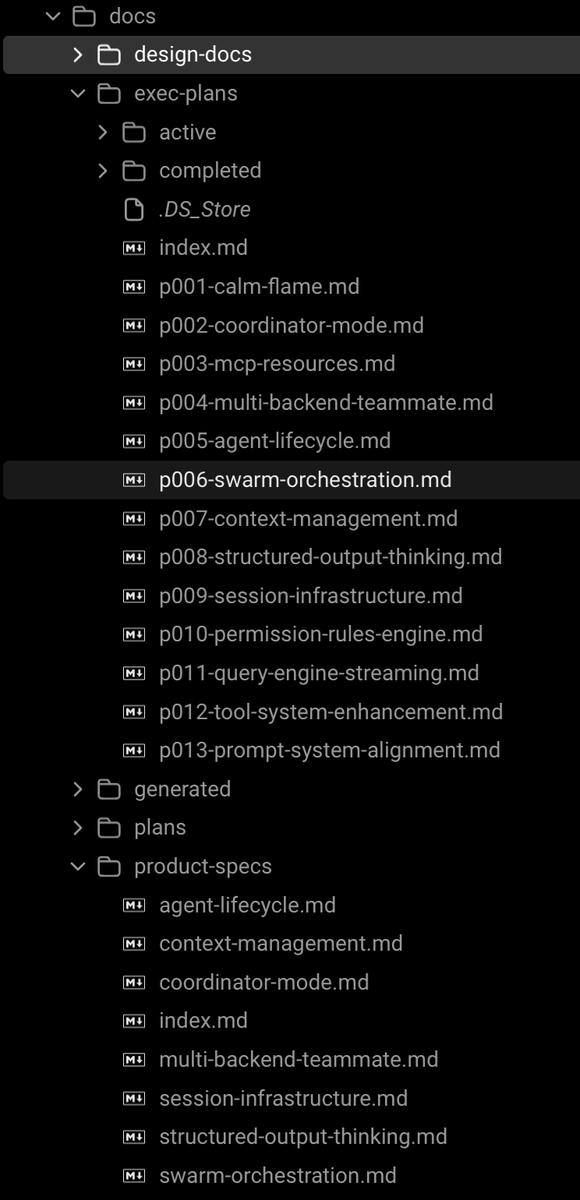
继续分享一些 harness engineering 实际经验 坦白说,在做 haicode (一个我自用的 coding agent) 的过程中,我通过 Harness 方案借鉴了 Claude Code 的不少优秀设计。虽然功能复刻个七七八八,但整体使用体验始终不如 CC 丝滑,比如有的任务执行很顺,有的任务执行就不收敛。 我今天静下心来想了下,只有功能点对齐是不够的,必须深入对齐其底层机制,正好 k2.6-code 发布,跑通了一套“四步对齐法”,效果我觉得还行,分享一下希望对你有帮助。 haicode 目前有接近 10w 行 golang,要对齐 CC 50w 行ts,确实有点困难。通过人眼来对齐肯定是没什么可能性了,看不过来。 所以需要引入文档作为中间层来对齐,我选择的是 PRD 做事实层面的对齐。分四步走 第一步:PRD 宏观对齐(Gap Analysis) Prompt 示例:「请帮我比对当前项目与上游 Claude Code 的源码,找出我们在架构和体验上还有哪些差距?重点关注 Agent Loop、上下文管理、Agent Teams 等核心模块。请将不完善的地方拆解成独立的 PRD,并输出到 docs/product-specs 目录中」 需要注意的是,不需要像我一样说的很规范,现在 k2.6 之类的国模都比较聪明,在实际使用的过程中可以用语音说很长的一些废话,意思到位,最后确保放入对应目录中就行了。 第二步:PRD 细化与反思(Deep Dive & Questioning) 要求模型在 PRD 中明确标注“当前实现”与“上游实现”的具体差距(Delta),客观评价当前做得好的与不好的地方。 「请基于这里的 PRD结合上游源码,评价当前做得好的与不好的地方,提出你在分析过程中遇到的‘开放式问题’(例如设计意图、edge case)来问我。」 第三步:PRD 细化与反思(Deep Dive & Questioning) 使用提示词:「对于你刚才提出的开放式问题,请你直接从上游 Claude Code 的代码库中寻找答案,并补充到 PRD 中」 这时候再进行人工审核。Harness 开发中 80% 的常规逻辑模型能快速搞定,但剩下 20% 决定体验的核心逻辑,必须依赖我们把 PRD 抠得足够细。 有的朋友可能会问我为啥咱不一步到位,把三步 PRD 生成的提示词写在一起?因为效果不好。精细一些的活,分开一步一步来效果比较可控。 第四步:转化执行计划(Actionable Plan) 「请将所有梳理出的差距和 PRD 改写成具体的执行计划(Execution Plan),并放入 docs/exec-plans 目录」 然后就把 plan 目录拖到终端,让他开始干活。在 claude code 中每次干活时间还挺长的( 没有调优的情况下,我看一个 todo 能干超过 30~40min) 因为是每个月 199 的套餐,最终我验收了两个 plan,效果还不错。 但 cc + kimi 也有一些不爽的地方,估计 claude code 有 bug,有的时候给我弹 API Error: Claude Code is unable to respond to this request 另外在调试 haicode 这种智能体上面,我还用了其他的模型 GLM 5.1 / GPT 5.4 / Opus,我的感觉是模型 GLM 5.1, 比较稳扎稳打:在连带智能体调试的体验上还不错,不会乱飞。 GPT 5.4 / Codex (容易过度设计):它有一种“工程兜底”的强迫症。有时候会情不自禁地发明一些超出 Claude Code 原本路线的解法,比如居然想用关键词来做意图检测,反而把简单问题复杂化了。 Opus 4.6 agent 调试agent最强:在代码拆解和逻辑洞察上的表现应该是最好的, 能够连带 提示词 + 工程一起改,效果最好,但但但但我分析了两天之后 5x 订阅掉了(不知道是相关性还是因果性)......血亏🤣


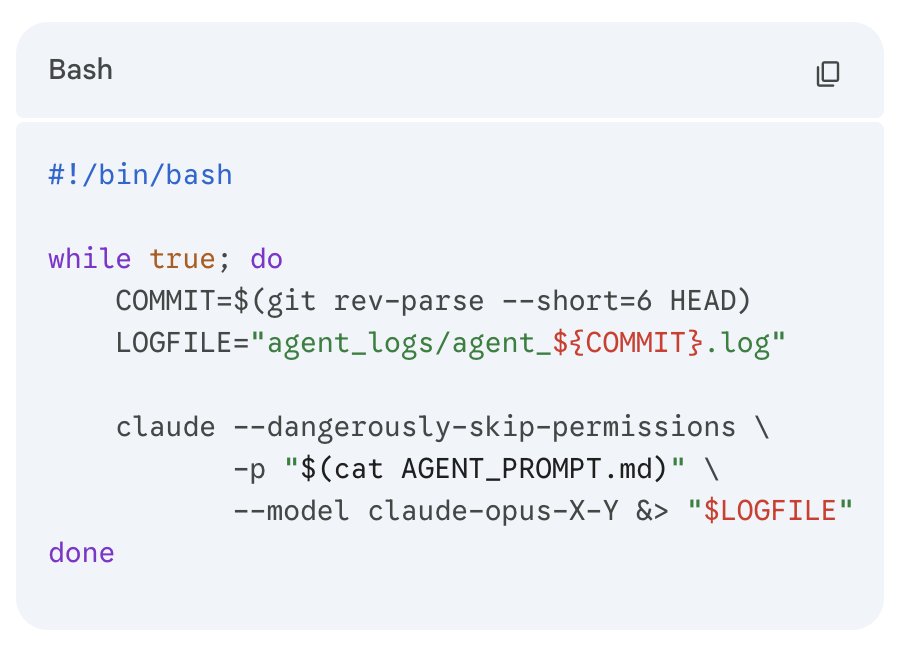
大家经常说的编排(Orchestration)Agent 似乎也不是必须,看 Anthropic 那个让 16 个 agent 并行两周不打架的案例: 这是 Nicholas Carlini 的编译器项目。最有意思的是他绕过了复杂的 agent 编排,回归了最朴素的如图所示 Bash Shell 循环: 🛠 同步协议: 任务池: 一个名为 current_tasks/ 的共享文件夹。 互斥锁: 智能体写入 .lock 文件标记“我在做了”。 分布式协同: 利用 Git 处理并行修改,连合并冲突(Merge Conflict)都由 Claude 自行解决。 🔄 单次 Loop 逻辑: 启动: 容器启动,拉取 upstream 最新状态。 寻路: Claude 扫描目录,认领没被锁定的任务。 交付: 完成编码,更新进度文件,git push 并释放锁。 current_task 从哪里来?所有 agent 都可以往里面提交任务,这个应该是写在 AGENT_PROMPT.md 启动规则里面。 对于长任务 agent 来说,这种设计模式省去了昂贵的编排管理成本,非常值得借鉴。 anthropic.com/engineering/bu…

看到一个很实用的一个小技巧,针对 npm 的供应链攻击,pnpm中可以将 minimumReleaseAge=10080 (分钟) 新版本发布后至少等多长时间也后才可以安装,目的是避开恶意包发布后、被社区发现并下架前的黄金攻击窗口。 npm(v11.10+) 也有类似命令:min-release-age=7(天数) Pnpm 有一篇专门的文档是描述这个问题的:pnpm.io/supply-chain-s…

LLM Knowledge Bases Something I'm finding very useful recently: using LLMs to build personal knowledge bases for various topics of research interest. In this way, a large fraction of my recent token throughput is going less into manipulating code, and more into manipulating knowledge (stored as markdown and images). The latest LLMs are quite good at it. So: Data ingest: I index source documents (articles, papers, repos, datasets, images, etc.) into a raw/ directory, then I use an LLM to incrementally "compile" a wiki, which is just a collection of .md files in a directory structure. The wiki includes summaries of all the data in raw/, backlinks, and then it categorizes data into concepts, writes articles for them, and links them all. To convert web articles into .md files I like to use the Obsidian Web Clipper extension, and then I also use a hotkey to download all the related images to local so that my LLM can easily reference them. IDE: I use Obsidian as the IDE "frontend" where I can view the raw data, the the compiled wiki, and the derived visualizations. Important to note that the LLM writes and maintains all of the data of the wiki, I rarely touch it directly. I've played with a few Obsidian plugins to render and view data in other ways (e.g. Marp for slides). Q&A: Where things get interesting is that once your wiki is big enough (e.g. mine on some recent research is ~100 articles and ~400K words), you can ask your LLM agent all kinds of complex questions against the wiki, and it will go off, research the answers, etc. I thought I had to reach for fancy RAG, but the LLM has been pretty good about auto-maintaining index files and brief summaries of all the documents and it reads all the important related data fairly easily at this ~small scale. Output: Instead of getting answers in text/terminal, I like to have it render markdown files for me, or slide shows (Marp format), or matplotlib images, all of which I then view again in Obsidian. You can imagine many other visual output formats depending on the query. Often, I end up "filing" the outputs back into the wiki to enhance it for further queries. So my own explorations and queries always "add up" in the knowledge base. Linting: I've run some LLM "health checks" over the wiki to e.g. find inconsistent data, impute missing data (with web searchers), find interesting connections for new article candidates, etc., to incrementally clean up the wiki and enhance its overall data integrity. The LLMs are quite good at suggesting further questions to ask and look into. Extra tools: I find myself developing additional tools to process the data, e.g. I vibe coded a small and naive search engine over the wiki, which I both use directly (in a web ui), but more often I want to hand it off to an LLM via CLI as a tool for larger queries. Further explorations: As the repo grows, the natural desire is to also think about synthetic data generation + finetuning to have your LLM "know" the data in its weights instead of just context windows. TLDR: raw data from a given number of sources is collected, then compiled by an LLM into a .md wiki, then operated on by various CLIs by the LLM to do Q&A and to incrementally enhance the wiki, and all of it viewable in Obsidian. You rarely ever write or edit the wiki manually, it's the domain of the LLM. I think there is room here for an incredible new product instead of a hacky collection of scripts.
围绕选品,分享一个我自己常用的老操作: 平时我会经常看最新一批 AI 产品里,那些增长很快、又已经开始有人付费的榜单,尤其是典型的腰部产品。这类项目往往最值得看,因为它们既不是纯概念,也还没大到卷不动,通常更容易看出真实机会。 这类榜单有两个价值。 一个是能帮你持续感知市场上最近在冒出来什么新方向,保持对新机会的敏感度。 另一个是能帮你看到,哪些 AI 产品已经跑出了初步付费验证,适合拿来拆解它们的切入点、用户痛点、定价方式和增长路径。 选品这件事,很多时候拼的不是灵感有多炸裂,更多还是看你有没有持续输入,看得够不够新、够不够多、够不够贴近真实市场。 最近我也让小龙虾整理了一版,质量还不错,分享给大家。 docs.google.com/spreadsheets/d…



Claude 把 Google Ads 操盘手卷失业了! Anthropic AI 的增长营销大牛 Austin,把 Claude 的 Cowork 插件玩出了新高度。他把整个 Google Ads 付费搜索工作流,全部打包成了自定义Skills,直接把 AI 变成了 24 小时在线的付费搜索专职 Coworker。 不是让你用 AI 写文案,不是让你用AI出报告,而是让 AI 代替你干脏活累活:挖搜索词、筛否定关键词、做预算优化、周报分析……全流程自动化,还能直接落地执行。 他到底干了什么? 1. 自定义 Skills,把个人打法固化 他把自己的搜索词评估逻辑、否定词规则、预算分配原则全部写成结构化Prompt,存成Skills。 比如“search-term-methodology”这个技能,会严格按照: • 只看未处理搜索词(status=NONE) • 按消耗降序排序 • 三重交叉验证(搜索词本身 + 触发关键词 + 广告组主题) • 判断相关性而非单纯看转化 完全复制他本人的专业判断标准。 2. 一键 Mine Search Terms,输出可直接导入的 CSV 发一条指令:/mine-search-terms,Claude 就会通过 MCP 调用Google Ads API,拉最近 30天数据,自动筛选、评估,给出带完整理由的否定词列表 + 批量上传CSV。 你只需要扫一眼理由,点确认、AI 就能帮你把否定词推到账户里(所有改动都需要人工审批,安全第一)。 3. 手机端Dispatch直接操盘 最骚的是,这个插件在 Claude 手机App(Dispatch)也能用。他可以在床上直接Impression Share、要预算建议、改投放设置……Google Ads 官方手机 App 做不到的事,AI 全干了。 ⚠️⚠️ 普通人怎么复制? Austin自己在回复里说得很清楚: 把这条线程整个扔给 Claude Cowork,然后说根据这个线程帮我复刻一套Google Ads Toolkit 的 Skills,再根据自己账户特点微调就行。 Google 官方已经提供了 GAQL 的MCP connector,Mutations(改动)也只需要简单对接 API 即可。 ⚠️⚠️ 这波操作的真正意义: • 效率 10倍+:以前一周要花 20小时干的活,现在 10分钟指令搞定。 • 决策更准:AI 严格执行你写死的专业逻辑,不会偷懒也不会脑补。 • 可审计:每一步都有详细Reasoning,随时 review 和 override。 • 工作角色升级:你从执行者变成流程设计师。以后营销人的核心竞争力,是会设计AI 工作流。 2026 年了,不会用 AI 当 Coworker的 营销人,才是真正的落后。那些还在手动 Excel 筛搜索词、一个一个加否定的老派操盘手,真的要被卷哭了。
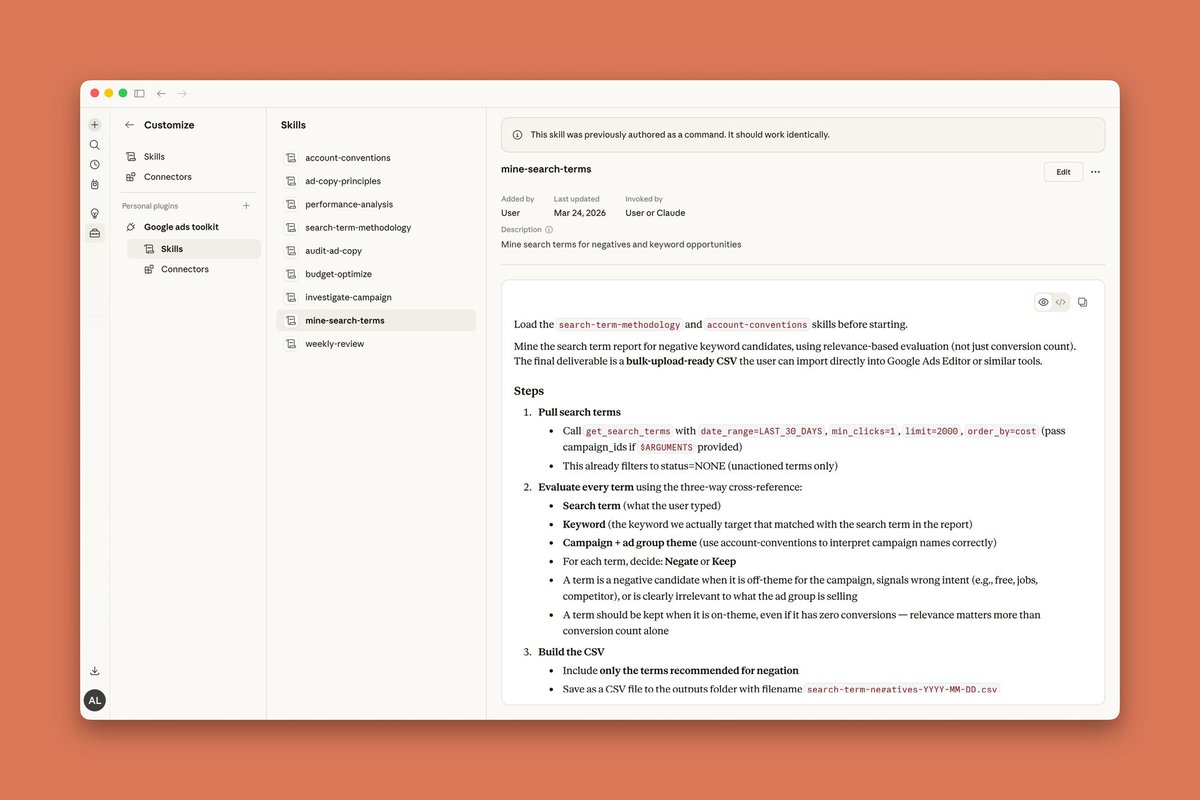

if you're a performance marketer, here's how I use a custom Claude Cowork plugin to manage Google Ads at @AnthropicAI. it connects to the Google Ads API via MCP, encodes my common paid search workflows into skills, and works on desktop and Dispatch.
早上好,朋友们! 看到有人分享了2026 年20个免费高质量外链,我整理了一下分享给大家。 1. Crunchbase(DA 91) 访问 crunchbase.com 创建免费账户 添加组织资料 完整填写融资信息、创始人、公司描述和官网网址 网站字段传递 dofollow 链接 2. Product Hunt(DR 91) 在 producthunt.com 注册账号 创建包含网站链接的创作者资料 提交产品 即使未登首页,产品展示页的链接仍会被收录 3. G2(DR 91) 访问 g2.com 认领或创建免费产品列表 填写产品描述、类别、定价和网站URL 产品资料中的网站链接为 dofollow 4. Capterra 通过 capterra.com/vendors 提交产品信息 平台支持免费入驻 完善产品描述、分类目录及官网链接 5. AlternativeTo(DR 89) 通过 alternativeto.net/add 免费提交申请 填写官网URL、产品分类和描述 列出您产品可替代的竞品名称 6. SourceForge(DR 86) 在 sourceforge.net 注册项目 填写描述、官网链接、截图及文档 开源软件和商业软件均可提交 7. BetaList 在 betalist.com/submit 提交初创项目 接受免费提交(付费可优先审核) 8. Hashnode 在 hashnode.com 创建免费账户 发布与产品领域相关的技术文章 每篇文章中自然地链接回官网或相关页面 9. DEV.to(DA 87) 在 dev.to 创建账户 发布实用的技术内容 在上下文中链接回产品、教程或相关文档 避免明显的推广帖 10. Medium(DA 95) 在 medium.com 注册账号 以初创公司名义创建出版物 发布深度文章并自然植入返回官网的上下文链接 11. LinkedIn(DA 98) 为初创公司创建LinkedIn企业页面 填写所有详细信息,包括公司官网链接 定期发布动态、文章和公告 鼓励团队成员在其个人资料中关联公司信息 12. Wellfound/AngelList(DA 82) 在 wellfound.com 注册公司信息 完善公司资料,包括融资情况、团队成员、业务描述和官网链接 13. Clutch(DA 83) 在 clutch.co 认领或创建企业档案(免费) 完善服务内容、公司描述、团队规模、报价及官网链接 14. About.me 在 about.me 创建个人资料 添加职业简介、照片和网站链接 网站链接字段支持权重传递 15. Muck Rack(DA 85) 在 muckrack.com 上创建免费账户 设置记者或公关资料 在个人简介中添加初创公司网站链接 16. Behance(DA 93) 在 behance.net 注册免费账户 创建作品集展示产品设计、界面截图、品牌作品 在个人资料中添加官网链接 17. SlideShare(DA 95) 通过 slideshare.net 免费注册(支持LinkedIn账号登录) 上传与创业领域相关的演示文稿 在文稿描述中添加官网链接 18. Disqus(DA 91) 在 disqus.com 创建免费账户 用真实姓名、个人简介和网站网址完善资料 在行业博客和出版物上真诚参与讨论 19. F6S(DA 82) 在 f6s.com 注册 完善包含详细描述、创始团队、产品详情和网站链接的初创企业资料 20. Issuu(DA 94) 在 issuu.com 注册免费账户 上传文档(融资路演PPT、产品指南、案例研究、行业报告或白皮书) 在个人资料和每份发布文档的描述中添加官网链接


skill: github.com/lijigang/ljg-s… 论文解读的skill,做了升级。


非常强,今天试试

发布一个非常旋转无敌好用的 Skill 「Web Access」 能让你的 Agent 的联网和浏览器能力,拉满到最强的一集 特别适合在 Claude Code、OpenClaw 增强Agent 联网任务能力 支持: 装了这个以后,你可以让 Agent 代替你做很多事情: 1)一次性打开操作 100+ 浏览器网页

已经有网友把我这个小技巧包了个skill,可以直接让ClaudeCode 或者龙虾来检查你的网站 github.com/ianho7/ai-frie… (AI 普及之后这种协同速度真的是小时级别的, 只要你有想法, 就能分分钟找到志同道合的人一起实现👍)

分享一个找外链的小技巧: 1. 打开 saashub.com 或 alternativeto.net 等竞品搜索网站 2. 在网站里搜 producthunt/openhunts 3. 查看他们的竞品,你会发现大量能提交链接的产品

把Lenny的649个Markdown文件转成Skill,对话式学习。 Lenny资料包下载:xiangyangqiaomu.feishu.cn/wiki/S97awc7Ee… Skill安装 npx skills add joeseesun/lennys-podcast-newsletter Github:github.com/joeseesun/lenn…


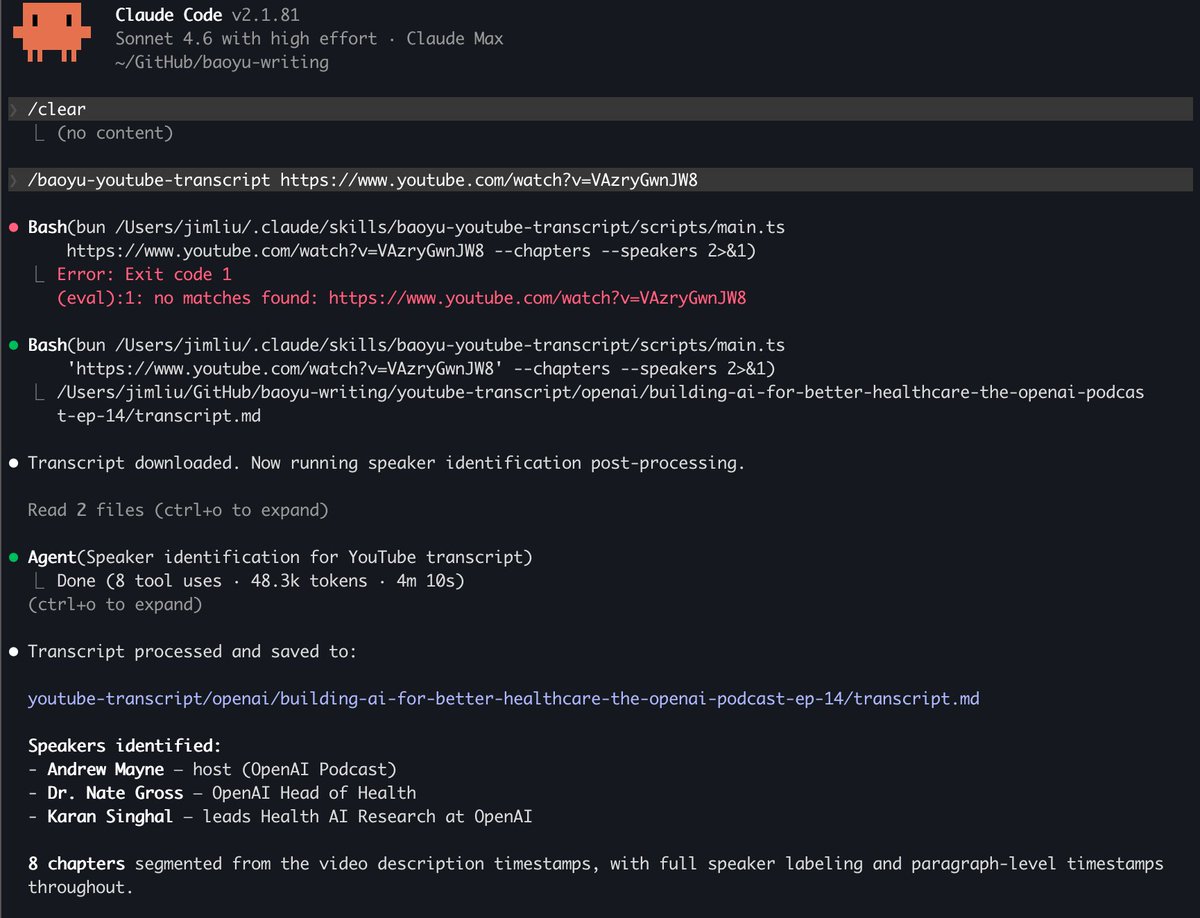
发布一个新的 Skill:baoyu-youtube-transcript 输入 YouTube URL,直接抓取视频字幕,生成带章节、发言人和封面图的文档,不需要任何 API Key。 【怎么用】 选择这个 Skill,把 YouTube 链接丢进去就行。支持完整链接、短链接、嵌入链接、Shorts 链接,甚至直接输入视频 ID 都可以。 默认输出带时间戳的 Markdown 格式,也可以导出 SRT 字幕文件。支持多语言,可以指定优先语言,也可以翻译成其他语言。 第一次抓取后会自动缓存原始数据,之后换格式、换参数都不用重新请求,秒出结果。 【工作原理】 底层调用的是 YouTube 的 InnerTube API,这是 YouTube 内部用来获取字幕数据的接口,公开可用但没有官方文档。好处是不需要 Google API Key,不需要 OAuth 认证,脚本直接发请求就能拿到字幕数据。 拿到原始字幕后,脚本会做一次智能断句处理:按句末标点(句号、问号、感叹号等)切分,跨字幕片段合并成完整句子,时间戳按字符长度等比分配,对中日韩文字做了专门适配。这样输出的文本是自然的句子,不是 YouTube 那种碎片化的逐行字幕。 【章节分割】 如果视频描述里有章节时间戳(比如 "0:00 Introduction"),脚本会自动解析,按章节把字幕分段,生成带目录的 Markdown。没有章节信息的视频,就按段落分组输出。 【说话人识别】 这是最有意思的部分。YouTube 字幕本身不带说话人信息,所以识别说话人需要 AI 后处理。 流程是这样的:先用 --speakers 参数抓取原始字幕,脚本会把视频元数据(标题、频道名、简介)和 SRT 格式的原始字幕一起输出到一个 Markdown 文件里。然后启动一个 AI 子代理(用 Claude Sonnet,够用且省成本),按预设的 Prompt 模板处理这个文件。 AI 识别说话人的逻辑分三层优先级:首先从元数据推断,视频标题通常包含嘉宾名字,频道名就是主持人;其次从对话内容判断,比如自我介绍、互相称呼;都不行就用通用标签(Speaker 1、Host 之类),保持全文一致。如果后面对话中才出现名字,会回溯更新前面所有标签。 处理完的输出是带说话人标签的分段对话,长独白会被切成 2-4 句一段,每段末尾带时间范围。 【缓存机制】 第一次运行会缓存四样东西:视频元数据(meta.json)、原始字幕片段(transcript-raw.json)、断句后的字幕(transcript-sentences.json)、视频封面图(cover.jpg)。之后不管切换格式还是重新生成,都直接用缓存,不再请求网络。加 --refresh 参数可以强制刷新。 安装命令: $ npx skills add jimliu/baoyu-skills --skill baoyu-youtube-transcript 项目地址:github.com/jimliu/baoyu-s…
New Agent skill: baoyu-youtube-transcript 🎬 Extract YouTube transcripts directly — no API key needed. ✦ Multi-language support ✦ Chapter segmentation ✦ AI speaker identification ✦ SRT & Markdown output ✦ Smart caching for instant re-formatting Just select the skill and


今天继续分享 3 个免费提交外链的站点,建议收藏: 1. Startup Fame 适合补 startup profile 和基础曝光 startupfa.me 2. PeerPush 首页还有 Submit Your Product Now,适合社区型曝光 peerpush.net 3. StartupFound 更适合 startup / SaaS 做第一波 launch 曝光 startupfound.com 这几个站先提上。 如果你想自动化提交更多外链目录,可以试试 sopilot.net/submitdir
今天继续分享 3 个适合独立开发者先做的免费入口,建议收藏: 1. Product Hunt producthunt.com 新品曝光和基础分发入口,权重高,适合 AI 工具和 SaaS,打榜必备 2. BetaList betalist.com 适合早期 startup 提交,官方支持页就写了 submit your startup 3. Show HN

空乘晚晚没有大... @kajalid3456
11K Followers 12K Following 💯💯💯90后,在职空乘 原创博主 轻度性瘾患者 经常出差、 喜欢不同的刺激和有趣的事💯 💯 喜欢跟成熟素质的男士交流、素质搭讪,
姚金刚 @yaojingang
19K Followers 398 Following AI营销与教育科技创业者 持续开源GEOFlow / YAO Skills / AI Tools 周更《姚金刚认知随笔》:https://t.co/IOUcygwMdR
周尔复 @cholf5
12K Followers 747 Following 游戏后端主程|15年开发经验; 做游戏|聊真实开发人生|AI工具实践; 后端:.NET, skynet; 前端:UE-AS, Unity, Blazor, React; 开发工具偏好:Rider, VSCode, ZCode; 偏好: KISS, DRY, YAGNI 独立游戏长期探索者; FIRE 路径践行中
龙共火火 @huolongguodomgt
3K Followers 839 Following 一个mcn 老板, 还在做一家 AI 应用公司 。 在 x 上 提高审美,更新上下文, 找志同道合的小伙伴。
吴美律AI日记 @wumeilv_ai
4K Followers 573 Following 🎯AI编程入门与提效📌出海实战与案例分享❤️自媒体与流量增长🏃♀️正在尝试通过AI编程搭建第一个出海网站 知识星球:吴美律AI实战营
idoubi @idoubicc
28K Followers 399 Following Building Agent-Native Apps👇 https://t.co/jiNBn9il4Q https://t.co/Ommsg8hqJU https://t.co/H0JafkPZje https://t.co/pmpgoD8ElU https://t.co/IoSSxZrSBM https://t.co/dWTvPAtDOS https://t.co/ulEivWhyj4

CuiMao @CuiMao
66K Followers 1K Following AI Developer | NVIDIA YES | Qwen | Github: https://t.co/CRpiUABJoL
DreamStarter @DreamStarter_1
5K Followers 1K Following AI Producer/filmmaker , 3d artist in another lifetime ⦿ My goal is to learn, create & inspire ⬇️
赵纯想 @chunxiangai
40K Followers 476 Following I’m CEO, bitch. Building https://t.co/Xd1e237tVD that leaves competitors hopeless. Building https://t.co/WMbovmcJif The only Vibe Coding 👇 tutorial you need.
写增长的子木 @CoderJeffLee
6K Followers 827 Following AI 增长黑客,全干码农 我是子木,万千世界,飘过的我是竹叶般... 在这里聊聊 AI 软件|出海 SEO|增长与商业化,恰好你喜欢,谢谢 ~ 🛰 oqqsmile(请备注)
Graphite @GraphiteEditor
2K Followers 70 Following Open source 2D raster & vector editor that melds traditional layers & tools with a modern node-based procedural workflow. #MadeWithGraphite
胡二虎 Will hu🐯 @willlhhh
2K Followers 373 Following AI Growth Hacker @ManusAI & @hey_im_Monica, 在创业公司5年,出身PM,但喜欢搞野路子增长。经常用数据视角+Agent自动化跑有意思的产品增长案例
GREG ISENBERG @gregisenberg
688K Followers 990 Following I drop startup ideas daily. Host @startupideaspod. CEO: @latecheckoutplz we build companies like @ideabrowser, @meetLCA, @boringmarketer etc
Bun @bunjavascript
80K Followers 7 Following Bun is a fast, all-in-one toolkit for installing, bundling, running and testing JavaScript & TypeScript. To install: `npm i -g bun`
大罗SEO @daluoseo
11K Followers 1K Following 出海 Growth Marketing / SEO专家 | 提供SEO咨询,优化服务以及高权重外链 | 油管: 大罗SEO Partner @ HashMatrix
松果先森 @songguoxiansen
31K Followers 582 Following 关注AI技术:LLM、AI编程、AI图像、AI视频等。 免费提示词:https://t.co/jvdn30HNI5 微信公众号:松果先森,扣666进AI群 AI交流TG群:https://t.co/KvkfTq1G9H
-Zho- @ZHO_ZHO_ZHO
33K Followers 177 Following Aichitect ➟ Architect | Artist | AI explorer @ZHO_ZHO_ZHO_EN

刘小排 @bourneliu66
28K Followers 90 Following AI Product Founder · Building in Public Raphael https://t.co/tJOiC33sAI AnyVoice https://t.co/MQkmOW2lbu Fast3D https://t.co/6m3JO8jJvc
TresJS @tresjs_dev
4K Followers 116 Following Create awesome 3D experiences declaratively with @vuejs components. Discord https://t.co/arVlgZXv95


kAI @_kaichen
5K Followers 3K Following 👨💻 资深全栈工程师 | 🧠 AGI 信仰者 | 🚀 e/acc 驱动的持续学习与对 AI/LLM 的长期关注 非大模型从业人员 | 业余 AI 研究员/评论员 每天一睡醒就查看 AGI/ASI 到来没有
哥飞 @gefei55
56K Followers 1K Following 哥飞,出海鼓励师,SEO爱好者,Adsense玩家,出海AI工具方向创业者。 同名公众号写了五百多篇出海搞流量免费教程文章。

Z.ai @Zai_org
128K Followers 264 Following The AI Lab behind GLM models, dedicated to inspiring the development of AGI to benefit humanity. https://t.co/7a5aSCUNcZ https://t.co/x14hb3klXm
jMonkeyEngine @jmonkeyengine
2K Followers 121 Following jMonkeyEngine 3 is a modern open source game development suite for PC and mobile written purely in Java.

死月 XadillaX 🌙�... @XadillaX
5K Followers 368 Following 🦋 INFP; MSc CS (@ZJU_China, Mobile Internet & Game Dev); A mere cog in the vast machine @Trae_ai; @nodejs Collaborator Emeriti; Retired (OI & ACM)er.

Xuan Huang · 黄玄 @Huxpro
17K Followers 2K Following Vibing @Lynxjs_org · ⚛️ Former @Reactjs, @ReactNative, @HermesEngine · 👨🔬 λ.TaPL/FP/@TC39/@W3C
天猪 TZ @atian25
7K Followers 297 Following - Currently focused on @Trae_ai IDE. - Used to be a core developer of open source projects EggJS/CNPM. - ByteDance Engineer / ex-Alibaba.
Boshen @boshen_c
13K Followers 622 Following Engineering @voidzerodev (acq. @cloudflare). Creator of @OxcProject. Follow me for JavaScript, Rust, and how I use AI.
GitHubDaily @GitHub_Daily
82K Followers 203 Following 💡 挖掘开源的价值 🧑🏻💻 坚持分享 GitHub 上高质量、有趣、实用的教程、AI工具、前沿 AI 技术 🧐 A list cool, interesting projects of GitHub. ✏️ 公众号:GitHubDaily

GitHub Projects Commu... @GithubProjects
331K Followers 65 Following We're sharing/showcasing best of @github projects/repos. Follow to stay in loop. Promoting Open-Source Contributions. UNOFFICIAL, but followed by github
River · 沈青川 @Shenqingchuan
5K Followers 915 Following 🚨 Opinions on my own 💗 Loving 琳琳/ 🇨🇳 Chinese / Frontend / Author of https://t.co/ZWtDiwiYMx / Vue+Vite+Rollup 中文文档参译 / 电竞爱好者 / Socialist
KotlinForData @KotlinForData
1K Followers 113 Following Everything about using @Kotlin for Data Science, Machine Learning, Deep Learning, and Data Engineering.


Kimi.ai @Kimi_Moonshot
322K Followers 138 Following Built by Moonshot AI to empower everyone to be superhuman. @Kimidevs built for developers ⚡️API: https://t.co/XCrgjXAqMw DC: https://t.co/wBsBTn6Ncc
karminski-牙医 @karminski3
38K Followers 2K Following A coder, road bike rider, server fortune teller, electronic waste collector, co-founder of KCORES, ex-director at IllaSoft, KingsoftOffice, Juejin.
Mike Cheng @mike_cheng1208
685 Followers 273 Following Front end Developer、Podcaster、Youtuber、Teacher

Vitest @vitest_dev
32K Followers 27 Following Testing framework powered by @vite_js ⚡️, brought to you by @voidzerodev | Bluesky: https://t.co/vS4yqK4RGr 🦋

TypeScript @typescript
420K Followers 50 Following TypeScript is a language for application-scale JavaScript development. It's a typed superset of JavaScript that compiles to plain JavaScript.
Amazon Web Services @awscloud
2.2M Followers 433 Following AWS is the world's most comprehensive cloud, enabling organizations to accelerate innovation, reduce costs, and scale more efficiently.
尤雨溪 @yuxiyou
127K Followers 263 Following @evanyou 的中文小号。@voidzerodev 创始人,开源软件开发者,Vue / Vite 作者。此号只聊技术无关的闲话(偶尔破戒警告You might like