Shinka @SimShinka
Joined January 2026-
Tweets58
-
Followers5
-
Following202
-
Likes111

1/ 🧵 Comment j'ai automatisé la modération de mes réseaux sociaux avec Claude Code. Réponses aux commentaires, likes, masquage des mauvais coms, DM automatiques… 24/7, sans moi, pour 0€. J'avais testé 2 solutions avant. Pourquoi je les ai lâchées — et comment monter la tienne 👇 2/ 1️⃣ Mettre quelqu'un dessus. Bien… mais limité : ça coûte, ça dort la nuit, ça oublie des commentaires, et ça ne répond pas 24/24. 3/ 2️⃣ Une app externe (type TrustFlow). Bien sur le papier… mais trop complexe à mettre en place, et une boîte noire que tu configures à moitié. Du coup j'ai monté la mienne. Elle règle les 2 problèmes — et un 3ᵉ : le prix. 0€. 4/ Le principe : Claude Code, branché sur l'API de Meta (Facebook + Instagram). Il voit tous les commentaires de mes pubs + mes DM, et il peut répondre, liker, masquer, envoyer des DM — en mon nom, dans ma voix. 5/ Ce qu'il fait, tout seul : → DM les clients contents pour les inviter à laisser un avis → DM ceux qui posent une question pour les convertir → répond avec humour aux commentaires sarcastiques (ça monte la valeur perçue) → masque les commentaires « arnaque / dropshipping » — tout en réglant les soucis des vrai clients en privé 6/ Maintenant, le COMMENT — techniquement. Plus simple que tu crois 👇 7/ Étape 1 — Un compte GitHub (gratuit). Tu crées un repo privé : c'est là que vivent le code + ton fichier de config. Et c'est GitHub qui héberge l'automatisation, gratuitement. 8/ Étape 2 — Tu branches Claude Code. Tu lui donnes accès à ton repo + un token Meta, tu lui expliques ce que tu veux… et il écrit TOUT le code à ta place. Tu ne codes pas une seule ligne. 9/ Étape 3 — Le fichier « cerveau ». Un simple fichier texte : ta voix de marque, tes règles, tes réponses aux objections, quand masquer, quand envoyer un DM. C'est lui qui rend le bot 100% à ta main. Une ligne changée = comportement changé. 10/ Étape 4 — Le cron. Un cron, c'est juste une tâche programmée qui se déclenche toute seule à intervalle régulier. Ici, GitHub réveille le bot toutes les 3h : il balaie les nouveaux commentaires + DM, décide, poste, et se rendort. 11/ Étape 5 — Les clés en sécurité. Ton token Meta + la clé de l'IA vont dans les « secrets » de GitHub (jamais dans le code). Et un mode test qui te montre ce qu'il ferait AVANT de poster pour de vrai. 12/ 💸 Combien ça coûte ? GitHub (repo + automatisation) = gratuit. L'IA qui rédige : un palier gratuit (Gemini, Groq) → 0€ pour de vrai. Ou un modèle premium pour quelques centimes/jour. J'utilise gpt-4o-mini c'est pas chère. Zéro abonnement, zéro app à payer. 13/ 🔄 Et tu l'améliores en parlant à Claude : « Sois plus taquin quand on se moque de la pub. » « Renvoie tout ce qui touche une commande vers cet email. » « Ne demande un avis qu'aux clients vraiment contents. » Claude réécrit le fichier cerveau tout seul. Un push, et c'est live au run suivant. Zéro ligne de code. ✍️ 14/ 🤖 BONUS : je l'ai branché à mon Telegram. Quand un commentaire le bloque, il me le DM direct. Je réponds en une phrase ce qu'il faut dire → il le reformule dans la voix de la marque et poste. Le kicker : il enregistre chacune de mes réponses. Donc plus le temps passe, moins il me sollicite — il apprend ma façon de faire, tout seul. 🧠 15/ Bonus : c'est scalable. Une fois le moteur en place, ajouter une 2ᵉ marque = copier le dossier + changer le fichier « cerveau ». ~1h. 16/ En résumé : ✅ 24/7 (≠ un humain) ✅ Simple à monter avec Claude (≠ une app externe) ✅ 0€ (≠ les deux) ✅ 100% ta voix, ton contrôle 17/ Et le meilleur : pour mettre tout ça en place, copie-colle ce thread et envoie-le à Claude. Il te guidera pas à pas, très facilement. 🙂 Claude Code + l'API Meta + GitHub. Let's go les amis 🙂
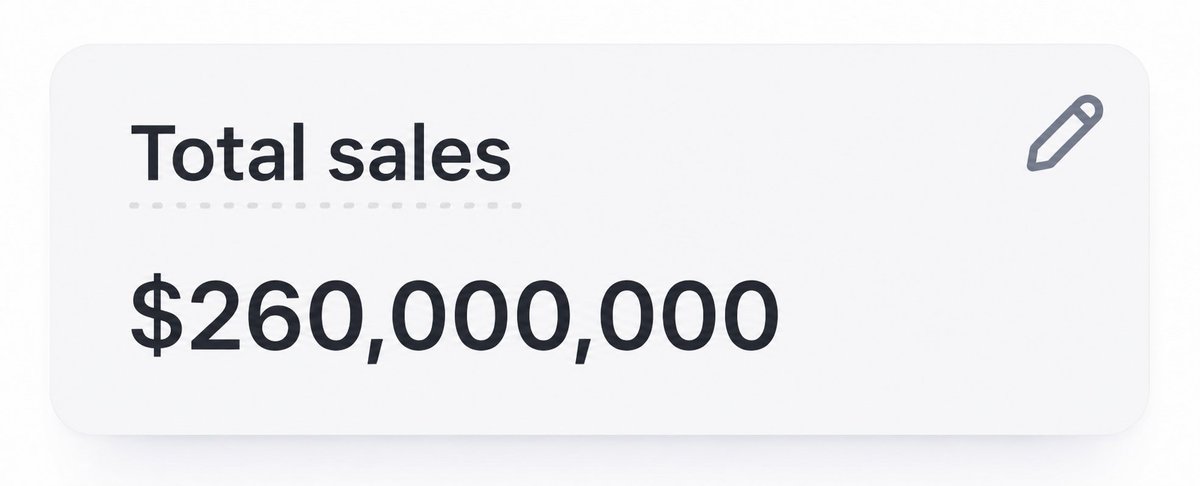
I'm 41. I've done $260M with ecom in 5 years, fully bootstrapped. Here's how I built my ecom business with 500+ influencers using this exact playbook Here’s how I did it in 30 steps: 1. Start with a problem you personally hate. We didn't find Hiya in a market report. I read the label on my kids' vitamins one morning and saw 2 teaspoons of sugar per serving. I read the label on my kids's vitamins one morning and saw 2 teaspoons of sugar per serving. The average kids vitamin had as much sugar as a piece of chocolate cake. That frustration became a $260M company. 2. Understand your market size before you build. The US children's vitamin and supplement market was valued at $900M when we started. Expected to reach $1.4B by 2029. We weren't guessing there was opportunity. We knew exactly how big the ceiling was. 3. Find a co-founder who's already won with you. Darren and I had already built GoLive Mobile together — $250M in revenue, $100M in earnings, 1000x return for shareholders. We didn't start Hiya as strangers taking a leap of faith. We had 7 years of proof we worked together. 4. Spend at least 12 months on product before launch. We spent over a year mapping formulation, finding manufacturers, working with pediatricians and nutritionists before a single bottle shipped. Most founders spend 4-6 weeks. We spent 52+. That's why our product worked from day one. 5. Validate with experts not just instincts. We assembled a team of pediatricians, nutritionists, dentists, scientists and parents to formulate our product. Not 1 expert. Not 2. A full network. The result was 15 essential vitamins and minerals in a single chewable with 0 grams of sugar. 6. Outsiders redesign systems. Insiders optimize within them. We had 0 years of experience in children's health. That was our advantage. We questioned every industry default — sugar levels, gummy formats, synthetic fillers. Experts couldn't see what we saw because they were too deep in the system. 7. Your consumer and your customer are not always the same person. Our consumer was the child. Our customer was the parent. 100% of our marketing was aimed at parents while 100% of our product experience was designed for kids. Most competitors solved for 1. We solved for both simultaneously. 8. Launch on the worst possible day and keep going anyway. We launched March 11 2020. The exact same day WHO declared COVID-19 a global pandemic. We thought it was over before it started. It wasn't. We hit $103M in annual revenue 4 years later. 9. Price is a signal of quality. We priced at a premium from day one — roughly $30/month per child. Above every competitor in the category. Not because we were greedy. Because $10 signals $10 quality. "Approachable luxury" — premium enough to signal trust, low enough that households making under $75K annually could still afford it. And they did. That demographic became our largest customer segment. 10. Never change your price. Change your value. Our price has never changed in 5+ years. Costs increased significantly — especially during COVID supply chain chaos. We absorbed every dollar of that by growing volume, improving retention, and expanding our product line instead of passing costs to customers and losing their trust. 11. Commit to 100% subscription from day one. Not a subscription option. 100% subscription only. No one-time purchases. No Amazon storefront. No retail shelf. Pure recurring revenue from the first day. This single decision defined our entire business model and cash flow trajectory. 12. Offer 50% off the first month. Never change it. We've tested every possible variation of this offer over 5 years. 50% off month 1 has been the highest performer every single time. The goal isn't margin on month 1. The goal is getting the right customer in the door so months 2 through 24 can compound. 13. Solve the cash flow paradox before it solves you. 50% off month 1 + bootstrapped growth = brutal cash flow problem. The faster we grew the more cash negative we became. Every 1,000 new customers we signed up created a cash hole that took months to fill. We raised $0 from VCs so we had to get creative with debt financing. Some partners were horrific. Some were great. Find them before you need them. 14. Text every single new customer personally within 24 hours. We built an entire vitamin concierge team. Every new subscriber — whether we had 100 customers or 100,000 — received a personal text from a real human introducing themselves and offering help. Not a bot. Not an automated sequence. A real person. That 1 decision shaped our entire retention curve. 15. Let customers customize down to individual units. Parents could text us "my son only likes the green ones." We'd ship custom ratios — 47 green, 37 yellow, 0 red per monthly shipment. Raised our costs slightly. Created a competitive moat that billion dollar companies like Unilever and P&G could never replicate. Drove a tangible measurable lift in both retention and brand sentiment. 16. Iterate relentlessly on your core product. We launched 1 multivitamin in March 2020. We are now on the 8th iteration of that same product. 8 rounds of improvements based purely on customer feedback. We changed flavor profiles, ingredient ratios, and texture based on what the data told us. Never stop improving what's already working. 17. Build your brand for 2 audiences simultaneously. Our packaging had to make a parent want to put it on their kitchen counter AND make a child excited to take their vitamin. We made a reusable glass bottle with stickers kids could decorate. Parents Instagrammed it. Kids personalized it. 1 product, 2 emotional hooks, zero sugar. 18. Insource fulfillment until scale makes it impossible. We ran our own warehouse operations in the early days. Complete control over every touchpoint. It enabled the customization. It enabled the quality control. Eventually when we reached a scale where the warehouse was becoming its own full business we outsourced the majority. But those early years of full control were invaluable. 19. Don't launch product 2 until product 1 is undeniable. We waited 2.5 years — approximately 30 months — before launching our probiotic as our second product. Not because we lacked confidence. Because we wanted 30 months of data, customer feedback, and retention proof before we risked our brand reputation on something new. 20. Survey customers before formulation begins. Every new product in our lineup was validated by existing customers before we spent $1 on development. We asked parents directly what problem they wanted us to solve next. They told us probiotics. We made probiotics. We knew it wouldn't fail before we made it. Today more than 50% of our customers purchase more than 1 Hiya product every single month. 21. Educate before you sell. Always. Our social and email strategy was 80% education, 20% promotion. We explained ingredients we DON'T use and why. We talked about what's wrong with kids nutrition in America. We gave parents information that had nothing to do with buying Hiya. The result was customers who trusted us as an expert advisor not just a brand they bought from. 22. Build a team with near zero turnover. In our entire existence as a company we lost approximately 2 employees voluntarily. 2. In a period where most DTC startups had 40-60% annual turnover. We did that by hiring the absolute best people in every discipline, never micromanaging, and building a culture around shared values not fear. 23. Vulnerability is the most underrated leadership trait. When we made mistakes we said so internally immediately. When we didn't know something we admitted it publicly to the team. When we entered retail — something we knew nothing about — we said so clearly. That honesty created a culture where people felt safe enough to do their best work. 24. Know your gaps before your gaps know you. We knew nothing about international expansion. USANA does 90%+ of their business internationally across 24+ countries. We knew nothing about large scale manufacturing optimization. USANA has been doing it for 30+ years. We picked our acquirer based on who filled our exact gaps. Not who offered the most money. 25. Never raise institutional capital if you can avoid it. Total outside capital raised over our entire existence: a few hundred thousand dollars from friends and family in 2020. That's it. No Series A. No Series B. No VC board. No dilution. $0 institutional capital → $103M annual revenue → $260M acquisition. Founders retained virtually all equity going into the exit. 26. A profitable company negotiates from strength. At the time we began exploring acquisition we were already highly profitable. $19M net income on $103M revenue , roughly 19% net margin. We did not need to sell. That single fact changed every conversation we had with potential acquirers. Never sell from desperation. Build something that doesn't need to be sold. 27. The subscription cash flow trap will suffocate you if you're not ready. This is the thing nobody in DTC talks about honestly. Growing fast with a discounted first month means every new customer cohort creates a cash hole. Sign up 10,000 new customers in a month at 50% off and you're immediately deeply cash negative even though your business is fundamentally healthy. Plan for this or it will kill you when you're winning. 28. Pick your acquirer like you pick your co-founder. We met with many potential buyers. We knew USANA was the right partner after our 2nd meeting. Not because of their offer. Because they wanted to learn FROM us not impose their will ON us. Post acquisition my day to day changed by approximately a few phone calls per week. That's it. Culture fit in an acquisition matters more than price. 29. Time is the only thing that can't be negotiated. Compounding only works with patience. The first 6 months of Hiya almost nothing worked. Month 7 we started finding our stride. By year 2 we were growing 50% year over year. By year 4 we were the #1 children's wellness brand in America. You cannot accelerate compounding. You can only show up every single day. 30. Let the scoreboard speak for itself. We never chased press. Never sought validation. Never announced funding rounds because we had none to announce. We just built. $0 raised. $103M revenue. $260M exit. 200,000+ families trusting us with their children's health. Zero VC. Zero regrets. Comment "X" if you want me to send you a full playbook of everything I learned while building my business and how you can too :) **must be following + retweet so I can send it to your DM

hismile’s creative team just did something nobody’s talking about gross visual hooks simple 30 second “hacks” ugc that looks native landing pages matched to what’s scaling every beauty brand will be copying this in 12 months

how it feels running crazy discounts vs realizing no one will pay full price again

Top 5, top 7 - listicle is a great format for BOFU to clean up all the warm solution aware traffic from your competitors and yours traffic. Just updated my swipe file with 300+ listicles from top brands in every niche imaginable. Get it below, adapt and print mfers

@EcomTable what's is the name of the fcb library of Alevia please
How to never run out of winning ads: Stop turning one dial. Turn four 1. Rotate angle, format, awareness level, and avatar independently 2. One validated angle × 3 formats × 3 awareness levels × 3 avatars = 27 ads 3 . Iterations have a higher hit rate than brand new concepts 4. Use data to decide which dial to turn next 5. Exhaust the combinations before you hunt for a new concept Full breakdown below…
the copywriter i almost hired the day he found out this article does his whole job in 30 minutes:
@bairod_sk Let’s go faut encore un peux accélérer 🔥

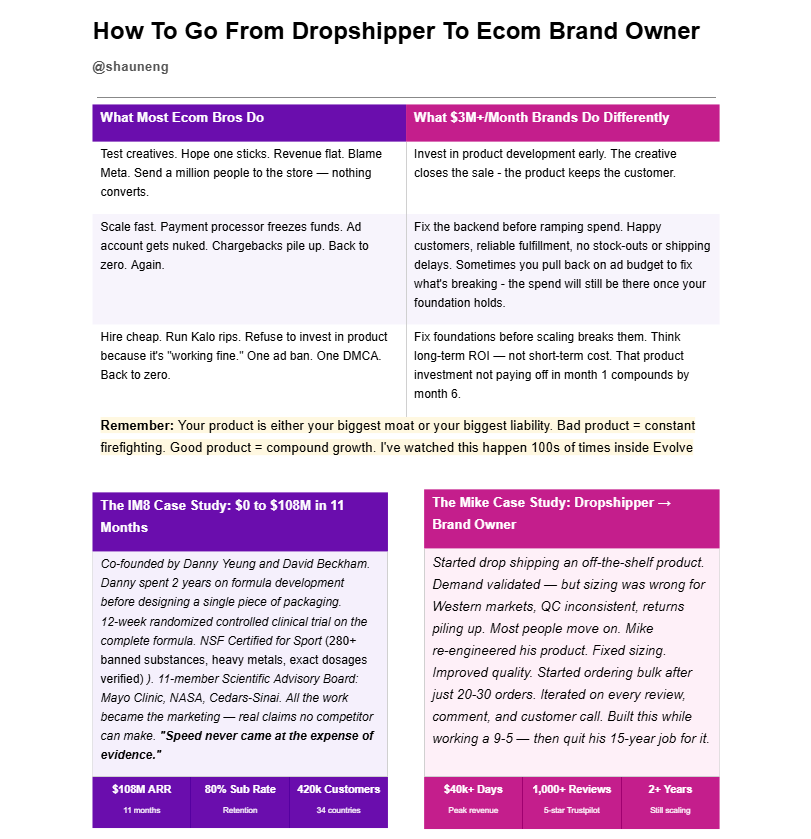
How to go from Dropshipper to Ecom brand owner. Full masterclass👇
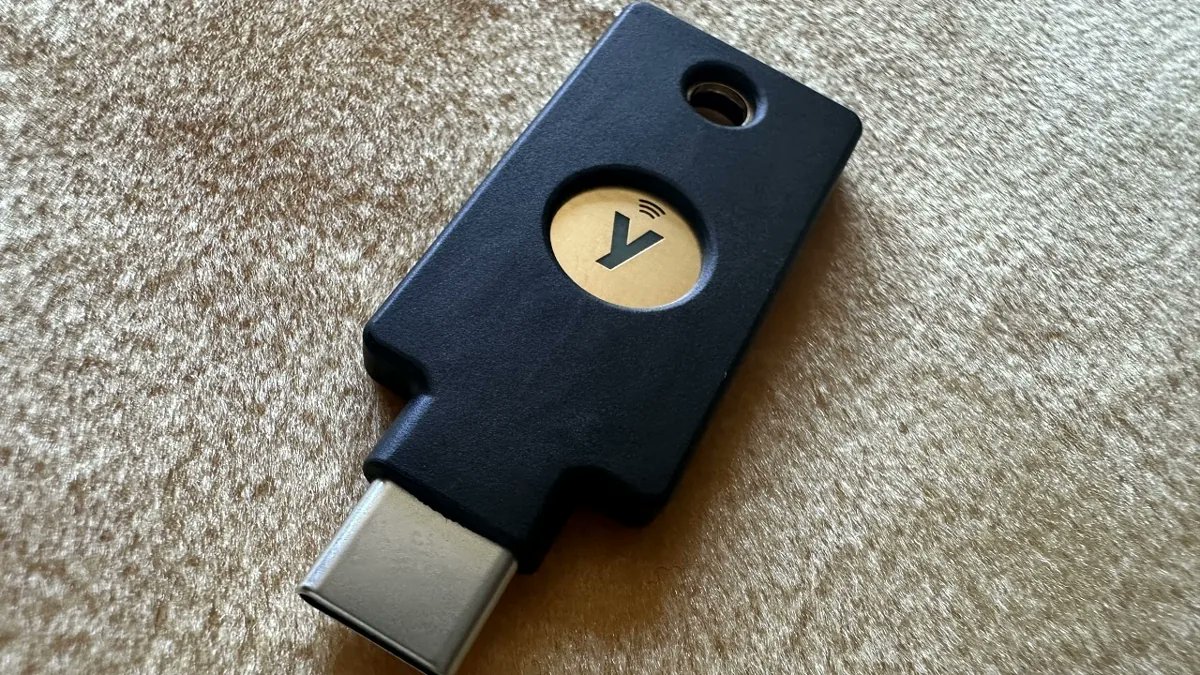
I've seen FB advertisers lose $300k to hackers. And it's only getting more common. What y'all need is a physical 2FA like a Yubikey. Digital 2FAs still get hacked no problem. We ran into it a few years back. Switched to physical keys. Zero issues since.

my wife thinks i'm obsessed...but I will keep repeating this. Claude Fable 5 + SEO is going to create more “self made millionaires” this year than the last decade combined. don't bookmark this if it crosses your timeline. just paste this entire thing into Claude Fable 5. thank me later.
manus + opus 4.8 are CRACKED at oneshotting google ads funnels for ecom… > advertorials > comparison pages > quizzes, listicles, even pdps so i put together a 6-step playbook on how we're ABUSING it to maximize every click from our clients’ google ads campaigns covering EVERY prompt, template, and principle: > keyword clustering for TOF/MOF/BOF > funnel type selection guidelines (adv vs VSL vs pdp) > AI copy generation based on traffic’s intent > google ads campaign architecture > audience signal library > pre-launch audit all backed by having generated +$20M for ecom brands with google ads funnels like these like + comment "MANUS" and i'll DM you EVERYTHING (must be following + RT for priority access)


Nos canaux d’acquisition : - Meta - Snap - TikTok - Google - Criteo - Pinterest Les apps à très fort ROI (qui ont eu un réel impact sur fincut) : - getkanal.com : WhatsApp pour toucher les clients là où ils ne s’y attendent pas - trytrustflow.ai : convertir ++ grâce aux commentaires sous les ads - reviewz.ai : améliorer le score Trustpilot, renforcer la confiance et identifier ce qui bloque en backend pour optimiser le parcours client Merci aux goats @hugoomdra et @a_chab_saas pour les travaux. Je vais aussi vous faire soon une liste d’agences fiables avec lesquelles on bosse sur différents sujets autour de la brand :)


Qu'est-ce que le whitelisting ads (ou partnership ads) ? C'est un peu une méthode magique qui peut possiblement réduire ton CPA quelques étapes. En gros, c'est une stratégie qui consiste simplement à diffuser tes ads directement depuis le compte d'un créateur/influenceur (ou d'un compte créé et chauffé par tes soins pour les pirates). L'avantage majeur, c'est qu'un prospect peut être exposé à ton produit plusieurs fois dans la même journée via des comptes différents. Il voit une vidéo de ta marque, puis plus tard une statique de témoignage via un micro-influenceur. Ça crée une impression de viralité réelle plutôt qu'un matraquage publicitaire. Le résultat : → Baisse des coûts : Utiliser une page tierce (qui ne porte pas le nom de ta marque) réduit mécaniquement tes CPM et peut diviser ton CPA par deux. → Augmentation du Trust : Les gens se méfient des marques. Si c'est "Le blog de Marie" ou un "Docteur" qui recommande le produit, la garde du prospect baisse direct. → Ciblage Andromeda (2026) : Avec le nouvel algo Meta, la diversité est reine. Utiliser différents visages et comptes permet de toucher des poches d'audience auxquelles ta page de marque n'aurait jamais eu accès. Quand est-ce pertinent ? → Dès la validation du produit (même pour les débutants). → Lors du passage au palier de scaling. → En période de forte compétition (Q4 / Black Friday). l'ads peut aussi très bien être une statique (Ugly ads ou natives). Tu peux les générer directement en 1 clic depuis @CreaflowAI pour désactiver le filtre anti-pub de tes prospects. Le process concret pour en créer : Cas 1 : Tu crées tes propres pages (mode pirate) → Création : Fais des pages "Avatar" (ex: "Marie, maman active") avec une photo réaliste, ou des pages "Autorité" (ex: "Docteur Bien-être") pour les produits techniques. → Chauffe la page : Ne lance pas l'ads direct. Poste du contenu organique pendant au moins une semaine pour paraître authentique aux yeux de l'algo. Cas 2 : Tu passes par de vrais influenceurs → Activation : Le proprio du compte doit activer l'option "Partenariat" dans ses paramètres Insta/Facebook pour autoriser ta marque. (Tips : utilise un tool comme Leadsie pour simplifier le partage des accès publicitaires). Pour le lancement : Au niveau de la pub dans l'Ads Manager, sélectionne l'identité du partenaire dans "Identité" et coche "Partnership Ad". Le scaling : Une fois que tu as identifié tes winners sur ta page de marque, injecte-les systématiquement en whitelisting pour alimenter le cercle vertueux. Et voilà. Faites ce que vous voulez de cette value. RT + Follow pour la force ⚡️


Pour tout débutant qui galère. On a sorti un guide 100% Gratuit. Il est tard chez moi j'ai la flemme de faire un big tweet, régalez vous. N'hésitez pas à nous remonter vos feedbacks dans le discord ! adorable-puck-7e1.notion.site/Guide-complet-… On à pondu ça en freestyle pour le peuple avec @amino_ecom A votre service !


Chase Dimond @yukatly
169 Followers 413 Following Driven $200 million in email revenue for clients. Partner at a 7-figure Ecommerce Email Marketing Agency. Join 100,423 marketers & get my email secrets FREE ⬇️
Alexs. Sedlak @alexxssedlak
91 Followers 1K Following owner of the #1 TikTok shop agency in America @medialabsteam

Kareon Digital @KareonDigital
29 Followers 330 Following
Bairod App @bairod_sk
124 Followers 568 Following Jai exit mon Saas gemmy Maintenant je devs et market des apps Objectif $500k/mo Décembre 2026 🟩 ⬜️ ⬜️ ⬜️ ⬜️ ⬜️ ⬜️ ⬜️ ⬜️ ⬜️ 9%


Alex Minecan @alexpagepilot
4K Followers 307 Following Co-founder @PagePilotAI. Create Shopify Stores and Product Pages in minutes. 200M+ revenue generated for all PagePilot users.
Aymen Zayani @Aymenzayani_
2K Followers 301 Following I help 7-9 fig eCom brands get to $2-5M+/month in profitable ad spend using DR Ads | VSL's | Creative Strategy | founder https://t.co/e74UTFIZBw
the.valere @the_valere
8K Followers 228 Following Running ecom brands | Noting to sell here | Follow for more
Difaino Harting @difaino
16K Followers 126 Following
Sidees - Ylan @Sidees_ecom
3K Followers 528 Following I don’t chase hype. I build. E-commerce | 330k/day
Dan @ AdRevival.io @DandiG_
7K Followers 722 Following https://t.co/rpVUyNej8a Co-Founder. Your biggest competition is using our agency ad accounts 🤘
Sarah 🦕 @SarahLevinger
33K Followers 2K Following Creative strategy that makes your ad production 80% faster & spend 40% more efficient. 🔥 Creator of the T-E-E-P Framework, Founder @tetherinsights
Anouar @VenumSnake1
361 Followers 59 Following Founder https://t.co/pwGEQS4y10 (consumer apps) business angel
Ryan @PerformanceMax
22K Followers 780 Following Spending $100k to $1M+ per day on Google Ads💻 SAAS | ECOM🚀
LRZ @Leuronzo
2K Followers 98 Following Plusieurs millions générés en ecommerce depuis 2019. IG @leuronzo
ScaleSurfer @scalesurfer_
10K Followers 59 Following Facebook ads destroyer 😈 - Comments about my brands or stores = instant block, I keep this private for a reason🫡
Jem Bourouh @JemBourouhDE
24K Followers 1K Following Google Ads for high-growth DTC brands. Built Adcubator to scale what most agencies can’t. Structured for speed, run for profit.
Jānis Dzalbe @janisdzalbe
167 Followers 93 Following 8-Figure Brand Owner & DTC Agency Owner | Built an A Team That Helps 7-8 Figure Brands Scale.
Alex Elfi @shadox_a
11K Followers 312 Following Scaling E-Commerce brands to millions per monthly Ma communauté gratuite 👇
Doug Kelsey @seamlesspro93
3K Followers 309 Following CSO of https://t.co/kese0cN9p2 and Paynote : https://t.co/JhXrwY7GrM Payments Expert. Sign up here. https://t.co/tZVH3nIUqG
Adam Gillman @AdamGillman
13K Followers 153 Following Built Hiya to $260M fully bootstrapped. Investor. Advisor. Husband. Father of 2.





Inzino 🥂 @inzino
7K Followers 1K Following Ecom, Saas, 2x Uni Dropout & Part Time Professional Hater | Building @Apptics

Vince @VinceNijhof
15K Followers 109 Following Founder @ooakbrands Re-inventing supplychain @ecomflow3pl

Nicolas @ScalingWarlord
653 Followers 421 Following J'ai accompagné des centaines de business (majoritairement ecom) sur leur marketing et email marketing depuis 2018. Je build désormais mes propres boutiques.
Kévin Miguet | CRO f... @kevin_miguet
2K Followers 1K Following We test what moves money. Nothing else. Hello Nancy, Fluff co, Cambridge Satchel, Grounded co, Unbottled. Free audit → https://t.co/FQ76uMwnHH
Lionel MTP Ecom @Lionel_MTP_Ecom
180 Followers 96 Following 📈 +4 millions générés avec ma marque en France 🇹🇭 Chiang Mai
Hashir @HashirBaig_
5K Followers 1K Following Funnels & CRO for Landing Pages for 7-8 Figures Ecom Brands • Trusted by Old School Labs™, MaryRuth Organics™, Nuorganic T™, and more.
Marco - eCom & Perfor... @marcobatt
6K Followers 481 Following After $350M in Revenue across 20+ niches, the only Creative Agency that Guarantees to beat your CPA. Brands including @my_obvi, @myhoneybalm, @StayHerbaly
George Stock @georgesttock
47K Followers 837 Following Founder @makeugc Create UGC with AI - https://t.co/DqyovofZdA
Manny Barbas @mannybarbas_
14K Followers 900 Following building consumer brands since 2013. over 200m in shopify sales. advisor to multiple ecommerce brands. book a call to work with me 👇🏻
Mat De Sousa @DsMatie
33K Followers 741 Following I build Shopify apps ($600k+ per year) Get more users from the Shopify App Store: https://t.co/tAM7ihcat5 I share my journey to inspire you.
8lab Ecosystem @8labEcosystem
9K Followers 340 Following Bâtis et scale ta marque e-commerce. ∞ Accompagnement - Formation - Communauté 👽


Sabronx | Gclimb.io @sabronx
4K Followers 234 Following Ex Data Engineer | Building GClimb SaaS & 6 figs ecom brands
Chase Dimond | Email ... @ecomchasedimond
169K Followers 1K Following Driven $200 million in email revenue for clients. Partner at a 7-figure Ecommerce Email Marketing Agency. Join 100,423 marketers & get my email secrets FREE ⬇️
DTC Midas @DTCMidas
15K Followers 496 Following Day trading ad budgets 🥱 - Ecom operator sharing what works (and doesn’t)
Trendtrack @Trendtrack_io
6K Followers 2 Following Find What's Winning in Ecom Right Now. The best Free Extension Available. +100,000 users💚


Examy @examycom
5K Followers 207 Following J'aide des marques à tripler leur CA 🚀 Je fais aussi de l'ecom, follow si tu veux des TIPS 🧠 Pas de bullshit, que du concret 💰 Coaching 1h = 1000€ 👉 DM

Baptiste @Baptouvfx
1K Followers 390 Following Creative Strategist 🇫🇷 Scaled from 0 to 250K/day in 6 months
Amin @eCom_Amin
13K Followers 408 Following scaling dtc brands past 7 figures with my google ads ecosystem
zack @zackpaid
63K Followers 287 Following #1 meta ads specialist on X spending $1m/m on meta ads TEXT MY CELL 👉 +1 (704) 998-8564
Trends for United States
You might like