DeepAncientThought @TeXasMadde
📜 Specialist in Ancient Near east Levantine/Asia area Religions +Linguistics +Learning to Teacher of Ancient history +Mythology /Wonder Workings (PolyMath)❕️ independent.academia.edu/WEAREMADE Everywhere but no where - Joined August 2021-
Tweets26K
-
Followers1K
-
Following1K
-
Likes9K
🔑 Specialist Study Continues on Isaiah 35, Supplemental Sections 18-64: From Wisdom, Sirach, Tobit, Baruch, First and Second Enoch, Jubilees, the Testaments of the Twelve Patriarchs, Psalms of Solomon, the Sibylline Oracles, Second Baruch, Fourth Ezra, the Apocalypse of Abraham, & Third Baruch through Matthew, Mark, John, Acts, Hebrews, Paul, Revelation, the Odes of Solomon, the Didache, the Shepherd of Hermas, the Apocalypse of Peter, the Epistula Apostolorum, the Ascension of Isaiah, the Gospel of Nicodemus, Justin Martyr, Irenaeus, Tertullian, Origen, Athanasius, Cyril of Yerushalayim, & Ephrem the Syrian - (SEE QUOTE SHARE FOR PRIOR SECTIONS & ISAIAH 35 COMPLETE CHAPTER IF YOU NEED TO CATCH UP) 18/XVIII. Sirach (Ecclesiasticus) Wisdom as Sacred Path, Watered Garden, and River of Instruction Sirach repeatedly describes wisdom through roads, rivers, fountains, gardens, trees, fragrance, and fruitful cultivation. Isaiah 35 likewise refuses to divide the sacred path from the sacred waters. The Way of Holiness passes through an irrigated world because Divine wisdom is both directional and life-giving. 19/XIX. Tobit Healed Eyes, Angelic Medicine, Return, and the Rebuilt Radiant City Tobit joins blindness, angelic guidance, healing, family restoration, journey, and the future glory of Yerushalayim. The healing of Tobit’s eyes becomes a household-scale counterpart to Isaiah 35:5. Vision returns so the righteous person may recognize providence, family, worship, and future Zion. 20/XX. Baruch 4-5 Zion’s Children Returning, Mountains Lowered, Valleys Filled, and Glory as a Garment Baruch sees Yerushalayim putting off mourning, clothing herself with Divine glory, and watching her children return. Mountains and hills are lowered while valleys are filled to create a level road. This is Isaiah 35 and Isaiah 40 merged into one procession. Sacred geography changes to accommodate the ransomed. III. Second Temple and Pseudepigraphal Eschatology 21/XXI. First Enoch 25 The Fragrant Tree, Holy Mountain, and Life Restored to the Elect First Enoch’s journey reaches a fragrant tree reserved for the righteous near the holy mountain. The tree belongs to the future age and to life granted after judgment. Isaiah’s blossoming wilderness therefore participates in a wider apocalyptic arborology. Trees and flowers are covenant beings within the vision. They disclose who may inhabit the coming holy order. 22/XXII. First Enoch 45 and 48 New Heaven, Transformed Earth, the Elect One, and the Strengthening of the Righteous The Elect One sits in judgment, the earth is transformed, and the righteous receive a place of security. The pre-appointed Son of Man becomes light, support, and hope for those whose hearts are troubled. Isaiah 35 addresses the hasty-hearted and says, “Be strong.” Enochic language likewise places the stability of the righteous in the revealed Elect One rather than in the present world-order. 23/XXIII. First Enoch 51 Earth Returning Its Dead, Mountains Leaping, Angelic Joy, and the Elect Walking upon Renewed Ground First Enoch 51 provides an extraordinary companion to Isaiah 35. Earth and Sheol return what they have received; the Elect One arises; mountains leap like rams; angels shine with joy; earth rejoices; and the elect walk upon it. Isaiah’s lame man leaps like the hart. Enoch’s mountains leap like rams. Human body and cosmic body receive parallel movement. The resurrection is therefore not a private rearrangement of individual flesh. It is a total kinematic awakening: • the dead rise, • mountains move, • angels rejoice, • earth participates, • the elect walk. 24/XXIV. First Enoch 62 and 104 Garments of Glory, Faces Transformed, and the End of Downcast Countenance The righteous exchange humiliation for radiance and receive garments connected with life and glory. Their faces cease to be cast down. Isaiah 35 places everlasting joy upon the heads of the ransomed. First Enoch gives that joy a vestimentary form. Glory becomes wearable. This is the same affective coronation seen in Isaiah: inward restoration becomes visible upon face, garment, and head. 25/XXV. Second Enoch Celestial Highways, Treasuries of Creation, and the Incorruptible Age Second Enoch’s ascent passes through ordered heavens, treasuries, angelic administrations, and differing degrees of glory. The seer learns that visible creation is surrounded by a greater celestial architecture. Isaiah’s highway can therefore be read through multiple dimensions: • terrestrial route, • covenant conduct, • angelically protected ascent, • movement toward an incorruptible habitation. 26/XXVI. Jubilees Edenic Sanctuary, Sacred Times, Angelic Mediation, and the Renewed People Jubilees presents Eden as holy territory, binds history to sacred times, and repeatedly joins covenant obedience with angelic and cosmic order. Isaiah’s Way of Holiness belongs to this calendrical and territorial holiness. It is a road whose movement accords with the appointed order of YHWH rather than the disordered haste of fear. 27/XXVII. Testaments of the Twelve Patriarchs Spirits of Truth and Error, the Star from Ya’aqob, Healing Priesthood, and Universal Light The Testaments repeatedly contrast the spirits of truth and deceit. The coming priestly and royal figure defeats hostile power, illuminates nations, opens Paradise, and gives peace to the faithful. Isaiah’s highway is therefore also an interior road. The traveler moves through a moral spirit-world in which truth guides, deceit diverts, holiness secures, and the Messianic light makes direction visible. 28/XXVIII. Psalms of Solomon 17-18 The Son of David, Holy Gathering, Purified Zion, and the Exclusion of Injustice The Psalms of Solomon describe a Davidic ruler who gathers a holy people, purifies Yerushalayim, removes lawless occupants, shepherds the nations, and leads the righteous in holiness. Isaiah 35:8-10 provides the landscape for this Messianic assembly. The purified people require a purified road and destination. 29/XXIX. Testament of Moses Cosmic Shaking, Manifested Kingdom, and the Raising of the Faithful above the Stars The Testament of Moses joins the manifestation of YHWH’s Kingdom with altered mountains, disturbed celestial order, failing seas and rivers, and the exaltation of Yisra’el. Isaiah 35 presents the positive terrestrial face of this transition. As oppressive cosmic orders shake, the wilderness of the redeemed begins to blossom. 30/XXX. Sibylline Oracles Resurrection, Renewed Earth, Peaceful Creatures, and Abundant Creation The Sibylline collections repeatedly combine judgment with resurrection, renewed fertility, peace among creatures, and the blessing of the righteous. Their visions preserve a world in which apocalyptic fire and paradisal abundance belong to successive phases of one Divine intervention. (Sacred Texts) Isaiah 34 and 35 already contain that architecture: • fire and desolation, • then flowers and living streams, • hostile beasts removed, • then redeemed humanity dwelling securely. 31/XXXI. Second Baruch 29-30 Messianic Abundance, Extraordinary Fruitfulness, Resurrection, and the Treasury of Souls Second Baruch’s Messianic world contains extraordinary agricultural abundance, while the earth gives back the dead and the treasury of souls is opened. Isaiah 35’s abundant blossoming should therefore be read as resurrection ecology. The fertile land and restored body belong to the same coming age. 32/XXXII. Second Baruch 51 Bodily Transformation, Recognition, Radiance, and Angel-Like Glory The resurrected are transformed into degrees of splendor. Those who belong to righteousness receive beauty, light, and glory corresponding to the heavenly world. Isaiah’s opened eyes allow the redeemed to see glory, but Second Baruch adds another degree: the beholder is also changed by the glory beheld. Perception becomes participation. 33/XXXIII. Fourth Ezra 6-7 Opened Books, Paradise Revealed, Resurrection, and the Difficult Passage toward Life Fourth Ezra presents the completion of the age, opened records, resurrection, judgment, Paradise, and the narrow passage leading toward the inheritance of life. Isaiah’s highway is broad in Divine clarity while narrow in holiness. Fourth Ezra intensifies the pilgrim’s experience: the way to the incorruptible world crosses danger, testing, and moral decision. 34/XXXIV. Fourth Ezra 13 The Man from the Sea, the Defeat of Hostile Multitudes, and the Gathering of the Peaceful Remnant The Man from the sea overcomes the gathered hostile powers through the force proceeding from His mouth and gathers another peaceful company. Isaiah 35:4 announces God coming with recompense to save. Fourth Ezra depicts the royal-apocalyptic action of that coming: hostile power is removed so the remnant may assemble. 35/XXXV. Apocalypse of Abraham Heavenly Portion, Fiery Judgment, and the Separation of Habitats The Apocalypse of Abraham distinguishes Abraham’s heavenly portion from Azazel’s assigned earthly and fiery region. Territory corresponds to spiritual allegiance. Isaiah 34 assigned Edom to burning desolation. Isaiah 35 assigns the redeemed to a holy road, fertile land, and Zion. The two chapters form opposed inheritance maps. 36/XXXVI. Third Baruch Dragon Geography, Hades, Celestial Wonders, and the Journey beyond the Visible World Third Baruch’s dragon and underworld imagery illuminate Isaiah’s “habitation of dragons.” The dragon belongs to a larger death-geography associated with devouring, darkness, and the lower world. Isaiah 35:7 performs a territorial conquest. Water and reeds appear in the dragon’s habitation. Life does not merely avoid the death-zone. It enters and transforms its former surface territory. IV. The New Testament Fulfillment Network 37/XXXVII. Matthew 11:2-6 and Luke 7:18-23 Yeshua Identifies His Works through Isaiah’s Messianic Sensorium When Yochanan’s messengers ask whether Yeshua is the Coming One, He directs them to what they see and hear: • blind persons receive sight, • lame persons walk, • deaf persons hear, • the dead rise, • the poor receive the Gospel. Yeshua interprets Isaiah 35 through embodied events. Prophecy becomes visible in eyes, ears, legs, tongues, graves, and proclamation. Justin, Irenaeus, and Cyril later recognized the same structure: the works of healing identify the One whose coming Isaiah announced. 38/XXXVIII. Matthew 9, 12, 15, 20, and 21 Son of David Healings, Demon Expulsion, Multitudes Restored, and Temple Renewal Matthew’s healing sequences expand Isaiah 35 across several fields: • blind men invoke the Son of David, • a blind and mute man is delivered from demonic oppression, • multitudes bring the lame, blind, maimed, and mute, • blind men receive sight near Yericho, • the blind and lame are healed within the Temple. Isaiah’s restored body is therefore royal, exorcistic, communal, geographical, and liturgical. The Temple scene is especially powerful. Those whose bodies formerly limited their access enter the sacred precinct and are restored by Messiah. The Highway of Holiness reaches the house of YHWH. 39/XXXIX. Mark 7:31-37 Ephphatha, Opened Ears, Released Tongue, and the Rare Mogilalos Connection Mark uses the rare Greek mogilalos, difficulty of speech, corresponding to the Greek wording of Isaiah 35:6. Yeshua touches the ears and tongue, looks toward heaven, sighs, and commands: “Ephphatha,” Be opened. The bodily gates obey the Creator. Mark’s declaration that He “hath done all things well” echoes creation’s original goodness. Healing is re-creation through the incarnate Word. 40/XL. John 7:37-39 Rivers from the Inner Person and the Spirit as Living Hydrology Yeshua summons the thirsty and promises rivers of living water flowing from within the believer. John identifies this water with the Spirit. Isaiah’s wilderness hydrology therefore enters human embodiment. The believer becomes: • irrigated ground, • living spring, • river-bearing sanctuary, • mobile extension of the Temple current. 41/XLI. John 9 Clay, Shiloah, Opened Sight, and Adamic Re-Formation Yeshua uses earth and moisture upon the blind man’s eyes and sends him to the Pool of Siloam. The scene gathers: • Adam formed from ground, • Shiloah’s softly flowing waters from Isaiah 8, • the opened eyes of Isaiah 35, • the Sent One and the sending pool, • bodily re-creation through Word, earth, and water. The rejected gentle waters become the location of sight. 42/XLII. Acts 3 The Beautiful Gate, Strengthened Ankles, Leaping Praise, and Entrance into Sacred Space The man lame from birth lies outside the Temple. Through the Name of Yeshua, his feet and ankle bones receive strength. He stands, walks, leaps, praises, and enters. Isaiah 35 appears with remarkable precision: • feeble limbs strengthened, • lame person leaping, • holy movement, • Zionic destination, • singing praise. The miracle is a complete micro-pilgrimage. 43/XLIII. Acts 8 and 14 Unclean Spirits Depart, Paralysis Ends, and the Apostolic Highway Extends among the Nations Acts 8 joins the departure of unclean spirits with healing of paralytic and lame persons. Acts 14 shows a man unable to walk from birth leaping and walking at Paul’s command. The Isaiah 35 signs do not cease at Yerushalayim. They travel along the Gospel highway into Samaria and the nations. 44/XLIV. Hebrews 12:12-14 Strengthened Limbs, Straight Paths, Healing, Peace, and Holiness Hebrews directly receives Isaiah 35:3: • lift the hanging hands, • strengthen the feeble knees, • make straight paths, • prevent the lame from turning aside, • seek peace and holiness. The Highway of Holiness becomes ecclesial ethics. The Church prepares the road through mutual encouragement, disciplined movement, healing, peace, and sanctification. 45/XLV. Romans 8:18-25 Creation’s Groaning and Liberation into Glory Paul describes creation subjected to corruption yet awaiting release into the liberty of God’s children. Isaiah 35 shows that release phenomenologically: • ground flowers, • water erupts, • creatures lose predatory authority, • bodies regain movement, • creation and humanity rejoice together. Redemption is cosmic without ceasing to be bodily. 46/XLVI. First Corinthians 15 Resurrection Body, Incorruption, Victory, and the End of Immobilizing Death Paul’s resurrection chapter answers Isaiah’s bodily promises at their highest degree. Blindness, deafness, lameness, and muteness are local signs of a larger mortality. Resurrection addresses the root condition by clothing the corruptible with incorruption. The lame person’s leap becomes an anticipatory sign of the whole body raised in power. 47/XLVII. Revelation 7 Multinational Ransoming, Living Fountains, Divine Shepherding, and Tears Removed Revelation 7 gathers a multitude from nations before the throne. The Lamb shepherds them toward living fountains, and God wipes away tears. This is Isaiah 35:10 translated into throne-liturgical form: • ransomed people, • sacred destination, • living waters, • sorrow removed, • everlasting worship. 48/XLVIII. Revelation 21-22 New Yerushalayim, River of Life, Healing Nations, No Curse, and Everlasting Light Revelation completes Isaiah’s highway. The holy city descends. Nothing defiling enters. The river of life proceeds from the throne. The tree of life heals the nations. The curse disappears. God’s servants see His face, bear His Name, and reign. Isaiah 35’s components reach totality: • blossom becomes tree of life, • springs become throne-river, • opened eyes become face-to-face vision, • holy highway becomes entry into the city, • joy upon heads becomes Divine Name upon foreheads, • sorrow fleeing becomes the end of crying and pain. V. Early Jewish-Christian and New Testament Apocryphal Witnesses 49/XLIX. The Odes of Solomon Living Waters, Blossoming Land, Opened Mouth, Strengthened Limbs, Paradise, and Joyful Way The Odes provide one of the richest early Christian companions to Isaiah 35. They speak of: • parched lips refreshed, • collapsed limbs restored, • eyes receiving light, • living water that does not die, • a beautiful path toward the Lord, • the worshipper becoming like land that blossoms, • Paradise irrigated by a river of joy, • the silent receiving an opened mouth, • sorrow and affliction removed from the renewed body. The Odes internalize Isaiah’s landscape. The soul becomes blooming land; the lips become a fountain outlet; the body becomes sorrowless territory; the course toward the Lord becomes the holy path. This is interior eschatological topography. 50/L. The Didache 16 Vigilance, the Deceiver, Heavenly Opening, Trumpet, Resurrection, and the Coming Saints The Didache concludes with an apocalyptic sequence: • multiplication of false prophets, • increase of lawlessness, • appearance of the world-deceiver, • testing through fiery ordeal, • a sign opened or spread in heaven, • trumpet sound, • resurrection, • the Lord coming with His saints. Isaiah 35 gives the destination of those who endure that passage. The Didache gives the final trial surrounding the road. The Highway of Holiness therefore includes watchfulness. Clarity of road does not eliminate the need for discernment. 51/LI. The Shepherd of Hermas The Tower, Renewed Spirits, Joy after Tribulation, and the Straight Way of Commandments Hermas presents the Church as a tower under construction, visions of purification, repentance, renewal, and the strengthening produced by revealed joy. In one interpretation, sudden good news makes sorrow forgotten and renews the spirit for good. Isaiah 35 similarly treats joy as an operative power. Joy does not merely decorate the end of the journey. It strengthens hands, stabilizes knees, renews courage, and makes continued building possible. 52/LII. Apocalypse of Peter The Earth Presenting the Dead, Incorruptible Blossoms, Fragrant Territory, and the Bright Region beyond Judgment The Apocalypse of Peter describes the earth presenting humanity before God and portrays a bright region filled with unfading flowers, fragrance, incorruptible plants, and blessed fruit. (Early Christian Writings) This is a direct expansion of Isaiah’s blossoming wilderness. Isaiah gives the prophetic seed: desert flowering before Divine glory. Peter’s Apocalypse shows the eschatological territory: a luminous land whose vegetation no longer fades. 53/LIII. Epistula Apostolorum Cloud-Wings, the Sign of the Cross, Final Advent, Resurrection, and the Judgment of the Living and Dead The Epistula presents Messiah coming in brightness, borne by clouds, preceded by the sign of the cross, and judging the living and dead. It also joins the Father’s light with death, resurrection, and final perfection. (Early Christian Writings) Isaiah 35:4 says God will come and save. The Epistula identifies the visible advent-symbolism of that coming. 54/LIV. Ascension of Isaiah Descent of the Beloved, Defeat of Beliar, Resurrection, Garments of Saints, and Ascent through the Heavens The Ascension joins the Beloved’s descent, crucifixion, burial, resurrection, ascent, judgment of angels, destruction of the present hostile order, transformation of saints, and garments of glory. (Early Christian Writings) Isaiah’s highway thus acquires a Christological vertical axis: • the Beloved descends through the heavens, • enters the human condition, • breaks the dominion of hostile powers, • rises, • and opens the upward route for His people. 55/LV. Gospel of Nicodemus The King of Glory, Broken Hadean Gates, Adam’s Release, and the Final Opening of the Road The Gospel of Nicodemus portrays Yeshua entering Hades, breaking its gates, defeating its ruler, and bringing forth the captives. (Early Christian Writings) Isaiah 35 promises a road where no ravenous creature may obstruct the redeemed. Nicodemus supplies the underworld victory necessary for that security. The greatest predator, Death, loses control of the road. 56/LVI. Didascalia Apostolorum Isaiah, Resurrection, Eternal Life, Glory of the Righteous, and the Overthrow of Wickedness The Didascalia explicitly recognizes Isaiah among the prophets announcing resurrection, everlasting life, righteous glory, and the downfall of wickedness. (Early Christian Writings) It receives the prophetic book as an integrated supernatural witness rather than a set of disconnected moral sayings. VI. Apostolic Fathers and the Church to A.D. 500 57/LVII. First Clement Creation’s Cycles, Resurrection Signs, Order, and Hope beyond Dissolution First Clement directs attention toward the recurring signs of renewal in creation and uses them to strengthen resurrection hope. (Early Christian Writings) Isaiah 35 makes creation itself an eschatological teacher. Blooming ground demonstrates that YHWH can call apparent death into visible life. 58/LVIII. Justin Martyr Isaiah 35 as a Direct Prophecy of Messiah’s Healing Works Justin cites Isaiah’s lame leaping, blind seeing, and other healing signs as prophecies fulfilled in Christ’s ministry. He treats the works as public Messianic evidence. (New Advent) For Justin, Isaiah 35 is neither generic encouragement nor poetic exaggeration. It identifies the character of Messiah’s advent. 59/LIX. Irenaeus of Lyons Healing as Prophetic Fulfillment and Creation’s Movement toward Resurrection Glory Irenaeus explicitly connects Isaiah 35:3-6 with Yeshua’s works of healing. He also joins prophetic restoration with the resurrection of the just, earthly renewal, sight of the Lord, and communion with angels. His reading preserves both fulfillments: • the signs truly appear in Yeshua’s first advent, • their full architecture points toward bodily resurrection and renewed creation. The miracles are first fruits of the final world. 60/LX. Tertullian Flesh as the Territory of Salvation Tertullian’s resurrection theology insists that the body participating in suffering, obedience, baptism, worship, and martyrdom also participates in restoration. Isaiah 35 strongly supports this somatic theology. The promised Kingdom does not discard eyes, ears, knees, feet, and tongue. It heals them. 61/LXI. Origen Spiritual Senses, Resurrection Degrees, and the Soul’s Passage toward Divine Vision Origen develops the idea of spiritual senses while defending resurrection and differing degrees of glory. (Early Christian Writings) Isaiah 35 supports a double restoration: • physical senses opened through Messianic healing, • inner senses opened to perceive the glory of YHWH. The bodily sign and spiritual perception belong together. 62/LXII. Athanasius The Creator-Word Re-entering His Creation to Restore It Wholly Athanasius begins from the truth that the Father saves the world through the same Word by whom it was created. Elsewhere, he describes the Word as Physician, Life, and Light, restoring humanity whole. Isaiah 35 is profoundly Athanasian in shape: • the Creator arrives, • disordered creation obeys, • blindness yields to light, • immobility yields to life, • wilderness yields to fruitfulness. The miracle is not foreign intervention by an outsider. It is creation recognizing its own Word. 63/LXIII. Cyril of Yerushalayim “Behold, Our God,” the Coming One, and the Isaianic Signs of Incarnation Cyril cites Isaiah 35:4-6 as a direct witness to the Lord’s coming in flesh. The coming God opens blind eyes, causes the lame to leap, and releases speech. (New Advent) Cyril’s reading emphasizes the identity of the Healer: the prophet says God will come, and the Gospel shows Yeshua performing the signs. 64/LXIV. Ephrem the Syrian Christ as Sea, Scripture as Rivers, Baptism as Paradise-Recovery, and Resurrection as Ruin-Raising Ephrem describes Christ as a sea receiving the fountains, brooks, rivers, and streams flowing through Scripture. He joins baptism with Paradise restored, resurrection with death’s defeat, and Divine joy with release from bondage. (New Advent) Isaiah 35’s waters become, in Ephrem’s poetic theology: • scriptural currents, • baptismal restoration, • Christological abundance, • resurrection energy. 65/LXV. Gregory of Nyssa Re-Formation of the Body, Resurrection Soundness, and the Divine Hand Raising Prostrate Humanity Gregory describes resurrection as the re-formation of the dissolved body and the refashioning of humanity into soundness, freedom from corruption, and release from evil. He also portrays Christ stretching forth His hand toward fallen humanity and raising the whole human nature with Himself . Isaiah’s command to strengthen weak hands becomes Christological at its deepest level!
#BibleStudy #194 #Phenomenology #63 #DimensionalTheology #58 #SupernaturalCosmography #43 🔑 Specialist Supplemental Manual on Isaiah 35: From Eden and the Prophets through Second Temple Apocalypticism, Yeshua’s Messianic Signs, the Apostolic Fathers, Medieval Sacred
#BibleStudy #194 #Phenomenology #63 #DimensionalTheology #58 #SupernaturalCosmography #43 🔑 Specialist Supplemental Manual on Isaiah 35: From Eden and the Prophets through Second Temple Apocalypticism, Yeshua’s Messianic Signs, the Apostolic Fathers, Medieval Sacred Cosmology, & the Everlasting Highway to New Yerushalayim Creation awakens, YHWH comes, fear is expelled, bodies are restored, waters break through death-like ground, hostile habitats are reclaimed, a holy road appears, predators are excluded, the ransomed return, and sorrow flees from Zion. Its sequence may be read as seven connected transformations: 1/I. Desert into garden 2/II. Fear into strength 3/III. Divine absence into Divine advent 4/IV. Sensory closure into Messianic perception 5/V. Dragon territory into living-water territory 6/VI. Exile into sacred pilgrimage 7/VII. Sorrow into everlasting joy I. The Canonical Old Testament Apocalyptic Commonwealth 1/I. Genesis 1-3 Creation, Tōhû-Bōhû, Edenic Hydrology, Curse-Growth, and the First Lost Highway Isaiah 34 returned hostile territory toward tōhû wābōhû, the “without forme and voide” condition of Genesis 1:2. Isaiah 35 immediately reverses that movement. Light, water, vegetation, creaturely order, and human movement reappear. Genesis 1 supplies the first cosmological structure: • the Spirit moves over the waters, • light penetrates darkness, • waters are divided, • dry land appears, • vegetation springs from the earth, • creatures receive appointed habitats, • humanity is placed inside an ordered world. Isaiah 35 is a prophetic reapplication of that sequence. The desert receives water, the parched soil receives vegetation, the human body receives renewed function, and the redeemed receive an appointed way. Genesis 2 adds the river flowing from Eden and dividing into four heads. Isaiah’s wilderness streams and springs are therefore Edenic in character. Water does not simply relieve heat. It announces that Paradise-order is advancing into exile. Genesis 3 explains the need for restoration: • thorns enter the ground, • sorrow enters human embodiment, • exile removes humanity from the garden, • cherubim guard the way to the tree of life. Isaiah 35 answers all four: • blossom replaces thorn, • everlasting joy replaces sorrow, • the ransomed return from exile, • a divinely protected Way of Holiness leads toward Zion. The first lost way in Genesis becomes the restored highway of Isaiah. 2/II. Genesis 12, 22, 28, and 49 Abrahamic Blessing, the Mountain of Provision, Ya’aqob’s Celestial Stair, and the Lion of Yudah The promise to Abraham that all families of the earth will receive blessing prepares Isaiah’s universal restoration. The flowering wilderness cannot be contained within one private experience. It displays a covenant abundance destined to reach nations. At Moriah, YHWH provides upon the mountain. Isaiah 35 similarly reveals provision along a sacred ascent toward Zion. Ya’aqob’s ladder in Genesis 28 joins earth and heaven, angels ascend and descend, and the place becomes the gate of God. Isaiah’s highway belongs to this vertical-horizontal world. The pilgrim moves horizontally through renewed creation while Divine presence opens vertically above the route. Genesis 49 gives Yudah the lion and royal promise. Isaiah 35 excludes the predatory lion from the highway, yet its Messianic fulfillment leads toward the true Lion of Yudah in Revelation 5. False predation is removed so righteous kingship may govern. 3/III. Exodus 3, 13-17, and 40 Burning Presence, Cloud-Guided Transit, Sea-Cleaving, Rock-Water, and the Glory-Filled Dwelling Isaiah 35 is a New Exodus chapter. The Exodus pattern contains: • YHWH coming down to deliver, • the fearful strengthened by Divine promise, • a route opened through impossible terrain, • hostile power judged, • waters divided, • wilderness provision, • water proceeding from rock, • a people led toward sacred habitation. Isaiah 35:4 states the Exodus principle directly: “Your God will come…he will come and saue you.” The pillar of cloud and fire explains the 1611 marginal possibility in verse 8: “For he shall be with them.” The redeemed do not survive the wilderness because they possess perfect geographic perception. They survive because YHWH’s presence turns wilderness into a guided corridor. The Red Sea and the struck Rock deepen Isaiah 35:6. The Hebrew bāqa‘, “break open” or “cleave,” describes waters erupting from the desert. The same Divine authority that cleaves sea and rock can open the sealed hydrology beneath a wilderness. Exodus 40 ends with glory filling the Tabernacle. Isaiah 35 begins with the restored land seeing “the glory of YHWH.” The wilderness itself becomes an extended sanctuary. 4/IV. Deuteronomy 32-33 YHWH’s Coming, Desert Preservation, Water from Flint, and the Everlasting Arms The Song of Moses presents YHWH finding Yisra’el in a desert waste, surrounding, instructing, and preserving him. Water comes from flinty rock, while the Most High governs the nations. Deuteronomy 33 declares: “The eternall God is thy refuge, and vnderneath are the euerlasting armes.” This belongs beside Isaiah 35:3. Weak hands and tottering knees are strengthened because the everlasting arms sustain the whole covenant body. Deuteronomy’s final vision also joins sacred journey, tribal inheritance, protection, and the defeat of hostile power. Isaiah 35 converts these into a single highway procession. 5/V. The Psalms Creation Singing, Rivers Clapping, the Sacred Highway, Zion Processions, and Joy Crowning the Redeemed Isaiah 35 is saturated with Psalmic correspondences. Psalm 23 Still waters, restored soul, right paths, protected passage through death-shadow, and arrival within YHWH’s house form a miniature version of Isaiah 35. Psalm 46 A river makes glad the city of God. Isaiah 33 made YHWH Zion’s broad river-place; Isaiah 35 extends that water into the wilderness. Psalm 65 YHWH visits the earth, waters it, enriches it, crowns the year, and causes wilderness pastures to overflow. Psalms 84 and 87 The pilgrim crosses dry valleys, turns them into spring-country, moves from strength to strength, and appears before God in Zion. This is nearly the experiential interior of Isaiah’s Highway of Holiness. Psalms 96-98 Earth, sea, fields, trees, floods, and hills rejoice before the coming Judge. Isaiah 35’s singing desert belongs to this created liturgy. Psalm 107 Wilderness wanderers find no city, cry to YHWH, are led by a right way, and reach a city of habitation. The desert becomes standing water and dry ground becomes springs. Psalm 126 The returning captives come with laughter, songs, and sheaves. Isaiah 35:10 raises the same return into everlasting joy. 6/VI. Isaiah’s Own Greater Restoration System Isaiah 35 is not an isolated poem. It is a central chamber within a much larger restoration architecture. Isaiah 4 Zion is cleansed, glory becomes a canopy, and Divine fire creates protected habitation. Isaiah 6 The prophet’s sensorium is opened within the throne-theophany. Isaiah sees, hears, speaks, and is cleansed. Isaiah 35 extends this prophetic sensory restoration to the blind, deaf, lame, and mute. Isaiah 9 Those dwelling in darkness see great light. The royal Child destroys the oppressor’s yoke and establishes endless peace. Isaiah 11 The Branch from Jesse judges righteously, fills the earth with knowledge, pacifies predatory creatures, and raises a highway for the remnant. Isaiah 12 The saved draw water joyfully from the wells of salvation. Isaiah 24-27 The world is shaken, the high host is judged, death is swallowed, tears are wiped away, and the vineyard of YHWH is guarded and watered. Isaiah 30 Streams appear upon every high mountain; a voice identifies the correct way; YHWH’s breath becomes a stream of judgment against oppression. Isaiah 32 The Spirit from on high turns wilderness into fruitful field. A Messianic Man becomes rivers in a dry place. The people dwell in quiet resting places. Isaiah 33 The lame divide the spoil. YHWH becomes broad rivers and streams. The inhabitants are healed and forgiven. Isaiah 34 The host of heaven dissolves, Edom’s streams become pitch, palaces receive thorns, and dragon territory enters measured desolation. Isaiah 35 Every preceding loss is reversed. Isaiah 40 A highway is prepared in the wilderness for YHWH Himself, valleys rise, mountains descend, and all flesh sees Divine glory. Isaiah 41 YHWH opens rivers in high places and fountains in valleys. Isaiah 42 The Servant opens blind eyes and brings prisoners from darkness. Isaiah 43 A way appears in the sea and rivers in the desert. Isaiah 44 Water is poured upon the thirsty and the Spirit upon the seed. Isaiah 49 Mountains become roads, the exiles return from afar, and creation sings. Isaiah 51 The wilderness becomes Eden, Zion’s ransomed return with singing, and sorrow flees. Isaiah 52 The uncircumcised and unclean are excluded from holy Yerushalayim, while the redeemed depart under YHWH’s protection. Isaiah 55 The thirsty come to the waters; mountains sing; trees clap; thorns become fir and myrtle. Isaiah 58 The restored person becomes a watered garden and an unfailing spring. Isaiah 60-62 Zion rises in glory, nations come to her light, gates remain open, a highway is cleared, and the redeemed city receives a new name. Isaiah 65-66 New heavens and earth, extraordinary longevity, peace in the animal world, universal worship, and the final exposure of hostile rebellion complete the Isaianic Apocalypse. Isaiah 35 therefore sits at the center of a river flowing from Eden to New Creation. 7/VII. Hosea Desert Betrothal, Valley-Door Transformation, Dew, Root, Blossom, and Restored Fruit Hosea 2 presents YHWH bringing His people into the wilderness and speaking to the heart. The Valley of Achor becomes a door of hope. Creation enters covenant harmony. Hosea 14 describes Yisra’el blossoming like the lily, extending roots, spreading branches, receiving the beauty of the olive and fragrance of Lebanon. Isaiah 35 likewise transfers Lebanon’s glory into restored territory. The wilderness becomes bridal rather than abandoned. 8/VIII. Joel Spirit-Outpouring, Cosmic Signs, Zion Deliverance, and the Temple Fountain Joel 2 joins Spirit-outpouring with prophetic speech, dreams, visions, cosmic signs, and deliverance in Zion. Joel 3 ends with mountains dropping sweetness, hills flowing, rivers filling, and a fountain emerging from the house of YHWH. Isaiah 35 provides the wilderness approach to that Temple fountain. Joel reveals its sanctuary source. 9/IX. Amos Fallen Tabernacle Raised and Mountains Dripping with Abundance Amos 9 promises the raising of David’s fallen tabernacle. Mountains drip sweetness, hills flow, captives return, cities are rebuilt, and vineyards are planted. Isaiah’s restored highway leads toward precisely this repaired Davidic and agricultural world. 10/X. Micah Mountain-Pilgrimage, Lame Remnant, Divine Kingship, and Peaceful Creature Order Micah 4 sees nations ascending the mountain of YHWH to learn His ways. The lame are gathered, the outcast becomes a strong nation, and YHWH reigns in Zion. Isaiah 35 strengthens feeble knees, makes the lame leap, and brings the redeemed into Zion. Micah identifies those formerly disabled and cast out as the nucleus of the coming Kingdom. 11/XI. Habakkuk 3 The Divine Warrior, Cleaved Rivers, Trembling Mountains, and Hind-Like Feet Habakkuk 3 is one of Isaiah 35’s strongest companions. YHWH comes in radiance. Mountains tremble. Waters respond. The earth is cleaved with rivers. The prophet concludes that YHWH gives him feet like hinds’ feet and causes him to walk upon high places. Isaiah 35 makes the lame leap like the hart. Habakkuk shows the worshipper receiving the same creaturely agility through Divine strength. The hart is therefore an image of restored vertical movement. The weak person no longer remains trapped upon the low ground of fear. 12/XII. Zephaniah Judgment Cleanses Speech, YHWH Rejoices over Zion, and the Lame Receive Praise Zephaniah 3 joins purifying judgment with renewed language, united worship, YHWH dwelling in the midst, Divine singing over His people, gathering of the lame, and restoration of the outcast. Isaiah 35 gives the mute a singing tongue. Zephaniah reveals a whole purified people calling upon YHWH with one consent. 13/XIII. Zechariah The Returning King, Living Waters, Holy Geography, and the Exclusion of Defilement Zechariah 8 presents streets filled with restored life and nations traveling to seek YHWH. Zechariah 9 reveals the coming King. Zechariah 12-14 joins the defense of Yerushalayim, the opening of a cleansing fountain, the removal of unclean spirits, YHWH’s appearance, the splitting mountain, living waters flowing from the city, and holiness inscribed upon ordinary objects. Isaiah’s holy highway arrives at a city whose entire material culture has become consecrated. 14/XIV. Ezekiel New Heart, Resurrection Valley, Davidic Shepherd, Temple River, and Healing Trees Ezekiel 34 promises YHWH’s personal search for the scattered sheep, the removal of predatory beasts, secure dwelling, and the reign of the Davidic Shepherd. Ezekiel 36 joins clean water, new heart, new Spirit, restored land, and ruined cities becoming Eden-like. Ezekiel 37 gives bodily form to national resurrection. Dry bones receive sinews, flesh, skin, breath, standing strength, and restored identity. Ezekiel 40-48 reveals the great Temple River. It deepens from ankle to knee to loins and finally becomes uncrossable water. Trees grow along its banks, the sea is healed, and the leaves become medicine. Isaiah 35 supplies the first desert springs. Ezekiel shows the river reaching full Temple magnitude. 15/XV. Daniel Kingdom Transfer, Shining Saints, Resurrection, and the End of Beastly Predation Daniel 7 removes dominion from beasts and gives the Kingdom to the Son of Man and the saints. Daniel 12 declares resurrection, purification, and the righteous shining like the brightness of the firmament. Isaiah 35 excludes the ravenous beast from the highway. Daniel explains the political and angelological depth of that exclusion: beastly kingdoms lose authority, while the holy ones receive the Kingdom. 16/XVI. Malachi The Coming Lord, Purifying Fire, Healing Sun, and Calf-Like Leaping Malachi 3 announces the sudden coming of the Lord to His Temple. Malachi 4 presents the Sun of Righteousness rising with healing in His wings, after which the faithful go forth and leap like calves released from confinement. Isaiah’s lame person leaps like a hart. Malachi’s healed community leaps like calves. Both portray salvation as liberated bodily energy beneath Messianic radiance. II. The Apocrypha and Wisdom Books 17/XVII. Wisdom of Solomon 3-5 Souls in Peace, Fiery Visitation, Radiant Kingship, and the Armament of Creation Wisdom portrays the righteous as held within God’s hand, receiving peace, shining forth, and participating in Divine government. Creation itself joins the judgment of wickedness. This helps interpret Isaiah’s restored sensorium. The opening of eyes and ears is not restricted to medical function. It is preparation for perceiving Divine glory and participating in the Kingdom’s order. (⚠️SEE NEXT REPLY FOR THE REST)
#ApocalypticBookStudy #105 #BibleStudy #193 #Phenomenology #62 #DimensionalTheology #57 #SupernaturalCosmography #42 📜 Isaiah 35:1-10 📜 🔑 Specialist Study on The Wilderness Crowned with Glory, YHWH Coming to Save, Dragon-Habitat Reclamation, the Reopened Human Sensorium,


🔑 Specialist/Scholarly Study Continues on 📜 Isaiah 35:6-10 📜 The Hart-Leaping Lame, the Singing Tongue, Living Waters Reclaiming the Dragons’ Habitation, the Highway of Holiness, & the Ransomed Return to Zion beneath Everlasting Joy (SEE QUOTE SHARE FOR THE PRIOR VERSES FOR ISAIAH 35) 📜VERSE + Commentary Continues 📜 📜 Isaiah 35:6 - KJV 1611 Then shall the lame man leape as an Hart, and the tongue of the dumbe sing: for in the wildernesse shall waters breake out, and streames in the desert. This verse joins four astonishing movements: 1/I. Disabled limbs become leaping limbs. 2/II. The silent tongue becomes a singing tongue. 3/III. Water breaks through wilderness ground. 4/IV. Streams cross the desert. The human body and the landscape are healed through corresponding motions. The lame body leaps. The buried water breaks out. The silent tongue sings. The desert becomes acoustically alive. ─── “The Lame Man Leap as an Hart” Hebrew: יְדַלֵּג כָּאַיָּל פִּסֵּחַ Yedallēg kā’ayyāl pissēaḥ Dālag means to leap, spring, bound, or move suddenly over an obstacle. ’Ayyāl is the hart, deer, or stag, known for agility, elevated movement, and sure-footed strength. The healing exceeds bare mobility. The lame person does not merely stand cautiously. He leaps with animal vigor. The restoration is abundant. Isaiah 33:23 had already declared: “The lame take the pray.” Isaiah 35 advances the transformation: • first the lame share the spoil of victory, • then the lame leap through the restored land. Participation becomes mobility. ─── The 1611 Marginal Chain for the Lame Matthew 11:5 The lame walk as a sign of the Coming One. Matthew 15:30 Multitudes bring the lame, blind, dumb, maimed, and many others to Yeshua. He heals them, and the crowd glorifies the God of Yisra’el. Matthew 21:14 The blind and lame are healed within the Temple, joining bodily restoration with the purification and renewal of sacred space. John 5:8-9 Yeshua commands the infirm man: “Rise, take vp thy bed, and walke.” The man immediately receives strength and movement. Acts 3:2-8 The man lame from birth is healed at the Beautiful Gate of the Temple. He rises, walks, enters the Temple, and leaps while praising God. Acts does not merely report that he could move. It specifically describes him leaping, making Isaiah 35:6 visible in apostolic history. The movement is carefully ordered: 1. He lies outside the Temple. 2. He receives strength through the Name of Yeshua. 3. His feet and ankle bones become firm. 4. He leaps. 5. He enters sacred space. 6. He praises God. The Highway of Holiness begins to appear inside the renewed body. Acts 8:7 Unclean spirits depart, and persons who were paralyzed or lame are healed. Deliverance from hostile spirits and restoration of movement occur together. Acts 14:8-10 Paul commands a man unable to walk from birth to stand upright. The man leaps and walks. Isaiah’s hart-like motion continues through the apostolic mission. ─── “The Tongue of the Dumb Sing” Hebrew: וְתָרֹן לְשׁוֹן אִלֵּם Wethārōn leshōn ’illēm The tongue does not merely produce functional speech. It sings, cries aloud, or gives a ringing shout. Salvation changes silence into praise. The tongue had been bound, yet its released purpose is liturgical. Speech reaches fulfillment in worship. ─── Mark 7 and a Rare Greek Correspondence The Septuagint of Isaiah 35:6 uses a rare Greek word connected with impaired speech: μογιλάλος - mogilalos The same rare term appears in Mark 7:32 when a man who is deaf and has difficulty speaking is brought to Yeshua. Yeshua places His fingers in the man’s ears, touches his tongue, looks toward heaven, sighs, and says: Ἐφφαθά - Ephphatha “Be opened.” This Aramaic command is related to the Semitic verb for opening. Immediately: • the man’s ears are opened, • the bond of his tongue is loosed, • he speaks clearly. Mark’s wording deliberately resonates with Isaiah 35: • deaf ears opened, • bound speech released, • creation responding to the command of Messiah. The crowd then declares: “He hath done all things well: he maketh both the deafe to heare, and the dumbe to speake.” The phrase “all things well” also echoes the goodness of creation. Yeshua’s healing is presented as restorative creation. ─── Waters Breaking Out in the Wilderness Hebrew: כִּי־נִבְקְעוּ בַמִּדְבָּר מַיִם Kî-nivqe‘û vammidbār mayim Bāqa‘ means to split, cleave, burst open, divide, or break through. Water does not gently seep into the wilderness. It breaks out as though a hidden reservoir were released from beneath a sealed surface. This recalls: • the waters divided at creation, • the Red Sea cleft during Exodus, • the Rock split to give water, • Habakkuk 3, where YHWH cleaves the earth with rivers, • Isaiah 30:25, where streams appear upon high mountains, • Isaiah 32:2, where the Messianic Man becomes rivers in a dry place, • Isaiah 33:21, where YHWH becomes broad rivers and streams. Isaiah 35 brings the river-presence of chapter 33 outward into the wilderness. ─── John 7:38-39 in the 1611 Margin The KJV margin directs the reader to Yeshua’s declaration: “He that beleeueth on me, as the Scripture hath said, out of his belly shall flow riuers of liuing water.” John immediately explains: “This spake he of the Spirit.” Isaiah’s water is therefore pneumatological as well as ecological. The Spirit: • irrigates the wilderness, • renews human inwardness, • releases praise, • creates living currents, • and turns the believer into a bearer of Divine outflow. The chapter’s hydrology becomes Pneumatic Hydrology. The river is an environmental sign of the Spirit’s life-giving presence. ─── 📜 Isaiah 35:7 - KJV 1611 And the parched ground shall become a poole, and the thirstie land springs of water: in the habitation of dragons, where each lay, shall be ||grasse with reedes and rushes. 1611 Margin Or, a court for reedes, &c. “The Parched Ground Shall Become a Pool” Hebrew: וְהָיָה הַשָּׁרָב לַאֲגַם Wehāyāh hashshārāv la’agam Shārāv is not only parched ground. It can signify the burning heat-haze or desert mirage. This creates one of the chapter’s rarest and most beautiful transformations: The mirage becomes a real pool. A thirsty traveler sees water shimmering in the distance, approaches, and finds nothing. Isaiah declares that under YHWH’s restoration, the appearance of water will no longer deceive. The promise becomes substance. This is a profound Phenomenology of Thirst. Under the old wilderness order, sight promises what the land cannot give. Under the Kingdom, what appears as water truly becomes water. Deceptive appearance is replaced by material fulfillment. The mirage becomes sacramentally real. ─── “The Thirsty Land Springs of Water” The Hebrew tsimmā’ôn expresses thirst-land, scorched soil, or a place characterized by thirst itself. The landscape had embodied deprivation. It now generates springs. This is more than water placed upon the surface. A spring suggests an internal source. The land itself becomes capable of sustained outflow. The wilderness is not temporarily visited by rain. Its hidden constitution is changed. ─── The Habitation of Dragons Reversed Hebrew: בִּנְוֵה תַנִּים Binwēh tannîm The KJV preserves: “the habitation of dragons.” Tannîm can encompass desert howlers, jackal-like creatures, and the broader draconic symbolism of wilderness, chaos, ruined territory, and anti-Edenic habitation. Isaiah 34:13 had declared: “It shall be an habitation of dragons.” Isaiah 35:7 deliberately repeats the expression and transforms it. Isaiah 34 • habitation of dragons, • thorn-filled palaces, • demonologically charged wilderness, • no human passage, • streams of burning pitch. Isaiah 35 • habitation of dragons, • grass, • reeds, • rushes, • pools, • springs, • waters breaking forth. The dragon-habitat is not merely abandoned. It is irrigated. The anti-Edenic territory becomes wetland ecology. This is Draconic Habitat Reclamation: territory previously associated with chaos and nocturnal desolation is reclaimed by water-bearing life. ─── “A Court for Reeds” The 1611 margin offers: “A court for reedes.” This is remarkable beside Isaiah 34:13, which described a court for owls. The court changes occupants. Isaiah 34 The court belongs to creatures of ruin. Isaiah 35 The court belongs to reeds and rushes. A royal court once occupied by oppressive human power became a creature-court under judgment. It now becomes a vegetational court under restoration. The palace-world passes through three states: 1/I. Corrupt human habitation 2/II. Wilderness and dragon habitation 3/III. Irrigated reed-habitation YHWH transforms political geography into ecological sanctuary. ─── Reeds and Rushes Reeds and rushes indicate persistent water. They do not grow from one passing shower. Their presence witnesses to marsh, pool, spring, and sustained moisture. The vegetation proves that the hydrological transformation is genuine. The desert’s former mirage has become a stable ecosystem. ─── 📜 Isaiah 35:8 - KJV 1611 And an high way shall be there, and a way, and it shall be called the way of holinesse, the vncleane shall not passe ouer it, ||but it shall be for those: the way-faring men, though fooles, shall not erre therein. 1611 Margin Or, for he shall be with them. The transformed wilderness receives architecture: a highway. The chapter does not leave the redeemed standing beside beautiful pools. The renewed ecology becomes a passage toward Zion. The flowers, waters, healings, and strengthened limbs all prepare for pilgrimage. ─── “An Highway and a Way” Hebrew: מַסְלוּל וָדֶרֶךְ Maslûl wāderekh Maslûl is a raised road, constructed highway, causeway, or prepared route. Derekh is a way, path, manner of walking, course of life, or journey. The highway is both external and spiritual: • a real route of return, • a covenant manner of life, • a sacred procession, • an ordered passage from exile to Zion. This is Hierodromology, the study of sacred roads and holy movement. The redeemed do not wander through indefinite wilderness. YHWH gives them direction. ─── Earlier Isaianic Highways Isaiah has already developed a great highway theology. Isaiah 11:16 A highway is prepared for the remnant returning from Assyria, corresponding to the Exodus from Egypt. Isaiah 19:23 A highway joins Egypt and Assyria, while Yisra’el becomes a blessing in their midst. Isaiah 30:21 The traveler hears: “This is the way, walke ye in it.” Isaiah 33:8 Under treachery, the highways lie waste and the wayfaring person ceases. Isaiah 35:8 The highway returns, now explicitly named: “The way of holinesse.” The deserted roads of oppression become the sacred route of redemption. Later Isaiah will expand the same current: • a highway prepared for YHWH in Isaiah 40, • mountains turned into roads in Isaiah 49, • the way cleared for the people in Isaiah 62. ─── “The Way of Holiness” Hebrew: דֶּרֶךְ הַקֹּדֶשׁ Derekh haqqōdesh Holiness is not only a condition inside a sanctuary. It becomes a road. The holy life is directional. It has: • an origin, • a boundary, • a manner of travel, • protection, • companions, • and a destination. Holiness moves toward the presence of YHWH. This anticipates Yeshua’s declaration: “I am the Way, the Truth, and the Life.” The early apostolic community is repeatedly called “the Way” in Acts. Hebrews 10 speaks of a new and living way opened through the veil. Revelation ends with the redeemed entering the holy city while nothing defiling gains access. ─── “The Unclean Shall Not Pass Over It” Hebrew ṭāmē’, unclean, concerns ritual pollution, moral defilement, death-association, and incompatibility with sacred space. The Way of Holiness cannot be used as an imperial road, a route for oppression, or a passage for untransformed corruption. It is open to the redeemed and closed to defilement. This corresponds to Revelation 21:27: nothing that defiles, works abomination, or makes falsehood enters New Yerushalayim. The holy road and holy city possess the same boundary. ─── “For He Shall Be with Them” The 1611 margin preserves a magnificent reading: “For he shall be with them.” The route is secure because the Divine Guide inhabits the journey. This evokes the Exodus: • the pillar leads, • the cloud covers, • the fire illuminates, • YHWH goes with His people, • the wilderness becomes a guided corridor. The Way of Holiness is not safe because every traveler possesses perfect geographical knowledge. It is safe because YHWH accompanies them. Presence prevents wandering. ─── “Though Fools Shall Not Err Therein” The verse does not glorify foolishness. It magnifies Divine guidance. Even the person lacking cultivated navigational skill will not be lost upon this road. The way is clear, guarded, and accompanied. This is Noetic Mercy. YHWH’s road is intelligible enough for the simple, while remaining too holy for defilement. The wise cannot boast that intellect alone discovered it. The weak cannot despair that insufficient learning excludes them. The Guide preserves the traveler. ─── 📜 Isaiah 35:9 - KJV 1611 No lyon shall be there, nor any rauenous beast shall goe vp thereon, it shall not be found there: but the redeemed shall walke there. The Removal of Predatory Interruption Ancient wilderness roads carried dangers: • lions, • predatory animals, • robbers, • exposure, • disorientation, • waterlessness, • and hostile territory. Isaiah removes each obstacle in turn. Waterlessness has become springs. Wandering has become a highway. Weak limbs have become strong. Predators are excluded. The pilgrimage is not merely possible. It is protected. ─── “No Lion Shall Be There” The lion carries many biblical meanings depending upon context: royal strength, Judahic kingship, natural danger, imperial power, and predatory threat. Here the lion represents the danger that prevents safe passage. The verse does not condemn the creature itself. It announces that predation cannot enter the holy route. This harmonizes with Isaiah 11, where the animal order is pacified beneath the Branch from Jesse. It also corresponds with Ezekiel 34:25, where YHWH removes evil beasts and allows His people to dwell safely in the wilderness. The wilderness ceases to be the dominion of fear. ─── “Nor Any Ravenous Beast” Hebrew: פְּרִיץ חַיּוֹת Perîts ḥayyôth This signifies a violent, fierce, breaking, or ravenous beast. The root atmosphere involves bursting through, tearing, violent force, or lawless aggression. The animal image can therefore carry the wider meaning of predatory power. No devouring force may ascend upon the holy road. The route to Zion is an anti-predatory zone. ─── “The Redeemed Shall Walk There” Hebrew: וְהָלְכוּ גְאוּלִים Wehālekhû ge’ûlîm Ge’ûlîm comes from gā’al, to redeem as a kinsman, reclaim family property, vindicate a relative, avenge violated blood, or restore one who has fallen into bondage. The redeemed are therefore the kinsman-reclaimed. YHWH has not rescued strangers with whom He possesses no relation. He acts as covenant Kinsman. The controversy of Zion in Isaiah 34 becomes the redemption of Zion’s children in Isaiah 35. The Kinsman judges the predator and opens the road for the family. ─── Walking as Restored Humanity Earlier the lame could not walk. Now the redeemed walk upon the holy highway. Walking is one of Scripture’s fundamental images of covenant existence: • Ḥanok walked with God. • Noaḥ walked with God. • Abraham was commanded to walk before YHWH. • Yisra’el was called to walk in the commandments. • disciples walked with Yeshua. • the redeemed walk in light in Revelation. Isaiah 35 restores the human walk from body to covenant to destiny. ─── 📜 Isaiah 35:10 - KJV 1611 *And the ransomed of the LORD shall returne and come to Zion with songs, and euerlasting ioy vpon their heads: they shall obtaine ioy and gladnesse, and sorrow and sighing shall flee away. 1611 Marginal Reference Isaiah 51:11 Isaiah 51 repeats the verse almost directly, establishing it as a major refrain of the book. ─── “The Ransomed of YHWH” Hebrew: וּפְדוּיֵי יְהוָה Ûphedûyê YHWH Verse 9 called them ge’ûlîm, redeemed by the Kinsman. Verse 10 calls them pedûyîm, ransomed or liberated through an act of release. The chapter therefore joins two great redemption words: Gā’al Kinship redemption, restoration of family right, vindication, reclaiming. Pādāh Ransom, liberation, release from bondage, rescue from a possessing power. YHWH is both Kinsman and Ransomer. He claims His people as family and releases them from the power that held them. This reaches back to Exodus and forward to Revelation: • YHWH redeems Yisra’el from Egypt. • the Passover marks liberation through blood. • Isaiah 43 declares, “I have redeemed thee.” • Isaiah 52 speaks of redemption without money. • Isaiah 53 reveals the Servant bearing iniquity. • Revelation 5 celebrates the Lamb who ransomed people for God by His blood from every tribe, tongue, people, and nation. The road to Zion is therefore a blood-secured and covenantally reclaimed road. ─── “Shall Return and Come to Zion” Two motions are joined: • return • come Return emphasizes restoration from exile. Come emphasizes arrival within sacred presence. This is a New Exodus and a homecoming. The redeemed are not released into aimless independence. They are liberated toward Zion. Salvation has a destination. ─── “With Songs” The wilderness sang in verse 2. The restored tongue sang in verse 6. The ransomed now enter Zion with songs in verse 10. The chapter contains an expanding choir: 1/I. The desert rejoices. 2/II. The renewed land sings. 3/III. The formerly silent tongue sings. 4/IV. The returning community sings together. Ecology, body, and assembly unite in praise. ─── “Everlasting Joy upon Their Heads” Hebrew: וְשִׂמְחַת עוֹלָם עַל־רֹאשָׁם Wesimḥath ‘ōlām ‘al-rōshām Everlasting joy rests upon their heads. The image suggests: • a crown, • anointing, • a garland, • a canopy, • a visible atmosphere, • or a royal sign of transformed identity. Joy is not only hidden emotion. It becomes something worn. The ransomed resemble a crowned procession entering the city of the King. This is Affective Coronation: joy itself becomes the royal ornament of the redeemed. ─── “They Shall Obtain Joy and Gladness” Hebrew: שָׂשׂוֹן וְשִׂמְחָה יַשִּׂיגוּ Sāsôn wesimḥāh yassîgû The verb nāśag means to reach, overtake, catch, attain, or come upon. Joy and gladness do not remain distant objects the redeemed struggle to capture. The language allows the beautiful impression that joy overtakes them. They once feared being overtaken by armies. Now they are overtaken by gladness. The pursuing power has changed. ─── “Sorrow and Sighing Shall Flee Away” Hebrew: וְנָסוּ יָגוֹן וַאֲנָחָה Wenāsû yāgôn wa’ănāḥāh Sorrow and sighing are personified as defeated enemies. Throughout Isaiah, people flee before armies, nations flee before YHWH’s tumult, and enemies scatter before Divine exaltation. Now sorrow itself flees. Sighing is driven out of the restored habitat. This is the final conquest of the chapter. The enemy is no longer only Assyria, Edom, predatory beasts, blindness, deafness, lameness, muteness, drought, or exile. The final adversaries are sorrow and the exhausted breath of grief. They cannot remain where everlasting joy has taken possession. ─── Revelation 7 and 21 Revelation 7 shows the redeemed before the throne, guided by the Lamb toward living fountains of waters, while God wipes away every tear. Revelation 21 declares: death shall be no more, neither sorrow, nor crying, nor pain,for the former things have passed away. Revelation 22 then reveals: • the river of the water of life, • the tree of life, • healing, • no more curse, • the throne of God and the Lamb, • servants beholding His face, • and everlasting reign. Isaiah 35 is one of the clearest prophetic roads leading into that final city. Its wilderness waters become Revelation’s river. Its healing becomes the removal of pain. Its holy highway becomes entrance into New Yerushalayim. Its visible glory becomes the light of the city. Its fleeing sorrow becomes the end of tears. Its everlasting joy becomes everlasting reign. ─── Whole-Chapter Synthesis - Isaiah 35:1-10 Isaiah 35 is a ten-verse restoration cosmos. It begins where Isaiah 34 ended: in wilderness. Yet the wilderness has changed allegiance. The desert rejoices and blossoms. Lebanon, Carmel, and Sharon transfer their excellence into formerly barren territory. Creation becomes capable of joy because the glory of YHWH has entered its environment. The command then reaches the human body. Weak hands must be strengthened. Feeble knees must be confirmed. The anxious heart must hear that God is coming. Vengeance and salvation appear together. The recompense announced against the hostile powers in Isaiah 34 becomes the rescue of the fearful in Isaiah 35. YHWH’s judgment removes the obstacle to life. The Messianic signs then unfold: • blind eyes open, • deaf ears hear, • lame limbs leap, • silent tongues sing. The KJV 1611 margin rightly surrounds these verses with Matthew, Mark, John, Acts, and Hebrews. Yeshua’s ministry embodies Isaiah’s restoration. His healings declare the arriving Kingdom through the repaired human sensorium. The transformation spreads back into the land. Waters cleave the wilderness. Streams cross the desert. The mirage becomes a pool. Thirst-land produces springs. The dragons’ habitation becomes a court of reeds and rushes. Isaiah 34’s demonographically charged anti-Eden is reclaimed as an irrigated environment. A highway rises through the renewed territory. It is called the Way of Holiness. Defilement cannot exploit it, predators cannot enter it, and even the unskilled traveler does not wander because the Divine Guide is with the pilgrims. The redeemed walk. The ransomed return. Zion receives them. Everlasting joy rests upon their heads like a crown. Joy and gladness overtake them. Sorrow and sighing flee like defeated armies. Isaiah 35 therefore presents the entire economy of redemption through five connected restorations: 1/I. Ecological restoration Wilderness becomes garden, dryness becomes water, dragons’ habitations become reed-courts. 2/II. Somatic restoration Hands strengthen, knees stabilize, eyes open, ears hear, limbs leap, tongues sing. 3/III. Pneumatic restoration Living waters signify the Spirit breaking through human and terrestrial barrenness. 4/IV. Spatial restoration The wasted highway becomes the Way of Holiness, protected from uncleanness and predation. 5/V. Eschatological restoration The ransomed reach Zion, joy becomes everlasting, and grief loses the right to remain. The chapter is small in page-length, but immense in architecture. It contains Eden, Exodus, Messiah, Gospel, Spirit, healing, pilgrimage, Zion, New Creation, and the final flight of sorrow within ten concentrated verses.
#ApocalypticBookStudy #105 #BibleStudy #193 #Phenomenology #62 #DimensionalTheology #57 #SupernaturalCosmography #42 📜 Isaiah 35:1-10 📜 🔑 Specialist Study on The Wilderness Crowned with Glory, YHWH Coming to Save, Dragon-Habitat Reclamation, the Reopened Human Sensorium,
#ApocalypticBookStudy #105 #BibleStudy #193 #Phenomenology #62 #DimensionalTheology #57 #SupernaturalCosmography #42 📜 Isaiah 35:1-10 📜 🔑 Specialist Study on The Wilderness Crowned with Glory, YHWH Coming to Save, Dragon-Habitat Reclamation, the Reopened Human Sensorium, the Highway of Holiness, & the Ransomed Procession into Zion or called a Tenfold Restoration Apocalypse of Isaiah 35: Edenic Blossoming, Messianic Healing, Living-Water Pneumatology, Hart-Like Resurrection Movement, Sacred Pilgrimage, & Everlasting Joy upon the Redeemed - ⚠️NOTE: PLEASE SEE THE NEXT POSTS BELOW FOR THE BONUS SUPPLEMENTARY SECTION (If you want to after this chapter Verse + Commentary) 📜 Chapter Heading for Isaiah 35 📜 1.The ioyfull flourishing of Christs Kingdome. 3 The weake are incouraged by the vertues and priuiledges of the Gospel. Isaiah 35 contains only ten verses, yet it is a complete miniature Apocalypse of restoration. It reverses nearly every desolating image in Isaiah 33-34: • Isaiah 33:9 showed Lebanon withering, Sharon becoming wilderness, and Carmel casting off its fruit. Isaiah 35 restores their glory and excellence. • Isaiah 33:21 revealed YHWH as broad rivers and streams. Isaiah 35 sends those waters breaking through the wilderness. • Isaiah 33:23 allowed the lame to divide the spoil. Isaiah 35:6 causes the lame to leap like a hart. • Isaiah 33:24 promised that Zion’s inhabitants would no longer say, “I am sick.” Isaiah 35 opens blind eyes, unstops deaf ears, strengthens weak limbs, and releases the tongue. • Isaiah 34 transformed Edom’s streams into pitch and its dust into brimstone. Isaiah 35 transforms the parched ground into a pool and the thirsty land into springs. • Isaiah 34 gave ruined territory to dragons, nocturnal creatures, and wilderness beings. Isaiah 35 turns the habitation of dragons into a court of reeds, rushes, water, and grass. • Isaiah 34 made the land impassable. Isaiah 35 raises a holy highway through the renewed wilderness. • Isaiah 34 ends with generational desolation. Isaiah 35 ends with everlasting joy and the flight of sorrow. Isaiah 34 is measured de-creation. Isaiah 35 is supernatural re-creation. The chapter moves from ecology to embodiment, embodiment to pilgrimage, pilgrimage to Zion, and Zion to everlasting joy. ─── The Extraordinary KJV 1611 New Testament Marginal Chain The side notes in the photographed 1611 text construct a substantial Gospel and Acts commentary directly beside Isaiah 35: • Hebrews 12:12-13 beside the weak hands and feeble knees. • Matthew 9:27, 11:5, 12:22, 20:30, 21:14, and John 9:6-7 beside the opening of blind eyes. • Matthew 11:5 and Mark 7:32 beside the unstopping of deaf ears. • Matthew 11:5, 15:30, 21:14, John 5:8-9, Acts 3:2, 8:7, and 14:8 beside the leaping of the lame. • Matthew 9:32, 12:22, and 15:30 beside the singing tongue of the dumb. • John 7:38-39 beside the waters breaking out in the wilderness. • Isaiah 51:11 beside the ransomed returning to Zion. The 1611 apparatus reads Isaiah 35 as a great Messianic network. Yeshua’s miracles are not disconnected wonders. They are signs that the Kingdom described by Yeshayahu has entered history. 📜VERSE BY VERSE COMMENTARY STARTS NOW 📜 ─── 📜 Isaiah 35:1 - KJV 1611 The wildernesse and the solitarie place shall be glad for them: and the desert shall reioyce, and blossome as the rose. The Wilderness Becomes Capable of Joy The Hebrew names several degrees of uncultivated space: מִדְבָּר - midbār Wilderness, pasture-wilderness, uncultivated territory, or a region beyond settled civic order. צִיָּה - tsiyyāh Dry land, parched ground, aridity, or waterless territory. עֲרָבָה - ‘arāvāh Desert plain, steppe, wilderness-valley, or the great dry region associated with the Jordan-Arabah landscape. These are not interchangeable decorative words. They form an arid topography: 1/I. Wilderness beyond settled cultivation 2/II. Dry land deprived of moisture 3/III. Desert plain extending across open space Every degree is awakened. The wilderness becomes glad. The desert rejoices. The dry ground blossoms. Isaiah presents the landscape as responsive consciousness. Creation does not remain an inert stage upon which redemption happens only to human beings. The land itself participates in salvation. This is Ecological Soteriology, the truth that YHWH’s saving work reaches soil, water, vegetation, animal habitat, human bodies, roads, cities, and the total environment of life. Paul develops the same reality in Romans 8. Creation groans under corruption and awaits liberation into the glorious freedom of the children of God. Isaiah 35 shows that liberation poetically and materially: the desert receives joy, and the wilderness answers salvation with flowers. ─── “Blossome as the Rose” Hebrew: וְתִפְרַח כַּחֲבַצָּלֶת Wethiphraḥ kaḥăvatstseleth Pāraḥ means to bud, sprout, flourish, break into flower, or burst forth with vegetative life. Ḥăvatstseleth is a beautiful and uncommon flower-name. It has been understood as a crocus, meadow saffron, lily-like blossom, or rose. The KJV preserves “rose,” while the Greek Septuagint uses krinon, a lily. The point is not one isolated flower placed in a dead desert. The entire wilderness assumes floral character. What looked incapable of life becomes the bearer of color, fragrance, form, and abundance. The desert receives an ornament it could never manufacture for itself. ─── Genesis 3 Reversed Genesis 3 describes the ground producing thorns and thistles after humanity’s fall. Isaiah 34 had intensified that curse: thorns in palaces, nettles in fortresses, and wilderness beings inhabiting royal courts. Isaiah 35 introduces the counter-movement: thorns yield to flowers, dryness yields to moisture, and desolation yields to rejoicing. The chapter is therefore deeply Edenic. It does not simply describe better weather. It reveals the curse losing territorial authority. The Genesis movement was: • garden to exile, • abundance to toil, • open fellowship to guarded access, • life toward death. Isaiah 35 moves in the opposite direction: • wilderness toward garden, • dryness toward springs, • weakness toward strength, • exile toward Zion, • sorrow toward everlasting joy. ─── The Desert’s Liturgical Awakening The verbs glad, rejoice, and later sing give the land a liturgical function. The wilderness becomes a worshipper. Psalm 96 commands fields, trees, seas, and the earth to rejoice before YHWH. Psalm 98 speaks of floods clapping their hands and hills rejoicing together. Isaiah 35 places the desert inside that cosmic choir. This is Vegetational Doxology: plants, blossoms, and restored landscapes become visible praise. The flower is the wilderness’s hymn. ─── 📜 Isaiah 35:2 - KJV 1611 It shall blossome abundantly, and reioyce euen with ioy and singing: the glory of Lebanon shall be giuen vnto it, the excellencie of Carmel and Sharon, they shall see the glory of the LORD, and the excellencie of our God. “Blossoming It Shall Blossom” The Hebrew intensifies the action: פָּרֹחַ תִּפְרַח Pāroaḥ tiphraḥ This is an emphatic construction: blossoming, it shall blossom flourishing, it shall surely flourish The repetition communicates abundance, certainty, and multiplication. The desert does not produce one fragile sign of recovery. It enters a sustained state of flourishing. Its transformation is both visual and acoustical: • flowers appear, • joy rises, • singing is heard, • glory becomes visible. The restored creation possesses color, sound, fragrance, movement, and spiritual perception. ─── Isaiah 33:9 Directly Reversed Isaiah 33:9 declared: “Lebanon is ashamed and withered away: Sharon is like a wildernesse, and Bashan and Carmel shake off their fruits.” Isaiah 35:2 answers nearly every element: “The glory of Lebanon shall be giuen vnto it, the excellencie of Carmel and Sharon.” This is one of the clearest deliberate reversals in the sequence. Isaiah 33 • Lebanon withers. • Sharon becomes wilderness. • Carmel loses fruit. • The earth mourns. Isaiah 35 • Lebanon gives its glory. • Sharon gives its excellence. • Carmel gives its splendor. • The wilderness rejoices and blossoms. The regions do more than recover their own fertility. Their glory is transferred into the desert. The wilderness receives the finest characteristics of the most celebrated fertile regions. This may be called Transregional Glory Transfer. YHWH gathers the excellencies of forests, gardens, plains, and mountains and bestows them upon the formerly barren place. ─── Lebanon, Carmel, and Sharon Lebanon Lebanon signifies cedar-glory, elevated forests, fragrance, strength, and mountain majesty. Carmel Karmel carries the sense of orchard-land, garden-land, vineyard abundance, and cultivated fertility. Sharon Sharon signifies luxuriant plain, flowered pasture, and open agricultural beauty. These regions form an ecological trinity: • forested height, • cultivated mountain-garden, • fertile plain. Their combined excellence enters the wilderness. The whole land becomes a sanctuary-garden. ─── “They Shall See the Glory of YHWH” The ecological transformation culminates in vision: כְּבוֹד יְהוָה - kevōd YHWH The glory, weight, radiance, manifest majesty, and substantial presence of YHWH. הֲדַר אֱלֹהֵינוּ - hadar ’Elohênû The splendor, magnificence, beauty, or royal excellence of our God. The flowers are not the final object of sight. They disclose the presence behind their renewal. The desert blossoms because glory has entered it. This continues the biblical glory-current: • YHWH’s glory appears in the wilderness in Exodus 16. • Sinai is covered by Divine glory. • Moses asks to behold YHWH’s glory. • Isaiah sees the glory filling the Temple in Isaiah 6. • Isaiah 35 promises glory visible within restored creation. • Isaiah 40:5 declares that all flesh shall see the glory of YHWH. • John 1:14 declares that the Word became flesh and His glory was beheld. • Revelation 21 shows New Yerushalayim possessing the glory of God, requiring neither sun nor moon as its ultimate light. The wilderness of Isaiah 35 is moving toward the luminous city of Revelation 21. ─── 📜 Isaiah 35:3 - KJV 1611 ¶ Strengthen yee the weake hands, and confirme the feeble knees. 1611 Marginal Correspondence Hebrews 12:12-13 Hebrews receives Isaiah’s language directly: “Wherefore lift vp the hands which hang downe, and the feeble knees: and make straight paths for your feete, lest that which is lame be turned out of the way; but let it rather be healed.” Restoration Becomes a Communal Command The first two verses describe what YHWH does to the landscape. Verse 3 commands the community to participate in that restoration. The wilderness blossoms supernaturally, but human beings are still commanded to strengthen one another. The Hebrew is vigorous: חַזְּקוּ יָדַיִם רָפוֹת Ḥazzĕqû yādayim rāphôth Strengthen slack, dropping, weakened hands. וּבִרְכַּיִם כֹּשְׁלוֹת אַמֵּצוּ Ûvirkayim kōshĕlôth ’ammētsû Make firm the tottering, stumbling, collapsing knees. The hands and knees represent human agency and movement. Hands perform work, worship, defense, giving, building, blessing, and service. Knees bear weight, enable walking, support standing, and bend in prayer. When hands hang down and knees buckle, the whole embodied vocation is threatened. ─── Somatic Theology Isaiah does not divide spiritual courage from bodily expression. Fear appears in: • weakened hands, • shaking limbs, • unstable knees, • interrupted movement, • reduced strength. Encouragement also becomes bodily: • hands rise, • knees are stabilized, • the body stands, • the pilgrim begins moving again. This is Somatic Exhortation, spiritual truth entering the limbs and restoring the person’s capacity for action. ─── “Strengthen Ye” The command is plural. The strong are responsible for the weak. Isaiah does not say only: “Weak hands, strengthen yourselves.” He speaks to the covenant community: You strengthen the weak hands. You confirm the feeble knees. Restoration is shared. One person’s strength becomes support for another. This recalls Exodus 17, where Moses’ hands grow heavy and Aaron and Hur hold them up until the battle is completed. The victory involves Divine power, human weakness, and communal support operating together. ─── Hebrews and the Highway Hebrews 12 joins Isaiah 35:3 to straight paths. This is important because Isaiah 35 will soon reveal the Highway of Holiness. The sequence is: 1/I. Strengthen the limbs. 2/II. Make straight paths. 3/III. Prevent the lame from being turned aside. 4/IV. Let the wounded be healed. 5/V. Continue toward the holy destination. The body and road belong together. YHWH restores pilgrims because He has prepared a path for them. ─── 📜 Isaiah 35:4 - KJV 1611 Say to them that are of †a fearefull heart; Be strong, feare not: behold, your God will come with vengeance, euen God with a recompence, he will come and saue you. 1611 Margin Heb. hastie. The Hasty or Anxious Heart Hebrew: נִמְהֲרֵי־לֵב Nimhărê-lēv The phrase can describe those whose hearts are hasty, anxious, agitated, hurried, trembling, or internally disturbed. Fear accelerates inward time. The heart races ahead into imagined disaster. It interprets delay as abandonment and threat as finality. Isaiah commands prophetic speech to enter that accelerated interior world: “Be strong, feare not.” The remedy is not vague optimism. It is the coming of God. ─── “Behold, Your God Will Come” Hebrew: הִנֵּה אֱלֹהֵיכֶם Hinnēh ’Elohêkhem Hinnēh, behold, commands awakened perception. The fearful person sees the enemy approaching, but the prophet redirects sight: Behold your God. The central promise is intensely personal: your God The One coming is neither an unknown cosmic force nor a distant abstraction. He is the covenant God who has bound His Name to His people. ─── Vengeance and Recompense from Isaiah 34 Isaiah 34:8 declared: “The day of the LORDS vengeance, and the yeere of recompences for the controuersie of Zion.” Isaiah 35:4 now declares: “Your God will come with vengeance, euen God with a recompence, he will come and saue you.” These verses interpret one another. Isaiah 34 Vengeance falls upon the hostile order. Isaiah 35 That same Divine intervention saves the fearful. Judgment and salvation are therefore two directions of one coming. YHWH’s vengeance removes what oppresses. His recompense answers the controversy of Zion. His coming releases those who trembled beneath hostile power. This is Vindicatory Soteriology: Divine judgment becomes salvation because it removes the forces preventing life, holiness, and return. ─── “He Will Come and Save You” The Hebrew concludes emphatically: הוּא יָבוֹא וְיֹשַׁעֲכֶם Hû’ yāvô’ weyōsha‘ăkhem He Himself will come and save you. Salvation is not delegated to Egypt, horses, alliances, human messengers, or imperial treaties. Isaiah 31 condemned trust in Egyptian strength. Isaiah 33 showed the failure of ambassadors. Isaiah 35 declares that God Himself comes. This prepares the Messianic reading of the following verses. When Yeshua is asked whether He is the Coming One, He points to the Isaianic signs occurring around Him: blind eyes see, lame persons walk, deaf ears hear, the dead are raised, and good news reaches the poor. Yeshua’s answer in Matthew 11:4-5 and Luke 7:22 is effectively: Look at Isaiah 35 taking bodily form. ─── From Isaiah 35 to Isaiah 61 and 63 Isaiah 61 joins the acceptable year of YHWH with the day of Divine vengeance. Isaiah 63 joins the day of vengeance with the year of the redeemed. Isaiah 35 already contains both realities in concentrated form: • vengeance, • recompense, • salvation, • bodily restoration, • return to Zion. The coming God is Warrior, Healer, Redeemer, and King. ─── 📜 Isaiah 35:5 - KJV 1611 Then the eyes of the blind shall be opened, and the eares of the deafe shall be vnstoped. The Restored Human Sensorium The wilderness first changes outside the person. Now the human sensorium changes within the person. Sight and hearing are covenant faculties. Through them humanity receives: • creation, • revelation, • warning, • music, • language, • faces, • signs, • Scripture, • and the manifested glory of YHWH. Isaiah portrays redemption as the removal of sensory closure. ─── The Eyes of the Blind Opened Hebrew: אָז תִּפָּקַחְנָה עֵינֵי עִוְרִים ’Āz tippāqaḥnāh ‘ênê ‘iwrîm The verb pāqaḥ means to open, especially the eyes, releasing sight that had been closed or restrained. Genesis 3 also speaks of eyes being opened, but there the opening leads Adam and Ḥavvah into the awareness of nakedness, fear, and shame. Isaiah 35 gives a redemptive eye-opening: • eyes open toward glory, • faces become visible, • the pathway can be discerned, • the beautiful King can be seen, • creation can be received anew. Genesis 3 opened eyes into exile. Isaiah 35 opens eyes upon the road home. ─── Earlier Isaianic Blindness Isaiah has repeatedly addressed sensory closure: • Isaiah 6 speaks of people seeing without perceiving and hearing without understanding. • Isaiah 29:10 describes closed eyes within a spirit of deep sleep. • Isaiah 29:18 promises that the eyes of the blind shall see out of obscurity. • Isaiah 30:21 promises a voice heard behind the traveler, saying, “This is the way.” • Isaiah 32:3 promises that the eyes of those who see shall not be dim. • Isaiah 33:17 promises, “Thine eyes shall see the King in his beauty.” Isaiah 35 gathers these promises into bodily restoration. ─── The 1611 Marginal Gospel Chain for Blind Eyes Matthew 9:27-31 Two blind men follow Yeshua, calling Him Son of David. Their sight is restored according to faith. The royal title joins healing with Messianic kingship. Matthew 11:5 Yeshua includes the seeing of the blind among the signs answering whether He is the Coming One. Matthew 12:22 A man oppressed by a demon, blind and unable to speak, is healed. The sensory restoration also reveals Yeshua’s authority over hostile spirits. Matthew 20:30-34 Blind men again cry, “O Lord, thou sonne of Dauid.” Yeshua touches their eyes, and they follow Him. Matthew 21:14 The blind and lame come to Yeshua inside the Temple, and He heals them. Isaiah’s restoration enters sacred space while the children proclaim Davidic praise. John 9:6-7 Yeshua anoints the blind man’s eyes with clay and directs him to wash in the Pool of Siloam. This is especially rich beside Isaiah: • Adam was formed from ground. • Yeshua uses earth and moisture. • Siloam is connected with the gentle waters of Shiloah in Isaiah 8. • The rejected Shiloah-water becomes associated with opened vision. • The created substance of earth participates in the Creator’s healing act. The sensory miracle is therefore also an act of re-creation. ─── The Ears of the Deaf Unstopped Hebrew: וְאָזְנֵי חֵרְשִׁים תִּפָּתַחְנָה We’oznê ḥērshîm tippāthaḥnāh The ears are opened, released from obstruction. The person can now hear: • the prophetic summons, • the songs of the wilderness, • the declaration “Your God will come,” • the direction of the highway, • and the songs of the ransomed. Isaiah’s salvation is acoustical as well as visual. The restored world is heard. ─── 📜⚠️📜PLEASE SEE NEXT REPLY FOR - 📜 Isaiah 35:6-10 📜
#ApocalypticBookStudy #104 #BibleStudy #191 #Phenomenology #60 #DimensionalTheology #55 #SupernaturalCosmography #40 📜 Isaiah 33:1-24 - 34:1-17 📜 ⚠️ Specialist Study on Rolled Heavens & Angelomachic Judgment, Falling Star-Powers, Brimstone Transmutation, Demonological
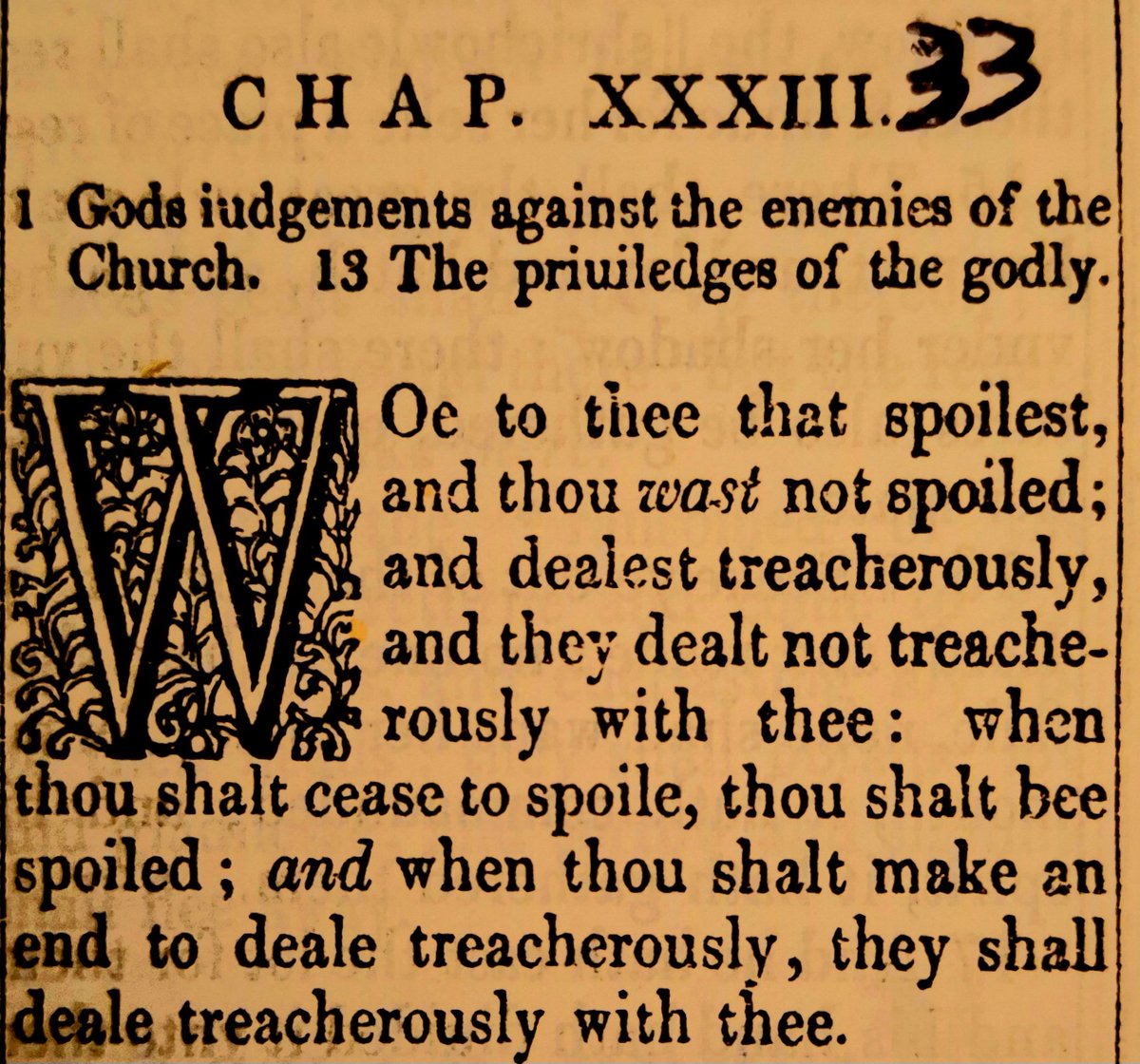
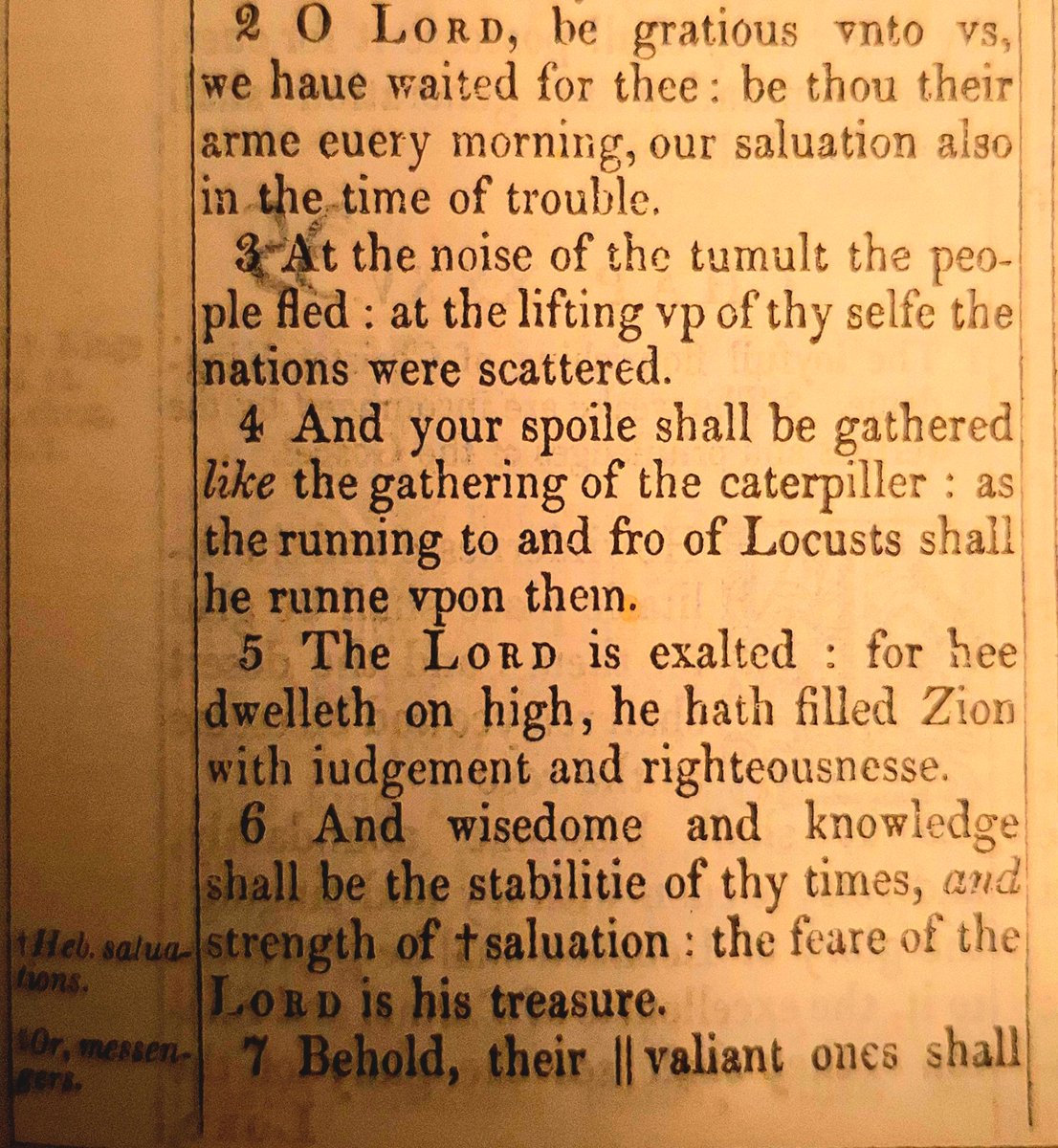
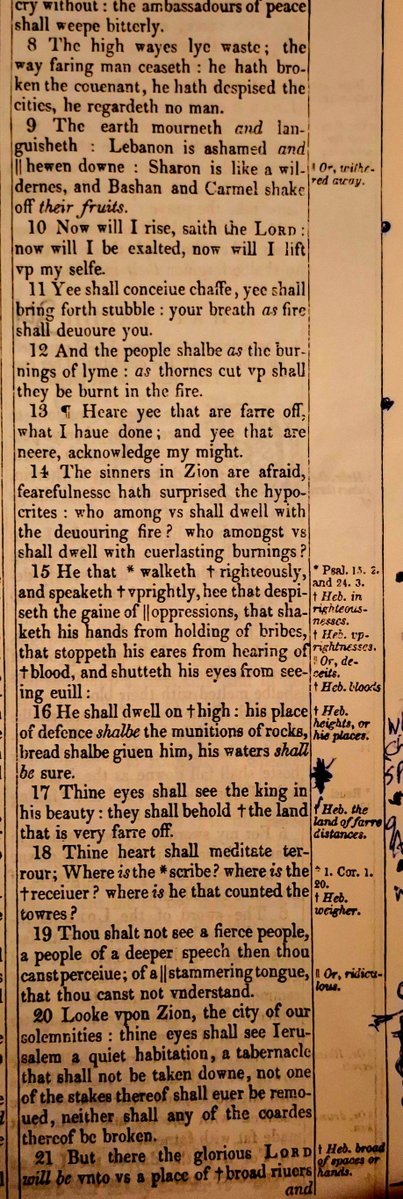

1593 - A Table from the Beginning of the World to This Day: Wherein Is Declared in What Yeere of the World Every Thing Was Done, Both in the Scriptures Mentioned, & Also in Prophane Matters -John More, B.A. - Fts - Phenomenology of Sacred Time, Creation-Proportion, Prophetic Chronometry, Greek-Roman Synchronism with Regnal Computation, Prophetic Visions, Danielic Heptadology, Temple Epochs, Greek-Roman Synchronisms, Apostolic Itineraries, Ecclesiastical Succession, Civilizational Metamorphosis, & the Providential Architecture of Universal Time - AS RARE AS THEY COME - ✨️🔐🔑📜 Uploaded/Povided by with NEW Scholarly Abstract - Alexander T H E L I B R A R Y C A T O F : The New Alexandria Library of Texas 🇨🇱 Ft DeepAncientThought A.M., A.A.S., F.V.S. , and Polymath --- 🔑📜 For this rare book academia.edu/171200898/A_Ta… ✨️📜 For my/our 535 RARE BOOK COLLECTION(ARCHIVE) & CURRENT PAPERS & DISSERTATIONS ETC independent.academia.edu/DeepAncientTho… --- 📜OLD & NEW PUBLICATIONS/PUBLISHERS INFO📜 1593 - Cambridge: Sold at the Sign of the Sun in Paul’s Churchyard, London - Printed John Legate, Printer to the University of Cambridge; & 2026 - East Texas: The New Alexandria Library of Texas --- 🔑Powerful Specialist/Scholarly Abstract OR a Specialist Supplemental Study on the Phenomenology of Sacred Time, Creation-Proportion, Prophetic Chronometry, Greek-Roman Synchronism, and the Open Architecture of John More’s Universal Table - with Terminology & Contributions right after this Abstract Below in the replies - The deeper reading changes the nature of the book. John More has not merely written a chronology. He has constructed a visual philosophy of created time. The ruled columns cause birth, death, translation, covenant, judgment, prophecy, empire, philosophy, earthquake, martyrdom, apparition, university foundation, and political revolution to become visible within one temporal field. Each event possesses its own character, yet every event must inhabit an appointed year beneath the single heading WORLD. More states that the most certain way to gather the years from the beginning of the world is through Scripture. The table accordingly begins with the world made by the eternal God and then measures the succession of created events toward the suffering of Christ. ─── I. The Mathematical Proportions of More’s Sacred Timeline More’s principal chronology from Creation to the suffering of Christ contains seven great intervals. When his stated numbers are added together, they produce his exact total of 3961 years. Sacred interval Years Share of Creation to the Cross Share of Creation to 1593 Creation to the Flood 1656 41.81% 29.99% Flood to the Promise 427 10.78% 7.73% Promise to the Exodus 430 10.86% 7.79% Exodus to the Temple 480 12.12% 8.69% Temple to the Captivity 408 10.30% 7.39% Captivity to Deliverance 70 1.77% 1.27% Deliverance to the Messiah slain 490 12.37% 8.88% Messiah slain to 1593 1560 - 28.26% Complete span to 1593 5521 - 100% The first total is obtained directly from More’s intervals: 1656 + 427 + 430 + 480 + 408 + 70 + 490 = 3961. The opening genealogy gives 1056 years from Adam to Noah’s birth and another 600 years to the universal Flood, producing the first 1656-year age. More then gives 427 years from the Flood to the Promise, including 352 years to Abraham’s birth and 75 years to his reception of the Promise. Israel’s departure is placed 430 years after the Promise, while the Exodus-to-Temple interval is calculated at 480 years. The Temple-to-Captivity period is 408 years; the Captivity lasts 70; and the Deliverance-to-Messiah interval is 490 years. The first remarkable proportion The primeval age before the Flood alone occupies almost 42 percent of the entire Creation-to-Cross chronology. This gives primordial humanity enormous temporal depth. Adam, Seth, Enosh, Kenan, Mahalaleel, Jared, Enoch, Methuselah, Lamech, and Noah do not occupy a brief legendary vestibule. They inhabit nearly half of pre-Messianic created time. Yet the number of named events is comparatively small. The reader therefore experiences primeval existence as: • long-lived • genealogically spacious • biologically monumental • historically quiet • interrupted by rare ontological events • finally overwhelmed by universal catastrophe Later centuries become increasingly crowded with rulers, offices, prophets, battles, councils, writers, cities, and institutions. Thus duration is greatest at the beginning, while event-density increases toward the later world. ─── II. The Hidden Symmetries of the Seven Intervals Several subtle proportions become visible only when More’s numbers are considered together. 1. Flood-to-Promise and Promise-to-Exodus The first period is 427 years and the second 430 years. Only three years separate them. This creates two nearly equal covenantal chambers: • 427 years from recreated humanity to the Promise • 430 years from the Promise to national deliverance The Promise therefore stands close to the center of an 857-year post-Flood structure. It is simultaneously the conclusion of postdiluvian wandering and the beginning of Israel’s gestational history. 2. Exodus-to-Temple and Deliverance-to-Messiah These periods are 480 and 490 years. Again, only ten years separate them. The first moves from liberation to sanctuary. The second moves from restoration to Messiah. Both transform deliverance into sacred presence: • Exodus leads toward the house built by Solomon • Cyrus’s Deliverance leads toward the embodied coming of Christ The Temple and Messiah thus occupy analogous terminal positions within two similarly proportioned ages. 3. The 70 and the 490 The Captivity lasts 70 years. The following period lasts 490 years, or: 70 × 7 = 490. More himself describes the period after the Captivity as “seventy sevens” and argues that the prophetic comfort requires the 490 years to begin immediately when the seventy-year Captivity ends. The proportional movement is therefore: 70 years of Captivity followed by seven times seventy years of restored movement toward Messiah The shorter seventy is a period of contraction. The 490 is an expanded sabbatical field. Captivity becomes the seed-measure from which the entire Messianic interval unfolds. 4. The compressed hinge The 70-year Captivity is only 1.77 percent of the Creation-to-Cross total, yet it receives extraordinary theological weight. Its small numerical size does not indicate insignificance. It acts like the narrow waist of an hourglass: • Temple history descends into it • Danielic history emerges from it • the sacred vessels enter Babylon • prophetic dreams become imperial disclosures • the seventy weeks begin when the seventy years end This is an important principle of More’s chronography: The shortest period may possess the greatest transformational intensity. ─── III. Creation as an Ontological Beginning, Not Merely a First Date The opening line does not merely identify an early event. It states that the world was made by the eternal God. Creation is therefore the condition that makes all subsequent chronology possible. Time is not presented as an autonomous container into which God places events. Created time begins because the world begins. The first tables are dominated by bodily events: • birth • generation • ageing • death • survival • translation • preparation • destruction The body is the first clock of history. Adam’s descendants measure time by begetting and dying. Before cities, magistracies, empires, chronicles, and Olympiads, the human body itself supplies chronological evidence. Enoch as an interruption in mortal regularity The table places Enoch’s translation in the year of the world 987, directly among the births and deaths of the patriarchs. This placement is phenomenologically remarkable. The ordinary sequence is: born - lived - died Enoch introduces another movement: born - walked - translated More does not remove this supernatural transition to a separate collection of wonders. It occupies a normal chronological row. The grid therefore acknowledges that supernatural alteration belongs within real time rather than outside it. Death and translation are two different exits from visible earthly continuity. ─── IV. Noah, the Ark, and the Temporal Phenomenology of Preparation More gives Noah a long preparatory interval connected with the Ark and places the universal Flood at the year of the world 1656. This produces three temporal layers: 1. Generational time - the lives of the patriarchs 2. Warning time - the preparation of the Ark 3. Catastrophic time - the universal Flood The Flood is not merely an isolated disaster. It is the terminal event of an age whose entire bodily genealogy has been carefully counted. That makes the destruction proportionate to what precedes it. Nearly 42 percent of pre-Cross history culminates in one universal hydrological threshold. The table’s arrangement causes the reader to experience the Flood as: • the closing of Adamic duration • a rupture in inhabited space • a cleansing of corrupted terrestrial continuity • a preservation of selected life • the resetting of genealogy • the beginning of a new world-count within the world-count After the Flood, More adds a secondary column measuring years from the Flood. Time now possesses more than one origin point. Creation remains the absolute beginning, but the Flood becomes a subordinate beginning. ─── V. Nested Time: More’s Most Intricate Graphical Method The book does not use one clock. It uses several clocks simultaneously. A row may indicate: • the year of the world • the year since the Flood • the year since the Promise • the year since the Temple • the year of the Captivity • the year since Deliverance • the numbered seven of Daniel • the year after Christ’s birth • the year of a ruler’s reign This is a nested temporal coordinate system. A person or event is not merely located at “one date.” It is positioned within several overlapping histories. For example, an event can simultaneously be: • a world-year event • an event in Persian succession • a year within the Deliverance • a year within one of Daniel’s sevens • a Roman constitutional event The page therefore acts like temporal geometry. Each event receives several coordinates. Vertical succession and horizontal simultaneity Reading downward reveals succession. Reading across reveals simultaneity. This means that More’s chronology can be read in two ways: Vertically - What happened next within one tradition? Horizontally - What was happening elsewhere in the same created year? The second movement generates the book’s most extraordinary correspondences. ─── VI. Babel, Peleg, Nimrod, and the Birth of Divided Historical Space After the Flood, the table brings together: • Arphaxad • Shelah • Eber • Peleg • the Tower of Babel • Nimrod • Babylonian tradition More gives one Babel placement around the hundredth year after the Flood and another attribution from Berosus. He also records a tradition identifying Nimrod with “Saturne Babylon.” These small entries form a dense creation-to-civilization sequence. The phenomenological progression Genealogy becomes population. Population becomes collective construction. Construction becomes vertical ambition. Language becomes divided perception. Divided speech produces divided habitation. Divided habitation produces kingdoms. Kingdom produces dynastic memory. Peleg’s birth is placed beside the Babel horizon. His name becomes a human marker of terrestrial division, while Babel is the architectural marker. Nimrod then represents the conversion of post-Flood vitality into imperial concentration. Thus the table moves from the Ark as divinely ordered enclosure to Babel as humanly projected enclosure. ─── VII. Semiramis, Abraham, and the Crossing of Sacred and Imperial Genealogies More places Abraham’s birth within a field that also contains Assyrian and Egyptian dynastic traditions. He records Semiramis, wife of Ninus, as governing Assyria in male apparel. This is one of the smallest but most revealing links in the early table. Two forms of futurity appear simultaneously: • Abraham carries covenantal futurity • Semiramis carries imperial futurity One line moves toward Israel, Promise, Exodus, Temple, and Messiah. The other moves toward Assyrian kingship, monumental power, war, and imperial memory. More’s table does not confuse these trajectories. It shows them occupying the same world. The sacred line and the imperial line are historically co-present but teleologically different. ─── VIII. Circumcision, Sodom, Isaac, Moab, Ammon, Hagar, and Sacrifice The Abrahamic table is extraordinarily compressed. Within a narrow series of rows More places: • Ishmael’s birth • Arphaxad’s death • circumcision • the destruction of Sodom • Isaac’s birth • the birth of Moab and Ammon • the expulsion of Hagar and Ishmael • covenant with Abimelech and Phicol • Abraham at Beersheba • Isaac offered for sacrifice These are not unrelated notices. They form a phenomenology of covenantal embodiment. Circumcision The Promise becomes inscribed upon the body. Sodom Judgment transforms inhabited place into destroyed place. Isaac The promised future becomes visible in a child. Moab and Ammon National genealogies emerge from the aftermath of catastrophe. Hagar’s expulsion Household separation becomes a chronological starting point for a larger period. Isaac’s offering The body of promise is placed upon the boundary between gift, death, obedience, and restoration. Within only a few rows, More moves among: • flesh • fire • city • birth • nation • exile • altar • covenant The smallness of the entries conceals the enormity of their theological reach. ─── IX. The Temple as a Temporal Body The Temple is not merely dated as a building. It becomes the title of an entire chronological epoch. More calculates 480 years from the Exodus to the commencement of Solomon’s Temple, then 408 years from the Temple’s beginning to the Babylonian Captivity. The sanctuary therefore changes the name of time. Before it, the epoch is measured from deliverance and wandering. After it, history is measured under TEMPLE. This is a form of hierochronology - sacred architecture becomes a clock. The Temple gathers: • land • kingship • priesthood • sacrifice • prophecy • national memory • Divine dwelling When the Temple burns, the epoch does not simply lose a building. Its temporal center collapses. ─── X. Captivity as Spatial Displacement and Intensified Vision The Captivity pages are among the richest supernatural sections of the book. More places within this compressed period: • Jeremiah’s seventy-year prophecy • Daniel’s interpretation of the golden image • Ezekiel beginning to prophesy in Captivity • Daniel’s fame among the exiles • the three children in the furnace • Jerusalem’s siege • the Temple’s burning • Ezekiel’s vision of the restored spiritual kingdom • the vision of the tree cut down • Nebuchadnezzar becoming as a beast • Daniel’s four beasts • the ram and goat • the revelation of the seventy weeks The destruction of visible sacred space produces an intensification of visionary space. Israel loses: • city • palace • sanctuary • territorial sovereignty Yet Daniel and Ezekiel receive: • dream interpretation • symbolic beasts • visionary architecture • heavenly chronology • future kingdoms • restoration measurements • Messianic time The visible Temple is destroyed, but Ezekiel sees the architecture of the restored spiritual kingdom. This is one of the deepest phenomenological movements in the entire book: External sacred space contracts while revealed inner and visionary space expands. ─── XI. The Supernatural Modes Preserved in the Timeline More’s table contains several different forms of supernatural manifestation. They should not all be reduced to the single word “miracle.” 1. Ontological manifestation Creation itself and Enoch’s translation alter the conditions of existence. 2. Catastrophic manifestation The Flood, Sodom, the destruction of cities, and earthquakes transform inhabited space. 3. Oneiric manifestation Daniel interprets the dream of the golden image. The dream contains imperial history before imperial history visibly unfolds. 4. Pyric preservation The three children inhabit fire without being consumed. Fire remains materially present, but its destructive office is restrained. 5. Bestiary revelation The four beasts and the ram and goat render political powers as living symbolic forms. Empire becomes visible as creature. 6. Royal animalization Nebuchadnezzar’s vision of the cut tree is followed by his becoming “as a beast.” The king who had treated nations as objects loses the stable human form of kingship. 7. Angelic chronometry The seventy weeks reveal not merely an event but the proportion of future time. 8. Prophetic architecture Ezekiel 40-41 places a measured spiritual kingdom beside the Roman institution of dictatorship and the predicted fall of Egypt. 9. Incarnational manifestation At Christ’s birth, More places the wise men from the East, Simeon and Anna, the flight into Egypt, the slaughter of the infants, and the division of Herod’s territories. The supernatural sign and the political reaction occupy the same rows. 10. Apocalyptic inscription John writes Revelation on Patmos during Domitian’s persecution. Vision becomes book, and book becomes an event in Roman chronology. 11. Providential meteorology More records rain coming “by miracle” in the Roman army at the prayers of Christians. 12. Portentous atmosphere He also records a tradition that in Italy it rained blood for three days. 13. Postmortem apparition Later medieval entries include a deceased figure appearing and seeking relief from Purgatory, and another said to have appeared like a bear after death. 14. Reported revelatory legitimation More records Egwin as having revelations connected with the worship of images. These later reports reveal that the book preserves not only biblical supernatural history but the contested supernatural memory of medieval Christendom. More does not isolate such material as a fictional appendix. He assigns it chronological location, while his wording and source attributions sometimes preserve distinctions of certainty. ─── XII. More’s Internal Scale of Historical Discernment The book is broad, but it is not methodologically careless. More uses several degrees of confidence. Scriptural certainty Scripture supplies the most certain calculation from Creation to Christ. Prophetic certainty The angelic number in Daniel corrects conflicting human chronologies. Native historical testimony In the Roman appendix, More argues that Virgil and Livy deserve credit concerning Rome’s own affairs rather than foreign historians less acquainted with that kingdom. Qualified preservation The story of Susanna is placed with the qualification “if it be true.” Attributed antiquarian tradition The Babel and Nimrod materials are attached to Berosus rather than silently presented as Genesis itself. Thus More’s universal history possesses a layered evidentiary structure: 1. Scripture 2. Prophecy 3. Regnal computation 4. Native historians 5. Ecclesiastical historians 6. Antiquarian tradition 7. Qualified lore This enables him to preserve a vast knowledge-world without pretending that every source speaks in precisely the same manner. ─── XIII. Daniel’s Seventy Weeks as an Angelic Measuring Rod More’s treatment of Daniel is the methodological heart of the book. He argues that historical disagreement concerning Persian kings arises partly from: • fathers making sons co-kings • absent rulers leaving sons in authority • successors receiving the royal name before sole accession • regnal years being counted twice • wars causing rulers to disappear from one historian’s list • one reign being absorbed into another He uses these principles to compress apparently longer Persian chronologies into the prophetic 490-year structure. His division is: • 136 years from the Deliverance to Alexander’s death • 280 years from Alexander to Augustus • 74 years from Augustus to Christ’s death • 490 years altogether Phenomenologically, the angel’s word functions like a measuring rod laid across three empires. Persia, Greece, and Rome are not merely successive political systems. They become segments inside revealed Messianic time. The prophecy does not hover above history. It enters history as proportion. ─── XIV. Greek Intellectual Constellations Inside Jewish and Persian Time The main tables contain extraordinary intellectual clusters. During the Captivity and early Deliverance sequences, More places together: • Pythagoras • Democritus • Pindar • Heraclitus • Croesus • Solon • Thales • Aesop • the Seven Wise Men • Pisistratus Later, within the Persian-Deliverance chronology, the table aligns: • Themistocles • Aristides • Aeschylus • Sophocles • Pericles • Empedocles • Hippocrates • Parmenides • Herodotus • Socrates • Alcibiades This is more than a list of famous Greeks. It establishes an intellectual simultaneity: While Jerusalem is being restored and Persian succession unfolds, Greek drama, medicine, philosophy, rhetoric, history, and political thought arise within the same world-years. Hippocrates does not inhabit an abstract “classical age.” He is placed within the years of Persian rule and the restored Jewish commonwealth. Aeschylus and Sophocles become contemporaries of a particular phase in sacred restoration. Philosophy is thereby given historical atmosphere. ─── XV. The Final Athens Appendix: Political Forms as Temporal Bodies After the main annual table ends, the book changes scale. The year-by-year microscope becomes a civilizational telescope. The Athens appendix traces: • Cecrops and kingship • ten-year magistrates • annual magistrates • the Thirty Tyrants • restoration under Thrasybulus • Lacedaemonian domination • Theban supremacy • Philip of Macedon • Roman conquest • later Turkish rule The political constitution of Athens repeatedly changes bodily form: one king becomes one magistrate for ten years becomes a magistrate each year becomes thirty tyrants becomes liberty restored becomes subjection to another Greek city becomes Macedonian monarchy becomes Roman province becomes Ottoman possession This is a phenomenology of political multiplicity. The number of rulers and the duration of office determine how civic time is experienced: • kingship centralizes continuity • decennial rule slows succession • annual rule accelerates civic renewal • thirty tyrants fragment authority • empire removes the city’s autonomous clock Athens loses control of its own time when it loses control of its own magistracies. ─── XVI. Egypt’s Appendix: Twenty-Two Governments and Constitutional Metamorphosis The Egyptian appendix is among the most obscure sections of the volume. More organizes ancient Egypt through successive forms of government and synchronizes those forms with: • Jacob • Moses • Joshua • Samson • Rehoboam • Hezekiah He then traces Egyptian sovereignty through: • the Chaldeans • the Persians • Alexander • the Ptolemies • Pompey and Rome • Christian reception through Mark • Saracen rule • the Syrian Sultan • the Mamluks • Ottoman conquest Egypt is therefore not treated as a static civilization. It is a sequence of governmental habitations. Each ruling form temporarily occupies the land, but the land outlasts every form. This produces a deep distinction between: • geographical endurance • constitutional impermanence Egypt remains Egypt while dynasties, conquerors, priesthoods, religions, military castes, and imperial affiliations change. ─── ⚠️SEE NEXT REPLY FOR THE REST -

🔑 79 Rare Terminologies, Obscure Facets, Specialized Fields, & Intellectual Discoveries Ancient Sovereignty, Legendary History, & Heroic Ireland - 1/I. Gynarchic Historiography - The reconstruction of a nation’s history through women as principal causes rather than secondary companions. Blackburne’s early thesis identifies women as decisive instruments in the foundation of fortresses, religious institutions, invasions, dynastic alliances, literature, and national identity. 2/II. Legendary-Real Continuum A historiographical condition in which historical personalities survive within marvellous, allegorical, and poetic narratives. Blackburne refuses to separate Macha and Méave completely from their supernatural framework because the framework itself forms part of how ancient Ireland remembered political reality. 3/III. Machaic Sovereignty A model of queenship based upon martial victory, personal cunning, juridical knowledge, and monumental foundation. Macha claims rule by right of battle rather than merely inheritance or marriage. 4/IV. Emhain-Macha Foundation Complex The combined story of captivity, law, measurement, forced construction, sovereignty, and urban foundation associated with Macha’s palace. Blackburne presents the fortress as one of the earliest fixed points in Irish chronological memory. 5/V. Brooch-Measure Topography The extraordinary tradition in which Macha uses the golden brooch from her mantle to mark or measure the site of Emhain-Macha. A personal ornament becomes an instrument of royal surveying, transforming regalia into territorial geometry. 6/VI. Brehonic Captive Jurisprudence Macha refuses to execute captives because death would violate the written law and make her reign unrighteous. The episode preserves a remembered distinction between vengeance, lawful captivity, enslavement, labour, and royal justice. 7/VII. Dithorban Exile Cycle The narrative surrounding Dithorba’s sons, their defeat, flight into Connacht’s forests, Macha’s disguise, and their recapture. It combines forest exile, gender disguise, royal pursuit, and sovereignty consolidation. 8/VIII. Ulidian Royal Topography The study of the political landscape of the Ulaid or Ulidians through palaces, fortresses, courts, roads, battlefields, and territorial memory centred upon Emhain-Macha. 9/IX. Medbian Cattle Sovereignty A political economy in which cattle, breeding prestige, tribute, land, rank, and royal honour become inseparable. Méave’s expedition is not merely an animal raid but an assertion of parity, wealth, and sovereign magnificence. 10/X. Táinic Epic Memory The preservation of history through the Táin Bó Cúailnge, which Blackburne compares in cultural importance to Chaucer’s Canterbury Tales. The heroic tale becomes an archive of kingship, cattle valuation, roads, warriors, diplomacy, and provincial identity 11/XI. Donn Cuailnge Economy The diplomatic and material valuation surrounding the Brown Bull of Cooley. Méave offers heifers, territory, a highly valued chariot, friendship, and the bull’s eventual return, revealing a complex economy of prestige loans and royal compensation. 12/XII. Cumal Valuation An archaic unit of social and economic valuation expressed through cattle-equivalents. The bull negotiations preserve the memory of a chariot valued at three times seven cumals, translated by Blackburne into sixty-three cows. 13/XIII. Cruachain Court Culture The political, ceremonial, and heroic world surrounding Méave’s royal centre at Cruachain. The index’s retention of “Cruachain” and “Mebh of Cruachain” preserves an older geographical identity frequently reduced in later popular retellings. 14/XIV. Female Instrumentality Thesis Blackburne’s declaration that five great events of early Irish history occurred through women. It is the organizing intellectual principle of the first volume and one of the book’s most advanced historical propositions. 15/XV. Heroic-Annals Method The comparative use of legend, genealogy, annals, bardic material, archaeological reference, and later historical criticism to recover the underlying human event without destroying its ancient narrative form. Brigidine Culture, Sacred Knowledge, and Manuscript Art 16/XVI. Brigidine Monasticism The network of female religious communities attributed to Saint Brigit. Blackburne connects these foundations with religious education, communal discipline, manuscript production, hospitality, and the widening social influence of women. 17/XVII. Cill-Dara Hierotopography The sacred geography of the “Cell” or “Church of the Oak,” later Kildare. The site unites an ancient oak, a monastic settlement, pilgrimage, sacred fire, female rule, and the growth of a surrounding town. 18/XVIII. Perpetual-Fire Continuity in Ancient Cultures The preservation of an inextinguishable sacred flame associated with older Druidic usage and adapted to Christian symbolism. Blackburne interprets its continuation as deliberate religious accommodation rather than simple destruction of inherited custom. 19/XIX. Druidic-Christian Adaptation The process by which ancient forms, places, symbols, and communal habits are redirected into Christian meaning. Brigit’s foundation demonstrates conversion through continuity, familiarity, and symbolic transformation. 20/XX. Insular Illumination The intricate colouring, calligraphy, ornamentation, and sacred visual art of early Irish manuscripts. Blackburne treats manuscript illumination as a major achievement connected with religious women and Christian education. 21/XXI. Book of Kildare Problem The historical question of whether the celebrated but lost Book of Kildare may have been related to, or confused with, the surviving Book of Kells. Blackburne records Petrie’s suggestion that the magnificence described by Giraldus might refer to the surviving manuscript. 22/XXII. Portable-Bell Diplomacy The exchange of small ecclesiastical bells as tokens of friendship, spiritual fellowship, and institutional recognition. The bell attributed to Gildas becomes an object of sacred communication between learned religious figures. 23/XXIII. Female Scribal Education Brigit’s communities are remembered for needlework and manuscript illumination, leading Blackburne to identify her as an early force in Christian female education in Ireland. 24/XXIV. Hagiographic Genealogy The tracing of a saint through ancestral, royal, and legal lineages rather than treating holiness as detached from kinship. Brigit’s genealogy contains such rare names as Dubthach Donn, Dremni, Bresal, Dian, Comila, Carbri Niadh, Aengus Mor, and Feidlimidh the Legal. 25/XXV. Fotharda Lineage Memory The retention of Brigit’s connection with the Fotharda of Leinster. This preserves the saint within a specific hereditary and territorial world, joining sanctity, genealogy, provincial identity, and bardic recollection. Dynastic Change, Brehon Law, and Medieval Women 26/XXVI. Dearbhforguill Invasion Nexus A chain of personal, dynastic, and military consequences beginning with Dearbhforguill’s removal from the Prince of Breffny and culminating, in Blackburne’s arrangement, in Anglo-Norman intervention. 27/XXVII. Eva-Strongbow Dynastic Hinge The marriage of Eva, daughter of Dermot of Leinster, and Strongbow functions as a hinge between Gaelic dynastic politics and Anglo-Norman power. Blackburne treats marriage as a geopolitical instrument rather than merely a domestic event. 28/XXVIII. Matrimonial Geopolitics The study of marriages as mechanisms that redistribute claims, lands, titles, military loyalties, and international relations. Eva’s marriage altered the political attitude of England and Ireland toward one another. 29/XXIX. Brehon Female Privilege Blackburne remarks that women possessed significant privileges under the Brehon laws and were regarded as more consequential than they later became under English rule. 30/XXX. Embroideress Fine Law A remarkable craft regulation by which damage to the professional embroideress’s needle was valued more highly than damage to an ordinary needle. Skill, occupation, and specialized equipment received distinct legal protection. 31/XXXI. Queen’s Workbag Jurisprudence The legal valuation of a queen’s workbag according to its proper contents, including veil, gold ornament, silver thread, and related objects. Domestic equipment becomes a legally classified expression of rank. 32/XXXII. Professional Needle Economy An early distinction between amateur needlework and ornamentation performed for livelihood. Blackburne notes the unusual legal principle that a professional embroideress could be entitled to greater profit than a queen. 33/XXXIII. Gráinnean Maritime Queenship The authority of Gráinne O’Mailly over ships, coasts, island strongholds, kinship networks, and maritime retainers. Her life joins piracy, clan leadership, motherhood, treaty-making, and royal diplomacy. 34/XXXIV. Carrigahowly Castle Culture The fortified coastal world associated with Gráinne’s power. Castles here are not static residences but nodes of sea-lanes, tribute, defence, family government, and political negotiation. 35/XXXV. Treaty Without Title-Surrender Gráinne negotiates with Elizabeth I while preserving her own royal dignity, reportedly declining the offer of an English countess’s title. Blackburne interprets this as gratitude without submission. 36/XXXVI. Castle-Defence Matriarchy The exercise of military command and household leadership by a noblewoman defending her dependants, children, property, and hereditary rights during siege or rebellion. 37/XXXVII. Ophalian Resistance The political and martial steadfastness of Lettice Digby, Baroness Ophaly, whose life connects Geraldine inheritance, the barony of Geashill, widowhood, seven children, estate government, and castle defence during the disturbances of 1641. 38/XXXVIII. Medieval Record Scarcity Blackburne’s recognition that medieval Irishwomen are difficult to reconstruct because surviving records concentrate upon government and warfare. Her book therefore rescues scattered female lives from chronicles written for other purposes. Stage History, Performance, and Theatrical Archaeology 39/XXXIX. Hibernian Theatrology The interdisciplinary study of Irish theatrical life through actresses, managers, audiences, playhouses, roles, costumes, reviews, salaries, tours, benefits, and public reputation. 40/XL. Smock Alley Network The Dublin theatrical system centred upon Smock Alley and connected with provincial towns, London stages, touring companies, playwrights, newspapers, and patronage. 41/XLI. Aungier-Crow Street Continuum The succession and interconnection of Dublin’s major theatrical sites. The indexes repeatedly connect Aungier Street, Crow Street, Smock Alley, Drury Lane, Covent Garden, the Haymarket, and the Theatre Royal. 42/XLII. Benefit-Performance Economy A theatrical financial arrangement in which a performer received proceeds from a selected evening. The book repeatedly records “benefits,” receipts, special roles, and audience attraction as parts of an actress’s professional livelihood. 43/XLIII. Role-Transmission Genealogy The tracing of dramatic roles from one celebrated actress to another. Juliet, Lady Townly, Lady Fanciful, Ophelia, Cleopatra, Desdemona, Rosina, and Charlotte Rusport become inheritances through which changing schools of acting can be studied. 44/XLIV. Celtic Comedy Temperament Blackburne attributes Irish success in comedy to a union of vivacity, versatility, sparkling expression, and a slight but essential undercurrent of pathos. 45/XLV. Pathos-Vivacity Synthesis The emotional mechanism by which sorrow heightens rather than destroys comic brilliance. In Blackburne’s theatrical theory, the best Irish comedy contains quickness, warmth, melancholy, and human sympathy. 46/XLVI. Dramatic-Censor Evidentiary Method The use of contemporary theatrical criticism as historical testimony. Reviews are not treated merely as opinions but as dated records of voice, gesture, audience response, technical development, and reputation. 47/XLVII. Playbill Archivalism The recovery of theatrical history from manuscript bills, role lists, advertisements, benefit notices, and scraps of newspapers. Blackburne consulted files of original manuscript playbills in the British Museum. 48/XLVIII. Actress Mobility Geography The routes linking Dublin, Drogheda, London, Liverpool, York, Leeds, Milan, continental opera houses, Australia, America, India, and other performance centres. An actress’s biography becomes a map of nineteenth-century cultural travel. 49/XLIX. Perdita Celebrity Culture Mary Robinson’s transformation from actress into “Perdita” demonstrates the making of a public persona through stage role, royal attention, fashion, portraiture, scandal, poetry, and print circulation. 50/L. O’Neillian Tragic Naturalism Miss O’Neill’s acting is praised for melodic voice, emotional truth, natural pauses, delicate expression, and the avoidance of forced screams and contorted horror. 51/LI. Hayesian Operatic Diaspora Catherine Hayes’s movement from Ireland into continental opera, London’s Royal Italian Opera, court performance, and international touring. Her career shows Irish vocal artistry entering a global circuit. 52/LII. Theatre-Riot Ethnography Descriptions of applause, flowers, hisses, catcalls, curtain interruptions, audience demands, and near-riotous scenes preserve the behaviour of nineteenth-century spectators as vividly as the performances themselves. Literary Women, Translation, and Print Culture 53/LIII. Centlivrean Recovery The restoration of Susanna Centlivre from comparative oblivion. Blackburne positions her as a major dramatist whose lively incidents, humour, language, and depictions of life deserved a place among British classics. 54/LIV. Feminine Title-Masking The practice of issuing a woman’s writing under a fictitious name because publishers feared that openly female authorship would condemn the work in advance. Centlivre’s career exposes commercial prejudice within print culture. 55/LV. Griersonian Autodidacticism Constantia Grierson reportedly mastered Greek and Latin without a teacher, while also studying history, divinity, philosophy, and mathematics. Her education becomes a remarkable example of disciplined self-instruction 56/LVI. King’s-Printer Household Scholarship Grierson’s classical learning was employed within her husband’s printing business, which possessed the monopoly of Bible printing in Ireland. Domestic partnership, philology, sacred printing, and commercial production converge. 57/LVII. Polyglot Womanhood The intellectual condition represented by women trained in Greek, Latin, French, and other European languages. Blackburne deliberately groups Centlivre, Mrs. Monk, Grierson, and Brooke within a history of female linguistic accomplishment. 58/LVIII. Brookean Gaelic Recovery Charlotte Brooke’s mastery of ancient Irish language and literature allowed her to transmit Gaelic poetic materials into English-language literary culture. 59/LIX. Reliquary Translation Translation understood as preservation of literary remains. Brooke’s Reliques of Irish Poetry functions as a verbal reliquary through which older Irish voices could be carried into a new readership. 60/LX. Edgeworthian Manners-Ethnography Maria Edgeworth’s fiction records regional manners, customs, speech, education, abuses, estate relationships, and social transformation. Blackburne sees this national description as foundational to later historical fiction. 61/LXI. Porterian Historical Romance Jane and Anna Maria Porter transform national wars, heroic memory, legend, love, and political struggle into historical romance. 62/LXII. Scottish Indebtedness Nexus Blackburne argues that Maria Edgeworth and Jane Porter helped inspire Walter Scott’s historical method. Edgeworth showed how national manners could animate fiction, while Porter demonstrated how historical legend could be woven into romance. 63/LXIII. Morganian Perseverance Lady Morgan represents the union of literary productivity, social intelligence, self-fashioning, political engagement, and persistence across changing reputations. 64/LXIV. Blessington Salonography The reconstruction of literary society through Lady Blessington’s conversations, friendships, hospitality, correspondence, fashion, and gatherings. The salon becomes a living intellectual institution. 65/LXV. Tighean Psyche-Poetics Mary Tighe’s Psyche joins classical allegory, inner solitude, beauty, melancholy, cultivated Dublin society, and the spiritualization of personal emotion. Blackburne places her within both antiquity’s imaginative inheritance and Ireland’s literary world. 66/LXVI. Stirling-Maxwellian Social Protest The poetry and fiction of Lady Stirling-Maxwell, better known as Caroline Norton, speak for injured women, factory workers, the poor, the outcast, and the socially condemned. Literary emotion becomes a form of public advocacy. Secret Societies, Eccentric Lives, and Archival Discoveries 67/LXVII. Lady-Freemason Exception Elizabeth St. Leger, later Mrs. Aldworth, occupies the extraordinary position of a woman remembered as having been formally initiated into Freemasonry after witnessing part of a lodge ceremony. 68/LXVIII. Masonic-Ordeal Narrative The account of St. Leger removing part of a weakened wall, observing two stages of Masonic work, being discovered, and accepting initiation as the solution to the lodge’s dilemma. 69/LXIX. Female Masonic Philanthropy Mrs. Aldworth openly acknowledged her Masonic connection and was remembered for aid to the poor, particularly the Masonic poor. Her wealth and unusual institutional status were converted into charitable patronage. 70/LXX. Llangollen Domestic Republic The independent household created by Lady Eleanor Butler and Sarah Ponsonby at Plas Newydd. Their cottage became a self-governing intellectual, social, artistic, and domestic world visited by writers, statesmen, travellers, and admirers. 71/LXXI. Sartorial Eccentricity The Ladies of Llangollen developed a permanent style involving starched neckcloths, coat-like habits, powdered hair, black beaver hats, orders, brooches, and a visual presentation that contemporaries compared with elderly clergymen. 72/LXXII. Cottage-Museum Culture Their home accumulated curiosities and gifts until it became both a private residence and a museum of friendship, memory, travel, celebrity, and artistic attachment. 73/LXXIII. Gunningiad Beauty Mythology The social phenomenon surrounding Maria and Elizabeth Gunning, whose beauty produced extraordinary public attention, aristocratic marriages, portraiture, gossip, courtly competition, and a near-mythic reputation. 74/LXXIV. Courtly Celebrity Anthropology The book records how appearance, clothing, marriage prospects, theatrical visibility, salons, royal favour, newspaper commentary, and public curiosity created female celebrity before modern mass media. 75/LXXV. Curranian Memorial Pathos Sarah Curran’s life is preserved through love, political execution, portrait memory, poetry, private grief, and national mourning. The scene in which she silently confronts a posthumous portrait of Robert Emmet becomes an archive of bodily grief. 76/LXXVI. Gormflaith Recovery Problem Blackburne regretted obtaining information about Gormflaith too late for inclusion in the first volume. She describes her as daughter, sister, wife, and mother of kings, ultimately reduced to begging from door to door. 77/LXXVII. Bibliographic Wandering Blackburne’s own phrase for the devious movement through literature required to assemble scattered information. It describes research conducted across archives, memoirs, newspapers, chronicles, correspondence, private collections, and forgotten periodicals. 78/LXXVIII. Original-Document Historicism The methodological conviction that original letters, manuscripts, playbills, diaries, and contemporary reviews should be consulted wherever practicable. This makes the work more than a compilation of later retellings. 79/LXXIX. Dual-Index Architecture Each volume possesses a copious index intended to make the work useful as a reference book. These indexes expand the forty central biographies into a vast network of plays, poets, castles, laws, periodicals, saints, actors, monarchs, placenames, institutions, and forgotten persons.
1877 - Illustrious Irishwomen: Being Memoirs of Some of the Most Noted Irishwomen from the Earliest Ages to the Present Century - Lady Elizabeth Owens Blackburne Casey - 2 Volumes - 835 Pages - Fts - Encompassing Ancient Queens, Saints, Gaelic Patronesses, Castle Defenders,

✨️💎 34 Tantalizing Specialist/Scholarly Rare Insights, Forgotten Lore, Remarkable Times, Discoveries, Correspondences, Degrees, Avenues, Stages, & Documentary Truths + a ⚠️ Bonus Section - 16 Non-Repetitive Core & Key Constructs Illustrious Irishwomen is far more than a sequence of major biographies. Its two volumes construct a many-layered archive extending from ancient queens, saints, learned women, political defenders, hereditary families, actresses, singers, poets, novelists, salon-builders, travelers, patrons, and reformers to the innumerable women concealed within anecdotes, genealogies, footnotes, traditions, and indexes. 🔑📜 Volume I moves through the ancient Irish, medieval, and theatrical worlds, while Volume II gathers literary women and an extraordinary miscellaneous realm of social history. ⚠️ Bonus Section - Sixteen Non-Repetitive Core and Key Constructs* I. Thirty-Four Tantalizing Rare Insights 1/I. The Index as a Hidden Republic of Women The principal biographies form only the visible architecture. The indexes disclose a second population of women - queens, daughters, wives, foster-mothers, actresses, abbesses, poets, legendary figures, correspondents, patrons, rivals, and witnesses. Each minor name is a surviving point in a larger female knowledge-network, proving that cultural memory was created collectively rather than by a few isolated heroines. 2/II. Queen Macha and the Feminine Foundation of Sacred Territory Macha represents sovereignty as an embodied power capable of naming territory, establishing boundaries, and altering the destiny of a people. Her narrative joins woman, land, kingship, pain, memory, and prophetic consequence. Territory is not merely possessed. It becomes psychically and historically charged through the experience of the woman associated with it. 3/III. Queen Méave and Strategic Multiplicity Méave appears not as a single-function monarch but as a concentration of royal intelligence - negotiator, military organizer, assessor of wealth, reader of character, distributor of rank, and manipulator of symbolic prestige. Her story preserves an ancient understanding that rulership required several cognitive faculties operating simultaneously: calculation, persuasion, memory, anticipation, spectacle, and command. 4/IV. Saint Brigit as a Bridge Between Worlds Brigit occupies a remarkable threshold between older Irish reverence for sacred femininity and Christian sanctity. Her traditions bind fire, hospitality, healing, livestock, poetry, generosity, monastic government, and miraculous abundance. She becomes a living correspondence between household and sanctuary, earthly nourishment and spiritual illumination, local landscape and universal faith. 5/V. The Forgotten Intellectual Authority of Abbesses The book’s ecclesiastical women reveal that the early religious house could function as a center of teaching, manuscript culture, diplomacy, medicine, hospitality, and regional government. The abbess was not simply secluded. She could direct property, preserve learning, settle disputes, receive travelers, and act as an intellectual mother within an extensive sacred community. 6/VI. Druidesses as Keepers of Liminal Knowledge The index preserves traces of druidesses and prophetically gifted women whose authority belonged to the boundary between visible event and invisible causation. Whether encountered as religious specialists, seers, counselors, or figures of tradition, they represent a lost category of female cognition in which memory, landscape, ritual, astronomy, omen, and political counsel were united. 7/VII. The Banshee as Genealogical Consciousness The banshee is more than an apparition of death. She may be read as a supernatural embodiment of family memory. Her cry belongs to a lineage, not merely to an individual. Through her, ancestry becomes audible. The household hears its own historical depth approaching the threshold between life and death, grief and foreknowledge, bloodline and invisible guardianship. 8/VIII. The Caointeach and the Phenomenology of Sacred Lament The mourning woman, supernatural keener, or caointeach transforms grief into sound, rhythm, warning, and communal recognition. Lament becomes a cognitive act through which death is interpreted and socially received. The cry does not merely express sorrow. It prepares consciousness for transition and gives audible form to an event too immense for ordinary speech. 9/IX. Brain-Balls and the Material Preservation of Heroic Memory The extraordinary index reference to brain-balls recalls an archaic world in which the bodily remains of a defeated hero could be transformed into a hardened object of memory and power. Here cognition, warfare, relic, vengeance, and material symbolism converge. The mind’s former seat becomes a weapon, preserving personality through a terrible form of posthumous materiality. 10/X. Brehon Law and Female Legal Presence References to Brehon law open an avenue into women’s rights, marriages, inheritance, fosterage, property, status, compensation, and social protection within native Irish jurisprudence. The legal woman was not merely a dependent figure. Her position varied according to rank, contract, kinship, possession, and circumstance, revealing degrees of personhood often erased by simplified historical narratives. 11/XI. Fosterage as Cognitive Kinship Irish fosterage enlarged identity beyond biological parentage. Women serving as foster-mothers helped transmit speech, manners, loyalty, practical knowledge, genealogy, and emotional allegiance. The child belonged to interlocking households and memory-fields. Fosterage therefore functioned as a social technology for joining families, territories, political interests, and affections across generations. 12/XII. Margaret O’Carroll and the Banquet of Knowledge Margaret O’Carroll’s celebrated gatherings of poets, chroniclers, clergy, musicians, scholars, and dependents make hospitality an instrument of civilization. Food, learning, patronage, and public generosity become parts of one intellectual economy. The feast preserves the learned order because bodies must be sustained before manuscripts, poetry, genealogy, and historical remembrance can continue. 13/XIII. The Learned Household as an Unrecognized Institution Many women in the book created intellectual environments without holding formal academic offices. Their houses became salons, libraries, correspondence centers, rehearsal rooms, schools of etiquette, political meeting places, and shelters for writers. The domestic interior emerges as a hidden institution where conversation could produce literature, reputation, patronage, alliances, and cultural memory. 14/XIV. Gráinne O’Malley and Maritime Intelligence Gráinne O’Malley’s authority depended upon a marine form of cognition - tides, coastlines, harbors, ships, kinship routes, tribute, defense, mobility, and negotiation. Her world was not bounded by the estate. It was distributed across sea-lanes. Tradition remembered her vividly even when formal history recorded comparatively little, showing how oral memory can preserve maritime sovereignty. 15/XV. Oral Testimony as a Chain Across Centuries The account of Gráinne preserves a remarkable chain of remembrance: one person knew another who had known someone linked to her own generation. Such testimony reveals memory not as vague folklore but as a sequence of human custodians. Each speaker becomes a living manuscript, transmitting identity through conversation rather than parchment. 16/XVI. Baroness Ophaly and the Architecture of Resistance Lettice, Baroness Ophaly, demonstrates how a defended house could become an extension of will. Walls, provisions, servants, messengers, weapons, and resolve formed a single resistance-system. Her example discloses a female military cognition built upon endurance, logistics, spatial command, morale, and refusal rather than the open-field heroism usually privileged by chronicles. 17/XVII. The Old Countess of Desmond and Living Antiquity The Old Countess stands at the meeting point of biography, longevity tradition, dynastic memory, and historical uncertainty. Her age transformed her into a living corridor between generations. Whether every remembered detail can be established or not, the tradition reveals a desire to encounter history embodied in a person whose memory seemed to exceed ordinary human duration. 18/XVIII. The Fair Geraldine and Poetic Image-Making The Fair Geraldine illustrates how a historical woman could acquire a second existence inside poetry. Her literary image traveled beyond her immediate biography and became an idealized structure of beauty, lineage, longing, and courtly imagination. This is a form of imaginal immortality in which language preserves not the entire person, but a radiant cultural presence. 19/XIX. Actresses as Embodied Archives The great actresses in Volume I preserved Shakespeare, comedy, tragedy, gesture, accent, costume, music, and emotional interpretation through their bodies. Before recording technology, performance lived in disciplined memory. An actress carried hundreds of verbal cues, movements, expressions, and relations. She was simultaneously interpreter, mnemonic vessel, moving image, and living archive. 20/XX. Smock Alley as a Cognitive Laboratory The Irish theater was a testing ground for voice, timing, audience perception, emotional suggestion, improvisation, and social identity. Smock Alley and the provincial stages trained women to read a crowd instantly. The actress learned applied phenomenology - how posture, silence, rhythm, facial change, and tone could alter the consciousness of hundreds of spectators. 21/XXI. Dorothy Jordan and the Intelligence of Comic Naturalness Dorothy Jordan’s celebrated manner depended upon appearing effortless. Yet theatrical naturalness requires exact control of timing, gesture, vocal modulation, and audience expectation. Her career reveals a paradox: the most convincing spontaneity may arise from highly developed embodied intelligence. Blackburne traces her movement from Waterford and Dublin to Cork, Leeds, and the English stage. 22/XXII. Miss O’Neill and Tragic Transfiguration Eliza O’Neill rose from poverty, provincial performance, and limited formal education to become a commanding tragic presence. Her development demonstrates the conversion of hardship into emotional range. The actress enters an imagined catastrophe yet makes it experientially real to others, creating a temporary plane where fictional sorrow produces genuine human feeling. 23/XXIII. Catherine Hayes and the Acoustic Enlargement of Ireland Catherine Hayes’s voice carried Irish cultural identity into international musical space. Blackburne portrays her as both dramatically and vocally gifted, describing the discovery of her singing beside the Shannon as an almost enchanted eruption of melody from the landscape itself. Voice becomes geography made audible and Ireland projected through breath. 24/XXIV. Susanna Centlivre and Disguised Access to Knowledge The narrative of Susanna Centlivre entering Cambridge in male clothing as “Cousin Jack” dramatizes the intellectual barriers surrounding women. Disguise becomes an epistemic passage. By temporarily changing visible identity, she enters restricted space, reads widely, and cultivates the style later manifested in her drama. Knowledge was available, but access was socially guarded. 25/XXV. Female Authorship Concealed Beneath Male Names Centlivre’s works were sometimes distanced from her female identity because publishers feared prejudice. This reveals a hidden layer of literary history: some texts entered the world detached from the women who conceived them. Anonymity and pseudonymity were not merely artistic games. They were protective vessels through which female intellect crossed hostile cultural thresholds. 26/XXVI. Plotting as Advanced Social Cognition Blackburne praises Centlivre’s mastery of dramatic plot. Plotting requires the simultaneous management of motives, misunderstandings, timings, secrets, entrances, expectations, and reversals. The playwright becomes an architect of possible worlds, modeling how persons act when knowledge is unevenly distributed. Comedy therefore contains a sophisticated science of social causation. 27/XXVII. Constantia Grierson and Accelerated Learning Constantia Grierson embodies the intensity of self-directed scholarship. Her association with languages, classical literature, editing, and learned production reveals the mind working across disciplinary frontiers without the institutional pathways commonly offered to men. She represents intellectual compression - the gathering of many fields into a comparatively brief but brilliant life. 28/XXVIII. Charlotte Brooke and the Rescue of Gaelic Voice Charlotte Brooke stands at a vital crossing between Irish-language poetry and English readership. Translation becomes more than verbal substitution. It is an act of cultural rescue requiring sensitivity to cadence, image, historical setting, and emotional temperature. Through such work, poetic voices threatened by linguistic displacement enter a new field of remembrance. 29/XXIX. Maria Edgeworth and the Experimental Social World Edgeworth’s fiction can be read as a laboratory of conduct. Education, inheritance, estate management, marriage, class, nationality, speech, and moral choice are placed into narrative situations to show their consequences. The novel becomes an instrument for examining human behavior over time, joining imaginative literature with moral psychology and social observation. 30/XXX. Felicia Hemans and the Interior Theater of Memory Hemans repeatedly transformed historical event into inward vision. Ruins, exile, home, death, heroism, feminine sacrifice, and distant landscapes become chambers of emotional resonance. Her poetry suggests that history survives not only in public monuments but in private feeling, where images return, combine, and form an interior theater of remembrance. 31/XXXI. The Porter Sisters and Historical World-Building Jane and Anna Maria Porter demonstrate how women helped shape the historical novel before the form was fully stabilized. They reconstructed distant periods through costumes, landscapes, battles, loyalties, and moral conflicts. Their work required an imaginative archaeology - building a believable past from fragmented records, inherited tales, literary conventions, and disciplined conjecture. 32/XXXII. Lady Morgan and the Woman as Cultural Interpreter Sydney, Lady Morgan, crossed boundaries between novelist, traveler, historian, conversationalist, political observer, and social performer. She interpreted countries to one another through description and comparison. Her career shows that travel writing can become a form of comparative consciousness in which customs, institutions, landscapes, and prejudices are placed under a mobile female gaze. 33/XXXIII. The Lady Freemason and Initiatory Thresholds The account traditionally called “The Lady Freemason” introduces a woman who encounters a ritual world structured around secrecy, architecture, signs, vows, and controlled revelation. Whatever distinctions must be made between history and later elaboration, the narrative preserves a compelling question: what happens when a woman crosses into a symbolic institution designed to exclude her? 34/XXXIV. The Ladies of Llangollen and the Deliberately Created Life Lady Eleanor Butler and Sarah Ponsonby fashioned a shared existence apart from conventional expectations. Their home became an aesthetic, literary, botanical, emotional, and social world. They demonstrate that a life may be consciously composed like a text - through chosen companionship, architecture, dress, reading, correspondence, landscape, hospitality, and disciplined withdrawal. ⚠️ Bonus Section - Sixteen Non-Repetitive Core & Key Constructs 35/XXXV. Mnemo-Genealogical Cognition This is the capacity to understand identity through ancestry, kinship, fosterage, marriage, inherited story, and territorial belonging. Many women in the volumes operate as keepers of genealogical continuity. Their knowledge preserves who belonged to whom, which alliances shaped the present, and how personal identity extended backward into generations unseen. 36/XXXVI. Hiberno-Feminine Sovereignty Fields A sovereignty field forms when female authority radiates beyond a single office into land, household, kinship, ritual, patronage, defense, and public memory. Macha, Méave, Gráinne, and later noblewomen display different degrees of this field. Power appears distributed through relationships, spaces, symbols, obligations, and remembered acts rather than confined to a throne. 37/XXXVII. Acoustic Phenomenology The book repeatedly invites study of sound as lived power - keening, prophecy, theatrical speech, song, poetry, cries of warning, conversation, and public recitation. Sound crosses physical distance while entering consciousness directly. Irishwomen preserve memory not only by writing but by modulating breath into forms capable of altering emotion, attention, and communal awareness. 38/XXXVIII. Threshold Intelligence Threshold intelligence is the ability to operate between normally separated conditions - pagan and Christian, oral and written, domestic and political, Irish and English, private and public, historical and legendary. Many women in the work become powerful precisely because they inhabit crossings rather than remaining enclosed within one cultural category. 39/XXXIX. Embodied Mnemonics Actresses, singers, storytellers, and ritual mourners stored knowledge inside trained bodies. Voice, gesture, posture, timing, movement, and expression served as mnemonic instruments. Their art demonstrates that the body can function as a manuscript whose text is revealed only through performance and must be recreated anew before every audience. 40/XL. Patronage as Knowledge-Infrastructure The woman who fed poets, hosted writers, supported dependents, maintained a household, funded education, or encouraged publication created the conditions under which knowledge survived. Patronage is therefore not ornamental generosity. It is intellectual infrastructure, often invisible because the resulting poem, book, or reputation remains while the sustaining woman recedes into a dedication or anecdote. 41/XLI. Domestic Cosmography The household could become a miniature ordered world containing rank, hospitality, ritual, education, correspondence, music, reading, servants, visitors, children, and inherited objects. Women frequently governed this complex field. Domestic space therefore possessed its own cosmography - centers, thresholds, sacred corners, archives, ceremonial tables, and channels of information. 42/XLII. Emotional Statecraft Several women exercised influence by understanding affection, loyalty, fear, admiration, grief, obligation, and reputation. Emotional intelligence became a political instrument. Marriages were negotiated, alliances strengthened, households stabilized, patrons approached, enemies softened, and communities inspired through the skillful reading and direction of human feeling. 43/XLIII. Imaginal Survival A woman may survive historically in several forms at once - documented person, family memory, poem, legend, theatrical character, portrait, place-name, supernatural tale, or moral example. These forms are not identical, yet together they create an imaginal body capable of outliving the physical person and moving through centuries. 44/XLIV. Archival Shadow-Presence Many women appear only indirectly - as the author of a lost letter, the unnamed mother of a celebrated figure, a witness in a legal case, a patron mentioned in passing, or a performer recorded without biography. These are archival shadows. Their incomplete traces indicate historical participation greater than the surviving documentation allows us to reconstruct. 45/XLV. Cognitive Polyphony The book refuses a single model of female intelligence. It contains strategic, poetic, devotional, juridical, theatrical, linguistic, maritime, domestic, pedagogical, musical, and prophetic cognition. Together these create cognitive polyphony - many forms of knowing sounding simultaneously without requiring one to silence or reduce the others. 46/XLVI. Landscape-Memory Correspondence Mountains, rivers, castles, roads, monasteries, islands, estates, theaters, and coastlines retain associations with women’s lives. Biography becomes attached to geography. A place may function as a mnemonic surface upon which suffering, achievement, love, defense, sanctity, or song remains mentally inscribed long after material structures have altered. 47/XLVII. Theatrical Consciousness Engineering The accomplished performer does not merely display emotion. She constructs a sequence that directs attention, suspense, sympathy, expectation, and release. Costume, light, voice, pause, gesture, and spatial position become instruments for shaping the audience’s experience. The stage is therefore an early laboratory for consciously organized collective perception. 48/XLVIII. Female Textual Migration Irishwomen’s writings and reputations moved among Ireland, England, Scotland, continental Europe, America, and imperial territories. Their words crossed linguistic, political, denominational, and social boundaries. Textual migration altered how Ireland was imagined abroad while also returning foreign forms, styles, and concepts to Irish intellectual life. 49/XLIX. Ritualized Social Visibility Balls, courts, salons, theatrical debuts, literary gatherings, marriages, funerals, charitable events, and public performances were stages upon which women became socially visible. Appearance was not superficial. Clothing, gesture, speech, introduction, reputation, and setting formed a ritual system through which identity was publicly recognized and remembered. 50/L. The Polytemporal Woman The deepest construct revealed by the volumes is the woman living in several times simultaneously. She inhabits her immediate historical moment, carries ancestral memory, acts for descendants, enters legend, and is rediscovered by later writers. Her reality is polytemporal - biological life ends, yet her cognitive, textual, genealogical, and imaginal effects continue.
1877 - Illustrious Irishwomen: Being Memoirs of Some of the Most Noted Irishwomen from the Earliest Ages to the Present Century - Lady Elizabeth Owens Blackburne Casey - 2 Volumes - 835 Pages - Fts - Encompassing Ancient Queens, Saints, Gaelic Patronesses, Castle Defenders,
1877 - Illustrious Irishwomen: Being Memoirs of Some of the Most Noted Irishwomen from the Earliest Ages to the Present Century - Lady Elizabeth Owens Blackburne Casey - 2 Volumes - 835 Pages - Fts - Encompassing Ancient Queens, Saints, Gaelic Patronesses, Castle Defenders, Maritime Chieftainesses,Actresses, Dramatists, Poets, Novelists, Translators, Philologists, Salon Women, Freemasonry, Eccentric Domestic Republics, & National Memory - Extremely Obscure/Rare book of old - 🔑📜🧾✨️ In Two Volumes - A Polytemporal Archive of Female Sovereignty, Sacred Memory, Literary Genius, Theatrical Consciousness, Genealogical Cognition, Liminal Knowledge, & the Hidden Republic of Irish Womanhood 📜☆📜PROVIDED BY/UPLOADED with New Scholarly Abstract & 79 Key/Core Terminology Following in the replies below 📜☆📜 Alexander T H E L I B R A R Y C A T O F : The New Alexandria Library of Texas ✨️ 🇨🇱✨️ Ft DeepAncientThought A.M., A.A.S., F.V.S. , & Polymath - 📜🧾📂 DATE OF PUBLICATION/Original Publisher & New One LISTED 📜🧾📂 1877 - London: 8 Catherine Street, Strand, Tinsely Brothers - & 2026 - East Texas: The New Alexandria Library of Texas - - 📜✨️ WHERE IS THIS FINE ORIGINAL BOOK? academia.edu/171281446/Illu… 📜🧾✨️Where 536 Rare Books & Scholarly Dissertations & Papers with old Hoary Manuscripts in 9+ Ancient different Languages independent.academia.edu/DeepAncientTho… - 🔑 Specialist/Scholarly Abstract/Analysis with 79 Key Terminology below (most extinct & lost/forgotten historical anthropology of Irish & British Women) Highly interesting & Entertaining with lots of New obscure Learning.... we read.. This is an extraordinary and genuinely neglected work. Its value lies not merely in its forty principal memoirs, but in the hundreds of nearly vanished names, placenames, plays, manuscripts, genealogies, castles, customs, institutions, legal terms, theatrical roles, periodicals, and private recollections preserved throughout its two enormous indexes. The index alone recovers such names and forms as Achy-Eolachair, Aedh-Ruadh, Aeifi, Aengus-Mor, Aengus Mac-Mog, Daire Mac-Fiachna, Cruimthoris, Dithorba, Dinn-Seanchas, Donn Chuailgne, Doodarro O’Mailly, Grana-na-Garrugh, Grany-i-Mally, Graina na g Cearbhach, and many more now almost absent from ordinary historical reading. This mega two-volume reconstruction of Irish history through the political, sacred, intellectual, theatrical, literary, domestic, artistic, and social agency of women. Lady Elizabeth Owens Blackburne Casey, guiding proposition is stated at the opening: the history of Ireland must be examined according to what Irishwomen contributed politically, socially, and intellectually. She therefore overturns the customary arrangement of national history, in which women appear only as wives, daughters, ornaments, or incidental witnesses, and instead places them at the centre of dynastic transformation, religious institution-building, military resistance, cultural transmission, artistic innovation, and literary formation. The first movement enters the half-historical and half-marvellous atmosphere of ancient Ireland. Blackburne refuses to single out Irish tradition as uniquely legendary, arguing that Roman and Greek beginnings are equally interwoven with wonder, poetic memory, and heroic narrative. For her, early Irish chronicles contain historical persons and actual occurrences clothed in allegory, supernatural attribution, and bardic enlargement. Queen Macha and Queen Méave are consequently treated as real historical presences embedded within the romantic framework by which cultural memory preserved them. Blackburne organizes early Irish development around five female instruments of national change: • Macha and the establishment of Emhain-Macha • Méave and the Táin Bó Cúailnge • Brigit and female monastic education • Dearbhforguill and the political chain leading to Anglo-Norman intervention • Eva and Strongbow’s marriage, which altered Anglo-Irish political relations This is a powerful early form of female-centred causal historiography. Women do not merely inhabit events. They generate historical transitions. The medieval division moves through Margaret O’Carroll, the Old Countess of Desmond, the Fair Geraldine, Gráinne O’Mailly, Lettice Baroness Ophaly, and La Belle Hamilton. These lives preserve Gaelic hospitality, genealogical legitimacy, maritime power, castle defence, English-Irish diplomacy, hereditary memory, court beauty, and aristocratic survival. The contents then open into an immense theatrical archive containing Margaret Woffington, George Anne Bellamy, Mary Robinson or “Perdita,” Kitty Clive, Dorothy Jordan, Elizabeth Farren, Maria Pope, Miss O’Neill, and Catherine Hayes. Volume II becomes a library of female intellect. It gathers Susanna Centlivre, the Honourable Mrs. Monk, Constantia Grierson, Charlotte Brooke, Mary Tighe, Mary and Henrietta Boyle, Maria Edgeworth, Felicia Hemans, Jane and Anna Maria Porter, Lady Morgan, the Countess of Blessington, Eliza Ryves, the Countess of Dufferin, and Lady Stirling-Maxwell. Its miscellaneous final division includes the Lady Freemason, the Beautiful Gunnings, the Ladies of Llangollen, Lady Louisa Conolly, and Sarah Curran. The book is especially important for its archival method. Blackburne acknowledges that she quoted extensively because she preferred tested contemporary criticism and original testimony to merely rewriting those judgments in her own language. Wherever practicable, she consulted original documents. Her sources included Royal Irish Academy manuscripts, Trinity College materials, original letters, manuscript playbills in the British Museum, Irish annals, archaeological journals, theatrical memoirs, diaries, newspapers, magazines, broadsides, private communications, and biographical reference works. Cambridge’s modern scholarly description calls it the first published biographical reference work devoted to Irish women. Its forty principal lives, original-document research, and immense indexes make it not merely a book of biographies, but an early national archive of women’s history. (Cambridge University Press) 🔑SEE NEXT REPLY FOR THOSE 79 TERMS & FORGOTTEN LITERARY EXTRAVAGANZA
1) Immanuel - English עִמָּנוּאֵל (2 - Hebrew ܥܡܢܘܐܝܠ (3 - Old Syriac 4) Ἐμμανουήλ - Greek 5) Emmanuhel - Old Latin 𐤀𐤋 𐤏𐤌𐤍 (6 - Phoenician/Canaanite paleo hybrid alpha/glyphs امانوئل (7 - Old Persian = 7 Languages translation of " God is with us/ Jesus Christ is with us "
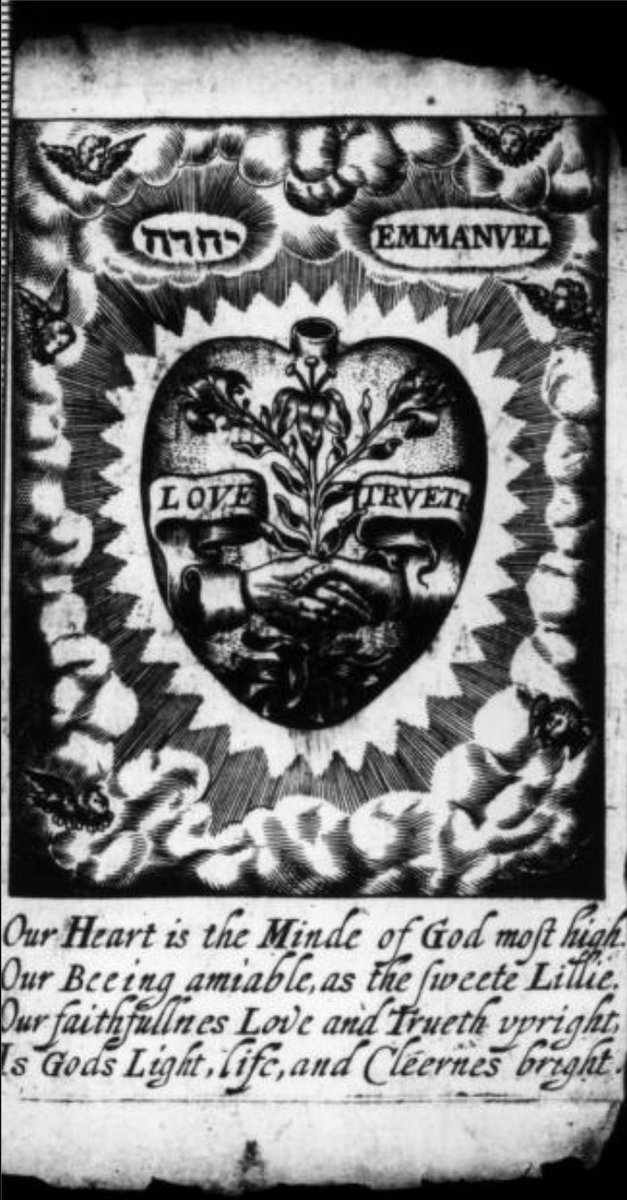
⚠️ 115 Rare Tags, Extinct Chronological Terms, Obscure Historical Facets, & Deep Knowledge Correspondences - For John More’s A Table from the Beginning of the World to This Day - 1593 - The following terms are grounded in the attached volume. Some are historical expressions or subjects found directly in More’s table; others are specialized analytical terms coined to describe the book’s remarkable intellectual machinery. Sacred Foundations and Primeval Chronology 1/I. Sacred Chronography The ordering of world history according to the sequence, genealogies, reigns, covenants, captivities, prophecies, and sacred intervals preserved in Scripture. More makes this the governing science of his entire historical table. 2/II. Annus Mundi Computation The calculation of events by the “year of the world.” Instead of separating biblical history from classical and European history, More assigns them positions within one uninterrupted temporal creation. 3/III. Scriptural Temporal Meridian The Bible functions as the fixed line from which all other chronologies are measured. More explicitly refuses to force Scripture into conformity with uncertain secular writers and instead brings foreign histories into agreement with the sacred account. 4/IV. Providential Synchronism The joining of events from different nations because they occurred within the same divinely governed span of time. Israel, Egypt, Athens, Persia, Troy, Rome, and England are therefore made visible as simultaneous portions of one history. 5/V. Creation-to-Consummation Architecture The book begins with the world’s first generations and advances through Christ, the Church, kingdoms, universities, reformations, and More’s own century. Its chronology is an immense architecture of beginnings, fulfillments, falls, restorations, and continuities. 6/VI. Christological Anchor-Year The suffering of Christ becomes a principal point from which More measures backward and forward. He places it in the eighteenth year of Tiberius and in the year of the world 3961. 7/VII. Tiberian Cross-Calculation The reign of Tiberius is used as a bridge between Gospel history and Roman chronology. This allows sacred events to be compared with the Roman count from the foundation of the city. 8/VIII. Ab Urbe Condita Reconciliation More correlates Roman years with the years of the world, calculating Rome’s foundation in the days of Amaziah, king of Judah. Roman civic time is thus inserted into biblical regnal history. 9/IX. Trojan-Judicial Synchronism The destruction of Troy is assigned to the age of Elon, judge of Israel, twelve years before Samson. Greek heroic memory is thereby placed inside the chronology of Judges. 10/X. Olympiad-Regnal Correspondence The beginning of the Olympiads is synchronized with the reign of Joash. More transforms the Greek athletic calendar into a supporting instrument for sacred history. ─── Genealogical Mathematics and Covenant Time 11/XI. Genealogical Chronometry Patriarchal ages are treated as exact historical measurements. Births, deaths, generations, and covenantal transitions become the numerical ligaments holding primeval history together. 12/XII. Covenant-Line Precedence A person may be named first because sacred history continues through his line, rather than because he was biologically eldest. More applies this principle to Shem and Abraham. 13/XIII. Semitic Ecclesial Continuity Shem’s line is privileged because the history of the Church and promise continues through it. More states that Japheth was eldest and Ham youngest, while Shem stands first in the narrative because of covenantal succession. 14/XIV. Primogeniture Reassessment The ordering of names in Genesis is not mechanically equated with birth order. More’s treatment is an early exercise in literary genealogy and historical sequence. 15/XV. Terahic Recalculation More argues that Abraham was born when Terah was approximately 130 years old rather than seventy. He believes earlier chronologers lost sixty years by misunderstanding the patriarchal succession. 16/XVI. Flood-to-Promise Interval The period from the Flood to the promise made to Abraham is calculated as 427 years. This interval binds postdiluvian genealogy to the emergence of covenantal history. 17/XVII. Diluvian Temporal Threshold The Flood is both catastrophe and chronological boundary. After it, the renewed genealogical world is measured through Noah, Shem, Arphaxad, and the patriarchal succession. 18/XVIII. Postdiluvian Patriarchal Arithmetic Ages after the Flood are compared against one another to reconstruct the true order of descent, survival, migration, and promise. 19/XIX. Promise-to-Exodus Computation The 430-year period is treated as beginning with the divine promise rather than merely with Jacob’s entrance into Egypt. More reads Exodus and Galatians as mutually explanatory chronological witnesses. 20/XX. Exodus-Temple Quadringentary The 480 years from the Exodus to the fourth year of Solomon provide one of the principal biblical measurements in the book. More gathers the period through the Judges and the succeeding rulers. ─── Judges, Kings, Temple, and Captivity 21/XXI. Judicial Aggregation The age of the Judges is reconstructed by combining years of rule, oppression, deliverance, and transitional leadership. The period is a layered chronology rather than a simple line of consecutive biographies. 22/XXII. Oppression-Time Accounting More considers whether years under Canaanite and Moabite domination are included within larger apostolic approximations. Political subjection becomes a distinct measurable component of Israel’s chronology. 23/XXIII. Prophetic School Chronology The schools or companies of prophets at Ramah, Naioth, and Gibeah are placed within Israel’s political timeline, joining inspired instruction with regnal and military history. 24/XXIV. Solomonic Temple Epoch The commencement of the Temple in Solomon’s fourth year marks the conclusion of an immense sacred interval. Architecture becomes a temporal monument as well as a sanctuary. 25/XXV. Temple-Captivity Interval More calculates 408 years from the beginning of Solomon’s Temple to the beginning of the Babylonian Captivity, using the reigns of Judah and Israel as a comparative framework. 26/XXVI. Parallel Regnalism The kings of Judah and Israel are aligned in adjoining chronological sequences. Their overlapping reigns become instruments for checking the internal coherence of the historical books. 27/XXVII. Jehoiakim Captivity Thesis More begins the Captivity in the fourth year of Jehoiakim, when Daniel and other nobles were carried away. He rejects beginning it only with Jehoiachin’s deportation or the Temple’s destruction. 28/XXVIII. Nebuchadnezzarian Regnal Matrix The reign of Nebuchadnezzar is coordinated with Jehoiakim, Daniel, Jeremiah, Babylon’s political succession, and the removal of the sacred vessels. 29/XXIX. Seventy-Year Captivity The Captivity is measured as seventy years from its true beginning to Cyrus’s decree of return. More supports the interval through Jeremiah, Daniel, Ezra, Chronicles, and the reigns of Babylonian rulers. 30/XXX. Cyrusian Deliverance Epoch Cyrus’s permission for the Jews to return and rebuild the Temple inaugurates a new chronological age called the Deliverance from Captivity. ─── Danielic Time and Second Temple History 31/XXXI. Danielic Heptadology The study of Daniel’s “sevens” as actual prophetic periods of years. More regards the seventy weeks as a divinely revealed chronological structure. 32/XXXII. Angelic Chronometry The angelic declaration in Daniel carries greater certainty than competing human chronographies. Prophetic revelation becomes a measure capable of correcting the histories of empires. 33/XXXIII. Messianic Quadringentary The seventy weeks form 490 years from the Deliverance out of Babylon to the slaying of the Messiah. This is the book’s greatest prophecy-history synthesis. 34/XXXIV. Persian Chronological Compression More adjusts the length and overlap of Persian reigns so that they accord with Daniel’s prophetic interval, accounting for co-regencies and princes named kings before sole accession. 35/XXXV. Alexander-Augustan Bridge The 280 years between Alexander’s death and Augustus’s accession form the central classical span in More’s 490-year calculation. 36/XXXVI. Persian-Macedonian-Roman Triad The prophetic period is divided among Persian dominion, Macedonian and Hellenistic succession, and the Roman age culminating in Christ. 37/XXXVII. Historiographical Correction by Prophecy More’s method reverses the ordinary hierarchy of sources. Disagreeing historians are examined by the prophetic number rather than Daniel being stretched to accommodate their uncertainties 38/XXXVIII. Temple-Restoration Chronology Haggai, Zechariah, Ezra, and royal Persian commands are coordinated with the stages of rebuilding. The completion of the Temple becomes a dated act of restoration. 39/XXXIX. Estherian-Persian Synchronism Esther’s purification, marriage, Haman’s fall, and Mordecai’s advancement are situated beside Persian and Roman political developments. 40/XL. Decemviral Correspondence The Roman Decemvirs and tribunes appear alongside the Persian restoration period. Roman constitutional history is synchronized with Ezra, Esther, and the rebuilt Temple. ─── Apocrypha, Maccabees, and Jewish Sovereignty 41/XLI. Apocryphal Chronography Susanna, Bel and the Dragon, and Maccabean materials are integrated into the chronology as witnesses to the history surrounding Daniel and the Second Temple. 42/XLII. Susanna Temporal Placement More assigns the story of Susanna to a specific Babylonian setting, while qualifying it with the phrase “if it be true.” The entry preserves both use and textual discernment. 43/XLIII. Bel-and-Dragon Integration The narrative of Bel and the Dragon is placed beside Daniel’s advancement and lions’ den, demonstrating the volume’s broad scriptural-historical range. 44/XLIV. Antiochene Persecution Cycle Antiochus Epiphanes becomes a chronological center for sacrilege, coercion, Jerusalem’s suffering, and armed resistance. 45/XLV. Maccabean Deliverance Mechanics The uprising of the priestly family is represented as resistance to imposed abandonment of the Law. Political liberation and covenantal defense converge in one entry. 46/XLVI. Hasmonean Priest-Kingship High-priestly and royal authority are tracked together through the later Jewish rulers, revealing the fusion of sanctuary office and political sovereignty. 47/XLVII. Aristobulan Coronation Aristobulus is identified as the first crowned king in Judea after the Captivity. His violent household history is preserved beside his constitutional importance. 48/XLVIII. Herodian Regnal Intrusion Herod’s Roman-supported accession represents the passage from Hasmonean rule to a new political order shaped by Antony, Roman patronage, and regional warfare. 49/XLIX. Herodian Temple Magnificence The rebuilding of the Jerusalem Temple under Herod is marked as a major architectural event within the final decades preceding Christ. 50/L. High-Priestly Succession Register The placement and replacement of high priests under Herodian and Roman authority are recorded as part of the political chronology of Judea. ─── Apostolic and Early Christian Chronology 51/LI. Apostolic Itinerary Mapping The journeys of Paul are arranged through cities, councils, imprisonments, sea passages, and periods of residence. 52/LII. Pauline Epistolary Geography Epistles are linked to their places of composition, including Athens, Corinth, Macedonia, Ephesus, and Troas. Letters become geographical and chronological events. 53/LIII. Missionary Urbanism Philippi, Thessalonica, Berea, Athens, Corinth, and Ephesus appear as stations within a spreading sacred network. 54/LIV. Conciliar Apostolicity The Council at Jerusalem is placed within the missionary chronology, connecting doctrinal decision, ecclesiastical governance, and apostolic travel. 55/LV. Evangelical Succession The history after Christ is not treated as a rupture from biblical chronology. It is a continuation through apostles, evangelists, bishops, martyrs, councils, and churches. 56/LVI. Pentarchic Chronology The succession of bishops in Rome, Jerusalem, Constantinople, Antioch, and Alexandria forms a parallel ecclesiastical time-map. 57/LVII. Episcopal Synchronism Bishops are dated alongside emperors, invasions, councils, theological controversies, and civil disasters. 58/LVIII. Martyrological Annalism Martyrdoms appear as dated historical actions rather than detached devotional legends. The table turns suffering into part of the measured memory of the Church. 59/LIX. Persecution-Dynasty Correspondence Imperial reigns and persecutions are arranged together, revealing how changes in political sovereignty affected Christian communities. 60/LX. Ecclesiastical Chronotaxis A specialized term for More’s ordering of Church persons, offices, doctrines, councils, and institutions according to their proper places in time. ─── Councils, Heresies, and Doctrinal Memory 61/LXI. Conciliar Indexing Councils at Nicaea, Ephesus, Chalcedon, Carthage, Orange, Arles, Rome, and other locations appear throughout the year-columns. 62/LXII. Nicene Documentary Contest More records accusations concerning the falsification or misuse of Nicene conciliar material in disputes over ecclesiastical primacy. 63/LXIII. Heresiological Calendar Montanists, Praxeans, Arians, Nestorians, Eutychians, Monothelites, and many lesser movements are assigned chronological positions. 64/LXIV. Monothelite Succession The seventh-century sequence records emperors, patriarchs, exiles, mutilations, Roman councils, and doctrinal resistance surrounding Monothelitism. 65/LXV. Christological Conflict Mapping Doctrinal controversies concerning the person, natures, and wills of Christ are interwoven with imperial and episcopal politics. 66/LXVI. Primatial Rivalry Chronicle Disputes over ecclesiastical superiority are traced between Rome, Constantinople, Jerusalem, Canterbury, and York. 67/LXVII. Antipapal Counter-Memory More preserves teachers and movements that criticized Roman supremacy, indulgences, purgatory, clerical temporal power, and compulsory traditions. 68/LXVIII. Antipope Duplication Periods containing rival popes are recorded as chronological disorders within the institutional Church. 69/LXIX. Schismography The historical study of divided ecclesiastical government. More records the persons, rival obediences, wars, curses, councils, and political patrons involved in major schisms. 70/LXX. Great Western Schism Register Urban and Clement are placed within a prolonged conflict of competing popes, cardinals, nations, and military violence. ─── Medieval Dissent, Reform, and Spiritual Continuity 71/LXXI. Waldensian Persistence More presents the Waldenses as opposing invocation of saints, purgatory, masses, papal supremacy, and the identification of Rome with the true Church. He states that they continued in Piedmont and Provence. 72/LXXII. Albigensian Nomenclature The work recognizes that related dissenting communities received different regional names, including Albigenses in the Toulouse region. 73/LXXIII. Bohemian Reform Transmission Teachings associated with Prague, Wyclif, and later reforming movements are placed in a long continuity rather than treated as isolated outbreaks. 74/LXXIV. Melitzian Admonition Milíč of Prague appears as a preacher who accused pope, cardinals, and priests of abandoning truth and proclaimed the arrival of Antichrist. 75/LXXV. Brigitine Prophetic Reproof Bridget is remembered for severe criticism of ecclesiastical corruption and for predictions associated with the coming schism. 76/LXXVI. Wycliffite Doctrinal Continuity More records Wyclif’s teaching on the sacrament, clerical temporal power, pardons, supremacy, and the Roman institution, while emphasizing that his doctrine endured under persecution. 77/LXXVII. Plowman’s Prayer Tradition The “Plowman’s Prayer” is placed among fourteenth-century protests against friars, canon law, compulsory celibacy, purgatory, and papal claims. 78/LXXVIII. Armaghian Biblioclasm Witness The Archbishop of Armagh is associated with opposition to friars and the striking complaint that he could scarcely find four Bibles. 79/LXXIX. Prelatical Pride Reproof Nicholas Oresme is remembered as preaching before the pope against the pride of prelates. The table preserves such speeches as landmarks of reforming conscience. 80/LXXX. Reformation Prehistory The volume constructs a centuries-long genealogy of correction, dissent, martyrdom, scriptural recovery, and resistance before the sixteenth-century Reformation. ─── Institutions, Universities, and Knowledge Foundations 81/LXXXI. University Annalistics The foundation of universities is treated as an event worthy of placement beside kings, councils, wars, and religious transformations. 82/LXXXII. Collegiate Microchronology Cambridge and Oxford colleges appear with founders, patrons, bishops, queens, duchesses, and institutional dates. 83/LXXXIII. Cambridge Foundation Register Trinity Hall, Clare Hall, King’s Hall, Pembroke Hall, Queens’ College, Catherine Hall, and other foundations are woven into general history. 84/LXXXIV. Royal Female Patronage Queens, countesses, and duchesses appear as agents in the foundation and completion of colleges, revealing the role of aristocratic women in the architecture of learning. 85/LXXXV. Bibliotectonic Institutionalism A coined term for the way libraries, colleges, schools, monasteries, and universities form visible structures within More’s chronology of civilization. 86/LXXXVI. Printing Invention Marker The invention of printing receives an index entry, showing that technologies of textual multiplication belong within universal history. 87/LXXXVII. Hebrew-Greek Type Scarcity Nicholas Bownd laments the limited availability of Hebrew and Greek printing characters in England, suggesting that other learned works by More might be delayed or prevented. 88/LXXXVIII. Cartographic Production Cost Bownd also identifies the expense of printing maps as an obstacle to publishing further manuscripts. This is a rare glimpse into the material economy of late Elizabethan scholarship. 89/LXXXIX. Posthumous Manuscript Stewardship More’s writings passed into Bownd’s care, and Bownd regarded their publication as a duty both to the deceased scholar and to the Church. 90/XC. First-Fruits Bibliography The volume is presented as the first portion of a larger body of More’s scholarship, giving it the character of a surviving fragment from a more extensive intellectual workshop. ─── Classical Learning and Intellectual Synchronisms 91/XCI. Philosophical Synchronography Philosophers are dated beside biblical restorations, Persian kings, Greek wars, and Roman institutions. 92/XCII. Hippocratic Temporal Placement Hippocrates appears within the Persian and Greek chronological sequence alongside Empedocles, Parmenides, Herodotus, and dramatic poets. 93/XCIII. Dramatic Annalism Aeschylus and Sophocles are treated as datable occupants of world history, not merely as names in a literary canon. 94/XCIV. Presocratic Constellation Parmenides, Empedocles, and other early thinkers appear as an intellectual constellation within imperial and sacred time. 95/XCV. Pythagorean Epochalism Pythagoras is indexed among the persons whose lives can be located within the world-year structure. 96/XCVI. Platonic Chronolocation Plato’s place in the table allows philosophy to be situated relative to Persian, Jewish, Macedonian, and Roman history. 97/XCVII. Poetical Time-Mapping Pindar, Plautus, Petrarch, and other poets become historical coordinates within the chronological field. 98/XCVIII. Historiographer Constellation Herodotus, Polybius, Plutarch, Josephus, ecclesiastical historians, and medieval chroniclers form overlapping layers of historical testimony. 99/XCIX. Classical-Biblical Co-Presence Moses, Deucalion, Athens, Caleb, Pharaoh, and the Exodus are placed close together, revealing how More envisioned ancient civilizations sharing one temporal world. 100/C. Polymathic Annalism The table contains theology, political succession, philosophy, medicine, poetry, war, architecture, institutions, geography, and biography within a single chronological apparatus. ─── Kingdoms, Migrations, and Civilizational Successions 101/CI. Athenian Constitutional Stratigraphy Athens is traced through kingship, ten-year magistracies, annual magistrates, the Thirty Tyrants, restored liberty, Macedonian dominion, Roman conquest, and later Turkish rule. 102/CII. Macedonian Unification Threshold Philip of Macedon’s conquest of the divided Greek powers marks the absorption of independent city-states into a larger monarchy. 103/CIII. Imperial Palimpsest A land may pass through several political and religious sovereignties while retaining traces of each. Egypt, Jerusalem, Italy, Persia, and Spain are treated as layered historical surfaces. 104/CIV. Gothic Migration Annals The Goths are followed through Thrace, Constantinople, Gaul, Spain, Italy, and conflicts with Roman imperial power. 105/CV. Vandal-African Succession The Vandals move from northern and central Europe through Spain into Africa, sack Rome, persecute Christians as Arians, and are eventually subdued by Belisarius. 106/CVI. Lombardic Italian Layer The Lombards are traced from northern regions into Pannonia and Italy, where they rule until their defeat by Charlemagne. 107/CVII. Ostrogothic Regnal Interlude Theodoric’s Gothic kingdom in Italy is described between the expulsion of Odoacer and the campaigns of Justinian’s commanders. 108/CVIII. Jerusalem Sovereignty Chain Jerusalem passes successively through Roman, Persian, Saracen, Turkish, Egyptian, Frankish, and Saladine control. The holy city becomes a concentrated history of imperial succession. 109/CIX. Egyptian Governmental Metamorphosis Egypt is followed through Persian, Macedonian, Ptolemaic, Roman, Christian, Saracen, sultanic, Mamluk, and Ottoman phases. 110/CX. Mamluk Captive-Warrior Polity More describes a military government formed from captives brought for warfare, who rose in power, killed the sultan, and established rulers called Mamluks. ─── Deep Structural and Archival Terms 111/CXI. Chronotopography The union of place and time within the table. Jerusalem, Babylon, Rome, Athens, Norwich, Cambridge, and Constantinople acquire meaning through both location and chronological position. 112/CXII. Sacred-Geopolitical Succession Kingdoms, cities, and peoples are interpreted through their changing relation to divine worship, persecution, conversion, heresy, restoration, and scriptural history. 113/CXIII. Polycolumnar Historiography The page itself acts as an intellectual machine. Parallel columns permit rulers, prophets, bishops, kingdoms, and events to be perceived simultaneously rather than read only in narrative succession. 114/CXIV. Alphabetical Retrieval Architecture The large index transforms the volume into a searchable knowledge system. Entries range from Noah, Nimrod, Nebuchadnezzar, and Nehemiah to councils, heresies, monasteries, universities, plagues, printers, poets, and Norwich events. 115/CXV. Providential Memory Engine The finest description of the complete work. More’s table gathers Scripture, chronology, prophecy, philosophy, empire, ecclesiastical succession, martyrdom, education, local memory, and world geography into one immense apparatus designed to show that no year and no civilization exists outside the ordered history of God.
1593 - A Table from the Beginning of the World to This Day: Wherein Is Declared in What Yeere of the World Every Thing Was Done, Both in the Scriptures Mentioned, & Also in Prophane Matters -John More, B.A. - Fts - Phenomenology of Sacred Time, Creation-Proportion, Prophetic
⚠️ 25 Remarkable Lagoons of Knowledge Experimental Sciences, Experiential Philosophy, Historical Ontology, Natural Phenomena, Intellectual Heavy Hitters, & Obscure Degrees in John More’s A Table from the Beginning of the World to This Day - 1593 1/I. Chronometric Experimentalism More’s table operates like a historical laboratory in which competing dates are placed beside one another, tested by addition, subtraction, succession, genealogy, and synchronism. His “experiment” is not performed with glass vessels or chemical furnaces, but with years, reigns, generations, Olympiads, jubilees, captivities, and scriptural intervals. He begins with a controlling measure derived from Scripture and then tests whether foreign histories can be brought into agreement with it. Rome, Troy, Tiberius, the Olympiads, Judah, and the Judges become variables in one immense chronological demonstration. This method contributes to a proto-science of historical verification: a date must not merely be repeated from authority, but fitted into a larger system without breaking its proportions. More’s statement that histories must be brought to their “due and right time” captures the practical spirit of this chronological experimentalism. XVIII. Roman Micro-Time in the Main Table The Roman chronology is not confined to emperors. More records changing civic instruments: • kings • tribunes • military tribunes • decemvirs • consuls • dictators • provincial presidents • emperors • East-West divisions • exarchs • popes • German emperors One of the most remarkable conjunctions occurs during the Captivity. Ezekiel’s vision of the restored spiritual kingdom is placed near the institution of the Roman dictator and the predicted destruction of Egypt. Three forms of authority meet in one temporal field: • Roman emergency magistracy • Babylonian imperial power • visionary Divine kingship The historical dictator holds temporary concentrated power. Nebuchadnezzar exercises imperial domination. Ezekiel sees a spiritual kingdom whose order exceeds both. The grid allows their differences to become visible without separating them into different books. ─── XIX. Christ, Imperial Administration, and Sacred Presence Around Christ’s birth and childhood, More records not only sacred manifestations but administrative changes: • wise men from the East • Simeon and Anna • the flight into Egypt • the slaughter of infants • Archelaus • Philip • Herod Antipas • Roman and Syrian officials Later the table places Christ disputing in the Temple beside Roman provincial presidents and high-priestly appointments. The Incarnation therefore enters an already crowded governmental world. Sacred presence does not replace administrative reality. It inhabits it. The Temple contains the child Christ while Rome appoints governors and local rulers reorganize priestly office. The supernatural appears inside jurisdiction. ─── XX. Apostolic Geography as Living Chronology After Christ, the table becomes increasingly geographical. Paul’s movements are recorded through: • Arabia • Jerusalem • Tarsus • Antioch • Cyprus • Pisidia • Iconium • Lystra • Derbe • Philippi • Thessalonica • Berea • Athens • Corinth • Ephesus • Macedonia • Troas • Rome The epistles are tied to places of composition, journeys, imprisonments, and periods of residence This produces epistolary chronotopography. A letter is simultaneously: • theological discourse • written object • geographical product • missionary instrument • dated event • extension of apostolic presence The journeys form a nervous system, while the epistles become transmissions through that system. ─── XXI. Historical Duration Versus Page-Space The proportions of the printed table reveal another hidden structure. Approximately the first 94 numbered table pages carry almost 3961 years, from Creation to Christ’s death. The remaining main-table pages extend from the apostolic age through the late sixteenth century and occupy substantially more space per historical year. This means that the post-apostolic and ecclesiastical centuries are typographically about three and a half times denser per year than the primeval and biblical chronology. This does not mean the later centuries are more important. It reveals a difference in archival abundance: • Genesis provides long genealogical spans • kingdoms create more annual divisions • Rome produces magistrates and emperors • the Church produces bishops and councils • medieval Europe produces universities, orders, schisms, and monarchies • the Reformation produces local events, burnings, publications, and controversies The world accumulates records as it accumulates institutions. Chronological duration decreases while documentary density increases. ─── 🔑 - Empty Rows and the Phenomenology of Silent Time The table preserves many rows containing no named event. This is not wasted space. A blank year still receives a line. More does not collapse history by jumping only from event to event. The unfilled interval remains visible. Time continues even when the chronographer has nothing to assign to it. This may be described as apophatic annalism: The blank row acknowledges a real year whose contents are absent from the surviving record. The ruled emptiness tells the reader: • something may have occurred • the author has not entered it • the year nevertheless existed • history exceeds the written notice The book therefore makes absence part of historical perception. ─── 🔑 The Astonishing Blank Continuation from 1591 to 1631 One of the rarest discoveries is found immediately before the appendices. The final filled historical notices become sparse in the late 1580s. The table then continues with printed year-columns and blank writing spaces through: • 1591 • 1592 • 1593 • the 1600s • the 1610s • the 1620s • 1631 The final blank page ends with FINIS. This transforms the book from a closed history into an extendable chronographical instrument. The future has already been given ruled space, but not content. The author cannot know the events, yet he can provide their future temporal habitation. The profound implication The future is not represented by prophecy in these blank pages. It is represented by capacity. There are lines waiting for: • future rulers • future disasters • future councils • future discoveries • future persecutions • future acts of Providence The reader is implicitly invited to become the next annalist. Editorial fidelity Nicholas Bownd states that the work came into the patrons’ hands “whole and perfect” as More left it, without addition, subtraction, or alteration. The blank future rows therefore become material evidence of the editor’s restraint. Bownd did not fill the uncompleted years with his own notices. The empty paper preserves the boundary between More’s knowledge and later history. ─── 🔑 - FINIS Followed by Appendices: The Book Changes Optical Scale The principal table concludes with blank future years and FINIS. Immediately afterward appears the narrative appendix on Athens, followed by the Arabians, Egypt, Goths, Jerusalem, Lombards, Ostrogoths, Persians, Rome, and Vandals. This is a deliberate change of historical optics. The main table is microscopic It observes: • single years • individual rulers • exact months • births • deaths • visions • councils • local events The appendices are telescopic They observe: • whole governmental forms • centuries of domination • continental migrations • religious transformations • imperial rise and dissolution • long constitutional sequences The book therefore contains two temporal sciences: 1. Microchronology - the exact annual row 2. Macrochronology - the long civilizational phase The appendices do not merely add miscellaneous information. They reveal what the annual grid cannot easily show: the shape of a civilization across many centuries. ─── 🔑 - More’s Complete Intricate Methodology More’s historical procedure can be reconstructed in ten operations. 1. Establish the ontological beginning The world is created by God. All later time is subordinate created duration. 2. Construct patriarchal sums The ages of begetting, birth, and death are added to form the primeval chronology. 3. Establish epochal thresholds Flood, Promise, Exodus, Temple, Captivity, Deliverance, Messiah, and Christ’s birth become secondary origins. 4. Maintain nested counters Each new epoch receives its own numerical sequence while the universal world-year continues. 5. Identify contact points Tiberius, Rome’s foundation, Troy, and the Olympiads permit sacred and foreign chronologies to touch. 6. Prefer relevant witnesses Native historians are preferred when writing about their own kingdoms. 7. Reconcile co-regencies Overlapping reigns are identified so duplicated years do not enlarge the world artificially. 8. Use prophecy as temporal calibration Daniel’s seventy weeks provide the controlling measure for Persian, Greek, and Roman succession. 9. Preserve graded traditions Scriptural testimony, historical writing, ecclesiastical record, and qualified lore are retained with differing forms of attribution. 10. Leave the future structurally open Blank rows transform the reader from passive recipient into potential continuer of sacred history. ─── 🔑 Overall Phenomenological Assessment = a temporal cosmogram. Creation gives time its being. Genealogy gives time bodily measure. The Flood gives time catastrophic division. The Promise gives time covenantal direction. The Exodus gives time liberated movement. The Temple gives time architectural center. Captivity gives time absence and compression. Daniel gives time angelic proportion. Christ gives time incarnational fullness. The apostles give time geographical expansion. Rome gives time jurisdictional succession. The Church gives time institutional memory. The blank future pages give time openness. The smallest entries frequently contain the deepest correspondences: • Enoch’s translation among patriarchal deaths • Babel beside Peleg • Nimrod beside Babylonian tradition • Abraham beside Semiramis • circumcision beside Sodom • Isaac beside Moab and Ammon • Ezekiel’s spiritual kingdom beside Roman dictatorship • Daniel’s beasts beside Persian succession • the wise men beside imperial administration • Revelation beside Domitian • miraculous rain beside Roman warfare • blank years beside FINIS The graph does not flatten these realities. It reveals their simultaneity. More’s deepest proposition is that all dimensions of history - natural, supernatural, political, prophetic, bodily, architectural, literary, celestial, local, and imperial - possess their proper position within the created proportion of time. 2/II. Genealogical Arithmetic as a Science of Living Duration The patriarchal genealogies become More’s earliest measuring instruments. Human bodies preserve time through ages of generation, parenthood, survival, and death. More does not read Abraham, Terah, Shem, Noah, and their descendants merely as names in a sacred family record. Their ages become data capable of exposing chronological error. His recalculation of Abraham’s birth argues that earlier chronographers had lost sixty years because they assumed that the first-named son must always be the eldest. The obscurer intellectual achievement lies in his combination of narrative order, age at death, migration, birth order, and covenantal succession. This is a proto-demographic and genealogical methodology: biological continuity becomes mathematical evidence, while textual placement is tested against lifespan and event sequence. More thereby treats embodied existence as the first archive of world history. 3/III. Regnal Mechanics and the Hidden Science of Overlapping Sovereignty More recognizes that royal time is mechanically complicated. A king may reign alone, with his father, during his father’s absence, or under a title granted before sole accession. Years may therefore be duplicated, absorbed, or assigned differently by separate historians. His discussions of Cyrus, Cambyses, Xerxes, Darius, and the several Artaxerxes amount to an early study of co-regency mechanics. Political succession behaves almost like interlocking wheels: when one reign overlaps another, the chronographer must determine whether the shared years belong to one wheel, both wheels, or the complete machine. This is one reason More compresses Persian chronology. He understands that lists of kings cannot be added mechanically without examining the actual mode of government. The resulting methodology anticipates later chronological criticism by distinguishing titular kingship, delegated authority, co-rule, sole rule, and retrospective dynastic counting. 4/IV. Angelic Mathematics and the Measurement of Invisible Counsel Daniel’s seventy weeks form the deepest supernatural mathematics in the book. More treats the angelic declaration as a genuine measure of historical duration, not as a decorative symbol. The 490 years become a revealed line stretched across Persia, Macedonia, the Hellenistic kingdoms, Rome, and the coming of Christ. This creates a remarkable union of supernatural revelation and historical computation. The invisible counsel of God is made numerically traceable through visible kingdoms. More divides the interval into 136 years to Alexander’s death, 280 years from Alexander to Augustus, and 74 years from Augustus to Christ’s death. His method proposes that prophecy may contain not only meaning but proportion. Time itself becomes an object of revelation, and the angel functions as a heavenly chronographer whose number corrects the uncertainties of terrestrial annalists. 5/V. Jubilee Dynamics and Sabbatical Temporal Physiology The repeated jubilee entries reveal that More does not imagine history as an undifferentiated stream. Time possesses recurring joints, rests, releases, and sacred proportions. The jubilee serves almost as a temporal physiology: history breathes through cycles of seven and seven-times-seven. More connects the beginning of the Captivity with a calculation that causes a jubilee year to fall upon Christ’s suffering in the year of the world 3961. This is a highly intricate synchronism, joining land-rest, release, captivity, restoration, and redemption. The jubilee therefore acts as more than an agricultural or legal institution. It becomes an underlying rhythm of sacred reality. The many jubilee references throughout the index show how persistently More marks these recurrent thresholds within royal and prophetic history. 6/VI. Calendarology and the Collision of Multiple Time Systems More’s pages coordinate several temporal languages at once: years of the world, years after the Flood, years from the Promise, regnal years, Olympiads, Roman civic reckoning, jubilees, Danielic sevens, months of the Hebrew calendar, and years after Christ’s birth. The table therefore functions as a converter among ancient calendars. One event may occupy several temporal realities simultaneously. The building of the Temple, for example, is a year of the world, a year after the Exodus, a year of Solomon’s reign, and a scriptural interval. This is an advanced form of temporal triangulation. It permits the reader to observe the same event through covenantal, political, astronomical-civic, and universal coordinates. The method resembles a scientific conversion table in which different units remain distinct but become mutually intelligible. 7/VII. Scriptural Data Reconciliation and the Joshua Remainder Method More sometimes calculates an unstated quantity by subtracting known quantities from a fixed total. In discussing the 480 years from the Exodus to the Temple, he compares the period of the Judges, foreign oppressions, apostolic approximations, genealogical constraints, and the unrecorded length of Joshua’s rule. He concludes that the remaining eighteen years must belong to Joshua. This is a proto-algebraic historical method: establish a total, subtract all securely known components, and assign the remainder to the uncertain interval. He also tests Paul’s approximate figure against the genealogy from Rahab to David, showing that generational limits constrain chronological possibilities. More is therefore not merely collecting numbers. He is evaluating whether biological succession, textual totals, and political periods can coexist inside the same mathematical frame. 8/VIII. Proto-Seismology and the Memory of Overthrown Cities The table records Laodicea, Colossae, and Hierapolis as overthrown by an earthquake. This small notice opens a lagoon of ancient environmental history. More treats seismic catastrophe as chronologically equal to imperial succession, apostolic writing, persecution, and theological controversy. The earth itself becomes an historical actor capable of ending urban continuity in a single convulsion. Such notices contribute to proto-seismology because they preserve the date, locality, scale, and civilizational effect of natural disturbance Phenomenologically, the earthquake reveals the instability beneath apparently permanent cities. Streets, temples, homes, archives, and civic identities depend upon a ground that can suddenly move. More’s inclusion of the event demonstrates that universal history must contain not only human decisions but terrestrial motions. 9/IX. Meteorological Portents and Providential Atmospherics More preserves several atmospheric marvels, including rain said to have come by miracle in a Roman army at the prayers of Christians and a report that blood rained in Italy for three days. The table does not reduce the atmosphere to passive background. Rain, flood, frost, storm, and extraordinary precipitation enter the historical record as events affecting armies, cities, belief, and collective interpretation. These notices belong to an old aerological science in which weather could possess physical, moral, providential, and symbolic dimensions simultaneously. The value of the entries lies in their preservation of how earlier societies experienced the sky: not merely as climate, but as an active boundary between visible nature and Divine governance. More’s record becomes a repository of historical atmospheric consciousness. 10/X. Hydrological Catastrophe and the Repeated Rewriting of Habitable Space From the universal Flood to later rivers overflowing cities, the book preserves the power of water to redraw historical geography. Noah’s Flood closes an entire primeval age, while later inundations interrupt urban government, transport, worship, and ordinary habitation. One notice records the Tiber overflowing Rome so extensively that boats were required within the city. Such entries form a proto-hydrology of civilization: water is life-giving, boundary-forming, commercially necessary, and catastrophically invasive. The ontological lesson is that a city’s identity depends upon maintaining distinctions between river and street, channel and house, harbor and sanctuary. When water crosses those boundaries, civic space temporarily changes substance. More’s table allows natural process and political history to be read in one continuum. 11/XI. Medical Annalism and the Historical Body The book’s index and tables preserve Hippocrates, pestilences, bodily deaths, the English sweating sickness, mass mortality, poisonings, worms, strange bodily endings, and the physical effects of persecution and famine. This creates an unplanned archive of historical medicine. Hippocrates appears not in isolation but among Parmenides, Empedocles, Herodotus, Sophocles, and Persian rulers, demonstrating that medicine belonged to the same intellectual flowering as philosophy, drama, politics, and history. Later disease entries reveal that epidemics alter dynasties, cities, labor, worship, and memory. More’s chronology therefore contributes to a proto-epidemiological understanding: illness is not private biology alone but a force shaping public time. The index’s notice of the sweat “first in England” preserves the emergence of a distinctive disease-event within national memory. 12/XII. Embodied Judgment and the Political Physiology of Rulers More frequently records the bodily ends of rulers and prelates: Herod eaten by worms, a pope reportedly choked by a fly, others poisoned, mutilated, drowned, burned, or appearing after death in altered form. Such entries reflect an older historical physiology in which the body of a ruler could manifest the moral condition of power. The sovereign body was not merely private flesh. It represented office, authority, pride, corruption, mortality, and judgment. A king’s or pope’s unusual death therefore became an interpretive event. These notices also preserve experiential history: how chroniclers understood the encounter between public authority and physical dissolution. More’s table repeatedly reduces the seemingly immense power of rulers to the vulnerability of breath, digestion, infection, poison, accident, and decay. 13/XIII. Dream Hermeneutics as a Proto-Science of Symbolic Information Daniel’s interpretation of the golden image demonstrates a science of received symbols. The dream arrives as compressed information: metals, bodily form, sequence, fracture, and replacement contain the future of kingdoms. Daniel’s work is interpretive, but it is also analytical. He distinguishes elements, assigns them to political realities, and unfolds their temporal succession. More places this dream within an exact year, converting oneiric experience into public history. The dream is not treated as private fantasy. It becomes an informational vessel whose meaning exceeds the dreamer’s consciousness. This opens a remarkable field of proto-psychology, symbolic cognition, and revelatory hermeneutics. The mind receives an image; the prophet decodes it; the empire becomes intelligible through its symbolic materials. 14/XIV. Pyric Phenomenology and the Experimental Limits of Fire The three children in the furnace occupy one of the most powerful material-supernatural entries in the table. Fire is present, visible, hot, and destructive, yet its ordinary effect is suspended upon the protected bodies. The event therefore creates a phenomenological experiment concerning substance and Divine command. Fire retains its nature but does not exercise its full operation upon the chosen subjects. More places the event beside siege, prophecy, kingship, and captivity, making it part of actual historical sequence. This opens a lagoon of proto-material thought: created elements possess stable powers, but those powers remain subordinate to their Creator. The furnace becomes both execution apparatus and theophanic chamber. 15/XV. Bestiary Political Ontology Daniel’s beasts, the ram, the goat, and Nebuchadnezzar’s animalized condition establish a political bestiary inside More’s chronology. Kingdoms are rendered as living forms possessing horns, appetites, force, motion, and conflict. Political power is therefore understood not only juridically but zoologically. Empire can devour, trample, grow horns, lose balance, and transform. Nebuchadnezzar’s descent into beast-like existence completes this pattern at the personal level: the ruler who commands nations experiences a collapse of human royal form. More’s exact placement of these visions turns symbolic creatures into historical ontology. They reveal what kingdoms are beneath ceremonial titles - concentrations of appetite, dominion, violence, and temporal limitation. ⚠️SEE NEXT REPLY FOR THE REST
1593 - A Table from the Beginning of the World to This Day: Wherein Is Declared in What Yeere of the World Every Thing Was Done, Both in the Scriptures Mentioned, & Also in Prophane Matters -John More, B.A. - Fts - Phenomenology of Sacred Time, Creation-Proportion, Prophetic
🔑🔑🔑🔑🔑NEXT OR NEW WEEK= NEW CHAPTER x.com/TeXasMadde/sta…
🔑 Scholarly Supplem. cont 24/XXIV - Charlesworth’s first volume gathers the great apocalyptic and testamentary corpus, including the Enoch books, Sibylline Oracles, Ezra and Baruch apocalypses, Abrahamic, Adamic, Elijah, Daniel, and testamentary visions. The correspondences
#ApocalypticBookStudy #104 #BibleStudy #191 #Phenomenology #60 #DimensionalTheology #55 #SupernaturalCosmography #40 📜 Isaiah 33:1-24 - 34:1-17 📜 ⚠️ Specialist Study on Rolled Heavens & Angelomachic Judgment, Falling Star-Powers, Brimstone Transmutation, Demonological Territoriality, Supernatural Tohu & Bohu Lore, Septuagintal Onocentaurs & Sirens AKA The Greek Bestiary of the Judged Frontier: Daimonia, Onocentaurs, Sirens, Hybrid Bodies, & the Wilderness Geometry of a World beyond Civic Order, Rûḥē, Shēdā, & the Night-Dweller: The Syriac translation of Spirits, Afflicting Beings, Demon-Fellows, & the Assigned Repose of the Nocturnal Realm + a 🔑(Never before looked at comparative themes in rare apocryphal books such as but not limited too)(will BE IN NEXT POSTS BELOW WHEN THE PROPER VERSE IN EACH CHAPTER COMES TO THEM) (SKIP TO READ ISAIAH 33:1 AKA START OF THIS COMMENTARY) COMPARATIVE FACETS FROM RARE BOOKS SUCH AS - Gospel of Nicodemus - Featuring - The King of Glory beneath the Earth: Iron Bars Broken, Ancient Gates Shattered, Adam Released, & the Fortified Kingdom of Death Despoiled by Yeshua Questions of Bartholomew When Hades Heard God Approaching: Beliar’s Terror, the Eternal Gates Removed, the Underworld’s Inward Agony, & the Ascent of Adam’s Company The Book that Outlives the Heavens: The Commanding Mouth of YHWH, the Spirit Who Gathers, and the Prophetic Scroll Remaining Open after the Firmamental Scroll Is Closed Heavenly Books across the Apocalypses The Archives above the Firmament: Enochic Tablets, Ezra’s Opened Books, Celestial Scribes, Seals, Records, Testimonies, and the Unforgotten Memory of YHWH’s Court VS the Broken Hades, & the Spirit-Governed Totality of Visible and Invisible Reality & so much more in these 2 jam packed AWESOME chapters for this weeks study ⚠️ Specialist Study on Isaiah 33 (SEE FOLLOWING POSTS BELOW FOR NEXT VERSES & CHAPTERS AKA ISAIAH 34 ALSO WILL BE BELOW IN THE REPLIES)(SEE PICS FOR 1611 TRANSLATION WITH SMALL MARGINAL NOTES WITH NO COMMENTARY OR KEEP READING FOR FINALLY OUR WEEKLY... VERSE BY VERSS +/& COMMENTARY STARTS NOW - Picture I - Isaiah 33:1 Chapter Heading Gods iudgements against the enemies of the Church. 13 The priuiledges of the godly. The heading gives the chapter two great movements: 1/I. YHWH’s judgments against the enemies of His covenant people. 2/II. The protected condition and supernatural privileges of the righteous. Isaiah 33 therefore begins with the enemy’s apparent triumph, but it will move toward YHWH rising, Zion being filled with judgment and righteousness, the devouring fire, the King in His beauty, the immovable tabernacle, the broad rivers, and the forgiveness of the inhabitants. 📜───📜 Verses + the Commentary STARTS HERE - Isaiah 33:1 - KJV 1611 Woe to thee that spoilest, and thou wast not spoiled; and dealest treacherously, and they dealt not treacherously with thee: when thou shalt cease to spoile, thou shalt bee spoiled; and when thou shalt make an end to deale treacherously, they shall deale treacherously with thee. The Prophetic Woe The verse opens with “Woe”, Hebrew הוֹי - hôy. This is more than an expression of sadness. It is a prophetic alarm, a judicial cry, and sometimes the opening sound of a funeral lament pronounced before the proud power has visibly fallen. The spoiler still appears successful. His armies remain active, his treasures increase, and his victims seem powerless. Yet Yeshayahu speaks as though the spoiler’s destruction is already contained within his violence. The woe is therefore a spoken boundary. The prophet announces that the empire’s season has an appointed end. ─── The Unprovoked Spoiler The enemy spoils although he himself had not been spoiled. He acts treacherously although others had not first acted treacherously toward him. This describes violence without rightful cause. The aggressor cannot claim that his destruction was an act of necessary defense. He invaded, plundered, broke agreements, and extended power because he desired domination. The immediate historical atmosphere strongly evokes Assyria, whose kings conquered cities, carried away wealth, displaced peoples, demanded tribute, and treated nations as objects of imperial acquisition. Yet the language is broad enough to describe every later empire that assumes strength gives it the right to devour. The chapter therefore begins by uncovering a hidden law of empire: a kingdom that survives by consuming others eventually prepares the conditions of its own consumption. ─── Hebrew Root-Play Two Hebrew roots dominate the verse. שָׁדַד - shādad To spoil, devastate, plunder, overpower, or violently strip away. The participle שׁוֹדֵד - shōdēd describes the spoiler as one whose continuing identity is plunder. He does not commit one isolated theft. Spoiling has become his imperial vocation. בָּגַד - bāgad To act treacherously, betray trust, violate faith, or deal deceitfully. The form בּוֹגֵד - bōgēd describes one who operates through covenant-breaking and calculated betrayal. The Hebrew repeatedly echoes these roots: The spoiler shall be spoiled. The treacherous dealer shall be dealt with treacherously. English preserves the repetition, but the Hebrew sound is even more forceful. The judgment answers the sin in its own vocabulary. The enemy hears his own deeds returned to him as sentence. ─── Divine Judicial Correspondence This verse reveals a form of judgment in which the punishment corresponds to the offense. The spoiler loses his spoil. The betrayer experiences betrayal. The destroyer enters the destruction he created for others. This is not uncontrolled revenge. It is judicial correspondence beneath YHWH’s sovereign governance. The crime forms the outline of the sentence. Isaiah’s principle appears throughout Scripture: “As thou hast done, it shall be done vnto thee.” Obadiah 15 “With what measure ye mete, it shall be measured to you againe.” Matthew 7:2 “He that leadeth into captiuitie, shall goe into captiuitie.” Revelation 13:10 The same moral architecture operates across prophet, Gospel, and Apocalypse. History is not an empty field where strength alone decides the outcome. Human deeds enter the judicial memory of YHWH. ─── “When Thou Shalt Cease” The enemy does not cease because he becomes righteous. He ceases because the divinely permitted span of his activity reaches completion. The Hebrew idea is: When thou hast finished spoiling. Assyria imagines that it determines when campaigns begin and end. Isaiah reveals a higher chronology. The empire operates inside a time-bound enclosure known to YHWH. This creates a profound distinction: • The spoiler possesses temporary operational power. • YHWH possesses authority over the duration of that power. • The empire chooses its cruelty. • YHWH determines the terminal boundary beyond which that cruelty cannot pass. This is one of the chapter’s first supernatural features. The visible empire believes it governs history, but an invisible Divine chronology governs the empire. ─── The Finishing of Treachery “When thou shalt make an end to deale treacherously…” Treachery carries within itself a finishing point. The betrayer may believe deception gives him endless advantage, but every act adds weight to the approaching reversal. The phrase also suggests the exhaustion of evil. Evil is not self-renewing or eternal. It consumes trust, covenant, stability, and eventually its own foundations. Treachery creates a world in which no alliance remains dependable, including the alliances of the treacherous power itself. The betrayer therefore becomes surrounded by the very atmosphere he created. ─── The Invisible Court behind the Verse The supernatural court is already active. Someone has observed the unprovoked spoiling. Someone has measured the treachery. Someone has fixed its duration. Someone has decreed the reversal. Someone has preserved the moral record of every violated city and covenant. That hidden Judge is YHWH, who will declare in verse 10: “Now will I rise, saith the LORD: now will I be exalted, now will I lift vp my selfe.” Verse 1 is therefore the judicial proclamation issued before the visible rising of YHWH in verse 10. ─── Old Testament Correspondences Habakkuk 2 Habakkuk pronounces woes against the one who increases what is not his and gathers nations through violence. The plundered peoples eventually rise against the plunderer. Jeremiah 50-51 Babylon receives according to her deeds. The destroying mountain becomes a burned mountain, and the empire that made nations desolate enters desolation. Psalm 137:8 Babylon is addressed as one destined for destruction, and blessing is pronounced upon the agent who repays her according to what she did. These passages belong to the same theology: imperial action may seem unanswered for a season, but YHWH preserves the moral shape of history. ─── New Testament and Apocalyptic Correspondences Revelation develops Isaiah’s principle on a universal scale. The world-city that intoxicates nations, enriches merchants, sheds blood, and deceives kingdoms receives an answering judgment. The cry concerning Babylon in Revelation is structurally Isaianic: the devourer becomes desolate, the wealthy city loses its treasures, and the persecuting power receives the measure it gave. Isaiah 33:1 therefore contains an early form of apocalyptic imperial reversal. Assyria becomes a pattern through which later prophetic literature understands Babylon, Rome, and every anti-covenantal world-power. ─── Short Specialist Lens Imperial Moral Symmetry - the empire receives the form of judgment it imposed upon others. Kairological Judgment - the spoiler’s activity has an appointed duration known to YHWH. Providential Reversal - apparent victory is turned into defeat through Divine governance of history. ─── Verse Synthesis Isaiah 33 begins with the spoiler standing at the height of his strength. He has not yet been visibly spoiled. His treachery still appears profitable. Yet Yeshayahu announces that his future has already been judicially shaped. The verse presents an unseen Divine geometry: Spoiling curves back upon the spoiler. Treachery returns to the betrayer. Imperial duration reaches its boundary. The enemy’s completed work becomes the doorway into his own judgment. The chapter therefore does not begin in fear of Assyria. It begins with YHWH’s sentence over Assyria. Before the nations hear the tumult of verse 3, before YHWH rises in verse 10, and before the sinners tremble before everlasting burnings in verse 14, the prophetic Word has already enclosed the spoiler within the certainty of reversal. Next reply below AKA picture (Verses) begins with Isaiah 33:2, the morning arm of YHWH, salvation in trouble, the scattering of nations, and wisdom as the stability of the times & the Posts after will feature 📜 Isaiah 34 -
#ApocalypticBookStudy #103 #BibleStudy #189 #Phenomenology #58 #DimensionalTheology #53 #SupernaturalCosmography #38 📜 Isaiah 31:1-9 - 32:1-20 📜 ⚠️ Specialist Study on: The Lion beneath the Celestial Wings: Angelo-Avian Theophany, Sacred Aerial Defense, Hovering
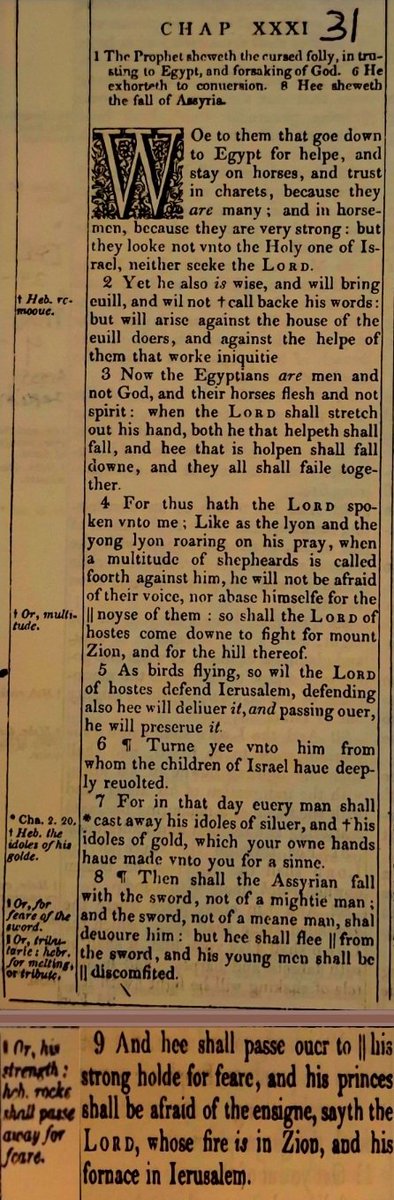


🔑🔑🔑🔑🔑NEXT OR NEW WEEK= NEW CHAPTER x.com/TeXasMadde/sta…
#ApocalypticBookStudy #105 #BibleStudy #193 #Phenomenology #62 #DimensionalTheology #57 #SupernaturalCosmography #42 📜 Isaiah 35:1-10 📜 🔑 Specialist Study on The Wilderness Crowned with Glory, YHWH Coming to Save, Dragon-Habitat Reclamation, the Reopened Human Sensorium,
📜✨️🪽NEW CHAPTER 34 (MAIN POST ABOVE CONTINUES) x.com/TeXasMadde/sta…
#ApocalypticBookStudy #104 #BibleStudy #191 #Phenomenology #60 #DimensionalTheology #55 #SupernaturalCosmography #40 📜 Isaiah 33:1-24 - 34:1-17 📜 ⚠️ Specialist Study on Rolled Heavens & Angelomachic Judgment, Falling Star-Powers, Brimstone Transmutation, Demonological
LAST WEEKS JAM PACKED CHAPTERS - x.com/TeXasMadde/sta…
⚠️ Specialist Study on Isaiah 34 Picture I - Isaiah 34:1 The Universal Assize of YHWH: Earth & Its Offspring Summoned to Hear, the Celestial Host Awaiting Dissolution, the Sword Descending from Heaven, Edom as the Earthly Seat of Cosmic Judgment, & the Tohu-Bohu Geography
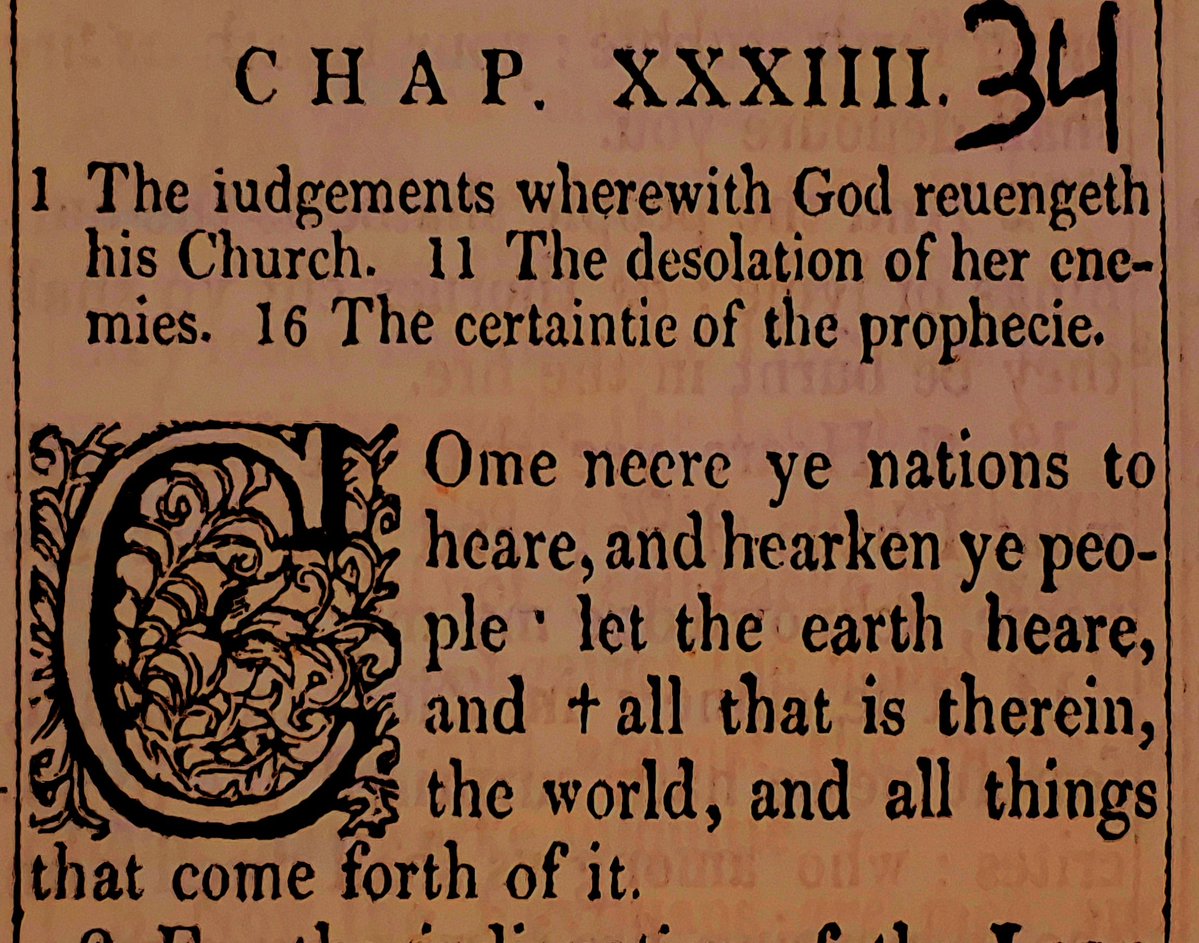

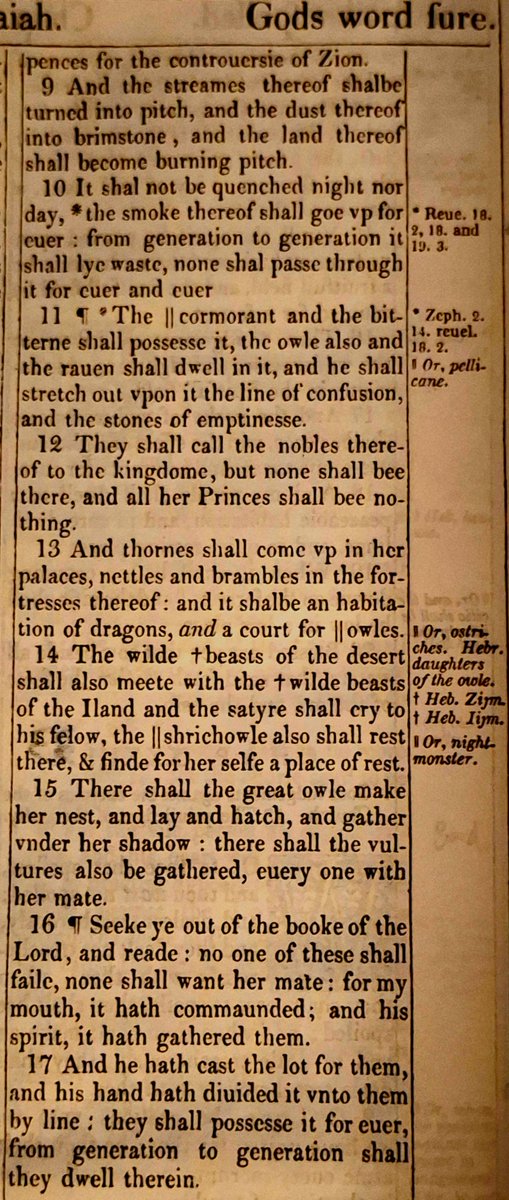
Continued MAIN CHAPTER x.com/TeXasMadde/sta…
🔑 Specialist/Scholarly Study Continues on 📜 Isaiah 35:6-10 📜 The Hart-Leaping Lame, the Singing Tongue, Living Waters Reclaiming the Dragons’ Habitation, the Highway of Holiness, & the Ransomed Return to Zion beneath Everlasting Joy (SEE QUOTE SHARE FOR THE PRIOR VERSES FOR
MAIN CHAPTER x.com/TeXasMadde/sta…
#ApocalypticBookStudy #105 #BibleStudy #193 #Phenomenology #62 #DimensionalTheology #57 #SupernaturalCosmography #42 📜 Isaiah 35:1-10 📜 🔑 Specialist Study on The Wilderness Crowned with Glory, YHWH Coming to Save, Dragon-Habitat Reclamation, the Reopened Human Sensorium,
NEXT FOR MAIN CHAPTER OR CONTINUED VERSES x.com/TeXasMadde/sta…
🔑 Specialist/Scholarly Study Continues on 📜 Isaiah 35:6-10 📜 The Hart-Leaping Lame, the Singing Tongue, Living Waters Reclaiming the Dragons’ Habitation, the Highway of Holiness, & the Ransomed Return to Zion beneath Everlasting Joy (SEE QUOTE SHARE FOR THE PRIOR VERSES FOR
MAIN CHAPTER x.com/TeXasMadde/sta…
#ApocalypticBookStudy #105 #BibleStudy #193 #Phenomenology #62 #DimensionalTheology #57 #SupernaturalCosmography #42 📜 Isaiah 35:1-10 📜 🔑 Specialist Study on The Wilderness Crowned with Glory, YHWH Coming to Save, Dragon-Habitat Reclamation, the Reopened Human Sensorium,
🔑 Specialist Study Continues on Isaiah 35, Supplemental Sections 18-64: From Wisdom, Sirach, Tobit, Baruch, First and Second Enoch, Jubilees, the Testaments of the Twelve Patriarchs, Psalms of Solomon, the Sibylline Oracles, Second Baruch, Fourth Ezra, the Apocalypse of Abraham,
#BibleStudy #194 #Phenomenology #63 #DimensionalTheology #58 #SupernaturalCosmography #43 🔑 Specialist Supplemental Manual on Isaiah 35: From Eden and the Prophets through Second Temple Apocalypticism, Yeshua’s Messianic Signs, the Apostolic Fathers, Medieval Sacred

E-chud Barack | Build... @greaterfunsperg
2K Followers 4K Following replyguy LANDSRAAD | Gom Jabbar-roni | Sperg Finance CTO | McGowan | PROGRAMMED TO GRILL | Drunk voicemails to myself

michelle_allen5 @ChristineD84265
8 Followers 267 Following Just a hopeless romantic in love with the world 🌍❤️
Luxe Home Decor @HomeDesignAM
1K Followers 4K Following Everything you need to create a beautiful living space. Daily selected Amazon product links with 4.5 ⭐ and up
Grace @fiuuuartGrace
196 Followers 3K Following Finding joy in the simple things, appreciating the beauty of nature, and living in the present moment with gratitude.

themetalhorse @themetalho4xr
16 Followers 113 Following
jam @jamillahemeid
208 Followers 3K Following
Belinda @Belinda75014388
297 Followers 5K Following creating beauty, one note & one color at a time ✨🎨

Stunning Homes @FurnishDecor
1K Followers 4K Following Keeping you cozy and comfortable. Daily Amazon links with 4.5 ⭐ and up
Leo Harper @LeoHarper567
2 Followers 18 Following very straight forward looking for a serious date and relationship
Julian @sackclothjulian
423 Followers 1K Following "Then I turned my face to the Lord God, seeking Him by prayer and pleas for mercy with fasting and sackcloth and ashes."
Akar Kasim Ankh I @AkarKasimAnkhI
150 Followers 940 Following The Kings Confidant Wizard Priest Of The Astral Realm 🧙🏿♂️🧑🏿🚀 Moving to Mars ASAP Would rent on The Moon
Mandy Smith @MSmithBet
547 Followers 3K Following love facts and universal human rights for all..unfortunately Syria is the victim of war crimes, hypocrisy and Russian propaganda
Pamela @7bca7j
283 Followers 3K Following BRB = I`m not really going anywhere, but neither is this conversation.
Writes of Regeneratio... @gregory_m_klein
26 Followers 387 Following Writer, Creator, Modern Myth Maker, WP Website Designer, No-Code GeoApp Vibe Developer, Father, Grandfather, Builder, Remodeler, Carpenter
Rachelllllle @ameyliRachel
327 Followers 3K Following life is way too precious. if anyone ever needs anyone to talk to/vent i`m always here for any of u, even if i don`t know you. you`re not alone
Author_Melissa @Author_Melissa2
1K Followers 2K Following Author of Tom Boppa and the Dragon Sharing magical tales of courage, empathy Inspiring young hearts & minds through storytelling Let’s connect!

water @watergaard
1 Followers 9 Following le tengo miedo a las arañas pero no a la muerte; y es que si las arañas matan no tengo por que temerles.
Beyond The Veil @BtvVeil
12K Followers 3K Following Rebuilding the Modern Man | Masculine MD | Mindset is Muscle | Strength is Strategy
Sweet SA @stumpygutbucket
2K Followers 2K Following Collectively, I have love and compassion for all mankind. Individually, almost everybody pisses me off.

Daniela Riojas @Danielariojas_2
4 Followers 97 Following Curandera🪶 Musician🍃 Educator Earth Medicine Keeper🌎 Ceremonial Offerings SHAMAN🧙♀️🌱
Elizabeth @e_draper13
8 Followers 375 Following
ChristianCowgirl @Evelina8111
1K Followers 3K Following 10 Commandments. Grandmother of 6, retired CBSA officer, survivalist, armed with the Word of God. Watchman. 2nd coming.🌹🕊️ Homestead Hippy Chick💜🇨🇦
Julie Poole @julie_pooleyy
2K Followers 4K Following
Julian DeVille @realdeville1963
595 Followers 2K Following Author of authentic fiction shaped by espionage, military power, global shadows. Loyalty, betrayal, survival in secrecy and state.
Fatik @EternalFunShine
249K Followers 16K Following Good morning, and in case I don't see ya, good afternoon, good evening, and good night!
hamadi saidy @hamadisaid7iga
31 Followers 564 Following
Ken @Kemdndnssp56169
109 Followers 1K Following
FactsDontLie @TruthCampaigns
2K Followers 7K Following “If you tolerate this your children will be next!” Truth seekers intuitively seek #Facts of Scientific & Government misdeeds! Animal stuff @Drdoolittles
TIMxAI @TIM_x_AI
234 Followers 257 Following An AI company that runs itself — live, in public. An AI board scouts real problems, decides, builds, ships. One human outside the loop. Watch → https://t.co/0uy7xXgOBX
Tracy @tracy14ernest
2K Followers 5K Following just here laughing & crying | sometimes at the same time



Daily Home Decor @StyleDecorand
1K Followers 4K Following Ideal decor, furniture, and accessories to suit your style. Daily selected Amazon product links with 4.5 ⭐ and up
QuianaTorres @QuianaTorres15
1K Followers 4K Following Work hard in silence, let success be the noise. $xFurious illenial 🧡 ↑%🕊
Luz @luzavelar88
56 Followers 2K Following 🖤 Enter if you dare, but only if you’ve got the guts (and you’re 18+) 😉
Helen Louy @SandraLouy
279 Followers 2K Following All I know and all I have is time, and tide and time are on my side.
Nancy Ivan @NovaAssist003
220 Followers 2K Following Nova Assist — Helping you handle financial challenges with ease, using smart systems and real human support.
Lisa Peterson @LisaPettta
1K Followers 3K Following
Angie Tarver @AngieTarver17
1K Followers 3K Following WHAT IF I TOLD YOU. All presidents are Front-Men to distract you from the Real people that runs the country.

Juanita Broaddrick @atensnut
2.0M Followers 14K Following Author, "You'd Better Put Some Ice On That" retired RN & business owner, Speaker. 🇺🇸🇺🇸
Tim Pool @Timcast
2.7M Followers 997 Following Host of Timcast IRL And CEO https://t.co/05eFrFNCuW Host of The Culture War Podcast at https://t.co/mtMhgpJnKO
LeoTerrell @TheLeoTerrell
2.7M Followers 184 Following Fair-Minded American. Former Fox News Contributor. This is my Personal Account! Follow my official government account @LeoTerrellDOJ on X and Truth Social🇺🇸
Luxe Home Decor @HomeDesignAM
1K Followers 4K Following Everything you need to create a beautiful living space. Daily selected Amazon product links with 4.5 ⭐ and up
jam @jamillahemeid
208 Followers 3K Following
E-chud Barack | Build... @greaterfunsperg
2K Followers 4K Following replyguy LANDSRAAD | Gom Jabbar-roni | Sperg Finance CTO | McGowan | PROGRAMMED TO GRILL | Drunk voicemails to myself
Emily @Emily32526616
2K Followers 292 Following Tell me, and I'll forget; teach me, and I might remember; involve me, and I'll learn.
Leo Harper @LeoHarper567
2 Followers 18 Following very straight forward looking for a serious date and relationship
Stunning Homes @FurnishDecor
1K Followers 4K Following Keeping you cozy and comfortable. Daily Amazon links with 4.5 ⭐ and up
Julian @sackclothjulian
423 Followers 1K Following "Then I turned my face to the Lord God, seeking Him by prayer and pleas for mercy with fasting and sackcloth and ashes."
Akar Kasim Ankh I @AkarKasimAnkhI
150 Followers 940 Following The Kings Confidant Wizard Priest Of The Astral Realm 🧙🏿♂️🧑🏿🚀 Moving to Mars ASAP Would rent on The Moon
Natushi Sakka Muthu @finiteinjustice
326 Followers 6K Following Tall, dark & almost handsome. Rebel by nature, looking for a cause
Julie Poole @julie_pooleyy
2K Followers 4K Following
ChristianCowgirl @Evelina8111
1K Followers 3K Following 10 Commandments. Grandmother of 6, retired CBSA officer, survivalist, armed with the Word of God. Watchman. 2nd coming.🌹🕊️ Homestead Hippy Chick💜🇨🇦
Daniela Riojas @Danielariojas_2
4 Followers 97 Following Curandera🪶 Musician🍃 Educator Earth Medicine Keeper🌎 Ceremonial Offerings SHAMAN🧙♀️🌱
Elizabeth @e_draper13
8 Followers 375 Following
Beyond The Veil @BtvVeil
12K Followers 3K Following Rebuilding the Modern Man | Masculine MD | Mindset is Muscle | Strength is Strategy
water @watergaard
1 Followers 9 Following le tengo miedo a las arañas pero no a la muerte; y es que si las arañas matan no tengo por que temerles.
Pamela @7bca7j
283 Followers 3K Following BRB = I`m not really going anywhere, but neither is this conversation.
Mandy Smith @MSmithBet
547 Followers 3K Following love facts and universal human rights for all..unfortunately Syria is the victim of war crimes, hypocrisy and Russian propaganda
Writes of Regeneratio... @gregory_m_klein
26 Followers 387 Following Writer, Creator, Modern Myth Maker, WP Website Designer, No-Code GeoApp Vibe Developer, Father, Grandfather, Builder, Remodeler, Carpenter
Rachelllllle @ameyliRachel
327 Followers 3K Following life is way too precious. if anyone ever needs anyone to talk to/vent i`m always here for any of u, even if i don`t know you. you`re not alone
Author_Melissa @Author_Melissa2
1K Followers 2K Following Author of Tom Boppa and the Dragon Sharing magical tales of courage, empathy Inspiring young hearts & minds through storytelling Let’s connect!
alex @pentagrammss
7 Followers 100 Following
Sweet SA @stumpygutbucket
2K Followers 2K Following Collectively, I have love and compassion for all mankind. Individually, almost everybody pisses me off.

Rev. Ezekiel Dachomo @ezekieldachomo0
26K Followers 0 Following Regional Leader, Church of Christ in Nations (COCIN) | Voice for the persecuted | 🇳🇬Standing for justice, peace, and faith
Louise Crawford @LouiseCreez
2K Followers 4K Following
Franz piercy @FranzPiercy
344 Followers 3K Following Music Producer, DJ, Integrated Circuit Design Engineer
KILL YOUR GODS!!! @CASOLiberty
135 Followers 608 Following OPERATION MOCKINGBIRD is a CIA program begun in 1948 that attempts to manipulate news & social media for propaganda purposes both at home & abroad!!!
Wendy @nalls_wendy67
70 Followers 2K Following you weren't built to stay stuck, keep moving babygirl
I dress myself @i_dress_myself
105 Followers 2K Following

Oriana Gallardo @Oriana_9G
799 Followers 1K Following Simple guy with big goals ✨ Love tech, trends & creativity 🚀 Living life one step at a time
Hidden Word Daily @HiddenWordDaily
4 Followers 68 Following Daily Bible verses, scripture & faith inspiration 🙏 | Strengthening hearts one verse at a time | Let’s grow in God’s Word together

Julian DeVille @realdeville1963
595 Followers 2K Following Author of authentic fiction shaped by espionage, military power, global shadows. Loyalty, betrayal, survival in secrecy and state.
Fatik @EternalFunShine
249K Followers 16K Following Good morning, and in case I don't see ya, good afternoon, good evening, and good night!
hamadi saidy @hamadisaid7iga
31 Followers 564 Following
Ken @Kemdndnssp56169
109 Followers 1K Following
Maqzara @Maqitzara
3K Followers 1K Following Tooroodo Fulani, Interested in anything related to religion, archaeology, genetics and history
.. @lomb61337
16 Followers 109 Following
Cynthia @carsoncynthia61
16 Followers 730 Following
melanie ✨ @melajgnv
4 Followers 369 Following 18 🧵 looking for a content partner this week 🌶 only responding here ⬇️
Jose Maria Garcia But... @JButano49097
168 Followers 4K FollowingYou might like