Ben Lyons @ba_lyons
Associate professor @UofUComm. Associate member @huntsmancancer. Associate editor @MisinfoReview. Just generally an associate. ben-lyons.github.io slc Joined May 2020-
Tweets2K
-
Followers1K
-
Following952
-
Likes4K

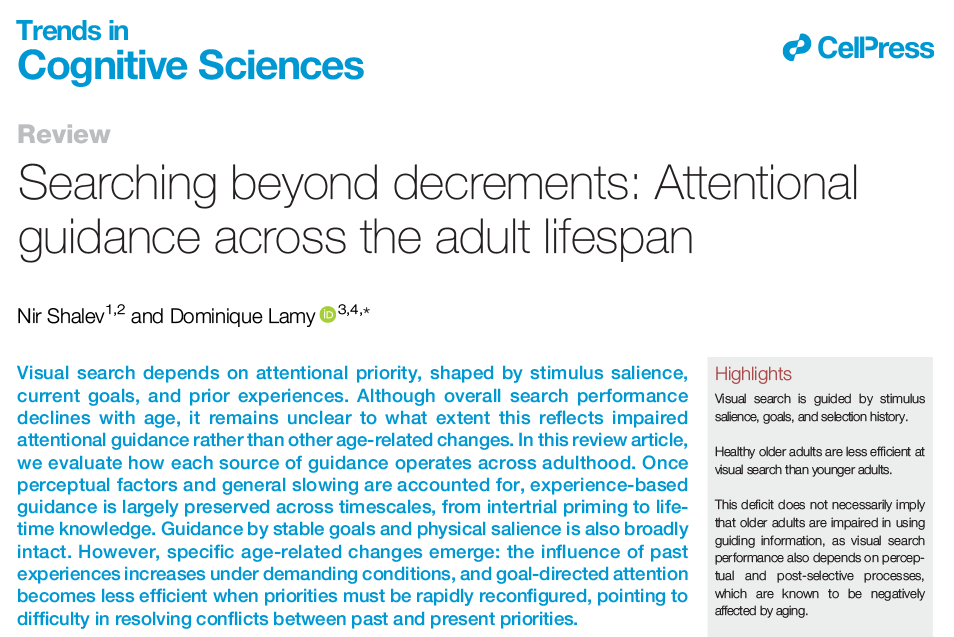
Searching beyond decrements: Attentional guidance across the adult lifespan Review by Nir Shalev & Dominique Lamy Free access before August 13: tinyurl.com/m733p8cs

🔔 Dr. Matthew VanDyke and Dr. Sara K. Yeo are looking to hire a Postdoctoral Civic Science Fellow. Please see the opportunity here: careers.ua.edu/jobs/postdocto…
Illinois rise up

Here is a plot of the total tornadoes by state as of 3 pm July 1. The numbers were obtained by the quality controlled tornado tracks in the Damage Assessment Toolkit database. #ILwx #tornadoes

Oh do I have a book for you. Misinformation and the aging American - coming in October from OUP global.oup.com/academic/produ…

It would be *much* more socially transformative to ban social media for over-65s

Why do arguments often change people’s beliefs without changing their attitudes? In a new APSR with @patrickpliu and Scott Clifford, we point to belief relevance: arguments are more persuasive when they grapple with the idiosyncratic reasons people hold their political views.


what is an "age" effect? it may very well be a running tally:

ANES has been asking people what they like and dislike about Democratic and Republican parties since 1952. here is a simple model on the *number* of considerations, showing that, with age, people have a lot more ideas to offer about each party:

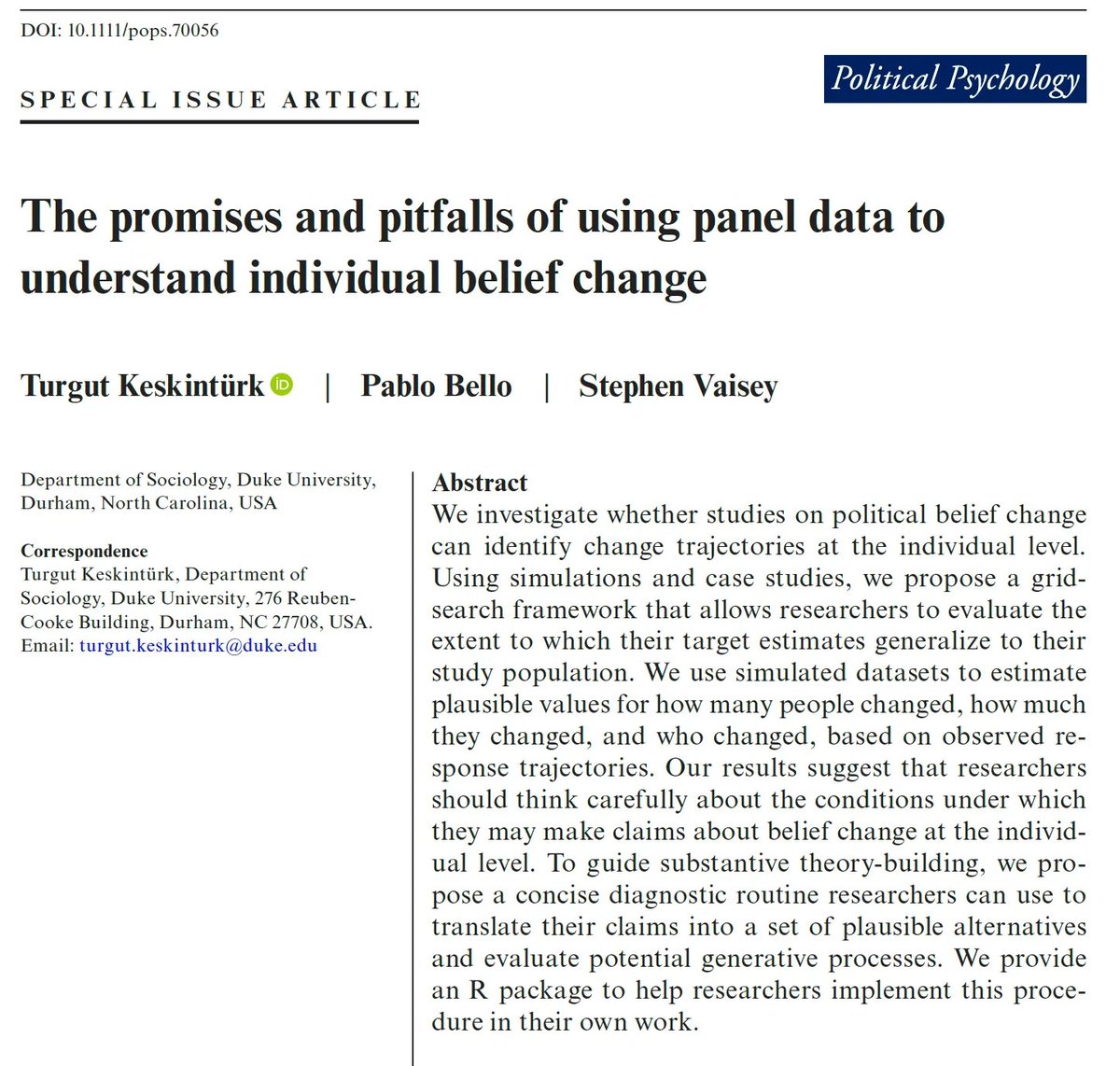
we have a new paper in the April issue of Political Psychology. in this (admittedly lovely) new paper, Steve Vaisey, Pablo Bello and I make a simple point: using panel data to understand belief change is very hard. we highlight an empirical intractability in the process:
Me to my seat mate when @delta cancels my flight on the runway for the third time this week


Does affective polarization itself actually threaten democracy? Recent experiments from the US suggest maybe not. In our new @EJPRjournal paper, we revisit this question comparatively with a survey experiment in 9 democracies (18,000 respondents). cup.org/4v72pej

Call for Papers - Human Communication Research We're now accepting submissions for a special issue: "Who Are We Studying in Communication Research? Revisiting Audience in a Transforming Media Environment" Extended abstract deadline: August 31, 2026 academic.oup.com/hcr/pages/spec…
🚨 Special Issue @HCR_Journal cfp: Who Are We Studying in Communication Research? Revisiting Audience in a Transforming Media Environment Guest eds @YeSun_comm, Adrian Meier & me Extended abstracts due Aug. 31 More info: academic.oup.com/hcr/pages/spec…
@dee_of_e saw Boogie Nights in packed theater of younger people apparently seeing it for their first time based on reactions, huge cheers when Rollergirl stomps the guy and when the Colonel gets smacked in prison
Link to paper: osf.io/preprints/psya…

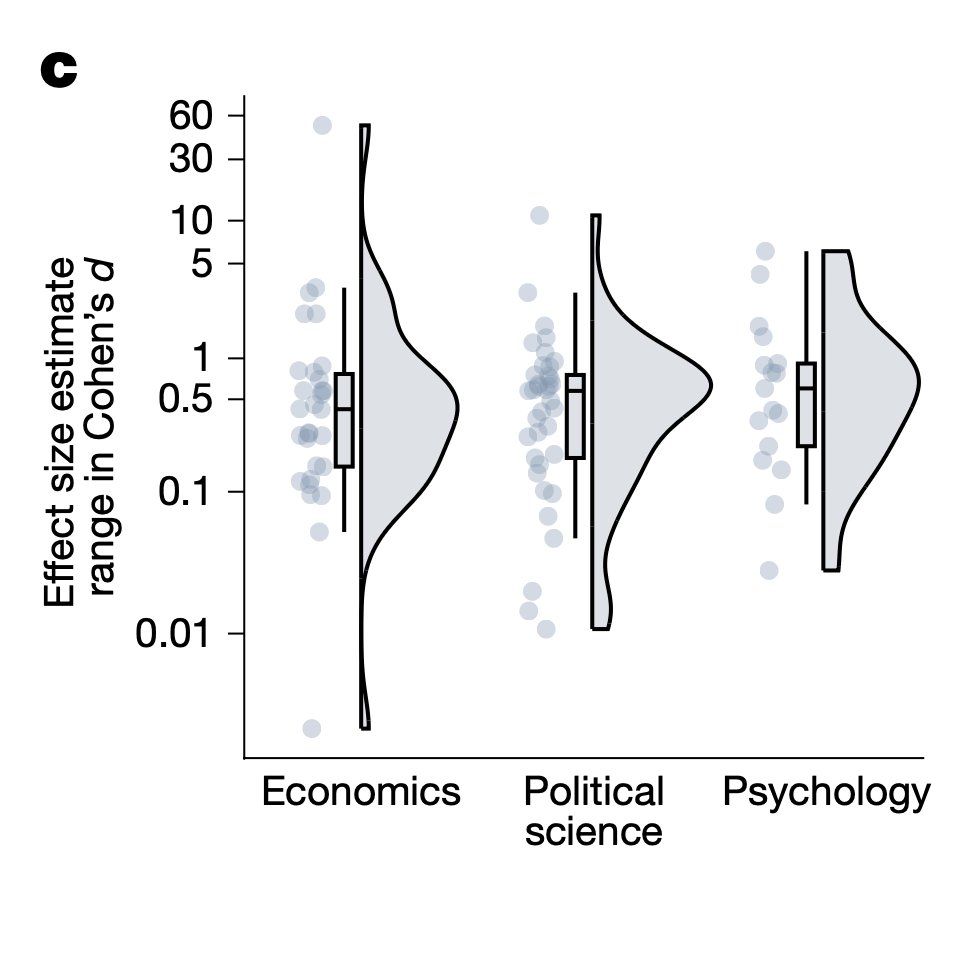
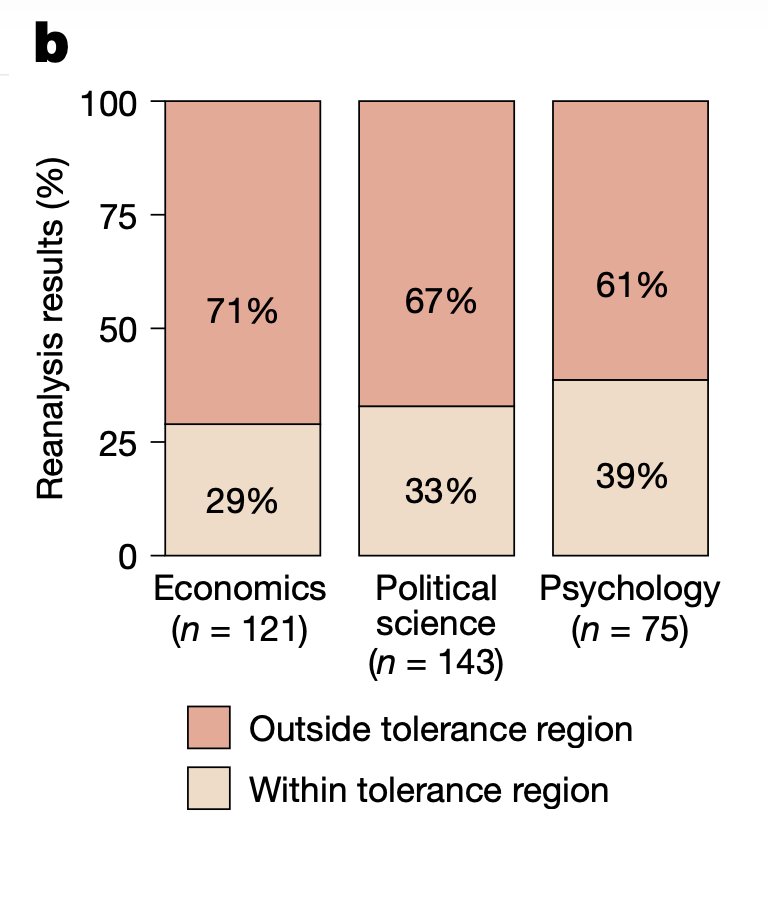
Economics is about the same as political science in the "reproducibility" paper, which looked at whether data and code was available and could reproduce results in a sample of articles. Again, read the paper for details: nature.com/articles/s4158…


Economics doesn't look better in the "robustness" paper. Honestly, econ looks worse than PS and psych but the difference is tiny and not worth obsessing over. Experimental work looks better than observational. Read the paper for details: nature.com/articles/s4158…

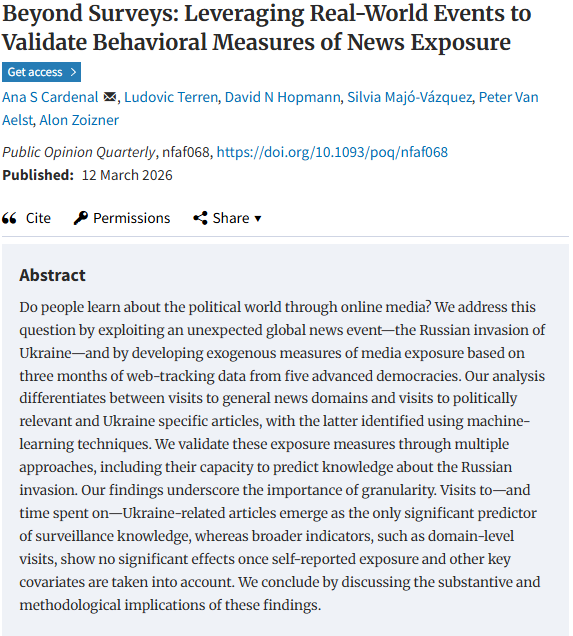
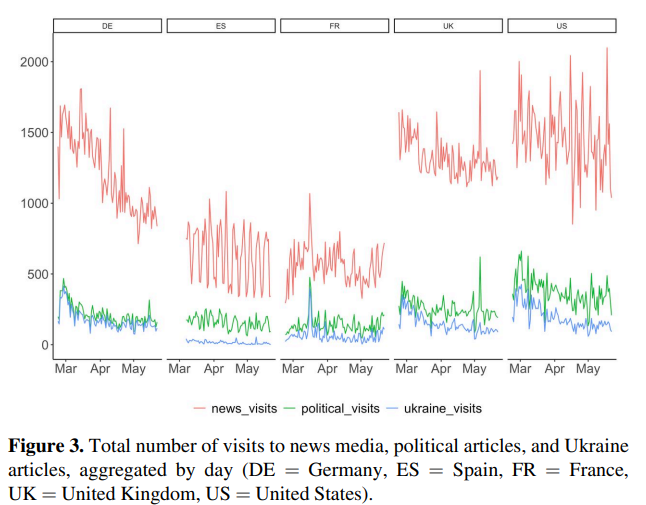
Not all news clicks teach us something. In POQ, Cardenal et al., using digital trace data, find that only article-level exposure to Ukraine stories—not general news browsing—predicted who learned about the Russian invasion. Read now: doi.org/10.1093/poq/nf…

Nearly half of Americans (46%) report using AI to get news at least occasionally--but most are light users. Only ~14% use it 3+ times a week. Some people use AI as their primary interface to society, even if the models are not really up to the task.

You might like