
Robles @diegorv
ॐ मणिपद्मे हूँ Chomolungma, Tibetan Joined June 2010-
Tweets47
-
Followers2
-
Following971
-
Likes3K

DeepSeek has open-sourced DeepSeek Harness. (crossed 35k stars in a few hours) it is built around one core idea: everything is a plugin let me explain what that means: the model adapter, the tool registry, the session log, and the agent loop itself are all plugins in DeepSeek Harness (dsh). every one of them can be swapped for your own. that matters because changing how an agent assembles context usually means editing the framework's own source, or forking it and paying for that fork on every upgrade. the mechanics that make it work: → a plugin claims a stable key like ctx .tools or ctx .llm, and other plugins find it by that key instead of importing a concrete implementation. → dependencies are declared rather than hand-sequenced, so load order falls out of what each plugin requires. → registrations are reversible, so unloading a plugin unwinds everything it registered. → one event, agent/pre-step, decides what the model sees. listeners can rewrite the claimed messages or reject them, which is where nearly all custom context engineering would land. → the session log is append-only and covers system prompts, reasoning, tool calls, subagent scheduling, and every context injection. that last one is what i would actually reach for. logging tool calls is standard, and when an agent misbehaves you are still guessing at what was in the window. here, model-visible means logged, asserted at runtime, so a new model-visible input requires a new session event. deepseek was the last major lab shipping coding-grade models without a first-party harness to train against, and it now ships one that can delegate subagent work to Claude Code and Codex. link to GitHub repo: github.com/deepseek-ai/de… if you want the full anatomy of what a harness actually contains, the article is quoted below.


A Vercel user reported an issue that sounded extremely scary. An unknown GitHub OSS codebase being deployed to their team. We, of course, took the report extremely seriously and began an investigation. Security and infra engineering engaged. Turns out Opus 4.6 *hallucinated a public repository ID* and used our API to deploy it. Luckily for this user, the repository was harmless and random. The JSON payload looked like this: "𝚐𝚒𝚝𝚂𝚘𝚞𝚛𝚌𝚎": { "𝚝𝚢𝚙𝚎": "𝚐𝚒𝚝𝚑𝚞𝚋", "𝚛𝚎𝚙𝚘𝙸𝚍": "𝟿𝟷𝟹𝟿𝟹𝟿𝟺𝟶𝟷", // ⚠️ 𝚑𝚊𝚕𝚕𝚞𝚌𝚒𝚗𝚊𝚝𝚎𝚍 "𝚛𝚎𝚏": "𝚖𝚊𝚒𝚗" } When the user asked the agent to explain the failure, it confessed: The agent never looked up the GitHub repo ID via the GitHub API. There are zero GitHub API calls in the session before the first rogue deployment. The number 913939401 appears for the first time at line 877 — the agent fabricated it entirely. The agent knew the correct project ID (prj_▒▒▒▒▒▒) and project name (▒▒▒▒▒▒) but invented a plausible-looking numeric repo ID rather than looking it up. Some takeaways: ▪️ Even the smartest models have bizarre failure modes that are very different from ours. Humans make lots of mistakes, but certainly not make up a random repo id. ▪️ Powerful APIs create additional risks for agents. The API exist to import and deploy legitimate code, but not if the agent decides to hallucinate what code to deploy! ▪️ Thus, it's likely the agent would have had better results had it not decided to use the API and stuck with CLI or MCP. This reinforces our commitment to make Vercel the most secure platform for agentic engineering. Through deeper integrations with tools like Claude Code and additional guardrails, we're confident security and privacy will be upheld. Note: the repo id above is randomized for privacy reasons.
@kepano I sent you a DM — would love to hear back when you have a moment!
@Killian_Kirk @kepano Could you please share it?

I posted this thinking I'd get a handful of answers, but it turned into a massive thread with hundreds of thoughtful ideas it feels like a turning point of some kind?
if you're using Obsidian with Claude Code, tell me about your workflow, and what you've used it for
@mikeschmitz Hello! I watched your YouTube channel and the content it is amazing!!! ❤️ I want to buy LifeHQ but $197 it is very expensive to Brazilians. Could you give a discount? To help purchase parity power? 🙏

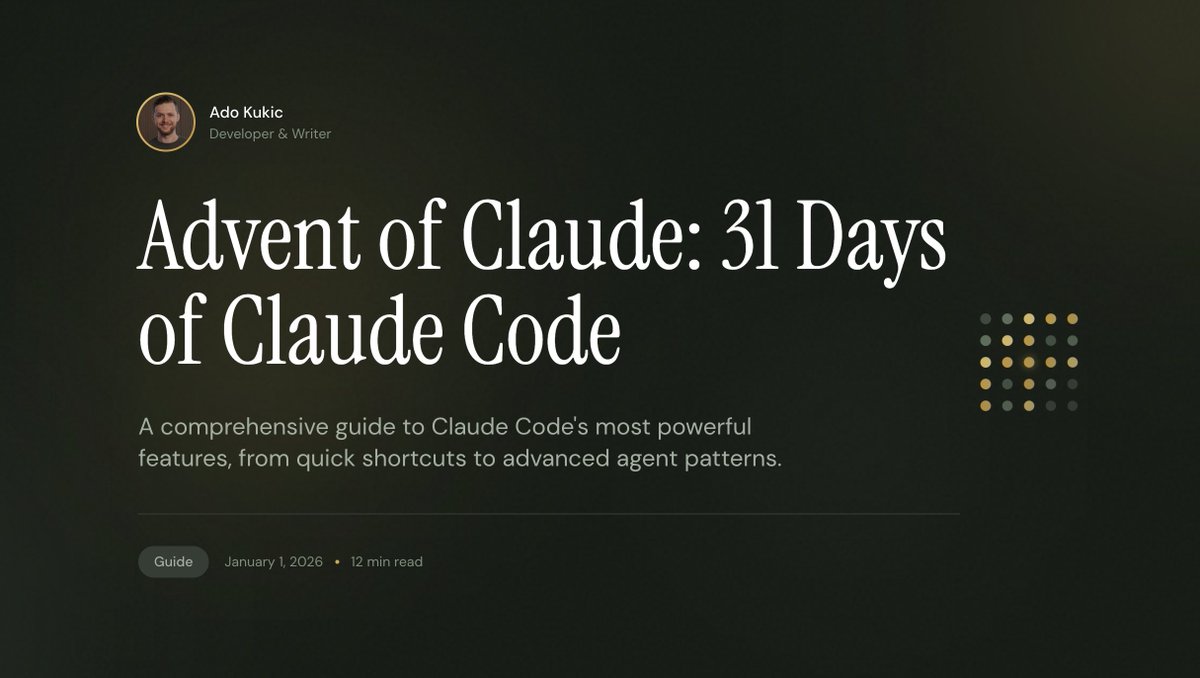
I turned the Advent of Claude into a blog post where I could provide additional context, resources, and re-ordered the tips into a more logical order going from startup to advanced capabilities.
@wcools @jdvhouten @ednico_ Could you grant me a trial access to thymer.com? I’ve been using Obsidian for a few years, and I’m very curious to understand what your app will be like.

Anthropic just released ALL the Claude Code secrets Their Prompting best practices just went live in their docs and I spent hours reading it and testing out all the tips Here are the 10 that make Claude Code so much better: 🧵


ChatGPT + Laptop + Internet + 60 min/day = Online Income 🚀 No office. No fancy tools. Just smart AI usage. I usually sell this guide for $79, but for the next 48 hours, it’s 100% FREE. To get it 👇 Follow me @AI_with_jasmin Retweet Comment “AI” Don’t miss it.🚨

The future is plain text files — it's just not evenly distributed
if you're using Obsidian with Claude Code, tell me about your workflow, and what you've used it for

Linear’s CEO just described the biggest shift in product team structure since Agile. For decades, product work meant: PM defines requirements → designers create specs → engineers translate to code. The middle step, translation, absorbed 70% of the time and created most of the friction. Karri is saying that step is collapsing. AI agents don’t need handoff documents or sprint planning rituals. They need structured context about what matters, what constraints apply, and what success looks like. This inverts the leverage points. The person who captures customer intent clearly now has more impact than the person who translates it into implementation. And the person reviewing agent output becomes the quality bottleneck. Linear built their entire product around this bet: structured entities with clear ownership, context attached to work items, feedback connected directly to issues. It turns out the same system that helps humans coordinate also helps agents know what to do. The teams figuring this out first will have a structural advantage. Everyone else will still be writing Jira tickets that read like riddles.


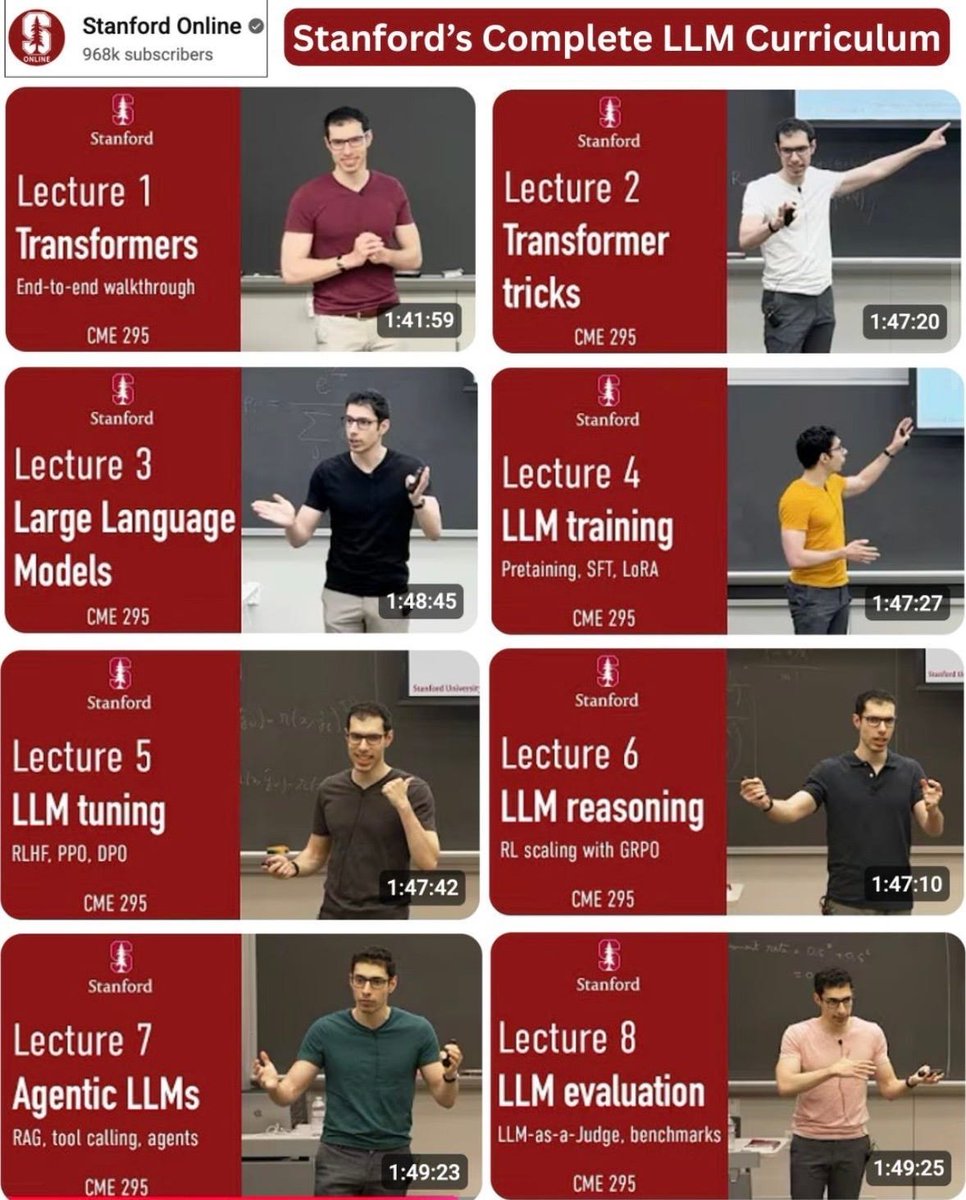
> I don’t understand why people are still paying in dollars to learn LLMs. > these 9 lectures from Stanford are a pure goldmine for anyone wanting to understand LLMs in depth.

I'm Boris and I created Claude Code. Lots of people have asked how I use Claude Code, so I wanted to show off my setup a bit. My setup might be surprisingly vanilla! Claude Code works great out of the box, so I personally don't customize it much. There is no one correct way to use Claude Code: we intentionally build it in a way that you can use it, customize it, and hack it however you like. Each person on the Claude Code team uses it very differently. So, here goes.

scorn// -::- @chaincod3r
28 Followers 168 Following between voltage and intent hardware, software, ai, and quiet obsession. -::- maintaining coherence.
Nahid | UI/UX Designe... @sknahidhasan0
933 Followers 3K Following UI/UX Designer | Mobile & Web Specialist | Startup Design Expert 📩 Contact me: https://t.co/5i1w2LRii9

Glaucia Lemos 🌊�... @glaucia_lemos86
18K Followers 1K Following Principal Software Engineer @ Itaú | MVP Web Technologies | Codex e Devin Ambassador | ex-Microsoft | Geek Girl | Opinions on my own
Ayub | Internet propr... @ayubio
32K Followers 254 Following Me chamo Ayub e eu faço a Internet funcionar interligando cidades e países. Mantenho um canal YouTube sobre a Internet, sou professor e Diretor de Tecnologia.
TiredAndOnFire-HD Rem... @TiredAndOnFire
50K Followers 11K Following 🔥Gamedev, Texture Artist, Modder, Photoshop🔥 Full list of games/mods +updates: https://t.co/my9512URnl Abandonware preservation Steamdeck/ROG Ally stuff
estebanpdn @estebanpdn_
6K Followers 14 Following I’m Esteban, a developer creating fan-made Nintendo 3DS ports and homebrew projects, focused on making classic games feel right at home on the 3DS.
Maryn✨Pokémon Radi... @PokemonRadiante
5K Followers 191 Following Revive la historia de Pokémon Sol☀️ y Luna🌙 con muchas mejoras, en esta experiencia hecha en RPG Maker xp
Senhor Linguica Pro @SrLinguicaVIVE
36K Followers 590 Following Notícias sobre games, tecnologia e promoções! Siga @linguicapromo Contato: [email protected] Minhas redes e grupos: https://t.co/U0JFUyEHHj
Emily Forlini @EmilyForlini
2K Followers 544 Following Senior AI Reporter @ Fortune | Leading with ❤️…and facts | Message me off the record on Signal @eforlini.42 Previously PCMag, Amazon
Nicolas Camara @nickscamara_
19K Followers 390 Following co-founder & cto @firecrawl 🔥 / yc s22 / brazilian 🇧🇷 prev built mendable (AI chat used by coinbase, snapchat)
mireia. @heymireia
78K Followers 326 Following I turn AI tools into skills you actually use | @aiscwork | @RoobetES
clay. @clayul
140K Followers 848 Following frontend engineer with an eye for design | @aiscwork | @RoobetES
Eduardo, the HadesPla... @HadesPlays_
25K Followers 845 Following Um cara que faz vídeo sobre videojogos no canal HadesPlays! Fã NUMERO 1 de POKEMON e da GAMEFREAK | Instagram: @ohadesplays| Contato: [email protected]
Pokémon Fangame News @PokeFangameNews
33K Followers 254 Following THE source for Pokemon Fangame related news! 📰 If you want YOUR game to be featured, DM us. Everyone is welcome. Managed by @Haunted_Ditto
Charmi @Charmi
12K Followers 280 Following Twitch Partner | https://t.co/4v72XEiCKi | Mail: [email protected]
Cam 🇨🇴 🇵🇸... @calidosocam
4K Followers 484 Following Magical Realism Creature. Cam's art Twitter. |30's| (She/Her). 🇨🇴 Autistic Latine Artist. pfp. @hernyed
Patrick Smith @TheSmithPlays
199K Followers 525 Following CoD Zombies starter, Fortnite & Minecraft temp, now returned to childhood Pokémon obsessor. I Make YouTube Videos.
Mikelan @mikelan98
3K Followers 198 Following ROM Hacker desde 2011 y pionero en NDS desde 2012. Mi proyecto: @lightplatinumds
Tenma 👑 @TenmaRH
8K Followers 18 Following ⭐Creador Pokémon Quetzal⭐ Free download: https://t.co/nqfTAn1Zyf Youtube: https://t.co/vO0cv8XuUB Discord: https://t.co/7DuV7BJGfb
Riles 🫡 @rileytestut
43K Followers 2K Following Developer of Delta emulator for iPhone + iPad. No longer active here, follow me https://t.co/WbFZ9zJU6M or https://t.co/3jZAPiITND 👋

Shida Li @shida_li
1K Followers 5 Following
chewa @chewadoteth
4K Followers 666 Following 22, just trading on perps. 6'4 (height) don't tell my mom that I'm a perp maxi
Nigel Yong @niyonx
2K Followers 931 Following 🔁 https://t.co/1x6e3tyonv $3k/m ⚡ https://t.co/IhftVkZGIi $600/m 🌹 https://t.co/hbVTFe989s $100/m 🛍️ https://t.co/v3gHCy59KH $200/m 🎯 2026 🟩🟩🟩🟩⬜⬜⬜⬜⬜⬜ $10k/m
Femke Plantinga @femke_plantinga
14K Followers 611 Following learn with me about AI. growth @SliteHQ
Abraham John 🦄🦓 @Abmankendrick
63K Followers 298 Following Product Designer ( UI / UX ) | Brand Identity Designer | Creating Beautiful Functional UI's
Jakub Krehel @jakubkrehel
22K Followers 193 Following @interfere_ / magazine → https://t.co/ByWs6AAhyK

AJ @appariciojunior
10K Followers 533 Following 👨💻 Head of Product Design 🧠 ADHD 🦖 Dad ↦ https://t.co/gYJzl4WFDU ↦ https://t.co/64l6SnDsIU ↦ https://t.co/mkJIb8z8tA ↦ https://t.co/IXNSnwJ4a0
Rimsha Bhardwaj @heyrimsha
25K Followers 222 Following Helping you master AI daily with step by step AI guides, & practical tools • AI Educator & Writer • DM for Collab
Sunil Joshi @suniljoshi19
1K Followers 457 Following Designing & shipping UI products since 2008. Co-Founder of WrapPixel, AdminMart, Tailwindadmin, ShadcnSpace. Obsessed with quality, UX, & developer experience.
Wes Wagner ☕️ @caffeinatedwes
3K Followers 3K Following ✍️ on tech, biz, and ai. Bootstrapping @RarelyDecaf token-by-token, previously VC-backed generalist. Dad. Remote-native. Regularly in 🇲🇽

Xudong Han @Xudong07452910
11K Followers 595 Following 🎓PhD ing @ University of Sussex | LLM & AI Agents 📖AI Agent Product Development 🛠️Sharing AI tech insights 📩DM for collab
darkzodchi @zodchiii
26K Followers 363 Following ai & finance entrepreneur • @zscdao member • sharing what I learn
atomic.chat @atomic_chat_hq
15K Followers 61 Following Local AI chat and Inference Engine. Enhanced by TurboQuant. Team: @gladkos @skinbagwbones @AlexFromAtomic @danyurkin @quantizedden
Zhuo Tao @runzhuotao
569 Followers 3K Following AI+gaming. Previously @unity. Building @Bakable_AI. Join us https://t.co/eJJrgtRzOh

宝玉 @dotey
245K Followers 2K Following AI Engineer, dedicated to learning and disseminating knowledge about AI, software engineering, and engineering management.
Luke ➨ rm2.online @luker2o
159 Followers 244 Following Se você tem nível superior e já quis ser militar, experimenta o https://t.co/xEj0OXB8hC


Rina @irinatoxi
3K Followers 366 Following Building cool things with AI so you don't have to imagine them

Argona @Argona0x
30K Followers 719 Following AI leverage for one-person builders | I test systems, repos & workflows that turn one person into a team | proof, setup, limits
nicolasmelo @nicolasmelo
3K Followers 900 Following Not lured by praise, not frightened by slander, follow the righteous path and discipline oneself with integrity
rari @0xwhrrari
14K Followers 150 Following building @kollectivexyz ai | prediction markets | solo setups dm always open... 444

Kanika @KanikaBK
37K Followers 338 Following I test AI tools and agents daily. Building practical workflows for creators and builders who want real results. DM/[email protected]
jeff 🇦🇹 @jeffecom
16K Followers 383 Following 👨🏻💻 digital strategist | 🧠 8 figures | 🌎 27 countries
Felipe Rabelo @feliperabeloep
11K Followers 986 Following CIO na Café Family Office | VAMK University 🇫🇮 Python para mercado financeiro 🇧🇷🇨🇭🇪🇪 https://t.co/ToClUg4khfTrends for United States
You might like