guitar @guitarquant
Joined July 2025-
Tweets153
-
Followers306
-
Following124
-
Likes906

Over the past few months I’ve been quietly working on something that I’m about to share for the first time. I wanted to understand Keeta more deeply; at every layer of the core protocol there always seemed to be a deeper one that didn’t fully make sense. If someone kept asking me “Why?” we would have inevitably reached a question I wouldn’t know the answer to. To that end, I dug down to the foundation and learned everything there is about Keeta – from a technical angle. The following paper contains all that, and an initial argument about why Keeta is a safe and correctly designed system*. It’s academic writing that should be useful to engineers interested in Keeta, but don’t think for a second it’s not relevant to you: The first three chapters are deliberately very accessible and I recommend it to anyone who’s already spending a lot of time with Keeta and wants to see one layer deeper. It’s my first ever academic paper and I think it has some pretty glaring flaws, yet I’m proud to be one of the first to formally write about Keeta. As the protocol grows, many more computer scientists, much smarter than I am, will explore how Keeta works. I hope I could contribute something that others can build on. $KTA

@KW8758332185788 @0xMpco @KeetaNetwork No, it’s SOLO’s own infrastructure and bank network. Keeta has access to the SOLO network as both an issuer of certificates and a querier of certificates. If you want to know how the SOLO network works: docs.solo.one

Correspondent banking has a TVL. It's called prefunding, and everyone agrees it's the problem. Banks hold balances in accounts around the world so payments can settle against them later. Estimates of how much sits there run into the trillions, and the industry spends more energy arguing about which figure is right than about why the figure exists at all. Meanwhile a standard knock on Keeta is that its TVL is negligible. It is. Ethereum sits at $41B and Keeta isn't in the same postcode. But TVL measures value locked. Capital that has stopped moving, parked in a contract, earning something for sitting there. Good proxy for how much DeFi is happening. Odd thing to optimise for if the point is moving money rather than parking it. You're comparing a network trying to eliminate idle capital against networks whose headline number is how much idle capital they've attracted. And the system being replaced wins that contest outright. All of DeFi has about $77B locked. Correspondent banking immobilises multiples of that and books it as a cost of doing business. Nobody asks how much money is sitting inside Swift, because that isn't what Swift is for. The numbers that would tell you something are volume settled, corridors live, anchors running, fees through the Globetrot Resolver. None of those are on the leaderboard people keep quoting. Low TVL isn't automatically a defence either. It can just mean nobody is using the thing yet, and there's not much settled volume to point at right now. FX needs real depth on both sides of a pair and someone has to hold that inventory. The difference is it sits on an anchor's balance sheet rather than in a permissionless pool, which means DefiLlama was never going to see it. The metric belongs to the thing being replaced. That's worth noticing before you use it to score the replacement. $KTA
Send money from Europe to Mexico and here's what actually happens. Nothing moves. Your bank debits you and sends a message. If it has no relationship with the receiving bank, and it often doesn't, that message goes to a bank that does. Usually with a dollar leg in the middle, because the deep market is EUR to USD and USD to MXN rather than the pair you actually wanted. Two conversions, two spreads, rarely quoted to you in full. Every institution in that chain also holds prefunded balances with the others. Money parked in accounts around the world doing nothing, sitting there so payments can be settled against it later. That capital has a cost, and it ends up priced into what you pay. Inside its own borders, this all works fine now. SEPA Instant in Europe, UPI in India, Pix in Brazil, SPEI in Mexico. Instant, cheap, 24/7, and over 100 jurisdictions have something like it. Domestic payments are a solved problem. It's the space between them that isn't. There are more than 70 of these systems, and wiring them to each other one pair at a time means a separate legal, FX, compliance and operational build for every single connection. The number of pairs grows far faster than the number of countries, which is why nobody has finished it, and why the BIS designed Nexus as a single hub instead. Nexus targets 2027, with five founding countries. So the picture is seventy-odd fast systems that mostly can't talk to each other, and one attempt to fix it that needs central banks to agree, country by country. Speed complaints are dated now, and worth being accurate about. Swift moves most payments to the beneficiary bank inside ten minutes. What didn't get fixed is the last mile. Roughly 40% lands in the recipient's account within the hour, and about 80% of total transit time sits in that final step, in local processing and compliance. Awkward corridors with two conversions still take days. Because every hop reruns compliance on the same payment. None of them trust the checks the others already did. The bet Keeta is making is that a shared ledger does what a hub does without needing anyone's permission to join it. Euros and pesos issued on the same network as tokenized deposits, so the exchange happens in one place with no dollar leg to route through. Compliance done once and carried with the identity instead of repeated at every hop. That last part took years and nobody claps for it. The local ends still need someone licensed on the ground with access to the domestic system. That doesn't go away. What changes is that it becomes one role anyone qualified can fill, instead of a web of bank-to-bank relationships negotiated pair by pair. Plenty of people are working on this gap. Nexus links the domestic systems through a hub, no token involved. Ripple bridges through XRP or RLUSD with local payout partners, and already runs USD to MXN today. The difference is on the balance sheet. A bridge asset needs a conversion at each end, and a reserve-backed token is a claim on a fund rather than money at a bank. Nine currencies issued natively as deposits means there's nothing to bridge through, because the currency you wanted is already there. None of it is live at scale. It's an argument, not a track record, and the last mile is where arguments like this usually die. But what's being replaced isn't necessarily technology. It's an arrangement from a time when the only way to move value between two countries was to trust a line of institutions to pass it along, and it never got rebuilt because nobody had a shared ledger those institutions were allowed to touch. $KTA

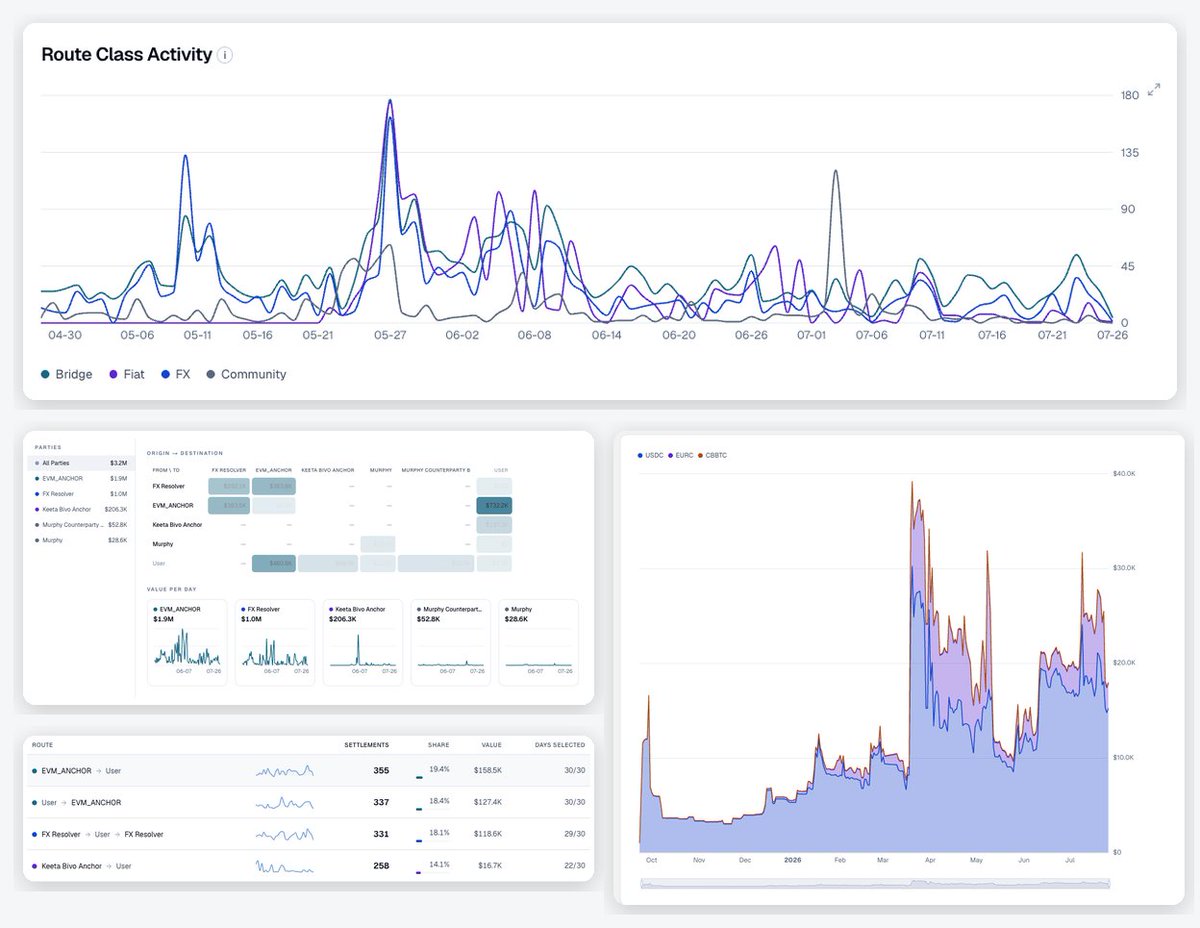
New update for astrupdata: Routing graph and settlement routes are now available. Also releasing an expanded charts library and a workbench tool to build your own charts. keeta:native astrupdata.com
Nine currencies is a strange thing to launch with when everyone else is still building a better dollar. USD, EUR, JPY, CNY, GBP, CAD, MXN, AED, HKD. Half that list only makes sense once you accept that crypto traders aren't the main customer. Nobody has been begging for an MXN pair. AED isn't a liquidity problem anyone was trying to solve. Those are corridors. US into Mexico, the Gulf into India, Hong Kong and the mainland. Somebody picked them off a map of where money physically crosses a border rather than off an exchange listing page. KUSD makes it obvious. No yield to holders, which reads as a dealbreaker next to synthetic dollars sitting on treasuries at 4%. Except yield is the first question a trader asks and close to the last one an institution asks. Compliance comes first, and plenty of Web3-native stablecoins never cleared that bar, which is why the money that was supposed to arrive never did. The reserve revenue doesn't disappear either. It supports KTA buybacks rather than being sent to holders directly. Anyone who has spent time in the SDK already knew where this was heading. The permission and certificate primitives have been sitting there a long time, doing very little for anyone who just wanted to move a token around. They only start making sense once the thing moving is regulated money and the issuer has to prove who touched it. That work was done well before there was anything to announce. Nine at once matters too. Every currency drags in its own banking relationships and its own regulator. Nobody takes that on nine times over if multi-currency was a roadmap item for later. Then the ASK Group JV. Gulf oil, gold, copper. Those trades settle in something, and AED was on the list before anyone asked for it. No volume behind any of it yet. No launch partners, no numbers. But nobody assembles this much regulatory surface on spec. $KTA
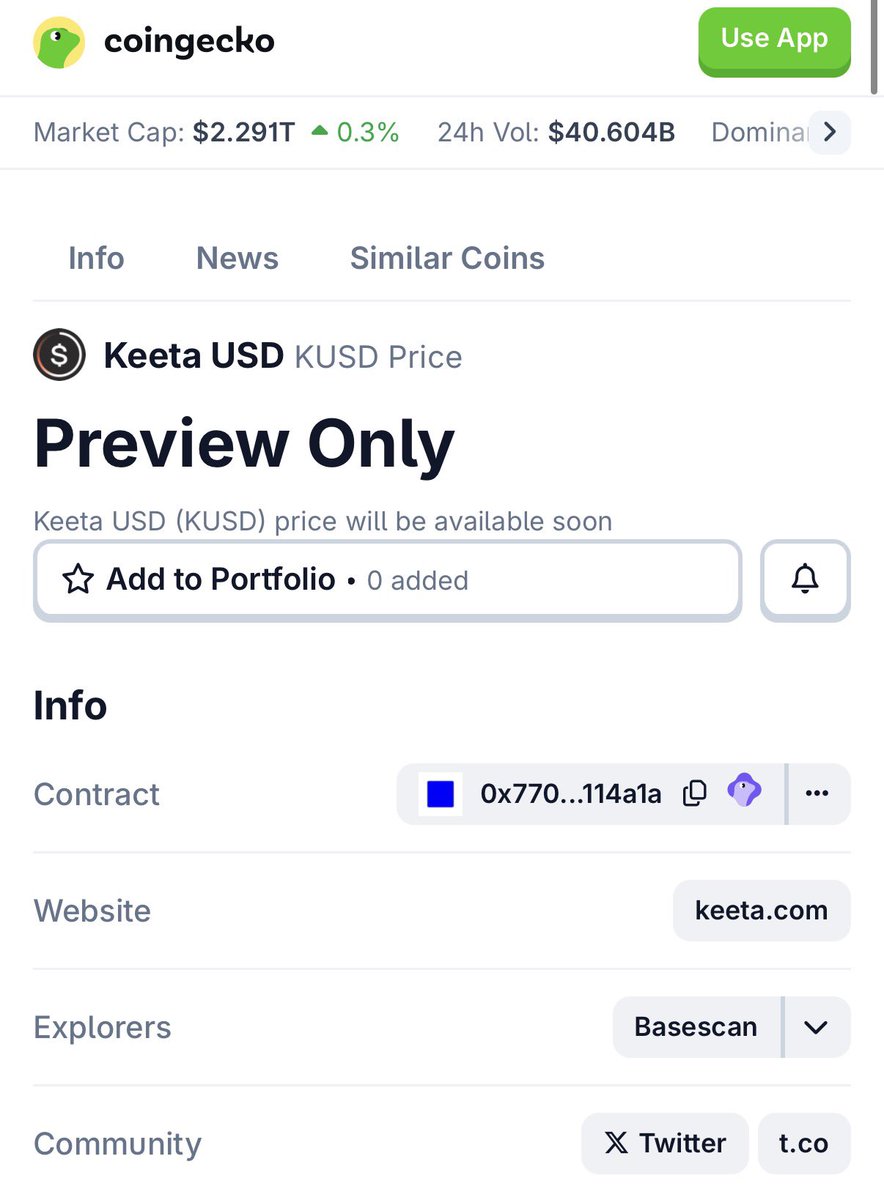
Following @GeckoTerminal’s Keeta $KTA integration, CoinGecko is already listing 9 of the upcoming “K” stablecoins. The assets, released in collaboration with @LayerZero_Core, have no activity so far – but this may signal a faster release timeline than previously expected.

The LayerZero news is getting read as a stablecoin partnership and I think that undersells what happened. Pushback I keep seeing is that LayerZero already connects 150+ chains, so being one more of them means nothing. True, if that's what this was. But the direction is reversed. LayerZero is coming in as an anchor inside Keeta, not Keeta showing up as just another endpoint on LayerZero. That matters because OFT is transport, and transport is the commoditized part. The scarce part is issuance. Minting tokenized commercial bank deposits, backed through a licensed money transmitter, needs identity and compliance sitting at the protocol layer instead of bolted on afterwards. Almost none of those 150 chains can originate that. The part many seem to forget however. Anchors are discovered through the Globetrot Resolver, and every official Keeta product is required to route through it. Globetrot puts a basis-point fee on FX and asset-movement volume through the Resolver, payable in KTA, with a portion of that revenue used to buy and permanently burn KTA. So two weeks after building a fee-burn-mechanism around anchor volume, the team announces an anchor whose entire job is moving multi-currency bank money across chains. Currency list says the same thing. USD, EUR, JPY, CNY, GBP, CAD, MXN, AED, HKD. Nobody trades MXN or AED pairs on a DEX. Those are trade and remittance corridors, and AED lines up with the ASK Group JV for Gulf oil, gold and copper, because commodities settle in something. Burns only matter if volume actually shows up. But the ordering hasn't looked accidental for a while. $KTA
Stablecoins and commercial bank money are fundamentally different both in how they're backed and the nature of the liability. Genius-ready stablecoins are fully reserve-backed 1:1 by US treasuries, cash, and other authorized liquid instruments. USDC, e.g., is a liability of Circle (historically not a bank, though this is evolving with their recent OCC approval to establish a bank). Keeta Stablecoins are different in that they are a liability of the issuing institution (commercial bank, corporate treasury), backed by bank deposits held within the banking system via Bivo's infrastructure. To be clear, deposits and private bank money power 95%+ of daily transactions in most advanced economies, so they are not only prevalent but critical for commerce.
(1/8) Keeta has partnered with @LayerZero_Core to bring tokenized commercial bank money to major blockchains. Together, we’re the first to combine regulated, compliance-native infrastructure with omnichain interoperability, enabling financial institutions to move bank-grade money across any ecosystem.

The Keeta C# .NET SDK is now available in beta. In addition to our TypeScript SDK, developers can now build on Keeta using the .NET framework. The beta SDK provides a starting point for developers and gives our upcoming partners the flexibility to integrate with Keeta using their preferred language. The beta documentation is now available alongside our existing TypeScript documentation: docs.keeta.com

We're aiming to deliver the largest real-world asset tokenization initiative the blockchain industry has ever seen.
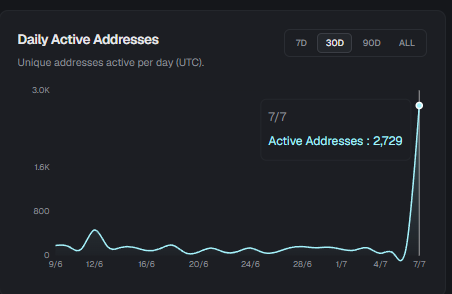
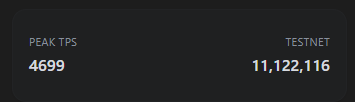
The @KeetaNetwork has had intriguing activity the past two days, July 8 and 9. 1. 1.5 million new wallets were created onchain yesterday. This more than doubles the amount of network accounts in a single day, from about 1m to 2.5m. 2. Daily Active Addresses shot up to over 2,700 in one day - about a 25x increase from previous daily averages. 3. Keeta reached a peak TPS of 4699 on mainnet - an all-time high for mainnet, processing at peak over 30 blocks per second. That's a block every 0.033 seconds - and that is an extremely small fraction of the network's ultimate capabilities - over 11m TPS. 4. Daily transaction count (excluding spam) went up over 25x from previous daily averages. It's worth keeping a close eye on the network to see if there are any further developments in the coming days and weeks. You can keep track yourself: Data from @keetools @astrupdata.



Murphy has officially been listed and verified on @GeckoTerminal Keeta is now a supported chain on GeckoTerminal. Big thanks to @scaler_x and the CoinGecko team! This gives Keeta on-chain more visibility through features like: - Live charting with technical analysis tools - A dedicated chain listing on one of the biggest crypto terminals - Easier token discovery for traders and new users - Better access to on-chain market data - More visibility for projects building on Keeta Small step for Murphy, giant leap for Keeta! $KTA $MURF


I think the bigger takeaway from Keeta’s announcement today isn’t just that it now supports x402. It’s what that says about where they’re positioning the network. Keeta has talked publicly about positioning itself for the future of agentic payments. If AI agents and software are going to buy services, access data, execute trades, or pay each other autonomously, they need a way to move value just as easily as they exchange information. That’s where x402 comes in. x402 is an open protocol that makes payments a native part of HTTP. Instead of developers building separate billing systems, API key management, subscriptions, and payment gateways, applications can request payment directly before serving a resource. That opens the door for developers to build APIs, AI services, marketplaces, data providers, and other digital products that can be paid for programmatically. What’s interesting is Keeta is now one of only a handful of blockchain networks supported by x402, and is even listed directly in the official x402 documentation alongside networks like Ethereum, Solana, Hedera, Stellar, Algorand, Aptos, TON, and others. To me, that’s the real story. This isn’t just another integration. It’s Keeta making sure developers building around one of the leading open payment protocols already have Keeta as an option. If agentic payments become a major part of how software interacts over the next several years, this feels like another example of Keeta quietly putting itself in the right place before that wave arrives. @KeetaNetwork $KTA

(1/5) Keeta now supports x402. x402 is an open, HTTP-native payment standard built around the 402 Payment Required status code by @CoinbaseDev. It lets any API or endpoint charge for access, per request, per token, or per call, without accounts, API keys, or subscription


You know you’re building something serious when new standards don’t need an explanation….they just add your network to the list! #Keeta keeps showing up in all the right places. Seeing Keeta listed alongside every major network should tell you exactly where this is headed!! $KTA

(1/5) Keeta now supports x402. x402 is an open, HTTP-native payment standard built around the 402 Payment Required status code by @CoinbaseDev. It lets any API or endpoint charge for access, per request, per token, or per call, without accounts, API keys, or subscription
The x402 docs (docs.x402.org/core-concepts/…) directly identify @KeetaNetwork as one of nine supported networks: Keeta EVM (e.g., Base) Solana TON (TVM) Algorand Stellar Aptos Hedera Concordium "Any Keeta token" is supported which means any real-world asset on Keeta.
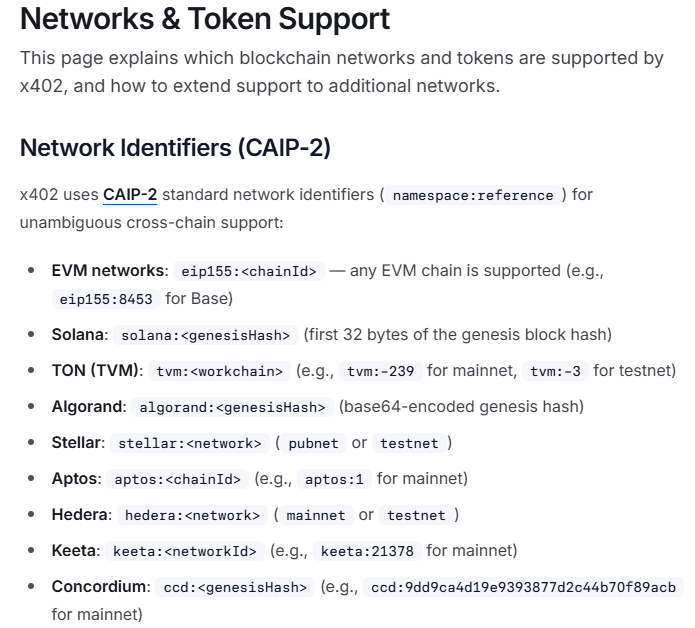
(1/5) Keeta now supports x402. x402 is an open, HTTP-native payment standard built around the 402 Payment Required status code by @CoinbaseDev. It lets any API or endpoint charge for access, per request, per token, or per call, without accounts, API keys, or subscription

angels Feather @AnnaFt_Her
708 Followers 814 Following Wanderer | Beauty & life lover | Bookworm & diver | Camps or glams up | Elegant anywhere
No3lito @willboog2210
116 Followers 407 Following
Michael @OsirisFPS
3K Followers 361 Following @Twitch Partner since 2015. \m/ #bitcoin $KTA $PACA $SLVR
Nick Martinsen @NickMartinsen_
263 Followers 1K Following Building @P1Management_ | https://t.co/Na9sYT7980 | https://t.co/aNLuxSiARn
._. @digimongol
56 Followers 360 Following
Kamara22r @KamaraCraftpl
0 Followers 238 Following

Broski 🐂💨 @broskitrades
532 Followers 861 Following Crypto trader 📈 || Gem Hunter 💎 || Not on Onlyfans 🍑 #NFA #DYOR

Zak McKracken @Tominki1
11 Followers 152 Following
BCD_KYLE @bcd_kyle
1K Followers 7K Following Blockchain, Quant Dev. | KR DevRel @Mantle_Official TG: https://t.co/AywDcqbd5a Medium: https://t.co/XOsbBjX2d9
KTAMaxi @Altcoingeek22
166 Followers 322 Following
SilverCipher 🇬🇧 @TheSilverCipher
409 Followers 629 Following Looking to support and grow projects I believe will make a difference
Kevin @Ego_peccator
1K Followers 3K Following Just some dude using his Uncle's cool dog as a profile picture.
Matthew Lombard @lombardmatthew
29 Followers 192 Following

Twisted Juniper @rvcrpt
0 Followers 63 Following
CryptoMark @CryptoMarky4
1K Followers 677 Following
NSV @NSVentures1
4 Followers 36 Following

Francisc @Francis3028984
27 Followers 100 Following


AAAR @id4amit
32 Followers 118 Following
Outlaw Stars @OutlawStars2
54 Followers 273 Following


ethical noodles @_lightningsloth
294 Followers 1K Following here so I can say stupid things with no consequences

T_Bolv2 🟣 @T_Bolv2
10 Followers 51 Following
Dapp Fiddler @dappfiddler
182 Followers 131 Following Dad, Investor, Surfer, Traveler, and Dapp Fiddler.
HellToBeShady @HellToBeShady
2K Followers 1K Following
Alejandro @AlejandroL83620
58 Followers 353 Following
LM @Elemzir
456 Followers 141 Following Dev of KTA-Oracle · MCP payment intel for AI agents on @KeetaNetwork | BAKKT, ZAMBIA, COBO, BLUESKY, L'IMAD. All of this research stems from me. More to come!
Costco Pizza @MOON_BAGS69
451 Followers 3K Following
JLMC @jlmc2010
26 Followers 379 Following

Earlytobed @Rookiecrypt0tdr
53 Followers 153 Following

Razvan @bugsjr
155 Followers 412 Following Crypto enthusiasts. Top supporter of $KTA | $ONDO | $SUI | $PRXVT | $GITLAWB

Mr Peter Schiff @MrPeterSchiffy
11 Followers 1K Following Chief Economist & Global Strategist https://t.co/Er5It64Sox, Chairman https://t.co/uO7SoWsYGh, Founder https://t.co/8AJztcBQ3Y, Host https://t.co/PttWFeci2t, Best-selling Author
Jos @jos_07910
0 Followers 16 Following
Throwaway815 @Throwaway8151
0 Followers 1K Following
bama @bamatism
4K Followers 3K Following Cooking content for @HusherExchange @LaunchOnSumo @HumidiFi @spx6900 @joecoin_ @bobocouncil @Wen_officialx
Ivesy @_ivesy_
114 Followers 620 Following
Pepsi free @sourpiggy35
39 Followers 272 Following
Riftbound Report @RiftboundReport
32K Followers 110 Following Riftbound: League of Legends Trading Card Game News & Updates Fan Account. Not affiliated with @PlayRiftbound. Business Email: [email protected]
Riftbound @playriftbound
69K Followers 7 Following A trading card game inspired by League of Legends. Made by @riotgames
Michael @OsirisFPS
3K Followers 361 Following @Twitch Partner since 2015. \m/ #bitcoin $KTA $PACA $SLVR

Bryan Pellegrino (臭... @PrimordialAA
116K Followers 3K Following Co-Founder and CEO of LayerZero Labs. @LayerZero_Core 💎🙌
Virtual Assets Regula... @varadubai
3K Followers 31 Following VARA - Virtual Assets Regulatory Authority of Dubai. Regulating, supervising, and overseeing virtual assets and related activities across Dubai.


Open Standard @openstandard
30K Followers 81 Following We’re building open stablecoin infrastructure for businesses to move money globally.
Zach Abrams @zcabrams
17K Followers 466 Following Founding CEO @OpenStandard, and Cofounder, CEO Bridge (acq. by Stripe). generalist by temperament. mediocre athlete.
Keeta Watcher @keeta_watcher
969 Followers 21 Following Suite of Keeta things. Includes real-time reporting on github updates and noteworthy $KTA transactions as they happen.
Keeta Github Tracker @KeetaCode
94 Followers 3 Following Suite of Keeta things. Includes real-time reporting on github updates and noteworthy $KTA transactions as they happen.

Punit Thakker @thakkerpunit
472 Followers 970 Following Fintech Leader & Entrepreneur | Payments, Blockchain & M&A | 20+ Years across MENA, APAC & India
محمد بن زاي�... @MohamedBinZayed
5.6M Followers 26 Following الحساب الرسمي لصاحب السمو الشيخ محمد بن زايد آل نهيان رئيس دولة الإمارات | Official account of His Highness Sheikh Mohamed bin Zayed Al Nahyan, President of UAE


Ahmed Bin Sultan @asknahyan
2K Followers 3 Following
Askgroup @askgroupae
843 Followers 5 Following Together we represent a generation driven to inspire, innovate and lead.
thaboss @thaboss8854
11 Followers 20 Following
Hal Crypto @haltechster
10K Followers 6K Following UK crypto OG since 2014. Marketing. AI. Gamefi. Defi. Kraken Affiliate. Keeta $KTA maxi 🔥
Pika! @Pika7331
13 Followers 22 Following
Ledger @Ledger
673K Followers 248 Following Free from Compromise. Ledger will never DM you, call you, or ask for your 24 word recovery phrase. Posts under this account are not intended for the UK


Cobo @Cobo_Global
28K Followers 502 Following Cobo is a trusted custody and wallet infrastructure provider that simplifies digital asset security for organizations and developers.

🌏StormKing @StormKing_9
316 Followers 2K Following The Earth is but one country, and humankind its citizens. - Bahá'u'lláh


HUFF @HUFF1022
824 Followers 515 Following $KTA #KTAallday #crofam $CRO $LION Say it how you see it. Haters gonna hate. Take crypto profits like you use shampoo. Rinse and Repeat.

Tubbs @Tubbs_the_Mayor
164 Followers 86 Following

Mimir @MimirMarket
30 Followers 8 Following Stake your foresight. A curated prediction market on @KeetaNetwork


FUpayMe @LifeNameunknown
1K Followers 1K Following
LM @Elemzir
456 Followers 141 Following Dev of KTA-Oracle · MCP payment intel for AI agents on @KeetaNetwork | BAKKT, ZAMBIA, COBO, BLUESKY, L'IMAD. All of this research stems from me. More to come!
Keeta Land @keeta_land
586 Followers 66 Following The unofficial community and ecosystem hub for all things @keetanetwork #KeetaEcosystem
degenbarbie @degenbarbie
6K Followers 1K Following trader & quant // ex-goldman // building AI agents in openclaw // 💳 @usetria // i trade crypto, metals & stocks on chain
🅵🎨🅰 🎨🅲... @ArtistFAChekki
10K Followers 11K Following 🎣 🌊🎨 Contemporary oil painting artist & 📚 writer/creator #deFi #NFTs / $KTA 🐆

mark @markbbik_mark
6 Followers 192 Following
Al @Aldior94
271 Followers 2K Following
Cheddar @DimitriLeh52470
213 Followers 579 FollowingYou might like