
Pushkar Yadav @manspeedlight
Semper Fi Season 25 Ep 8 Goa, India Joined July 2014-
Tweets156
-
Followers30
-
Following488
-
Likes18K

I was deeply saddened to learn of the passing last night of Group Captain Dara Phiroze Chinoy, VSM. Chinoy is best remembered for one of the IAF’s most remarkable wartime escapes. On 10 Sep 1965, while flying a Mystère of No. 32 Sqn on a low-level strike against a heavily defended target in the Lahore sector, his aircraft was hit by anti-aircraft fire. He ejected over Pakistani territory, came under fire while descending and was pursued after landing. For more than five hours, he ran, crawled and concealed himself among the fields, before crossing the front line and reaching Indian troops. What followed was equally telling. Chinoy returned to his squadron and flew further operational missions during the war. For his determination and devotion to duty, he was awarded the Vishisht Seva Medal in January 1966. The escape was only one extraordinary episode in a remarkable flying career. Chinoy survived three ejections: from an Ouragan in 1964 following a serious control malfunction, from the Mystère in 1965, and from a MiG-21 after a bird strike in 1987. Yet he continued to return to the cockpit. His subsequent appointments included serving as an instructor at the Flying Instructors School, instructing with the Iraqi Air Force, becoming Chief Flying Instructor at Tambaram, commanding No. 30 Squadron, serving as Joint Director of Offensive Operations at Air Headquarters, and later as Station Commander at No. 33 Signal Unit. He retired from the IAF as a Group Captain in January 1990. He eventually recorded his experiences in his memoir, Escape from Pakistan: A War Hero’s Chronicle. His own narration of the 1965 escape remains worth hearing - youtu.be/7hS-oOP7Hj0 May his soul rest in peace. My heartfelt condolences to his family, friends and the wider Indian Air Force fraternity. #IAFHistory @IAF_MCC


The most retarded and inhuman argument I ever heard. “These 3 sailors who were killed were working for a foreign company and not an Indian co.” Then why do you gloat about the achievements of Indians working for foreign companies, many of whom are not even Indian citizens anymore

Fixed this for you @CNN


Live visuals of the ED team on its way to raid Raghav Chadha.

Bharat Ratna to Dr. Homi Jehangir Bhabha is a must.

@realkaypius This reminds me of the kamov crash near belgaum in 2005, a lot of mobilization had happened as far as I remember. Great stories of jungle survival

Will never forget this episode.

"They were fooling Lt Gen Hooda..." says Lt Gen Raj Shukla (Retd) on the Military making an open-source operating system #ANIPodcast #SmitaPrakash #Military #Army #OpenAI #Software Watch Full Episode Here: youtu.be/mm0PzKOSGm8

Iran should let India manage the Strait of Hormuz for them. We'll double their revenue by installing a toll booth.
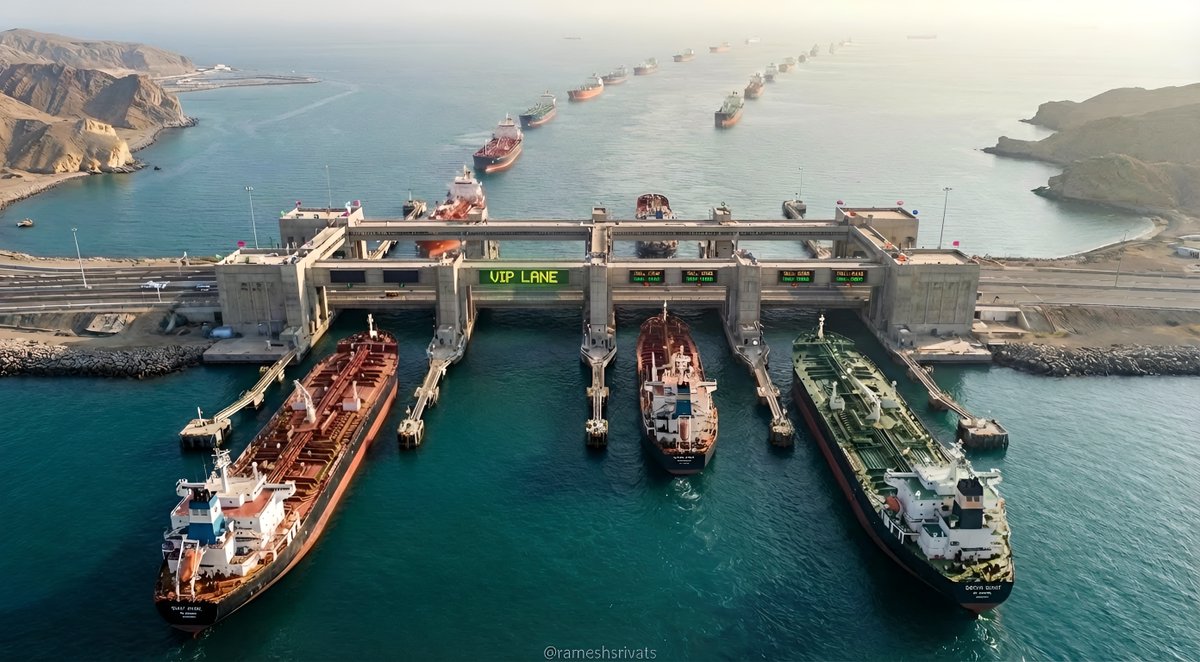
@MontyPanging @ArunTheAviator @SandeepUnnithan @RgGhai @IAF_MCC @Chopsyturvey @ArunachalCMO @arunp2810 is this the same time when you were flying the harrier Sir?
@srinivas_sudher Got a notification just now for the same, David Trezeguet scored
Don't tax disability pension - Sign the Petition! c.org/szLLDzNvQr via @Change
@srinivas_sudher Bohot ajeeb log hain idhar, gussa chadh jaata hai

Over 10,000 ex-Servicemen in Goa, left high & dry by ECHS, as scheme runs out of medicine & sole empanled civil hospital withdraws service due non-payment of bills. For 3rd time in 2025 funds blocked by MoD, causing extreme distress to the old & sick. @PMOIndia @DefenceMinIndia

India spends heavily on defence but does not finance it. That distinction, subtle yet decisive, separates mature defence-industrial economies from those trapped in yearly budget cycles. Unlike agriculture, energy, or infrastructure, which have long-term credit institutions and development banks, India’s defence sector still relies on annual appropriations, a legacy of British-era fiscal systems designed for control, not capacity. What once served an empire’s need for accountability now constrains a nation’s need for preparedness. Read #ThePrintOpinion by Sudhir Pillai @sudhirpillai__ Despite rising defence budgets and ambitious acquisition plans, India still lacks an institutional framework to finance its long-term military capability goals. If the future of India’s defence sector depends on sustained capability building, it must first create the financial institutions to support it. A Defence Finance Corporation (DFC) could be the missing bridge between ambition and execution. India spends heavily on defence but does not finance it. That distinction, subtle yet decisive, separates mature defence-industrial economies from those trapped in yearly budget cycles. Unlike agriculture, energy, or infrastructure, which have long-term credit institutions and development banks, India’s defence sector still relies on annual appropriations, a legacy of British-era fiscal systems designed for control, not capacity. What once served an empire’s need for accountability now constrains a nation’s need for preparedness. The process follows a familiar ritual; the three Services submit demands, the Ministry of Defence consolidates them, and the Ministry of Finance sanctions what fiscal limits permit. The result is an economy that spends but does not invest. It pays salaries and pensions, sustains imports, and funds public-sector production, yet it lacks a credit ecosystem or institutional network to ensure steady, affordable, and long-term capital. Without such a framework, capability growth remains episodic rather than cumulative. Fiscal policy to financial architecture Other sectors in India were innovated out of necessity. Liquidity risk and delayed returns led to the creation of the Industrial Development Bank of India (IDBI) in 1964, the National Bank for Agriculture and Rural Development (NABARD) in 1982, and the India Infrastructure Finance Company Limited (IIFCL) in 2006, each turning fiscal policy into financial architecture. Defence never had to. Its funds came directly from the Consolidated Fund of India, a sovereign, reliable, and politically untouchable source. Even when delayed, they eventually arrived, breeding dependence rather than discipline. Projects such as the Light Combat Aircraft (LCA), the Arjun Main Battle Tank (MBT), and submarines under Project 75 were funded by the government of India through grants rather than structured loans, with no agency tasked with appraising their financial risk or return on capability. When funds fell short, projects were deferred instead of refinanced. Where other sectors used credit to accelerate outcomes, defence relied on annual rationing, a system that guaranteed delay and denied accountability. The nuclear-submarine and strategic missile programmes are exceptions, following a sovereign model akin to India’s atomic energy and space sectors, which are funded directly under classified heads. Strategic secrecy gave it insulation but also isolated it from the broader defence-industrial base, which never developed auditable, structured financing. The result is a bifurcated system: classified programmes that are fully State-funded but opaque, and conventional projects that remain budget-bound and fiscally brittle. Why the status quo hurts Large-scale programmes such as the Advanced Medium Combat Aircraft (AMCA), the Twin Engine Deck-Based Fighter (TEDBF), next-generation destroyers, and Project-77 submarines each require sustained funding over 15–20 years. The scale of these programmes makes it impossible to fund them through annual capital allocations without crowding out other critical priorities. Meanwhile, India’s private sector, including Tata, L&T, Adani, Bharat Forge, Data Patterns, Zen Technologies, and Astra Microwave Products, among others, has expanded into aerospace and defence manufacturing. These firms can raise capital for infrastructure and tooling, but not for platforms like aircraft or submarines, which remain sovereign assets. Without a financial bridge between State, industry, and capital, India risks repeating a familiar pattern: projects sanctioned without structured funding, delayed execution, and emergency imports to plug operational gaps. How mature powers fund defence No significant military power finances its defence solely through annual budgets. Each has developed institutions that connect finance, industry, and national strategy. Turkey’s Defence Industry Support Fund (SSDF), created in 1985 and managed by the Presidency of Defence Industries (SSB), channels tax revenues into a revolving corpus that funds research and production outside the annual budget. Fiscal autonomy enabled steady progress on the Bayraktar drones, Hurjet trainer, and TFX fighter, insulated from political or financial volatility. Japan integrates credit and procurement through the Japan Development Bank and the Acquisition, Technology and Logistics Agency (ATLA). Post-war industrial groups, such as Mitsubishi, IHI, and NEC, are linked through keiretsu cross-shareholding, with a core bank at its centre, and long-term state contracts, ensuring that industrial depth and fiscal discipline advance together. China perfected state-bank capitalism. The Aviation Industry Corporation of China (AVIC), backed by the China Development Bank and the Export–Import Bank of China, finances defence R&D and production through soft loans and State guarantees. South Korea blends sovereign funding with development banking. The Korea Development Bank (KDB) and the Export–Import Bank of Korea provide long-term credit for the KF-21 Boramae fighter and other strategic programmes. The United States operates through a vast web of military–industrial capital. Pentagon contracts serve as State-backed financial instruments, enabling Lockheed Martin, Boeing, and Northrop Grumman to raise billions on the bond market. Liquidity also flows through the Defense Production Act Fund and the US Export–Import Bank. This US ecosystem was not organic but policy-driven. In July 1993, during the “Last Supper,” Secretary of Defense Les Aspin and Deputy Secretary William Perry gathered leading defence executives and told them to “merge or perish.” Facing post-Cold War cuts, the Pentagon engineered consolidation, reducing the number of prime contractors from 51 to five within a decade. The resulting giants – Lockheed Martin, Boeing, Northrop Grumman, Raytheon, and General Dynamics – still dominate global production. The lesson is clear: fiscal design and institutional architecture are as decisive as technology in sustaining long-term military capability. The bullet train and the AMCA There is a fiscal parallel between the Mumbai-Ahmedabad bullet train and the AMCA (including its indigenous jet-engine programme). Both are large-scale national investments exceeding Rs 1 lakh crore that combine indigenous effort with foreign collaboration. The critical difference lies in their modes of financing. The bullet train is primarily funded through soft loans from the Japan International Cooperation Agency (JICA), covering approximately 80 per cent of the costs and repayable over several decades. As a civilian infrastructure project, it benefits from a clear revenue model that supports debt financing. As discussed in my earlier article in ThePrint, the AMCA faces a more profound fiscal dilemma, a strategic programme financed almost entirely from the defence budget. It competes for funds against the Tejas Mk1A/2 and the Multi-Role Fighter Aircraft (MRFA) programme, which may include the manufacture of Rafale in India. Civil projects, such as the bullet train, access international development finance and repayment models. But defence projects like the AMCA depend solely on defence budgets. The contrast highlights the need to move from budgetary to financial planning if India is to sustain long-term capability programmes. India’s financial reality India has taken tentative steps toward market integration. Defence public-sector firms, such as Hindustan Aeronautics (HAL), Bharat Electronics (BEL), Bharat Dynamics (BDL), Mazagaon Dock (MDL), and Garden Reach (GRSE), are listed on national stock exchanges, collectively valued at over Rs 3.5 lakh crore. Yet listing has not brought autonomy. These enterprises remain tethered to the exchequer: profitable but fiscally captive. Dividend rules requiring payouts of 30 per cent of profits or 4 per cent of net worth ensure steady fiscal inflows but restrict reinvestment. Even HAL, India’s first defence Maharatna, faces additional constraints; its Rs 5,000-crore investment autonomy is largely symbolic for global-scale projects. Navratnas and Miniratnas alike need the freedom to lay more “golden eggs” — and grow their nests, in the process. By contrast, China’s AVIC and shipbuilding conglomerates use listed subsidiaries on the Shanghai, Shenzhen, and Hong Kong exchanges to tap domestic and foreign capital, reinvest profits, and issue debt under state-bank guarantees, aligning markets with policy. Yet AVIC’s scale comes with opacity. Recent purges of senior officers and executives, including those within the People’s Liberation Army (PLA) Rocket Force, demonstrate how unchecked financial ecosystems can foster corruption. India’s challenge is the opposite: excessive control rather than excessive freedom, running counter to promoting innovation in complex defence and aerospace sectors. A DFC must therefore balance autonomy with oversight, embedding transparency and auditability from inception. India’s model remains appropriation-led, not credit-led. A DFC could finally convert rising allocations into structured capital, linking public investment with industrial autonomy. Case for a Defence Finance Corporation India now needs a dedicated Defence Finance Corporation (DFC) to convert fiscal allocations into structured, auditable capital investment, bringing to defence what IDBI once brought to industry and NABARD to agriculture. It would not replace the Defence Ministry or the Defence Accounts Department but would professionalise the financing of military projects, introducing rigour, predictability, and accountability into long-term planning. Drawing on global models, a DFC would provide structured sovereign credit, milestone-linked disbursements, vendor financing, defence infrastructure bonds, and a strategic sovereign fund. Together, these instruments would bring discipline, continuity, and predictability to India’s defence financing, making structured credit as integral to capability-building as human resources or technology. The DFC could serve as a specialised development finance institution under a National Defence Industrial Board (NDIB), a high-level body that aligns finance, industry, and capability planning. The NDIB could include representatives from the MoD, MoF, Ministry of Commerce and Industry, the RBI, and independent directors from the banking and defence industry, balancing government oversight with professional autonomy. The DFC could begin with an equity infusion of approximately Rs 25,000 crore from the Consolidated Fund of India, a figure comparable to the government’s initial support for National Bank for Financing Infrastructure and Development (NaBFID) and India Infrastructure Finance Company Limited (IIFCL). The fund infusion would serve as core equity, enabling the DFC to raise five to ten times that amount through sovereign-backed bonds or co-lending arrangements subscribed to by LIC, SBI, and other institutional investors. It could extend ten to twenty-year loans to DRDO, HAL, BEL, private vendors, etc., linked to procurement schedules. A Rs 10,000-crore revolving credit line could finance MSMEs in defence manufacturing backed by confirmed orders. Tax-incentivised Defence Infrastructure Bonds could attract pension and insurance funds, while co-lending with banks and sovereign guarantees could support major projects, such as fighter engine development or shipyard expansion. Lessons from the Past The post-purchase refit of INS Vikramaditya, initially conceived as a limited overhaul, evolved into a near-total reconstruction of a Soviet-era carrier hull. When hidden deficiencies emerged, the absence of a risk-sharing mechanism led to costs spiralling from under $1 billion to over $2.3 billion. Similarly, the MiG-29K acquisition nearly stalled when the Indian PSU bank had to face up to financing Russian suppliers without a sovereign guarantee. The MoD improvised by authorising a “letter of comfort,” reportedly issued by a bureaucratic cog within the Russian system rather than by the Russian sovereign, offering little assurance to either lender or exchequer. Both episodes reveal a systemic flaw: India lacks an institutional mechanism to appraise, finance, and monitor long-cycle defence projects. A DFC could have pre-empted both by acting as a single-window capital agency empowered to raise long-term bonds, co-lend with banks, and guarantee vendor credit. The aim would not be to add another institution or bureaucratic layers but to transform fiscal culture. A DFC would ensure project appraisal before sanction, funds released against deliverables, and continuity maintained beyond political or annual budget cycles. It would also provide the industry with predictable, sovereign-backed payment streams, encouraging investment in tooling, plants, and R&D. In effect, it would turn Atmanirbharta from a slogan to a fiscal structure. India’s defence spending, however large, will yield limited outcomes without such reform. The goal must be not just to spend more, but to spend better, turning budgets into bankable investments in capability. Banking on strength India’s growing economic fundamentals make reform feasible. The 2025 Union Budget set aside Rs 6.2 lakh crore to defence (Rs 6.81 lakh crore including pensions), of which Rs 1.72 lakh crore was for capital outlay. Such outlays require converting rising allocations into structure. A significant portion of this growth, however, is likely to be offset by ‘defence inflation’, an area that warrants deeper policy analysis. Without reform, higher budgets will expand inefficiency. With a DFC, they can create durable capacity and disciplined capability. Defence economics is ultimately about predictability and complexity. Great powers build credit, not just arsenals. A DFC will not be a cure-all, but it will mark a decisive shift, from annual rationing to strategic investment, from grants to governance, from slogans to systems. As Thucydides observed of Athens, “The strength of a city lies not in its walls, but in the resources that sustain them”. For India, the Kautilian truth needs to be reiterated. Military strength ultimately rests on the strength of the treasury, and on the institutions that sustain it.

رؤية_المؤشر @Ji692795529
8 Followers 292 Following A little fantasy never hurts ✨https://t.co/zZLVzm045g
cammy main character @mkwegner
125 Followers 3K Following too many feelings, not enough words 💌 follow back

Michael BC Cassandra @MichaelBCC48947
21 Followers 273 Following Have all the experience you want in #Bitcoin #Froex and #Crypto trading Dm now for your mentorship
Bubble @Bubble236360
114 Followers 4K Following
Eliza Russel @ElizaplRussel
10 Followers 458 Following Lured the best beauties from all US states 😻 Ready for a 1 on 1 meeting Some have naked profile photos! Watching this https://t.co/1xDteu9iVK
Carrie Thornton @CarrieplThornt
12 Followers 371 Following Gathered on the site of girls from all US states 😜 Ready for a 1 on 1 meeting See nude photos before a date! Watching this https://t.co/oGvUUiPnQu@
0 Followers 0 Following

The Don Photography @THE_DON_TOG
11K Followers 7K Following Globally published, multi-award winning photographer for The Don Photography Please follow my insta - https://t.co/2jD31ke0aE
Vbhadrao T @Arbharath11
0 Followers 3 Following
Ashok Chhibbar @chibskycoo
3K Followers 1K Following Ex fighter pilot. Author. Country first. Always!
Aakash Chahar @whyAakash
6 Followers 11 Following Trying my way around being an overnight sensation with one crazy tweet.
rupinder dhillon @ParaRjs
7K Followers 6K Following

Virendra Kumar @Virendr77208725
22 Followers 66 Following Government employe love yoga sports man judo player
Henzil Luis @HenzilLuis
34 Followers 190 Following An incorrigible social and optimistic enthusiast.
Sushobhan Jena | ETHG... @JenaSushobhan
16 Followers 77 Following

TottenHammy @Bissoumatatas
1K Followers 1K Following Death to the pedos. Tottenham, medicine, poetry, politics, life, laughter, peace, love, travel, fitness, music, sports.
twtlit @skathreya8
49 Followers 230 Following all things sports ⚽🏀🏏 all things entertainment 🎥🎶🕺 #MUFC
Harsh Raj @harsh_ion
7 Followers 31 Following Jack of all trades, expert of some. Physics intrigues me a lot.... Not to argue, just to put my point.... Scum heads stfu...
Sudher Srinivas @srinivas_sudher
40 Followers 517 Following Giving out info and opinions for no fuckin reason.



wannabedavegrohl @RaghuNegi04
73 Followers 429 Following Someone told me there's a girl out there with love in her eyes and flowers in her hair
dhruv negi @dhruvnegi
94 Followers 249 Following

Middle East Observer @ME_Observer_
379K Followers 2K Following 🇱🇧 Galilean Middle East Analysis/History/Politics/Memes reporting Subtitling Videos for you Support the subtitling project here: https://t.co/7UPdbUoegq
Admiral D K Joshi @Admiral_DKJoshi
6K Followers 2 Following Admiral D K Joshi PVSM, AVSM, YSM, NM, VSM (Retd.) Lt Governor of Andaman & Nicobar Islands, and Vice-Chairman, Islands Development Agency
Ex Maj Manish Bhatnag... @menforjustice
851 Followers 98 Following First to Spot & Report Kargil Intrusion in Jan 99. 5 PARA SF, 1/11 GR, 3 Times Siachen & Kargil War. Lawyer, Masters Vedic Edn https://t.co/XXZZiVRm7r
Ajeet Bharti @ajeetbharti
546K Followers 107 Following Journalist | Author | Creator of Point Blank by @AjeetBhartii | https://t.co/nDEZ5fe2dy


Maritime History Soci... @MHSofIndia
3K Followers 216 Following Curating A Voyage of Excellence where #HeritageAwakens our #MaritimeConsciousness
This Day In Indian Na... @thisdayin_IN
4K Followers 59 Following A curated page on the day to day history of the Indian Navy #ThisDayInIndianNavy, #INHistory, #NavalHistory, #IndianNavyHistory
Gaurav M Tripathi @GauravT71548031
1K Followers 505 Following Air Cmde Gaurav M Tripathi (retd) VSM, Mil Strategy, NSCS, Natsec, Geopolitics, Def Manufacture, Innovation MHS'92/NDA88 Retweets not endorsements
Samir @obretix
68K Followers 79 Following I like brave people who are able to think for themselves. geospatial IT – OSINT/IMINT
Marcos @Marcos29791582
1K Followers 734 Following
Nature Desai @NatureDesai
5K Followers 477 Following AI/ML | CSE | Trade Finance | Geo-economics | Maps | Himalayas | Tibet | Frontiers Alum: IIT | BITS Pilani
Jaidev Jamwal @JaidevJamwal
38K Followers 765 Following Order of Battle, Military Affairs and Travel. #ORBAT Samples: https://t.co/LbcQlbgsyB
BLYSKAVKA @blyskavka_ua
163K Followers 1 Following Prompt information about Ukraine🇺🇦 #without_fake_news #Blyskavka_ua #WorldNews #UkraineNews #UkrainianNews #RussianNews #news #usa #Europenews
MilitaryLand.net @Militarylandnet
271K Followers 28 Following A database dedicated to 🇺🇦 Ukrainian regular and volunteer military units, combined with a news source primarily focused on the Ukrainian Armed Forces.
Special Kherson Cat �... @bayraktar_1love
465K Followers 428 Following Cat owner from Kherson🇺🇦. Here I post mainly about ongoing war in Ukraine and situation in my hometown Kherson, liberated 11/11/2022. (fled from Kherson)
Andrew Perpetua @AndrewPerpetua
157K Followers 661 Following If you think I deserve a tip: https://t.co/yZHw1x6jYZ to view my map: https://t.co/fEtAaykiX1
𝔗𝔥𝔢 𝕯𝔢... @TheDeadDistrict
160K Followers 118 Following The latest on conflicts, weapons systems and military-related news. Support my work https://t.co/F4HkJgo15s Thank you!
(((Tendar))) @Tendar
451K Followers 888 Following Tyrants are my enemies | Si vis pacem para bellum |🇩🇪🇪🇺| Das Böse triumphiert allein dadurch, dass gute Menschen nichts unternehmen |Military & History
NOELREPORTS 🇪🇺 ... @NOELreports
529K Followers 408 Following Media platform covering global conflict zones. Focus on the Russian-Ukrainian war. If you'd like to support our voluntary work: https://t.co/PmM2wwDA1Y.
Ukraine Battle Map @ukraine_map
438K Followers 956 Following Live Ukraine battle map is updated all the time. Showing cities and villages being under Ukraine or Russia control.
Def Mon @DefMon3
292K Followers 565 Following Support my work: https://t.co/08QF2RJJ56 I am not Tom Clancly.
ChrisO_wiki @ChrisO_wiki
254K Followers 372 Following Independent military history author and researcher. Coffee tips are appreciated! https://t.co/t1EjNrIZ2c Now also at https://t.co/4qGQ2ffHJJ
GeoConfirmed @GeoConfirmed
229K Followers 284 Following Map and Investigations = https://t.co/B93nqcHOaM Managed by volunteers.
Amit K Paul @theamitkpaul
680 Followers 1K Following Lawyer by training,Mediator by heart,Cinephile by passion,Bibliophile by habit,Researcher by choice,Ideator by nature,Author by pursuit,Enterprising by core.
Shin @hey_itsmyturn
121K Followers 311 Following Dave here! 0320 Sometimes #OSINT, #ADSB & #IMINT | Contact: https://t.co/opApyWkJ3G | Former Aleph! Like my content? You may Support: https://t.co/5WrSO2S9U1 ❤️
RAdm MD Suresh (Retd) @Moochikal
2K Followers 221 Following Navy veteran with “No Limits” and “Cutting Edge” as mottos in Command. Family and nation are loves, friends matter. Books, movies, music & fitness are passions.
Axios @axios
853K Followers 1K Following Smart Brevity worthy of people's time, attention and trust. Subscribe to our newsletters: https://t.co/uMitaJIcpz

The Directorate- Clan... @Delta_SquadAnex
21K Followers 551 Following Director of clandestine Operations- 26/11 Mumbai was done by MI6. LUBYANKA BUILDING
OSINTdefender @sentdefender
2.5M Followers 2K Following Open Source Intelligence Monitor focused on Europe and Conflicts across the World. RT ≠ Endorsement. Want to Support my Work? https://t.co/PcUbewwuEZ
COUPSURE @COUPSURE
178K Followers 2K Following Open source and geospatial data | @GeoConfirmed member | Worked with @Cen4infoRes & @lemondefr | Opinions Are My Own |
Dr. Hemanth @hem_foxtrot
2K Followers 81 Following Ship Designer | Adjunct Fellow, National Maritime Foundation |
Bernie News Network @BNews_Network
2K Followers 3 Following Breaking news from Israel & the Middle East, before the headlines. Real-time alerts on WhatsApp, Telegram & X. 120,000+ subscribers. https://t.co/WKk8fA2NCs

Mohonto Panging Pao @MontyPanging
6K Followers 223 Following Ex Fighter Pilot, Entrepreneur, Author, Columnist, Social Work

BharatShakti.in @BharatShaktiBSI
18K Followers 204 Following For self-reliance in defence; one-stop portal on defence in India; founded by @nitingokhale. Intricacies explained; policy issues debated and discussed
Samir Saran @samirsaran
147K Followers 1K Following President, ORF (@orfonline); #Tech #Climate #ForeignPolicy; Curate @raisinadialogue; Chair #CyFy; Author #PaxSinica; #TheNewWorldDisorder; #GeoTechnoGraphy

Prashant Jasrotia @Hashpipe821
25K Followers 409 Following Indian Military, Actor, Model, certified metabolic health, hormone and supplement science coach. Helping people get strong and achieve that tungstuned body.
कुशल मे�... @kushal_mehra
102K Followers 295 Following यावज्जीवेत्सुखं जीवेत् ऋणं कृत्वा घृतं पिबेत् । भस्मीभूतस्य देहस्य पुनरागमनं कुतः । Host The Cārvāka Podcast https://t.co/Cy0kwyscHR
Harsh Gupta Madhusuda... @harshmadhusudan
120K Followers 5K Following Long India. New India. Dharmatva.
OSINTtechnical @Osinttechnical
1.8M Followers 942 Following PAI enjoyer, OSINT guy @hntrbrkmedia, my views/freezing cold takes are my own. For full disclosures, visit https://t.co/JOtQx4pI3e.
Vantor @vantortech
139K Followers 836 Following Vantor is forging the new frontier of spatial intelligence to unlock a more automated, interoperable world. Delivering total clarity from space to ground.

Deepika Narayan Bhard... @DeepikaBhardwaj
326K Followers 3K Following Journalist | Filmmaker | Social Activist Director : #IndiasSons #MartyrsofMarriage Founder @ekamnyaay UPI : ekamnyaay@axl [email protected]
Abhijit Iyer-Mitra @Iyervval
320K Followers 3K Following HRH The ArchBitchess of Mylapore | Commie Hunter | Class Oppressor | Pedagogue of the Maledictory Sciences | My cigars cost more than your education
Sai Deepak J @jsaideepak
817K Followers 524 Following Senior Advocate,Delhi HC/SCI. Civil Commercial & Constitutional litigator. Author of #1 India that is Bharat, & #2 India, Bharat and Pakistan (Bloomsbury).
Bharat @parthparth2290
2K Followers 172 Following Updates on #Dharma , #Defence, #Foreign policy #Statecraft ,#Civilization and #Economics. #India that is #Bharat.Trends for United States
You might like