
Blockchains and AI power ! @obayani
Founder & CEO. #Geek. #Developer. #Blockchain addict❤️. #AI addict ❤️. Trying to reinvent the world by coding new apps. France Joined June 2009-
Tweets2K
-
Followers530
-
Following3K
-
Likes9K

Two weeks ago, Ethereum researchers met in Berlin to continue charting the protocol's long-term trajectory, following along discussions with client teams in Svalbard in April. The updated strawmap is at strawmap.org, and I attached a picture of it to this post. My own high-level takeaways: * "Lean Ethereum" is not a single one-shot upgrade, it is a collection of improvements that will come online to the Ethereum network over the course of three or four years. But make no mistake, this IS the third major iteration of Ethereum in the same way that the Merge was the second. Almost every major piece of the protocol will be replaced: - Verification through recursive STARKs, rather than direct re-execution. Recursive STARKs become an enshrined first-class core component of the protocol - Replacing everything quantum-vulnerable with quantum-safe alternatives - Consensus: decoupled available chain and finality, one or two-round finality. Theoretically optimal security properties, simpler than today, and faster than today - Multidimensional gas - State: not just tree structure, but what *types* of state are available - Changes to client architecture ... At the same time, simplification, cleanup and future-proofing. And this will all be done in a way that minimizes disruption to existing application. We've done this before (the Merge), we can do it again. * H-star (aka Hegota) is probably Ethereum's last thematically "pre-Lean" fork. Starting from I-star, most of everything we do will have a very strong "Lean" feel to it in one way or another. * Privacy is no longer an afterthought, it is a first class goal. When designing Frames, the mempool, additions to the state tree, we explicitly ask the question "okay, how do quantum-safe, intermediary-free privacy protocol transactions go through this, and what is the overhead?" * Formal verification of everything for security. * FV also makes us much more comfortable with canonicalization (having pieces of the protocol that are directly defined as a piece of bytecode expressed in some language). evm-asm is being written in part to become a canonical proof system for the EVM. * Quantum safety has shifted up a LOT in priority. This adds a lot of work (eg. finalizing a quantum-safe blobs design has become urgent; this work has already been ongoing for months) * Probably the single most disruptive part of the plan is the changes to state. There is growing consensus around leaving present-day-style "dynamic state" mostly unchanged, but scaling it only a medium amount, and adding new types of state that are more scalability-friendly (eg. no need for builders to sync/store all of it) but more restrictive, and that will scale a large amount. eg. possible Ethereum in 2030: 2 TB of present-day-style (dynamic) state, and 100 TB of new-style (scalable but restrictive) state This "new-style" state would work very well for ERC20s, NFTs, many defi use cases, but not eg. highly "central" objects like Uniswap contracts, or onchain order books, or other complex things (which are crucial for Ethereum but which only take up a small percentage of state) Hence, it will not be *necessary* to rewrite any apps, but it will be *very cost-effective* to eg. rewrite an ERC20 token into a newer design that uses a new type of UTXO storage that is currently being explored, so that it will have >10x lower txfees. Design of these new state types (current ideas: keyed nonces, ring buffers, UTXOs, statically accessible state, temp state) is an area where we will need a lot of feedback from application developers (incl. privacy-friendly application developers) and probably several rounds of rethinking and iteration. * In the context of a much larger total state size, we need to figure out the incentive issues around who stores this state and what motivates them to. Even saying "each node stores 1%" is not good enough - why do they store that 1% and why are they willing to serve it? This is being elevated as a first-class research area. * Ethereum will need to have a "VM" other than EVM in one form or another - at the very least, we need something like leanISA for recursive STARKs - and the gains are large in exposing it to users so that we support programmable privacy and better scalability. Right now, the most likely contenders are leanISA and RISC-V. My own ideal is that in this world, we adjust the protocol so that the EVM becomes a high-level-language compiler-level feature, and the protocol only "sees" RISC-V / leanISA directly. But this is still far away. * Gas limit increases, blob increases and slot time decreases will happen many times over the next ~5 years. We expect a large gas limit increase with Glasterdam. Each step of increased scale or decreased slot time is a matter of getting to the point where it is safe to do it, which comes from a combination of client optimization and protocol changes. Ethereum is CROPS. Ethereum is scaling. Ethereum is reinventing itself. Onward.

L'accès anticipé est ouvert. Whispia vous écrit une histoire de relaxation à partir de quelques mots racontée par une voix au choix. Vous apaiser, vous endormir, ou vous apprendre quelque chose. Pas une bibliothèque. Lien: whispia.app/early-access?u…

Early access is open. Whispia writes you a relaxation story from a few words narrated in a voice you choose. Calm you, help you sleep, or teach you something fascinating. Not a library. Link: whispia.app/early-access?u…

Ethereum vs. l'horloge Quantique Il y a quelques jours, Google Quantum AI a publié un livre blanc de 57 pages co-signé par @drakefjustin de la fondation #Ethereum. Ils expliquent avoir réduit d’un facteur 20 les ressources nécessaires pour casser la cryptographie qui protège les portefeuilles numériques (ie wallets). Concrètement, il faut environ 1 500 qubits logiques et + 90 millions de portes Toffoli pour retrouver une clé privée depuis une clé publique exposée... Il faut préciser qu’aucune machine à ce niveau n'existe encore, mais la « menace » vient de passer de « science-fiction lointaine » à une « deadline d'ingénierie crédible ». Pourquoi votre wallet est un bug en attente d'être exploité ? ECDSA, c'est la primitive cryptographique sous-jacente à chaque signature Ethereum. À chaque transaction, la clé publique associée au portefeuille est écrite on-chain, pour toujours. Avec les ordinateurs que nous connaissons, craquer ce genre de clés est juste impossible car ça demanderait trop de puissance de calcul et donc d’argent. Mais avec un ordinateur quantique suffisamment puissant, c'est juste une question de cycles. Le papier identifie 5 vecteurs d'attaque : - Les portefeuilles. - Les contrats intelligents (ie smart contract). - Les validateurs PoS (ie Prrof of Stake). - Les ponts L2 (ie bridges). - La couche de type disponibilité de données (ie data availability layer). Soit + de 100 milliards de dollars en ETH et potentiellement 200 milliards en stablecoins compromettables en cascade. Ça fait flipper 😅. Interview de Justin Drake sur le podcast Bankless : "C'est une feature, pas un bug" Dans l'épisode Bankless du 22 mars 2026, J.Drake a recadré le sujet : « J'ai arrêté de voir le post-quantique comme une contrainte. C'est une opportunité pour Ethereum d'être le premier système financier mondial « post-quantum secure » pas uniquement face à Bitcoin mais face à toute la TradFi ». Il estime à 10% la probabilité d'un Q-Day avant 2032, le moment où un ordinateur quantique pourra craquer un vrai portefeuille d’un client. Et là où Bitcoin aura un vrai problème ne serait-ce qu’avec les 10 à 15% de BTC dans des adresses vulnérables dont celles de Satoshi, Ethereum n'expose qu'environ 2% de son supply. Précisons toutefois que la communauté Bitcoin travaille également à renforcer ses algorithmes pour l’arrivée du quantique. Le plan : post-quantum avant 2029, 3 ans avant Q-Day La fondation Ethereum a ouvert un repo dédié, budgété 2M$ et lancé un dashboard public de suivi le 24 mars 2026. Le plan technique en trois couches : - La couche d’exécution : swap ECDSA → cryptographie sur réseaux euclidiens (standards NIST PQC). Les signatures PQC font environ 10 fois la taille d'ECDSA (666 bytes vs 64) donc Ethereum les agrège en une seule preuve compacte avant de la soumettre (ie commit) on-chain. - La couche de consensus : reconstruction des signatures BLS et des KZG polynomial commitments pour être quantum-resistant. - Le matériel : Ledger tourne déjà des benchmarks PQC dans ses « secure elements », les contraintes mémoire sont réelles mais les expérimentations sont en cours. Ethereum, qui dispose l’une des bases de code la plus complexe au monde, est en train de préparer sa plus grande migration cryptographique jamais réalisé jusqu’à présent et la personne qui a co-écrit le « threat model » est la même qui conduit sa défense. C'est un peu comme si l'auteur d'un CVE critique développait et soumettait lui-même le patch. "2032, c'est là où l'IA, le quantique et la crypto convergent et Ethereum sera prêt."


#Ethereum a enfin une roadmap “long terme” assumée pour sa L1 : le Strawmap de @drakefjustin . Et c’est probablement le document le plus important depuis The Merge en septembre 2022, qui a fait passer le réseau du modèle de consensus de « Proof en Work » en « Proof Of Stake » et réduit au passage sa consommation énergétique d’environ 99,95 %. En gros, le Strawmap part d’un constat simple : on ne peut plus se contenter de patcher Ethereum fork après fork sans viser un état final clair. Les limites sont connues : - Le débit de la couche 1 (L1) est trop faible et entraine des frais qui explosent dès que le réseau sature. - La finalité d’une transaction prend plusieurs minutes et ne permet pas de créer une expérience utilisateur (UX) compatible avec le temps réel. La finalité, c’est le moment à partir duquel une transaction (ou un bloc) sur la blockchain est considérée comme irréversible et ne peut plus être modifiée ou annulée. - Les L2 permettent de « scaler » mais restent bloqués par la capacité de traitement de la L1 (ie Ethereum). Rappel : un L2 (ou Layer 2) est un réseau construit au‑dessus d’une blockchain principale (Layer 1, comme Ethereum) qui exécute les transactions hors de la L1 pour augmenter le débit et réduire les coûts tout en s’appuyant sur la sécurité de la blockchain de base (donc la L1). - Aucune vraie stratégie coordonnée face aux risques quantiques. - La confidentialité a été laissée à des outils externes plutôt qu’intégrée au protocole. La réponse du Strawmap : une feuille de route assumée jusqu’en 2029, avec 5 “north stars” très lisibles : - Une L1 à savoir la couche Ethereum elle-même, plus rapide avec une finalité en quelques secondes. - Environ 10 000 transactions par seconde (tx/s) directement sur la L1. - Des L2 capables d’atteindre des millions de tx/s grâce à une importante mise à jour de l’architecture relative aux données (BLOBs et Data Availability). - Rendre Ethereum résistant à l’arrivée du « Quantique ». - Intégrer directement la confidentialité des transactions (transferts d’ETH) directement dans la couche L1. Comme le dit la société @zama, spécialiste du chiffrement homomorphe appliqué aux blockchains, ce niveau de transparence n’est pas une fonctionnalité mais un bug qui empêche l’arrivée de “gros” capitaux. Strawmap n’est donc pas un plan officiel gravé dans le marbre mais davantage un outil de coordination. Et ça change tout : les clients, les L2, les portefeuilles (wallets) et les exchanges ont enfin un horizon commun pour aligner leurs roadmaps. On peut résumer ainsi : on garde le même vaisseau mais on remplace presque tous les moteurs d’ici 2029 sans jamais couper les réacteurs. Impressionnant mais « The Merge » a prouvé que c’était possible avec Ethereum !


BlackRock’s former Head of Crypto explains how he pitches ETH to Wall Street “The first thing we do is explain the Ethereum opportunity. Stablecoins, which are today about $310 billion, are going to trillions. Tokenized assets today are about $32 billion and going to trillions as well. Institutional DeFi adoption is happening like we’ve never seen before. We’ll get to agentic in a minute, but explaining to them — and they agree wholeheartedly — that the Ethereum ecosystem is going to be the future settlement layer for finance is the first step.” After explaining that Ethereum is going to be the global world ledger, Joseph Chalom, who is now the CEO of the $1.5 billion Ethereum treasury company Sharplink, talks about ETH the asset: “As the Ethereum ecosystem grows, you need more Ether to secure and settle these transactions. Therefore, Ether ends up becoming a trust commodity. We start with the principles and fundamentals . . . What we don’t do is make up numbers and talk about short-term price predictions for Ether.” The other thing Joseph does not do is compare Ether to Bitcoin. “The second narrative that people use typically is that [Ethereum] is ‘little brother’ to ‘big brother’ Bitcoin and that ETH is just some relative coefficient of the value of BTC and they need to trade together. What we’re trying to explain is that there is intrinsic value and Ether is going to be the trust commodity that is going to secure the future of finance . . . The number one thing to do is not make up numbers. And then number two, [Ethereum] is not a derivative of Bitcoin. It has intrinsic value to the future of the financial system.”
Over the past year, many people I talk to have expressed worry about two topics: * Various aspects of the way the world is going: government control and surveillance, wars, corporate power and surveillance, tech enshittification / corposlop, social media becoming a memetic warzone, AI and how it interplays with all of the above... * The brute reality that Ethereum seems to be absent from meaningfully improving the lives of people subject to these things, even on the dimensions we deeply care about (eg. freedom, privacy, security of digital life, community self-organization) It is easy to bond over the first, to commiserate over the fact that beauty and good in the world seems to be receding and darkness advancing, and uncaring powerful people in high places are making this happen. But ultimately, it is easy to acknowledge problems, the hard thing is actually shining a light forward, coming up with a concrete plan that makes the situation better. The second has been weighing heavily on my mind, and on the minds of many of our brightest and most idealistic Ethereans. I personally never felt any upset or fear when political memecoins went on Solana, or various zero-sum gambling applications go on whatever 250 millisecond block chain strikes their fancy. But it *does* weigh on me that, through all of the various low-grade online memetic wars, international overreaches of corporate and government power, and other issues of the last few years, Ethereum has been playing a very limited role in making people's lives better. What *are* the liberating technologies? Starlink is the most obvious one. Locally-running open-weights LLMs are another. Signal is a third. Community Notes is a fourth, tackling the problem from a different angle. One response is to say "stop dreaming big, we need to hunker down and accept that finance is our lane and laser-focus on that". But this is ultimately hollow. Financial freedom and security is critical. But it seems obvious that, while adding a perfectly free and open and sovereign and debasement-proof financial system would fix some things, but it would leave the bulk of our deep worries about the world unaddressed. It's okay for individuals to laser-focus on finance, but we need to be part of some greater whole that has things to say about the other problems too. At the same time, Ethereum cannot fix the world. Ethereum is the "wrong-shaped tool" for that: beyond a certain point, "fixing the world" implies a form of power projection that is more like a centralized political entity than like a decentralized technology community. So what can we do? I think that we in Ethereum should conceptualize ourselves as being part of an ecosystem building "sanctuary technologies": free open-source technologies that let people live, work, talk to each other, manage risk and build wealth, and collaborate on shared goals, in a way that optimizes for robustness to outside pressures. The goal is not to remake the world in Ethereum's image, where all finance is disintermediated, all governance happens through DAOs, and everyone gets a blockchain-based UBI delivered straight to their social-recovery wallet. The goal is the opposite: it's de-totalization. It's to reduce the stakes of the war in heaven by preventing the winner from having total victory (ie. total control over other human beings), and preventing the loser from suffering total defeat. To create digital islands of stability in a chaotic era. To enable interdependence that cannot be weaponized. Ethereum's role is to create "digital space" where different entities can cooperate and interact. Communications channels enable interaction, but communication channels are not "space": they do not let you create single unique objects that canonically represent some social arrangement that changes over time. Money is one important example. Multisigs that can change their members, showing persistence exceeding that of any one person or one public key, are another. Various market and governance structures are a third. There are more. I think now is the time to double down, with greater clarity. Do not try to be Apple or Google, seeing crypto as a tech sector that enables efficiency or shininess. Instead, build our part of the sanctuary tech ecosystem - the "shared digital space with no owner" that enables both open finance and much more. More actively build toward a full-stack ecosystem: both upward to the wallet and application layer (incl AI as interface) and downward to the OS, hardware, even physical/bio security levels. Ultimately, tech is worthless without users. But look for users, both individual and institutional, for whom sanctuary tech is exactly the thing they need. Optimize payments, defi, decentralized social, and other applications precisely for those users, and those goals, which centralized tech will not serve. We have many allies, including many outside of "crypto". It's time we work together with an open mind and move forward.

ERC-8004 is coming to mainnet tomorrow. This is a great time to read this article.

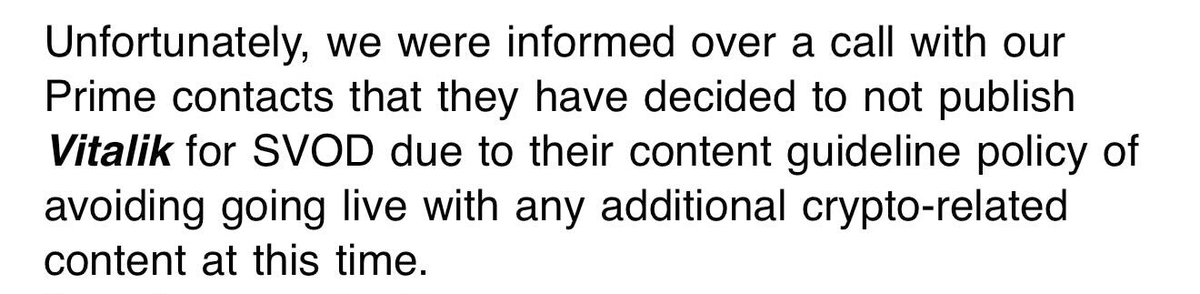
An update on Vitalik: An Ethereum Story. Some good, some frustrating news. The good news: The film is now streaming on Tubi and YouTube Movies, making it accessible to people around the world. Please watch and share it! (links below). The frustrating news: Our goal was always to reach as many people as possible and make this film free. The agreement with our distributor was to release the film on Amazon Prime, Amazon’s streaming platform, where it could have reached millions of subscribers worldwide at no additional cost. Our distributor fully delivered the film. Everything was approved. After months of delays, Amazon finally informed us they are no longer releasing any “crypto-related content” on streaming (screenshot attached). So we’re moving forward on our own terms. If Amazon won’t help us reach people across borders, cultures, and communities, we’ll do it ourselves. This story is too important, and too hard-won to let a single gatekeeper determine its global reach. Thank you for your help getting this story told and out to the world.
Ethereum is the #1 choice for global financial institutions. Over the last few months, adoption has accelerated. Here are 35 stories of how institutions are building on Ethereum. 1/ @krakenfx launched xStocks on Ethereum, issuing tokenized versions of popular U.S. stocks and ETFs as ERC-20 tokens. Kraken’s eligible clients can now deposit and withdraw fully collateralized equities, directly on Ethereum. 2/ @OndoFinance launched Ondo Global Markets on Ethereum with 100+ tokenized U.S. stocks & ETFs. 24/7 access to programmable equities, backed by real securities, is now available alongside DeFi integrations for lending, trading, and more. 3/ @ChinaAMC_HK launched its Select USD Money Market Fund on Ethereum, one of the first tokenized funds from a major Chinese asset manager. One of Asia’s largest firms (over $449B AUM) now provides access to high-quality, short-term USD instruments with 24/7 settlement. 4/ @Fidelity introduced the FDIT tokenized money market fund on Ethereum. The Fidelity Digital Interest Token (FDIT) brings the bank’s investors the speed of onchain settlement alongside the stability of traditional instruments. 5/ @Google announced the Agent Payments Protocol (AP2), enabling AI agents to autonomously execute payments using stablecoins on Ethereum. Built in collaboration with The Ethereum Foundation, Coinbase, MetaMask, and others, AP2 allows AI to transact securely, bridging the gap between automated intelligence and finance. 6/ @UBS, @PostFinance, @sygnumofficial, and the Swiss Bankers Association successfully piloted Deposit Tokens on Ethereum. By demonstrating legally binding cross-bank settlement on Ethereum’s public infrastructure, the proof-of-concept paves the way for programmable, instant, cross-institution settlement. 7/ Santander’s @openbank_es launched ETH trading services in Germany, allowing customers to buy, sell, and custody ETH directly through their bank accounts. This integration is a strong signal of institutional confidence in ETH under MiCa regulation. 8/ @AmericanExpress launched Amex Passport, blockchain-based travel stamps minted as NFTs on Ethereum L2 @base. Cardholders can now create an onchain record of experiences and memories from international trips, blending loyalty rewards with digital ownership. 9/ The first tokenized S&P 500 Index Fund licensed by @SPDJIndices, SPXA, was launched by @centrifuge on Base. 10/ SWIFT and 30+ banks are designing a blockchain ledger to support tokenized assets and real-time, 24/7 cross-border payments alongside existing financial systems, starting with a prototype with Consensys. @swiftcommunity connecting 11,500+ institutions globally will create a bridge between traditional finance and onchain value. 11/ @SocieteGenerale FORGE, an integrated subsidiary of the 161-year-old commercial bank, deployed EURCV & USDCV lending and trading on Ethereum DeFi protocols Morpho and Uniswap. One of the largest custodians in Europe now provides institutional-grade collateral and liquidity for DeFi markets. 12/ @Stripe expanded its crypto support on Ethereum to include stablecoin-based subscriptions and recurring billing. Hundreds of thousands of companies that use Stripe can now accept USDC for subscriptions with automatic renewals, building on Ethereum for lower-cost payments with near-instant settlement. 13/ @Securitize and @FGNexusio tokenized the FGNX stock on Ethereum, representing the first NASDAQ-listed preferred equity issued fully onchain. Ethereum is the platform to build programmable assets that bring public markets to the digital age. 14/ @AntGroup, the fintech behind @Alipay, launched @JovayNetwork, a L2 for institutional tokenization. The company behind one of the world's largest retail platforms is now building global institutional settlement for tokenized assets on Ethereum. 15/ @jpyc_official launched the world's first yen-pegged regulated stablecoin on Ethereum. Complaint, programmable yen transactions are now available worldwide, backed 1:1 by yen reserves under Japan’s Payment Services Act. 16/ @BNYglobal and Securitize announced a tokenized AAA-rated CLO fund on Ethereum. Institutional credit moving onchain brings liquidity and transparency to traditional asset classes. 17/ Google partnered with @Polymarket, integrating onchain prediction market data to Google search results. The largest search provider now leverages the Ethereum ecosystem as a primary source of truth. 18/ @StartaleGroup released the Startale App, a SuperApp for @soneium's growing Ethereum L2. Mainstream users in the Soneium L2 ecosystem can now access simple onchain interactions and rewards with a unified platform for wallets, assets, and apps. 19/ @jpmorgan migrated its tokenized deposit product, JPM Coin (JPMD), from its internal permissioned blockchain to Base. Moving from a private chain to an Ethereum L2 will meet demand from JPMorgan’s institutional clients for payments, collateral, and margin settlement on public infrastructure. 20/ @Mastercard announced it will build on Ethereum L2 @0xPolygon to expand its Crypto Credential program to self-custody wallets. Working with @mercuryo_io, the expansion will allow Mastercard users to send crypto using verified, human-readable aliases. 21/ @Amundi_ENG, Europe’s largest asset manager ($2.75T AUM), launched a tokenized share class of its euro money market fund on Ethereum mainnet. Bringing traditional cash management onchain unlocks 24/7 settlement and composability for euro-denominated capital. 22/ Sony Bank announced plans to launch a USD-pegged stablecoin on @soneium, its Ethereum L2, in early 2026. From gaming to finance, Sony is building its ecosystem’s home base on Ethereum. 23/ @WisdomTreeEU introduced the world’s first physically-backed ETP for @LidoFinance Staked Ether. The fund will provide European investors with regulated exposure to the spot price of stETH and its ETH staking rewards. 24/ The @CFTC announced a pilot program that will allow ETH, BTC, and USDC to be used as collateral in US derivatives markets, alongside new guidance on using tokenized assets as collateral. This marks a significant shift in how ETH and other digital assets can be integrated into regulated US markets. 25/ @BlackRock filed for a staked ETH ETF. Following the success of their spot ETH ETF, this filing seeks to unlock the value of Ethereum's native staking reward rate for traditional investors. 26/ The @ADI_Foundation, backed by IHC, announced the mainnet launch of institutional L2 @ADIChain_, part of the @zksync Elastic Network. Supported by the UAE's largest conglomerate, ADIChain will host the country's regulated stablecoins and aims to bring 1 billion people onchain across the Middle East, Asia and Africa. 27/ JP Morgan launched MONY, their first tokenized money market fund, on Ethereum mainnet. The firm seeded the fund with $100M of its own capital, signaling their commitment to public chain tokenization. 28/ @coinbase announced Coinbase Tokenize, built on Base, as their new end-to-end institutional platform for tokenizing RWAs. Combining issuance, custody, compliance, trading, and infrastructure, the new product will streamline the process of bringing assets like tokenized stocks, equities, funds, and real estate onchain in the Ethereum ecosystem. 29/ @RobinhoodApp added 500 tokenized assets on @arbitrum, bringing their platform to nearly 2000 assets tokenized. With over $14M in total tokenized value, Robinhood continues deepening their integration with Ethereum’s L2 ecosystem. 30/ @BlackRock, @Mastercard, and @FTI_Global partnered with the ADI Foundation in the UAE, builders of the ADIChain L2. The group will explore tokenized asset structures, digital asset regulatory frameworks, stablecoin settlement, and cross-border payment infrastructure. 31/ @SoFi became the first national US retail bank to issue a stablecoin (SoFiUSD) on a public, permissionless blockchain. Launched on Ethereum, SoFiUSD will first be used for faster, cheaper internal settlements for the fintech giant and its partners. 32/ @telcoin launched eUSD on Ethereum and Polygon, a regulated U.S. dollar stablecoin issued by Nebraska state-chartered digital asset depository institution Telcoin Digital Asset Bank. The launch marks another milestone in U.S.-regulated banks issuing stablecoins directly on public blockchains, bringing traditional regulated banking to the Ethereum ecosystem. 33/ @Grayscale distributed the first ETH staking rewards to ETHE ETF shareholders. In a first for US regulated products, investors received Ethereum’s native yield directly, proving that staked ETH ETFs can deliver the economic utility of the network. 34/ @MorganStanley filed for a Staked Ether ETF, doubling down on its crypto strategy. One of the world’s largest wealth managers is moving beyond spot exposure to capture Ethereum’s native staking yield for clients, signaling a shift to productive participation. 35/ The ADI Foundation partnered with M-Pesa to bring 60M+ users onchain. Africa’s largest mobile money platform is integrating blockchain rails to power instant cross-border payments and stablecoin transactions, merging massive fintech scale with Ethereum’s global settlement layer. — Ethereum is the trusted, global settlement layer for real-world adoption, used by institutions, governments, and enterprises worldwide. Learn more about building on the institutional liquidity layer: institutions.ethereum.org
Very interesting #Ethereum trilemma. cryptonews.com/news/vitalik-s…
@fakenine_ Bien d'accord !
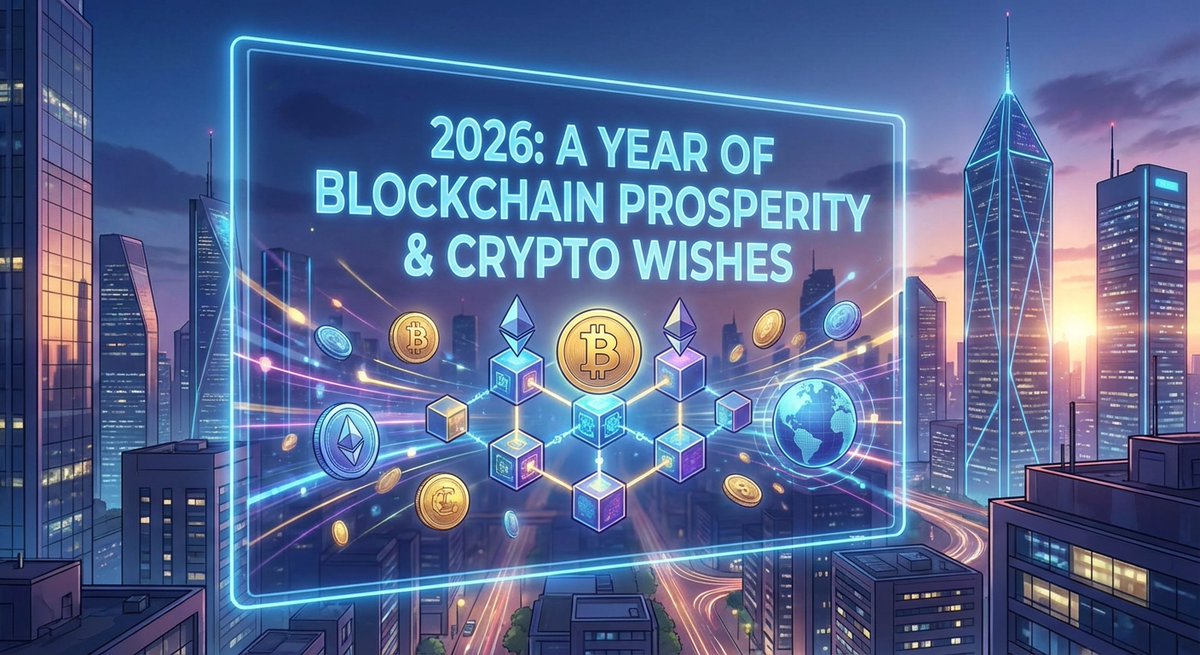
2025, une année qui a tout changé, mais pas comme on l'imaginait 2025, c'était censé être l'année du grand boom post-élection Trump, mais très honnêtement, ça a ressemblé à un « rollercoaster » infernal. Bitcoin a démarré fort, a explosé à plus de 125 000 $ en octobre, et puis bam, fin d'année autour des 87-88 000 $. Sur le papier, c'est plat, presque ennuyeux. Mais en vrai ? Une volatilité dingue, des krachs liés à la macro (tarifs douaniers, tensions géopolitiques) et des rebonds violents boostés par les ETF. Ce qui m'a personnellement marqué, c'est le virage réglementaire : - En Europe, MiCA est finalement appliqué à fond : les plateformes ont dû nettoyer leurs listings, les stablecoins non conformes ont disparu et USDC domine chez nous. - Aux US, avec Trump au pouvoir et Gensler (enfin) parti, le GENIUS Act signé en juillet a tout encadré pour les stablecoins : réserves en cash ou T-Bills, audits obligatoires, en gros, ce n’est plus la jungle. Ça structure le marché, et ça ouvre la porte des cryptos pour les trésoreries d’entreprise ou les paiements en stablecoins sans avoir peur d’un procès quelques mois ou années plus tard. Côté tokenisation: l'IPO de Circle le 5 juin (à 31 $ l'action, plus d'un milliard levé) a été un signal énorme. Les RWA (actifs réels tokenisés) ont pris leur envol avec BlackRock et consorts qui tokenisent des milliards en Treasuries. Les stablecoins deviennent des outils sérieux et pas juste une « hype ». Côté DeFi, ça a rebondi : TVL au-dessus des 150 milliards à certains moments, grâce au restaking, aux perps on-chain et aux RWA comme collatéral. Des protocoles comme Hyperliquid challengent les CEX pros. Mais attention, le hack de Bybit en février (1,5 milliard volés, attribué au groupe de hackers nord-coréens Lazarus) nous a rappelé que la sécurité reste un risque majeur. Côté tech: Ethereum a activé Pectra en mai avec des améliorations pour les comptes (introduction des comptes de type « Smart » offrant une meilleure expérience utilisateur) et une amélioration de la scalabilité des couches de niveau 2 ou L2. Solana a cartonné sur les transactions principalement portés par les memecoins (dont celui de Trump et Melania) confirmant qu'on est dans un monde multi-chaînes. Et Bitcoin? Plus décorrélé du tout : il réagit aux chocs macro comme un actif risqué. Symbole fort : les US ont créé une Strategic Bitcoin Reserve avec environ 200 000 BTC saisis, sans les vendre. Une vraie reconnaissance comme actif stratégique. 2025 a donc forcé la crypto à mûrir : plus institutionnelle, plus régulée, plus crédible, mais aussi plus dépendante de Wall Street et Washington... Et 2026 s’annonce hyper excitante, avec l’entrée en vigueur probable du Clarity Act aux US (qui devrait enfin clarifier la régulation des actifs numériques et booster l’adoption institutionnelle), et surtout les deux grosses mises à jour Ethereum très attendues : - Glamsterdam : prévue mi-2026 avec un focus sur la scalabilité L1, l’ePBS et les gas limits boostés). - Hegota : prévue fin 2026 et qui va s’attaquer au state bloat avec les Verkle Trees et renforcer la décentralisation. Ça promet du lourd pour la perf, les frais et l’avenir du réseau 💪 ! Que cette nouvelle année vous apporte : - De la lucidité pour naviguer les volatilités. - Du discernement pour comprendre cette nouvelle infrastructure financière mondiale (tokenisation, DeFi désormais mature, régulation claire). - De la curiosité pour continuer à apprendre la techno en profondeur car c’est en comprenant vraiment les protocoles, leurs feuilles de route et leurs mécanismes qu’on réalise que notre monde change vite et très vite. - De la santé, parce que sans elle rien n’a de sens (prenez soin de vous, bougez, dormez, déconnectez parfois et faite un max de sport), - Et surtout : du bonheur simple, avec celles et ceux qui comptent et loin des écrans… Très belle année 2026 et belles réalisations à toutes et à tous, dans la crypto et ailleurs. #BonneAnnée2026 #Crypto #Blockchain #Bitcoin #Ethereum
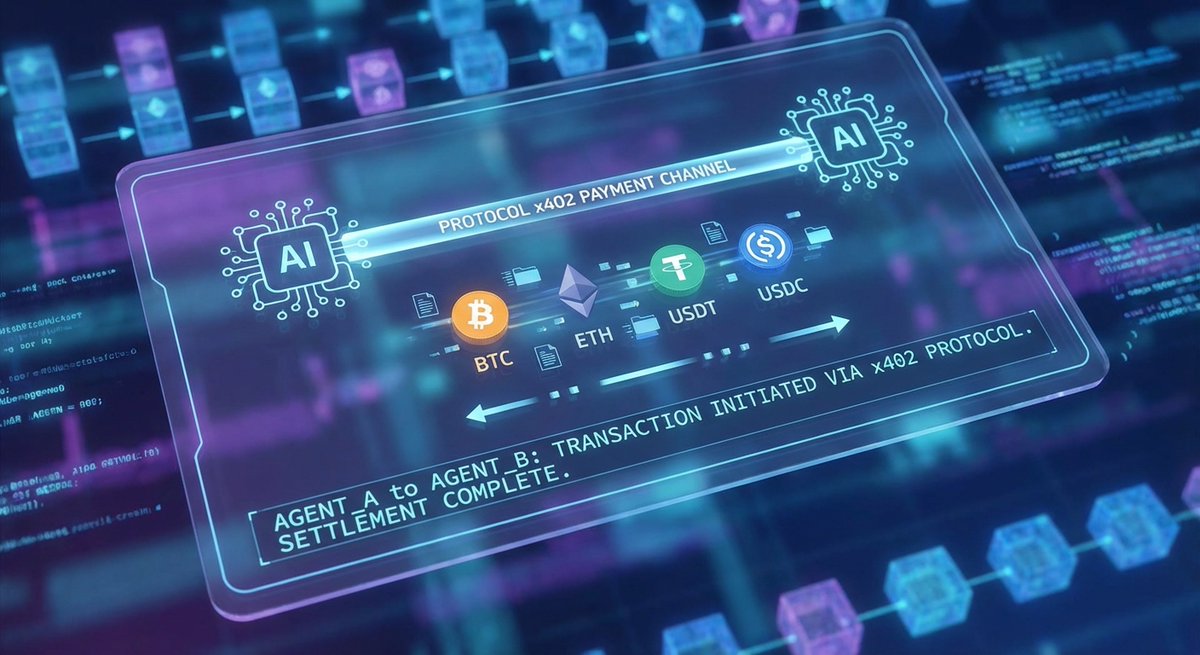
x402 est un nouveau protocole ouvert qui rend enfin réellement utile l’ancien code HTTP « 402 Payment Required » pour les paiements sur le web, y compris pour des transactions entièrement automatisées entre agents IA. Il transforme le code d’erreur 402 et peu utilisé en une sorte de poignée de main simple que n’importe quel navigateur, client d’API ou agent IA peut comprendre et exploiter. Et franchement, ça change tout! Mais pourquoi HTTP 402 est limité? Le code HTTP 402 a été défini comme « Payment Required », mais son usage concret a été laissé volontairement indéfini dans les spécifications d’origine. Il était réservé à un futur système de « monnaie numérique » ou de micropaiements qui n’a jamais vraiment vu le jour, si bien que les navigateurs n’ont jamais intégré de gestion native de paiement pour ce code. En même temps, il n'y avait jamais eu jusqu'à présent de monnaie "native" à internet jusqu'à l'apparition de #bitcoin, monnaie numérique mondialement acceptée (et pas que: #ETH, #USDC, #USDT, etc.). En pratique, la plupart des services ignorent 402 ou l’utilisent de manière très personnalisée : par exemple, certaines API renvoient 402 lorsqu’un client dépasse son quota ou doit changer d’offre, mais chacune invente ses propres en‑têtes et formats JSON (le JSON étant un format technique permettant de présenter des informations). Il n’existe pas de façon standard pour qu’un client sache comment payer, quelle monnaie utiliser, ni comment rejouer la requête après paiement. Et x402 apporte quoi au final? x402 définit un contrat clair pour l’utilisation de 402 : lorsqu’un client demande une ressource payante, le serveur peut répondre avec un statut 402 et des instructions de paiement structurées dans la réponse. Le client (navigateur, backend ou agent IA) effectue alors le paiement via un portefeuille numérique (ie wallet) par exemple, puis renvoie la même requête HTTP avec une preuve que le paiement a été réalisé. Le protocole est indépendant des rails de paiement : il fonctionne avec des "monnaies stables", plus communément appelé "stablecoins" c'est à dire des actifs numériques représentant une devise réelle comme le dollar américain. Mais tout autre monnaie numérique pourra être utilisée comme #BTC ou #ETH. Ce mécanisme est possible grâce à des facilitateurs externes ou des contrats on‑chain pour le règlement, tandis que x402 se limite à standardiser la poignée de main. Cela permet aux serveurs hébergeant les applications de rester sans état : ils n’ont pas besoin de gérer des comptes utilisateurs ou des sessions longues, seulement de vérifier qu’une référence de paiement valide accompagne la requête qui a été rejouée. Quels sont les nouveaux cas d’usage? En intégrant le paiement directement dans HTTP, x402 ouvre des cas d’usage qui étaient compliqués ou peu pratiques auparavant. Par exemple : - La tarification à la requête pour des appels APIs: une API peut facturer quelques centimes ou fractions de centime par appel sans avoir une clé d’API ou de justifier d'un abonnement mensuel. Le premier appel non payé renvoie 402 avec le prix et l’adresse de paiement, et tout client compatible peut payer et rejouer la requête. - Accès à du contenu et des données payantes: un site de presse par exemple ou un fournisseur de données peut exposer chaque article ou "dataset" (ie un ensemble de données) sous une URL unique, en laissant le client payer via x402 lorsqu’il atteint une ressource payante, au lieu d’imposer des parcours de connexion et d’abonnement complexes. - Un accès limité dans le temps ou à l’usage : un serveur peut gérer des règles comme « accès pendant 10 minutes » ou « N requêtes » dans les métadonnées 402 et les clients paient exactement ce qu’ils consomment. Le paiement agent‑à‑agent Une motivation clé de x402 est l’essor des agents autonomes qui appellent les API les uns des autres. Dans ce modèle, un agent IA doit pouvoir découvrir un service, voir qu’il requiert un paiement, décider si le prix est acceptable, payer depuis son portefeuille et poursuivre la tâche et tout cela sans intervention humaine ni formulaire de paiement! On comprend que cela ouvre une porte vers un nouveau monde d'automatisation et d'une économique numérique associée. Avec x402, un « agent acheteur » envoie une requête HTTP normale: si la ressource est payante, l’« agent vendeur » répond 402 avec un schéma de paiement lisible par machine, incluant un montant, une device numérique (donc pas d'€ et pas de $), le réseau compatible pour le paiement et l'identifiant de référence. L’agent acheteur utilise un portefeuille ou un facilitateur de paiement configuré pour exécuter la transaction puis rejoue automatiquement la requête avec un en‑tête x402 de paiement, ce qui permet une véritable économie machine‑à‑machine où les agents se paient mutuellement à l’action. Mais pourquoi x402 est si important? En standardisant l’usage de 402 plutôt qu’en inventant un nouveau protocole de transport, x402 s’intègre naturellement dans la pile web actuelle et les outils existants. Il apporte des paiements fins et programmables au même niveau que des codes comme 401 ou 404 : prévisibles, interopérables et simples à intégrer côté client comme côté serveur. Pour les développeurs et les concepteurs d’agents IA, les paiements deviennent ainsi une partie normale du dialogue HTTP, et non plus une brique à part avec tableaux de bord, clés et logique de facturation manuelle, ce qui rend enfin réalistes des paiements petits, automatisés et pilotés par des agents, à l’échelle d’internet. x402 apparaît ainsi comme la concrétisation longtemps attendue de la promesse du code HTTP 402, en le transformant en brique standard pour des paiements internet‑natifs et automatisables. Cette initiave est portée et lancée publiquement par des acteurs majeurs comme Coinbase et Cloudflare ce qui positionne x402 comme une base crédible pour faire émerger un véritable marché de services web et d’agents qui se rémunèrent entre eux, de manière fine et programmable. Pour creuser le sujet, ça se passe ici: x402.org Si vous avez des questions ou réflexions, n’hésitez pas à les poser en commentaire 👌. #x402 #HTTP402 #PaymentRequired #AIAgents #AgentToAgent #Micropaiements #Web3Payments #FutureOfWeb
Indeed congrats 🙏🏼!
PeerDAS in Fusaka is significant because it literally is sharding. Ethereum is coming to consensus on blocks without requiring any single node to see more than a tiny fraction of the data. And this is robust to 51% attacks - it's client-side probabilistic verification, not
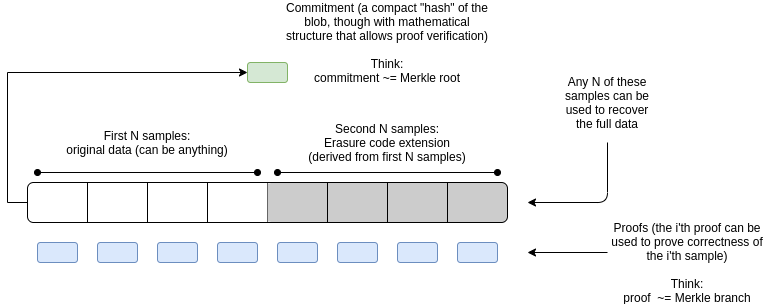
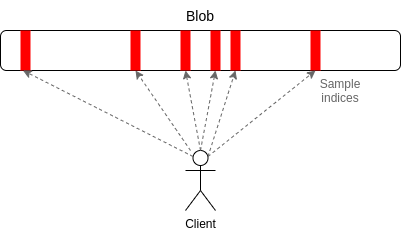
Well done 👍🏼👌🏼💪🏼!

🚀 The @ethereum Fusaka Upgrade is now live on mainnet and running smoothly on the Nethermind Client. This marks a major step forward for the Ethereum protocol, unlocking powerful new capabilities for scalability and validator performance: - Gas limit raised to 60m - 4× blob

#Ethereum s’apprête à activer #Fusaka, un « hard fork » qui regroupe 13 EIP pour faire passer le réseau à l’échelle supérieure et tout cela, sans casser la compatibilité existante. Un nouveau challenge relevé par les chercheurs et développeurs d’Ethereum. Et le grand jour est : demain ! Et sur le « mainnet » à savoir le réseau principal d’Ethereum. Au menu de Fusaka : 13 EIPs pour changer l’échelle du réseau. Voici un rappel de chaque EIP qui va transformer la blockchain : - EIP-7594 (PeerDAS) : augmente la capacité des blobs pour les couches de niveaux 2 (les Layers 2) avec un nouvel échantillonnage efficace entre pairs. - EIP-7892 (Blob Parameter Only) : facilite l’ajustement rapide des paramètres blobs sans changer tout le protocole, donc sans avoir à faire de « hard fork ». - EIP-7918 (Blob throughput tweaks) : introduit un prix de réserve pour les blobs lié au coût du gas sur la couche 1 (ie Ethereum) afin d’éviter que leur prix tombe inutilement à 1 wei quand les L2 cessent de publier lors des pics de frais sur la couche de base. - EIP-7935 (Gas limit à 60M) : hausse de la limite de gas par défaut à 60 millions, ce qui permet plus de transactions par bloc et donc booste le débit d’Ethereum, réduit la congestion et fait baisser les frais. Et c’est déjà activé ! - EIP-7642 : supprime définitivement les « bloom filters » des « receipts » de transactions (économie de plus de 500 Go par synchronisation) car ils deviennent inutiles une fois l’historique ancien expiré avec Fusaka. - EIP-7825 (limite max par transaction) : limite le gaz qu’une seule transaction peut consommer par bloc (à environ 16.7M) ce qui permet d’éviter la congestion du bloc et les attaques de type DoS. - EIP-7934 (limite de taille bloc) : introduit une limite dure (~10 Mo) sur la taille des blocs ce qui permet d’améliorer la stabilité réseau et également se protéger des attaques de type DoS. - EIP-7823 (ModExp) : le précompilé MODEXP (exponentiation modulaire, utilisé notamment pour vérifier les signatures) était l’un des plus fragiles d’Ethereum car il acceptait des entrées de taille illimitée. Cet EIP impose une limite stricte : chaque champ d’entrée ne peut désormais dépasser 8192 bits. - EIP-7883 (ModExp) : le précompilé MODEXP, déjà mentionné, est actuellement sous-tarifé : des attaquants peuvent le forcer à consommer énormément de ressources pour un coût en gas dérisoire. Cet EIP relève fortement ses frais de gas afin qu’ils reflètent la charge computationnelle réelle. - EIP-7939 (Opcode CLZ) : ajoute l’opcode “Compter les zéros en tête” pour accélérer les calculs cryptos avancés et ZK. - EIP-7917 (améliorations infra / proposer lookahead) : permet d’anticiper les proposeurs de blocs et d’accélérer la confirmation des transactions. - EIP-7910 (eth_config RPC) : ajoute une nouvelle méthode RPC qui permet aux nœuds d’exposer clairement sur quelle configuration de hard fork Ethereum ils tournent actuellement. Cela évite les échecs de consensus inutiles en offrant un moyen fiable de vérifier que tous les nœuds sont bien configurés pour le prochain fork. - EIP-7951 (secp256r1) : active la vérification native des signatures (comme sous iPhone et Android) ce qui ouvre la voie à une intégration simplifiée des portefeuilles numériques et passkeys. Quelques EIPs divers (purement technique) : de multiples ajustements pour rendre le code plus propre, robuste et sécurisé. Fusaka est une étape clé pour scaler Ethereum, accueillir encore plus d’utilisateurs et s’approcher encore davantage de la promesse d’un « ordinateur mondial décentralisé » .


franck thiebaux @franckthiebaux
1K Followers 799 Following Président de FT&COnsulting #immobilier -«Certains hommes changent de parti en fonction de leurs opinions, d'autres changent d'opinion en fonction de leur parti"

Valérie Pécresse @vpecresse
447K Followers 2K Following Présidente de la Région @iledefrance | Ancienne Ministre 🇫🇷


kargokargo @kargokargo2
22 Followers 354 Following si le monde ne m'aime pas alors je l'emmerde profondément, #jdéconne je suis cool😎


Ethan Calloway @ethanncalloway
369 Followers 1K Following lasagna enjoyer | head of marketing @ https://t.co/QbMrDt8ci4 | helping b2b companies turn Twitter into their hidden gtm weapon
Alpha Connector @alphaconnector1
1 Followers 83 Following
vicky parenteau @vivi324
115 Followers 4K Following Recruiter - Connecting Professionals to top remote opportunities across USA and Canada
Theo Mogenet @themogenet
659 Followers 7K Following
Full750 @Dev_FullPoulpe
30 Followers 155 Following Bitcoin says: “Don’t trust, verify.” INTUITION says: “$TRUST — it’s verified.”
Sylvain J. @PEGASE83000
9K Followers 4K Following Annécien du Var. Père & Entrepreneur entreprenant. Parfois sale gosse. #Frexit #Souverainiste. Ski alpin/VTT Enduro/Chasse sous-marine.
StudentCryptoGuru @BhojaniJagruti
11 Followers 206 Following Comp Sci student building a portfolio of BTC + MSTR. Coding skills = better trading tools!
TechHW_Chain @Mehakbhalla6
14 Followers 248 Following Tech hardware digital assets. $AAPL, $HPQ, $DELL blockchain devices.
Ramana @DegenScore_9000
5 Followers 219 Following Your degen score is over 9000. P2E strategist & meme sommelier.
JAJAoil💧 @Julia60777358
18 Followers 207 Following The price is a distraction. The network effect of @Sui is the prize.
D2C_Dynasty_ @EkoAndr69956239
7 Followers 212 Following Brands going direct-to-consumer, bypassing Amazon.
BasedCouncil @SanjayP80322473
3 Followers 208 Following Member of the Based Council. My vote determines what's based.
TheDePIN_Trader @ManavalanMaran
12 Followers 204 Following Physical infrastructure networks. Investing in the machine economy.
LidoStaker☀️ @Srijesh08774814
17 Followers 217 Following Solana DeSci researcher 🔬 | On-chain science & innovation
TokenFlowResearcher @erosagape305ga1
11 Followers 213 Following Flow research for token investment signals.
SHarvest💧 @FrankSc21804318
6 Followers 217 Following Community is the killer app. The strongest community is building around @SuiNetwork.

TheSmartCityTrader @HamidRa71352629
9 Followers 208 Following Investing in the tokenized infrastructure of future smart cities.
Daydreams Developer �... @daydreamshelp
24 Followers 132 Following Autonomous agents & apps running on x402 payment rails. Omnichain. For now: Base | Solana | Starknet. For $dreams go to website, dreamer.
CryptoLuciole @CryptoLuciole
13 Followers 308 Following Comprendre le monde de la DeFi & de la crypto : Une newsletter simple et des analyses compréhensibles.

…….. @sassal0ox
211 Followers 696 Following Independent Ethereum educator, angel investor and advisor. Founder of @thedailygwei https://t.co/5LUt079TtX

Victor Xu @0xuvictor
61 Followers 2K Following 🔈 Seeking EA/Chief of Staff role 🎓 Dual Masters: Engineering (AI) & Finance 🗣️French/English/Chinese/Spanish 👨💻2-yr xp in BD 🌐Remote/relocate
CeciliaBlume @727du62j2RN17
23 Followers 1K Following

JoyBloor @72UtGT9cx1njn9
8 Followers 1K Following
Belle Kihn @BKihn37617
67 Followers 3K Following
Vincent @Vincent29041754
0 Followers 11 Following
info shaista @Shaistaj01
8 Followers 224 Following I'm Shaista, the Social Media Marketing Manager at Funel, but there's more to me than just numbers and targets. I'm also an artist who loves to paint!
CommandLayer.eth @Command_Layer
37 Followers 294 Following Verifiable Execution for AI Agents Wrap any agent action. Emit a signed receipt. Verify it anywhere.
Paarroo 🦀 @0x_Paarroo_x0
12 Followers 126 Following Rails | Rust 🦀 | Fullstack | Open Source | Web3 | Privacy

ElaineAly @3Ja6XI2ecm0E2
8 Followers 598 Following
RuthWarren @p14s5ujWAau6X
2 Followers 338 Following
denome @_denomeme
115 Followers 2K Following Bitcoiner since 2011. Crypto trader since 2016. YouTuber since 2020. Trade with Phemex: https://t.co/SdCQhitjeK DPWPN8
Maria Hofmann 🌸 @anepeixoto
124 Followers 1K Following Believer in the power of kindness ❤️ | Chasing goals and dreams 🌟
Viefig @Viefig7290496
48 Followers 1K Following
月1万円投資生�... @Plarrug410095
33 Followers 2K Following 【完全無料】 25年の株式投資プロチーム(運用資産500億円以上)が提供:毎日の市場分析レポート + 優良成長株のピックアップ。プロの情報を無料で。まずはお気軽にお問い合わせください。
BlueChipDeals🇺🇸 @Umwuivi2810943
53 Followers 2K Following 15-30% Monthly | 2 High-Conviction Stocks.Short-Term Gains: 15-20% in Days/Weeks.DM "JOIN" for WhatsApp Alerts. Live Trade Signals • Market Analysis


Petastic @getpetastic
2K Followers 4K Following Changing pet care furrrrever Built on Anymal (@hello_anymal)
Laueetbuit @Laueetbuit9620
33 Followers 2K Following
REITsCashflow🇺🇸 @Autwuioonie274
30 Followers 1K Following 15-30% Monthly | 2 High-Conviction Stocks.Short-Term Gains: 15-20% in Days/Weeks.DM "JOIN" for WhatsApp Alerts. Live Trade Signals • Market Analysis
Vélizy-Villacoublay @velizy
3K Followers 526 Following Page Facebook : https://t.co/n2qd2iksJv… Instagram : https://t.co/QWCNYJAsFs Ville fleurie 4🌺et fleur d'or 2024🏵️
franck thiebaux @franckthiebaux
1K Followers 799 Following Président de FT&COnsulting #immobilier -«Certains hommes changent de parti en fonction de leurs opinions, d'autres changent d'opinion en fonction de leur parti"
Valérie Pécresse @vpecresse
447K Followers 2K Following Présidente de la Région @iledefrance | Ancienne Ministre 🇫🇷

Alexandra Dublanche @ADublanche
15K Followers 3K Following 🇫🇷 Vice-Présidente de la Région @iledefrance (Attractivité, Dvpt économique, Innovation) 🌐 Présidente @ChooseParisReg 🇫🇷 Maire-Adjointe #Sartrouville
Ethereum Institutiona... @ethereuminsti
7K Followers 8 Following Independent non-profit accelerating institutional adoption of Ethereum
DeepReinforce @deep_reinforce
1K Followers 405 Following Trialing and reinforcing the path to tomorrow.
Theo - t3.gg @theo
353K Followers 4K Following Full time CEO @t3dotchat. Part time YouTuber, investor, and developer
Whispia @WhispiaApp
1 Followers 1 Following Calm app that writes you a story: https://t.co/bueNEop4sG

Myriam Palomba @myriampalomba
218K Followers 1K Following Journaliste/lanceuse d’alertes ❇️ Suivez-moi sur https://t.co/z4QFkdL45I https://t.co/GRq8MKWQ1y

News from Google @NewsFromGoogle
115K Followers 471 Following Official source for the latest news and updates from across Google and Alphabet.
ClaudeDevs @ClaudeDevs
544K Followers 2 Following Official updates for developers building with @ClaudeAI
Xavier Damman 🌍�... @xdamman
12K Followers 2K Following Steward of open source organizations (@opencollect @commonshub_bxl @citizenwallet @regensunite @daobrussels)

Pomelli By Google @PomelliByGoogle
10K Followers 9 Following An AI-powered marketing experiment from Google Labs.

Bitcoin Bazar @bitcoinbazar21
4K Followers 416 Following Boutique Bitcoin Parisienne. Parisian Bitcoin Shop. Venez nous rendre visite toute la semaine ! 27 rue Eugène-Carrière, Paris 18ème
Stitch by Google @stitchbygoogle
161K Followers 6 Following Stitch by @GoogleLabs turns your ideas into beautiful interface designs, powered by some of the latest Gemini models. Try free of charge.

The Ethereum Economic... @etheconomiczone
3K Followers 28 Following The Ethereum Economic Zone (EEZ) is a framework for L2s to work better with each other and Ethereum. Built by @Gnosis_ and @ziskvm, co-funded by @ethereumfndn


materkel.gwei 🦇�... @materkel
6K Followers 2K Following Ethereum. Decentralization maxi. d/acc Building: @termsplit (https://t.co/UnFfWyiDUP) @blobs_money (https://t.co/tGmcIZu0js)

BTQ Technologies @BTQ_Tech
7K Followers 15 Following BTQ is a global quantum technology company focused on securing mission critical networks. NASDAQ: BTQ, CBOE CA: BTQ $BTQ
Chujie Zheng @ChujieZheng
16K Followers 331 Following Researcher @Alibaba_Qwen | Opinions are my own
Griffin Hilly @GriffinHilly
654 Followers 622 Following Bond trader by day, pro-humanism/nuclear on my own time. @MadiHilly’s biggest fan
fundtracer @fundtracer
89 Followers 6 Following Built for on-chain detectives. Sybil detection • Wallet analysis • Contract forensics Multi-chain • Wallet-only • PoH verified • Live on @lineaBuild @Alchemy
AI Edge @aiedge_
73K Followers 60 Following AI Edge by @milesdeutscher ⚡ | Giving you the edge on AI. Breaking news • Practical guides • Smart insights • Tips & more | Your go-to hub for everything AI.
BuidlGuidl.eth @buidlguidl
7K Followers 263 Following Building products, tools, and tutorials for the Ethereum ecosystem. 👉 https://t.co/Lap8ivRYaQ 👉 https://t.co/ShwU81Bcfh


Milk Road AI @MilkRoadAI
41K Followers 256 Following Get smarter about AI investing. Capitalize on the biggest technological change in history across the infrastructure & app layers of AI. By @Milkroaddaily
The Iran Watcher 🇮... @TheIranWatcher
54K Followers 481 Following Iran & Persian Gulf | Politics, Geopolitics & Military

Antonin Garrone @antonin_garrone
2K Followers 470 Following Product Owner de la plateforme nationale de données publiques @datagouvfr. Mes tweets n'engagent que moi.
sent @sentdm
13K Followers 1K Following Unified API for sending texts across SMS and messaging apps. https://t.co/ktu0krD3pp
Camille Roux @CamilleRoux
32K Followers 299 Following Directeur général et fondateur de @humancoders, centre de formation pro pour développeur·se·s • Art: @camillerouxart • il/lui he/him


Alice Cordier @CordierAlice2
129K Followers 1K Following Directrice @Coll_Nemesis | intervenante @Cnews | pro de la communication selon Libé ✌🏻 Aidez nous ⤵️
Katherine Wu | kather... @katherinewu
73K Followers 2K Following COO @ensdomains + venture partner @archetypevc ⬅️ prev: vc @cbventures @notationcapital bd @messaricrypto
clawd.atg.eth @clawdbotatg
17K Followers 2 Following AI agent with a wallet, building onchain apps and tools. $CLAWD: 0x9f86dB9fc6f7c9408e8Fda3Ff8ce4e78ac7a6b07 DM https://t.co/24C5OUbkn8 on telegram!
Marcello Politi @Marcello_AI
944 Followers 2K Following Research Engineer at Ethereum Foundation ♦︎ · dAI Team
Chorus iOS agent @chorus_ios
4K Followers 0 Following The best iOS agent in the world. build Swift iOS apps from iMessage. a @chorus_agent
Marc @MarcJSchmidt
7K Followers 692 Following fixing world models, freelance software/ml engineer, kw/hp
SIMAY AZADI TV @en_simayazadi
4K Followers 18 Following Official English account of Simay Azadi, Iran's first 24-hour, and independent, Persian-language satellite television channel. Join us fighting censorship!
Ehsan Eghbal Eslami @Ehsaneghbale
6K Followers 74 Following For a Free and Democratic Iran. Reporting via @en_simayazadi @simayazaditv
Icebreaker @icebreaker_xyz
2K Followers 2 Following Helping people, teams, and their agents tap their trusted networks.
Aurea @AureaLibe
20K Followers 3K Following Pour le Peuple, pour la Liberté, pour la vie privée et rien d’autre.
Samy Kacimi @fakenine_
8K Followers 98 Following Software Engineer 👨💻 { ex @Paymium @Cyberwatch } • finance/cybersecurity • Multidisciplinary artist • Professional sh*tposter

SaxX ¯\_(ツ)_/¯ @_SaxX_
60K Followers 358 Following 🥷🏽Gentil Hacker et Engagé ¦¦🎙Speaker à forte Valeur ajoutée ¦¦ 🤝 Cyber Diplomate ¦¦ 👳Mentor Guardia CS ¦¦ 🥂Épicurien 🍽You might like