
HearingTheQuantum @quantumpod
Quantum physics for quantum physicists. Praising the cool stuff, snarky comments about the rest. Personal account: @ekwilibrator. Opinions my own! hearingthequantum.podbean.com Joined February 2019-
Tweets874
-
Followers1K
-
Following549
-
Likes842
What he said
Read it at whitehouse.gov/science
I recently scraped hundreds of arXiv physics papers for open questions, and fed them to frontier AI models. Here is what happened: m-malinowski.github.io/2026/06/05/ai-…
My new Substack, all about the key "aha moments" in the history of science & technology inventiontime.substack.com
So true

every aspiring home cook has roughly the same journey 1) Basics with Babish 2) omg sous vide is amazing 3) why isn't home kitchen closed-loop industrial PID controlled cooking a thing?

New Anthropic Research: Project Vend. We had Claude run a small shop in our office lunchroom. Here’s how it went.

@MichalOszmaniec @annawitten MS: "research published today in Nature, along with data shared at the Station Q meeting" = mamy artykul gdzie nie ma qubitow ktory mozesz przeczytac, i mielismy tez wewnetrzne spotkanie gdzie byly qubity ale tam ciebie nie bylo :)
Trying to forecast the future of quantum computing be like

I'm not yet convinced this exodus will last, but in case it does, you can find me at bsky.app/profile/msmali… But don't worry, I'll hang out here still!

We have a existential manufacturing problem in America. Why aren't there Amazon/Tesla-scale gigafactory warehouses filled with CNC machines? Will we ever be able to make our own products again? How do we accelerate the turnaround of American manufacturing? I asked this question a few months ago, and it's more relevant than ever. I firmly believe it's unacceptable to be a country that, ultimately, isn't able to make its own stuff. This isn’t just about economics—it’s about national resilience. It’s about the stability, defense, and sovereignty of the United States. A country that cannot produce its own goods is inherently fragile. Maybe this is irrational patriotism or stubbornness. Defense considerations aside, we must strive for price parity with our neighbors—subsidies can provide a short-term boost, but they are not a sustainable foundation for a competitive manufacturing economy. Future growth will require a return to cash-flowing, material-output businesses depending heavily on manufactured goods. Controlling our own destiny is a good thing. I’d like to kickstart a series of essays in coordination with @newindustrials, Blueprints for Reindustrialization, by contributing the first piece and setting the tone for what I hope will be a lively conversation from boots-on-the-ground operators. A few spicy takes up front. We’re not in first place. We killed the golden goose to increase quarterly profits. We lack both the capacity and the skills. We ought to create more high-paying manufacturing jobs, not low-paying manufacturing jobs. The most fundamental thing we need to do is increase efficiency. Manufacturing costs are inherently higher in the United States, period. After adjusting for the cost of living an average salary in Shenzhen is approximately $2,730, while in Houston, it's about $4,414. We’re 61% more expensive right off the bat. In addition to labor differences, other nations actively subsidize their raw material inputs. It’s tough to make the economics work when you’re so far behind. I’ve been on the front lines of making complicated stuff quickly for most of my life. The last four years of operating in defense-critical applications have been eye-opening. Whereas previously I could reach out to international partners for work, now I have to comply with U.S. rules for sensitive technologies. The contrast in capabilities and skill sets between the two locations is incredible. It feels like a barren wasteland of talent, with a huge vacuum left by the retiring skilled tradesmen. In addition to a population crisis, we are certainly facing a hardware-skilled labor crisis. Nearly every week, I’m desperately begging vendors to take our money. It's quite literally like the Futurama Fry meme—money in hand, begging someone to take it. More often than not, the answer is “we don’t have the capacity.” I’m a tiny customer, and we have no macro-scale event currently happening. This is not what national resilience looks like. Here’s an uncomfortable truth we need to say out loud: China has its shit together in a way difficult for us to replicate, in regard to manufacturing. They've made it a top-level priority to be the world's destination for manufactured goods. Moreover, did we think they would stop at dollar-store trinkets? Foolish. Every dollar of revenue in China is compounded into creating their huge critical mass of machines, infrastructure, and expertise. The plan has been running for decades now. They're climbing the ladder of technology as we paid them to do it. We could do the same. We could simply decide that it matters to make stuff here. It seems like we have a few knobs we can turn: • External taxes (import tariffs) • Internal tax breaks (low-cost/risk loans) • Technological breakthroughs (automation) • Operational excellence (scale) • Irrational actor patriotism Now, let's be realistic here. No amount of impassioned chanting of dynamism is going to shift the tides, though the X (formerly Twitter) grassroots discussion will kickstart the conversation. We're dealing with a scale truly hard to appreciate. We’re at least a trillion dollars behind. Policies to nudge this in the right direction are a bit over my head; I’m just an engineer with some ideas. I am, however, quite curious to sit down and understand what D.C. thinks about this. How do we foster growth and make domestic manufacturing powerhouses, akin to Foxconn and Pegatron? How do we pick winners and put the pedal to the floor? Before diving into specific scale considerations, let's address the macro issues. We need a set of policies that can accomplish several objectives simultaneously: • Capital equipment incentives: implement dollar-match assistance to incentivize companies to invest in capital equipment now, jump-starting the manufacturing sector this fiscal year • Long-term corporate tax breaks: provide tax incentives to corporations that successfully and measurably return their supply chain domestically • Future import tariffs: this is the “buy equipment now, China pays later” approach. Announce import tariffs 1-2 years in advance and use the proceeds specifically to defray the costs of upfront incentives. This gives domestic industries time to prepare and enhances competitiveness when the tariffs take effect. • Worker payroll credit: offer tax reductions to employees in specific manufacturing jobs (identified by NAICS codes), which appear directly on their paychecks. This boosts enthusiasm for the field and makes manufacturing careers more attractive. Capital Equipment Incentive. We should consider implementing a CHIPS Act equivalent for broader manufacturing—offering targeted, low-interest loans and dollar-matching on new capital expenditures. Imagine gov-backed loans at the Fed rate, paired with a dollar-for-dollar match on new machinery and automation purchases. This approach must be carefully executed to avoid turning into a grift-a-thon. The goal is to provide the activation energy for private industry to shift toward domestic manufacturing, not to heavily manipulate the economy or dictate specific actions. We should apply a light touch—enough incentives to motivate small businesses to expand in a healthy manner without distorting the market. If anyone on Capitol Hill is looking for bill names: • MARS (Manufacturing and Reshoring Strategy) • FORGE (Fostering Onshore Resilient Growth & Employment) • PRIME (Promoting Resilient Industrial Manufacturing Economy) Future Import Tariffs. The primary purpose of tariffs is to make domestic manufacturing more attractive by creating price parity between imported and locally-produced goods. If imports and domestic products cost the same, there's a compelling reason to choose domestic suppliers. Unfortunately, this approach often leads to higher prices overall. Announcing import tariffs two years in advance—a "buy equipment now, China pays later" strategy—can encourage immediate investment in domestic manufacturing. This gives domestic industries time to prepare, invest in capital equipment, and enhance competitiveness before the tariffs take effect. Importantly, the revenue generated from these tariffs could be used to fund the proposed capital expenditure (capex) incentive purchasing program. By directing tariff proceeds toward dollar-match assistance and tax incentives for domestic manufacturers, the tariffs not only level the playing field but also provide the financial means to strengthen the domestic supply chain. This ensures that the funding ends up in the right bucket, enhancing the effectiveness of the incentives and making domestic manufacturing a more viable alternative. It's crucial to remember that tariffs are only a tool—a means to an end, not a permanent solution. They should be used cautiously, much like steroids for domestic industries. In the long run, there are only two sustainable, tariff-free paths to achieving global competitiveness in American manufacturing: • Specialization: becoming the best in a specific sector through deliberate investment in capital equipment and the development of a highly-skilled technical workforce •Technology-driven productivity gains: achieving productivity improvements that offset our comparative labor and raw material cost disadvantages Achieving specialization requires conscious decisions and priorities. For instance, Japan's metrology industry exemplifies how a nation can become a leader in a specific field. Mitutoyo precision measurement tools are cherished by machinists worldwide, reflecting Japan's cultural emphasis on making tools as excellent as possible rather than merely adequate. While technology is often touted as the silver bullet, it's challenging to implement and defend over the long term at a national scale. Limitations like material science dictate the performance of tools—for example, constraints are more about the maximum surface feet per minute achievable by tungsten carbide than machine rapid speeds. Automation, although promising, has so far failed to deliver transformative gains. It often shifts costs rather than reduces them, moving expenses from production workers to capital expenditures and software development. Efficiency gains rarely outweigh these increased system costs. Numerous projects have attempted to replace a $15/hour worker with a robot arm, only to fail spectacularly. It’s a bit of a blanket statement, I admit, but is directionally correct based on my boots-on-the-ground experience and conversations. Moreover, technological advantages have a shelf life; they diffuse into the global market over time. A breakthrough might buy a decade or two of increased productivity, but resting too long on these gains risks falling behind. Unlike semiconductors, where Moore’s Law drives rapid advancement, manufacturing technology evolves more slowly, with hardware typically remaining viable for 10–20 years before becoming unprofitable. The reality is that deploying technology in this industry is difficult. While many small improvements are available, few shops have the resources to integrate these disparate pieces effectively. It's unrealistic to expect a typical machine shop to have dedicated software engineers to troubleshoot low-level FANUC communication issues with robot handlers or set up complex databases to coordinate RFID toolholder tags. One CNC shop owner shared a stark perspective: he believed there wasn't a single truly profitable shop in the U.S.—most were simply coasting on fully depreciated machines. While this view is extreme, it underscores the challenges and sentiments within the industry. Worker Payroll Credit. To attract talent and rejuvenate interest in manufacturing, I propose a worker payroll credit that offers immediate tax reductions to employees in specific manufacturing jobs identified by NAICS codes. This policy would directly increase take-home pay, making manufacturing careers more financially attractive. By targeting these critical sectors, the benefits reach those essential to rebuilding our industrial base. This approach rewards current workers and incentivizes new entrants, helping to restore the middle-class American dream associated with manufacturing jobs. Immediate benefits include: •Attracting new talent: higher net pay makes manufacturing competitive with other industries •Retaining skilled workers: financial incentives boost job satisfaction and reduce turnover •Stimulating economic growth: extra income leads to increased local spending and job creation •Enhancing respectability: recognizing and rewarding workers elevates the profession's status Administered through the existing payroll tax system, employers could adjust withholding based on the employee's NAICS code, increasing net pay without additional administrative burden. By providing immediate financial benefits, this policy affirms that manufacturing is essential to the nation's economic health and makes it a more attractive career choice. These policy measures lay the groundwork for revitalizing domestic manufacturing, but they are just one piece of the puzzle. To truly accelerate reindustrialization, the active participation of large corporations is essential. This brings me to the critical role of cost of capital and how leveraging the resources of cash-rich mega-corporations could be the game-changer we need. Cost of capital is everything. I still think one of the highest-leverage moves is encouraging the cash-flowing mega corporations in the U.S. to consider investing in domestic manufacturing capabilities. The ideas below are tailored for Amazon (@jeffbezos) but could be implemented by a handful of companies. We've also seen how one incredibly stubborn guy could stand up world-class manufacturing in the U.S. and turn a profit (@elonmusk). Like them or hate them, the billionaires serve an incredibly useful market function. You've got to realize that the activation energy to push this type of idea often doesn't come from a quarterly profit-driven market. Aggressive offshoring got us here in the first place. It takes a slightly irrational actor with a LOT of resources and a HUGE amount of conviction to make a move that pays off in ten years vs. the next quarter. I believe that measurable change is more likely to be affected by these entities than a group from YC. Sorry boys, but it’s a billions, not millions type of problem. Why am I specifically mentioning cash-flowing large corporations? Shouldn't I be advocating for the VC approach? No, in most cases. This is something I feel very strongly about. There are certain buckets of money for each type of problem. It’s important to know where it's appropriate to use high-risk capital (VC), profit-optimizing capital (PE), free cash flow, or government capital. I think that, net-net, VC money is not well-suited for the commodity manufacturing space. It comes at an extremely high cost and contorts business models into places where they won't operate sustainably. Risk capital belongs in areas going from 0-1 where there can be 100x–1000x improvements (someone should go fund a startup to develop next-generation tungsten carbide or single-crystal cutters). We’re talking macro level, and we need low cost of capital (Fed rate plus a percent) on the order of tens of billions. Okay, end of the Econ 101 section. I want to focus on actionable things that are more scale and operations focused. These can be realized with minimal (zero) breakthroughs. If it works, it would only be rendered more competitive and effective by other upstream policies. Efficiency is the silver bullet that makes everything downstream just work better. So let’s talk specifics. Let’s exhibit bias for action. What's actionable today? How can "unfair" advantages be leveraged today to save 3–5% in a bunch of small areas? Remember that I’m tailoring this to an Amazon-like entity; this isn’t for a 50-person shop. • Gigascale (>10,000 deployed machines) • Focus on operational excellence first, not technology • Don't invent anything new • Don't over-automate • Don't target high gross margin parts. Go med/low. • Utilization of equipment. Most shops are running 10–12 hours a day at best. Run 24 hours a day. • Own your freight network. The cost of moving material around is a significant percentage of your profit. Consider that most 3-axis CNC work comes in at 7x–10x the material cost, and materials average $4–$6/lb for nonferrous. • Access to cheap capital. Leverage your massive free cash flow to block-buy production from top machine manufacturers in exchange for large discounts. This is one of the biggest knobs, in my opinion. I know DMG will knock off 40% for a big enough order of machines. Many small shops are operating on machinery loans of prime plus 3–5% at MSRP. • Administrative support. Take advantage of your huge existing and battle-hardened accounting infrastructure. It's going to crush the one-person accounting department operating with QuickBooks. • Bootstrap on your own products. There are hundreds of millions of units of Amazon-brand consumer electronics already being sold. Every one represents a bill of material with at least a few parts well-suited for in-house manufacture: injection-molded cases for Kindles, microwave oven sheet metal frames, etc. • Massive deal flow. Offer deterministic pricing/lead times in exchange for being the default go-to vendor. You can operate break-even for the first few years to capture market share. At the end of the day, the engineers crave predictability and reliability. We're addicted to Prime 2-day in our personal lives—just imagine having 4-day turn times filled by your shop with 99% reliability. • Remote programming. Ironically, the most skilled portion of this job (the CAM tool paths) is the easiest thing to make physically distant. I'm typically a fan of being under the roof, but in this particular case, I recognize the difficulty of moving thousands of skilled workers to a few centralized hubs. With standardized cells/tools/workholding, it gets quite a bit easier for remote programmers to be effective. For quantity 1 parts, 80% is programming and maybe 20% is spindle time. Amazon already does Mechanical Turk. This is the skilled $100k+ version of that. I do this every day at my office; it's 100% possible. • Building space. Amazon's operational efficiency in deploying square footage is crazy. They've hyper-optimized the soup-to-nuts process of going from a plot of land to a finished and productive tilt-wall single-story warehouse. They already have a presence in every major city. •Software integration. Most shops lag far behind in software, relying on clunky, manual systems that can’t scale. Amazon’s expertise in inventory, tracking, and order management is a killer advantage. Streamline everything—raw material orders, production scheduling, and shipping. I was first applying these ideas to subtractive machining, but injection molding and sheet metal scale even better. They’re more deterministic, with simpler geometries and higher quantities. LEGO's Billund injection molding facility is a prime example of what’s achievable: over 1,000 machines running nearly lights-out. Apple is another excellent example, with the legendary football fields of Fanuc Robodrills and Brother Speedios knocking out watch frames by the millions. Yet, our current market setup is fragmented—96% of our manufacturing workforce is in small shops under 50 people. This decentralized model isn’t cutting it. When people say, "it’s too expensive to make parts here," what they really mean is that our output per employee is lagging. Let's review some estimates of the deployed machinery around the world to understand the league we're playing in. Even if we wanted to, we couldn't flip all of Apple's production to the USA—we simply lack the capacity. Subtractive (mills/lathes) •2,000,000 (Global) •300,000 (USA) Injection molding 1,600,000 (Global) ••145,000 (USA) Sheet metal •2,400,000 (Global) •365,000 (USA) The numbers are rough and pieced together, but directionally correct. The gap is staggering, and it's going to take years to catch up. As people have pointed out, there would be a huge problem of availability of the machine tools. Even Haas only produces ~2,000 machines per month. My friends in the industry are skeptical that such a thing could even be put together in a reasonable time frame. My experience has been 50-week lead times on transformers, 30 weeks to get high-pile racks permitted. While it seems physically impossible that @Tesla could build a gigafactory in two years, they accomplished exactly that. How do we remove some of the bureaucracy and roadblocks to infrastructure? Manufacturing is not glamorous, has never been known as such, and perhaps shouldn't be. But at least we could glorify it as a respectable and fulfilling profession. It’s dirty, hard work, and takes considerable amounts of effort to make significant improvement. For decades, software has been the title that works on complex and intellectual problems. Not only do we need to develop necessary skills and produce enough output for high-paying roles, it is essential that manufacturing regain its ability to provide a middle-class living. The gig economy is an embarrassment to our nation. I think we're in dire need of a skilled trade resurgence. The grand experiment of sending the entire population through college, only to exit with marginal real-world skills, has run its course. We need a pipeline of work that one can enter at an earlier age, gradually learn skills, and climb the ladder of the craft. It should take longer than a 4-week coding bootcamp to start a career. The post-war industrial revolution helped destroy the classic journeyman program in the United States. Other countries maintain working versions. Check out Germany's apprenticeship program (Ausbildung): • It typically lasts 2–3.5 years, depending on the profession • Apprentices split their time between vocational schools and practical training at companies • They can choose from 342 recognized trades • They receive a monthly salary and don't pay tuition fees • The curriculum is strictly regulated, ensuring consistent skill development across the country • Apprenticeships are governed by legal contracts between companies and apprentices. • After completing an apprenticeship, individuals can pursue further qualifications, such as becoming a master craftsman State of the market. Yes, I'm aware that Hadrian, Xometry, Protolabs, SendCutSend, and a dozen other smaller services exist. No need to blow up their Twitter handles; we all know each other. I have great respect for each of these companies. They each have their own particular niche they serve very well. • Hadrian has the biggest head start on the embodiment of a modern high-tech manufacturing process, attempting the monumental feat of end-to-end software controlled manufacturing. It’s the biggest swing by far, but will take an enormous amount of capital to scale to Foxconn levels. •Protolabs is the king of speed as an automated 72-hour turnaround time shop. • Xometry has instant pricing and a great marketplace for frictionless orders from real middle-America shops. •SendCutSend is a beloved institution for all things flat and bent, pulling off organic scaling with the lowest prices around. Each is a noble effort in trying to make us competitive, though I fear without government assistance in some form, these efforts are a drop in the bucket. The market has evolved into three or four distinct buckets of work. It all comes back to good, fast, and cheap. It's almost, by definition of the free market, impossible to do all three. If I were advising Jeff Bezos, I might suggest rolling up a few of the best players, but only the ones well-suited to be 50x in size. Honestly, the revenue ratios are just so low compared to any software M&A, everything in manufacturing looks like a bargain. Everyone is concerned with monopolies and antitrust in software; meanwhile, no one is looking at hardware. I don't think that a PE roll-up of existing small mom-and-pop shops would yield much, if any, improvement. Decentralized and diverse is the opposite of what I'm proposing. It's not a fully formed thought, but one I felt compelled to write down in between actually making parts. For the last two decades, I've been a consumer of manufacturing services, and an occasional manufacturer myself. I don’t have a book to shill, I just happen to have one foot in tech and one foot in blue collar. I started in a machine shop when I was 14, entering my mechanical engineering career with nearly a full apprenticeship under my belt. I started a hardware company in my 20s. Now I'm in my 30s, building hypersonic vehicles and working with America's greatest institutions. After thousands of parts both designed and made, I've had the chance to look around and consider the change I want to see in the world. • I want the U.S. to control its own destiny • I want skilled trades to flourish again • I want to see on-shoring/reindustrialization • I want McMaster/Amazon levels of speed and excellence applied to my custom manufactured goods • I want instant pricing and deterministic lead times • I want consistent quality. Doesn't have to be the best, just predictable • I want lifelong, well-paying careers for my younger brothers It seems like a fundamental shift occurred this month. How do we now translate that excitement into a plan? Rebuilding our industrial base is not just an economic necessity—it's a pivotal step toward securing our nation's future. The path forward doesn't require us to reinvent manufacturing, but rather rethink and optimize how we utilize our existing resources. By focusing on operational excellence, scale, and strategic investment, we can start down the long road of restoring America's position as a global manufacturing leader.
The sweet thing about a really snowy day is that people somehow start saying "hello" to each other when crossing on the street

@blip_tm Right! I'd basically want YC but staffed with a few chip veterans who can say: "this chip? no way", "that chip? only joe's foundry can make it, let me introduce you to joe".

Why can’t Britain build anything anymore? The news this week of the £100m ‘bat tunnel’ gave us some clues. Here’s the story of this tunnel, which has been 12 years in the making, and some thoughts on what it tells us

Interesting meta-analysis on Google's 2021 Nature paper claiming ML speeds up chip design: cacm.acm.org/research/reeva… TLDR: AI did not speed up the design, but it did make it slower 🐌 At least when it comes IC layout, humans still hold their ground 🦾! For how long though?

Does Zipf's law, or some equivalent, describe the distribution of the fundamental laws of nature? arxiv.org/abs/2408.11065 @Science_Cast @OxfordPhysics @NIST @APSphysics


I'll admit this would be fun. I used to get kicks from invoking the classic Ramanujan line. theorists: how did you get this pulse sequence?! and why does it work so well? me: It was revealed to me in a dream. [alas, they were not entertained.]
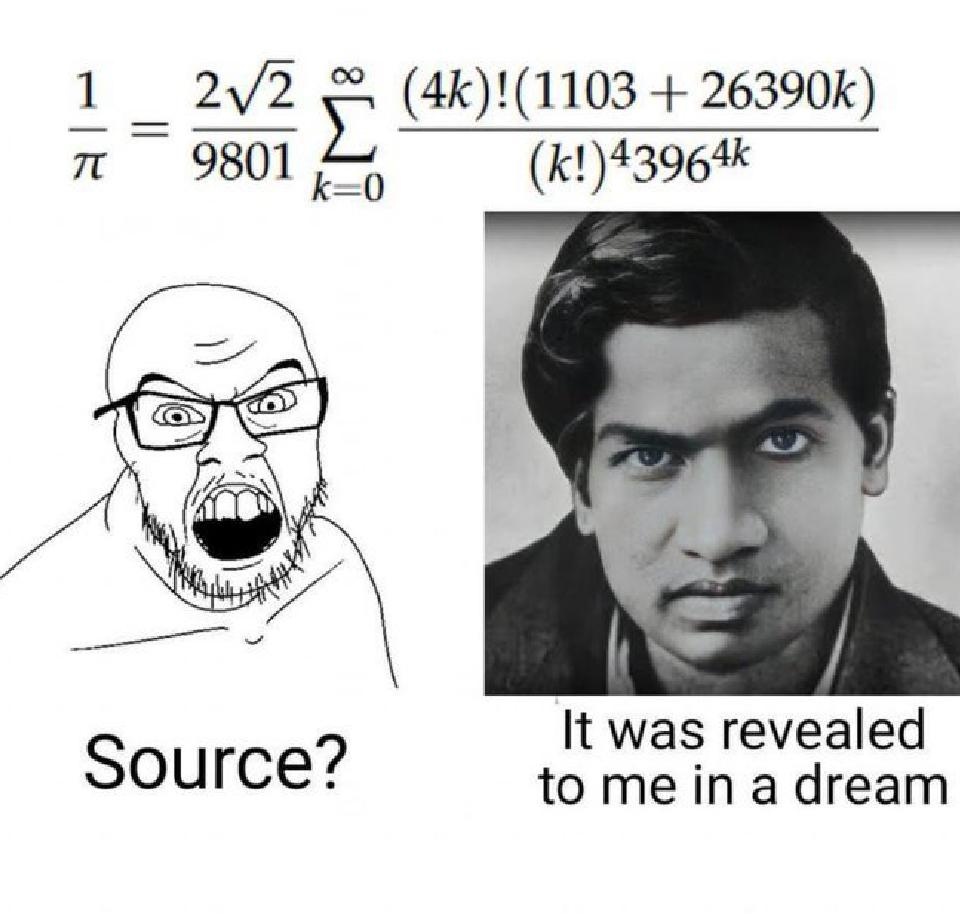

@ma_sabba Or just add a note explaining the margins don't contain enough space to write it out.


It’s incumbent upon everyone in the quantum community to avoid hyperbole and overstatements. We must stick with the facts and responsibly report on work being done without overstatements that could unnecessarily harm adoption and undermine the credibility of the industry.

Quantum biology: where the very small meets life itself! 🔬🌱 Still amazed by Dr. @ClariceDAiello 's insights. Nature might be the ultimate quantum engineer after all! #MizterRadShow #FutureOfHumanity open.spotify.com/episode/2xRC8L…
It's statistical mechanics all the way down
It’s incumbent upon everyone in the quantum community to avoid hyperbole and overstatements. We must stick with the facts and responsibly report on work being done without overstatements that could unnecessarily harm adoption and undermine the credibility of the industry.
Some nice new opportunities available for quantum jobs in #quantum benchmarking and compilers from the Unitary Fund.Check out unitary.fund/careers/
Woah, this seems huge
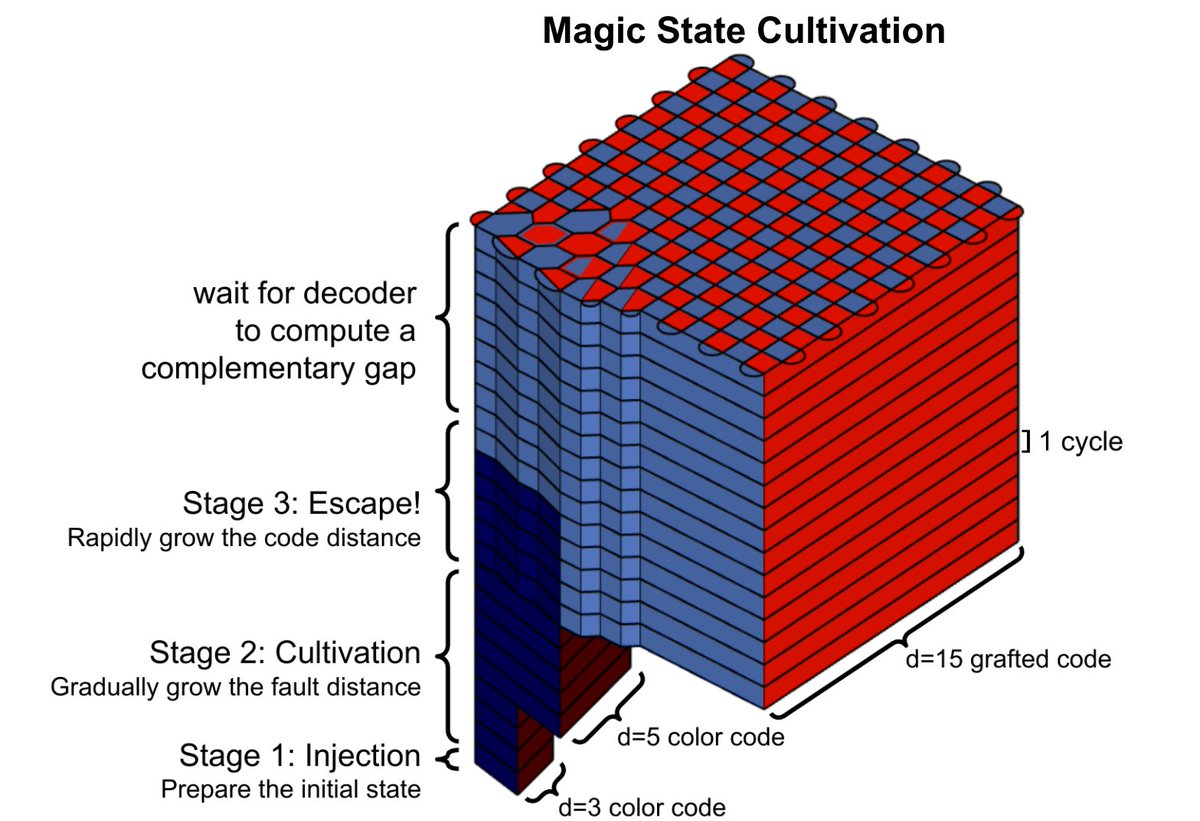
Been working on "Magic state cultivation: growing T states as cheap as CNOT gates" all year. It's finally out: arxiv.org/abs/2409.17595 The reign of the T gate is coming to an end. It's now nearly the cost of a lattice surgery CNOT gate, and I bet there's more improvements yet.


Andreas Wallraff @AndreasAtETH
42K Followers 8K Following Research and education in #physics with a focus on #quantum #computing, #communication and #sensing with team @qudev @ETH_en. Director of the @ETHQuantumCntr.
John Preskill @preskill
304K Followers 1K Following Theoretical physicist @Caltech, Director of @IQIM_Caltech
Jens Eisert @jenseisert
30K Followers 6K Following Scientist, professor of quantum physics at @FU_Berlin and affiliated with @HZBde and @FraunhoferHHI. @ERC_Research fellow. Founder of @Qonsultancy.
Zlatko Minev @zlatko_minev
22K Followers 1K Following Google Quantum AI | Ex-Team Lead, IBM Quantum | MIT TR35 | Founder, Open Labs | Board, Yale Alumni Assoc | Yale PhD
Anthony Leverrier @letonyo
8K Followers 1K Following researcher on quantum error correction https://t.co/RvavYrCGWD
Aephraim Steinberg @QuantumAephraim
6K Followers 778 Following Exp't quantum physics, @UofT @uoftphysics @CIFAR_News @CQIQC_Toronto.Thoughts here may not be my own by the time you read them. @quantumaephraim.bsky.social
Chiara Decaroli @DecaroliChiara
1K Followers 1K Following Quantum, sci comm, innovation, wellbeing, yoga and dogs. New mum. Deep Tech Quantum VC @ Redstone. PhD in trapped-ion QC @ ETH. Views my own.
Steven Touzard @StevenTouzard
3K Followers 470 Following Quantum physicist and engineer. Presidential Young Professor and NRF Fellow at the National University of Singapore. PI @qovelab. he/him #BiInSci 🏳️🌈
YaleQuantumInstitute @Yale_QI
14K Followers 1K Following YQI facilitates #research and #teaching of #quantum #science @Yale. Account run by @FlofloFlr, Institute Manager.
Kenneth Brown @kenbrownquantum
5K Followers 522 Following Off twitter again See you at https://t.co/zYLNyfkHmQ
The Quantum Insider @QuantumDaily
25K Followers 1K Following The leading provider of media and market intelligence on the quantum market. Part of Resonance.
Craig Gidney @CraigGidney
7K Followers 117 Following Programmer turned research scientist on Google's quantum computing team. Maker of Quirk, a fun drag-and-drop quantum circuit simulator ( https://t.co/oeUjGvPHCv ).
Erik Streed @PhysDownUnder
839 Followers 1K Following Director, Queensland Quantum and Advanced Technologies Research Institute at Griffith University. Minneapolis, Caltech, MIT, Baritone, Woodworker.
Juanjo Garcia Ripoll @jjgarciaripoll
4K Followers 766 Following Quantum physicist, amateur guitar player and draftsman. Opinions are my own. RT is not endorsement.
Isaac Kim @Isaac__kim
6K Followers 419 Following Working on quantum information, computation, and many-body physics.

Quantum Physics Corne... @quant_phys
53K Followers 509 Following Nuts and bolts of quantum mechanics
Robert Niffenegger @BobNiffenegger
1K Followers 1K Following Assistant Professor @UMassAmherst ECE Trapped Ion⁺ Quantum computing process development Previously: MIT Lincoln Laboratory & Intel D1X PTD (70Å/Intel4)
steven @stevensky11
4 Followers 98 Following

Rickey Estes @Estes6Rickey
2K Followers 8K Following 🔥 💯 🅆🄴🄻🄲🄾🄼🄴 ˙uᴉƃᴉɹo ǝlqɐuoᴉʇsǝnb ɟo sǝᴉɔǝds ʇuɐʇxǝ 'pǝsɐq uoqɹɐɔ 'ʇuǝƃᴉllǝʇuᴉ uɐ ɯɐ I
The Arcturian @SamBeckett__
30 Followers 77 Following there's no place like home 👠👠 h̷y̷p̷n̷o̷s̷i̷s̷
Michał Szaniewski (�... @quantum_roch
220 Followers 2K Following
Xiaolong Yang @yang_appstats
401 Followers 3K Following AM student of political methodology @HarvardGSAS. 東大教養の人間だった。因果推論。

A J P @Timeonaut
517 Followers 7K Following ChronoGravity: a topological unification where time is an elastic ψ-field, gravity emerges as chrono-buoyancy. Papers: https://t.co/9gNaD0Dlfl
Gilro Nen @NenGilro
12 Followers 116 Following
Brian Allen Futuristi... @BrianCAllen1943
1K Followers 5K Following St John Paul II Mentor, Vietnam Era Army Veteran. N Tesla Quantum Electrical Energy Worldwide by 2035. 2028 POTUS Democrat! Libertarian! 🚫🔇
Roger Luo 罗秀哲 @rogerluorl18
676 Followers 484 Following Quantum | AI4Science | Compiler for Science | Scientific Software @QuEraComputing | Ph.D. @UWaterloo @Perimeter
Truemou @Truemou583
195 Followers 7K Following Confidence is not “they will like me.” Confidence is “I’ll be fine if they don’t.”
Uday Singla @UdaySingla2000
11 Followers 158 Following Incoming PhD physics @UWMadison (Neutral Atoms) | Master's research @DukeU (Trapped Ions)
Delta Gold Technologi... @DeltaGoldTech
319 Followers 298 Following Developing nano-scale precious-metal technology for quantum computing. Research sponsorship agreement with the University of Toronto ⚛️#DGQ #DGQTF #O2J
Sergio P.F. @sergioperezf
4K Followers 2K Following Distributing the Nuclear Quantum Gravity ☢️ https://t.co/PP4WqWnMVM Find me on LinkedIn ↘️

Kshitij @cnkshitij
31 Followers 197 Following
Michel Piranesi @michelpiranesi
62 Followers 8K Following Hand Made Fine Jewels from Valenza, Italy https://t.co/kzA5ntbX2n

LS @LucisSoni
4 Followers 212 Following
Jonh njie @JonhNjie47422
30 Followers 852 Following May the Lord bless you with His favor and fill your heart with peace.✝️☦️✝️
Nathan Del Cid @nrdcid
393 Followers 424 Following
!.! @xypyth
44 Followers 7K Following
Rahul Madan @Perthoptions
119 Followers 7K Following An entrepreneur, investor, innovator and technologist always willing to learn, question, collaborate and contribute.
Sr @ydhdu18529
0 Followers 45 Following
Ryan Kralik: It From ... @ItFromUs
80 Followers 838 Following Exploring the idea that information, not matter or consciousness, is the foundation of reality. It From Us now available on Amazon - print, Kindle, audiobook
Terry Healy 2.0 @TerryHe28326491
264 Followers 3K Following #LINK $LINK @Chainlink A LINK by any other name would smell as sweet. William LINKspeare 0x005a05cE76Cee121E5e0Ef3F0B8c911a2aC446D9
Zen @zeobci
2K Followers 726 Following Continuation Trader | Dev | 10,000+ Hours of Exp | OEX, Math, Tails, Arb | Charts & Asymmetrical Setups | Join 400+ 📊
FaithnPhy @FaithnPhy
1 Followers 58 Following

Dilon Bates @Bv7000M31095
200 Followers 2K Following
Physics and Quantum P... @physicscon59323
88 Followers 2K Following 🔬 Quantum Physics | 🧠 Subatomic thinker | 📚 Science communicator. #WorldResearchAwards #ResearchAwards #AcademicAwards #ScienceAwards #GlobalResearchAwards
Di Zhang @DiZhang824967
33 Followers 1K Following
白离坚 @biljin362128
0 Followers 112 Following
Sofia @Grace496554
13 Followers 782 Following Global Summit on Quantum Computing – Quantum Meet 2026,, taking place from March 19-21, 2026, in Barcelona, Spain
Uivruihirs @Uivruihirs6433
21 Followers 479 Following

chewchew @chewie2023
633 Followers 842 Following
hemispheric_press @hemispheric_p
10 Followers 77 Following A small, independent publisher committed to turning authors' visions into reality while providing readers with exceptionally interesting books.
James Ingoldby @Ing_James2
3 Followers 143 Following
Egwu saviour Orji @Egwu_Saviour
3 Followers 301 Following
QuantumComputinghardw... @lagoutforceband
289 Followers 7K Following
Liberto Beltran @beltran_liberto
3 Followers 149 Following

FLUCTONIC Frédéric ... @FLUCTONIC
169 Followers 7K Following My hypotheses on: Cancer, Prime Numbers, Perfect Numbers, Attenuation of viremia, Quantum Mechanics, Free Fall on air https://t.co/ktA0oD5WmK
Monique Chiofalo @ChiofaloMonique
22 Followers 74 Following
Ayobami Victor @davikkyhaywhy
27 Followers 81 Following ... an idiosyncratic mind, I've got the mind of Christ.
Andreas Wallraff @AndreasAtETH
42K Followers 8K Following Research and education in #physics with a focus on #quantum #computing, #communication and #sensing with team @qudev @ETH_en. Director of the @ETHQuantumCntr.
John Preskill @preskill
304K Followers 1K Following Theoretical physicist @Caltech, Director of @IQIM_Caltech
Jens Eisert @jenseisert
30K Followers 6K Following Scientist, professor of quantum physics at @FU_Berlin and affiliated with @HZBde and @FraunhoferHHI. @ERC_Research fellow. Founder of @Qonsultancy.
Olivia Lanes @Liv_Lanes
35K Followers 668 Following Global Lead, IBM Quantum advocacy & education| PhD @PittTweet | @DickinsonCol | “Sufficiently amusing” | Ask me about my qubit.
Michael J. Biercuk @MJBiercuk
11K Followers 2K Following Founder @qctrlhq making #quantum tech useful for you. Professor. Speaker. @fondationgphg Academy member. Unabashed supporter of constitutional democracy.
Zlatko Minev @zlatko_minev
22K Followers 1K Following Google Quantum AI | Ex-Team Lead, IBM Quantum | MIT TR35 | Founder, Open Labs | Board, Yale Alumni Assoc | Yale PhD
Anthony Leverrier @letonyo
8K Followers 1K Following researcher on quantum error correction https://t.co/RvavYrCGWD
Michael Nielsen @michael_nielsen
120K Followers 5K Following Searching for the numinous 🇦🇺 🇨🇦, currently live in 🇺🇸 Research @AsteraInstitute https://t.co/maezekzRUb https://t.co/2dWwZKrvrn
Aephraim Steinberg @QuantumAephraim
6K Followers 778 Following Exp't quantum physics, @UofT @uoftphysics @CIFAR_News @CQIQC_Toronto.Thoughts here may not be my own by the time you read them. @quantumaephraim.bsky.social
Alexandre Blais @circuitqed
2K Followers 177 Following Quantum computing researcher and Scientific Director @IQ_USherbrooke.
the finite physicist @FinitePhysicist
68K Followers 351 Following theoretical particle physics & phenomenology || don't sleep through dreams that can come true
Chiara Decaroli @DecaroliChiara
1K Followers 1K Following Quantum, sci comm, innovation, wellbeing, yoga and dogs. New mum. Deep Tech Quantum VC @ Redstone. PhD in trapped-ion QC @ ETH. Views my own.
Steven Touzard @StevenTouzard
3K Followers 470 Following Quantum physicist and engineer. Presidential Young Professor and NRF Fellow at the National University of Singapore. PI @qovelab. he/him #BiInSci 🏳️🌈

nick farina @nick_farina
7K Followers 578 Following Ringleader of EeroQ since 2016. Angel investor in @extropic, nodeQ, and others. Old watches, old pens, new computers.
YaleQuantumInstitute @Yale_QI
14K Followers 1K Following YQI facilitates #research and #teaching of #quantum #science @Yale. Account run by @FlofloFlr, Institute Manager.
Kenneth Brown @kenbrownquantum
5K Followers 522 Following Off twitter again See you at https://t.co/zYLNyfkHmQ
bOb cOeCke @coecke
9K Followers 591 Following Created Quantum Picturalism, ZX-calculus, Categorical QM, Quantum NLP, DisCoCat/Circ, Quantum Guitar. Books: Quantum in Pictures & Picturing Quantum Processes.
Earl T Campbell @earltcampbell
6K Followers 608 Following Quantum wizardry // VP of Quantum Science @riverlane_io & opinions are mine // senior lecturer @sheffielduni.
Craig Gidney @CraigGidney
7K Followers 117 Following Programmer turned research scientist on Google's quantum computing team. Maker of Quirk, a fun drag-and-drop quantum circuit simulator ( https://t.co/oeUjGvPHCv ).
Director Michael Krat... @mkratsios47
46K Followers 51 Following Assistant to the President & 13th Director of @WHOSTP47 | Previously 4th CTO of the United States and Under Secretary of War | South Carolinian 🇺🇸
David Bessis @davidbessis
21K Followers 464 Following Rogue mathematician. "The product of mathematics is clarity and understanding." — Bill Thurston https://t.co/l95RHuWz2S
Jonathan Gorard @getjonwithit
47K Followers 22 Following Co-founder and CEO @lanyon_ai, making the universe computable. Previously math/physics @Princeton @Cambridge_Uni @WolframResearch
Edgar Dobriban @EdgarDobriban
3K Followers 275 Following Associate prof @Wharton @Penn. #Stats #ML #AI. PhD @Stanford. BA @Princeton. Recruiting students & postdocs.
Lanyon AI @lanyon_ai
3K Followers 3 Following Formal verification for a computable universe. Building the future of scientific computing.
Marre @himarre
29K Followers 244 Following 25 | building apps with AI and travel the world by my own ✈️🌎
Christian Szegedy @ChrSzegedy
45K Followers 3K Following #deeplearning, #ai research scientist. Opinions are mine.
Julia Bauman @JuliaBauman2
10K Followers 507 Following PhD student at @Stanford Genetics in @LarsMSteinmetz lab Explaining cool biotech to the world here and @ 60_SecondScience on TikTok
Patrick Kidger @PatrickKidger
12K Followers 244 Following 🚀 Doing something new. Curing uncured diseases. 🧪 antibodies+AI, neural ODEs, open-source JAX ecosystem. 👨💻 ex-{Cradle, Google, Oxford}.
George Sivulka @gsivulka
12K Followers 564 Following Founder, CEO @Hebbia Building AI that works the way you work.
Catalin Voss @CatalinVoss
2K Followers 543 Following Dad, CTO, & co-founder of @learnwithello. One-on-one teaching for every kid on earth. Ello 2.0 coming soon, come build it with us.
Charlie O'Neill @oneill_c
20K Followers 1K Following The sea is the sea The old man is an old man The boy is a boy and the fish is a fish The sharks are all sharks no better and no worse
Steven Dillmann ✈�... @StevenDillmann
685 Followers 2K Following Stanford PhD working on #AI4Science and maintaining Terminal-Bench Science @StanfordAILab 🧬🤖🪐
Lijie Chen @wjmzbmr1
7K Followers 440 Following Assistant professor at UC Berkeley EECS Previously: Miller Postdoctoral Fellow at UC Berkeley, Ph.D. in MIT EECS
David Turturean @DavidTurturean
3K Followers 2K Following Physics & AI @ MIT. Hibernating for AGI Spring

Tony Feng @tonylfeng
2K Followers 8 Following Math professor at UC Berkeley Research Scientist at Google DeepMind
Lillian Ma @lillian_ma_
1K Followers 442 Following head of global partnerships & member of non-technical staff @gmi_cloud | ex-founder | ai infra + inference | boba runs through my veins


Ali Madani @thisismadani
8K Followers 1K Following founder / ceo of profluent. build frontier ai models for protein design, create cures.

Silvana Konermann @SKonermann
10K Followers 524 Following Cofounder @arcinstitute and Assistant Professor @Stanford. HHMI Hanna Gray Fellow. CRISPR, RNA and Alzheimer’s via @salkinstitute, @MIT and @eth
Patrick Hsu @pdhsu
79K Followers 3K Following @ArcInstitute co-founder, @Stanford professor, @ThriveCapital investor | biology and ML research | 🇨🇦 prev @harvard @broadinstitute, Fast Grants
Tom Sercu @TomSercu
3K Followers 792 Following Building @evoscaleai - Frontier AI for biology. Ex-Meta FAIR, Ex-IBM Research. Alum @NYU, @ugent.
Alex Rives @alexrives
15K Followers 886 Following AI for scientific discovery. Head of Science, Biohub. Founder and scientific director of the ESM project.
EvolutionaryScale @EvoscaleAI
3K Followers 0 Following
Ekin Dogus Cubuk @ekindogus
9K Followers 490 Following Co-Founder of @periodiclabs Past: Lead of materials science and chemistry at @GoogleDeepMind; Google Brain
Liam Fedus @LiamFedus
36K Followers 1K Following Building industrial-scale science at @periodiclabs Past: VP of Post-Training @OpenAI; Google Brain
Geoffrey von Maltzahn @GVMaltzahn
3K Followers 284 Following Inventor | Founder | Entrepreneur @FlagshipPioneer, @LilaSciences, @IndigoAg, @TesseraTx, @Generate_Biomed, Sana Biotech, @SeresTx
Lila Sciences @LilaSciences
4K Followers 0 Following Building scientific superintelligence to solve humankind's greatest challenges.
Isomorphic Labs @IsomorphicLabs
59K Followers 82 Following Solve all disease. Developing and applying frontier AI to unlock deeper scientific insights, faster breakthroughs, and life-changing medicines.
Stanisław Jastrzębs... @kudkudakpl
1K Followers 865 Following AI for autonomous scientific discovery. Foundations of DL (post-doc at NYU, PhD at GMUM/UoE). co-founder and CTO 👨💻 @ https://t.co/qJUKvd3z5y. AC @ NeurIPS '26.
Lenny Rachitsky @lennysan
402K Followers 3K Following Deeply researched product, growth, and career advice
Thierry from arvy �... @ThierryBorgeat
31K Followers 716 Following CFA | Quality stocks and compounders, market cycles & investor psychology, on fundamentals AND technicals | #IBDPartner
Saman Habibi Esfahani @Saman_Habibi_E
3K Followers 30 Following Mathematics Postdoc @Harvard University, CMSA. YouTube: https://t.co/X8t1PBAztc
Alex Kontorovich @AlexKontorovich
34K Followers 839 Following Mathematician (Distinguished Professor of #Math at @RutgersU). Here to learn about research, education, and community. Let’s build something together.
Joshua Liu @joshuapliu
3K Followers 568 Following Physician & Co-founder/CEO @SeamlessMD Digital Care Journeys for health systems ⚡️ Previous: Chair, Innovation Council, CMA | @uoftmedicine | @NEXT_Canada
Przemek Chojecki | PC @prz_chojecki
14K Followers 1K Following Reasoning Data + Evals for LLMs @ https://t.co/v2xNrVTykE, PhD in mathematics.
Soumitra Shukla @soumitrashukla9
8K Followers 2K Following Research Fellow at the Artificial intelligence Institute @HarvardHBS and The Burning Glass Institute @theBGInstitute. All opinions on Twitter are my own.

Vincent Conitzer @conitzer
5K Followers 1K Following AI professor. Director, @FOCAL_lab @CarnegieMellon. Head of Technical AI Engagement, @UniofOxford @EthicsInAI. Author, "Moral AI - And How We Get There."

Demis Hassabis @demishassabis
1.5M Followers 177 Following Nobel Laureate. Co-Founder & CEO @GoogleDeepMind - working on AGI. Solving disease @IsomorphicLabs. Trying to understand the fundamental nature of reality.
Ada Fang @AdaFang_
6K Followers 244 Following PhD Candidate @Harvard | AI for Scientific Discovery & Biology | ex @GoogleDeepMind SR
James Sinka - Boston ... @jamessinka
3K Followers 2K Following Founder @reactorfieldai - helping scientists & deep tech startups use AI like frontier labs. AI changed SWE, science is next. Unicorn Founder Chemist (YCW19)
Sam Rodriques @SGRodriques
21K Followers 237 Following Director and CEO at FutureHouse and Edison Scientific. Building an AI scientist. https://t.co/aNx8D1QmfN. https://t.co/rQYoPOwV8Q
Google DeepMind @GoogleDeepMind
1.5M Followers 277 Following The engine room of @Google. Building AI safely and responsibly to solve the world’s most complex problems. Join us: https://t.co/jUHQA27iBL
Arc Institute @arcinstitute
46K Followers 70 Following A full-stack institute for AI and biology research.You might like