Abhishake @somethingvoid22
Joined February 2009-
Tweets3K
-
Followers36
-
Following654
-
Likes525

A guy bought a $1,500 Samsung TV 3 years ago. He watched Netflix. He watched YouTube. He thought the picture looked fine. He assumed that's just what a TV looks like. His friend, a home theater installer who calibrates TVs for a living, walked into his apartment and looked at the screen for 5 seconds. "You're watching everything in demo mode. The motion smoothing is on. The eco dimmer is cutting your brightness by 40%. Your TV is taking a screenshot of your screen every 30 seconds and selling your viewing data to advertisers. And you're watching a $1,500 panel in the same picture mode Best Buy uses under fluorescent lights to make TVs pop on a showroom wall." He changed 9 settings in 12 minutes. The picture looked like a different television. The soap opera effect disappeared. The colors became natural. The TV stopped spying on him. Here's every setting he changed 🧵

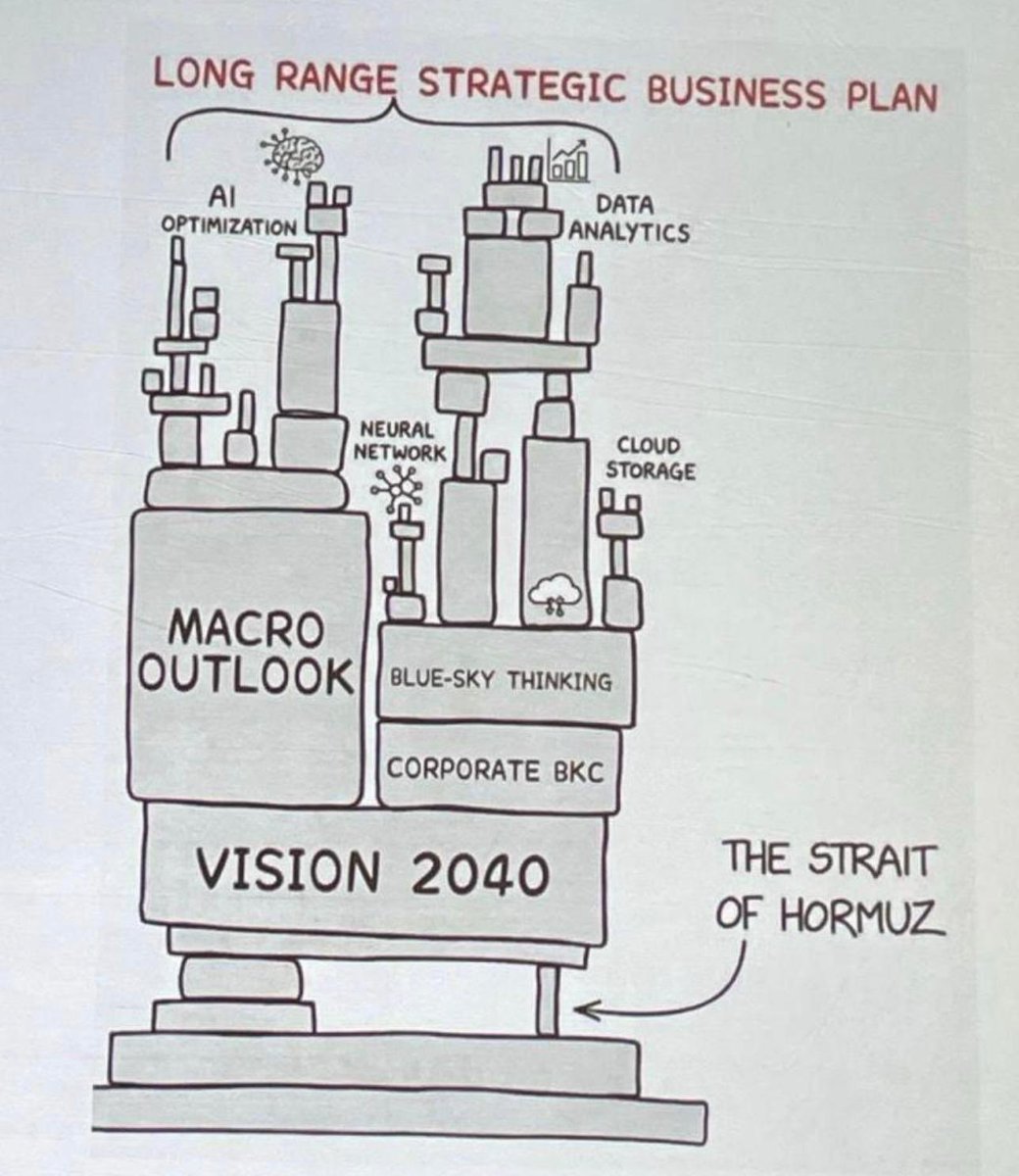
IT’s Wake-Up Call (1) Vishal Sikka says IT companies should go private. Public shareholders’ quarterly mindset will bring doom. (2) Reddit super thread of Bengaluru IT developers shows what’s coming. Dr. Sikka’s Radical Recipe 2.0 a. Ten years ago, when no one had heard of AI, Vishal Sikka made a revolutionary move for Infosys to invest in OpenAI. Yesterday, Dr. Sikka made an equally revolutionary suggestion – but this time Murthy cannot fire him for it. b. Dr. Sikka to CNBC India: “The tsunami has hit us. It’s not Vishal Sikka saying it. The water is already in our living room. It will wipe out the older ways of doing things. To me, the big question is how quickly do you pivot – that is, IF you see the urgency.” c. Self-Disrupt – Go Private: Dr. Sikka says IT companies should go private. “Being private would afford you the independence to make the radical changes that are necessary.” d. Indian IT companies are hamstrung by quarterly earning calls, retail shareholder optics, and promoter dividend dependence. (Example: 72% of TCS dividend goes to Tata Sons for funding other group companies). So, they cannot make the existential reinvention required to survive. e. Dr. Sikka gave the example of Netflix. When Netflix decided to abandon its highly profitable DVD rental business entirely and pivot to a 100% streaming platform, it was a near-death choice. Revenue dipped, stock crashed, shareholders complained, but Netflix extended its life cycle by decades with the bold self-disruption. Its competitor Blockbuster did not make that choice, and died. Accenture’s Warning Bells a. Accenture has cut its full-year revenue growth guidance. The CFO said: “More of the guidance range is in play.” Translation: things could get worse. b. Year-to-date, Accenture already has 104 client orders of $100+ million each. But the gap between AI bookings and AI revenue realization is becoming a growing concern at every analyst call. c. Morgan Stanley CIO Survey 2026 shows that overall IT budgets of companies (clients) will grow at 3.7%, but IT services budgets will grow at 2%. Note the difference of 1.7%. It means AI is already eating away 40% of IT services growth. In other words, total tech spending of clients is not shrinking. But the portion going to traditional IT service providers is being cannibalized by in-house AI. Signals from Ground Zero Analysts have to depend on lagging indicators (evaluating past quarter’s results.) But this week, a Reddit super thread of IT developers provides some leading indicators. a. Signal # 1: The original poster (OP) wrote his B2B product company in Bengaluru eliminated 45 of 50 tech roles overnight (90% workforce reduction). Three IT architects remain (OP is one of them) who will handle the job of 45. b. Signal # 2: OP says: “100% (not 60% or 80%) of React + Chakra UI frontend code over the last 4 months was written by Claude. More alarming: a full Okta SSO overhaul was done in 4 days, which would earlier take 2 months. “Claude caught, developed, backtracked, tested many things I did not even know were security holes.” INVESTOR IMPLICATION: TCS Chairman said AI cannot be trusted for complex work like security vulnerabilities. But in reality, that “complexity ceiling” is rising with every passing day. OP says the company’s rationale is: “If this restructuring does not pay off in 6 months, we can again hire developers who are available a dime a dozen in Bangalore with oversupply.” c. Signal # 3: Most Important Signal: A commenter said: “Just because a company can build 3x more products or ship features at 3x faster speed does not mean there are 3x more customers waiting to buy them. Productivity can increase much faster than demand.” Another commenter said: “Earlier the constraint was on production. Now the constraint is on consumption. Even if we could produce what we want, is there a market to consume it?” INVESTOR IMPLICATION: “AI will expand demand for IT services (expand total addressable market or TAM)” – this was the original bull thesis for IT stocks. The reality is the opposite of it. Clients are using AI to cut their costs of production (IT vendor contracts), and not increase sales as there is no demand elasticity. ENDPIECE: What is Your Exit Thesis? Question for retail IT investors: What is your exit strategy? Are you hoping that FIIs will start buying “too cheap” Indian IT at some point? Hope is not a strategy. As a commenter wrote on the Reddit thread: “I expect there would mass unemployment by late 2027 or early 2028. Hopefully, that would lead to Universal Basic Income or UBI (government’s monthly payments to unemployed citizens for survival) to be put into effect.” UBI is already the “hopium trade” in Bengaluru. @arabicatrader

A toothpaste company has quietly killed the entire market research industry and nobody is talking about it. Colgate published a paper showing you can predict real purchase intent at 90% accuracy by simply asking LLMs to roleplay customers. And this is beyond insane. If you ask an AI, "Rate this product from 1 to 5," it gives safe, middle-of-the-road garbage. So researchers invented a method called Semantic Similarity Rating (SSR). Instead of asking the AI for a number, they asked it to roleplay. They gave the LLM a demographic profile. They showed it a product concept. And they asked it to write down its raw, unfiltered thoughts. Then, they used a semantic model to translate those written thoughts into a numerical score. The results are staggering. Tested against 57 real corporate surveys and 9,300 actual human responses, the synthetic AI consumers matched real human buying behavior with 90% reliability. They perfectly mirrored how different age brackets and income levels react to price changes. And they provided detailed, qualitative feedback that was deeper and more critical than what actual humans wrote. This destroys the economics of traditional market research. You don't need to wait a month to see if a product will sell. You can simulate 1,000 hyper-targeted customer interviews overnight. You can A/B test pricing across every demographic instantly.


Andrej Karpathy: "90% of your AI coding bill is paying for context you didn't need to send." I measured mine. 430 hours. 6 million tokens. $1,340 spent. Only 27% was doing actual work. The other 73% was 9 patterns I didn't even know I was running. Full breakdown + 30-second fix for each one ↓ This will save you more than a plan upgrade ever will.

He spent 50 years preparing for 60 minutes. Roughly 50,000 hours in MIT classrooms, distilled down to 0.12% of itself. He recorded it knowing the timer was running. 5 months later, it ran out. This is that hour. Most won’t watch it. You should. Bookmark it for later 👇

A Stanford computer science professor has been teaching the same software design class for more than a decade, and every quarter the seats fill faster than almost any other course in the department. Students from Google, Meta, and Apple sneak back onto campus to audit it. Most of them have been writing code professionally for years. I read the book that came out of the class in a week and walked away seeing every codebase I had ever worked on through completely different eyes. His name is John Ousterhout. The book is called A Philosophy of Software Design. Almost everyone in tech eventually hits the same wall. You learn to code. You get good at it. You ship features. 6 months in, you cannot find anything in your own codebase. 12 months in, you are afraid to change things. 2 years in, you start wondering if the problem is you, because everyone around you seems to be drowning at exactly the same depth and nobody is willing to admit it. Ousterhout's argument is that the problem is not you. The problem is that nobody ever taught you what software was supposed to look like. Here is the story almost nobody tells you. Ousterhout was already a legend before he became a teacher. He invented the Tcl programming language, which has been used inside everything from Cisco routers to NASA spacecraft. He built systems companies. He served as a senior fellow at Electric Cloud and as VP of research at Sun Microsystems. By any normal measure he had earned the right to coast. He went back to Stanford instead. The reason he gave in interviews is the part that should make every senior engineer pay attention. He said almost every brilliant engineer he had hired in 30 years of running teams had the same gap. They could implement anything. They could solve any algorithmic problem. They could ship code that compiled, ran, and passed tests. And then 6 months later their own code would start to suffocate them, and they had no idea why. Nobody had ever taught them what good software was supposed to feel like to maintain. Universities taught data structures and algorithms. Bootcamps taught syntax and frameworks. Companies taught company processes. But the actual craft of designing software so that you would not hate yourself in two years was being passed down by accident, in code reviews, by the few senior engineers who had figured it out the hard way. Ousterhout decided to teach it on purpose. He built a class called CS 190 at Stanford, A Philosophy of Software Design. The structure of the class was unusual. Students did not just write code. They wrote code, threw it away, and rewrote it from scratch after detailed feedback. Sometimes 3 rewrites per assignment. The point was not to ship a project. The point was to feel, in your own hands, the difference between a system designed well and a system designed badly. Most students had never felt the difference before. After the class, they could not stop seeing it. He turned the lectures into a small book. It is around 190 pages. The first edition came out in 2018. It costs less than a textbook. It has quietly become one of the most-shared engineering books inside senior teams at Google, Meta, Stripe, OpenAI, and Anthropic. Senior engineers buy copies for their juniors. Tech leads send specific chapters to their teams during code reviews. The argument inside the book is brutally simple. Complexity is the enemy. Not bugs. Not slow performance. Not missed deadlines. Complexity. A system too complex to hold in your head is a system you will break by accident. You will not know which line broke it. You will fix the symptom and miss the cause. Over time, complexity compounds. The codebase becomes a place engineers fear to touch. New features take longer. Old features break for unrelated reasons. Eventually the team starts whispering about a rewrite. The rewrite usually fails for the same reasons the original did. Ousterhout argues that complexity comes from two sources. Dependencies, which are pieces of the system that affect each other across boundaries. And obscurity, which is information about the system that you cannot see from where you are reading. Reduce one, you almost always reduce the other. The deepest insight in the book is about what good modules actually look like. Most engineers are taught to build small, simple modules with lots of small, simple methods. Ousterhout calls these shallow modules and he says they are the disease, not the cure. A shallow module has a small interface and an even smaller body. The interface barely hides anything. To use the module, you have to understand almost everything inside it. Building software out of shallow modules creates the illusion of organization while the actual complexity stays exposed. Good modules are deep. A deep module has a small interface that hides a large amount of functionality inside. You use the module without understanding how it works internally. The interface gives you exactly what you need and nothing else. The complexity is contained. Files have file names, sizes, modification dates. You read and write them. You do not need to know about disk sectors, file allocation tables, or buffering strategies. The Unix file system is a deep module. Most modern abstractions are not. This is the part of the book that makes engineers stop reading and look at their own code with horror. Most production codebases are full of shallow modules disguised as good engineering. Tiny classes. Tiny functions. Long parameter lists. Wrapper layers that wrap other wrapper layers. Every layer leaks information about the layer below it. Every interface forces the caller to understand internals. Engineers wrote it that way because they thought small was good. Ousterhout argues that small is not good. Hidden complexity is good. The module should be doing a lot. The interface should be revealing very little. The second insight that landed hardest for me was about comments. Most engineers are taught that good code does not need comments. The code should be self-documenting. Variable names should be descriptive. Functions should be small enough to read top to bottom. Comments are a sign of failure. Ousterhout argues this is wrong, and that the people who say it have never actually maintained a large system over many years. Comments are not a failure of the code. Comments are how you write down the things the code cannot say. Why a particular approach was chosen. Why a tempting alternative was rejected. What invariants the function depends on. What the caller is supposed to know. None of these things can be expressed in code itself. If a future reader has to read every line of your function to understand what it is doing, you have not finished writing it. The job is not done when the tests pass. The job is done when the next engineer can pick up the file and understand it without asking you a question. The third insight is the one that hit me hardest, because it is the one almost no engineer is taught to think about until it is too late. Strategic versus tactical programming. Most engineers are taught to be tactical. You get a task. You finish the task. You move on. You take the shortest path between the current state of the codebase and the new feature. Each individual decision is reasonable. The combined effect, over years, is a codebase that has been hacked into shape by hundreds of small reasonable decisions, none of which made the system better as a whole. Strategic programming is the discipline of asking, every time you make a change, whether the change is leaving the system better than you found it. Sometimes the smallest task should pay for a refactor that makes the next ten tasks easier. Sometimes the right move is to pause for an hour and redesign the abstraction before you add the feature. Tactical programmers always feel like they are moving fast. Strategic programmers actually move fast. The difference becomes obvious around the two-year mark. Ousterhout's rule is the one I think about almost every day now. The best engineers do not write code faster than bad engineers. They delete code faster. Every line you add to a system is a permanent tax on every future reader. Most of the job of being a senior engineer is deciding what not to write. The book is short. Around 190 pages. You can finish it in a weekend. Reading it once will not make you a better engineer. Reading it twice, then watching yourself catch your own bad habits in real time, then forcing yourself to redesign one module per week using its principles, will measurably change how you write software in less than a year. Almost every engineering team I admire has at least one person who has read this book carefully and has been quietly nudging the rest of the team toward what it teaches. Most teams that do not have someone like this end up rewriting the same system every two years and never understanding why. Ousterhout is still teaching the class at Stanford. The course site is public. The book is around twenty dollars. The single most useful book about how to actually design software is sitting one click away from you. Most engineers will spend a decade learning the hard way what 190 pages would have taught them in a weekend.
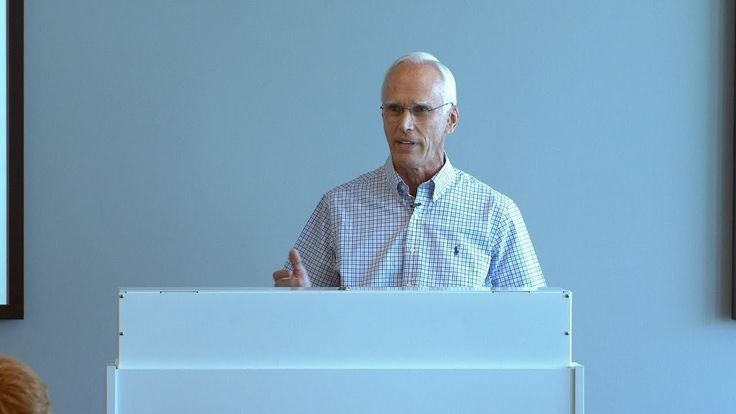

Patrick Winston taught engineering at MIT for 50 years. This is his last lecture. He died 5 months after recording it. It was his final gift to the world. 1000s of the greatest minds passed through his classroom and went on to engineer the world. He has some wisdom…

This 2-hour Stanford lecture breaks down how models like ChatGPT and Claude are actually built, clearer than what many people in top AI roles ever get exposed to. Save this and set aside two hours today. It might end up being the most valuable thing you learn all week.
n 1945, a young man dropped out of Harvard Law without a degree. He had $20 in his pocket and a family to feed. He became Warren Buffett's only partner. Together they built a $700 billion empire. He never used a computer. Rarely took meetings. Read for 6 hours a day until he was 99. His name was Charlie Munger. The man Buffett called "the abominable no-man" — because he could destroy any bad idea in 30 seconds flat. He didn't have a strategy. He had a system for thinking that made bad decisions almost impossible. I turned Munger's mental models into 12 Claude prompts. Here are all 12: 🧵


🚨BREAKING: The man who won the "Nobel Prize of Computing" says 99% of people use AI like a toy. Yann LeCun invented the technology inside every AI tool you touch. He's Meta's Chief AI Scientist. Turing Award winner. And he says your prompts are embarrassingly shallow. Here are 9 Claude prompts built on LeCun's cognitive architecture that turn shallow AI into expert-level reasoning:


How can you reach 1000 times your current level in life?

😱 Someone just open sourced an AI hedge fund where Warren Buffett, Michael Burry, Charlie Munger & 9 other investing legends debate every stock and then a Portfolio Manager makes the final call. No Bloomberg Terminal. No $25K brokerage minimums. No invitation-only fund. It's called AI Hedge Fund. Type a ticker. Eighteen AI agents modeled on the greatest investors in history tear it apart from every angle. Value, growth, momentum, sentiment, fundamentals, technicals, risk. They argue. They signal. The Portfolio Manager synthesizes it all into a final decision with position sizing included. Not a stock screener. Not a price alert tool. A full multi-agent investment committee that thinks like the people who beat the market for decades. No guesswork. No hot takes. No single point of failure. Here's who's in the room when you analyze a stock: → Ben Graham Agent hunts for hidden gems trading below intrinsic value with a margin of safety and only buys when the numbers scream cheap → Michael Burry Agent goes full contrarian, digging for deep value the market has completely missed or misunderstood → Cathie Wood Agent bets on disruption and exponential growth, ignores short-term noise, and focuses on 5-year technology curves → Charlie Munger Agent refuses to touch anything that isn't a wonderful business at a fair price with a brutal filter that very few stocks pass → Stanley Druckenmiller Agent hunts macro asymmetry, positions where the upside is massive and the downside is contained → Phil Fisher Agent runs deep "scuttlebutt" research, the qualitative signals most analysts never bother to find → The Risk Manager sets hard position limits based on portfolio-level exposure before any order is generated → The Portfolio Manager synthesizes all 12 investor signals plus 4 quantitative agents into a single final trade decision with sizing Here's how it actually works: Each legendary investor agent reads the same financial data and outputs a directional signal: bullish, bearish, or neutral, with a confidence score and written reasoning in that investor's exact style. The Valuation Agent calculates intrinsic value. The Sentiment Agent reads the market mood. The Fundamentals Agent checks the balance sheet. The Technicals Agent reads the chart. The Risk Manager reviews all signals, sets position limits, and only then does the Portfolio Manager produce the final order. Every decision is traceable. You can see exactly which agents agreed, which dissented, and why. Here's the wildest part: You can also run the Backtester, feeding it a historical date range and watching how the 18-agent committee would have traded AAPL, MSFT, or NVDA over any period. Munger says hold. Burry says buy more. Wood says trim and rotate. You see the whole debate, dated, reasoned, and resolved across years of history. poetry run python src/main.py --ticker AAPL,MSFT,NVDA Works with GPT-4o, Claude, Gemini, DeepSeek, Groq, or local LLMs via Ollama. Free financial data for AAPL, GOOGL, MSFT, NVDA, and TSLA with no API key needed to start. 45.7K GitHub stars. 8K forks. 570 watchers. 799 commits. 32 contributors. Actively maintained. 100% Open Source. MIT License.

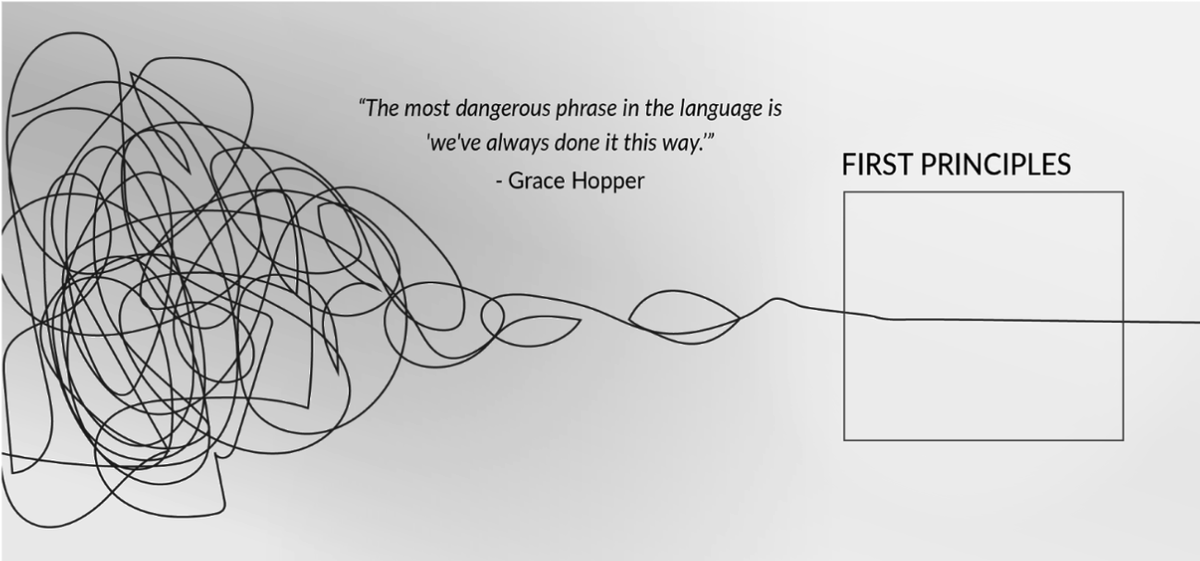
🚨BREAKING: Claude has a secret mode called "First Principles Breakdown." It strips any complex topic down to its raw fundamentals like Elon Musk thinks through problems. Here's how to activate it:
In 2018, Stanford professor Matt Abrahams gave a masterclass on why most people fail to communicate well.

In 2018, Stanford professor Matt Abrahams gave a masterclass on why most people fail to communicate well. He broke down: - The structure every message needs - Why audiences stop listening - The psychology of attention 15 lessons that'll make your communication unforgettable:

Instead of watching a 2-hour movie, watch this masterclass on how to fix your brain rot and become unrecognizable.

Instead of watching a 2-hour movie, watch this podcast with Claude’s CEO.

Chartist @pullbackcharts
93 Followers 1K Following Price Action | Swing Trader | Sharing Swing Charts Here | Tweets Only For Educational Purpose
Neha Singhel Trrader @RhodaLevi2
289 Followers 3K Following Trader | Investor | Scalper in stocks and Nifty sensex SEBI Registered ❌ Paid Course ❌ All tweets are for educational purposes 💚
Hey.harut | Elevated @hey_harut
4 Followers 519 Following Founder of https://t.co/mMoi57sAkS | 1B+ Views | Skool Games Champion 🏆 | Helping Entrepreneurs Scale Their Personal Brands & Investment Businesses to $100
Reilly D'Amore @ReillyD77881
64 Followers 4K Following
Aqorjif @Aqorjif822
20 Followers 987 Following
Louoca @Louoca4328723
46 Followers 1K Following
Reoollee @Reoollee972642
6 Followers 379 Following
Goate @Goate26394
66 Followers 3K Following
us_Aubrey_ @aubrey_us73410
69 Followers 5K Following
Lorenzo Minniti @LorenzoMinniti2
45 Followers 118 Following Manager, startupper and entrepreneurs, experienced in innovation and technology
Tathas @Tathas1079106
30 Followers 1K Following
Fiona Smith @The_MMWs
150 Followers 1K Following The Millennial Money Woman | Helping 1M+ become financially free by 2030 | Ex wealth & investment advisor turned entrepreneur
Fiona Smith @The_MMVV
133 Followers 819 Following The Millennial Money Woman | Helping 1M+ become financially free by 2030 | Ex wealth & investment advisor turned entrepreneur
Vemuda.Com Official @vemudasite
165 Followers 2K Following This is official twitter account of https://t.co/9zGehpvlVQ
Tj Mckittrick @bowtono1
100 Followers 371 Following goal is to helping personal brands growing their business via email copywriting , freelancer growing my own businesses to have my own story and my own success
Dan @DanGrowpreneur
2K Followers 2K Following Growth - #growthhacker Focus on ad-tech. security & cross device recognition.
Thels Katikireddi @thels_k
14 Followers 183 Following

प्रफुल्... @prafulla27
49 Followers 230 Following
Sailu @bhaguka1
1 Followers 4 Following
Shantanu Godbole @solzaire
339 Followers 271 Following Intergalactic traveler, Researcher, Foodie, Geek, General Enthusiast. This is a personal twitter account not reflecting IBM's views.
Chaitanya Peruka @ChaitanyaPeruka
11 Followers 98 Following
W.C. Planet @Wealth_C_Planet
858 Followers 1K Following
Anand Sherkhane @anandsherkhane
22 Followers 27 Following
Tweety @4Tweeting
0 Followers 15 Following
Anand Agrawal @anand_agrawal
317 Followers 225 Following Founder at Technogise, Agile, Application developer, Mobile app developer, founder of https://t.co/30c6oB70Gc, traveller

Satish Unawane @satishu
8 Followers 30 Following
Sucheta L @suchetal
28 Followers 45 Following LAMP Programmer, internet enthusiast, PHP Crazy and a mompreneur!!
YouKnowMe @ParimalWattal
7 Followers 96 Following
syed a ashraf @americanash
2 Followers 29 Following

Vikas Mahajan @vikasvm
15 Followers 18 Following Son, Dad, Husband, MDM, Node.js, data and service strategist
Prafull @prafull
680 Followers 3K Following #compassion, #curiosity, #engineering, #coding, #UX, #dancing, #iDreamOfTraveling
Daniel Berk @danielcberk
14K Followers 805 Following Host of Moneywise by @HamptonFounders (I interview billionaires) • Startup advisor + consultant • #7 @beehiiv • married up, father of 2 boys • runner
Dimitris @dimitriscreates
137 Followers 224 Following Exited my first brand at 21 | IG growth for @breedlove22 | 500M+ views generated for clients & myself
anul agarwal @anulagarwal
7K Followers 1K Following building IOS apps, mobile/tv/browsee games as a solo dev building games with AI using: https://t.co/nfOM4B8SPh
vixhaℓ @TheVixhal
23K Followers 690 Following Double Major in Physics and AI/ML (Minor in Math) | Building GraphDB at @hydra_db
Sagar Awatade @SagarAwatade
6K Followers 209 Following Founder @Oracura | Making advanced oral care accessible to every Indian household | 1 Million+ customers served
Vishal Sikka @vsikka
234K Followers 24 Following Student, practitioner of AI, Human Technologies Founder Hang Ten (https://t.co/QA952dNDmn). “What I cannot create, I do not understand” — Richard Feynman

arin @ArinVerma1910
10K Followers 261 Following quant dev @blackrock • bits pilani cs & econ • still can't explain repo rates and std::shared_ptr • 50K+ linkedin readers pretend to understand my posts
Jesse Pujji @jspujji
182K Followers 10K Following Tweets about building profitable, ambitious companies. Exited @ampush. Now CEO of @GatewayX, the only founder fellowship for seedstrapped, AI founders.
Rishab Kumar Jha @rishabkrjha
746 Followers 283 Following 20, eng | openlab'26 @CERN | gsoc'25 @pybamm_ | lfx'25 @kubernetesio

Rimsha Bhardwaj @heyrimsha
25K Followers 222 Following Helping you master AI daily with step by step AI guides, & practical tools • AI Educator & Writer • DM for Collab
Manu Sisti @Manu_Sisti
97K Followers 88 Following Co-Founder https://t.co/x3Ds1s8dZ4, Want to learn how to sell books? Register for this event 👇
Anish Jaitwar @AnishJaitwar
21K Followers 151 Following AI & Tech Influencer || Crypto Trader || Trading company || Meme coin || Open for Collorabion 🤝 || biz 💌 :- [email protected] || HIGGS-TLMU7
Skills Mastery @SkillsMastery_
76K Followers 0 Following How to repair and understand anything Secrets every man should know 🚨🚘

Michael Burry Stock T... @burrytracker
557K Followers 137 Following Tracking hedge funds and Burry’s stocks. Powered by @joinautopilot
Vikas Singh @vikas_ai_
14K Followers 38 Following Helping You Make Money with AI | Tech Side Hustles | Resources & Real Strategies | AI Tools | Daily Resource Giveaway
Jaana Dogan ヤナ �... @rakyll
167K Followers 1K Following ML/AI Systems at Google. Simplicity and optimism. Personal opinions.

Siddharth Dialani @siddharth_iitm
9K Followers 839 Following Founder and CEO, BharatAgri. https://t.co/Mjke6t3qMd. Transforming Indian Agriculture - One Farmer At A Time! Forbes India 30 Under 30 (2020)
Tom @tomcrawshaw01
28K Followers 605 Following 8 years in automation + $25M client rev | I help turn non-technical professionals into AI operators | Get my Free Claude Code Blueprint 👇

Tommi Pedruzzi @TommiPedruzzi
139K Followers 94 Following 7-Figure by selling eBooks on Amazon KDP (without writing) • CEO & Founder at @nespola_io
daedalus @aiofmgod
11K Followers 59 Following aı ofm https://t.co/tKpqwTBmBl = how I make 66k/m+ with one model
Chad McDonald @mcdonald_chad
1K Followers 236 Following B2B leads on demand • AI playbooks & tools (Claude/Antigravity) • CRM/intent/sales automation
Aadit Sheth @aaditsh
519K Followers 1K Following Co-founder @thenarrativecom. Real-time X narrative intelligence for enterprise teams
Hubert Thieblot @hthieblot
61K Followers 3K Following Investing @fdotinc, Founder @curseforge acq by @Twitch, love @oheather1337, 3x dad, 🇫🇷🇨🇭🇺🇸
Abhijith Reddy @archerabi
2K Followers 368 Following CTO ASBL, software engineer, crypto, defi. Hyderabadi #hiring https://t.co/c8VVGOpJeF Ξ 💜 🚲
Jasmin @AI_with_jasmin
15K Followers 129 Following AI researcher | Finding and sharing AI tools everyday |Open to collaborations. Email: [email protected]
Vinod Chendhil @vinodchendhil
17K Followers 537 Following Founder, Naturally Yours - Building World's No.1 Noodles Brand. Tweets on entrepreneurship & marketing.
Yohei @yoheinakajima
126K Followers 12K Following VC by day @untappedvc, builder by night: babyagi/@activegraphai. Build-in-public log: https://t.co/UdHHGbZba5
InfoGram @_InfoGram_
63K Followers 3K Following |Latest Global News trends & insights || Economy || Culture || Savage & Satire Commentary ||
Brett Adcock @adcock_brett
840K Followers 23 Following @figure_robot (AI robots) @hark_labs (AI lab) @cover_thz (weapon detection) @flyArcher (flying cars)
Andrew Bolis @AndrewBolis
338K Followers 162 Following AI & Marketing Consultant 📢 Former CMO 📒 Get My Free Guides: https://t.co/UjSQZDlQ3N 📧 [email protected] ➡️ Follow for AI & business growth tips
Dimitar Angelov @dimitarangg
6K Followers 451 Following running b2b outbound systems on x/email/linkedin
Alex Vacca @itsalexvacca
36K Followers 563 Following Founder & CEO @Frontal_AI | Helping B2B companies past PMF grow revenue without adding headcount | 1 of 4 @clay Elite Studio Partners | Built ColdIQ to $7M ARR
TechWorld with Nana |... @Njuchi_
54K Followers 173 Following Helping people break into DevOps (1.4 M+ Community) | Docker Captain 🐳 | AWS Container Hero ☁️ AI-Era DevOps Masterclass — Sept 13 👇

Samruddhi Mokal @samruddhi_mokal
18K Followers 538 Following Founder, Pace Labz · I train enterprise teams to orchestrate AI · Not AI users · 10x output · 90-day compounding ↓
Hyung Won Chung @hwchung27
39K Followers 343 Following AI Research Scientist @Meta Superintelligence Labs. Past: @OpenAI / @Google Brain / PhD @MIT
Andrew Ng @AndrewYNg
1.9M Followers 1K Following Co-Founder of Coursera; Stanford CS adjunct faculty. Former head of Baidu AI Group/Google Brain. #ai #machinelearning, #deeplearning #MOOCs

Gaurav Aggarwal @fooobar
16K Followers 1K Following Chief AI Scientist@Reliance Intelligence, Volunteer@iSPIRT. Visiting Faculty @ ISB, 2x founder, Prev: Google Research, Fashiate, Yahoo Labs. Views personal!
Lian Lim | Dashboard ... @dashboardlim
30K Followers 289 Following Building 8-9 figure AI Operating Systems
Elias @iam_elias1
35K Followers 571 Following Sharing my AI journey with everyone. From research papers to daily tips to building agents. Posting what resonates. DM for collab. [email protected]
SSI Inc. @ssi
129K Followers 0 Following A straight shot to safe superintelligence. Join us https://t.co/hHla3vusDE.

Sebastián Ramírez @tiangolo
85K Followers 279 Following Creator of @FastAPI, Typer, SQLModel, Asyncer, etc. 🚀 From 🇨🇴 in 🇩🇪 . Open Source, APIs, and tools for data/ML. 🤖 Building @FastAPIcloud. ⚡️You might like