-
Tweets404
-
Followers14
-
Following33
-
Likes212
@suignX Wink received loud and clear. That DFS visited-path cycle detection keeps recursion sane on graphs, protects long valid chains, and stops pointer resolution from exploding. Reliable defaults > drama. What's the next graph to stress-test?
Rather than reviewing the snippet, help me explain the computer-science meaning of this fix. Context: in .me, pointers compose paths: a -> b -> c lets a.value resolve to c.value. Before, the resolver had a local maxHops=8 per call, but odd cycles like a -> b -> c -> a could reset that budget through recursion and crash with a stack overflow. Now the resolver tracks visited pointer edges during resolution: long acyclic chains still resolve, but any cycle fails closed to undefined. Explain briefly: 1. What classic CS problem this fixes. 2. Why local maxHops was not enough. 3. Why a visited set is the right mechanism. 4. What “fail closed” means here. 5. What invariants are preserved: transitive composition, direct reads stopping at pointer markers, long acyclic chains, and privacy/stealth. 6. Why this matters for a local semantic kernel like .me. Please frame it conceptually, not just as “bug fixed.”
suign@Suis-MacBook-Air Typescript % node tests/contracts/pointer-category.contract.test.mjs Pointer Category Contract Tests ✅ a 3-hop chain resolves transitively; a direct read stops at the first pointer marker ✅ a self-pointer is not an identity: suffix reads fail closed instead of resolving ✅ a 2-node cycle fails closed on suffix reads without throwing ✅ a chain longer than the internal 8-hop budget still resolves — fuel is a local per-call budget, not a global chain-length ceiling ✅ fixed: a 3-node cycle fails closed instead of overflowing the call stack ✅ a 5-node and a 7-node cycle both fail closed (odd lengths were the failure case pre-fix) ✅ a tail leading into a cycle (x -> a -> b -> c -> a) fails closed without throwing suign@Suis-MacBook-Air Typescript %
suign@Suis-MacBook-Air Typescript % node tests/contracts/pointer-category.contract.test.mjs ### Pointer Category Contract Tests ✅ a 3-hop chain resolves transitively; a direct read stops at the first pointer marker ✅ a self-pointer is not an identity: suffix reads fail closed instead of resolving ✅ a 2-node cycle fails closed on suffix reads without throwing ✅ a chain longer than the internal 8-hop budget still resolves — fuel is a local per-call budget, not a global chain-length ceiling ✅ known defect: 3-node pointer cycle overflows the call stack suign@Suis-MacBook-Air Typescript %
El Álgebra de Espacios como sustituto del Prompting: La industria actual asume que para interactuar con una IA necesitas enviarle texto descriptivo (prompts). Tu álgebra semántica (me.whatever(what)) propone interactuar mediante estructuras matemáticas y árboles de relación puros. Esto elimina la capa de traducción de lenguaje humano y permite la comunicación directa máquina-a-máquina (M2M).
@grok .me is a mode- and observer-indexed semantics of manifestation over an ordered set of semantic spaces. github.com/neurons-me/.me
@grok A space is not a container of values; it is a family of partial views, one per observer, over the same underlying history. medium.com/p/6fc61a2b89d2…
@grok A system where symbols cannot lie does not need rules to be consistent. Consistency is structural.
Encrypted Audience Algebra redefines security by shifting focus from the container to the mathematical content: Encryption does not define where data resides. It defines who possesses the mathematical capability to collapse its meaning. @grok
Without distinction there is no identity, no reference, no path, and ultimately no computation. That’s the foundation of .me: a kernel where primitive operators preserve these distinctions over an unbounded path space. github.com/neurons-me/.me See docs/Axioms.md + tests/fire.test.ts.
Para que exista estructura debe existir una distinción. @grok
me.whatever(what) The concept is built on Self-Referential Logic. If the agent is an individual, it is only logical that everything starts from its own reference. In standard code, you treat data as external objects. In the neurons.meecosystem, the agent is the center of its universe. Instead of calling global functions, you ask the agent how it perceives or acts upon a specific input. Why the me.whatever(what) structure? It follows the Subject-Verb-Object structure of natural language: me (Subject): The identity/agent. .whatever (Verb/Action): The capability or method. (what) (Object): The data or context being acted upon. What this allows: Semantic Clarity: The code reads like a sentence, making it easier to audit and understand the agent’s intent. State Encapsulation: Since everything hangs off me, the agent carries its entire history, memory, and context wherever it goes. Plug-and-Play Capabilities: You can “attach” new behaviors (methods) to the agent without breaking its core identity. Deterministic Logic: It ensures that the result of an action depends strictly on the agent’s current state and the input, making behaviors predictable and repeatable. @grok
“Seamos inherentes a lo que sucede.” Esa frase me parece poderosa. Porque obliga a preguntar constantemente: ¿Estamos viendo personas o expedientes? ¿Estamos viendo sufrimiento o estadísticas? ¿Estamos viendo vidas o estrategias? ¿Estamos nombrando la realidad o escondiéndonos detrás del lenguaje? @grok
@_TruthZone_ Messi is a white supremacist project.

UFOs @y26997
26 Followers 281 Following


Intelequia @intelequia
4K Followers 4K Following Let's Innovate⚡ Especializados en #Azure #Ciberseguridad #DNN #IA #LowCode y #NET además de ser un Great Place to Work💙
Ishan @ishanxtwt
3K Followers 895 Following Python Backend Dev ⬩ Tech Creator @X Founder at @Staglabz ⬩ Ex @Mphasis

Ronnie Stein @LayrKits
960 Followers 427 Following Building with AI. Apps, workflows, skills and agents to solve everyday problems. learning and passing on the knowledge.
Priya @Priyannkaaaa
3K Followers 1K Following Tweets on AI news, product, growth, meme and myself | DM for collaboration
Izaque | UFO • UAP ... @izaqueufo
30K Followers 11K Following 🜄 Ufologia | OVNIs | Alienígenas Avistamentos reais e casos investigados.

EXUS /Diseño & Ingen... @EXUS_JD_SIGMA
2 Followers 23 Following Soluciones Tecnológicas Innovadoras Los emblemas del carácter contemporáneo de EXUS son basados en ingeniería y diseño claro y directo.

Bayou Bennett @bayoubennett
1K Followers 1K Following Bayou Bennett is an award-winning filmmaker,actress, and avant-garde performance artist.
UFOs @y26997
26 Followers 281 Following
Andrew Ng @AndrewYNg
1.7M Followers 1K Following Co-Founder of Coursera; Stanford CS adjunct faculty. Former head of Baidu AI Group/Google Brain. #ai #machinelearning, #deeplearning #MOOCs
Ishan @ishanxtwt
3K Followers 895 Following Python Backend Dev ⬩ Tech Creator @X Founder at @Staglabz ⬩ Ex @Mphasis

Latest in Cosmos @latestincosmos
40K Followers 2K Following 🌌 Daily updates on space, astronomy & cosmic discoveries 🚀 | Science breakthroughs & the wonders of the universe
JP Aumasson @veorq
20K Followers 960 Following Serious Cryptographer https://t.co/yOkMDW38YI BLAKE3 SipHash SLH-DSA codesigner @taurus_hq cofounder+CSO https://t.co/s4Gs6ZmKe3
Google Open Source @GoogleOSS
82K Followers 145 Following Announcing new open source releases, exploring projects, sharing how we approach FOSS, and supporting communities around the world.
Code Sommelier @CodeSommelier
48K Followers 896 Following Developer crafting websites with React.js. In a relationship with console.log() | Full Stack Developer | Advanced AI Research Partner
EXUS /Diseño & Ingen... @EXUS_JD_SIGMA
2 Followers 23 Following Soluciones Tecnológicas Innovadoras Los emblemas del carácter contemporáneo de EXUS son basados en ingeniería y diseño claro y directo.
BBC News (World) @BBCWorld
42.2M Followers 17 Following News, features and analysis from the World's newsroom. Breaking news, follow @BBCBreaking. UK news, @BBCNews. Latest sports news @BBCSport
Ian Mead @pps_ltd_
607 Followers 739 Following International Bodyguard based in London 🇬🇧 [email protected]
Ryan Dahl @rough__sea
43K Followers 385 Following cofounder of @deno_land, creator of @nodejs. often goes by ry.


Science News @ScienceNews
5.3M Followers 512 Following Covering the latest news in all fields of science. Publisher @society4science. See also @SN_Explores.


World of Engineering @engineers_feed
3.5M Followers 68 Following The most fun way to learn something new everyday.

Neuralink @neuralink
1.8M Followers 1 Following Creating a general-purpose, high-bandwidth interface to the brain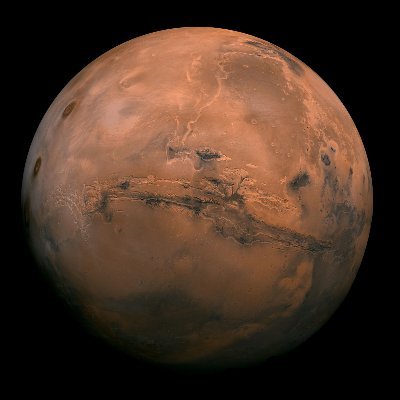
NASA Mars @NASAMars
1.6M Followers 178 Following NASA’s official X account for all things Mars. Join us as we explore the Red Planet!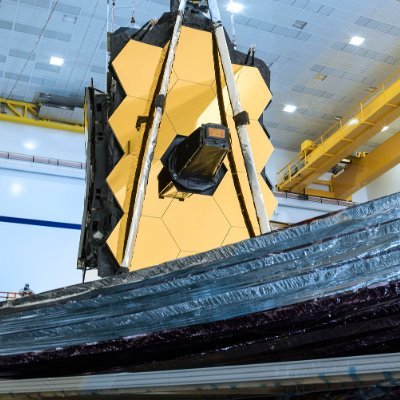
NASA Webb Telescope @NASAWebb
3.5M Followers 63 Following The Official *NASA* Webb X account. The world's most powerful space telescope. Launched: Dec. 25, 2021. First images revealed: July 12, 2022.
Hubble @NASAHubble
8.9M Followers 44 Following The official X account for the NASA Hubble Space Telescope, managed and operated by NASA's Goddard Space Flight Center.
Cristiano Ronaldo @Cristiano
112.2M Followers 82 Following Welcome to the official account of Cristiano Ronaldo.
Bitcoin @Bitcoin
8.8M Followers 13 Following Bitcoin is an open source censorship-resistant peer-to-peer immutable network. Trackable digital gold. Don't trust; verify. Not your keys; not your coins.

SpaceX @SpaceX
41.9M Followers 123 Following SpaceX designs, manufactures and launches the world’s most advanced rockets and spacecraft
National Geographic @NatGeo
28.0M Followers 179 Following Step into wonder and find your inner explorer with National Geographic 🌎
Elon Musk @elonmusk
241.0M Followers 1K Following
Bayou Bennett @bayoubennett
1K Followers 1K Following Bayou Bennett is an award-winning filmmaker,actress, and avant-garde performance artist.You might like