
Van Ngo @vanngo97
AI/ML Product Manager | Human-Centered Data Science @UofT linkedin.com/in/vanngo97 Toronto, Ontario Joined July 2010-
Tweets320
-
Followers145
-
Following197
-
Likes27K
Fable 5 is old news, but I'm still stoked that it helps me to build this immersive and interactive app to learn about the solar system 🤓


Here's the NY Times article everyone is talking about. A gift from me to you. 👀 nytimes.com/2026/06/10/mag…

i hooked my whoop to my work calendar to find which coworker gives me the most stress 🚨 thanks to fable, I reverse engineered whoop to pull per minute heart rate. nd matched spikes with cal events and attendees I now have a leaderboard and I think about it daily. few info masked for obvious reasons ;)


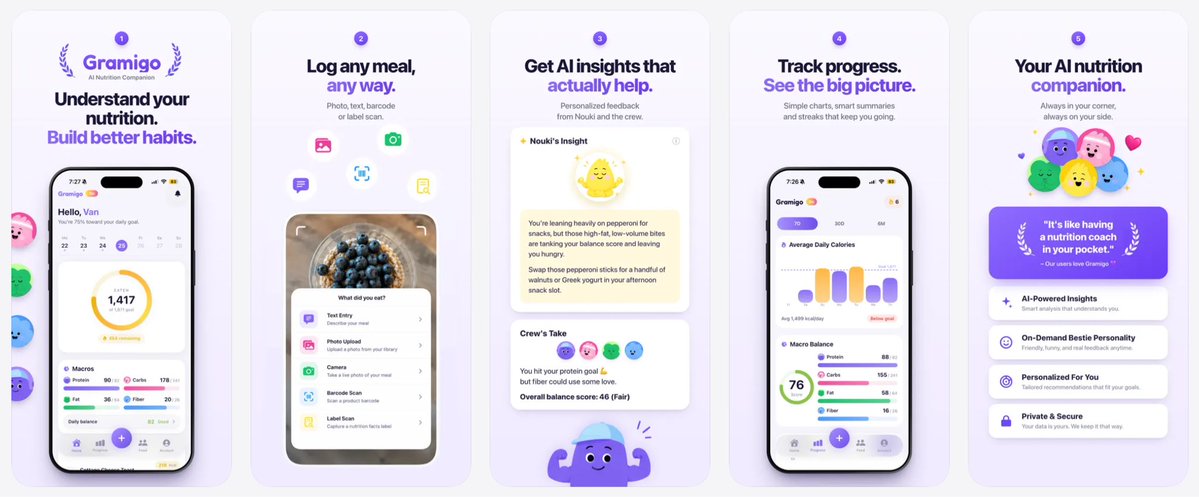
@briannekimmel A social macro tracker I guess 😁


There are no words.




Colours of the sky


books are so cool because there are NO FUCKING ADS IN THEM
@build_canada The 1st biosensor to capture multi-omic data from saliva and the molecular intelligence layer

world models are a sexy misnomer. @ylecun , @nvidia , and @drfeifei are all building world models. they are not building the same thing. lecun is working on cognitive architecture: a system that builds causal models of reality and plans inside them. nvidia is building simulation infrastructure: physics-based environments that train, evaluate, and run physical AI systems at scale. fei-fei li is building spatial intelligence: systems that understand and reason about physical space. same term. three different bets. three different timelines. bundling them into one category inflates the hype. it also hides where value actually accumulates. the simulation moat is the most obvious. native physical interaction data was scarce. synthetic environments filled the gap. but as robotics companies accumulate real interaction data at scale, that scarcity could end. the world model framing was a data poverty artifact. the spatial intelligence bet is the most grounded. fei-fei li is trying to give machines a persistent, accurate model of physical space: where things are, how they move, what they afford. narrow, reliable, deployable. the timeline is shorter. the cognitive architecture bet is the longest. what lecun is actually building requires three components: a causal model of how the world works, a forward simulator that imagines possible futures, and a pruning mechanism. a prior over which futures are worth simulating at all. that third component does not exist in any current system. it is the difference between prediction and genuine planning. three definitions. three timelines. three completely different implications for where value accumulates.

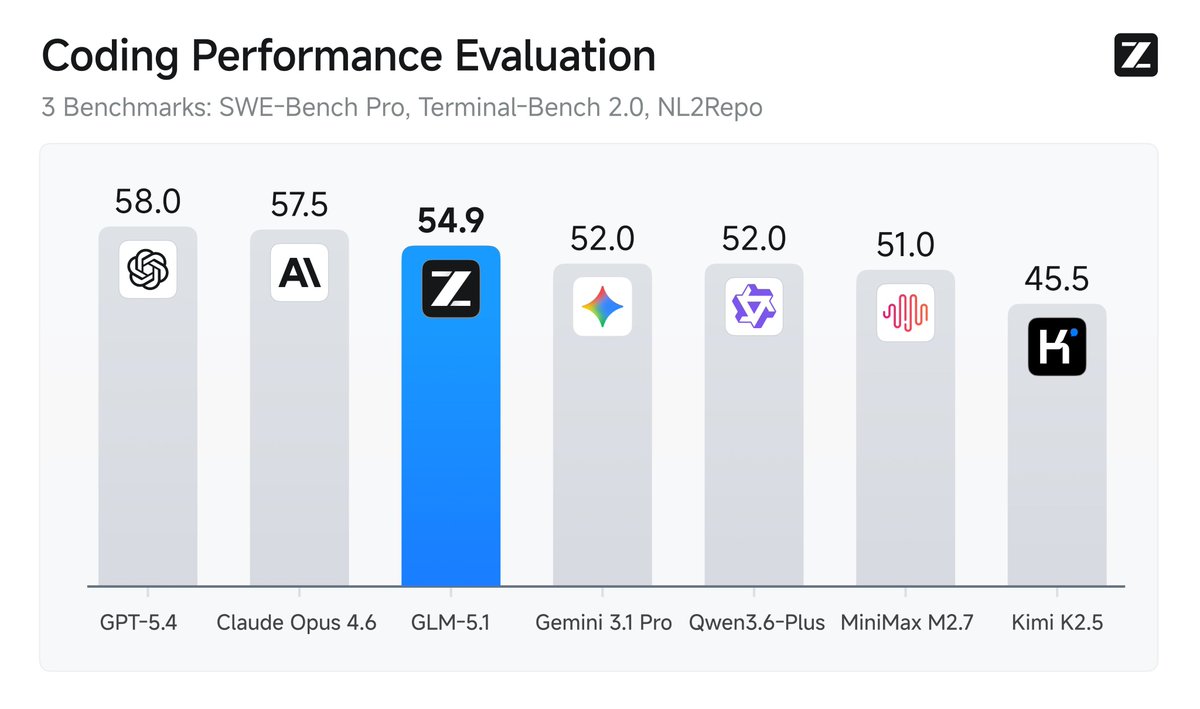
Silicon Valley is quietly running on Chinese open source AI models. Here are the receipts: → Cursor confirmed last month that Composer 2 is built on Moonshot's Kimi K2.5 → Cognition's SWE-1.6 model is likely post-trained on Zhipu's GLM → Shopify saved $5M a year by switching to Alibaba’s Qwen model. Airbnb CEO Brian Chesky has also said: "We rely a lot on Qwen. It's very good, fast, and cheap." And now Zhipu dropped GLM-5.1, an open source model that performs almost as well as Opus on coding benchmarks. 📌 More on the Anthropic + OpenClaw drama and what I'm learning about AI on the ground in China in my new post: creatoreconomy.so/p/the-all-you-…
As much as I love using Claude Max and ChatGPT Pro, I don't think these all-you-can-use AI subscriptions will last forever. Here's my new deep dive that covers: → Why Anthropic cut off OpenClaw access → How to run local models on your Mac → What I'm seeing on the ground in
@sid_srk Sounds intriguing 🤔 would like to follow along to see what you're up to 👀
@jnananaa Can't agree with this approach more!! More often than not, I just want simple apps that do one thing well and I'm happy to pay one-time fee. For lightweight multilingual LLMs, Cohere Labs have Tiny Aya which might work well for your case

"I'm at my limit" emotional or claude?

Cursor is raising at a $50 billion valuation on the claim that its “in-house models generate more code than almost any other LLMs in the world.” Less than 24 hours after launching Composer 2, a developer found the model ID in the API response: kimi-k2p5-rl-0317-s515-fast. That’s Moonshot AI’s Kimi K2.5 with reinforcement learning appended. A developer named Fynn was testing Cursor’s OpenAI-compatible base URL when the identifier leaked through the response headers. Moonshot’s head of pretraining, Yulun Du, confirmed on X that the tokenizer is identical to Kimi’s and questioned Cursor’s license compliance. Two other Moonshot employees posted confirmations. All three posts have since been deleted. This is the second time. When Cursor launched Composer 1 in October 2025, users across multiple countries reported the model spontaneously switching its inner monologue to Chinese mid-session. Kenneth Auchenberg, a partner at Alley Corp, posted a screenshot calling it a smoking gun. KR-Asia and 36Kr confirmed both Cursor and Windsurf were running fine-tuned Chinese open-weight models underneath. Cursor never disclosed what Composer 1 was built on. They shipped Composer 1.5 in February and moved on. The pattern: take a Chinese open-weight model, run RL on coding tasks, ship it as a proprietary breakthrough, publish a cost-performance chart comparing yourself against Opus 4.6 and GPT-5.4 without disclosing that your base model was free, then raise another round. That chart from the Composer 2 announcement deserves its own paragraph. Cursor plotted Composer 2 against frontier models on a price-vs-quality axis to argue they’d hit a superior tradeoff. What the chart doesn’t show is that Anthropic and OpenAI trained their models from scratch. Cursor took an open-weight model that Moonshot spent hundreds of millions developing, ran RL on top, and presented the output as evidence of in-house research. That’s margin arbitrage on someone else’s R&D dressed up as a benchmark slide. The license makes this more than an attribution oversight. Kimi K2.5 ships under a Modified MIT License with one clause designed for exactly this scenario: if your product exceeds $20 million in monthly revenue, you must prominently display “Kimi K2.5” on the user interface. Cursor’s ARR crossed $2 billion in February. That’s roughly $167 million per month, 8x the threshold. The clause covers derivative works explicitly. Cursor is valued at $29.3 billion and raising at $50 billion. Moonshot’s last reported valuation was $4.3 billion. The company worth 12x more took the smaller company’s model and shipped it as proprietary technology to justify a valuation built on the frontier lab narrative. Three Composer releases in five months. Composer 1 caught speaking Chinese. Composer 2 caught with a Kimi model ID in the API. A P0 incident this year. And a benchmark chart that compares an RL fine-tune against models requiring billions in training compute without disclosing the base was free. The question for investors in the $50 billion round: what exactly are you buying? A VS Code fork with strong distribution, or a frontier research lab? The model ID in the API answers that. If Moonshot doesn’t enforce this license against a company generating $2 billion annually from a derivative of their model, the attribution clause becomes decoration for every future open-weight release. Every AI lab watching this is running the same math: why open-source your model if companies with better distribution can strip attribution, call it proprietary, and raise at 12x your valuation? kimi-k2p5-rl-0317-s515-fast is the most expensive model ID leak in the history of AI licensing.

things are about to get interesting from here on


Stepping Out Boutique @SteppingOutBou1
57 Followers 615 Following We are here to provide inspiration, motivation, and information on today's top trends in online apparel. Visit today!
Wallace Sanders @wallace_sa71275
114 Followers 7K Following
priya sardana @psardana1
38 Followers 453 Following


James Dyson 🇺🇸 @jamesdyson128
40 Followers 998 Following 📈 9+ years trading 💰 Systematic options & futures trader 🔥 Blockchain developer exchanger
H V G @vgale2130
1K Followers 5K Following NCAA Football GBR, NFL Sports Olympics NASCAR NHRA muscle cars bodybuilding fitness travel beach life dad grandpa family love life!
BowTiedBiotech 🧪�... @BowTiedBiotech
22K Followers 4K Following Daily Biotech Updates: Public & Private Market Updates, Company Building, Financing, Exit Strategies, & Emerging Science Trends | Current: Janitor at Biotech VC
Jes Frjtr @Jessfrjtr
47 Followers 1K Following Abogada. Derecho Penal. Criminal Compliance. Juego pádel y escucho hxc #proyectoETHOSCompliance
Felix @AlwaysCanadian1
55 Followers 330 Following
Stellar Styles and Mo... @phils_funky_ts
98 Followers 1K Following Apparel & home decor that tells a story 🎨 POD shop sharing designs + behind-the-scenes growth. Helping other sellers grow while I build mine 💫
Kelly mooneyham @MooneyhamK75520
461 Followers 2K Following

PeacefulBloom🌸 @Craft8Lyy
136 Followers 768 Following A girl should be two things: who and what she wants
CindyQueen @Thoadead6zo
84 Followers 7K Following
gusenof @gusenoff
13 Followers 310 Following
Garkaws @GarkawsU65FP
37 Followers 4K Following
Matt ratto @mattratto
1K Followers 1K Following
Prof. Dr. Jarek Kraje... @JarekKrajewski
44 Followers 339 Following Wider der wohlmeinenden Verkleisterung der Realität

MaggieAnne @5R4c73gvn6v6rp2
9 Followers 1K Following
Arlen Ritchie @ArlenRitchie
118 Followers 3K Following Founder @getkicbak | Arming the travel rebels vs the OTA empire | 🦍 Apes Together Strong 💪
Kendall @iyomasaaya27825
103 Followers 7K Following
ModestyBaldwin @rvW04nNuzaSZB7
63 Followers 7K Following
JanicePrice @TL2U4pIZdQC3h
51 Followers 7K Following
Yoann Berno 🌍💡�... @YoannBerno_
41 Followers 137 Following Sharing my learnings and insights as a Climate Tech Fund Manager 🌍 And empowering the next generation of Climate changemakers 🚀
Shobhit Jain @shobhitzen
23 Followers 550 Following building strenly - a well designed app for people who lift without all the bs.
Kristen Ramos @RamosKristenrrr
936 Followers 7K Following Yo siempre seré esa persona con la cual podrás llorar cuando lo necesites, por que así soy yo. Estilista dominicana
Dr.Fatimah Al nassir @Fatimah_240
54 Followers 355 Following MBBS graduate | family medicine resident R3
McTosme @MTosme12904
32 Followers 2K Following
Lottie Lark @LarkLottie62322
3 Followers 216 Following
Sidesmoughs @sidesmough73152
19 Followers 1K Following
Shaythe @Shaythe449792
19 Followers 2K Following
Totaffees @totaffees42302
21 Followers 1K Following
Theseau @Theseau115355
26 Followers 2K Following
Nesmon @Nesmon163662
26 Followers 2K Following
Clark Christopher @ClarkChris99343
437 Followers 5K Following Venture Scout looking for entrepreneurs and founders. Acting as a bridge, connecting a fund to promising companies. 0.33333% of the carry pool.
xinxin @xinxin587153689
36 Followers 676 Following


Krystle Senires @KrystleSenires
120 Followers 61 Following Creator @ Shift Happens Newsletter @krystlegoingplaces on all the things 💼 10+ yrs @Deloitte + @KPMG
Sheridan Guerrette @sheridanloves
642 Followers 446 Following I like to rewrite rules from time to time.
Justin Gordon @justingordon212
48K Followers 10K Following Hosting the Ambition podcast. Founder of The LA Grind and The SF Grind. Founder of Just Go Grind (acquired). Scout @HeadlineVC.
Omar Nusrat @OmarNusrat
1K Followers 5K Following medphys phd candidate @torontomet + resident @primeintellect • prev @openai @mercor_ai
Loop by Cuemill @cuemill
17 Followers 2 Following Building a meaningful connection with real-life touch points and your locality! ♡
Matthew Charlton @mattcharlton22
441 Followers 5K Following Member of Talent and Operations at Boltz We're hiring! Get in touch for more information https://t.co/VzJaAVVCbE
ZCode @zcode_ai
5K Followers 4 Following 🎉 The Z Code community is here! We've created a Discord server for all ZCode users — https://t.co/oK1pV02Prf

Henry Shevlin @dioscuri
35K Followers 9K Following Philosopher & AI Ethicist @GoogleDeepMind · @LeverhulmeCFI @Cambridge_Uni | Consciousness, Machine Minds, AGI, Human-AI Relationships | All views my own
NYU Center for Mind, ... @nonhumanminds
325 Followers 32 Following We provide academic leadership for research and policy related to nonhuman consciousness, sentience, agency, moral status, legal status, and political status.
Kimi.ai @Kimi_Moonshot
273K Followers 138 Following Built by Moonshot AI to empower everyone to be superhuman. @Kimidevs built for developers ⚡️API: https://t.co/XCrgjXAqMw DC: https://t.co/wBsBTn6Ncc

Apollo Research @apolloaievals
11K Followers 0 Following Our goal is to secure frontier AI systems from development, to deployment and governance.
ERA Fellowship @ERA_Cambridge
439 Followers 20 Following Building talent for a new ERA of AI safety & Governance research


Google AI Studio @GoogleAIStudio
187K Followers 2 Following The fastest path from prompt to prototype to production with Gemini
Stitch by Google @stitchbygoogle
162K Followers 6 Following Stitch by @GoogleLabs turns your ideas into beautiful interface designs, powered by some of the latest Gemini models. Try free of charge.
FAR.AI @farairesearch
21K Followers 24 Following Frontier alignment research to ensure the safe development and deployment of advanced AI systems.
Yoshua Bengio @Yoshua_Bengio
44K Followers 269 Following Working towards the safe development of AI for the benefit of all @UMontreal, @LawZero_ & @Mila_Quebec A.M. Turing Award Recipient and most-cited AI researcher.
AI Now Institute @AINowInstitute
58K Followers 1K Following The AI Now Institute produces diagnosis and actionable policy research on artificial intelligence.
Esin Durmus @esindurmusnlp
6K Followers 452 Following
Internet Society @internetsociety
69K Followers 2K Following We’re a global charity working with our passionate community to connect the unconnected and advocate for a trusted Internet. Because the #InternetIsForEveryone.
Future Intelligence @LeverhulmeCFI
12K Followers 723 Following The Leverhulme Centre for the Future of Intelligence. Exploring the nature and impact of AI (Uni of Cambridge, with spokes at Imperial and Berkeley).
Lucius Caviola @LuciusCaviola
6K Followers 2K Following Researching the societal impact of AI Assistant Prof @Cambridge_Uni @LeverhulmeCFI https://t.co/mbMEgVFgSU, https://t.co/i0ba2X0CNY, https://t.co/GYOqDfp9Gy
Fei-Fei Li @drfeifei
877K Followers 1K Following Cofounder/CEO @theworldlabs, Prof (CS @Stanford), Co-Director @StanfordHAI, #AI #SpatialIntelligence #GenAI #computervision #robotics #AI-healthcare
00rm.record @00rm_record
3K Followers 33 Following Record for LingOrm. @linglingsirilak @ormmormm 💗OK to share with credit! No re-upload or editing without permission.🙏🙏
Ormkorn.zip @Ormkornzip
1K Followers 1 Following 404 Not Found — Except Orm Kornnaphat. @ormmormm #OrmKornnaphat #ออมกรณ์นภัส #OrmKornzip
Siqi Chen @blader
299K Followers 4K Following 🏗️ Love to build (@runwayco @sandboxvr @zynga) people love 💸 Investor @mercury @owner @elevenlabsio @meetgamma @sfcompute @turingcom @recallai @eightsleep ++
OMH_SUPPORT @OMH_SUPPORT
7K Followers 10 Following A home built on love for @ormmormm wherever you are in the world. 🏡💖 Official Global Fanpage | United in support, worldwide. 🌎
orm’s garden (พ�... @ormsgardenvn
5K Followers 31 Following 🇻🇳 a blog full of love for @ormmormm #ormkornnaphat #ออมกรณ์นภัส
OrmKorn_CN @OrmKorn_CN
7K Followers 32 Following Orm Kornnaphat's Official China Fanclub, With love from Chinese Omelettes
Google Gemini @GeminiApp
536K Followers 50 Following The Gemini app turns research into reality, bringing frontier AI experiences like Omni, Deep Think, Nano Banana, and more to hundreds of millions of people.
DeepSeek @deepseek_ai
1.0M Followers 0 Following Unravel the mystery of AGI with curiosity. Answer the essential question with long-termism.
Namtan.Tipnaree @NamtanTipnaree
577K Followers 228 Following For work Call : (+66)61-414-4046 Line OA : @gmmtvartists_work Email : [email protected] #NamtanTipnaree
ALenchenkxx @alenchenk
3K Followers 23 Following 🤍📸🦋🍳/just want to capture all the wonderful moments about hers.

OrmKorn_FansTH ( พ�... @OrmKorn_fans
19K Followers 76 Following Support : @ormmormm , whether in the present or the future. hashtags for engagement #OrmKornnaphat #ออมกรณ์นภัส #ไข่เจียวของออมเล็ต

ORMKORN’s HOME OFFI... @ORMKORNHOMETH
41K Followers 92 Following ORMKORNNAPHAT OFFICIAL THAILAND FANCLUB | Update All About @ormmormm🐱 | #ออมกรณ์นภัส #OrmKornnaphat | Fandom Name: #ไข่เจียวของออมเล็ต

LilyRose38 @LilyRose38_TH
29K Followers 9 Following 📸 11+27 = 38 #LingOrm #หลิงออม🌷 LilyRose = ความรักที่บริสุทธิ์และงดงาม🌹 HD VDO on Tiktok/IG : lilyrose38 .th 💜 2nd Acc 👉 @LilyRoses_TH
OrmKornnaphat_CN @OrmKornnaphatCN
21K Followers 40 Following Orm Kornnaphat's Official China Fanclub. From Chinese Omelettes 🍳, with love.🤍❤️
Royal_1127 @Royal_1127
27K Followers 0 Following 📸@linglingsirilak @ormmormm 📸 - treasure every moment that overflows with love.

Niall Harbison @NiallHarbison
573K Followers 1K Following On a mission to save street dogs around the world. You can support here...
CARTE Toronto @CARTEToronto
232 Followers 243 Following Centre for Analytics & AI Engineering | University of Toronto | Engineering impact through analytics and artificial intelligence
Vector Institute @VectorInst
30K Followers 539 Following Vector Institute transforms cutting-edge artificial intelligence research into practical solutions. AI-generated content will be disclosed. FR: @InstitutVecteur
Oxford Internet Insti... @oiioxford
47K Followers 2K Following Exploring how technology is transforming the way we live, work and govern. Join us at https://t.co/9AWnfNPA9N
Matt ratto @mattratto
1K Followers 1K Following
Schwartz Reisman Inst... @TorontoSRI
3K Followers 1K Following Integrative research. Human-centred solutions. We're a @UofT institute working to ensure that powerful technologies make the world better—for everyone.
U of T Data Sciences ... @UofTDSI
2K Followers 236 Following The Data Sciences Institute is a multidisciplinary, tri-campus hub for data science innovation @UofT.
World @worldnetwork
506K Followers 39 Following World is a new standard of trust for the internet - private proof of human, powerful financial infrastructure & the human-first experiences they enable.
BigHat Biosciences @BigHatBio
1K Followers 17 Following AI-enabled experimental platform to accelerate antibody engineering
Runway @runwayco
8K Followers 35 Following The finance platform your team doesn't hate. We also launched a hot sauce that one time at https://t.co/7JOPCNQFLH 🌶️
orm kornnaphat🌈(�... @ormmormm
518K Followers 82 Following ♡#ออมกรณ์นภัส #OrmKornnaphat #ไข่เจียวของออมเล็ตTrends for United States
You might like