Darknight @vimodkr
A nobody, who stumbled upon consciousness. Art.Alchemy.Astronomy.Anatomy. chaos Joined July 2018-
Tweets23K
-
Followers2K
-
Following1K
-
Likes30K

i have enough trauma to be evil and actively choose not to be

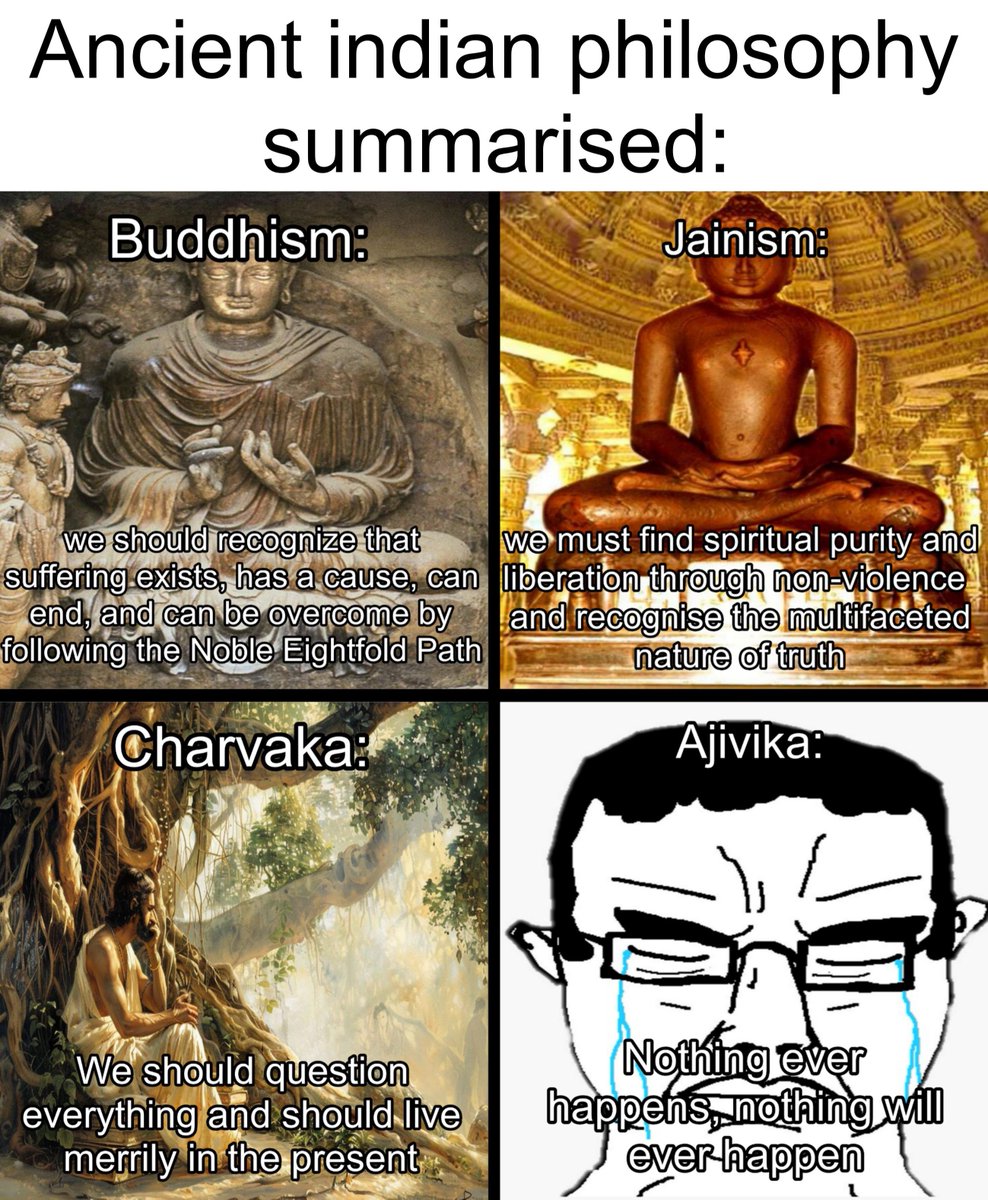


God, show mercy on him

Cuando tengas un mal año, acuérdate de Paco.
That's a frugal Boho Chic decor

The world should be grateful Elon Musk bought Twitter.

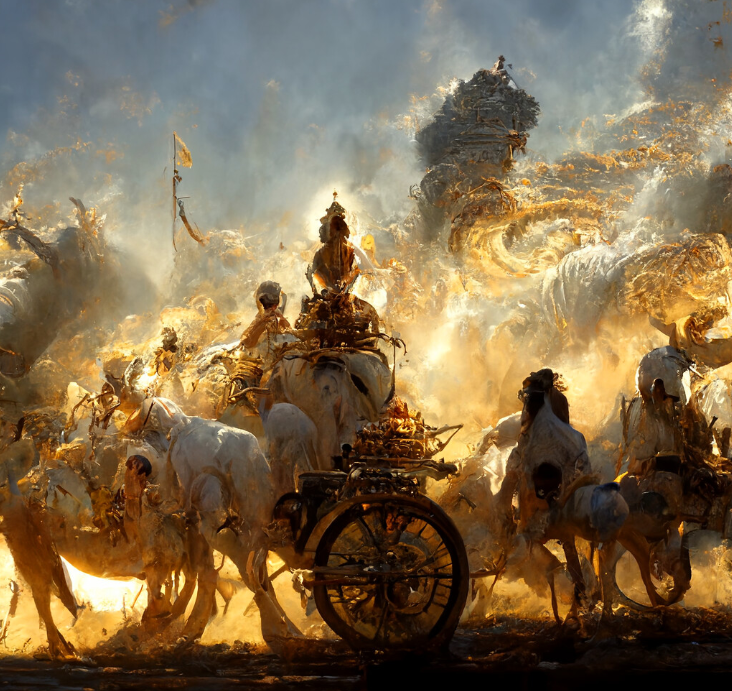
Decoding: Aksauhini, Rathi, Athirathi, Maharathi from Mahabharata & The inner strength of the Yogi The entire Kurukṣetra war = the great battle of Kuṇḍalinī ascent and the purification of the subtle body. The two armies = the two great currents of forces within us: 1) Pāṇḍava side = upward, purifying, sattvic forces (the five chakras + supportive energies) 2) Kaurava side = downward, binding, tamasic-rajasic forces (habitual tendencies, residual vāsanās, dualistic energies) -------------------------------------- Akṣauhiṇī One complete army unit as described in the Mahābhārata (Ādi Parva): 21,870 chariots (ratha) 21,870 elephants (gaja) 65,610 horses (aśva) 109,350 infantry (padāti) Total ≈ 218,700 fighting units Ratio = 1 : 1 : 3 : 5 (Note: the digits of each number add up to 18 — the sacred number of the Mahābhārata.) In the Kurukṣetra war: Pāṇḍavas → 7 Akṣauhiṇīs Kauravas → 11 Akṣauhiṇīs 1) Rathi = Can fight 5,000 ordinary warriors alone 2) Atirathi (Adhirathi) = Equal to 12 Rathis (Very powerful) 3) Maharathi = Equal to 12 Atirathis (Exceptional) 4) Aadhi Maharathi = Equal to 12 Maharathis (Extremely rare (almost divine)) -------------------------------- 1) Most ordinary heroes = Rathi or Atirathi 2) All hundred Kaurava brothers and Śakuni = Rathas 3) Bhīma → Equal to eight Rathas 4) Arjuna, Karṇa, Bhīṣma, Droṇa, Aśvatthāmā, Abhimanyu, Satyaki, Dhṛṣṭadyumna = Maharathi 5) Bhīṣma and Droṇa = Highest Maharathi 6) Kṛṣṇa (and sometimes Paraśurāma) = Ati-maharathi ---------------------------------- Aksauhini : = A complete, massive deployment of psychic and prāṇic forces. One Akṣauhiṇī represents a full “wave” or organised army of thoughts, emotions, vital impulses, and subtle energies that rise together in the inner battlefield. The fact that the numbers all reduce to 18 points to the completeness of the cosmic play (18 chapters of the Gītā, 18 days of war, 18 Akṣauhiṇīs in total, etc.). --------------------------------- The warrior ranks = different degrees of concentration, intensity, and mastery of inner power. Rathi : An ordinary but competent force of the mind or vital. It can handle a moderate number of scattered lower impulses (5,000 = a large but still manageable group of thoughts/desires). Atirathi : A significantly more concentrated and powerful current. Equal to 12 Rathis → a force that has gained greater one-pointedness and can overcome many ordinary mental-vital movements at once. Maharathi : A highly refined, intensely concentrated expression of śakti. Equal to 12 Atirathis → these are the great heroic powers in the subtle body (the major saṃskāras or purified energy streams that can dominate large regions of the inner battlefield). Arjuna, Karṇa, Bhīṣma, Droṇa as Maharathis represent the most powerful individualised forces — both luminous and shadow — that the rising Kuṇḍalinī must face and transform. Ati-maharathi : The near-divine or fully awakened power. Equal to 12 Maharathis → the force that is no longer merely individual but carries the direct power of the higher consciousness. Kṛṣṇa as Ati-maharathi is the pure, unobstructed presence of the Supreme (or the fully risen Kuṇḍalinī established as pure awareness) that can dissolve entire armies of inner obstacles with a single movement (the Sudarśana of discriminative wisdom). -------------------------------------------- Summary of the inner picture: The countless soldiers of the Akṣauhiṇīs are the innumerable subtle movements, residual impressions, and dualistic forces that fill the inner world. The graded ranks of warriors show the hierarchy of concentration and power among these forces. The higher the rank, the more one-pointed, intense, and decisive that particular energy has become. When the Pāṇḍava side (the ascending Kuṇḍalinī forces) finally prevails, it is because the highest power (Kṛṣṇa as Ati-maharathi — the pure Witness-consciousness) guides and empowers the Maharathi and Atirathi forces of the purified centres, until every organised army of the lower nature is dissolved. -------------------------------------- Ādi Parva (Book 1), Chapter 2 (verses approximately 15–23 in the Bombay/Vulgate numbering; eko ratho gajaś caiko narāḥ pañca padātayaḥ | trayaś ca turagās tajjñaiḥ pattir ity abhidhīyate || pattiṃ tu triguṇām etām āhuḥ senāmukhaṃ budhāḥ | trīṇi senāmukhāny eko gulma ity abhidhīyate || trayo gulmā gaṇo nāma vāhinī tu gaṇās trayaḥ | smṛtās tisras tu vāhinyaḥ pṛtaneti vicakṣaṇaiḥ || camūs tu pṛtanās tisras tisraś camvas tv anīkinī | anīkinīṃ daśaguṇāṃ prāhur akṣauhiṇīṃ budhāḥ || akṣauhiṇyāḥ prasaṃkhyānaṃ rathānāṃ dvijasattamāḥ | saṃkhyāgaṇitatattvajñaiḥ sahasrāṇy ekaviṃśatiḥ || śatāny upari caivāṣṭau tathā bhūyaś ca saptatiḥ | gajānāṃ tu parīmāṇam etad evātra nirdiśet || jñeyaṃ śatasahasraṃ tu sahasrāṇi tathā nava | narāṇām api pañcāśac chatāni trīṇi cānaghāḥ || pañcaṣaṣṭisahasrāṇi tathāśvānāṃ śatāni ca | daśottarāṇi ṣaṭ prāhur yathāvad iha saṃkhyayā || etām akṣauhiṇīṃ prāhuḥ saṃkhyātattvavido janāḥ | yāṃ vaḥ kathitavān asmi vistareṇa dvijottamāḥ|| English Translation: One chariot, one elephant, five foot-soldiers and three horses are called a Patti by those who know. Three such Pattis make a Senāmukha. Three Senāmukhas make a Gulma. Three Gulmas make a Gaṇa. Three Gaṇas make a Vāhinī. Three Vāhinīs make a Pṛtanā. Three Pṛtanās make a Camū. Three Camūs make an Anīkinī. Ten Anīkinīs make one Akṣauhiṇī, say the wise.The number of chariots in an Akṣauhiṇī is 21,870. The number of elephants is the same. The number of foot-soldiers is 109,350. The number of horses is 65,610. This is the Akṣauhiṇī as calculated by those who know the science of numbers. -------------------------------- Arjuna =son of Indra Bheema = son of Vayu Yudhishtira = son of Yama Nakula and Sahadeva = sons of Ashwini Kumaras Karna = Son of Surya (Sun)

Prayers, progress, patience.
Learn to appreciate the smallest acts of kindness.
💡Did you know? 'Pepe' is the spanish word for 'Joseph'(Jesus's father)

Note the spelling of trousers as trowsers. USA Spelling wasn’t standardized until Websters dictionary in 1806
One genuine question, In the current scenario, Tasmac is one of the leading contributors of the state's revenue. Tamil Nadu’s total outstanding direct government debt is estimated to reach approximately ₹10.62 lakh crore to ₹10.71 lakh crore for the 2026–27 fiscal year. Lets assume, if the future government plans to close Tasmac for the welfare of the people, How do we: 1. Find righteous ways of state revenue 2. Clear/minimize the existing state's debt @WTLFoundation @annamalai_k @arvinth_e @MuraliS27 @indhavaainko

Here’s the policy paper prepared by We the Leaders Foundation for a clean and sustainable Tamil Nadu, drawing inputs from experts in the fields of environment and health. wetheleader.org/files/policy-p… மாற்றம் நம்மிடமிருந்து துவங்கட்டும், தூய்மையான தமிழகம் பிறக்கட்டும்!
Decoding the first shloka of Bhagavat Gita: Chapter 1 Verse 1: A Tantric interpretation Sanskrit : धृतराष्ट्र उवाच : धर्मक्षेत्रे कुरुक्षेत्रे समवेता युयुत्सवः । मामकाः पाण्डवाश्चैव किमकुर्वत सञ्जय ॥ dhṛtarāṣṭra uvāca : dharma-kṣetre kuru-kṣetre samavetā yuyutsavaḥ |

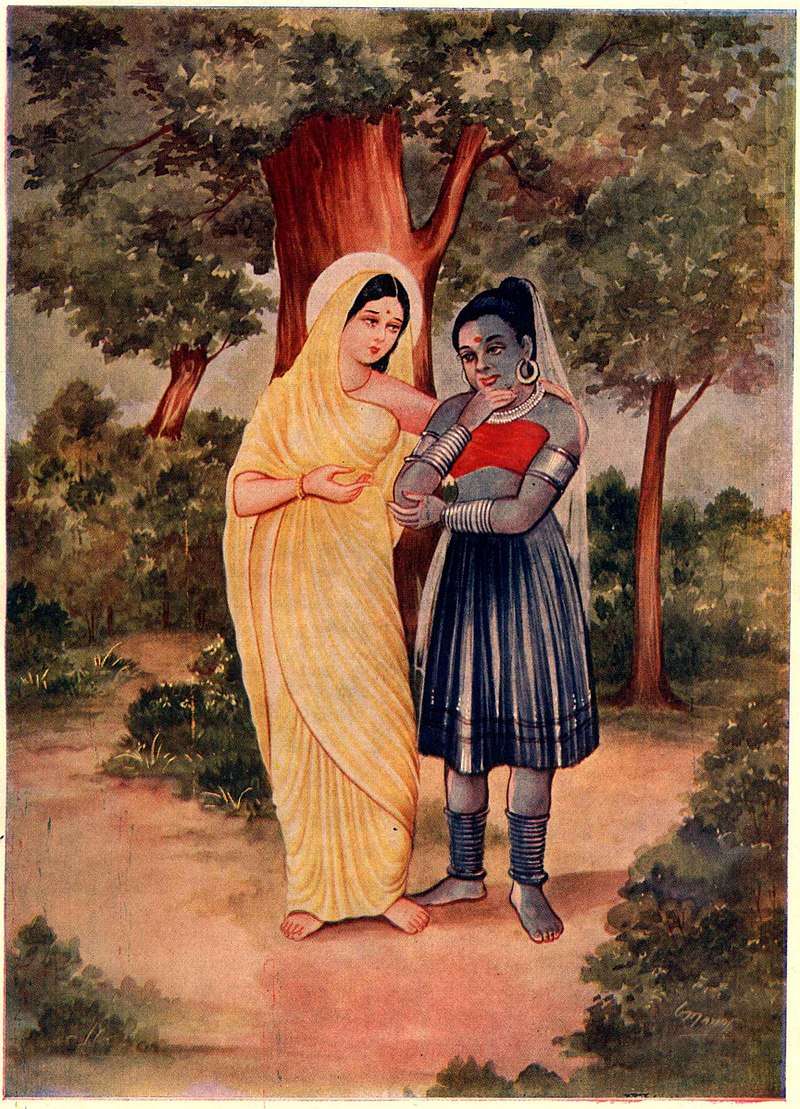
Trijata's Dream is nothing but Gayatri Mantra : Valmiki Ramayana This was published in the form of a series of articles inTelugu in Andhra Prabha, Telugu Daily in 1965. The 1st edition was publoished by author himself. The second edition was published by Tirumala Tirupati Devasthanams, Tirupathi in 1981. (This secret was decoded by the great Telugu poet Late. Gunturu Seshendra Sharma. He was a yogi, a master in Kaula Tantra. A Sahitya academy awardee and his name was shortlisted for Nobel Prize.) A secret in the Ramayana which no one has recognized so far. There is in Sundara Kanda a story known as Trijata's dream. What is it really? Is it only a mere dream? A dream is very well known to be a random experience without any explanation like cause and effect. Is the Trijata's Dream just such a dream? Will a Sage like Valmiki speak about such a dream? Based on a suspicion that some secret may have been hidden, I proceeded to examine it closely and found its truth with great surprise and satisfaction. The Rakshasis in Lanka, who were commanded by Ravana, tormented Sita to accept Ravana. When Sita rejected their words as blade of grass, they threatened that they will kill her and eat her. Then, one Rakshasi among them, called Trijata, warned them by saying: “Protect your own selves. You can never eat Sita. I saw a dream. In the dream, Rama in the form of Lakshmana, protected Sita, and took her away. Ravana and other Rakshasas and Lanka were destroyed.” She explained to them all that she saw in the dream. That is a brief account of that dream. Rama appears to Trijata four times in this dream in four different forms. In the first time; "Gaja danta mayeem divyaam sibikaam anta-rikshagaam yukthaam hamsa sahasrena swayam aasthaaya Raghavah, sukla-maalyambara-dharo Lakshmanena sahaagatah." Rama came in a palanquin made of elephant tusks and carried by thousand swans. The second time, "Raghavascha mayaa drishtah chaturdantam maha-gajam aarudhah sailasamkaasam cha kasa saha lakshmanah." It means that Rama came riding an elephant (Airavatam) in a ‘bright’ form. The third time, "Pandararshabha yuktena rathenaashta yuja swayam ihopayatah kaakutsthah seetayaa saha bharyayaa. It means:" Rama came accompanied by Sita in a chariot drawn by eight white bulls. For the fourth time, "Lakshmanena saha bhrataa vimaane pushpake sthita sukla-maalyambara-dharo lakshmanena samaagatah." Rama came accompanied by Lakshmana wearing white clothes in Pushpaka Vimana. These are the four visions. Thereafter, it was stated: "Aruhya Pushpakam divyam vimaanam suryasannibham uttaraam disamaalokya jagama purusharshabhah." Further, ‘an account of the miserable state of Ravana and others is given’. But, the topics to be examined are the four narrations given above. The commentators interpreted these statements as forecasting some auspicious events according to the science of dream interpretation. If we see that as a mere dream, there can be no significance for it. But, see the secret meaning that I could get from it. ------------------------------- In the first vision, a palanquin made of ivory, which is made of elephant tusk, gaja-danta (in Sanskrit). The word gaja has two meanings, one is elephant and the other is the ‘number eight’. (See Apte’s dictionary). The word danta indicates for the number ‘thirty two’. (No explanation is given for this; probably it is a way of representation using anatomy of human being who has thirty two teeth!). Hence, this palanquin has a ‘number eight thirty two’. In the second vision the vehicle is maha-gajam. The word maha-gajam is literally maha-eight. Finally the word maha-gaja chaturdantam is maha-eight which has four thirty two. What is all this? This is a ‘gross’ description of Gayatri Mantra itself!!! The heart of the Ramayana is Sundara Kanda. The heart of Sundara Kanda is the Dream of Trijata. Please find out where the Dream of Trijata is described in Ramayana. It is located at the exact middle of the Ramayana which has twenty four thousand verses. The first verse containing the story of Trijata’s dream is the thirteen thousand first verse. The actual story is at the middle of the section. ‘Bhartru-rankaa tsamutpatya tatah kamala lochanaa’ is the beginning of the verse (Su. 27-15) whose first syllable is ‘Bha’. This is also the syllable in the words ‘Bhargo devasya dheemahi’ of the Gayatri Mantra. It is the first syllable of the second part of Gayatri Mantra. Or it is the central syllable of Gayatri Mantra itself. The commentators of this verse said: ‘Tatastasya nagasyaagra iti - atra dwaadasa slokaa gataah – trayodasa sahasraadi moyam slokah gayatrastrayodasa maksharam atra bodhyam bhartruriti’ therefore, among the twenty four thousand verses of the Ramayana garland of beads, the dream of Trijata is situated as the Central bead. We have to take the message of the Sage in this way. How can the dream of Trijata be interpreted as Gayatri Mantra? This is the way. In the first vision. Which was described by the words, gaja danta mayee, the word gaja indicates the number eight, which is the first part of Gayatri Mantra. Similarly the word danta indicates all the thirty two syllables of Gayatri Mantra. Each pada of Gayatri has eight syllables and there the four padas of Gayatri and so Gayatri mantra has thirty two syllables. The second vision is described by the words, chaturdantam maha bhajam. In these words, the two words danta and gaja are not new. They are part of the first vision. The word chatur is a new one. It is used to indicate that there are four padas of Gayatri, the fourth one, paro rajasi saavadom, being given only to those who accept the fourth Ashrama, which is Sanyasa. That is Purna Gayatri. The first vision: The palanquin has thirty two auspicious marks corresponding to thirty syllables of Gayatri mantras and the sacred foot of Rama who is no other than Paramatma has eight auspicious marks. It can move in the sky corresponding to visuddha chakram whose intrinsic tattva is aakaasa. It is the seat of sound or song. Gayatri Mantra is recited and it protects the Sadhaka, Gayantam trayata iti gayatri. Rama came riding the chariot of Gayatri. Here no distinction is recognized between Rama and the Adhisthana Deity of Gayatri who is Parabrahman itself. The third vision is described by the words; ‘Pandurarshabha yuktena rathena ashtayujaa swayam’ that is a mantra describing the chariot. The chariot is drawn by eight white bulls. What is this bull? Why are there eight bulls? Why are they white? Sruti describes bull; “Chatursrigo sameedgaura etat ….. tridhaa baddho vrishabho roraveeti.” This refers to the bull mentioned in the Sruti which is also stated by Valmiki. It is no other than ‘Omkaara’. That is stated as ‘Gauram’. That is Pandurarshabha. Then why is there a qualifier, ‘eight’? Because, there are eight Omkaras for Gayatri! Om bhuh, Om bhuvah and so on, which has seven vyahritis are seven bulls, and another one with ‘Om tat savitur varenyam……’ making a total of eight Omkaras. The chariot is drawn by eight white bulls. The chariot Ratha means ramante atra iti rathah. Paramatma enjoys there! In the fourth vision, Sage said, ‘Divyam vimanam surya-sannibham’, without any further qualifiers in order to be consistent with the fourth state of Nirguna Brahma. The deity meditated upon by Gayatri Mantra is Sun indeed! What more exists to be stated further? The Sage had performed just that only. If the Sage did not entertain such a goal, he need not have used phrases, such as: Gaja-dantamayee, pandu-vrishabhah and the corresponding imagery. He could have used a different kind of words and depicted another group of images. Not only this. In order to be sure that the intended goal is realized he gave another clue also. In the first vision he showed Hamsa, and in the second vision he brought chaturdanta maha gaja which corresponds to Airavata. In the third vision he described a Bull. What are all these? They are not some random examples. They are the vehicles of the presiding Deities of the three Sandhyas in Sandhya Vandanam! That is Tripada gayatri saguna brahma-atmakam. The Tureeya paadam is Nirguna Brahmatmakam. In brief, Tripada is confluence of Brahma, Vishnu and Maheswara. “Gunatrayatmika prokta Brahma Vishnu Maheswari Guna traya saamya vastuatmika maya sabda Brahma tripada Gayatri.” Hence She shines in the three Sandhyas as Brahma, Vishnu and Maheswara along with the corresponding vehicles and attendants. In the Devi Bhagavatam itself we read: “Hamsa-sthau, Garuda-rudha tatha Vrishabha vaahanaa” (Devi Bha. 12th Sk, Ver. 5) Let us see the commentary on this by Neelakantha: “Gayatri raktaa, Savitree swetaa, Saraswatee krishnaa, tisrunnaam kramena vayovasthaa maha (baalaa, yauvanee vriddhaa) hamsasthaa braahmee, garudaarudhaa saraswatee, vrishabha vaahanaa savitree – devataanaam trayasya kramena veda-trayot-padaka maahaa” Following this sequence, the three visions of Gayatri in the dream of Trijata correspond to the appearance of the presiding deity of Gayatri riding on Hamsa, Garuda and a Bull. There may be a doubt regarding the appearance of Airavatam instead of Garuda of the presiding deity at noon. The answer to this question is that the Agama scriptures described Vishnu rode on Airavata also. He is not only Vishnu but also Upendra. Further, we read in Devi Bhagavatam (Sk 12 Adh 6, verse 26): “Gayatri airaavatee rudhaa, aindraanee airaavatee rudhaa chaaihika aamushmika pradana” Khecharee khagavaahanaa also is used. Though the topic is one, such deviations are inevitable in order to grasp the message. If it is very transparent it loses its value. That is not the purpose of a Kavya. Hence airavatam was mentioned. Over and above this, there is no damage to the main objective of conveying the essential message. However there is one special feature here. The order followed so far is slightly different from other scriptures. For example, the text of Gayatri Kalpam, the “Gayatri-ashtottara-sata-nama stotram” of Vasishta, Gayatri Upanishad, and Kasi Khanda, follow a different order of Brahma, Maheswara and Vishnu in the meditation of Gayatri Upasana, but not the sequence of Brahma, Vishnu and Maheswara. That means the Vahana in the midday is a Bull and Garuda and Garuda Vahana would be in the evening. Even the Jagadguru Adi Shankara Acharyya followed this sequence in his commentary of the Yajurveda Sandhya Vandanam. While the sequence, Garuda and Bull is consistent with the cyclic idea of Srishti, Sthiti and Laya (Creation, Existence and Dissolution), it is necessary to examine why a different sequence is also accepted. Whatever that may be, the three visions described by Valmiki are consistent with the sequence of Brahma, Vishnu and Maheswara, and also in agreement with the verse I quoted from Devi Bhagavatam. Hence it is concluded that the Sage created an external image in the form of a dream of Trijata but gave an inner meaning of Gayatri Mantra and the presiding Deity of Gayatri Mantra. This unprecedented creation was named by the Sage as the Dream of Trijata. There is already a secret in the very name of Trijata. Trijata is not some unknown Raakshasi (demoness). Trijata is one of the names of Gayatri’s thousand names! In Devi Bhagavatam (12th Sk, 6 Adh. 72 ver), we read; “Trijata tittiree trushna trividhha tarunaa krithi.” Hence we find its inner meaning of Trijata in the Ramayana. One of the commentators of the Ramayana, Govinda Raju, stated that Trijata is the daughter of Vibheeshana, probably on the basis of a statement “Trijata vibheeshana Putree”, which is an unfounded statement. This statement acquired currency subsequently. But Valmiki wrote in the Ramayana: “Rakshasi Trijata vriddhaa prabuddhaa vaakyam abraveet”. Trijata is vriddhaa which means Trijata is aged. Ravana was not aged. He was described as: “Samakshamiva kandarpam apaviddha saraasanam” And Vibheeshana is younger than Ravana. How can the daughter of Vibheeshana be aged? Valmiki said: “Jyeshtaa Kanyaa Nala naama Vibheeshana sutaa kape” (Su 37-11). Therefore the daughter of Vibheeshana is Nala. The description, “...” is the most appropriate use. The words: “Saayam sandhyaa vriddhaa prabuddhaa” describe a state of wisdom (evening Sandhya is jnana swaruupini). Another point: In the narration of the dream it was stated: “Sukla-maalya-ambara-dharo lakshmanena sahaagatah”; “Tatasthau nara saarduulau ... sukla-maalyambara-dharau” .... “seetaa sukla-ambara-dharavritaa” all which shows that Rama and Lakshmana and Sita were wearing white clothes or white garlands. They are all One from a transcendental point of view. It was known: “Lakshmee rasyaa stheti Lakshmanah.” Which means: He who has grace of Lakshmi is ‘Lakshmana.’ He is Rama only! When we say ‘Rama Lakshmana’, the word ‘Lakshmana’ is a qualifier of Rama. Take another example: “Na chiraat drakshyase Ramam, Lakshmanam cha maha balam madhye vaanara koteenaam sugreevam cha mitaujasam” (Su 34-38). This means: ‘You will see very soon Rama, Lakshmana, Sugreeva.’ It is the direct meaning. The implied meaning is: You will soon see the One who has the grace of Lakshmi and who has a beautiful ‘neck’ (voice or speech; madhye-vaa-nara koteenaam). There is no need to speak further about the inseparability of Sita and Rama. Where is the difference between Siva and Shakti? Their inseparability was revealed by Valmiki already in (Su 15-57): “Asyaa devyaa yathaa ruupam anga pratyanga saushthavam Ramasya cha yathaa ruupam thasyeyva meshi lakshanah” Rama Tapini Upanishad says: “Chinmayesmin sthrayodasa svabhuriyothi sthirah sita ramanavekaa jeeva vaachee shasthihi ...” It is, therefore, quite in order to say that the description of the white dress of Rama, Lakshmana and Sita in the dream is essentially the indication of Gayatri being meditated in Sweta varna — “Sweta Varna Saamkhyaayana sa gotra Gayatri.” The triple colors of Rakta, Sukla and Krishna varnas are intended only for three daily meditations, but in other occasions, Gayatri is always known in white color. Pic: Sita and Trijata
Decoding: Aksauhini, Rathi, Athirathi, Maharathi from Mahabharata & The inner strength of the Yogi The entire Kurukṣetra war = the great battle of Kuṇḍalinī ascent and the purification of the subtle body. The two armies = the two great currents of forces within us: 1)
Decoding: Aksauhini, Rathi, Athirathi, Maharathi from Mahabharata & The inner strength of the Yogi The entire Kurukṣetra war = the great battle of Kuṇḍalinī ascent and the purification of the subtle body. The two armies = the two great currents of forces within us: 1)
Decoding the first shloka of Bhagavat Gita: Chapter 1 Verse 1: A Tantric interpretation Sanskrit : धृतराष्ट्र उवाच : धर्मक्षेत्रे कुरुक्षेत्रे समवेता युयुत्सवः । मामकाः पाण्डवाश्चैव किमकुर्वत सञ्जय ॥ dhṛtarāṣṭra uvāca : dharma-kṣetre kuru-kṣetre samavetā yuyutsavaḥ | māmakāḥ pāṇḍavāś caiva kim akurvata sañjaya || Meaning: Dhṛtarāṣṭra asks: O Sañjaya, after my sons and the sons of Pāṇḍu assembled in the field of dharma, Kurukṣetra, desiring to fight, what did they do? --------------------------------------- The mapping of the 50 petals (Mulādhāra to Ājñā) to the 50 Sanskrit mātṛkās (letters/phonemes) is a core teaching in classical Tantric and Kuṇḍalinī texts, most clearly articulated in the Ṣaṭ-Cakra-Nirūpaṇa of Pūrṇānanda. Petal counts and akṣara correspondence: Mulādhāra (4 petals): va, śa, ṣa, sa Svādhiṣṭhāna (6 petals): ba, bha, ma, ya, ra, la Maṇipūra (10 petals): ḍa, ḍha, ṇa, ta, tha, da, dha, na, pa, pha Anāhata (12 petals): ka, kha, ga, gha, ṅa, ca, cha, ja, jha, ña, ṭa, ṭha Viśuddha (16 petals): the 16 vowels (a ā i ī u ū ṛ ṝ ḷ ḹ e ai o au aṃ aḥ) Ājñā (2 petals): ha, kṣa (4+6+10+12+16+2 = 50) Total = 50. These are the mātṛkās—the “little mothers,” the living vibrational forms of Śakti as sound. Each petal is a discrete ray or nāda-vibration. When a Sanskrit mantra is uttered with awareness, the corresponding petal(s) resonate; this is why Sanskrit is regarded as a vibrational language in Tantra—the alphabet itself is mapped onto the subtle body. Sahasrāra is described as a thousand-petalled lotus arranged in 20 layers of 50 petals each (50 × 20 = 1 000). The same 50 mātṛkās are said to revolve twenty times around it (sometimes with minor adjustments such as omitting a second la to keep the count exact). The letters appear white on a white/lustrous lotus whose head faces downward; its pericarp holds the supreme bindu and the form of the Guru as Parama-Śiva. Tantric reading of Dharmakṣetre Kurukṣetre : Kurukṣetra = the body (kṣhetra), the field that enables the activity of the kurus (sense-organs). It is simultaneously the field of worldly duties and the field of the highest dharma—Self-realization through Yoga. In this field the “murderous” pairs (passion vs. renunciation, anger vs. forbearance, etc.) confront one another. Māmakaḥ = the intentions born of ignorance (“mine”). Pāṇḍavāḥ = the pure intentions whose very nature is knowledge. Dhṛtarāṣṭra (blind king) = manas (the mind that cannot “see” the Self). Sañjaya = buddhi (the illuminated intellect that can report truly). The 100 Kauravas = the dual (ida–piṅgalā) play of the 50 mātṛkā-vibrations (50 × 2 = 100). These are the countless dualistic frequencies, likes/dislikes, solar/lunar currents, and mental modifications that arise from the interaction of the two lateral nāḍīs with the petal-forces. The 5 Pāṇḍavas = the five primary tattva/elemental centres (or the five lower chakras purified and turned upward) that, under the guidance of the inner Kṛṣṇa, lead to liberation. Because Bhagavān Kṛṣṇa (the pure Witness / Parama-Śiva) is established in the Sahasrāra, the sādhaka is instructed not to become entangled in the 100 dualistic frequencies. The practical directive of the Gītā, is stabilize and ascend through the five (or six) principal centres whose bījas are Laṃ–Vaṃ–Raṃ–Yaṃ–Haṃ–Oṃ. When the current is drawn into Suṣumnā and rises to the thousand-petalled lotus, the dual play of ida–piṅgalā is transcended and the 100 “sons of the blind mind” lose their power. The 50 letters, the petals, the bījas, the Pāṇḍava forces, and the inner Kṛṣṇa are simply different faces of the same Śakti–Śiva continuum. The entire Sanskrit alphabet is already written on your subtle body, and the battlefield of Kurukṣetra is already inside you. Focus on the five (or six) lotuses that lead to the thousand-petalled crown where Bhagavān resides; the rest takes care of itself. That's another reason, why Krishna chose to be with side of Pandavas. ---------------------------------- ādhāraṃ prathamaṃ cakraṃ svādhiṣṭhānaṃ dvitīyakam | nābher maṇipūraṃ ca hṛdaye cānāhatam || kaṇṭhe viśuddhināmānam ājñākhyaṃ bhrūmadhyagam | sahasrāraṃ mahat-padmaṃ brahmarandhre pratiṣṭhitam || Meaning: The first chakra is the Adhara (base support), the second is Svadhisthana. At the navel is Manipura, at the heart Anahata. At the throat is the one called Vishuddhi, between the brows is Ajna. The great lotus Sahasrara is established at the Brahmarandhra (crown aperture). Mulādhāra → Laṃ Svādhiṣṭhāna → Vaṃ Maṇipūra → Raṃ Anāhata → Yaṃ Viśuddha → Haṃ Ājñā → Oṃ (or Haṃsa) Sahasrāra → the pure Oṃ / bindu / silent nāda
The darshana of your own chakras is called 'Sudarshana' / Swa darshana'. This is the chakra in the hands of Maha Vishnu. x.com/vimodkr/status…
The six ideal and immutable virtues (ṣāḍguṇya) which characterise the Eternal Being (parabrahman) are: 1. jñāna - Intellect, 2. śakti - Energy, 3. aiśvarya - Sovereignty, 4. bala - Inexhaustibility, 5. vīrya - Immutability and 6. tejas - self-sufficience

@yajnadevam @naa_ganesan @Anand_Venkatram @vazhakandy @KokkadanAbhinav @sanskrit1906 @dushyanthsridar @AkhilKumarSaho8
Decoding: Aksauhini, Rathi, Athirathi, Maharathi from Mahabharata & The inner strength of the Yogi The entire Kurukṣetra war = the great battle of Kuṇḍalinī ascent and the purification of the subtle body. The two armies = the two great currents of forces within us: 1)
Characters that co exist and their relationship -in Mahabharata and Ramayana. 7 Saptarishis and their wives: Marichi - Kala Atri - Anasuya Vasishta - Arundhati ( binary stars) Angiras - Shraddha Pulaha - Havubhuh Pulatsya - Gathih Krathu - Kriya Rama studied in Vasishta's
THE CHAKRAVYUGH of MAHABHARATHA is a metaphorical representation of 7 Chakras of KUNDALINI.

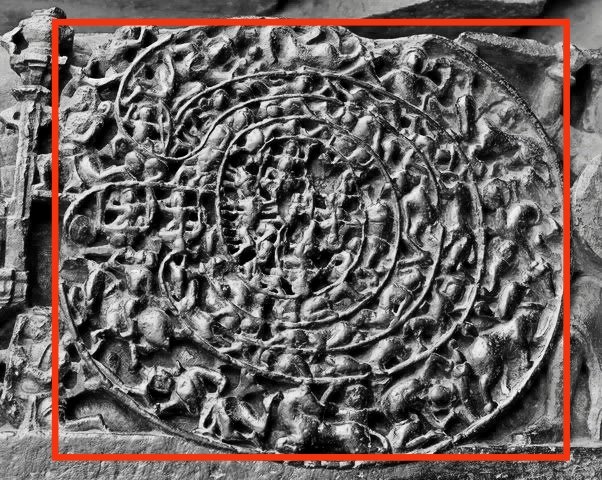
Characters that co exist and their relationship -in Mahabharata and Ramayana. 7 Saptarishis and their wives: Marichi - Kala Atri - Anasuya Vasishta - Arundhati ( binary stars) Angiras - Shraddha Pulaha - Havubhuh Pulatsya - Gathih Krathu - Kriya Rama studied in Vasishta's
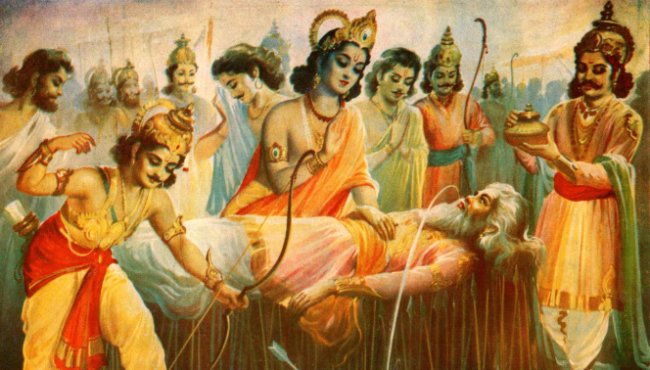
Bhishma on the bed of of arrows — Vishnu Sahasranamam : A Tantric interpretation In the Mahabharata-as-Kundalini allegory referenced (where the Chakravyuha = the seven-chakra labyrinth, Abhimanyu = ego/Abhiman dissolving at Sahasrara, Pandavas = the five senses held back at the




Pt. Satish K Sharma M... @thebritishhindu
24K Followers 3K Following Author: 'Caste, Conversion, A Colonial Conspiracy', now available in Asia Pac from https://t.co/OZe3DtHumg & https://t.co/jwh5GL8dVg Fellow Royal Asiatic Society
Biswajit Chakrabarti @BisChakrabarti
560 Followers 2K Following Consultant Physician in Respiratory and Sleep Medicine. Specialist interest in Sleep, Ventilation and Digital Respiratory health. LungHealth. Vedic.
SuperHuman @Kalbag_
274 Followers 2K Following Mouse dies in a mouse trap because it does not understand why cheese is free. The calmer you are, the clearer you think.
Sankaran CB @SankaranCb
31 Followers 611 Following

BRAVE @BRAVIRY
38 Followers 3K Following Strictly focused to India and eternity of civilisation, Growth, National Capacity, Nation Building, Actual History.
Bhrg @bhrg99
15 Followers 335 Following
Satyam Samantray | Pr... @satyam_xs
136 Followers 503 Following For Dharma. Pro India. Call me a Sanghi, I'll obliterate you in a debate. Unapologetically Hindu. Producer, Individualist, Artist. Work Account: Coming Soon
Gurusamy Rengasamy @gurusamy123
131 Followers 605 Following A typical small village guy from Tamil Nadu, India. Living in Long Island, New York.
Khandesh Express @KhandeshExpress
193 Followers 714 Following
History इतिह�... @ShreeHistory
19K Followers 3K Following History and AI. I work in AI and history is my hobby. I fact check the history to fix the colonial narratives using science, mathematics, technology and logic.
காर्तिக... @KarthikeyaTamil
561 Followers 841 Following 🌺🙏பூமியினும் பொறை மிக்குடையாள் பெரும் புண்ணிய நெஞ்சினள் #தாய் எனில் தோமிழைப்பார் முன் நின்றிடுங் காற்கொடுந் #துர்க்கை அனையவள் தாய்🔥🙏 TamilBharathiyaSanatani
Jayho Jayanth @jay26504
2 Followers 137 Following
Batman 🔥 @Darksoul_77777
14 Followers 480 Following Someone who loves Tamil,Dhoni,cricket,movies,politics and surfing feeds


Megalithic Mastery @megalithmastery
58 Followers 258 Following Uncover the mysteries of the ancient stones and mountains with Anthony the Atlantean
S @S5078849376416
51 Followers 2K Following
knowledgetransfer @KT_731008
768 Followers 1K Following to share information which i learned from Technology & Science, History & Culture,Health & Daily Life, share market & many more things...
निर्विक... @nirvikalpam000
57 Followers 1K Following यस्य नाहंकृतो भावो बुद्धिर्यस्य न लिप्यते। हत्वापि स इमाँल्लोकान्न हन्ति न निबध्यते।। विचार मेरे हे रिट्वीट और लाईक को किसी भी प्रकार का प्रचार नही कहा जा सकता
The Core @TheCore1724808
10K Followers 7K Following Big fan of the power of love! Ready to help build the Kingdom.


Emma AX @aleckEmma
325 Followers 3K Following Note to vegetarians: My food poops on your food. Enjoy that salad!
♡ @velunehq
10K Followers 830 Following Rare words for feelings you've always had but could never name. ✧
Aadi @Aadi1664690
4 Followers 457 Following
DharmicVijay @DharmicVijay
474 Followers 2K Following I can question my God, can you? Annamalai for TN; Yogi for Bharat

Kongan @Konganspce
2 Followers 212 Following
Haradhan Dutta @HaradhanDu82241
73 Followers 4K Following
Sudbham1109 @bsudhir
195 Followers 4K Following


Finance head @JenilKotha6304
5 Followers 30 Following
Gopal @ugkrish
15 Followers 258 Following
Amazing Vedas @AmazingVedas
7K Followers 199 Following The history of the Veda is the history of humanity…
The Sketch Designer @_OvalDesigns
3K Followers 986 Following Architecture • Landscape Architecture • Interior Design • Construction • Sustainable Design 🌿 • Biafra 🇱🇾
mdm @LuisMig160
0 Followers 118 Following

kotla sandeep @kotla38489
3 Followers 241 Following
João Perrini @joaoperrini7
0 Followers 77 Following
Msad @Msad_mlk
41 Followers 263 Following



𝐂𝐚𝐫𝐭𝐨�... @Catty_cat200k
78K Followers 2K Following ✊🍩 ᴱᵛᵉʳʸʰᵒᵘʳˢ ᵘᵖˡᵒᵃᵈ ⁿᵉʷ ᵀᵒᵐ ᵃⁿᵈ ʲᵉʳʳʸ ᵛⁱᵈᵉᵒˢ ᶠᵒˡˡᵒʷ ᵃⁿᵈ ᵃˡʷᵃʸˢ ˡᵃᵘᵍʰ 😂😁 ᴾᵃⁱᵈ ᵖʳᵒᵐᵒᵗⁱᵒⁿ ᵃᵛᵃⁱˡᵃᵇˡᵉ ᴰᴹ ᶠᵃˢᵗ 🗽 💗🌷
History इतिह�... @ShreeHistory
19K Followers 3K Following History and AI. I work in AI and history is my hobby. I fact check the history to fix the colonial narratives using science, mathematics, technology and logic.
PROTECT ALL WILDLIFE @Protect_Wldlife
361K Followers 157K Following Animals do not exist for our entertainment. They deserve to live their lives free from exploitation and abuse.’ ~ Protect All Wildlife.
Aravind R (மோட�... @Aravindram21
50 Followers 342 Following
Malayali Hindutva Vic... @hindutvakeralam
220 Followers 1K Following Indic Wing Kerala| Committed Hindu Nationalist| Socio-Political Commentary| Savarkarite|The Dharmic Viewpoint

Jayakada @karuppupori
291 Followers 1K Following
𑀧𑀭𑀸𑀣𑀺�... @Yatharoopam
73 Followers 212 Following
निर्विक... @nirvikalpam000
57 Followers 1K Following यस्य नाहंकृतो भावो बुद्धिर्यस्य न लिप्यते। हत्वापि स इमाँल्लोकान्न हन्ति न निबध्यते।। विचार मेरे हे रिट्वीट और लाईक को किसी भी प्रकार का प्रचार नही कहा जा सकता
Keerthan @superandroid21
26 Followers 151 Following 15 Years in Construction Ecosystem | Now: Viveka & Vairagya, Startup Ecosystems & Equity Investing.
The Core @TheCore1724808
10K Followers 7K Following Big fan of the power of love! Ready to help build the Kingdom.

♡ @velunehq
10K Followers 830 Following Rare words for feelings you've always had but could never name. ✧

ADHD Memes @ADHDForReal
384K Followers 195 Following Sharing our neurodivergent experiences helps us realize that we are not alone. Most memes are on ADHD, some are on Autism and others are just me being silly.
Sona Parivraj @SPariv
397 Followers 172 Following Seeker of Truth, Artist,Writer, Bhakta ॐ प्रणवाय नमः Myth busters on epics https://t.co/CzQsRW5BXi

Major Madhan Kumar (R... @major_madhan
48K Followers 429 Following Veteran ( Indian Army ), Farmer & Entrepreneur Geopolitical Analyst & Guest Lecturer Gen Secy- Youth4nation- TN Chapter YT: @MajorMadhanKumar Nation first 🇮🇳
Skyroot Aerospace @SkyrootA
170K Followers 146 Following Opening Space for All. Successfully launched India’s first privately developed rocket to orbit.
Amazing Vedas @AmazingVedas
7K Followers 199 Following The history of the Veda is the history of humanity…
Rudhra Dev @rudhraviswesh
9 Followers 96 Following
Magnus Vigsø @MagnusVigso
26K Followers 255 Following BUILDING RAW Royal Jelly: https://t.co/e392o1EuCJ DM to work with me.
#SaffronDalit ™ @SaffronDalit
35K Followers 2K Following #Nationalist #Arunthathiyar @WTLFoundation K.அண்ணாமலையின் படை வீரன். மாறுவோம் மாற்றுவோம்! IT leadership to product innovation ⚙️ | Still learning...
🫧 @lunecrumbss
18K Followers 35 Following a gentle reminder of how beautiful nature can be ⋆. ⋆. ⋆𓂃✧ ⋆˚✿˖° cat lover ⋆⋆ slow living🌿🫧

The Sketch Designer @_OvalDesigns
3K Followers 986 Following Architecture • Landscape Architecture • Interior Design • Construction • Sustainable Design 🌿 • Biafra 🇱🇾
cornersandlight @cornersandlight
3K Followers 642 Following
Archive @archivebycosmos
150K Followers 1 Following The inspiration behind the inspiration. By @thecosmos
Padhega India (Bodhi ... @PadhegaIndia_
17K Followers 89 Following Your own 'favourite' bookstore, a GoI-recognized startup, delivering literary delights nationwide and to 101+ countries worldwide! 📚✈️ @BuyFromPI @PIHINDI
Chennai (MAA) Airport @aaichnairport
67K Followers 242 Following Official handle of AAI Chennai Airport Instagram : https://t.co/OLXM5CA19V
காஸ்மிக... @cosmicblinker
15K Followers 2K Following கலாச்சாரம் உடல், இந்தியா உயிர், தமிழ் சுவாசம் #MainBhiChowkidar
Sho Pensar @ideiasdasho
63K Followers 2 Following Os melhores preços e ofertas postados diariamente - ative as notificações 🤍 | Parcerias na DM 📨 | fan account
Gentleman's geek @GntlemansGeek
13K Followers 677 Following
Andrii Frolov @kznsq
18K Followers 127 Following Oil painting artist 🇺🇦 🇬🇧 STORE: https://t.co/BCKhTDNOl8 Buy Me a Coffee: https://t.co/vzLp7kvkSI Instagram: https://t.co/5c4CZr6NkS

Vaidyamadham Subin Na... @DVaidyamadham
449 Followers 173 Following Doctor; SaalaVaidya (Ayurveda Physician);Professor-Follower of सनातनधर्म-Bharatiya & Adisankarapadavalambi https://t.co/ENCatXbcZ4
The Kevin Paul Show @kevinpaulshow
364 Followers 87 Following Conservative thinker | Anti-communist | Far-right extremist |
ن @Nash_Siddiqui
1K Followers 2K Following Indus Script Reconstruction Project | Architecture | Photography | Music | IIT Kgp Class of '96, B.Arch. (Honours)
Krishna Ramadas @sky3102bce
708 Followers 647 Following Exploring timeless knowledge | Author on Vedic Astronomy & Cosmology | Brought Siddhar Agasthiyar’s Magnum Opus to English | Working on Siddhar Medicine 🌿
Bagavath Pratheep @Bagavathprathee
9K Followers 357 Following Politics | Tamil | Observer | Tweets & RT Strictly Personal 🙏🏻
Murali 🇮🇳 @mregupathy
909 Followers 1K Following spiritual nationalist. my tweets and retweets are my personal opinion and doesn’t endorse my employer views. BJP supporter.
INDIAN ARMY FACT CHEC... @MythbusterXX
53K Followers 27 Following Official Fact Check Account of Indian Army
Abhinav Kokkadan @KokkadanAbhinav
33 Followers 399 Following The Sun is within. Financial Engineering.
Annamalai Overseas Su... @AnnamalaiOS
5K Followers 507 Following Official account of Annamalai Overseas Supporters. நம்மில் ஒருவர் | நமக்கான தலைவர் @annamalai_k Lead the change! ஒற்றுமைமிகுந்த வளமான தமிழகம்🇮🇳
William Dalrymple @DalrympleWill
1.2M Followers 4K Following Scottish historian & art historian; @EmpirePodUK podcaster & Jaipur Lit Fest co-director. 2024 Visiting Fellow at All Souls, Oxford. Writes the occasional book.Trends for United States
You might like