web3explorer @web3Explorer_X
Helping Web3 projects turn complex ideas into content people actually understand. t.me/Web3explore Building in web3 Joined June 2026-
Tweets458
-
Followers233
-
Following266
-
Likes349
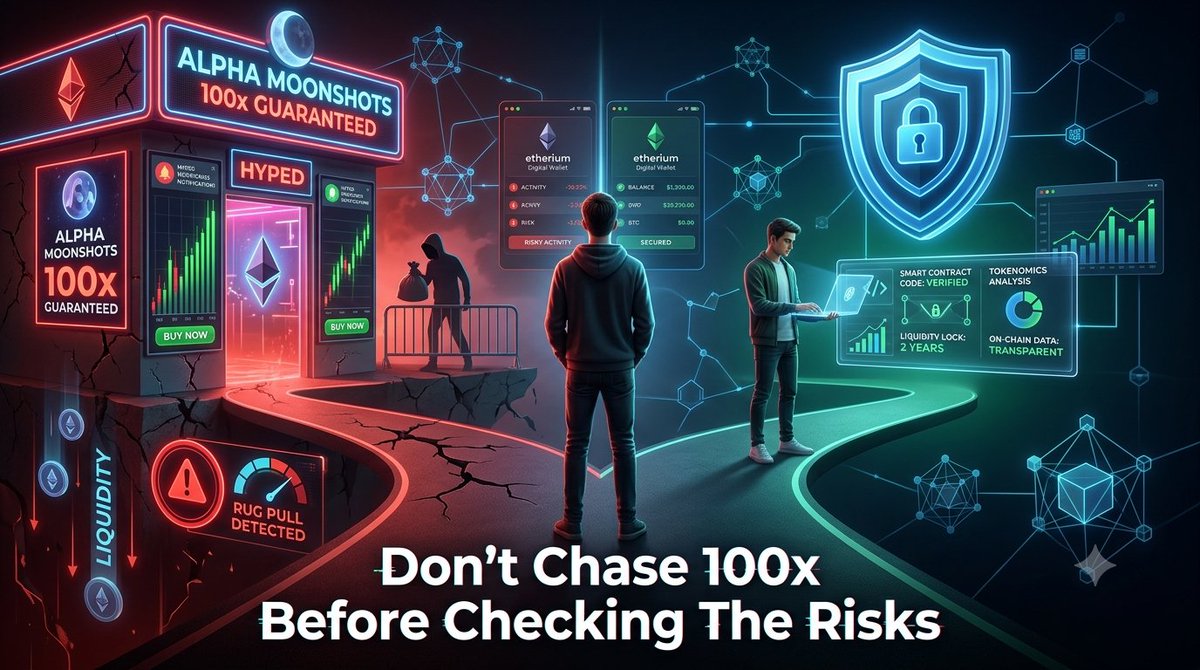
A good reminder that risk management starts before you buy. In crypto, protecting capital is just as important as finding opportunities. A project with strong branding but weak fundamentals is still a risk. Always verify the team, technology, tokenomics, liquidity, and actual user demand before committing funds. Research is not optional, it is your first defense.

The fastest way to lose money in crypto is not buying the wrong token… it’s ignoring the warning signs. Many rug pulls don’t look like scams at the beginning. They come with: - A beautiful website - A loud community - Big promises - Influencers promoting the hype Then suddenly: The team disappears. Liquidity dries up. Your investment becomes worthless. Before trusting any Web3 project, look deeper: - Is the team transparent? - Does the product actually exist? - Is liquidity protected? - Are token allocations fair? - Are they building or just marketing? The best investors don’t only search for the next 100x. They learn how to avoid the next 0x. In Web3, research is your first layer of security. What is the biggest red flag that makes you avoid a crypto project?
@AnasDeFikill Tokenization is only the first step. Real transformation begins when digital assets can move through trusted, efficient, and scalable financial systems with confidence.
1/7 Everyone says tokenization will reshape global finance. I disagree. Tokenization alone changes very little. The real transformation happens when institutions can issue, manage, distribute, and govern digital assets with the same confidence they have in traditional markets. That's the conversation we should be having.

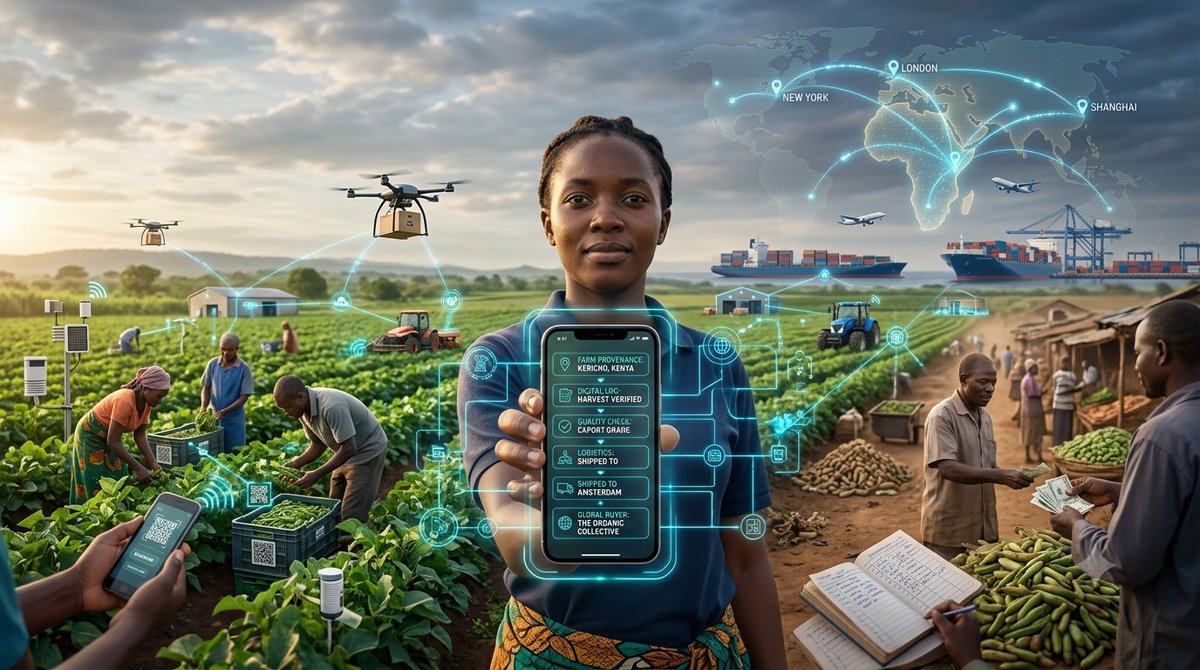
@AnasDeFikill The true value of blockchain in agriculture isn't the technology itself. It's giving farmers greater transparency, stronger market access, and a fairer share of the value they create.
Why African Farmers Could Benefit From Blockchain Powered Supply Chains Africa produces some of the world's most valuable agricultural resources. But many farmers still struggle with the same problems: Limited access to markets. Lack of transparent pricing. Too many middlemen. Weak supply chain visibility. The problem isn't the ability to produce. It's the system connecting farmers to the global economy. This is where blockchain can change the equation. Imagine a farmer being able to track every stage of a product's journey: From the farm. To the distributor. To the retailer. To the final consumer. Every transaction recorded transparently onchain. No hidden price manipulation. No unclear supply chains. More trust between farmers, buyers, and financial institutions. Blockchain powered supply chains could also unlock new opportunities: ✓ Digital proof of ownership for agricultural assets ✓ Better access to financing through verified farming data ✓ Transparent payment systems for farmers ✓ Stronger connections to international markets ✓ Improved traceability for African agricultural exports The future of agriculture is not only about producing more. It's about creating systems where farmers capture more value from what they produce. Web3 isn't replacing farming. It's building the infrastructure that can make farming more connected, transparent, and globally competitive. Africa has the land. Africa has the talent. The next step is building the digital rails that allow farmers to fully participate in the global economy. Could blockchain become the missing infrastructure connecting African farmers to global markets?
@AnasDeFikill @xora_finance The future belongs to assets that do more than appreciate. The real winners will be the ones that people can use effortlessly in their daily financial lives.
@AnasDeFikill Exactly. The biggest breakthroughs are the ones people use without thinking about the technology behind them. That's when innovation creates real impact.
Bitcoin changed the world by proving that digital money could exist without borders. But the next challenge is clear: How do we make Bitcoin more useful, faster, and ready for everyday financial activity? This is where innovation around @xora_finance becomes interesting. By exploring the connection between BTC and the efficiency of the XRP Ledger, XORA is focused on creating a smoother experience where Bitcoin holders can access more utility without losing the value proposition that made BTC unique. Imagine a future where: ✓ Bitcoin moves with faster settlement ✓ BTC holders unlock new financial possibilities ✓ Digital assets work beyond just holding ✓ Blockchain utility becomes part of everyday life The future of crypto is not only about owning assets. It is about making those assets more accessible, efficient, and useful. The question is: Would you use a solution that brings Bitcoin closer to real world financial utility? 👇 #XORA #BTC #XRPL #Web3

How African Gen Z Are Building a Parallel Economy with Stablecoins While Traditional Banks Fail Them The future of African finance isn't waiting for permission. It's already being built by Gen Z. Not inside bank branches. But onchain. For millions of young Africans, traditional banking wasn't designed for the way they live and work today. Cross border payments can take days. Transfer fees eat into earnings. Access to global financial services remains limited for many. So they're building an alternative. Freelancers receive payments in stablecoins. Creators get paid instantly by global clients. Entrepreneurs settle cross border transactions without relying on expensive intermediaries. Communities save, trade, and transact using digital dollars. This isn't about chasing the next crypto trend. It's about solving everyday financial problems. Stablecoins have become more than a digital asset. They're becoming financial infrastructure for a generation that values speed, accessibility, and global opportunity. Every wallet created... Every payment settled... Every business built onchain... Moves Africa one step closer to a parallel digital economy. The biggest opportunity isn't simply issuing more tokens. It's building the infrastructure that makes this new economy seamless: ✓ Better on and off ramps ✓ Deeper liquidity ✓ Easier user experiences ✓ Clearer regulatory frameworks African Gen Z isn't waiting for traditional finance to evolve. They're building the future with the tools already available. The real question isn't whether this shift is happening. It's how quickly the rest of the financial system will adapt. Will stablecoins become the default financial layer for Africa's next generation?

@AnasDeFikill Gas fees are one of those Web3 lessons everyone remembers. The future depends on making blockchain experiences simple, affordable, and accessible for everyday users.
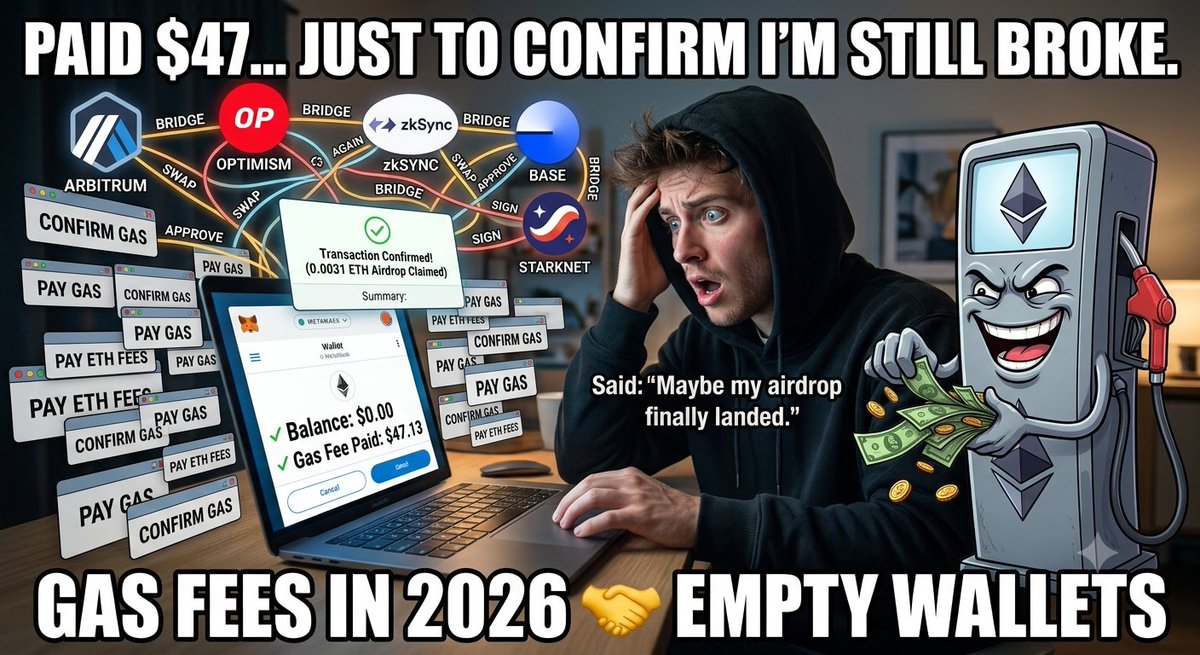
Gas fees in 2026 be like: "Congratulations! You just spent $47... to confirm your wallet is still empty." Me: "Maybe my airdrop finally landed." Ethereum: "That'll be $47 to find out." Wallet: Balance: $0.00 Gas: $47.13 At this point, the gas fee has a bigger portfolio than I do. L2s promised cheaper transactions... Now I'm bridging, swapping, waiting, and paying so many fees that I need a spreadsheet just to lose money efficiently. Web3 is the only place where checking your poverty comes with a premium subscription. 😂 Real question... What's the most ridiculous gas fee you've ever paid... And what was the transaction for? 👀 Be honest. We won't judge... unless it was $50 just to see a $0 wallet.
1/5 99% of people don't lose money in crypto because crypto is a scam. They lose because they repeat the same predictable mistakes. They buy excitement instead of value. They follow crowds instead of data. They react with emotion instead of discipline. The market rewards preparation, not hope.

@AnasDeFikill Crypto rewards discipline more than prediction. Research, risk management, and patience are what separate long term builders from emotional decisions.
How Web3 and Blockchain Are Empowering African Youth The next generation of Web3 builders may not come from Silicon Valley. They may come from Africa. For decades, opportunity was tied to geography. If you wanted access to global markets, better jobs, or international finance, where you lived often mattered as much as what you could do. Web3 is beginning to change that. For the first time, a young developer in Abuja, a designer in Nairobi, a writer in Accra, or a founder in Kigali can contribute to global networks without asking for permission from traditional gatekeepers. Talent is becoming more valuable than location. This is why Web3 matters for Africa. Not because it promises overnight wealth. But because it lowers barriers that have limited opportunity for generations. A smartphone, an internet connection, and the right skills can now unlock access to global clients, decentralised communities, open source projects, and digital economies that never sleep. We're already seeing the shift. Young Africans are earning through remote Web3 roles. Creators are monetising their work directly. Developers are building protocols used by people they've never met. Entrepreneurs are using stablecoins to reach customers beyond their borders. This isn't simply a new technology trend. It's a new economic model. The biggest opportunity isn't just owning digital assets. It's owning the infrastructure, products, and businesses that power the next generation of the internet. Africa has one of the world's youngest populations. That isn't just a demographic statistic. It's a competitive advantage. If governments, educators, founders, and developers invest in digital skills and open innovation today, Africa won't just participate in the Web3 economy. It will help define it. The future of Web3 won't be decided by who has the biggest economy. It will be shaped by those building solutions for real world problems. Could Africa's youth become the driving force behind the next wave of global Web3 innovation?

Most people still think Nigerian students only make money in Web3 through trading or chasing airdrops. That's one of the biggest misconceptions in 2026. Across campuses, students are building real careers by providing valuable skills to global Web3 teams and getting paid in stablecoins or USD. The opportunities include: ✓ Community Management & Moderation ✓ Content Writing & X Thread Creation ✓ Graphic & Motion Design ✓ Research & Onchain Analysis ✓ Growth Marketing & Ambassador Programs ✓ Social Media Management ✓ Product Testing & Bug Hunting ✓ Technical Writing None of these roles require you to be a blockchain developer. They reward people who can learn quickly, communicate clearly, and stay consistent. While many students are waiting until graduation to start earning, others are already building international portfolios, expanding their networks, and generating income from anywhere with a laptop and an internet connection. Your university degree is important. But your digital skills can open doors long before graduation. Web3 doesn't ask where you studied. It asks what value you can create. If you're a student, which Web3 skill are you focusing on this month?

The biggest shift in Web3 isn't better tools. It's empowering anyone to become an owner, a creator, and a source of value. That's where the future is being built.
Most prediction markets let you bet on outcomes. @PantaMarkets lets you build the market itself. Create markets around real world events, earn from trading activity, and become part of a permissionless prediction economy powered by Solana. The future isn't just trading

Mr. President Fx @Ameer_Trader
4K Followers 2K Following || Forex Trader 💰|| $XAU & $NQ 🎯Sharing real trading insights & Risk management📊. Partner with @Foraxisofficial. 📩 X Influencer DM for collab.
$DANI€L📊 @Danielrotachuk2
5K Followers 3K Following THE BIGGEST CRYPTO/FOREX PRODIGY🧘♂️📊/ ASPIRING SOFTWARE DEVELOPER
Gala Kadraj @GalaKadraj
32K Followers 21K Following Galatasaray’a dair en güncel ve güvenilir haberler 🦁
çilekapısı @cilekapisi
789K Followers 138K Following 📚 edebiyat, kitap, sözler, sanat, kültür, yatırım, haber, sorular 🤲dua 🕋 ayet, hadis ve hayata dair paylaşımlar, bu sayfa ruhunuza iyi gelecek inşâallah..💜


CJ Green @NokuD4267
935 Followers 2K Following I write the posts most people only think Clear insights • Longer thoughts • Zero fluff Follow if you want substance
Nufayrah Siddiqa @nufayrah53250
47 Followers 340 Following

BUSYBRAIN TRADER @BUSYBRAINTRADER
7K Followers 4K Following Forex 📉📈 Psychology 🧠 Financial Market Analyst 📊 XAUUSD 🪙 The market doesn’t care about feelings Learning daily, trading patiently. 🧠
Tarık @taarikxxx
23K Followers 21K Following bi' şekilde halledicez | reklam ve iş birliği için Dm 📩
RR @RRweb3
22K Followers 11K Following Web3 Researcher | AI • DeFi • RWA • Infrastructure | Research Threads | AMB @ZARGATES | Open for Collaborations
Hafcy @Chef_Hafsy
2K Followers 1K Following Crypto Trader || Degenerate || Content Writer || Medical Student || Health & Wellness Space Host ||.
Bareerah🥰 @bariraMusbahu01
5K Followers 5K Following Web3 Edecator | Web3 Jober | 💰 Crypto Believer | Free Alpha Tools | DM for Collaborations 🤝
Akoredey Oluwatobi�... @teetop4pf
2K Followers 4K Following Not here for long, here for a good time. 📍 Living, laughing, and dodging village people.
WEB3 CHAMPION @0xBaash
1K Followers 1K Following web3 native, defi || futures || prediction markets || contributor @concreteXYZ @dac_chain @goldfishggbr
CipherSphere @FinFutures1
5K Followers 7K Following Just a dude who believes that code is law is the most beautiful sentence ever written. 💻⚖️ Welcome to the future.
旁聽生┑ @HerrJinn
8K Followers 7K Following ㅅNever too old to audit the world 一枚南方老登,愿意分享AI、投资和真实生活观察。 定投BTC,每月买进几百,不碰其它任何加密货币。

Trần Cường @CuongTr00961203
2K Followers 2K Following Sharing life's interesting experiences from all around. I will follow back, 100%. 💯💯💯💯💯💯💯💯💯

Ø𝙭_𝙘𝙝𝙖�... @Ox_charli0
7K Followers 5K Following Content creator • Web 3 • Story line Creator• AI video Creator• On God I Trust 🦅 ✊


𝕄𝕌𝔹𝔸ℝ�... @Mubarakgoldfx
10K Followers 7K Following Forex trader 📉📈/motivational speaker price action/SRC, Fundamental analysts Financial freedom, risk management is a key
علين @Z9X9I
1K Followers 2K Following
Naasiir @nasirusman31
5K Followers 6K Following Intern @Trustchain|| Web3 @StonFi || Defi| DEX Trading|| Exploring the decentralized future through crypto Innovation.
H_Crypto @H_crypto2
9K Followers 7K Following Graphic Designer || Web3 Enthusiast || Content Writer || @gamingonsei creator || @seihausa contribute
GAMA @A_S_A_GAMA
2K Followers 2K Following ■■|| Content Writer | Sharing writing tips & X growth strategies | Trader | Learning in public & Islamic content ||■■
Web3 gal @Hsquareweb3
5K Followers 5K Following Web3 Enthusiast || Content Writer|| Airdrop Hunter ||Technical analyst || Ambassador @NodeOpsHQ
𝕁ohn 𝔽armily @Johnfarmily
6K Followers 7K Following Crypto Explorer Since 2013 ¦ @verylabs marketer ¦ @wemabank aggregator ¦ Space Host, Orator🎤¦ Crypto Investor ¦ Miner ¦ Tester @CNPYNetwork
Saminu Hassan Gama @danbaiwapromax
4K Followers 6K Following 📊 FX & Crypto Enthusiast | Digital Visionary, Marketer. 🤝 Connecting ideas, people & opportunities 📩 Telegram: @Danbaiwapromax
﮼نواف ُ🇸�... @Nawaf___67
7K Followers 7K Following متوفر لدينا جميع الخدمات الكترونية : خدمات تويتر وانستقرام وتيك توك وفيسبوك وسناب ، حسابات للبيع بها متابعين حقيقي ، حسابات تويتر وانستقرام انشاء قديم فارغه

Moriarty @Moriarty_winn
8K Followers 5K Following I shit gold and trade on @bitunixofficial👀 you can beat me at any game btw

Ken Neshboy🇰🇪 @KubaiKenne1980
2K Followers 2K Following ASSISTANT HEALTH PROVIDER Chelsea fan Loves having fun I love politics introvert Fuck your shits I don't care
AUWAL @Auwale_ai
10K Followers 7K Following Knowledge. Discipline. Purpose. The principles I trade and live by. Alhamdulillah for everything 🤍🕊️

Febian @Febian326859
533 Followers 3K Following
Emmanuel Alphonsus @e_klassic001
3K Followers 7K Following
🄰 ツ @X_6_G
23K Followers 23K Following ⠀⠀⠀⠀⠀⠀⠀⠀⠀⠀⠀⠀⠀⠀⠀⠀⠀⠀⠀⠀⠀⠀⠀⠀ ⠀⠀⠀⠀⠀⠀⠀⠀⠀⠀⠀⠀⠀⠀⠀⠀⠀⠀⠀⠀⠀⠀⠀⠀ ⠀⠀ ⠀⠀⠀⠀⠀⠀⠀⠀⠀⠀⠀⠀⠀⠀⠀⠀⠀⠀⠀⠀⠀⠀⠀ ⠀⠀⠀⠀⠀⠀⠀⠀⠀⠀⠀⠀⠀⠀⠀⠀⠀⠀⠀⠀⠀⠀⠀⠀ ⠀⠀⠀⠀⠀⠀⠀⠀⠀⠀⠀ ⠀⠀

𝔸฿฿𝔸𝕂₳... @Abba_bakaji_
28K Followers 24K Following 𝐝𝐞𝐬𝐢𝐠𝐧𝐞𝐫 ☠︎︎ 𝐓𝐫𝐚𝐝𝐞𝐫 ☠︎︎ 𝐂𝐨𝐧𝐭𝐞𝐧𝐭 & 𝐁𝐫𝐚𝐧𝐝𝐢𝐠✍︎☠︎︎ 𝐗 𝐆𝐫𝐨𝐰𝐭𝐡 𝐄𝐝𝐮𝐜𝐚𝐭𝐨𝐫 ☠︎︎ 𝐀𝐜𝐜𝐨𝐮𝐧𝐭 𝐁𝐮𝐢𝐥𝐝𝐢𝐧𝐠 𝐒𝐭𝐫𝐚𝐭𝐠𝐬 ☜
⨳𝐴ッ @6V200
14K Followers 12K Following الطمأنينه الوحيده التي تسكن قلوبنا دائمًاً أننا تحت رعاية الله في كل الظروف.! 💚
🔥 𝑰𝑩𝑹𝑨... @9OOOOX
8K Followers 8K Following ⠀ ⠀⠀⠀⠀⠀⠀⠀⠀⠀⠀⠀⠀⠀⠀⠀⠀⠀⠀⠀⠀⠀ ⠀⠀⠀⠀⠀⠀⠀⠀⠀⠀⠀⠀⠀⠀⠀ ⠀⠀⠀⠀⠀⠀⠀⠀ ⠀⠀⠀⠀⠀⠀⠀⠀⠀⠀⠀⠀⠀⠀⠀ ⠀⠀⠀⠀⠀⠀⠀⠀⠀⠀⠀⠀⠀⠀⠀⠀⠀⠀⠀⠀⠀⠀⠀⠀ ⠀⠀⠀⠀⠀⠀⠀⠀⠀⠀⠀ ⠀⠀⠀ ⠀⠀⠀⠀ ⠀⠀⠀⠀⠀⠀⠀⠀⠀⠀⠀⠀⠀⠀⠀⠀⠀⠀⠀⠀⠀ ⠀⠀⠀⠀⠀⠀⠀⠀⠀⠀⠀⠀⠀⠀⠀ ⠀⠀⠀⠀⠀⠀⠀⠀ ⠀⠀
çilekapısı @cilekapisi
789K Followers 138K Following 📚 edebiyat, kitap, sözler, sanat, kültür, yatırım, haber, sorular 🤲dua 🕋 ayet, hadis ve hayata dair paylaşımlar, bu sayfa ruhunuza iyi gelecek inşâallah..💜
Gala Kadraj @GalaKadraj
32K Followers 21K Following Galatasaray’a dair en güncel ve güvenilir haberler 🦁
$DANI€L📊 @Danielrotachuk2
5K Followers 3K Following THE BIGGEST CRYPTO/FOREX PRODIGY🧘♂️📊/ ASPIRING SOFTWARE DEVELOPER
CJ Green @NokuD4267
935 Followers 2K Following I write the posts most people only think Clear insights • Longer thoughts • Zero fluff Follow if you want substance
Nufayrah Siddiqa @nufayrah53250
47 Followers 340 Following
RR @RRweb3
22K Followers 11K Following Web3 Researcher | AI • DeFi • RWA • Infrastructure | Research Threads | AMB @ZARGATES | Open for Collaborations
Akoredey Oluwatobi�... @teetop4pf
2K Followers 4K Following Not here for long, here for a good time. 📍 Living, laughing, and dodging village people.
CipherSphere @FinFutures1
5K Followers 7K Following Just a dude who believes that code is law is the most beautiful sentence ever written. 💻⚖️ Welcome to the future.
旁聽生┑ @HerrJinn
8K Followers 7K Following ㅅNever too old to audit the world 一枚南方老登,愿意分享AI、投资和真实生活观察。 定投BTC,每月买进几百,不碰其它任何加密货币。
Hafcy @Chef_Hafsy
2K Followers 1K Following Crypto Trader || Degenerate || Content Writer || Medical Student || Health & Wellness Space Host ||.
Bareerah🥰 @bariraMusbahu01
5K Followers 5K Following Web3 Edecator | Web3 Jober | 💰 Crypto Believer | Free Alpha Tools | DM for Collaborations 🤝
BUSYBRAIN TRADER @BUSYBRAINTRADER
7K Followers 4K Following Forex 📉📈 Psychology 🧠 Financial Market Analyst 📊 XAUUSD 🪙 The market doesn’t care about feelings Learning daily, trading patiently. 🧠
Tarık @taarikxxx
23K Followers 21K Following bi' şekilde halledicez | reklam ve iş birliği için Dm 📩
Mihz Goodie @MihzGoodietxp3
16 Followers 44 Following
Hoo Lee Sheet @SinName240196
4K Followers 6K Following
Christian Ciullo @CiulloChristian
31 Followers 219 Following Co Founder of OptmindHub Interested in personal growth.
Muktar Inuwa Babba @Muktar_Crypto1
4K Followers 915 Following Entrepreneur | Pro Crypto Trader | Senior Business Development Manager | Stock Market Expert | Founder of @mib_group_ltd
CalcioBundes🇩🇪 @CalcioBundes
620 Followers 1K Following 🇩🇪 Bundesliga, beyond the headlines. Transfers • Tactics • Opinions.
Divine-Presence ✝�... @HorusTheYounger
1K Followers 1K Following Redeemed in Christ, Covered in His precious Blood🩸✝️ Holy and Set apart as One of His Children! Worthy is the Lamb! 🐑https://t.co/DBDd4MW3Dq


Berfin ❆ @Bberfll
26K Followers 24K Following living between the lines ✨️ ücretli rt ve reklam için dm 💌

Goldenglory @Goldenglory98
7 Followers 69 Following

gatouz_news @gatouz_news
494 Followers 313 Following
Professorrr💰 @XMasterrrrrs
15K Followers 16K Following X Monetization tips💡| Helping creators gain their first 1000 followers on X | Content Creator |
FOURG GLOBAL @FOURGGLOBAL
71 Followers 170 Following FOURG GLOBAL URBAN WEARS JERSEYS NATIVES TAILORED TO FIT GIFT ITEMS & SOUVENIERS NATIONWIDE DELIVERY 08089174881 [email protected]
Suleman Mustafa @Yaro237
286 Followers 298 Following
Abdullahi Babangida @Abdulla60073711
137 Followers 247 Following Crypto Learner💻 | Writer | Ambivert | Jokes Lover🤩 Opportunity Researcher...
B_M Sani @S_Ameeru_MED
41 Followers 125 Following medical lab in making/Crypto enthusiasts/Poet/Social media advocates🔋🔥
zahra @little__Ammie
1K Followers 1K Following
SUZUKI @Anh_Mot0
11K Followers 6K Following Chờ ngày @virtuals_io trở lại @base trổi dậy Ambassador: @lighter_xyz


Mijin saliha @mijin_saliha
109 Followers 784 Following I share daily remote Web3 job opportunities, skill guides, roadmaps, and practical tips to help you build a profitable career in the Web3 space.
Henry Jozzie @kreyziJozzie
3K Followers 5K Following Jus dis one kreyzi fellow,proudly outsider,cake lover,a proud Targaryen.🎬Movies Freak. 👔Fahionista. Cruise🧃&Vibes🍹All present here!
Auwal Khan @auwalkhan104
6K Followers 3K Following Building @kcs_academy01 | Web3 Enthusiast| Bilingual writer| Space host 🎙️
RABEEU($/acc)🔴💨 @RABEEU01
3K Followers 2K Following Web3 isn't a trend to me, it's the only bet I'm willing to make || Ambassador
0xdddd @0xdailyy
43K Followers 18K Following Account powered by caffeine and Adderall. @visagesclub @trenchgrinders
علين @Z9X9I
1K Followers 2K Following
You might like