-
Tweets680
-
Followers60
-
Following241
-
Likes152
I asked ChatGPT to identify which country has the most successful and vibrant oil industry and which country has the most successful electricity industry. Here is its assessment of the U.S.: “The United States has the world’s most vibrant oil industry because it allows many private actors to take risks, innovate, own assets, contract freely, and respond to market signals. The United States does not have an equally vibrant electricity industry because too much of the sector is still organized around monopoly franchises, regulatory permission, utility planning, and socialized cost recovery.” Consumer Regulated Electricity (CRE) is state policy that can change the direction of the electricity industry. cato.org/briefing-paper…
Isn’t the point of our continuously larger grid is that it becomes more and more reliable? It seems we’ve finally come to the end of that road. Off-grid systems are generally considered less reliable albeit much faster to build. If an off-grid system could scale like a utility, the reliability would improve with each added customer, just the way the grid is supposed to work. No need to worry about flexibility plus speed all in the same system. That’s Consumer Regulated Electricity (CRE). utilitydive.com/news/data-cent…

Excellent analysis of the value of speed and control. One glaring omission is something I can’t stop talking about: the policy risk that comes with a grid connection We have taken for granted that the federal executive branch favors data centers. What if that flips in Jan 2029?
People don't quite understand how many behind the meter power generation assets are being built for datacenters because the US Grid sucks, despite the higher cost and complexity.
Loan guarantees is the solution to a misdiagnosis of the problem. Hyperscalers and AI businesses aren't lacking for capital. Why is the nuclear sector? That's the problem to be solved. Government money will flow to those developers that are most focused on government money and less focused on the business itself. That doesn't set us up for success. Lastly, why is it that people who understand the importance of markets that are unfettered by government involvement seem to throw that understanding out the window when it comes to the electricity sector?
People are excited about the DOE loan guarantees, and I get it. We need a ridiculous amount of electric energy right now But the long view might suggest restraint, because each new intervention in energy markets begets more intervention. Where will it end?cato.org/blog/trumps-en…
AP story: Travis Fisher... said the Energy Department has the authority to issue these loan guarantees, but he doesn’t think the executive branch should be so heavily involved in the electricity sector apnews.com/article/nuclea…
My article on US grid capacity for @WorksInProgMag is out! I argue that grids can grow faster by prioritizing connecting the highest-value power plants and flexible power users. worksinprogress.co/issue/why-amer…
Data centers should bear the costs they impose, compete without subsidies, & operate within the same rules as everyone else. What concerns me is the growing tendency to treat data centers as a unique policy problem requiring government intervention at every turn. Markets, not politicians, are generally better at determining where investment, power generation, & infrastructure should be built.
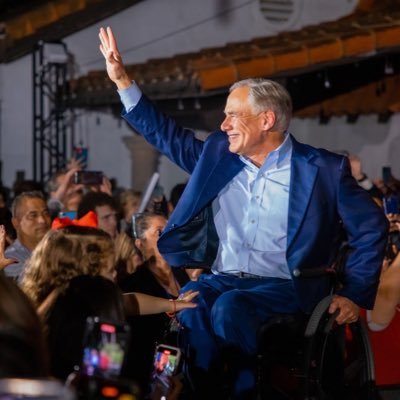
Data centers must bring their own power, they must reuse their own water, and they must reduce electricity costs for residential and small business customers. We will slash incentives and protect Texas neighborhoods. Those are bottom line expectations.
@patrickrooney What if the best incentive is the promise that, in *our* state, you can focus on your tech business and not get pulled into the political sh!tstorm that is the public power grid? cato.org/briefing-paper…
@AndrewBurchwell Extra bullish on states that allow large customers to go off-grid (for any reason) Main reason used to be to avoid interconnection queues and costly grid upgrades New reason is to avoid the impossible politics of both the grid and data centers Best reason is to be innovative!
“The better answer is not a national data-center tollbooth managed by FERC; it is freer contracting, cleaner cost causation, and more ways for large loads to build or buy their own power outside the legacy utility maze. Right now everyone thinks data centers are politically vulnerable enough to kick around and maybe shake down a little. Data centers should take the lesson: remove themselves from the worst parts of the market where possible, push hard for Consumer Regulated Electricity, behind-the-meter generation, and other arrangements that let private capital build private power without asking the entire rate base for permission.” gridbrief.com/p/firstenergy-…
“The shale revolution shows how resourceful we can be. Not long ago, experts confidently argued that the US was running out of economically recoverable oil and natural gas. Then, entrepreneurs and engineers transformed global energy markets through hydraulic fracturing and horizontal drilling. Rather than continuing our slow decline in oil and natural gas production, the US now leads the world. The important lesson is more philosophical than technical. The shale revolution was not centrally planned into existence. It emerged from decentralized experimentation, private investment, risk-taking, and a government that respects property rights and otherwise gets out of the way. In other words, it emerged from the exact kind of society Simon believed produced human progress.” cato.org/blog/doomslaye…
“Allowing or even encouraging data centers and other large loads to develop their own private grids could help address several pressing problems. First, it could insulate other customers from potential rate increases associated with utilities building infrastructure to serve data-center loads. In a fully private grid that remains physically and electrically separate from the broader system, none of the direct costs of generation or its related infrastructure could be allocated to the broader public grid and its customers. …Second, establishing a private grid could enable large loads to avoid or streamline many of the regulatory requirements that apply to traditional electric utilities, which often slow infrastructure development.” energyanalytics.org/research/ameri…
Trump’s ratepayer protection pledge is a good idea, but the entities responsible for retail rates didn’t sign it If we want to hold utilities accountable, they should sign the pledge, along with public service commissions Private grids also solve this problem, by the way!

We applaud FERC’s recognition that the large-load challenge cannot be solved through business-as-usual. Its action rightly pushes the grid operators toward faster studies, clearer cost responsibility, and protection against transmission cost shifting among other things. But speed cannot be the only objective. Some large loads may create reliability risks that go beyond the question of whether enough generation exists on paper. That is where Consumer Regulated Electricity (CRE) fits: FERC can improve the rules for large customers that connect to the grid, while CRE gives states a complementary path for customers willing to build and pay for independent power systems that keep their costs, risks, and operational consequences off the existing grid and away from ordinary ratepayers. ferc.gov/news-events/ne…
Governor Abbott said data centers should add to Texas’ electric capacity, pay their own infrastructure costs, protect local communities, and reduce the burden on residential ratepayers. "Bring Your Own Power" (BYOP), a version of CRE customized for Texas, is a simple and practical way to help meet that goal. (1) BYOP makes it straightforward for data centers to add capacity. A data center choosing a BYOP power supplier will eliminate any chance of burdening capacity serving captive residential ratepayers. (2) BYOP also makes it straightforward for data centers to pay all electric infrastructure costs: interconnection, transmission upgrades, distribution upgrades, reliability impacts, congestion impacts, planning costs, and other grid costs caused by the new load. The cleanest way to avoid cost-shifting is to let new large loads build or contract for new islanded power systems that do not depend on the regulated grid. (3) BYOP will provide faster solutions for the data centers than waiting on the PUC, ERCOT, and the utilities. Faster solutions mean Texans experience the economic benefits from data centers sooner. (4) BYOP developers will be able to experiment in ways that the PUC, ERCOT, and the utilities cannot. Some successful BYOP experiments will discover new ways to reduce costs and improve service, which ERCOT and the utilities can then implement. (5) BYOP protects and simplifies the work of the PUC, ERCOT, and the utilities. If every data center is forced onto a shared grid, the PUC, ERCOT, and utilities inherit the planning, reliability, congestion, and cost risks associated with the new load. gov.texas.gov/news/post/gove…
@reindsummit @robert_ivanhoe @IvanhoeMines_ Sounds like there’s a need for an open market, unconstrained by the past century of grid policy and design, and one that can design and build using 21st century thinking, technology, and recognizing 21st century challenges. That’s CRE.
18% of Americans said they oppose data centers in their local area because of “Energy consumption/Excess power usage/Grid constraints” and 15% said they oppose them because of “Higher utility bills/energy costs”. CRE is a tool that can help alleviate the concerns. CRE makes it easier to build off-grid systems and that can be attractive to data centers. The more data centers that choose off-grid systems, the lower the concerns listed above. news.gallup.com/poll/709772/am…
“While a vast majority of Houston-area residents (85%) utilize AI, nearly 63% oppose the construction of data centers within one mile of their homes due to overwhelming concerns regarding power grid reliability and energy demand.” CRE is one tool that can help. Making it easier to build off-grid power systems can reduce residents’ grid reliability and demand worries. uh.edu/news-events/st…
@ShanuMathew93 The regulatory compact was: legal monopoly over a service territory if you serve all customers at regulated, just and reasonable rates If you can’t serve all customers at reasonable rates, why should you keep your monopoly privilege? Here’s my proposal cato.org/briefing-paper…


Arushi Sharma Frank @ArushiSF
2K Followers 1K Following AI-Energy Tech Investor-Advisor. Ex- TSLA,CEG,EPSA,AGA. STEM to Grid IP. CSIS.C3. I change rules & create new value stacks. Classical Dancer, Pianist, Artist.


Robert Wittmeyer @RobertWittmeyer
4 Followers 83 Following

Reed Hogan @ReedHogan4
2 Followers 43 Following
Gideon O. Powell #Ene... @GideonOPowell
5K Followers 3K Following TBGA President Pre-elect, Texas Bitcoin Ambassador. #FlexibleLoad #EnergyAbundance #CJR


𝗝𝗲𝗿𝗮𝗺�... @JeramyKitchen
4K Followers 2K Following Pres. @TXPolResearch | Former #txlege Staffer | Husband | Dad | Free Speech/Free Market Purist | '25 #SEVVIE & @GAWTP Champion of Freedom | My Thoughts ⤵️
Nancy T @muhammeteren012
10 Followers 739 Following too soft for this timeline 💗 mutuals & follow back



Ryan W. Norris @RWNorse
250 Followers 663 Following State Director @AFPArkansas | Grassroots and Policy Coalition Leader | "Believe in AR" Podcast Host | I believe in the power and potential of free people.
Russ Greene @GreenPlusAnE
13K Followers 5K Following Executive Director, Prime Mover Institute. Helped build @crossfit. Lead the Total Boomer Luxury Communism awareness campaign.
DistroForge @DistroForge
7 Followers 74 Following Procurement intelligence for electrical distributors. Market data, supply chain analysis, and sourcing strategy for the equipment you can't afford to get wrong.
Elizabeth Patton @lizannpatton
694 Followers 595 Following Kansas conservative, wife, mom, daughter, and obsessive shoe shopper.
ZonaMaria @RoyJane25398
4 Followers 103 Following
Laura @Wunderkin2exx
169 Followers 3K Following Don`t get mad when a girl cares too much. Worry when they start to not give a fuck.
Emma broken halo @stevefultonco
144 Followers 2K Following soft heart, endless daydreams 🌸 follow back always
Gammy Sparkles @GammySparkles
2K Followers 6K Following Ranting Granny-Sparklestheclown on youtube and GammySparkles in various media UN APPT. BREITBART WARRIOR IN TRENCHES Social media, Real Estate (Commercial/Res)
CornBreadConsumer @consumer_crnbrd
116 Followers 2K Following generic individual. near perfect IQ (score of 97).
Thomas Savidge @thomas_savidge
2K Followers 6K Following Research Fellow at @aier. All views are my own unless stated otherwise.
Donte @justluciano
1K Followers 2K Following The meek shall inherit the Earth, but not its mineral rights.

MacIver Institute @maciverwisc
13K Followers 3K Following The Free Market Voice for Wisconsin and the home of the most important public policy debates in the nation. Also see @newsmaciver #wiright
Kyle Koenen @realkylekoenen
2K Followers 1K Following Policy Director at @wilawliberty. Formerly @kylekoenen. Proud Cheesehead. Opinions are my own and not those of my employer.
Megan Novak @meganjnovak
3K Followers 2K Following Proud wife, mom & American. Unofficial Kwik Trip & Taco Bell Fan Club Prez. Fan of 90s country & ABBA. Current churro enthusiast. Freedom fighter with @afpwi.
Nick Cicale @NickJCicale
3K Followers 5K Following Electric Power Attorney * Energy Bar Association* Backpacker Trailblazer * CT & VT home * NY & DC work * Yankees and Bills
BlueThrow @thebluethrow
0 Followers 2K Following

Spencer Prosser @BlueHorseShoe__
3K Followers 2K Following Crater-Energy, @MPagrilytics, Landmark Advisors LLC #anti Luddite
Meredith Angwin @MeredithAngwin
13K Followers 2K Following Electric grid issues, nuclear energy, renewable energy, capacity markets and more. By Meredith Angwin #RTOs #grid #nuclear #electricity
Audrey Streb @AudreyLStreb
988 Followers 3K Following Reporter for The Lion. Politics & energy. Opinions are my own. Daily Caller alum. DM tips
Vance Ginn @VanceGinn
18K Followers 3K Following PhD Economist | President, Ginn Economic Consulting | Host, Let People Prosper | Former Chief Econ, Trump 45 OMB & TPPF | Econ @ 20 Orgs | Let People Prosper
Paul Schecklman @PaulySchecks
793 Followers 799 Following techno-industrial optimist| founder @north_policynet |@BushSchool @tamu | All things Grand Strategy, Deterrence, Energy @msudss
EnergyOne @pugbrewing
97 Followers 234 Following
Jonathan Williams @Taxeconomist
5K Followers 4K Following Author, Rich States, Poor States. According to @TorontoStar: an affable, articulate tax wizard. Regular contributor American Radio Journal. Personal account
Eric Bott @EricJBott
15K Followers 14K Following Dad. Liberty. Wilderness. Eliminate Taxes. Stop Cronyism. State REINS Act Architect. Unapologetically Pro America, Technology, and Abundance.

Greg Knott @nobullcongress
200 Followers 2K Following
Peter Hoegler @petehoegler
570 Followers 3K Following clean AI infrastructure, by day. views are my own
Amy O. Cooke @TheRightAOC
3K Followers 5K Following Naturally curious. Challenger of narratives. Free Speech. Energy Policy. Advice: Get a generator. One day you'll thank me.
Paige Lambermont @paigelambermont
970 Followers 1K Following Energy nerd writing about grid reliability and nuclear | Research Fellow @ceidotorg | Catalyst Policy Fellow at Independent Institute | Visiting Fellow @IWF
Andrew Burchwell @AndrewBurchwell
2K Followers 3K Following @OHblockchain l @Am_Transmission l Bitcoin x Energy l Proverbs 4:23
Josh Smith @smithtjosh
2K Followers 2K Following Powering Spaceship Earth with @PacificLegal as the Senior Fellow for Abundance & ENR. People bring prosperity. Prosperous people are energy-intensive.
Ramez Naam @ramez
58K Followers 9K Following Climate and clean energy investor. Author of 5 books. Energy & Environment co-chair @SingularityU. Trying to build a better world.
Arushi Sharma Frank @ArushiSF
2K Followers 1K Following AI-Energy Tech Investor-Advisor. Ex- TSLA,CEG,EPSA,AGA. STEM to Grid IP. CSIS.C3. I change rules & create new value stacks. Classical Dancer, Pianist, Artist.
Dylan Patel @dylan522p
145K Followers 1K Following SemiAnalysis Boutique AI Infrastructure Research and Consulting DMs are open for consulting, quotes, or to talk shop, Opinions my own
Steve Everley @saeverley
13K Followers 2K Following Energy communications and public affairs, @FTIConsulting. @newtgingrich and @AEI alum. Jayhawk. Opinions are my own. Retweets are not endorsements.
Emily Seidel @SeidelSays
2K Followers 261 Following Wife & Mom. President & CEO of Americans for Prosperity. Fisherman. *Order subject to variation
Chris Gillett @ChrisGillett
1K Followers 512 Following Power markets. Advisory board @AustinEnergy. Views are my own
Dr. Eli David @DrEliDavid
856K Followers 6K Following AI Researcher, Lecturer, Entrepreneur & Investor | 4x Founder | Top 100 Most Influential 𝕏 Accounts | All opinions are my own.
Reed Hogan @ReedHogan4
2 Followers 43 Following
REINDUSTRIALIZE SUMMI... @reindsummit
20K Followers 509 Following Official account of the Reindustrialize Summit.
TIME @TIME
18.5M Followers 473 Following News and current events from around the globe. Since 1923. Subscribe: https://t.co/yT0dueLEm0
Business Insider @BusinessInsider
4.2M Followers 397 Following What you want to know about business. Love Business Insider? Add us as a preferred source on Google.
Bloomberg @Bloomberg
1.1M Followers 46 Following Connecting decision makers to a dynamic network of information, people and ideas.

Forbes @Forbes
20.3M Followers 5K Following Sign up now for Forbes' free daily newsletter for unmatched insights and exclusive reporting: https://t.co/v3UAa9BzAT
BlackRock @BlackRock
1.1M Followers 799 Following Global asset manager. Technology provider. Helping more and more people experience financial well-being. Disclosures: https://t.co/kFpM6EpA5V
The New York Times @nytimes
53.6M Followers 849 Following News tips? Share them here: https://t.co/ghL9OoYKMM
Gale Pooley @Galepooley
2K Followers 706 Following Co-Author of Superabundance and the Simon Abundance Index. Senior Fellow at the Discovery Institute, Adjunct Scholar @CatoInstitute. Tweets are mine.
Gideon O. Powell #Ene... @GideonOPowell
5K Followers 3K Following TBGA President Pre-elect, Texas Bitcoin Ambassador. #FlexibleLoad #EnergyAbundance #CJR


Nicole Nosek @NicoleNosek417
2K Followers 145 Following Founder & Chair of Texans for Reasonable Solutions @TXReasSolutions. Wife, Mom, Texan. Focusing on Policy and Civ Problems
𝗝𝗲𝗿𝗮𝗺�... @JeramyKitchen
4K Followers 2K Following Pres. @TXPolResearch | Former #txlege Staffer | Husband | Dad | Free Speech/Free Market Purist | '25 #SEVVIE & @GAWTP Champion of Freedom | My Thoughts ⤵️
Nancy T @muhammeteren012
10 Followers 739 Following too soft for this timeline 💗 mutuals & follow back
Ryan W. Norris @RWNorse
250 Followers 663 Following State Director @AFPArkansas | Grassroots and Policy Coalition Leader | "Believe in AR" Podcast Host | I believe in the power and potential of free people.
Texans for Reasonable... @TXReasSolutions
2K Followers 748 Following Texans for Reasonable Solutions 🏗 🏠 Mission: Solve Texas’s affordability crisis by making ENERGY & HOMES attainable for Texans. Sign up👇🏼
DistroForge @DistroForge
7 Followers 74 Following Procurement intelligence for electrical distributors. Market data, supply chain analysis, and sourcing strategy for the equipment you can't afford to get wrong.
Elizabeth Patton @lizannpatton
694 Followers 595 Following Kansas conservative, wife, mom, daughter, and obsessive shoe shopper.
Congressman Nick Begi... @RepNickBegich
10K Followers 113 Following Proudly serving America’s 49th state in the United States House of Representatives. American prosperity starts in Alaska.
Ireene Almayda @IreeneAlmayda
9K Followers 8K Following Proud Naturalized American Citizen. Constitutionalist. Animal Rescuer.
🅱️ryce N.Y. Chin... @BryceTheNoble
725 Followers 2K Following WI➡️DC➡️CT | Dad x3 | Work @abundanceinst | 👨🎓 of @ScharSchool & @UWWhitewater | ✍️ in @wsj @ctmirror @NRO @journalsentinel... | 📖 #ThomasSowell
Texas Public Policy F... @TPPF
33K Followers 2K Following TPPF is a non-profit, non-partisan research institute dedicated to liberty, free enterprise, & personal responsibility. #txlege
Mollie @MZHemingway
1.5M Followers 2K Following Editor-in-chief, @FDRLST. Senior Journalism Fellow, @Hillsdale. Fox News Contributor. A very smart woman, respected by everyone. Je suis Charlie.
Rob Powelson @NAWC_RFP
2K Followers 364 Following President/CEO of @NAWC. Former @FERC member, @PA_PUC, Chester Co. Chamber.
Rob Gramlich @RobGramlichDC
12K Followers 2K Following Pres of Grid Strategies LLC, Co-founder @Cleanenergygrid, @WATTCoalition, @PwrMrktsForum. Ex-@ferc, @pjminterconnect, @USCleanPower. #energytwitter
Ted Thomas @TedThomasENRGZ
487 Followers 493 Following Energy Geek, Energy Consultant, Former Chairman, Arkansas Public Service Commission. Former prosecutor. True crime obsessed.
Conservative Energy N... @ConsEnergyNet
2K Followers 341 Following CEN is a 501(c)(3) nonprofit launched in 2016 to support & connect state-based #Conservative #CleanEnergy organizations. #CleanIsRight
Sharon K. Segner @ssegner
648 Followers 945 Following Senior Vice President, LS Power. Passionate about good energy policy because it truly matters.
Paul Sperry @paulsperry_
601K Followers 8K Following Senior reporter https://t.co/ZXvD0P0CRn; NY Post columnist; Hoover Institution media fellow; ex-D.C. bureau chief IBD; author bestseller INFILTRATION
Jonathan Turley @JonathanTurley
1.1M Followers 589 Following Law professor, columnist, New York Times best-selling author, and legal analyst. "Rage and the Republic," #2 NY Times (NF): https://t.co/ekKoPevUKz
Davis Strobridge @DavisStrobridge
864 Followers 794 Following Regulatory Affairs @ITCGrid | Jared Goff believer | My views!
Joshua D. Rhodes @joshdr83
16K Followers 3K Following Energy | Research Scientist @UTAustin & @ColumbiaUEnergy | CTO @ideasmithsLLC | co-host @txenergyandpowr pod | husband | dad | views mine
Benjamin Williams @EnergyBenjamin
746 Followers 2K Following ⚡️@FERC External Affairs + @LauraSwettFERC, 🍊@SyracuseU Alum, 🚴2work, ⚽️Wash.Spirit.STM #EnergyTwitter #FERCafterDark Views=mine | RT≠endorsement
Thomas Eiden @AtomicEiden
445 Followers 175 Following Founder & CEO of @isotopefactory (YC W19). I make the neutron printer go brrrrrrrrrrr.
Tom Bowden 🇺🇸 �... @Similarity50306
569 Followers 389 Following Retired from the @AynRandInst, twenty years a lawyer before that, now luxuriating in free time.
NERC @NERC_Official
5K Followers 44 Following Reliability | Resilience | Security Official X account for the North American Electric Reliability Corporation
Zineb Riboua @zriboua
131K Followers 3K Following moroccan berber - building @chinainmena - research @HudsonInstitute - contact: [email protected]You might like