cryptolaps @cryptolaps_
@SeismicSys maximalist 🤎- Magnitude 8 seismic.systems Türkiye Joined July 2025-
Tweets1K
-
Followers466
-
Following760
-
Likes3K
Tokenized Deposits Are Real Deposits @SeismicSys gets more interesting when regulators stop asking whether bank deposits can go onchain and start treating tokenized deposits as bank deposits. Canada's federal banking regulator just made an important clarification: Tokenized deposits are not legally distinct from traditional deposits. Their principle is simple: Focus on what the financial product is, not the technology used to deliver it. That's a meaningful shift. Because once deposits become programmable, they can interact with: → customer balances → treasury positions → counterparties → payment conditions → credit relationships → compliance policies Regulation can determine what the money legally is. Compliance can determine under what rules it moves. But another question remains: What sensitive financial state actually needs to become visible while it moves? Banks don't need blockchain because they want everything public. They want programmability + always-on settlement + interoperability. The infrastructure challenge is delivering those properties without making private financial state public-by-default. Tokenizing the deposit is only the beginning. Making regulated money programmable without sacrificing financial privacy is the harder problem. @xealistt @NoxxW3 @heathcliff_eth @lyronctk

Focus 👇 @SeismicSys is becoming increasingly relevant as bank money itself moves onchain. Stablecoins aren’t the only programmable money anymore. DBS, OCBC and UOB just completed live interbank SGD transactions using tokenized deposits on Swift’s blockchain-based ledger. And

Focus 👇 @SeismicSys is becoming increasingly relevant as bank money itself moves onchain. Stablecoins aren’t the only programmable money anymore. DBS, OCBC and UOB just completed live interbank SGD transactions using tokenized deposits on Swift’s blockchain-based ledger. And Swift already has 17 banks across 6 continents preparing to use the infrastructure. That changes the conversation. The question is no longer: “Can bank money move onchain?” It can. The next question is: “What financial state should remain private when it does?” Because programmable bank money can interact with: → corporate balances → treasury positions → counterparties → payment conditions → internal policies → compliance logic And none of that should become public by default. This is exactly why Seismic matters. The future of financial infrastructure may look like: Onchain settlement. Programmable compliance. Private financial state. Banks want programmability. They don’t want unlimited transparency. Private execution is starting to look less like a crypto feature and more like financial infrastructure. @lyronctk @NoxxW3 @heathcliff_eth @xealistt
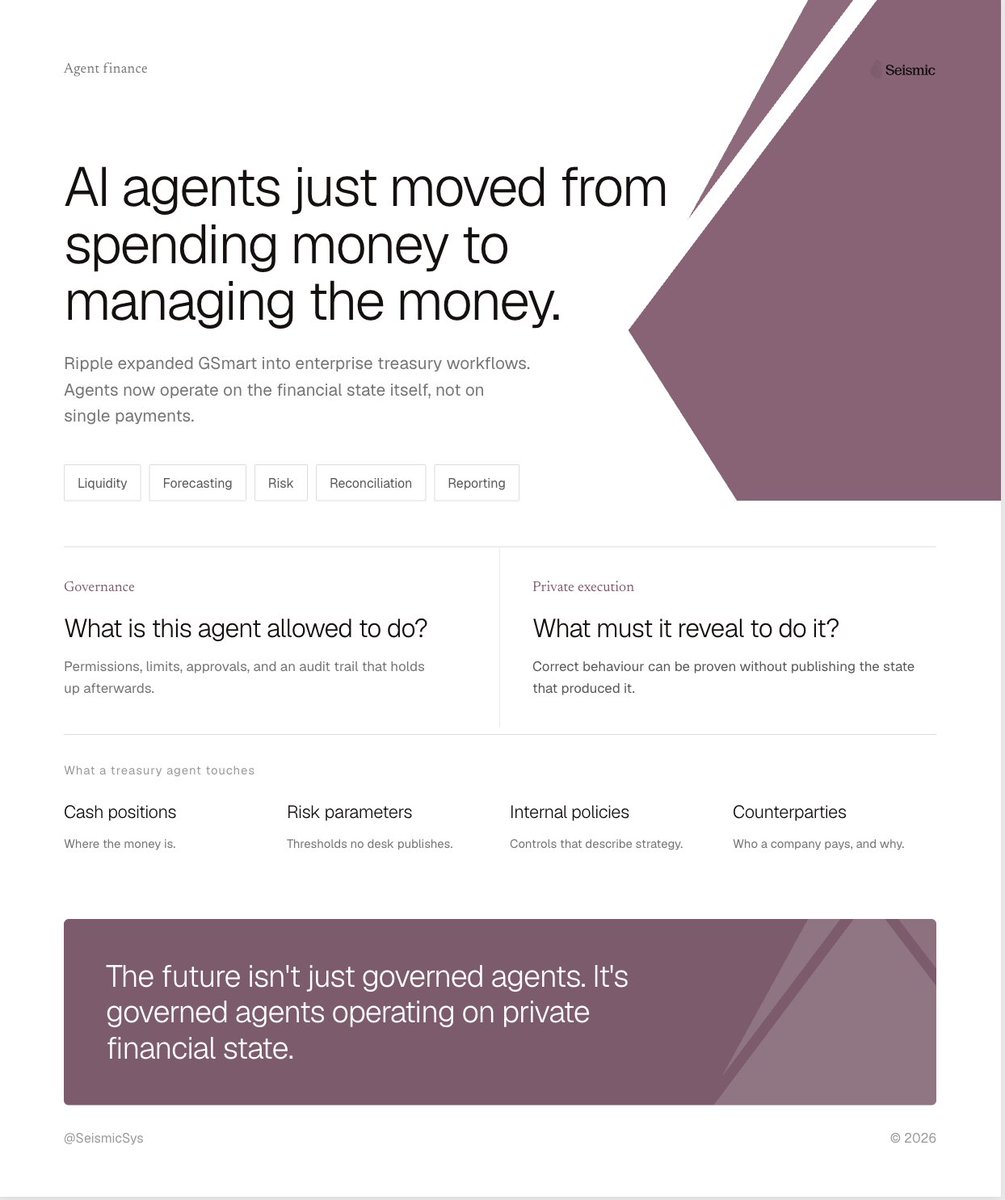
AI agents just moved from spending money to managing the financial state behind the money. Ripple expanded GSmart today, embedding governed AI directly into enterprise treasury workflows: → Liquidity → Forecasting → Risk → Reconciliation → Reporting This is a much bigger
@cryptowoodd @SeismicSys tebrikler sonuna kadar hak ettin 🎉
Shielded ownership for a PFP collection. About time. Worth a look. x.com/zaddrnet/statu…
Nice to not meet you. 2,800 faces on @Zcash . Every face is public. Every owner isn't. Whitelist is open. Apply early. zaddr.net/apply
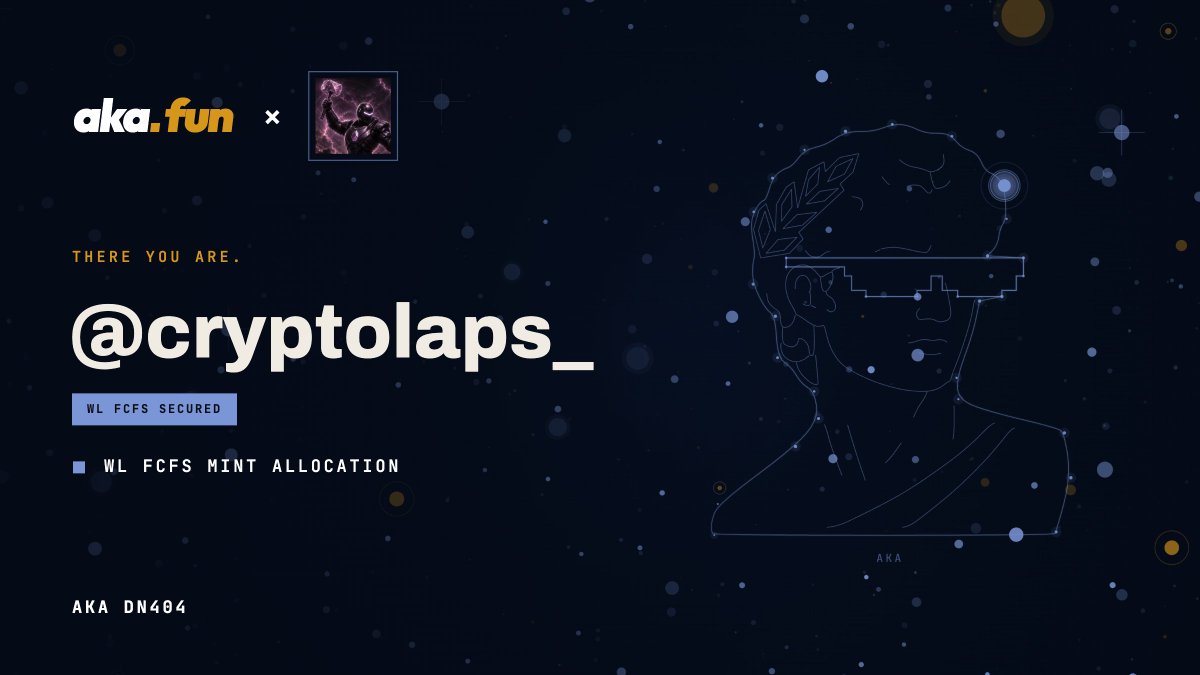
WL FCFS secured for the AKA DN404 mint. 🫡 Are you? aka.fun/mint-check @akadotfun @arc
Cooking 🔥
The forge has begun. Apply → furnacefi.xyz You have 48 hours.
The forge has begun. Apply → furnacefi.xyz You have 48 hours.
I got in. First wave, Rider #3702. @pabalx pabal.ai/card/33fa9311e…

AI agents just moved from spending money to managing the financial state behind the money. Ripple expanded GSmart today, embedding governed AI directly into enterprise treasury workflows: → Liquidity → Forecasting → Risk → Reconciliation → Reporting This is a much bigger shift than AI-powered payments. Agents are beginning to operate on the actual financial state of companies. And that makes the @SeismicSys thesis increasingly important. Governance can determine: What is this agent allowed to do? Private execution can determine: What sensitive financial state does it actually need to reveal while doing it? Cash positions. Risk parameters. Internal policies. Transaction relationships. AI moving deeper into finance shouldn't require financial state to become more exposed. The future isn't just governed agents. It's governed agents operating on private financial state. @lyronctk @NoxxW3 @heathcliff_eth @xealistt
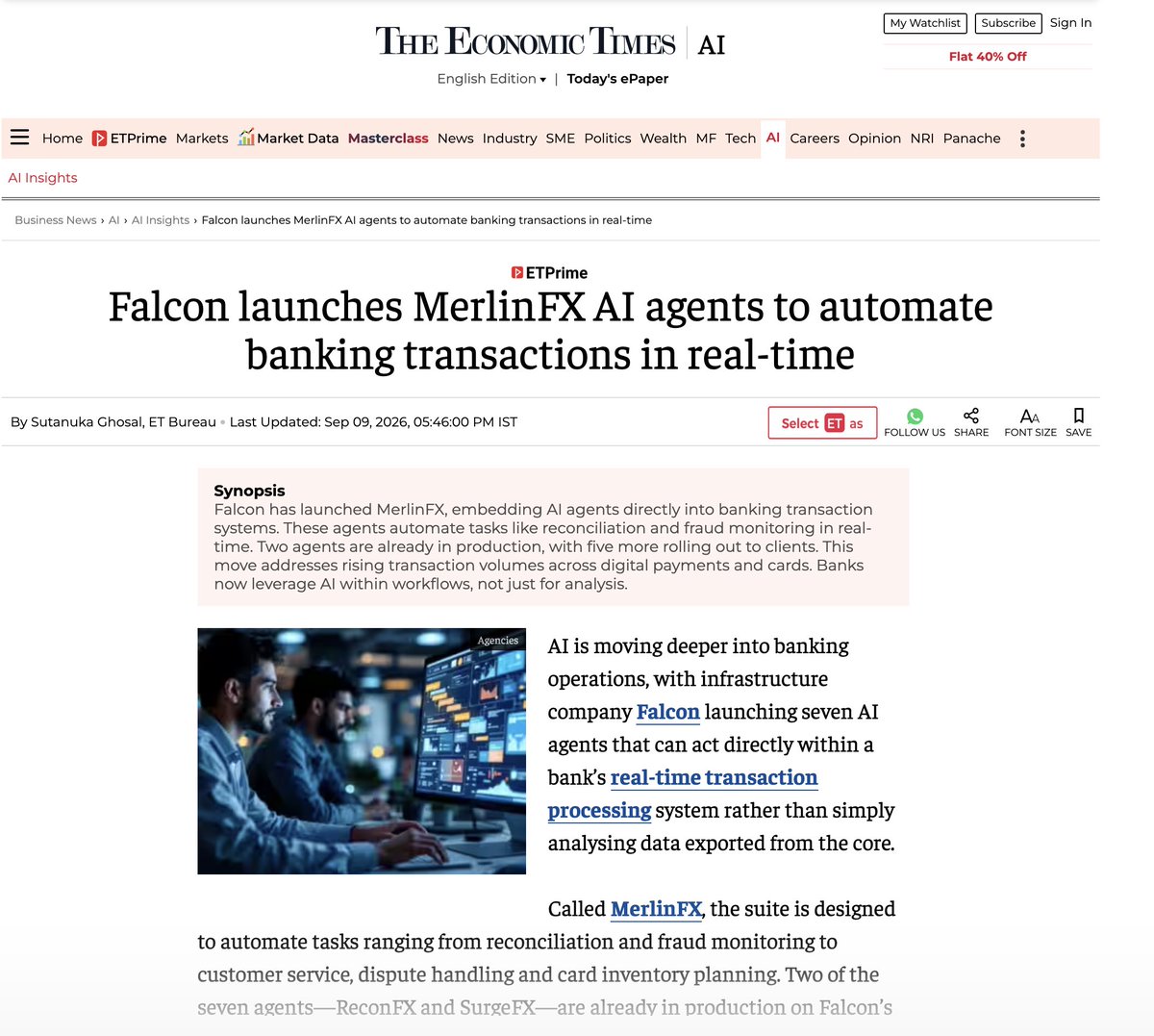
AI agents just entered the banking core. Falcon launched 7 AI agents that operate directly inside real-time banking transaction infrastructure. Not on exported data. On the actual financial workflow. They can monitor risk, reconcile transactions and act on live banking state
i don't have any friends. so i'm waiting for @RareFriendsNFT rarefriends.com/whitelist
@fwoghood @io_enthusiast @AndurilFlameee @yesimweb3 amazing community @MadLads 0xfF3cbc4274AB4EF39b3377F224e7222DCAf9c3ad
🐸 FWOGHOOD COLLABS ARE OPEN! 🤝 Giving out 200 GTD spots to the community. To get in: → RT + Like → Comment & tag your fwens 🐸 → Mention a community you want Fwoghood to collab with Tag ’em. Bring ’em. Let’s build the Hood. 🏡🐸


hieunguyen @hieu06730313
7K Followers 8K Following • Loyal Contributor @SeismicSys 🤎 • MOD @SentientAGI • Lil Pudgy #1884 Contributor @AbstractChain • Owner : https://t.co/8Jwzi738WJ , @SentientAGI_vn
SmartX @smartryven
3K Followers 4K Following Community Builder | DM For Collab Real Builder.... professional NFT Artist 🎨🎭
Cassiopeia @Technocryptex
6 Followers 78 Following
Aragorn @AndurilFlameee
2K Followers 1K Following Heir in the shadows 🗡️ Building onchain realms Design • Strategy • Web3


Agent Rails @AgentRails
94 Followers 968 Following Notes on AI agents, stablecoin payments and the onchain rails they may use.
دواء المتوك... @dwa96962
396 Followers 503 Following سلني عن الحب يا من ليس يعرفُهُ ما أطيبَ الحُبَّ لولا أنه نكِدُ
CryptoCosmo 🦉⭕�... @CryptoCosmo17
9K Followers 7K Following Moonbird✨ Azuki✨ Doodles✨ Lil Pudgy✨Veve Gold Logo #206✨Veve Affiliate ✨I post about projects I hold, none of it is financial advice
Lee eun @malaykorea
222K Followers 194K Following 인생에서 최대의 헛일은 후회와 쓸데없는 걱정이다. The biggest blunders we make in life are regretting something and worrying about useless things.
Amin⚡🐋.eth @amineth57
12K Followers 10K Following Web3 Researcher | Content Creator | Ethereum • DeFi • On-Chain Alpha | DM Open for Collabs
₿ig DML @dmlxbt
4K Followers 2K Following Building @3lvyndao || CM and High Council in @wifizards 🧙♂️
Rahat.eth @Rahatirtaza
6K Followers 6K Following Web3 since 2018 ▪ NFT Contributor ▪ Community Builder ▪ DM for Collabs
AIA⚡.eth @aiaeth7
12K Followers 9K Following Web3 Researcher | Crypto Content Creator | Ethereum • DeFi • On-Chain Insights | DMs Open
R E D H O X @Redhox_Core9X
8K Followers 9K Following Rᴇsᴘᴇᴄᴛ Mᴀᴋᴇs Lᴇɢᴇɴᴅs | Dᴇᴀʟs Mᴀᴋᴇ Nᴜᴍʙᴇʀs | members of @WeTeamNG
TofiqX @rabbiislam123
11K Followers 11K Following Content Writer & Creator | Web3 Explorer | -Members of @WeTeamNG
Quote Empire @AkshayKanc41845
3K Followers 7K Following The best quotes from legends, leaders, philosophers & creators. Follow for daily inspiration.
SΛIEM @Saiem_web3
5K Followers 6K Following Creating. Learning. Building. | Living on X | Web3 Content Creator
Alonmmusk @Alonmmusk
5K Followers 7K Following 🚀🚀 BULLISH $BTC. BULLISH $BNB. 🚀🚀 Real-time Binance setups with clear ENTRY, TARGETS & STOP-LOSS. Trade the plan. Manage. Binance | Bybit KOL @Alonmmusk

Draven @draven_onchain
2K Followers 2K Following Sharing ideas, creating content & learning in public


Abid.eth @Abid__Ahasan
19K Followers 10K Following Sharing my thoughts and creating content | believe in Web3 | NFT | DM for collabs ✉️

Martins @Martinsweb03
2K Followers 1K Following Web3 Researcher | NFT & On-chain Analyst Community Builder | Alpha Hunter Focused on DeFi Open for collaborations 📧🤝


Abubakar @Abubakar154767
415 Followers 2K Following

Leo @moderntrotzki
3K Followers 2K Following The end may justify the means as long as there is something that justifies the end


Alina-Malina @Alina_Malina999
2K Followers 1K Following @seismicSys - Magnitude 8.0 @bulktrade - contributor @KASTxyz - KAST Creator


Bautista 🦊| F1 @krisperio
13K Followers 4K Following Building AI B2B SaaS product along with the social platform, narrative trencher and consult investor. one of those is intentional | prev hop exchange, MIT '19
juli @juli_not_julie
2K Followers 2K Following BULK MAXI ✌🏻 SEISMIC Mag6 💛| proudoccassional cook, more of a gourmet(eater), part-time web3
Rayleigh Silvers @Rayleigh_com
6K Followers 6K Following Research CryptoCurrency, #Airdrop, Holder BTC
kadir.eth(❖,❖) @kkadireth34
2K Followers 4K Following Tüm Airdroplar Bu Grupda 👇 https://t.co/HstxOtWIjo

RusticDreams @dreamrust50227
177 Followers 284 Following
Galercitaa DomitaaH @DoomiTaaH_Naae
91 Followers 91 Following probably in downtown Manhattan pretending to journal while people watching instead

Elementborns @elementborns
7K Followers 0 Following not for everyone, no collabs just invites on @RobinhoodApp
Arcins @Arcins__
19K Followers 2 Following 10000 Tiny sprites Still loading their personalities. Some stay pixels. Some become Arcins. First NFT on @arc
zaddr @zaddrnet
5K Followers 110 Following 2,800 faces you can see. 2,800 owners you can't. Shielded on Zcash. Nice to not meet you https://t.co/gRse1jFqjf
el1000.mega | ∑: @Elminselimov5
10K Followers 7K Following Everyone wants cheap $bitcoin until Bitcoin is actually cheap… Your Network is Your Net Worth Big sequencer energy!
Rowdies @RowdiesRH
5K Followers 7 Following Your next fav PFP on @RobinHoodCrypto • 5555 Rowdies • Free Mint
The Furnace @Thefurnacexyz
7K Followers 7 Following Pixel furnaces that actually work like one. The first on @robinhoodapp Collabs/Partnership, dm on discord → Kontranft
hoodminers @hoodminers_rh
15K Followers 3 Following Hood Miners are not just collectibles. Each Miner has its own wallet and is designed to earn and accumulate digital assets over time.
Pabal @pabalx
666 Followers 35 Following send your horse. incubated by @GIWA_by_Upbit · GASOK phase 3


Arcadians @Arcadiansnft_
16K Followers 1 Following 5000 futuristic sci-fi creatures empowering creator economy || Coming day 1 of mainnet


Fwoghood @fwoghood
3K Followers 3 Following Just a lil fwog in the HOOD. $FWOH Freemint on @RobinhoodCrypto
Goalhood @Goalhoodz
7K Followers 2 Following 4,444 soccer players are getting ready to take the field @RobinhoodCrypto Minting on OpenSea
Cassiopeia @Technocryptex
6 Followers 78 Following
AKA @akadotfun
27K Followers 27 Following Crypto, aka FUN. MemeFi internet capital market backed by RWA. Built for Arc.
Aragorn @AndurilFlameee
2K Followers 1K Following Heir in the shadows 🗡️ Building onchain realms Design • Strategy • Web3

KIZO @kizohood
4K Followers 0 Following KIZO — Ancient spirits, awakened onchain. Collect • Awaken • Earn Building on @RobinhoodApp Chain.

Cloud Quest @CloudquestASIA
24K Followers 5K Following Join thousands completing tasks, building communities, and earning crypto rewards from top Web3 projects. Powered By @lifiprotocol


zkSNARKs @zksnarks_
16K Followers 327 Following A collection of encrypted identities stored on the ZCASH blockchain. Launching ███████.
Shadow Ronin @ShadowRoninARC
8K Followers 20 Following 影は、所有者を選ぶ。3,500体の完全オリジナル・シネマティックNFT。日本語から始まる物語|@arc Mainnet 2026.09.16

Ammora @AmmoraHQ
6K Followers 9 Following Building dynamic liquidity markets on GIWA Officially incubated by @GIWA_by_Upbit · GASOK Program Telegram : https://t.co/b3dUyvoHKx
دواء المتوك... @dwa96962
396 Followers 503 Following سلني عن الحب يا من ليس يعرفُهُ ما أطيبَ الحُبَّ لولا أنه نكِدُ
CryptoCosmo 🦉⭕�... @CryptoCosmo17
9K Followers 7K Following Moonbird✨ Azuki✨ Doodles✨ Lil Pudgy✨Veve Gold Logo #206✨Veve Affiliate ✨I post about projects I hold, none of it is financial advice
yanok @crypto_yanok
2K Followers 544 Following 🔗 @bulktrade - Contributor 🔗 @raikucom - Raiku Chad 🔗 @domaprotocol - Raider/OG 🔗 @KASTxyz - KAST Creator 🔗 @liquidtrading - Inner Circle
Quote Empire @AkshayKanc41845
3K Followers 7K Following The best quotes from legends, leaders, philosophers & creators. Follow for daily inspiration.
Rahat.eth @Rahatirtaza
6K Followers 6K Following Web3 since 2018 ▪ NFT Contributor ▪ Community Builder ▪ DM for Collabs
Lee eun @malaykorea
222K Followers 194K Following 인생에서 최대의 헛일은 후회와 쓸데없는 걱정이다. The biggest blunders we make in life are regretting something and worrying about useless things.
Mạnh 100 (❖,❖) @lon_rong14459
22K Followers 21K Following Passion for blockchain Project analysis, trend updates. @DecibelTrade
Amin⚡🐋.eth @amineth57
12K Followers 10K Following Web3 Researcher | Content Creator | Ethereum • DeFi • On-Chain Alpha | DM Open for Collabs
Excali @Excaliburweb3
9K Followers 6K Following Collecting NFT’s ....... Bringing community's closer together. Building: @ottoclubhouse OTTO WL Live - https://t.co/7PEerM9aZ9
Scrambller @Scrambller
48K Followers 17K Following Building @ottoclubhouse NFTs, community & IP | Investor 🦦 WL live - https://t.co/gC7WYWQSel
₿ig DML @dmlxbt
4K Followers 2K Following Building @3lvyndao || CM and High Council in @wifizards 🧙♂️
AIA⚡.eth @aiaeth7
12K Followers 9K Following Web3 Researcher | Crypto Content Creator | Ethereum • DeFi • On-Chain Insights | DMs Open
R E D H O X @Redhox_Core9X
8K Followers 9K Following Rᴇsᴘᴇᴄᴛ Mᴀᴋᴇs Lᴇɢᴇɴᴅs | Dᴇᴀʟs Mᴀᴋᴇ Nᴜᴍʙᴇʀs | members of @WeTeamNG
WeLoSu @io_enthusiast
285 Followers 451 Following -Astronaut @ionet -@SeismicSys Magnitude 6 -Member @RialoHQ -@OriginalBlokyz Holder
TofiqX @rabbiislam123
11K Followers 11K Following Content Writer & Creator | Web3 Explorer | -Members of @WeTeamNG
Alonmmusk @Alonmmusk
5K Followers 7K Following 🚀🚀 BULLISH $BTC. BULLISH $BNB. 🚀🚀 Real-time Binance setups with clear ENTRY, TARGETS & STOP-LOSS. Trade the plan. Manage. Binance | Bybit KOL @Alonmmusk
Trends for United States
You might like