
ㅅㅇ @dcafighter
Joined June 2025-
Tweets267
-
Followers47
-
Following522
-
Likes255

We're launching code storage and git hosting. Origin gives teams and agents a place to host, review, and collaborate on code. Available this fall. Join the waitlist. cursor.com/origin-waitlist
1년 만에 유료 고객 2200명까지 간 창업자가 정리한 @ycombinator 15가지 규칙 ㅋㅋ 1. 확장되지 않는 일들을 해라. 처음 10명 고객은 직접 손으로 데려와라. 2. 준비될 때까지 기다리지 말고 지금 런칭해라. 완벽할 때까지 미루지 마라. 3. 첫날부터 돈을 받아라. 돈 내는 사람이 없으면 스타트업이 아니라 취미다. 4. 매일 고객과 대화해라. 고객 머릿속에 로드맵이 있다. 5. 항상 90/10 해법을 찾아라. 대부분 기능은 10% 노력으로 90% 가치를 얻을 수 있다. 6. 진짜 일은 두 가지만 해라. 코드 짜기와 사용자 대화하기. 7. 고객을 직접 골라라. 10명이 진심으로 사랑하는 게 1000명이 그냥 좋아하는 것보다 낫다. 8. 성장은 결과이지 전략이 아니다. PMF 전에 성장만 쫓으면 고객 이탈만 늘어난다. 9. 적게 제대로 해라. 1~2개 지표만 골라서 모든 일을 판단해라. 10. 기본적으로 살아남을 수 있는지 확인해라. 현재 성장과 소진 속도로 돈 떨어지기 전에 수익 날 수 있나. 11. 아플 때까지는 사람 뽑지 마라. 채용은 큰 부담이다. 12. 모멘텀이 유일한 방벽이다. 1년차엔 매주 뭐라도 출시해라. 13. 모든 위대한 스타트업은 심하게 망가져 있다. 불 끄는 속도가 게임이다. 14. 경쟁사는 무시해라. 스타트업은 경쟁 때문에 죽는 게 아니라 스스로 죽는다. 15. 공동창업자와 관계가 깨진다. 솔직한 대화가 최고의 보험. 글이 올라오고 나서 yc창업자 폴 그레이엄이 댓글로 15번을 정정해줌. 공동창업자 싸움보다 잘못된 제품을 만들거나 돈을 너무 빨리 태우는 경우가 훨씬 더 많다고.

We went from 0 to 2,200 paying customers in under a year by following @ycombinator's 15 rules: 1/ Do things that don't scale. Get your first 10 customers by hand. 2/ Launch now, not when it's "ready". A mediocre product in front of real users teaches you more in a week than 6

It's really so satisfying to watch how @huge_icons make these UI icons Try - hugeicons.com/?via=Ali

Access Key 발급을 안해주면 된다 사용자는 IAM Identity Center로 Session Token이랑 같이 발급하고 AWS 내의 Compute Resource는 IAM Role붙이고 EKS 내의 Pod는 EKS Pod Identity 쓰고 AWS 밖의 Cloud Compute Resource는 Cognito Identity로 Workload Identity Federation 하면 된다
한국의 공공/공개 API을 정리해둔 Repo. JS의 Fetch/Axios, Python의 Requests 등을 연습할 때 좋을듯. (참고로 [OpenAPI]와 [Public/Open API], [Free API]는 각각 다른 개념임) github.com/yybmion/public…

@_inhobaek 안녕하세요. bcrypt는 메모리하드하지 못해서, GPU, ASIC 때문에 이젠 쓰시면 안됩니다. argon2 가 제일 낫구요, 안되면 최소 scrypt를 써야합니다. password-hashing.net 말씀하시는 KISA 규정 보시면 NIST도 인정을 하는데, NIST에선 balloon을 예시로 들고있어서 이거 쓰시면 될거같습니다.


Since Opus 4.8 is out and more and more designers are getting into Design Engineering, I thought I’d share some of the interaction patterns I use most often: Use proximity, not just hover. When the cursor gets close, nearby elements can subtly scale and darken based on distance. It makes interfaces feel more responsive, less binary, and way more alive onpointermove = e => document.querySelectorAll(".dock>*").forEach(el => { const r = el.getBoundingClientRect(); const t = Math.max(0, 1 - Math.abs(e.clientX - r.x - r.width/2) / 120); el. style.scale = 1 + t * .5; });

if you’re dynamically masking a scroll container with css, consider leaving room for the scrollbar instead of masking it too 🧑🍳 mask-repeat: no-repeat; mask-size: calc(100% - 10px) 100px;
Scroll masking with CSS scroll animation as a progressive enhancement ⭐️ .scroller { animation: mask-up; animation-timeline: scroll(self); animation-range: 0 1rem; mask-composite: exclude; } @keyframes mask-up { to { mask-size: 100% 120px, 100% 100%; } }
replaced 2 useEffects with some css. please clap.
@64bitcoinkr @gnh1201 여러모로 비흡연인은 흡연인 상대 안하는게 좋겠군요. 담배빵이 무서워서 피하나 냄새 나서 피하지
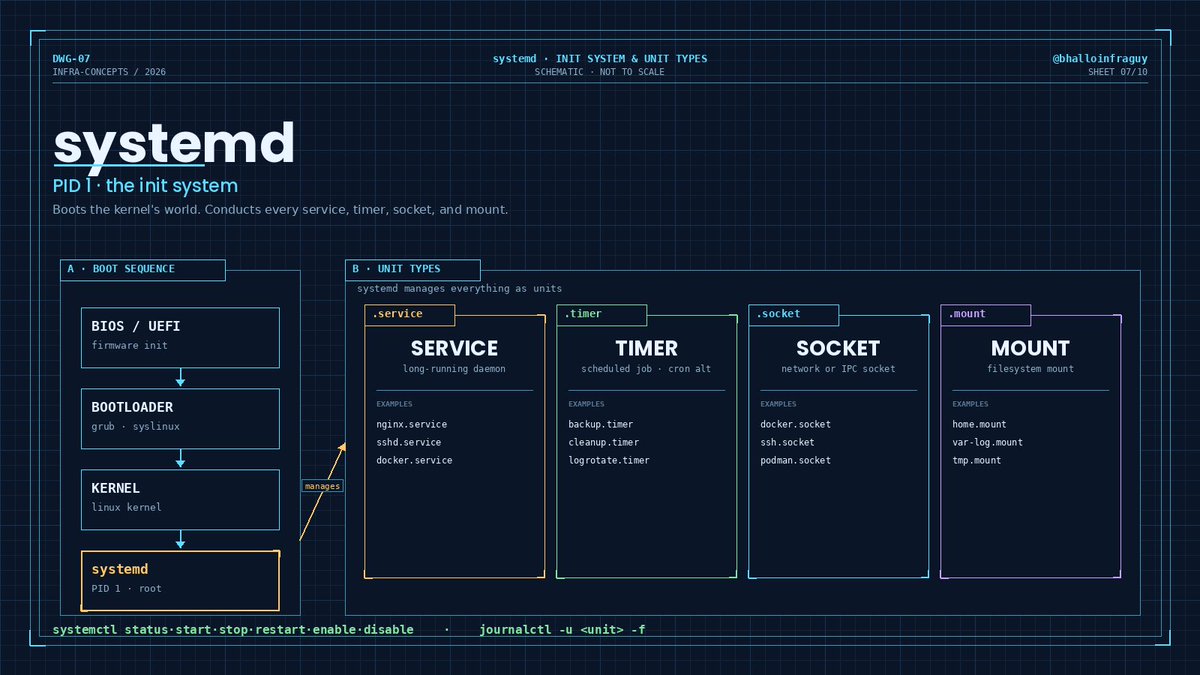
Infrastructure Concept — explained simply systemd When your Linux server boots, something has to start the kernel, mount file systems, bring up networking, launch services, and handle shutdowns. That something is systemd, PID 1, the init system on almost every modern Linux distro. Everything systemd manages is a unit. The most common types: → .service - a daemon (nginx, sshd, docker) → .timer - a scheduled job (modern cron alternative) → .socket - a network or IPC socket → .mount - a filesystem mount Commands you’ll use daily: systemctl status nginx - is it running? systemctl restart nginx - restart it systemctl enable nginx - start it on boot journalctl -u nginx -f - tail its logs If you understand systemd, you understand how Linux servers actually run.
@gnh1201 그냥 영어 읽고 작업하는거 싫어하는걸 돌려말한거 아닐까요 스펙상으로도 손해 볼 이유가 없을텐데
The latest 𝕏 algorithm has been published to GitHub github.com/xai-org/x-algo…
🧵 Day 30/30 — #SystemDesign Most people fail System Design interviews before they even start designing. Not because they don’t know Kafka, Load Balancers, or databases… but because they jump into architecture without understanding the problem first. System Design interviews are less about “perfect architecture” and more about structured thinking under constraints. A strong system design approach usually looks like this: → Clarify requirements → Estimate scale (users, traffic, storage) → Design high-level architecture → Identify bottlenecks → Discuss databases, caching, queues, scaling → Handle tradeoffs → Think about failures, reliability, monitoring Interviewers want to see how you think, communicate, and prioritize. One of the biggest mistakes candidates make: Trying to sound “advanced.” People randomly add: → Kafka → Microservices → Redis → Kubernetes even when the system doesn’t need them. Good engineering is not adding more tools. It’s choosing the right level of complexity. Another important skill is discussing tradeoffs clearly. Example: → SQL vs NoSQL → Consistency vs Availability → Monolith vs Microservices → Poll

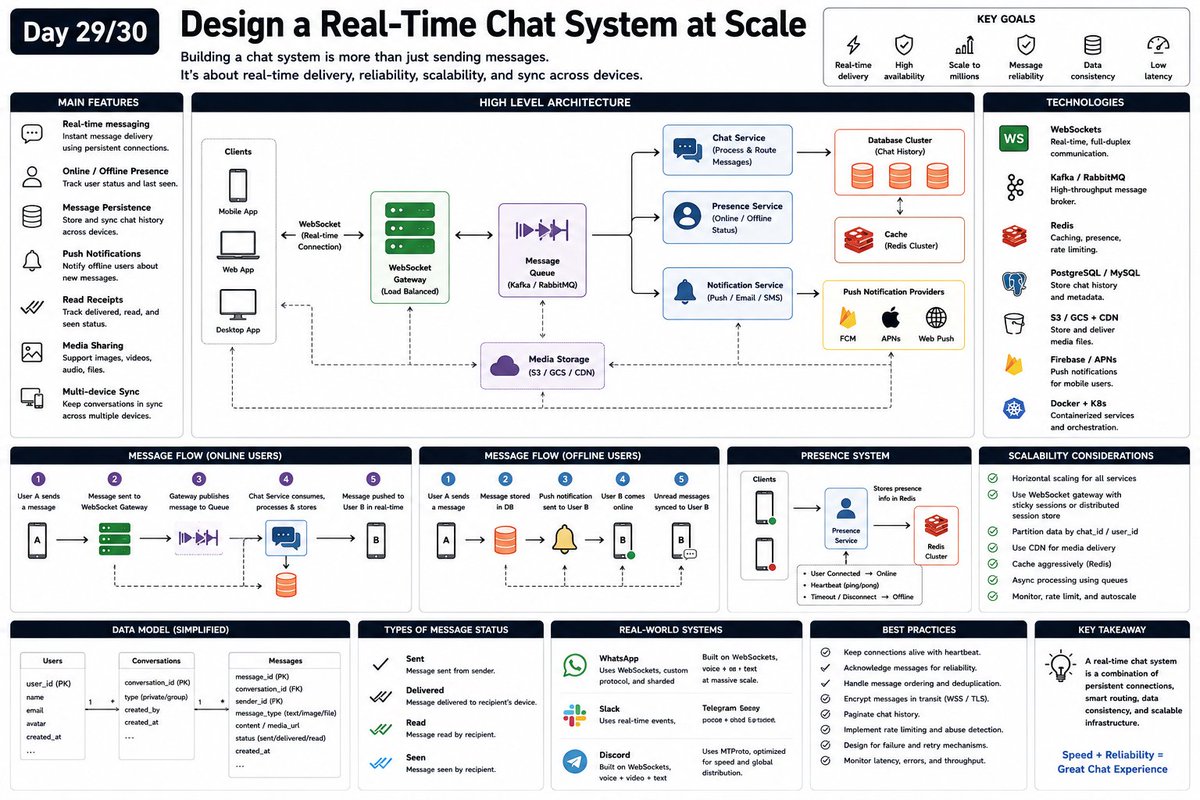
🧵 Day 29/30 — #SystemDesign Sending a message feels instant. But behind that simple “Send” button, real-time chat systems handle: → Millions of concurrent connections → Message delivery guarantees → Online/offline users → Notifications → Read receipts → Media uploads →

Go + Gin → REST APIs Go + Fiber → High-Performance APIs Go + Echo → Web Framework Go + net/http → Core Backend Go + gRPC → Microservices Go + PostgreSQL → Relational DB Go + GORM → ORM / DB Access Go + Redis → Caching Go + Kafka → Event Streaming Go + NATS → Messaging Systems Go + Docker → Containers Go + Kubernetes → Cloud Native Go + Terraform → Infrastructure as Code Go + Prometheus → Monitoring Go + CLI → Dev Tools Go + WebSockets → Real-Time Systems one language backend cloud devops systems and people still say “go is too basic” 👇
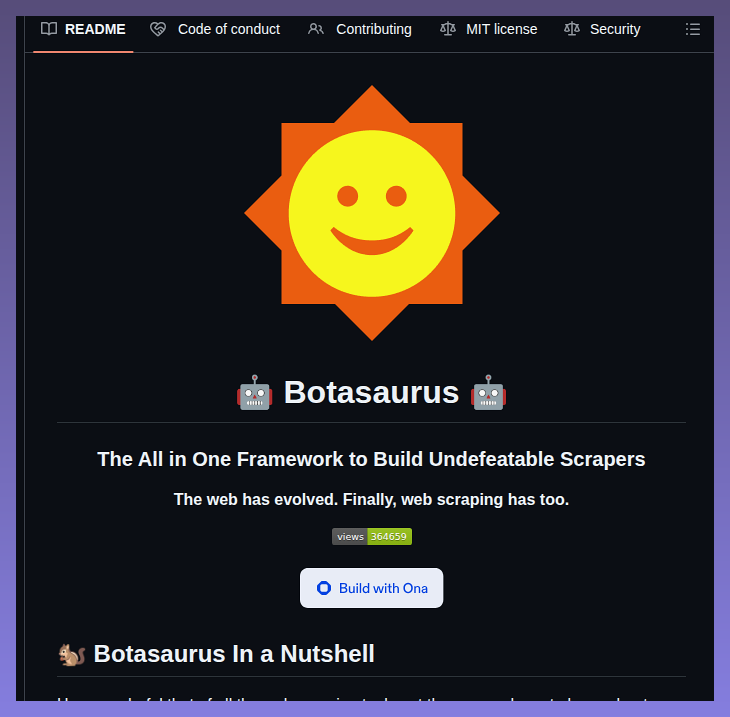
웹 스크래핑 좀 해본 놈들은 알겠지만 데이터 모으는 것보다 안티봇 차단 피하는 게 진짜 고역임. Botasaurus는 아예 탐지 불가 컨셉으로 우회 도구들을 세트로 묶어버렸는데, 이건 노가다 줄여주는 수준이 아니라 데이터 수집 문제에 집중할수 있게 해줌. 단순 크롤러 짜는 기술보다 이런 완성형 프레임워크 얼마나 잘 갖다 쓰느냐가 중요함.

Framework to build undetectable web scrapers github.com/omkarcloud/bot…
오픈소스 컨트리뷰션 아카데미 모집 공고 떴어요 oss.kr/pages/10/4511?…
41년 동안 교과서처럼 군림하던 다익스트라의 시대가 저물고 있음. 칭화대 연구진이 '최단 경로를 찾으려면 노드 정렬이 필수'라는 고정관념을 깨고 정렬 없이 계산하는 알고리즘을 내놨는데, 이건 단순한 성능 개선이 아니라 수십 년 된 이론적 천장을 뚫어버린 사건임. 구글 지도부터 인터넷 라우팅까지 밑바닥 인프라의 효율 자체가 한 단계 점프할 듯..
Chinese researchers have developed the best shortest-path algorithm in 41 years. Dijkstra’s Algorithm has been the undefeated king of the shortest path for over 40 years. Whether you’re using Google Maps, booking a flight, or routing internet packets, Dijkstra is the engine
레거시 코드나 처음 보는 거대 프로젝트 분석할 때 써먹기 좋은 도구임. 브라우저에서 ZIP이나 깃허브 링크만 넣으면 로컬 자원으로 지식 그래프 만들고 RAG 에이전트까지 붙여줌. 서버 없이 클라이언트 사이드에서 다 처리하니까 보안 민감한 프로젝트 맛보기 분석용으로 저장해둘 만함. 단, 레포가 너무 크면 브라우저가 버벅일 수 있으니 적당한 모듈 단위로 끊어보는 게 나음. 유즈케이스를 좀 보태자면 특정 비지니스 로직 변경되면 영향받는 코드범위 식별가능해짐. 그래서 이곳만 QA 빡세게 태우면 배포도 자신있게 할수 있게 되니 얼메나 좋게요. github.com/abhigyanpatwar…
Linux Performance Observability Tools Cheatsheet.


melanie 🐾 @melaoxie
3 Followers 563 Following 18 ⚖️ looking for a content partner this week 🌶 only replying here 👇🏼


Balogun Hammed @bhalloinfraguy
2K Followers 3K Following Making complex infra simple to understand. Cloud · Proxmox · Terraform · Linux Lagos 🇳🇬 💙



ever0de @ever0de
134 Followers 448 Following
HYPE DOT 🥰 귀여�... @HypedotStudio
718 Followers 715 Following 🤖 AI 친구가 당신의 감정을 귀엽게 그려주는 VibeCheck 앱 개발중 오늘 기분을 기록하고 공유하고 싶을 때 찾아주세요 💕 Waitlist 오픈 예정

나룻 @NarootHwang
306 Followers 719 Following 성장형 1인 개발자 / 나루토를 인생의 바이블로 삼는 사람 https://t.co/IzkLFYLazy


흐음 @huhutt1
2K Followers 2K Following


totori @kasala91
1K Followers 3K Following Crypto isn’t just a passion. it’s my daily life, my future, and my conviction.
Goldman🌙 @goldrun222
3K Followers 3K Following
금자⚡️GeumJa �... @OopsImaRich
2K Followers 1K Following Trying to get rich 💸 Documenting the journey 🎥 Stocks • Crypto • Whatever works

Strobe Finance Offici... @KittehCoinCTObo
91 Followers 1K Following XRPL-native DeFi. Welcome to XRPFi. Secure peer to peer XRP yield.
Sodnom @Soda_man3
17 Followers 45 Following BD @ Recruity 🚀 Helping Web3 & Fintech teams hire A+ talent | Let’s build together

omalry Sean @omalry_s
32 Followers 97 Following

CHE5YA @che5ya
46 Followers 233 Following apologies to all you programmers who followed me thinking i was going to tweet about programming. most of my tweets are in korean. 10-year full-stack dev.
하루나데브 harun... @tw_harunadev
2K Followers 2K Following I like C# (Unity) ㅣ Trial & Error dev ㅣ 한국어 ENG 日本語(独学中)ㅣ Discord: harunadev ㅣ VRChat: 하루룽짱harunadev

Blossom🕊 @Emma156basu
131 Followers 2K Following The tenacity and self-discipline behind exquisiteness are the most beautiful scenery in the world
Ovworqi @Ovworqi2667
17 Followers 286 Following
Bleecee @Bleecee1286
13 Followers 367 Following

Truly 진심펀치 �... @truly_punch
853 Followers 1K Following TG: https://t.co/R9V2CWLNNt @Madlads WAO Studying ZK, Stablecoin, RWA, AI Info, AMA Aggregator
chenyuan👑 @Anne_bm7
1K Followers 1K Following You don't have to believe in yourself, but you must try hard.✈✈
Michael @mikeehero93
432 Followers 1K Following

CoinEasy | Web3 Simpl... @Coiniseasy
29K Followers 7K Following 🌐 Your all-in-one 🇰🇷 Korean Web3 hub | Simplifying Web3 for Web2 🔗 | Crypto education & Web3 community 🌍✨ | Helping enter the Korean market 🚀 크립토 쉽게 배우자!
₿engi.ext ⚡️ @bengi_mk5
570 Followers 494 Following 어둠 속에서 빛을 바라본다면 빛이 될 수 있을까 선팔 그런거 ㅇ벗다 신변잡기용 뻘소리만하고, 사적대화는 mk4에서 주로 할 듯


Lukatdlight ✞ @lukatdlight
1K Followers 2K Following God First 🫡 || Exploring Blockchain Opportunities|| Pen newbie 🖊️ Artist || enthusiast
ENOCHii / WEB3 DJ | P... @e_noch_ii
3K Followers 4K Following BUILDING @nova_labs_abs A Web3 Traveler + DJ // The one and Only Web3 KOL doing DJ and Music Producing for 10 years in Korea, BORN TO BE Builder


Basketball Coach @cryptobball
3K Followers 3K Following Ball so hard mothers wanna find me / die hard @KentuckyMBB fan / runs https://t.co/eUMc3FX23w
Cheems Community Supp... @LordCheems_bscs
480 Followers 3K Following We are live on #BNB chain Contract: OxODF0587216a4a1bB7d5082fdc491d93d2dD4B413 Telegram: https://t.co/jGZutyjzvL LordCheems_Bsc
creativebiglee @creativebiglee
886 Followers 2K Following Business Development / Product Owner / Investor / SW Engineer / Art / SPACE / Satellite / Protocol Economy / 프사는 우상향을 의미합니다
mb.io @multibank_io
148K Followers 221 Following Part of @MultiBankGroup, https://t.co/b5lvkwqqAH bridges TradFi, DeFi & RWA. VARA & AUSTRAC regulated crypto exchange | Buy | Sell | Swap
Orca @OrcaOfficialAI
21K Followers 21 Following Orca — The AI Agent for Prediction Markets Not just trading Orca is a system that executes continuously Discover. Decide. Execute.

Kyle Dolan @SwampDaddy_
3K Followers 287 Following Decentralization Evangelist, Software Innovator, Coder, Miner, Computer hardware hobbyist, ping pong player, experienced aquarist and newly appointed father!
Godzi @cryptodzilla
28K Followers 1K Following Insider of all gem insiders under the scales: bull 🐂🀄️ | all posts are NFA | just Godzilla opinion🦖
Dmitrii Kovanikov @ChShersh
72K Followers 241 Following Dysfunctional Programming account #1. Senior SWE. I write C++ for money. ex-Haskell, ex-OCaml. All opinions are my own.


divyansh tiwari @DivyanshT91162
8K Followers 49 Following Exploring what AI can really do. → If it's powerful, useful, or underrated — you'll see it here. 📩 DM for collaborations

KotlinConf @kotlinconf
21K Followers 2 Following A conference about everything @Kotlin. Brought to you by @JetBrains. KotlinConf 2026 will take place in Munich, Germany on May 20–22, 2026.

Nodiens @nodiens
41K Followers 20 Following Sharpen Your Edge. Unified market intelligence: signals, risk, sentiment, all in one app.
Edgex @SahilExec
4K Followers 528 Following Backend engineer and lurker | DSA | CSE'28 | DM for collab
Balogun Hammed @bhalloinfraguy
2K Followers 3K Following Making complex infra simple to understand. Cloud · Proxmox · Terraform · Linux Lagos 🇳🇬 💙

Mashood tried Ops @fromcodetocloud
12K Followers 1K Following Devops Engineer | 4+ YOE | 📩DM for Paid Collab Sharing knowledge on devops, cloud and AI https://t.co/IgcJ0o6Rmu
Nitin.nn @NitinthisSide_
9K Followers 2K Following 21 | Building @lunamichq | Interested In Backend Development & AI | looking for Career Opportunities |
Perplexity @perplexity_ai
496K Followers 76 Following Curiosity changes everything. Download our free app on iOS, Mac, Windows, and Android.
Joongi Kim @achimnol
1K Followers 771 Following Lablup Inc. CTO & Co-founder, Ph.D@CS KAIST, Needlworks & TNF @[email protected]

Kyronis @kyronis_talks
27K Followers 70 Following AI & Tech Expert | Helping brands grow with AI 🚀 Open for paid collaborations DM or email: [email protected]
Miracle Chain @miraclechain
53K Followers 1 Following The consumer first L3 where affiliate marketing and direct selling go onchain. Built on Arbitrum
친절한티스 @kindtis
3K Followers 565 Following Game Programmer @ NEXON / 평생 개발자로 살아가긔 / 1n년째 중 / C/C++, C#, Rust, python / 스톰 트루퍼와 다스 베이다옹 수집 중 / 대충 잘 먹고 잘 살아가는게 목표 / 고양이 3마리 모시는 집사 / 고양이가 가끔 정치 관련 글을 씁니다
iwashi / Yoshimasa Iw... @iwashi86
20K Followers 675 Following NTTドコモビジネスでEM(育休中)。 その他に、早稲田大で非常勤講師、#fukabori.fmの中の人、書籍翻訳者。 AI、マネジメント、Dev、PdM、Agile、HRに関する学びをポストしています。 発言は個人の見解であり、所属する組織の公式見解ではありません。 Amazonアソシエイト・プログラム参加者。

TigerBeetle @TigerBeetleDB
10K Followers 2K Following The financial transactions database designed to power the next 30 years of transaction processing.
prateek @agent_wrapper
6K Followers 914 Following Orchestrator of agent orchestrators (@aoagents) | 2x ICPC WFs | Ex @composio, @databricks, @relicx, @rippling

Jared Duker Lichtman @jdlichtman
5K Followers 0 Following number theorist, szegő assistant professor of mathematics at @Stanford

Patrick Loeber @patloeber
73K Followers 1K Following member of technical staff @GoogleDeepMind • gemini api & ai studio • my views
yoh @yohhoy
2K Followers 2K Following Que Sera, Sera, whatever will be, will be, the future's not ours to see. 0655/2355/C/C++/ParallelComputing/Python/RustLang/Märklin
International Cyber D... @IntCyberDigest
181K Followers 294 Following Your weekly go-to cybersecurity newsletter, curated and commented on by our senior analysts.
Immanuel @immanuel_vibe
2K Followers 1K Following Kubernetes certified: CKA, CKS; DevOps / Cloud engineer, SRE • 4+ years • Open to international remote • https://t.co/1lTJDxeRn7 • Kubernetes | AWS
Avid @Av1dlive
17K Followers 388 Following I write, read and build. I normie-maxx building harness-agnostic memory for ai agents

Jahir Sheikh @jahirsheikh8
4K Followers 482 Following 23 • Fullstack dev @ startup, love building stuffs :) | Hijacking AI Agents to do my work | DM for collab/work
Ruthy | Surgence Labs @ruthybuilds
50K Followers 7K Following Co-Founder @Surgence_io. GTM Agency that builds, launches, and scales campaigns for venture-backed teams. Work with us: https://t.co/o745P4JsOu
GUTE_RachelHan @GuteslaX
17K Followers 2K Following Tesla SpaceX Love | LabX CEO& founder | Curator - tech/Industry data from Korea, US, China, Japan, and Europe | Business inquiry email : [email protected]
Scott Chacon @chacon
17K Followers 1K Following CEO of @gitbutler, cofounder of @SCNE_io, previously cofounder of @github.

Arpit Bhayani @arpit_bhayani
124K Followers 1K Following ape • Principal Engineer II - AI @Razorpay • databases • ex-staff @googlecloud (memorystore, dataproc) • @TheDiceDB • 1x founder • prev @unacademy, amazon
『YEONFEEL』 @YEONFEEL_
242 Followers 161 Following 🧑💻 ESTP · 1996 · 어쩌다 보니 AI 업계로 굴러온 Technical Writer & UX 컨설턴트. | 地図のない宇宙を行こうよ | 지도가 없는 우주로 가자! | 모든 트윗은 회사와 연관되지 않습니다.
GitHub Copilot App, C... @GHCopilotLog
4K Followers 6 Following Unofficial bot posting AI summaries of GitHub Copilot App, CLI, & SDK logs, powered by Foundry. Run by @jamesmontemagno (MSFT). Follow @GHchangelog for more
Yagiz Nizipli @yagiznizipli
17K Followers 572 Following principal engineer @x. @v8js committer. @nodejs technical steering committee member.
Chrome for Developers @ChromiumDev
420K Followers 125 Following The official Chrome Devs X account from Google. We want to help you build beautiful, accessible, fast, & secure websites that work for everyone, everywhere.
Jacquelin Catherine @JacquelinC88033
10 Followers 33 FollowingYou might like